
The Power of the Clergy: How Monks Influenced Feudal Japanese Politics


Welcome to Feudal Japan History, where we invite you on a fascinating journey through the intricate tapestry of Japan's feudal era. Prepare to uncover the powerful influence of monks on the political landscape of feudal Japan in our featured article, “The Power of the Clergy: How Monks Influenced Feudal Japanese Politics.” As you delve into the depths of this rich historical narrative, you'll discover how spiritual leaders shaped governance and society, intertwining religion with politics in ways that still resonate today.
Curious to learn more? Let us guide you through the captivating intersections of faith and power that defined a pivotal time in Japanese history!
Introduction to Monks Influence on Feudal Japan
The feudal era in Japan was a transformative period marked not only by the rise of warrior clans and samurai culture but also by the profound influence of religious institutions, particularly the clergy. Monks, as spiritual leaders and educators, played a crucial role in shaping the political landscape of feudal Japan.
Their authority extended beyond the temple walls, impacting political decisions, social structures, and cultural practices. This article delves into the significant ways in which monks influenced feudal Japanese politics, exploring their historical context, the rise of Buddhism, and the key monastic orders that left an indelible mark on society.
Overview of the Feudal Era in Japan
The feudal era, spanning from the late 12th century to the early 19th century, was characterized by a hierarchical system of land ownership and political power. At the top of this hierarchy were the shoguns, military leaders who wielded the most power, followed by daimyōs, powerful landholders, and finally the samurai, who served as their warriors. This structure created a dynamic interplay between military and political authority, often leading to conflicts and alliances that shaped Japan's history.
During this period, religion played a significant role in everyday life, with Buddhism, Shinto, and Confucianism influencing the values and beliefs of the people. Monks, particularly those affiliated with Buddhist sects, became influential figures, often serving as advisors and mediators in political affairs. Their teachings and writings contributed to the ideological framework that governed the actions of both rulers and the populace.
Significance of Monks in Japanese Society
Monks were not only spiritual guides but also cultural custodians. They were responsible for:
- Education: Monks educated the elite and commoners alike, spreading knowledge about Buddhist doctrines and literacy.
- Cultural Preservation: Monastic communities preserved and transmitted essential cultural practices, including art, literature, and philosophy.
- Political Mediation: Monks often acted as intermediaries between the ruling class and the common people, promoting peace and stability during times of conflict.
The influence of monks was particularly evident in their ability to mobilize communities and organize resources, allowing them to exert significant control over local affairs. This power created a unique blend of religious and political authority that would shape the course of Japanese history.
Historical Context of Monastic Power
The Rise of Buddhism in Japan
Buddhism was introduced to Japan in the 6th century and quickly gained traction, becoming a dominant religious force by the time of the feudal era. As it spread, various sects emerged, each contributing differently to the socio-political landscape:
- Tendai: Established a monastic system that emphasized scholarship and meditation.
- Shingon: Focused on esoteric practices and rituals, attracting the elite.
- Pure Land: Accessible to the masses, promoting the idea of salvation through faith.
These sects not only provided spiritual guidance but also engaged in political affairs, often aligning with powerful clans to protect their interests and expand their influence.
Key Monastic Orders and Their Influence
Several monastic orders emerged as significant players in the political arena during the feudal period:
- Tendai Order:
- Founded on Mount Hiei, it became a center of learning and political influence.
- Monks actively participated in military campaigns and often advised shoguns.
- Shingon Order:
- Known for its esoteric teachings, it attracted samurai and aristocracy.
- The order's rituals and ceremonies were often sought to bless military ventures.
- Pure Land Order:
- Focused on the salvation of all beings, it resonated with the common people.
- Its leaders became mediators in local disputes and were influential in community governance.
The power wielded by these monastic orders played a pivotal role in the complexities of feudal Japanese politics, demonstrating how monks were not merely religious figures but also vital political agents in shaping the course of the nation.
Monks as Political Players in Feudal Japan
In the complex tapestry of feudal Japan, monks emerged as significant political players, wielding influence that extended beyond spiritual realms. The intertwining of religion and politics during this era facilitated a unique environment where monasteries became power centers, and monks acted as intermediaries between the ruling classes and the general populace. By aligning themselves with warlords and local leaders, monks often shaped political landscapes, navigating the intricate dynamics of loyalty and power.
Monks not only provided spiritual guidance but also engaged actively in governance and social issues, often serving as advisors or mediators in local disputes. Their extensive networks, cultivated through religious practices and pilgrimages, enabled them to exert considerable influence over political decisions, land ownership, and community welfare. As a result, the clergy played a critical role in shaping the political narratives of their time, often reflecting the duality of their identities as both spiritual leaders and temporal authorities.
The Role of Monks in Local Governance
Monks held significant authority within local governance structures in feudal Japan. Temples and monasteries often functioned as administrative hubs, overseeing land management and community affairs. Many monks were entrusted with resolving disputes, collecting taxes, and managing resources, which allowed them to solidify their influence in local governance. This involvement was particularly pronounced during the Kamakura period (1185-1333), when temples like Hōjō and Tōdaiji played critical roles in local administration.
The governance models employed by monks varied significantly, depending on the region and the nature of the community they served. In some cases, monk-led councils were established to address local issues, where decisions were made collaboratively, reflecting the monastic commitment to communal well-being. This governance approach often garnered respect from local populations, as monks were seen as impartial figures dedicated to the interests of the community rather than specific political factions.
Monastic Alliances and Political Factions
The formation of monastic alliances significantly shaped the political landscape of feudal Japan. Monks often banded together to form powerful factions, leveraging their collective influence to challenge or support local warlords and ruling clans. These alliances allowed monks to protect their interests, gain political leverage, and reinforce their authority within the feudal hierarchy.
An example of such an alliance is the relationship between the Tendai sect and the Minamoto clan during the late Heian period. This partnership enabled both groups to bolster their political power against rival factions. Monastic factions were not merely spiritual entities; they were deeply entrenched in the political machinations of their time, often engaging in power struggles that had far-reaching implications for the broader societal landscape.
Case Studies of Notable Monks Influencing Politics
The impact of monks on feudal Japanese politics is best illustrated through the lives of notable figures who exemplified this influence. Two prominent examples are Hōnen and Shinran, whose teachings and political engagements left a lasting legacy on Japanese society.
Example 1: Hōnen
Hōnen (1133-1212), the founder of the Jōdo-shū sect, profoundly influenced the socio-political landscape of feudal Japan through his doctrinal innovations and charismatic leadership. His advocacy for the nembutsu (the recitation of the name of Amida Buddha) appealed to the masses, particularly during a time of social upheaval. Hōnen's teachings emphasized salvation through faith rather than ritualistic practices, which resonated with the common people and the emerging warrior class.
Politically, Hōnen aligned himself with powerful samurai clans, thereby gaining protection for his followers and temples. His influence extended to the establishment of a network of temples that served both spiritual and political purposes, fostering ties between religious and military leaders. This interplay of faith and politics not only transformed religious practices but also shaped the governance structures that emerged during this period.
Example 2: Shinran
Shinran (1173-1262), a disciple of Hōnen, further developed the Jōdo Shinshū sect, which became one of the most influential schools of Pure Land Buddhism in Japan. His teachings emphasized the importance of personal faith and the reliance on Amida Buddha for salvation, which appealed to the disenfranchised and marginalized in society.
Shinran's political influence was evident in his relationships with powerful figures of the time, including the Kamakura shogunate. His ability to connect with both the elite and the common populace allowed him to navigate the political landscape effectively. The establishment of Shinran's followers in various regions fostered a network of support that often intersected with local governance, reinforcing the role of monks as political players. His legacy not only reshaped religious practices but also contributed to the political and social dynamics of feudal Japan, illustrating the profound influence monks had on the era's governance.
The Dynamics of Religion and Politics
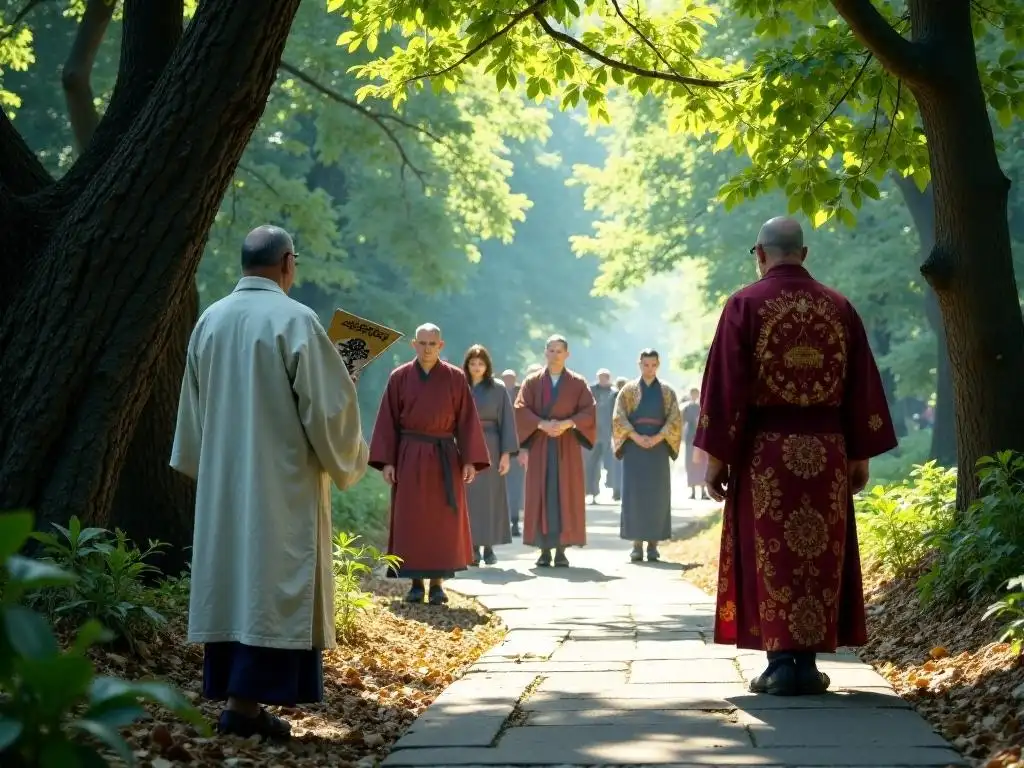
In feudal Japan, the relationship between religion and politics was complex and deeply intertwined. The clergy, particularly Buddhist monks, played a crucial role in shaping the political landscape. As spiritual leaders, they held significant sway over the populace, often influencing decisions at the highest levels of government. This influence stemmed from their ability to provide moral guidance and legitimacy to rulers, which was essential in a society where divine favor was believed to be a critical component of successful governance.
Monks were not only spiritual advisors but also landowners and economic powerhouses. Many Buddhist temples amassed considerable wealth through land grants and donations from the aristocracy, allowing them to become influential players in feudal politics. This wealth enabled the clergy to fund military campaigns, support factions, and even challenge the authority of feudal lords. The merging of temporal power with spiritual authority created a dynamic where monks could leverage their religious influence for political gain, often acting as mediators in disputes or as advocates for the oppressed.
How Monks Shaped Feudal Policies
Monks significantly impacted the formulation of feudal policies through their advisory roles to political leaders. The guidance provided by influential monks often dictated the moral and ethical frameworks within which samurai and lords operated. For example, the teachings of Zen Buddhism emphasized discipline and loyalty, qualities that were essential for samurai culture. As these ideals permeated feudal society, they helped shape the behavioral expectations of warriors and their lords, promoting a culture of honor and duty.
The clergy also played active roles in the administration of local governance. Monasteries often acted as centers of education and culture, and their leaders were frequently consulted on matters of law and policy. Additionally, during times of political instability, monks could rally support for specific factions, effectively aligning religious authority with military might. This confluence of religion and governance meant that the policies enacted in feudal Japan were often reflective of Buddhist principles, which sought to promote harmony and social stability.
The Interplay Between Buddhism and Samurai Culture
The relationship between Buddhism and samurai culture was symbiotic, with each influencing the other significantly. Samurai, as warriors, found a philosophical grounding in the teachings of Buddhism, particularly Zen, which emphasized mindfulness, meditation, and the acceptance of impermanence. This spiritual framework provided samurai with a means to cope with the violence and uncertainty of their lives.
Conversely, the samurai class supported the growth of Buddhism by protecting temples and promoting Buddhist practices among the populace. The prominence of Buddhist rituals and ceremonies in samurai life exemplified this interplay; for instance, many samurai sought the blessings of monks before going into battle, believing that their success depended on divine favor. This mutual reinforcement of values and practices helped solidify Buddhism’s role as a foundational aspect of feudal Japanese identity.
Conflicts Involving Monks and Political Entities

Throughout feudal Japan, conflicts arose between monks and political entities, often rooted in the struggle for power and influence. As temples grew in wealth and authority, they sometimes posed a direct challenge to the established political order. This led to tensions between the clergy and feudal lords, as each sought to assert their dominance over the other.
Monks occasionally found themselves embroiled in violent confrontations, defending their rights and privileges against encroachment by samurai or other political factions. The result was a series of notable conflicts that not only shaped the landscape of feudal Japan but also underscored the significant role of religion in political matters.
Notable Religious Conflicts in Feudal Japan
Several key conflicts illustrate the impact of monks on feudal politics. One of the most significant was the Ikko-Ikki movement during the 15th and 16th centuries, where followers of the Jodo Shinshu sect rose against the samurai class, demanding greater social equity and religious freedom. The Ikko-Ikki, comprised mainly of peasants and lower samurai, organized themselves into militant factions, leading to widespread uprisings and significant battles, such as the Battle of Nagashino.
Another notable conflict was the Sengoku period, characterized by power struggles among various clans. Monasteries often sided with specific factions, becoming de facto military forces. For example, the Hieizan Temple supported the Minamoto clan, while the Enryaku-ji Temple allied with the Taira clan, demonstrating how religious affiliations could dictate political alliances and conflicts.
The Consequences of Monk-Led Uprisings
The monk-led uprisings in feudal Japan had profound consequences on both political structures and societal norms. These movements often resulted in significant shifts in power dynamics, leading to the rise of new political entities and the decline of established ones. For instance, the Ikko-Ikki uprisings ultimately contributed to the destabilization of the shogunate system, paving the way for the emergence of powerful new leaders.
Moreover, these conflicts prompted changes in policies regarding the clergy and their role in governance. The shogunate sought to curtail the power of monks, often by confiscating temple lands or restricting their military capabilities. This led to a gradual decline in the political influence of monasteries, although their cultural and spiritual significance remained prominent.
The influence of monks on feudal Japan was profound, shaping not only political policies and samurai culture but also igniting significant conflicts that would alter the trajectory of Japanese history.
The Lasting Legacy of Monks in Japanese Politics
The influence of monks in feudal Japan extended far beyond the cloistered walls of their temples; it permeated the very fabric of the political landscape. Monasteries often served as centers of power and learning, where not only spiritual but also political teachings were disseminated. Monks wielded significant influence, acting as mediators between the ruling class and the common people. This dual role enabled them to impact political decisions, often aligning themselves with powerful samurai clans or local leaders to bolster their own influence and secure protection for their religious institutions.
Additionally, the rise of the Tendai and Shingon sects during the Heian period showcased the monks' ability to shape political ideology. They became key players in court politics, advising emperors and influencing legislation. The intertwining of religion and governance fostered an environment where monks could sway decisions on matters like land ownership and taxation, solidifying their status as vital political actors. Over time, this legacy created a precedent for the involvement of religious leaders in state affairs, a theme that echoes throughout Japanese history.
Influence on Modern Japanese Political Thought
The historical impact of monks on feudal Japanese politics is still discernible in modern Japanese political thought. Concepts of governance that emerged during the feudal era, such as the ethical responsibilities of leaders and the importance of moral governance, can be traced back to the teachings of influential monks. The integration of Buddhist principles into the political sphere fostered a culture where the moral character of leaders was paramount, influencing contemporary expectations of political figures.
Moreover, the historical alliance between religious institutions and the state has led to ongoing discussions about the role of religion in politics in modern Japan. This dynamic has shaped the public's perception of political authority and ethical leadership, as citizens often look to historical precedents to evaluate current political practices. The legacy of monastic influence continues to inspire debates around the relationship between religion and state, demonstrating that the echoes of the past remain relevant in today’s political discourse.
Reflection on the Role of Religion in Governance
The intricate relationship between religion and governance in feudal Japan highlights the multifaceted role that monks played in political affairs. Religion was not merely a personal belief system but a crucial component of societal governance. Monks often provided moral legitimacy to rulers, reinforcing their authority through religious endorsement. This practice allowed for a governance model where spiritual and temporal powers were interwoven, leading to a unique political landscape.
The use of religious rituals to legitimize power dynamics can be observed in various historical contexts, where monks participated in ceremonies that affirmed the rulers' divine right to govern. This symbiotic relationship resulted in a political environment where religious institutions not only influenced policy but also shaped public opinion. In many instances, monks acted as advisors, guiding rulers on issues of justice, land distribution, and military strategy, illustrating that the influence of religion extended deeply into the machinery of governance.
Conclusion: The Enduring Impact of Monks on Feudal Japan
The enduring impact of monks on feudal Japan is a testament to their multifaceted roles as spiritual leaders and political actors. The intertwining of religious authority with political power set a precedent that shaped the governance structures of the time. Monks not only influenced the course of political events but also left a lasting legacy that would echo through the ages.
Summary of Key Points
- Monks served as vital political actors, mediating between the rulers and the populace.
- Religious institutions played a crucial role in legitimizing political authority.
- The alliance between monks and samurai clans demonstrated the significance of religious influence in governance.
- Modern political thought in Japan continues to reflect the ethical teachings of monastic leaders.
Final Thoughts on Monastic Influence in History
The historical significance of monks in feudal Japan cannot be overstated. Their influence reshaped the political landscape, intertwining religion with governance in ways that continue to resonate today. As we reflect on the past, it becomes clear that the legacy of these monastic leaders provides valuable insights into the nature of power, morality, and the enduring quest for ethical governance. Understanding their role offers a richer appreciation of how spiritual and political realms can coexist and interact, shaping societies throughout history.
- Introduction to Monks Influence on Feudal Japan
- Historical Context of Monastic Power
- Monks as Political Players in Feudal Japan
- Case Studies of Notable Monks Influencing Politics
- The Dynamics of Religion and Politics
- How Monks Shaped Feudal Policies
- The Interplay Between Buddhism and Samurai Culture
- Conflicts Involving Monks and Political Entities
- The Lasting Legacy of Monks in Japanese Politics
- Conclusion: The Enduring Impact of Monks on Feudal Japan
Frequently Asked Questions
What role did monks play in feudal Japan?
Monks were significant in feudal Japan, acting as spiritual leaders and advisors to the samurai class, influencing both political and social structures.
How did Buddhism and Shintoism intersect in feudal Japan?
The interplay of Buddhism and Shintoism during the feudal era shaped cultural practices, as monks often integrated Shinto beliefs into their teachings, fostering a unique spiritual environment.
What was the impact of monastic institutions on land ownership?
Monastic institutions gained substantial landholdings, which enabled them to become powerful economic entities, influencing local politics and resource distribution.
How did monks contribute to education in feudal Japan?
Monks were key figures in education, establishing temples and schools that promoted literacy and cultural exchange, greatly impacting the intellectual landscape of the time.
In what ways did the clergy influence samurai loyalty?
The clergy fostered a sense of loyalty and duty among the samurai, often intertwining spiritual beliefs with military obligations, which shaped their ethical frameworks and allegiances.
Final Reflection: The Enduring Legacy of Monks in Feudal Japan
The influence of monks on feudal Japan remains a powerful testament to the intertwining of spirituality and governance. In an era where political power was often wielded by samurai and shoguns, the role of the clergy was pivotal in shaping societal norms and political structures. Their ability to guide, educate, and influence the masses not only solidified their position within the feudal hierarchy but also demonstrated that spiritual authority could rival military might. This historical interplay between religion and politics offers profound insights into the dynamics of power that resonate even in today's world.
The legacy of these monks continues to echo through Japanese culture and society, reminding us of the importance of moral leadership in governance. Their teachings and philosophies have not only influenced political decisions but have also shaped the ethical frameworks within which societies operate. As we reflect on this historical influence, we are reminded of the words of the philosopher Daisaku Ikeda: The greatest power is not the power of weapons, but the power of the spirit.
This sentiment underscores the idea that true influence often lies beyond mere physical force, residing instead in the hearts and minds of individuals.
As we consider the lessons from the past, I invite you to reflect on the role of spiritual and ethical guidance in your own life. How can you harness the power of moral leadership to influence your community positively? Whether through acts of kindness, community service, or simply standing up for what is right, each of us has the potential to be a guiding force in our own spheres. Let the example of the monks inspire you to seek a deeper understanding of your values and to wield your influence with wisdom and compassion in the world today.
Unleash the Wisdom of the Monks in Your Life!
Thank you for exploring the captivating world of feudal Japan and recognizing the significant role that monks played in shaping the political landscape. You’ve gained insight into the profound influence of spirituality on governance, and now it’s time to apply this wisdom to your own journey.
Here’s how you can take action:
- Visit a local temple or meditation center to experience the tranquility that monks cultivated and reflect on its relevance in today’s society.
- Share your thoughts on the relationship between spirituality and politics by writing an article or discussing it with friends.
- Join a community group focused on mindfulness or the study of history to deepen your understanding and connect with like-minded individuals.
What aspects of the monks' influence do you think could be beneficial in modern politics?