
The Search for Identity: Philosophical Questions in Feudal Japanese Society


Welcome to Feudal Japan History, where we delve deep into the rich tapestry of Japan's feudal era. Prepare to embark on a journey through time as we explore the intricate philosophy in Feudal Japan—a realm where existential inquiries shaped societal norms and cultural identities. In our featured article, The Search for Identity: Philosophical Questions in Feudal Japanese Society, we invite you to uncover the profound thoughts that influenced the lives of samurai, peasants, and monks alike.
What questions drove their beliefs and actions? Join us as we unravel these mysteries and spark your curiosity about a pivotal chapter in Japan's past.
Introduction to Philosophy in Feudal Japan
The philosophical landscape of feudal Japan is a rich tapestry woven from various cultural, religious, and historical threads. During this era, which spanned approximately from the 12th to the 19th century, Japan experienced significant transformations that shaped its societal norms and values. As samurai warriors upheld their codes of honor, and peasants navigated the complexities of their roles, questions surrounding identity—both individual and collective—became increasingly prominent. The intersection of philosophy in feudal Japan with these evolving identities provides a fascinating lens through which to explore the influences that shaped the nation’s ethical and moral frameworks.
This article delves into the major philosophical schools that influenced feudal Japanese thought and identity, emphasizing how these schools addressed the profound questions of existence, selfhood, and societal roles. By examining Philosophy in Feudal Japan, we can uncover the philosophical inquiries that defined an era and continue to resonate in contemporary discussions about identity.
Overview of Feudal Japan and Its Philosophical Landscape
Feudal Japan was characterized by a rigid social hierarchy and a complex political structure, dominated by the shogunate and the samurai class. This system not only dictated the socio-political dynamics but also shaped the philosophical inquiries of the time. Various schools of thought emerged, drawing from indigenous beliefs and foreign influences, particularly Buddhism and Confucianism.
- Buddhism, which arrived in Japan from China and Korea, introduced concepts such as impermanence and enlightenment, challenging individuals to contemplate their existence and purpose.
- Confucianism, with its emphasis on moral integrity and social harmony, provided a framework for understanding one's place within the societal hierarchy.
- Shintoism, as the indigenous spirituality of Japan, offered a unique perspective on identity tied closely to nature and ancestral reverence.
These philosophical traditions intertwined, creating a diverse landscape that encouraged introspection and dialogue about the self and one's duties within society.
The Importance of Identity in Historical Context
Identity in feudal Japan was not merely a personal matter; it was deeply embedded in the historical and cultural fabric of the society. The samurai class, for instance, adhered to a strict code of conduct known as Bushido, which emphasized loyalty, honor, and the warrior spirit. This code played a pivotal role in shaping the samurai's identity, influencing their actions, beliefs, and interactions with others.
Moreover, the rise of the merchant class and shifts in economic power during the Edo period prompted new philosophical inquiries about status and identity. As commerce flourished, so did the complexities of self-identification, leading to questions of worth beyond the rigid class structures.
In this context, understanding the philosophical questions surrounding identity allows us to appreciate the multifaceted nature of personal and collective existence in feudal Japan.
Major Philosophical Schools Influencing Feudal Japan
Zen Buddhism and Its Impact on Identity
Zen Buddhism emerged as a significant philosophical school during the Kamakura period, promoting the idea of direct experience and intuition over intellectual reasoning. This approach encouraged individuals to engage in meditation and self-reflection, fostering a deeper understanding of their true nature.
- Key Concepts:
- Satori: The sudden enlightenment that leads to a profound understanding of one's identity.
- Zazen: The practice of seated meditation, essential for self-discovery.
Zen's influence permeated various aspects of Japanese culture, including art, poetry, and even the martial arts, inviting individuals to explore the essence of their being beyond societal roles.
Confucianism's Role in Shaping Social Hierarchies
Confucianism played an instrumental role in defining the social hierarchies of feudal Japan, emphasizing the importance of relationships and moral duties. The teachings of Confucius stressed the significance of familial loyalty and respect for authority, shaping the way individuals perceived their identity in relation to others.
- Core Principles:
- Filial Piety: Respect for parents and ancestors, foundational to personal identity.
- Ritual and Order: Establishing social harmony through adherence to established roles.
This framework not only influenced personal identities but also reinforced the societal structures that governed feudal Japan, creating a sense of belonging and responsibility.
Shintoism and Indigenous Perspectives on Selfhood
Shintoism, the indigenous belief system of Japan, offers a unique perspective on identity rooted in nature and spirituality. The connection to kami (spiritual beings) and the reverence for natural elements foster a sense of belonging to the universe.
- Fundamental Ideas:
- Kami: The spiritual essence of all things, emphasizing a collective identity.
- Ritual Practices: Celebrating seasonal changes and ancestral ties that shape personal identity.
Shinto beliefs encouraged a harmonious relationship between individuals and their environment, promoting a holistic understanding of self that transcended individualism, allowing for a collective identity that is deeply intertwined with nature and community.
The exploration of philosophical questions surrounding identity in feudal Japan reveals a complex interplay of thought and culture that shaped individual and societal identities. Understanding these influences not only enriches our knowledge of Japanese history but also provides insight into the timeless questions of existence and selfhood.
Key Philosophical Questions in Feudal Society
Feudal Japan was a complex tapestry of social hierarchies, cultural traditions, and philosophical inquiries that shaped the identity of its people. Among the most pressing philosophical questions that emerged during this era were those concerning the nature of identity, the balance between individual desires and collective obligations, and the influence of class structures on personal self-conception. These questions not only reflect the socio-political dynamics of the time but also illustrate the broader existential dilemmas faced by individuals within a rigidly stratified society.
What Constitutes Identity in Feudal Japan?
In feudal Japan, identity was multifaceted, shaped by a confluence of factors including social class, family lineage, and cultural practices. The concept of "self" was often intertwined with one's role within the societal hierarchy, where samurai, peasants, and merchants each had distinct identities based on their social functions. This collective identity was reinforced by Confucian ideals, which emphasized duty, loyalty, and respect for hierarchy.
Moreover, identity was also influenced by regional affiliations and local customs, creating a rich tapestry of cultural identities across Japan. The intersection of these elements raises questions about the extent to which individuals could assert their personal identity against prevailing societal norms. In essence, identity in feudal Japan was not solely an internal construct but a reflection of external societal expectations.
The Interplay Between Individualism and Collectivism
The philosophical discourse in feudal Japan often grappled with the tension between individualism and collectivism. On one hand, the samurai class, guided by Bushido—the way of the warrior—championed ideals of personal honor, loyalty, and individual valor. This ethos encouraged a sense of personal agency and the pursuit of one's path within the constraints of duty to one's lord and family.
On the other hand, the collectivist mindset prevalent in agrarian society emphasized the importance of community and familial ties over individual aspirations. The interdependence of social roles fostered a sense of belonging, yet it simultaneously stifled individual expression. The balance between these two philosophies formed a core aspect of identity discourse, with individuals often navigating the complexities of fulfilling personal desires while adhering to societal expectations.
How Did Class Structures Influence Personal Identity?
Class structures played a pivotal role in shaping personal identity during the feudal era. The rigid caste system dictated not only one's profession and social standing but also one's worldview and opportunities for self-expression. For instance, samurai were expected to embody the ideals of courage and honor, while farmers were often viewed through the lens of their agrarian contributions to society.
This stratification led to a nuanced understanding of identity, where one's status influenced perceptions of self-worth and societal value. The philosophical implications of these class distinctions prompted debates about justice, morality, and the nature of human dignity. As individuals navigated their roles within this framework, the interplay between personal aspirations and societal constraints became a central theme in the philosophical inquiry of feudal Japan.
Philosophical Texts and Thinkers of Feudal Japan
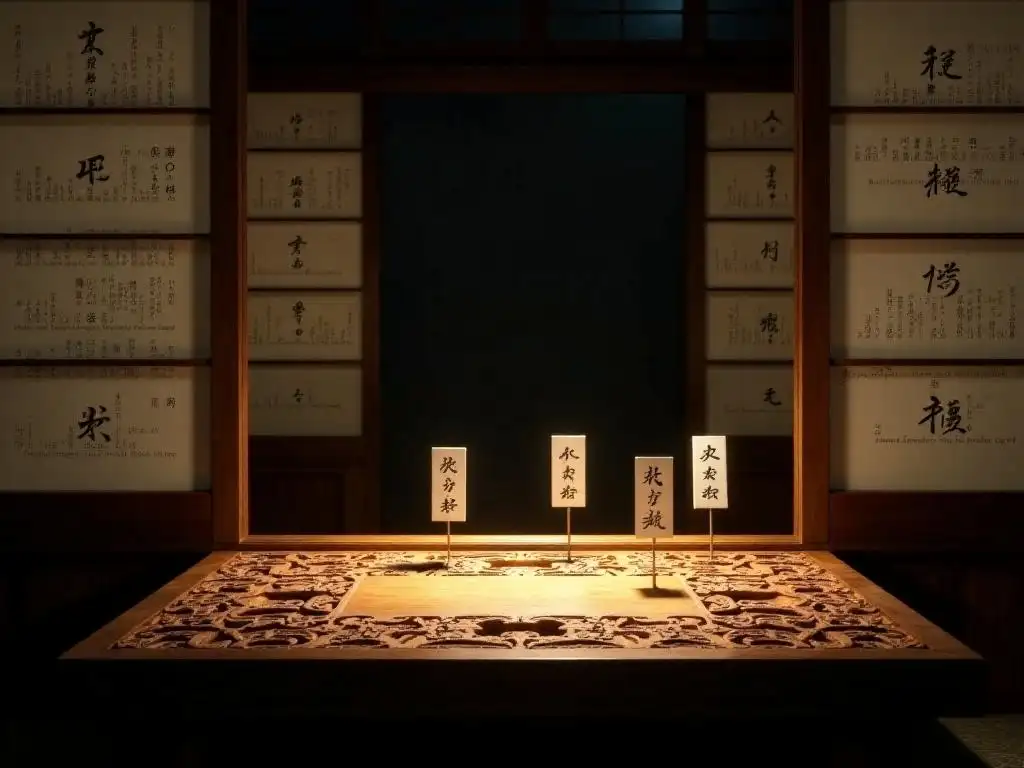
The exploration of identity in feudal Japan was not only a matter of personal contemplation but also a subject of rich philosophical discourse documented in various texts and contributions from key thinkers. These works provide insight into the prevailing philosophical currents and the intellectual climate of the era.
Notable Works on Philosophy in Feudal Japan
Several notable texts emerged during feudal Japan that addressed philosophical questions surrounding identity. One of the most significant works is The Book of Five Rings by Miyamoto Musashi, which delves into the nature of self-discipline and the pursuit of mastery in both martial arts and life. Musashi's reflections on the individual's journey toward self-understanding resonate with the broader themes of identity in a competitive society.
Another seminal text is The Tale of Genji, often referred to as the world's first novel, which explores the complexities of human emotions, social relations, and personal aspirations within the context of the Heian court. These literary works not only reflect the cultural ethos of feudal Japan but also serve as philosophical commentaries on the nature of identity, relationships, and the human condition.
Contributions of Key Philosophers to Identity Discourse
Key philosophers of the feudal period, such as Confucian scholar Zhu Xi and Zen masters like Dōgen, made significant contributions to the discourse on identity. Zhu Xi's interpretations of Confucianism emphasized ethical behavior and the importance of moral cultivation, influencing the samurai class's understanding of their roles in society. His ideas on filial piety and social harmony reinforced the collective aspects of identity.
Dōgen, the founder of the Sōtō school of Zen Buddhism, approached identity from a spiritual perspective, encouraging individuals to transcend the ego and embrace the impermanence of life. His teachings on mindfulness and self-awareness challenged rigid notions of identity, advocating for a deeper understanding of the self beyond societal labels.
These philosophical contributions laid the groundwork for ongoing discussions about identity in Japan, illustrating the dynamic interplay between personal introspection and societal influence during the feudal era.
Case Studies: Identity and Philosophy in Feudal Japan
The exploration of identity in Feudal Japan offers a rich tapestry of philosophical inquiries, intimately tied to the societal structures and cultural norms of the time. Throughout this period, various groups within society grappled with questions of self, duty, and morality, reflecting their unique circumstances and roles. By examining specific case studies, we can gain insights into how philosophy influenced identity formation and vice versa.
The Samurai's Identity: Honor and Philosophy
The samurai, as the warrior class of Feudal Japan, epitomized a complex interplay between identity and philosophy. Central to their existence was the concept of bushido, or the "way of the warrior," which outlined a strict code of conduct encompassing loyalty, honor, and courage. This philosophical framework not only defined the samurai's identity but also served as a way to justify their actions in a society characterized by violence and power struggles.
The samurai's adherence to bushido fostered a sense of purpose and belonging, as they were expected to embody virtues such as rectitude, courage, benevolence, and honor. These principles were not merely abstract ideas; they were lived experiences that shaped their daily lives and interactions. For instance, the practice of seppuku, or ritual suicide, highlighted the extreme measures taken to preserve honor in the face of disgrace, illustrating the profound connection between identity and philosophy.
Moreover, the philosophical writings of figures such as Yamamoto Tsunetomo, author of Hagakure, provide further insight into the samurai ethos. Tsunetomo's reflections on the transient nature of life and the importance of living with integrity encapsulate the existential dilemmas faced by samurai warriors, emphasizing how their philosophical beliefs were intertwined with their identities.
Women’s Roles and Philosophical Reflections on Gender Identity
The philosophical discourse surrounding gender identity in feudal Japan was heavily influenced by societal roles expected of women. While the samurai class dominated the narrative, women from different social strata also engaged in philosophical reflections that shaped their identities. Notably, women's roles were often confined to domestic spheres, but there were instances of resistance and philosophical inquiry that challenged these limitations.
The writings of women such as Murasaki Shikibu, author of The Tale of Genji, reveal a nuanced understanding of gender and identity. In her work, she explores the emotional and psychological landscapes of her female characters, offering profound insights into their struggles for autonomy and self-definition within a patriarchal society. This literary contribution underscores the philosophical exploration of women’s identity in a context that often marginalized their voices.
Additionally, the concept of onna daigaku (the "Great Learning for Women") emerged during this period, emphasizing the importance of education and moral development for women. This philosophical approach not only sought to elevate women's status but also prompted discussions about their identities, rights, and roles within the family and society.
The Legacy of Feudal Japanese Philosophy
The philosophical inquiries and reflections of feudal Japan have left a lasting legacy, influencing various aspects of Japanese culture and thought. This legacy is evident in literature, art, and social norms that persist today, reflecting the deep roots of philosophical traditions established during the feudal era.
Lasting Influences on Modern Japanese Thought
Modern Japanese thought has been significantly shaped by the philosophical frameworks established during the feudal period. Concepts such as harmony ( wa) and the importance of community continue to resonate in contemporary society. The idea of wa, emphasizing social cohesion and mutual respect, derives from the Confucian influence that permeated feudal Japan.
Furthermore, the samurai ethos, with its emphasis on honor and loyalty, remains a point of reference in discussions about national identity and personal conduct. These philosophical legacies have been integrated into modern educational systems, artistic expressions, and even corporate cultures in Japan, showcasing their enduring relevance.
How Philosophy in Feudal Japan Shapes Contemporary Identity Issues
The philosophical debates and identity questions raised during feudal Japan continue to influence contemporary issues surrounding identity. In a globalized world, where cultural exchanges are commonplace, the philosophical underpinnings of feudal Japan offer valuable perspectives on identity formation, cultural preservation, and the reconciliation of traditional values with modernity.
For instance, discussions around gender identity and roles can draw from the historical context of women’s philosophical reflections, providing a framework for understanding current movements advocating for gender equality and empowerment. Similarly, the samurai's code of honor can inform contemporary discussions about ethics in leadership and personal integrity.
The search for identity in feudal Japanese society was deeply intertwined with philosophical questions that shaped individuals and groups alike. By examining the case studies of samurai and women, and recognizing the lasting influences of these philosophical traditions, we can appreciate the complexity of identity in historical and modern contexts.
Conclusion: The Ongoing Search for Identity

The philosophical inquiries that emerged during Japan's feudal era continue to resonate today, as they address fundamental questions about identity, purpose, and the nature of existence. The exploration of how individuals and society define themselves amidst the shifting allegiances and power structures of feudal Japan laid the groundwork for future philosophical discourse. The period was marked by a blend of indigenous beliefs and influences from Buddhism, Confucianism, and Taoism, which created a rich tapestry of thought that grapples with the essence of self and the collective.
Feudal Japan's societal structure, with its rigid class system and the samurai code of ethics, prompted questions about loyalty, honor, and personal responsibility. These themes remain relevant as modern society navigates its own complexities and challenges related to identity and belonging. The philosophical frameworks established during this time invite us to reflect on how historical contexts shape our contemporary understanding of selfhood and communal ties.
Reflections on the Relevance of Feudal Philosophical Questions Today
The questions raised by feudal Japanese philosophers regarding identity are still applicable in today's globalized world. As individuals grapple with the effects of cultural exchange and globalization, the concepts of self as shaped by societal roles and responsibilities become increasingly pertinent. The idea of "giri" (duty) versus "ninjō" (human emotion) reflects a struggle that many face: balancing personal desires with societal expectations.
Moreover, the influence of Zen Buddhism and its emphasis on mindfulness and self-awareness can be seen in modern psychological practices, highlighting the enduring nature of these philosophical inquiries. The search for meaning and identity in the face of external pressures continues to be a universal experience, bridging the historical divide between feudal Japan and contemporary society.
Final Thoughts on Philosophy and Identity in Feudal Japan
The philosophical discourse of feudal Japan offers profound insights into the human condition, particularly regarding the formation of identity. The interplay between individual agency and social obligation, as seen in the samurai's duality of warrior and philosopher, exemplifies the complexity of self-understanding in a hierarchical society.
Understanding these philosophical dimensions enhances our appreciation of Japan's cultural heritage and its evolution over time. As we reflect on the past, we are reminded that the quest for identity is a timeless endeavor, one that transcends eras and cultures. The legacy of feudal philosophy encourages us to engage with our own identities, prompting questions about the roles we play and the values we uphold in our ever-evolving world.
- Introduction to Philosophy in Feudal Japan
- Major Philosophical Schools Influencing Feudal Japan
- Key Philosophical Questions in Feudal Society
- Philosophical Texts and Thinkers of Feudal Japan
- Case Studies: Identity and Philosophy in Feudal Japan
- The Legacy of Feudal Japanese Philosophy
- Conclusion: The Ongoing Search for Identity
- Reflections on the Relevance of Feudal Philosophical Questions Today
- Final Thoughts on Philosophy and Identity in Feudal Japan
Frequently Asked Questions
What were the main philosophical beliefs in Feudal Japan?
The philosophical beliefs in Feudal Japan were heavily influenced by Buddhism, Confucianism, and Shinto, each contributing to the societal values and ethical codes of the time.
How did philosophy impact the samurai class?
Philosophy profoundly shaped the samurai class, emphasizing loyalty, honor, and the bushido code, which guided their conduct and decision-making in both personal and professional life.
Were there any notable philosophers in Feudal Japan?
Yes, notable philosophers such as Miyamoto Musashi and Takuan Soho offered insights on strategy, martial arts, and Zen Buddhism, influencing both warrior ethics and aesthetic principles.
How did philosophical questions affect daily life in Feudal Japan?
Philosophical questions influenced daily life by shaping social hierarchies, family structures, and ritual practices, encouraging individuals to seek meaning and purpose within their roles in society.
What role did Zen Buddhism play in shaping Japanese philosophy?
Zen Buddhism played a crucial role by promoting mindfulness, meditation, and the idea of living in the moment, fostering a unique blend of spirituality and practicality in Feudal Japanese philosophy.
Final Reflection: Embracing Identity Through the Lens of Philosophy in Feudal Japan
The quest for identity in Feudal Japan remains profoundly relevant today, as we navigate our own complex social landscapes. The philosophical inquiries that shaped the lives of individuals during this era resonate with our contemporary struggles for self-understanding and belonging. The intricate interplay between personal identity and societal expectations in Feudal Japan serves as a mirror reflecting our own challenges in defining who we are amidst external pressures.
The philosophical questions that emerged in Feudal Japan have left an indelible mark on our cultural and social fabric. From the teachings of Confucianism to the spiritual insights of Zen Buddhism, these philosophies continue to influence modern thought and behavior. As we grapple with our identities in a rapidly changing world, we can draw inspiration from the past. The unexamined life is not worth living.
– Socrates. This timeless wisdom encourages us to reflect deeply on our own lives, just as the samurai and scholars of Feudal Japan sought to understand their place in the universe.
As you contemplate the themes explored in this article, I invite you to embark on your own journey of self-discovery. Consider how the philosophical inquiries of the past can illuminate your path today. Engage with the questions that resonate with you, and allow them to guide your understanding of your identity in a complex world. By embracing the lessons of Feudal Japan, we can cultivate a richer, more nuanced sense of self that honors both our individual experiences and our shared humanity.
Unveil Your Identity: Take Action on Your Journey!
Thank you for taking the time to explore the profound philosophical questions surrounding identity in feudal Japanese society. Your engagement with these themes enriches the conversation about our own identities today. Now, let’s delve into how you can deepen your understanding and connect with this captivating topic!
- Participate in a local cultural event or lecture to immerse yourself in the rich history of feudal Japan.
- Share your insights on our social media platform—let us know how these themes resonate with your personal journey of self-discovery.
- Expand your knowledge by reading more about Japanese philosophy, or consider starting a journal to reflect on your own experiences and beliefs.
In what ways do you believe the journey of self-discovery and identity influences your life today, especially in light of the lessons learned from the past?