
The Changing Landscape: Historical Maps and Books on Feudal Japan

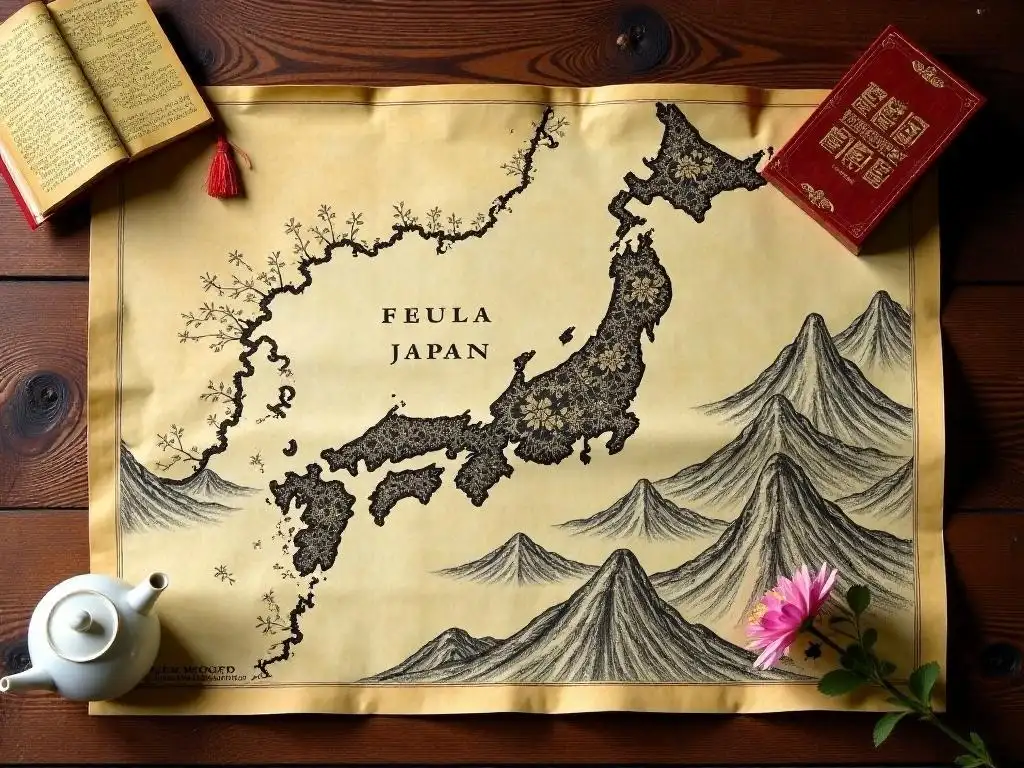
Welcome to Feudal Japan History, where we embark on a fascinating journey through the intricate tapestry of Japan's feudal era. In our featured article, "The Changing Landscape: Historical Maps and Books on Feudal Japan," we delve deep into the rich narratives woven into the pages of history and the maps that have charted the course of this remarkable period.
Discover how these invaluable resources illuminate the cultural and societal dynamics of feudal Japan, sparking curiosity and inviting you to explore the profound stories behind each map and book. Join us as we unravel the past and ignite your passion for history!
Introduction to Feudal Japan Historical Maps and Books
The feudal era of Japan, spanning from the late 12th century to the mid-19th century, is a period rich in cultural, social, and political transformations. As scholars and enthusiasts delve into this fascinating epoch, one of the most illuminating resources at their disposal is the historical maps and books that chronicle the dynamic landscape of feudal Japan. These artifacts not only provide visual representations of territorial boundaries and societal structures but also offer insights into the historical context that shaped the lives of samurai, farmers, and merchants.
In this article, we will explore the significance of historical maps and books in understanding feudal Japan, examining how they reflect the evolving geography, power dynamics, and cultural narratives of the time. From the intricate details of cartography to the valuable knowledge contained within historical texts, we aim to uncover the layers of information that these resources provide. Whether you are a student of history, a researcher, or simply an avid reader, understanding the role of these materials is essential for grasping the complexities of Japan’s feudal past.
The Role of Historical Maps in Understanding Feudal Japan
Historical maps serve as indispensable tools in the study of feudal Japan, as they encapsulate the geographical and political landscape of the time. They allow us to visualize the various domains controlled by powerful clans, the locations of significant battles, and the routes taken by traders and travelers. Through these maps, one can appreciate the intricate relationship between geography and the socio-political structure of feudal Japan.
What Are Historical Maps?
Historical maps are representations of geographical areas that reflect the knowledge, beliefs, and political realities of their time. They can vary widely in style, purpose, and accuracy, ranging from highly detailed topographical maps to more stylized representations intended for political or cultural purposes. In the context of feudal Japan, these maps often illustrate:
- Territorial Boundaries: Indicating the power dynamics among different clans and regions.
- Trade Routes: Highlighting the economic interactions between various parts of Japan and beyond.
- Cultural Landmarks: Showcasing significant religious sites, castles, and towns.
With the advent of modern cartography, historical maps have gained renewed importance, providing a visual narrative that complements textual histories.
The Importance of Cartography in Feudal Japan
Cartography during feudal Japan was not merely a practical tool; it was also a reflection of the political aspirations and cultural identity of the period. The creation and use of maps were closely tied to the governance of domains and the assertion of power by feudal lords. Some key points to consider include:
- Political Propaganda: Maps were often used to legitimize territorial claims and depict the power of a clan or shogunate.
- Cultural Reflection: The artistic style of maps can reveal the cultural values and aesthetics of the time, blending art with geography.
- Navigational Aid: Many maps served practical purposes, guiding travelers and merchants, thus facilitating trade and cultural exchange.
Understanding the role of cartography in feudal Japan provides valuable context for interpreting the historical maps and books that have survived to this day. These artifacts not only chart the physical dimensions of Japan's feudal landscape but also encapsulate the intricate tapestry of its history.
Best Historical Maps of Feudal Japan
Historical maps of Feudal Japan are not just tools for navigation; they are invaluable cultural artifacts that offer insights into the political, social, and economic landscapes of the time. These maps reflect the complexities of the feudal system, showcasing territorial boundaries, significant locations, and the influence of various clans and shogunates. Understanding these maps allows us to appreciate the intricate tapestry of Japan's history during its feudal era.
1. The Shogun’s Map: A Cultural Artifact
The Shogun's Map, often attributed to the powerful leaders of the shogunate, serves as a rich cultural artifact that encapsulates the essence of feudal Japan. These maps were not merely functional; they symbolized the authority and control of the shogun over the land. The detailed illustrations often included landmarks, trade routes, and strategic military positions, reflecting the shogun's interests in governance and defense.
Moreover, the artistic elements present in these maps provide insight into the aesthetics of the time. The use of color, symbolism, and intricate designs highlights the cultural values and priorities of the era. By studying the Shogun's Map, historians gain a deeper understanding of the political dynamics and societal structures that characterized feudal Japan.
2. The Edo Period Map: Urban Development and Society
The Edo Period Map is a significant representation of Japan's urban development and societal organization during the 17th to 19th centuries. This era marked a time of peace and stability, allowing cities to flourish. The map illustrates the growth of Edo (modern-day Tokyo) as a bustling metropolis, showcasing its intricate street layouts, commercial districts, and residential areas.
What makes this map particularly fascinating is its depiction of social stratification. Different areas of the city were designated for various classes, reflecting the rigid social hierarchy of feudal Japan. The map serves as a historical document that provides insight into daily life, economic activities, and the cultural practices of the time, making it an essential resource for understanding urbanization in feudal Japan.
3. The Tokugawa Shogunate Map: Power and Control
The Tokugawa Shogunate Map is a crucial illustration of the power dynamics that defined Japan from the early 17th century until the mid-19th century. This map not only delineates territorial boundaries but also emphasizes the shogunate's control over feudal lords (daimyos) and the governance of its domains.
The map highlights key regions, including significant castles and military installations, showcasing the shogunate’s strategic interests. Additionally, it often includes annotations and symbols indicating trade routes and agricultural production areas, emphasizing the economic foundations of Tokugawa rule. By analyzing this map, scholars gain insights into how the Tokugawa Shogunate maintained stability and order, as well as the relationships between various feudal entities.
Essential Books on Feudal Japan Historical Maps
Books that focus on historical maps of Feudal Japan offer readers a unique opportunity to explore the cartographic history and cultural significance of the era. These works not only present visual representations of the maps but also delve into the historical context, making them invaluable resources for understanding Japan's feudal past.
Why Read Books on Feudal Japan Historical Maps?
Reading books on Feudal Japan historical maps enriches our comprehension of the period's social, political, and cultural contexts. These texts often include expert commentary, detailed analyses, and high-quality reproductions of maps that allow readers to see the evolution of geographical knowledge and its impact on society. Additionally, these books serve as a bridge connecting modern readers with the historical narratives and cultural significance embedded in these maps. By engaging with these works, one can appreciate the intricate relationship between geography and history in shaping Japan's identity.
1. "The Land of the Rising Sun: Maps of Feudal Japan"
This book presents a comprehensive collection of historical maps from various periods of Feudal Japan, starting from the Heian period to the Edo period. It offers detailed commentary on each map, discussing its significance in relation to historical events and societal changes. The author emphasizes the artistry of the maps, highlighting the blend of cartography and cultural expression. Readers will gain insights into how these maps were used for both practical navigation and as tools of political power.
2. "Feudal Japan: A Cultural History"
"Feudal Japan: A Cultural History" is an essential read for anyone interested in understanding the broader context of life in feudal Japan, including its mapping practices. This book intertwines historical narratives with illustrations of significant maps, providing a holistic view of the era. It explores how maps reflected cultural values, regional identities, and the complexities of feudal relationships. By examining this work, readers will appreciate the intricate connections between geography and the cultural fabric of Japan.
3. "Mapping the Samurai: Historical Cartography of Japan"
"Mapping the Samurai: Historical Cartography of Japan" focuses specifically on the role of samurai in shaping Japan's geographical landscape through maps. This book examines how samurai clans used maps for military strategy, territorial claims, and trade. It features a collection of maps that depict the influence of the samurai class on Japan's cartographic history. Through expert analysis and engaging narratives, this book provides readers with a deeper understanding of the samurai's impact on both history and geography in Feudal Japan.
Integrating Historical Maps and Books for a Deeper Understanding

Historical maps and books serve as invaluable resources for anyone looking to gain a comprehensive understanding of Feudal Japan. When used in conjunction, they provide a multidimensional perspective on the socio-political and economic landscapes of the time. Maps illustrate geographical features, territorial disputes, and the movement of people and goods, while books offer narratives, context, and detailed accounts of events, cultures, and daily life.
Moreover, the integration of these two mediums enables researchers and enthusiasts to visualize historical changes over time. For instance, by overlaying maps from different periods, one can observe how borders shifted and how the influence of clans evolved. This dynamic interaction between visual and textual sources fosters a deeper appreciation of the complexities within Feudal Japan.
How to Use Historical Maps and Books Together
To effectively utilize historical maps and books together, follow these steps:
- Select Relevant Resources: Start by gathering a variety of historical maps and books that focus on specific periods or themes in Feudal Japan. Look for maps that highlight political boundaries, trade routes, and significant battles alongside books that discuss these topics in detail.
- Cross-reference Information: As you study a particular map, refer to accompanying literature to gain insights into the events or societal structures depicted. For instance, if examining a map showing the territory of the Takeda clan, consult historical texts that detail their strategies and conflicts.
- Create Visual Aids: Utilize charts and diagrams to represent data from both sources. This might include a timeline of events alongside a map showing territorial changes. Visual aids can clarify connections between geographical locations and historical events.
- Engage with the Historical Context: Understand the significance of the maps and texts within the wider scope of Feudal Japan. Consider how geography influenced cultural practices, military strategies, and trade.
- Participate in Discussions: Join forums or study groups focused on Feudal Japan to share insights gleaned from your map and book studies. Engaging with a community can enhance understanding through diverse perspectives.
Case Studies: Insights Gained from Historical Maps
One notable example of insights gained from historical maps is the examination of the Battle of Sekigahara in 1600. Maps from this period illustrate troop movements and key locations, allowing researchers to understand the strategic advantages held by the Tokugawa clan. By analyzing these maps alongside contemporary accounts in historical texts, scholars can reconstruct the battle's dynamics, revealing how geography impacted the outcome.
Another case study involves the trade routes during the Edo period, highlighted in maps that delineate major cities and trade hubs. When paired with economic texts from the time, such as accounts of the silk trade, these maps elucidate how geography influenced trade dynamics and the rise of merchant classes in urban centers like Edo (modern-day Tokyo).
Conclusion: The Impact of Historical Maps and Books on Feudal Japan Studies

The integration of historical maps and books has profoundly impacted the study of Feudal Japan. By combining visual and textual analyses, scholars gain a richer understanding of the era’s complexities. Maps serve as a visual representation of historical narratives, while books provide the context necessary to interpret those visuals meaningfully.
This synergy not only enhances academic research but also enriches the experience of casual learners interested in Feudal Japan. As the field continues to evolve with new discoveries and technological advancements, the collaboration between historical maps and books will remain crucial in uncovering the multifaceted legacy of this vibrant period in Japanese history.
Additional Resources on Feudal Japan Historical Maps and Books
In the pursuit of a deeper understanding of Feudal Japan, various resources can enhance your knowledge of its historical maps and literature. Here are some notable resources to consider:
- Online Archives and Libraries: Many universities and public libraries provide digital collections of historical maps and books. The National Diet Library of Japan, for instance, offers a wealth of materials related to Japan's feudal era, including digitized maps and rare texts that can be accessed online.
- Academic Journals and Articles: Journals like the Journal of Japanese Studies and Monumenta Nipponica often publish articles that explore historical mapping techniques and the significance of various texts from the feudal period. Accessing these journals through academic platforms can provide you with peer-reviewed articles and in-depth analyses.
- Documentaries and Educational Videos: Platforms like YouTube and educational channels often feature documentaries focusing on Feudal Japan. These can provide visual context to the maps and literature you study, making it easier to grasp the geographical and historical changes during this era.
- Museums and Exhibitions: Institutions such as the Tokyo National Museum or the British Museum frequently hold exhibitions that include historical maps and manuscripts from Feudal Japan. Visiting these exhibitions can provide a tactile and visual understanding of the period, complemented by expert talks and guided tours.
- Books and Anthologies: There are numerous anthologies and compilations that focus on the literature of Feudal Japan. Works such as The Tale of Genji and The Pillow Book provide cultural insights alongside historical contexts that can be paired with map studies for a richer understanding of the era's societal dynamics.
Call to Action: Exploring Feudal Japan
Delving into the world of Feudal Japan through historical maps and books offers an exciting opportunity to uncover the layers of this complex era. Here are ways to immerse yourself in this fascinating subject:
- Visit a Library: Head to your local library or university library to find books on Feudal Japan. Look for sections dedicated to history or cultural studies and ask librarians for recommendations on notable historical texts and maps.
- Participate in Online Forums: Join online communities and discussion forums that focus on Japanese history. Engaging with fellow enthusiasts can help you discover new resources, share insights, and even access rare materials that others might have.
- Attend Workshops or Lectures: Keep an eye out for workshops or lectures at cultural institutions or universities. These events often feature experts discussing various aspects of Feudal Japan, including historical mapping and literature, providing a deeper understanding of the topics.
- Create Your Own Map: As a fun and educational project, consider creating your own historical map of Feudal Japan. Use resources you've gathered to illustrate significant locations, events, and cultural landmarks, enhancing your learning experience through creativity.
- Explore Digital Platforms: Websites like Google Arts & Culture offer virtual tours and exhibitions on Japanese history. Utilize these platforms to explore artifacts and maps related to Feudal Japan from the comfort of your home.
By taking these steps, you can enrich your comprehension of Feudal Japan and appreciate the intricate relationship between its historical maps and literature. Happy exploring!
- Introduction to Feudal Japan Historical Maps and Books
- The Role of Historical Maps in Understanding Feudal Japan
- Best Historical Maps of Feudal Japan
- Essential Books on Feudal Japan Historical Maps
- Integrating Historical Maps and Books for a Deeper Understanding
- How to Use Historical Maps and Books Together
- Case Studies: Insights Gained from Historical Maps
- Conclusion: The Impact of Historical Maps and Books on Feudal Japan Studies
- Additional Resources on Feudal Japan Historical Maps and Books
- Call to Action: Exploring Feudal Japan
- What are some key features of historical maps from Feudal Japan?
- How can I find books focusing on Feudal Japan?
- Why are historical maps important for understanding Feudal Japan?
- What topics do books about Feudal Japan typically cover?
- Are there any recommended historical maps or books for beginners?
Frequently Asked Questions
What are some key features of historical maps from Feudal Japan?
Historical maps from Feudal Japan often showcase political boundaries, cultural regions, and important trade routes, reflecting the dynamic nature of the era's geography.
How can I find books focusing on Feudal Japan?
You can find books on Feudal Japan through online retailers, libraries, and academic publishers that specialize in historical or cultural studies of Japan.
Why are historical maps important for understanding Feudal Japan?
Historical maps provide visual context, illustrating the territorial changes and social structures of the time, which are essential for grasping the complexity of Feudal Japan.
What topics do books about Feudal Japan typically cover?
Books about Feudal Japan often explore political history, cultural practices, samurai culture, and the impact of geography on societal development during this period.
Are there any recommended historical maps or books for beginners?
For beginners, it's advisable to start with introductory texts on Feudal Japan and basic historical maps that outline major periods and events, providing a solid foundation for further study.
Final Reflection: Understanding Feudal Japan Through Historical Maps and Books
In an era where digital information reigns supreme, the exploration of Feudal Japan through historical maps and books remains profoundly relevant. These artifacts not only provide a window into the past but also serve as vital tools for understanding the complexities of social hierarchies, territorial disputes, and cultural exchanges that shaped Japan's history. As we navigate our increasingly interconnected world, the lessons gleaned from these historical documents remind us of the importance of context and perspective in our understanding of contemporary issues.
The influence of Feudal Japan's historical maps and books extends far beyond mere academic interest; they resonate deeply within our cultural and social landscapes today. These resources foster a connection to our shared human experience, illustrating how geography and history intertwine to shape identities. As we reflect on the ongoing relevance of these materials, we are reminded of the words of historian Edward Said: History is a kind of storytelling, and the stories we tell about the past shape our understanding of the present.
This sentiment underscores the importance of engaging with historical narratives, as they inform our collective consciousness and guide our actions in the present.
As you ponder the insights gained from exploring Feudal Japan's historical maps and books, I invite you to consider how these lessons can be applied in your own life. Reflect on the narratives that shape your understanding of the world and seek to engage with diverse perspectives. By doing so, you not only enrich your own knowledge but also contribute to a broader dialogue that honors the complexities of history. Let us embrace the stories of the past as we forge a path toward a more informed and empathetic future.
Unveil the Secrets of Feudal Japan!
Thank you for joining us on this journey through the fascinating world of historical maps and literature pertaining to feudal Japan. We hope you’ve discovered valuable insights and intriguing stories that will enhance your appreciation for this rich period. Now, it’s time to elevate your newfound knowledge!
Here’s how you can continue exploring and engaging with the captivating history of feudal Japan:
- Join our community: Connect with fellow history enthusiasts by signing up for our newsletter—it's a treasure trove of insights waiting for you!
- Explore further: Dive into our carefully curated list of recommended readings and resources designed to deepen your understanding and uncover detailed narratives.
- Share your thoughts: Consider writing a blog post or sharing a personal reflection on what feudal Japan means to you and how it has shaped your perspective on history.
What aspect of feudal Japan piques your curiosity the most, and how will you delve into it further?