
The Role of Foreign Relations in Shaping Japan's Isolationist Economic Landscape

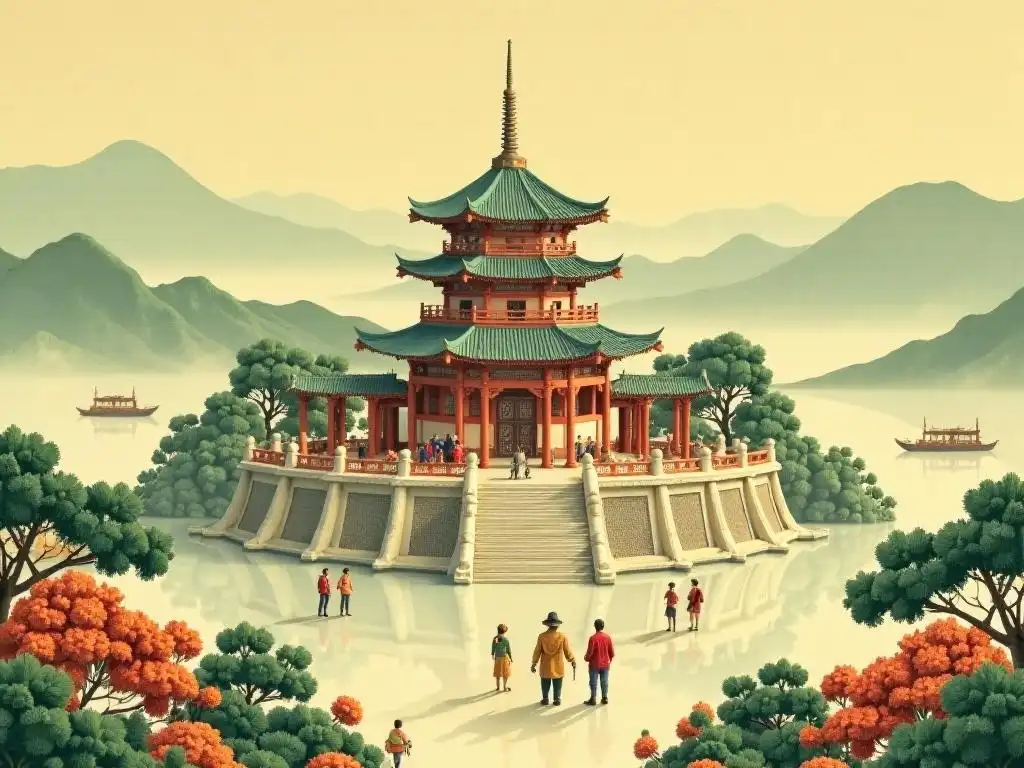
Welcome to Feudal Japan History! Dive into a captivating journey through Japan’s feudal era, where each article unveils the intricate layers of historical, cultural, and societal dynamics that shaped this remarkable period. Today, we invite you to explore our in-depth piece on "Japan's Isolationist Economic Relations." Discover how foreign relations influenced the development of Japan's unique economic landscape during its isolationist phase. What secrets lie within this fascinating intersection of history and economics? Join us as we unravel the complexities that defined an era and continue your exploration of Japan's rich heritage!
Introduction to Japan's Isolationist Economic Relations
The isolationist economic landscape of Japan, particularly during its feudal era, represents a fascinating interplay between foreign relations and local governance. With a history deeply rooted in a complex web of diplomatic encounters, Japan's approach to international relations significantly influenced its economic policies and societal development.
This article delves into the profound impact of foreign relations on Japan's isolationist stance, examining how these policies not only shaped trade and commerce but also influenced social structures and cultural exchanges throughout the centuries. Understanding this dynamic is essential for grasping the broader implications of Japan's economic history during its feudal periods and the lasting legacy of these isolationist policies.
Overview of Japan's Feudal Era
The feudal era of Japan, spanning from the 12th to the 19th century, was marked by a rigid social hierarchy and the emergence of powerful samurai clans. This period saw the establishment of a feudal system centered around the shogunate, where military leaders wielded significant authority while the emperor held a largely symbolic role. The political landscape was characterized by constant territorial conflicts, particularly during the Sengoku period, which fostered a climate of instability and competition.
During this time, Japan's foreign relations were often tumultuous. Initial contact with European traders and missionaries in the 16th century introduced new goods and ideas, which had both positive and negative ramifications. However, as the feudal system solidified, there arose a growing sentiment towards isolationism, culminating in policies that restricted foreign influence and trade.
Significance of Isolationist Policies in Economic Development
Japan's isolationist policies, particularly under the Tokugawa shogunate (1603-1868), were pivotal in shaping its economic landscape. The sakoku policy, which literally means "locked country," was instituted to curtail foreign influence, limiting trade primarily to the Dutch and Chinese. This policy had several significant effects:
- Economic Self-Sufficiency: By maintaining a closed economy, Japan prioritized local agriculture and crafts, fostering a sense of self-sufficiency that allowed domestic industries to flourish.
- Cultural Preservation: Isolationism helped preserve traditional Japanese culture and practices, shielding them from foreign ideologies that could disrupt societal norms.
- Limited Trade Dynamics: While foreign trade was restricted, the limited interactions with selected nations created unique trade dynamics that shaped the domestic economy, leading to a thriving market for Japanese goods.
Historical Context of Japan's Isolationism
Understanding the roots of Japan's isolationist policies requires a dive into its historical context, particularly during pivotal periods that influenced national sentiment and foreign relations.
The Sengoku Period and the Rise of Isolationist Sentiments
The Sengoku period, known as the "Age of Warring States," was characterized by widespread conflict and power struggles among feudal lords, or daimyōs. This chaotic environment significantly contributed to the rise of isolationist sentiments. As regional powers sought to consolidate control and establish stability, the fear of foreign interference grew. Notable events, such as the arrival of European traders and the subsequent spread of Christianity, further exacerbated these fears, leading to calls for tighter control over foreign interactions.
The culmination of these sentiments resulted in decisive actions by leaders such as Tokugawa Ieyasu, who recognized the potential threat posed by foreign influences. His policies laid the groundwork for the sakoku system, which effectively isolated Japan from much of the world for over two centuries.
Key Figures Influencing Japan's Foreign Relations
Several key figures played crucial roles in shaping Japan's foreign relations and isolationist policies. Among them were:
- Tokugawa Ieyasu: As the founder of the Tokugawa shogunate, Ieyasu's vision of a stable, centralized authority led to the implementation of strict isolationist policies.
- Francis Xavier: The Jesuit missionary's arrival in Japan marked the beginning of significant foreign influence, which ultimately led to a backlash against Christianity and foreign involvement.
- Dutch Traders: The limited trade allowed with the Dutch at Nagasaki became a vital lifeline for Japan, providing access to Western technology and knowledge while maintaining a controlled environment.
The intertwining of these figures and their actions elucidates the complexities of Japan's foreign relations and the resulting economic isolation that defined its feudal era. Understanding these dynamics is essential for a comprehensive exploration of Japan's economic history and the lasting impact of its isolationist policies.
The Impact of Foreign Relations on Japan's Isolationist Policies
Foreign relations played a pivotal role in shaping Japan's isolationist policies, particularly during the Edo period (1603-1868). The interactions with various foreign powers influenced Japan's approach to trade, diplomacy, and economic development. Initially, the influx of European traders and missionaries in the 16th century brought significant cultural and technological exchanges. However, as Japan faced increasing pressures from foreign entities, particularly during the 17th century, the Tokugawa shogunate sought to curb external influences to maintain social order and political stability. This shift led to the implementation of strict isolationist policies, known as Sakoku, which significantly redefined Japan's economic landscape.
Trade Dynamics Before Isolationism
Before the advent of isolationism, Japan's trade dynamics were marked by robust exchanges with foreign nations, particularly the Portuguese, Spanish, and Dutch. The introduction of European goods, such as firearms and textiles, had a profound impact on Japanese society and economy. Japanese ports, including Nagasaki, became bustling centers of international trade, allowing merchants to engage with foreign traders actively. This period also saw the introduction of Christianity, which, while initially welcomed, later contributed to the fear of foreign influence over Japan's traditional values.
As the Tokugawa shogunate consolidated power, concerns regarding the spread of Christianity and the potential for foreign domination led to a reevaluation of Japan's trade relationships. The shogunate began to restrict foreign influence by limiting trade to specific ports and countries, paving the way for the more stringent isolationist policies that would follow.
The Sakoku Edict and Its Economic Implications
The Sakoku Edict, enacted in 1635, was the cornerstone of Japan's isolationist policy. This legislation prohibited Japanese citizens from traveling abroad and restricted foreign contact to a select few Dutch and Chinese traders in Nagasaki. The economic implications of the Sakoku policy were significant. While it aimed to protect Japan from foreign influence and preserve its culture, it also led to a stagnation of economic growth due to limited access to international markets and goods.
Under Sakoku, Japan developed a self-sufficient economy focused on agriculture and domestic production. However, this self-imposed isolation also meant that Japan missed out on advancements in technology and trade practices occurring elsewhere in the world. This isolation had lasting effects on Japan’s economic development, creating a dichotomy between a vibrant domestic economy and a stagnant international presence.
Influence of European Powers on Japan's Economic Landscape
Despite Japan's isolationist stance, European powers continued to exert influence on its economic landscape. The Dutch, who were allowed limited trade, served as intermediaries between Japan and the broader world. They introduced Western knowledge, scientific advancements, and new agricultural techniques, albeit in a controlled manner that aligned with Japanese policies.
The influence of European powers was also felt in terms of military technology and tactics. The shogunate recognized the need to keep abreast of developments in weaponry to maintain sovereignty. While the direct economic interactions were limited, the indirect influence of European powers shaped Japan's military and technological strategies, ultimately impacting the economy.
Economic Consequences of Isolationist Relations
The economic consequences of Japan's isolationist relations were profound, affecting domestic structures, trade limitations, and the roles of artisans and craftsmen. While aiming for stability, these policies also created unique challenges and opportunities within Japan's economy.
Domestic Economic Structures Under Isolationism
Under isolationism, Japan's economic structure became heavily localized, focusing on self-sufficiency and internal trade. The Edo period saw the rise of a merchant class, particularly in urban centers like Edo (now Tokyo), which drove domestic commerce. Agriculture became the backbone of the economy, with rice serving as both currency and staple food.
The Tokugawa regime implemented a system of land taxation that incentivized agricultural productivity, resulting in increased food production and population growth. However, this focus on internal markets also meant that Japan did not engage with the global economy, leading to a lack of exposure to international trade practices and innovations.
Limitations on Trade: Benefits and Drawbacks
The limitations imposed by Sakoku brought both benefits and drawbacks to Japan's economy. On one hand, isolation fostered a sense of national identity and cultural cohesion, allowing traditional arts and crafts to flourish without foreign influence. The restrictions helped preserve Japan’s unique cultural heritage, as seen in the development of distinct Japanese styles in art, literature, and theater.
On the other hand, the drawbacks included economic stagnation and technological lag. The absence of foreign competition stifled innovation, leaving Japan vulnerable to external pressures in the long run. As the world began to industrialize in the 19th century, Japan found itself at a disadvantage, necessitating eventual reforms to open up the economy.
The Role of Japanese Artisans and Craftsmen in the Isolated Economy
Japanese artisans and craftsmen played a crucial role in the isolated economy, contributing to the domestic production of goods and the preservation of traditional crafts. The lack of foreign imports allowed indigenous industries, such as textiles, pottery, and woodworking, to thrive. Craftsmen developed unique techniques and styles, resulting in highly sought-after products both domestically and in limited foreign exchanges.
Additionally, the flourishing of the merchant class enabled artisans to gain greater economic independence, as they could sell their goods directly to consumers rather than relying solely on feudal lords. This shift not only allowed for a diverse range of products but also fostered a culture of innovation and quality craftsmanship that would later play a significant role in Japan's rapid industrialization during the Meiji Restoration.
The interplay of foreign relations and isolationist policies significantly shaped the economic landscape of feudal Japan, creating a complex environment that balanced self-sufficiency with the need for limited external engagement.
Case Studies of Japan's Economic Isolation
Japan's economic isolation during the Edo period (1603-1868) is a pivotal chapter in its history, marked by a unique interplay of foreign relations and domestic policies. This isolation, known as Sakoku, was characterized by the strict regulation of foreign influence and trade, significantly shaping Japan's economic landscape. Several case studies illustrate the complexities of this isolationist approach, highlighting how foreign relations, particularly with select nations, played a crucial role in Japan's economic framework.
The Dutch East India Company and Its Role in Japan’s Economy
The Dutch East India Company (VOC) emerged as a significant player in Japan's isolationist economy. Unlike other European powers, the Dutch were granted limited access to Japan through the island of Dejima in Nagasaki. This unique relationship allowed the VOC to engage in trade while adhering to the strict isolationist policies of the Tokugawa shogunate.
- Trade Dynamics: The VOC facilitated the exchange of valuable commodities such as silk, spices, and copper. Japan exported silver and other goods in return, establishing a robust economic link that was crucial for maintaining the flow of resources.
- Cultural Exchange: Beyond trade, the Dutch served as intermediaries of Western knowledge and technology. They introduced Western medicine, scientific advancements, and navigational techniques, contributing to Japan's gradual modernization while maintaining its isolationist stance.
- Political Maneuvering: The VOC’s relationship with Japanese authorities was also strategic. By complying with shogunal regulations and limiting foreign influence, the Dutch positioned themselves as a trusted partner, contrasting sharply with the expulsion of other foreign entities.
Through these dynamics, the Dutch East India Company not only played a vital role in sustaining Japan’s economy during its isolation but also laid the groundwork for future interactions when the country eventually opened up to the world.
Comparative Analysis: Japan vs. Other Isolationist Economies
Japan's isolationist policies can be compared to those of other historical economies that adopted similar stances. This comparative analysis reveals both unique characteristics and shared challenges faced by isolationist nations.
- China's Tribute System: Like Japan, China practiced a form of isolationism through its tribute system, which regulated foreign relations and trade. However, China maintained a more extensive network of tributary states, allowing for a broader exchange of goods and ideas compared to Japan's restrictive approach.
- Korea's Joseon Dynasty: During the same period, Korea also embraced isolationism, particularly under the Joseon Dynasty. Korea's policy of "Sadae" (serving the great) limited foreign influence primarily to China, contrasting sharply with Japan's selective engagement with the Dutch.
- Economic Consequences: Both Japan and Korea faced economic stagnation due to their isolationist policies, though Japan’s strategic trade with the Dutch allowed for a slight economic buffer. In contrast, Korea suffered more significantly from its limited engagement, leading to a slower pace of modernization.
This comparative analysis underscores that while isolationism can protect national identity and culture, it also poses significant risks, particularly in terms of economic growth and technological advancement.
The Modern Legacy of Japan's Isolationist Economic Relations
The legacy of Japan's economic isolationism continues to influence its contemporary policies and economic strategies. Understanding this legacy provides valuable insights into Japan's current economic landscape.
Influence on Contemporary Japanese Economic Policies
Modern Japan's economic policies reflect a blend of historical isolationist principles and global engagement. The post-World War II economic boom was characterized by a cautious approach to foreign trade:
- Protectionism: Echoing the isolationist past, Japan has often employed protectionist measures to shield its industries from foreign competition. This has been evident in sectors such as agriculture and automotive manufacturing, where tariffs and regulations foster domestic growth.
- Strategic Alliances: Japan's historical experiences have led to the formation of strategic economic alliances, particularly in the Asia-Pacific region. Trade agreements and partnerships with neighboring countries reflect a calculated approach that balances openness with caution.
- Cultural Preservation: The influence of historical isolationism is also seen in Japan's commitment to preserving its cultural identity amidst globalization. This focus on cultural heritage has become a significant aspect of Japan's soft power in international relations.
By analyzing these contemporary policies, it becomes evident that Japan's historical isolationism continues to shape its economic strategies and interactions on the global stage.
Lessons Learned from Japan's Historical Isolationism
Japan's experience with isolationism offers several key lessons for modern economies navigating the complexities of globalization:
- Balance Between Openness and Protection: Japan’s history illustrates the importance of finding a balance between engaging with the global economy and protecting domestic interests. Countries facing globalization pressures can learn from Japan's selective openness.
- Cultural Identity: Maintaining a strong cultural identity can coexist with economic engagement. Japan's ability to preserve its traditions while modernizing economically serves as a model for other nations.
- Strategic Engagement: Japan’s historical reliance on strategic partnerships, such as with the Dutch, highlights the value of carefully chosen foreign relations. Nations can benefit from fostering selective alliances that enhance their economic and technological capabilities without compromising their sovereignty.
The lessons drawn from Japan's historical isolationism are not only relevant for understanding its past but also provide a framework for navigating the challenges of today’s interconnected world.
Conclusion
The intersection of foreign relations and Japan's isolationist economic landscape is a complex tapestry that reveals how external pressures and internal policies shaped a unique economic environment. By examining the historical context, it becomes clear that Japan's decision to limit foreign influence was not merely a reactionary measure; it was a strategic choice influenced by various socio-political factors. This isolationism, particularly during the Edo period, fostered a self-sufficient economy that thrived in the absence of direct foreign competition, ultimately leading to a distinct cultural and economic identity.
Summary of the Role of Foreign Relations in Japan's Isolationist Economic Landscape
Japan's isolationist policy, particularly during the Tokugawa shogunate (1603-1868), was significantly influenced by foreign relations. The shogunate implemented the sakoku policy, which effectively closed Japan off from the majority of the world, allowing limited trade primarily with the Dutch and Chinese. This controlled engagement with foreign nations enabled the government to maintain stability and order while also fostering a unique domestic economy that prioritized local goods and craftsmanship.
The impact of foreign relations during this period can be seen in various aspects of Japanese society, including trade practices, cultural exchanges, and technological advancements. For example, while Japan limited foreign contact, it still managed to adopt certain foreign technologies and ideas, which were selectively integrated into its society. This careful navigation of foreign relations allowed Japan to create a robust economy that, while isolated, was not entirely insular.
Future Implications for Understanding Japan’s Economic History
Understanding the role of foreign relations in Japan's isolationist economic landscape has significant implications for how we interpret Japan's economic history. As global dynamics continue to evolve, the lessons from Japan's past can inform current discussions about economic self-sufficiency versus globalization. Future research could explore how the historical context of isolationism informs contemporary economic policies and international relations.
Additionally, the study of Japan's isolationist period highlights the importance of balancing external influences with domestic priorities. This balance is crucial not only for Japan but also for other nations navigating the complexities of globalization and economic interdependence today. By analyzing Japan's unique experiences, scholars and policymakers can gain insights into the long-term effects of isolationist policies on economic development and cultural identity.
References
Suggested Reading on Japan's Isolationist Policies and Economic Relations
- Beasley, W.G. (1990). The Rise of Modern Japan. St. Martin's Press.
- Jansen, M.B. (2000). The Making of Modern Japan. Harvard University Press.
- Totman, C. (2005). A History of Japan. Blackwell Publishing.
Academic Sources and Historical Texts
- Duus, P. (1998). The Rise of Modern Japan: Political, Economic, and Social Change since 1850. Wadsworth Publishing.
- Smith, H. (1966). Japan: A History. Harper & Row.
- Yamamura, K. (1990). The Economic History of Japan: 1600-1990. Princeton University Press.
- Introduction to Japan's Isolationist Economic Relations
- Historical Context of Japan's Isolationism
- The Impact of Foreign Relations on Japan's Isolationist Policies
- Economic Consequences of Isolationist Relations
- Case Studies of Japan's Economic Isolation
- The Modern Legacy of Japan's Isolationist Economic Relations
- Conclusion
- References
- What was the significance of foreign relations in feudal Japan?
- How did Japan's isolationist policies affect its economy?
- What were the major foreign influences during Japan's feudal era?
- How did the Tokugawa shogunate enforce isolation?
- What were the long-term effects of Japan's isolationist economic relations?
Frequently Asked Questions
What was the significance of foreign relations in feudal Japan?
Foreign relations played a crucial role in shaping Japan's isolationist economic landscape, influencing trade practices and cultural exchanges while maintaining a distinct national identity.
How did Japan's isolationist policies affect its economy?
Japan's isolationist policies limited foreign trade, which led to a self-sufficient economy but also restricted access to new technologies and ideas, impacting its long-term economic development.
What were the major foreign influences during Japan's feudal era?
Major influences included Dutch and Chinese traders, who introduced new goods and ideas while Japan maintained strict control over foreign interactions through limited trading posts.
How did the Tokugawa shogunate enforce isolation?
The Tokugawa shogunate implemented the sakoku policy, which restricted foreign relations and trade, only allowing limited contact with the Dutch and Chinese to preserve Japan’s cultural integrity.
What were the long-term effects of Japan's isolationist economic relations?
The long-term effects included a stagnation in technological advancement and an underdeveloped economic structure, which Japan later sought to rectify during the Meiji Restoration by opening up to global trade.
Final Reflection: The Enduring Legacy of Japan's Isolationist Economic Relations
The intricate dance of foreign relations has profoundly shaped Japan's isolationist economic landscape, revealing that the past continues to echo in the present. Today, as we navigate a globalized economy, understanding Japan's historical stance on isolationism offers critical insights into contemporary trade dynamics and international diplomacy. The lessons drawn from Japan's unique approach serve as a reminder that economic strategies are often deeply intertwined with cultural identity and national security.
Cultural and social landscapes are continually influenced by historical economic policies, and Japan's isolationist past is no exception. The nation’s selective engagement with the world has fostered a unique economic environment that prioritizes self-sufficiency while simultaneously embracing innovation. This duality has allowed Japan to maintain its cultural integrity while adapting to global changes. As the historian John Dower once said, Japan's past is not merely a series of events; it is a living narrative that shapes its present and future.
This perspective encourages us to appreciate how historical economic relations continue to inform Japan's current policies and its role on the world stage.
As we reflect on the lessons of Japan's isolationist economic relations, I invite you to consider how these insights can be applied in your own life. How can understanding the balance between engagement and isolation inform your personal or professional relationships? Embrace the idea that every interaction—be it local or global—carries the weight of history and the potential for future impact. Let us carry forward the lessons of the past to foster a more interconnected and thoughtful approach to our economic and social interactions in the years to come.
Unveil the Impact of Global Connections on Japan's Economy!
Thank you for diving into the complexities of Japan's economic landscape with us! You've explored how foreign relations have played a crucial role in shaping this fascinating period. Now, it’s time to take that insight and put it into action!
To deepen your understanding and engage with this topic further, consider taking these next steps:
- Reflect on History: Investigate a significant event where foreign relations notably influenced Japan’s economy, and take notes on its implications.
- Join the Conversation: Contribute your thoughts in the comments below or on our social media channels. Let’s discuss how these historical lessons apply to our current global context!
- Explore Further: Delve into our recommended readings on the impact of international trade on Japan during the Edo period for a broader perspective.
Which aspect of Japan's foreign relations intrigues you the most, and how do you think it shapes our understanding of globalization today?