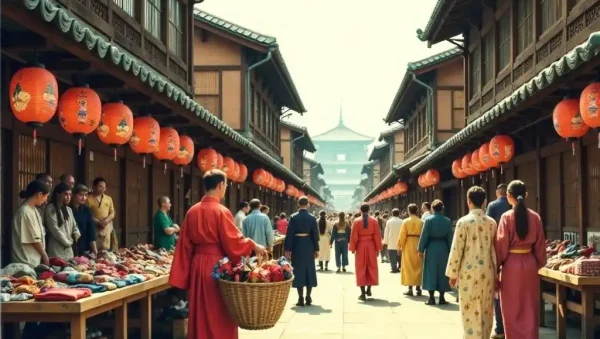
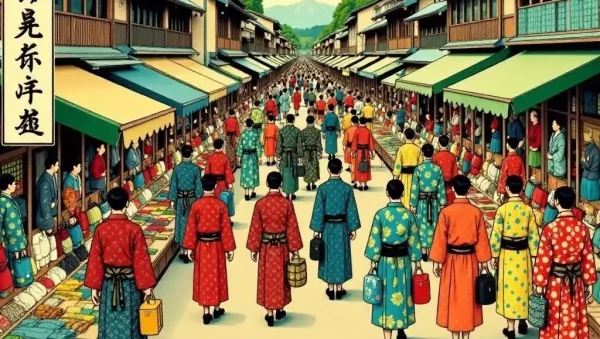
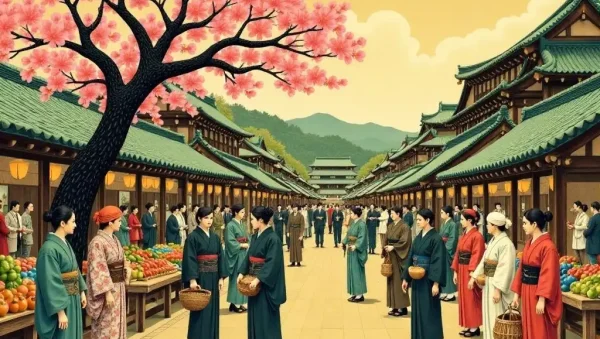
Economic History of Feudal Japan explores how production, taxation, trade, markets, and social change shaped Japan from the late medieval period through the Tokugawa era. This category examines the economic foundations of feudal Japan, including rice-based taxation, castle-town growth, merchant networks, samurai finances, agricultural development, and the impact of the sakoku system on domestic and international commerce.
Discover how the Tokugawa shogunate created political stability while managing a complex economy that connected villages, domains, cities, ports, and households. Our expert-driven articles explain the development of Edo-period economics, the role of daimyo and samurai, the expansion of urban markets, and the relationship between agriculture and commercial growth.
Whether you are researching Japanese economic history, the Tokugawa economy, feudal taxation, merchant culture, or the transition toward modern Japan, this collection provides clear, detailed, and historically grounded insights into the forces that transformed society during Japan’s feudal era.
🏯 Urbanization and Edo
This subcategory examines the growth of Edo, Osaka, Kyoto, and other castle towns during the Tokugawa period. Readers can explore how centralized authority, the sankin-kōtai system, population movement, and daimyo residence requirements encouraged urban development across feudal Japan.
Articles also cover the economic life of Edo-period cities, including markets, transportation, construction, labor, entertainment, and consumer culture. Learn how urbanization created new opportunities for merchants and artisans while increasing demand for rice, textiles, services, and luxury goods.
📜 Tokugawa Economic Policies
Explore the policies used by the Tokugawa shogunate and individual domains to regulate production, taxation, landholding, currency, labor, and commerce. This section explains the importance of the koku system, rice assessments, domain finance, and administrative controls in maintaining political stability.
Readers can also examine the strengths and weaknesses of Tokugawa economic management. Topics include fiscal pressure on daimyo, monetary changes, rural taxation, infrastructure investment, and the gradual transformation of a rice-centered economy into a more commercial and monetized system.
🚢 Trade and Commerce
This section explores domestic and international trade in feudal Japan, from coastal shipping and regional markets to merchant houses and long-distance commercial networks. Discover how Osaka became a major rice market and how cities such as Edo and Kyoto served as important centers of finance, manufacturing, and consumption.
Articles cover the movement of rice, silk, cotton, timber, metals, ceramics, and other goods throughout the archipelago. Readers will also learn about Japan’s controlled overseas trade with China, Korea, the Dutch, and neighboring regions, as well as the role of merchant guilds and credit systems.
⚔️ Samurai Economy
The samurai economy section investigates how warriors were paid, supplied, and financially managed during the Tokugawa era. Although samurai occupied the highest formal social status, many depended on fixed stipends while living in increasingly commercialized towns, creating significant financial challenges.
Readers can learn about rice stipends, debt, domain budgets, household expenses, and the changing economic relationship between samurai, merchants, and administrators. These articles explain why many samurai families faced declining purchasing power and how economic pressures contributed to political dissatisfaction before the Meiji Restoration.
🌏 Isolationist Policies and Economy
This subcategory examines the economic consequences of Japan’s regulated foreign relations, often associated with the term sakoku. Rather than complete isolation, Tokugawa Japan maintained carefully controlled connections with the Dutch, Chinese, Koreans, Ryukyu Kingdom, and neighboring territories.
Explore how restrictions on overseas travel, Christian activity, foreign trade, and diplomatic contact affected domestic production and consumption. The articles also consider how limited international exchange supported economic stability while restricting access to certain technologies, markets, and foreign goods.
🌾 Agriculture in Feudal Japan
Agriculture formed the foundation of feudal Japan’s economy, and this section explores rice cultivation, land surveys, irrigation, village organization, and rural taxation. Readers will learn how agricultural productivity supported samurai governments and determined the assessed wealth of domains.
Articles also examine crop diversification, commercial farming, tenant relations, population growth, and rural industries such as silk production, cotton weaving, sake brewing, and forestry. These developments reveal how Japanese villages became increasingly connected to expanding markets while remaining central to the Tokugawa economic system.
❓ Frequently Asked Questions About Economic History
What was the foundation of the feudal Japanese economy?
The foundation was agriculture, especially rice cultivation. The Tokugawa government measured domain wealth through the koku, an assessment based largely on rice production. Rice taxes supported the shogunate, daimyo administrations, castles, samurai stipends, and urban institutions.
How did the Tokugawa shogunate control the economy?
The shogunate controlled the economy through land surveys, taxation, social regulations, movement restrictions, domain administration, and oversight of foreign trade. It also used systems such as sankin-kōtai to manage daimyo power and stimulate economic activity between regional domains and major cities.
Was Japan completely isolated during the Tokugawa period?
No. Tokugawa Japan restricted and regulated foreign contact rather than ending it completely. Trade and diplomacy continued through selected channels involving the Dutch, Chinese, Koreans, the Ryukyu Kingdom, and the Ainu-related northern frontier. This controlled system is more accurately understood as regulated seclusion.
Why did cities grow during the Edo period?
Cities grew because of political centralization, castle-town development, daimyo residence requirements, expanding markets, and improved transportation. Edo became one of the world’s largest cities, while Osaka developed into a major commercial and rice-distribution center.
Why did many samurai experience financial difficulties?
Many samurai received fixed stipends while prices, consumer expectations, and urban living costs increased. Their income was often paid in rice but spent in a monetized economy. As a result, samurai frequently borrowed from merchants, faced debt, and struggled to maintain their traditional status.