🌾 Agriculture in Feudal Japan: Farming, Land, and Rural Life
Agriculture in Feudal Japan was the foundation of the country’s economy, society, and political power. From the rise of the samurai governments to the development of castle towns and expanding markets, rice cultivation shaped taxation, social status, labor, and everyday life. This subcategory explores Japanese agricultural history through detailed articles on farming techniques, land ownership, rural communities, irrigation, crops, harvests, and the relationship between peasants and feudal authorities.
🌱 Rice Cultivation and Farming Techniques
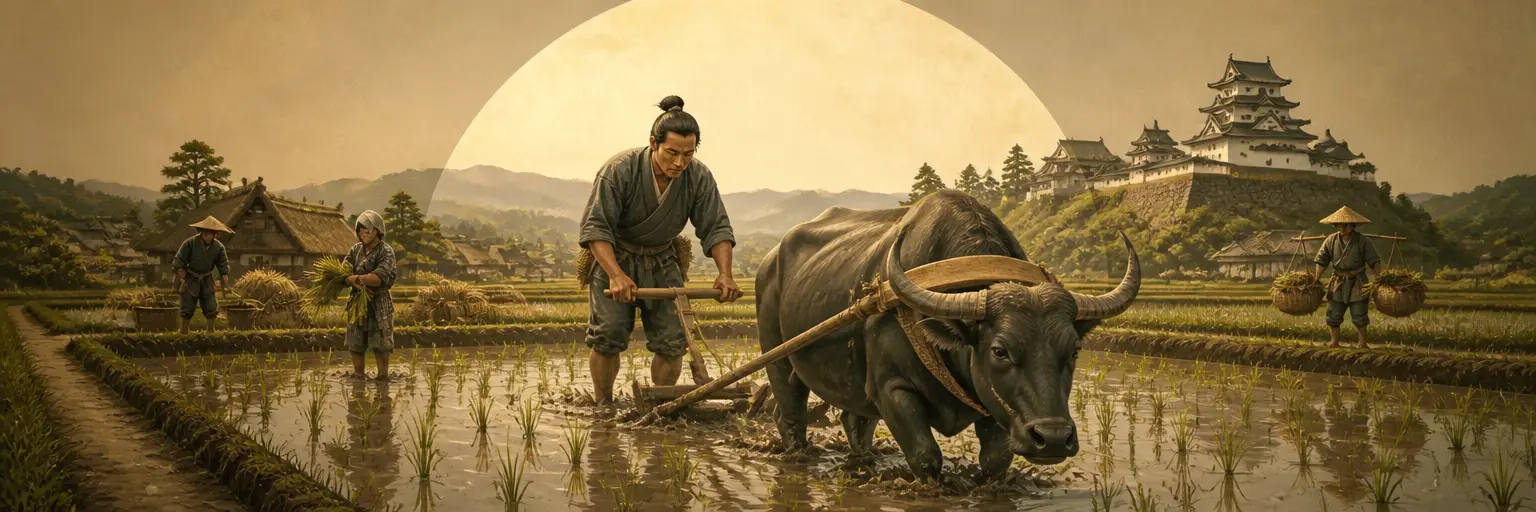
Rice was the most important crop in feudal Japan and served as both a staple food and a measure of wealth. Readers can learn how wet-rice agriculture developed through the use of flooded paddies, seedling transplantation, plowing, crop rotation, composting, and seasonal labor. Articles examine how farmers adapted their methods to Japan’s mountains, river valleys, coastal plains, and varied climate.
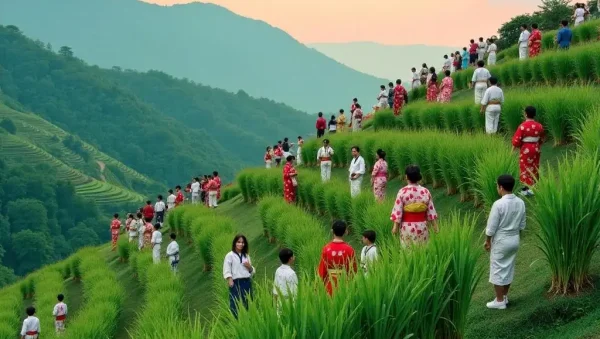
This section also explains how agricultural technology in feudal Japan improved productivity. Topics may include iron farming tools, waterwheels, oxen, irrigation channels, terracing, seed selection, and methods for protecting crops from floods, droughts, pests, and harsh weather. These developments help reveal why rice production expanded despite Japan’s limited arable land.
🏯 Land Ownership, Domains, and Feudal Taxation
Land was central to political authority during the Kamakura, Muromachi, Azuchi-Momoyama, and Edo periods. Readers can expect clear explanations of how shoguns, daimyō, temples, shrines, village headmen, and local administrators controlled agricultural land. Articles explore the organization of feudal domains, cadastral surveys, village registers, and the systems used to assess farmland and collect taxes.
A major focus is the role of rice taxes and kokudaka assessments in the feudal economy. Rather than treating taxation as a simple payment, this section examines how harvest estimates influenced military strength, domain ranking, samurai stipends, infrastructure, and government administration. It also considers the burdens placed on farming families when harvests failed or officials demanded additional contributions.
👨🌾 Peasant Life and Rural Communities
Peasants formed the majority of Japan’s population and carried out the labor that sustained feudal society. Readers can discover how farming households organized work, inheritance, marriage, seasonal obligations, and cooperation within the village. Content covers the responsibilities of village leaders, communal decision-making, shared resources, and the importance of collective labor during planting and harvest seasons.
This section presents rural life beyond taxation and production. Articles may discuss housing, diet, clothing, religious customs, festivals, education, family organization, and the relationships between villages and nearby castle towns. By examining ordinary farmers, readers gain a deeper understanding of daily life in feudal Japan and the social foundations of the samurai era.
💧 Irrigation, Water Management, and Agricultural Landscapes
Successful farming depended on reliable access to water. Readers can learn how villagers, domain governments, and local elites constructed and maintained irrigation canals, reservoirs, dams, embankments, and drainage systems. These projects transformed wetlands and river plains into productive rice-growing areas while reducing the risks associated with flooding and drought.
Water management also created cooperation and conflict. This section explores disputes between upstream and downstream villages, communal maintenance obligations, engineering improvements, and the authority required to manage shared waterways. Such topics demonstrate how irrigation in feudal Japan connected environmental conditions with law, politics, economics, and village organization.
🌾 Crops, Food Security, and Rural Economy
Although rice dominated taxation and status, farmers cultivated many other crops. Readers can explore wheat, barley, millet, buckwheat, soybeans, vegetables, tea, cotton, hemp, mulberries, and other regional products. These crops supported household survival, livestock, textile production, religious institutions, and growing commercial markets.
Articles also examine food shortages, famine, grain storage, price fluctuations, and the importance of agricultural diversity. Understanding these issues provides valuable insight into food security in feudal Japan and explains how rural communities responded to natural disasters, war, population growth, and changing market demand.
🧵 Commercial Agriculture and Rural Markets
By the Edo period, many villages were increasingly connected to regional and national markets. Readers can expect coverage of cash crops, peasant manufacturing, sericulture, cotton production, sake brewing, oilseed processing, and the sale of surplus grain. These activities allowed some farming households to earn money while also exposing them to debt, price changes, and commercial pressure.
This section shows how agriculture supported the growth of cities such as Edo, Osaka, and Kyoto. It explains the relationship between rural producers, merchants, wholesalers, domain officials, and urban consumers. The result is a broader view of Japan’s early modern economy, in which agricultural production and commercial exchange became increasingly interconnected.
📜 Agricultural Policies and Social Change
Feudal governments introduced policies intended to increase agricultural output, stabilize villages, and secure tax revenue. Readers can learn about land surveys, settlement programs, population controls, restrictions on movement, regulations concerning crops, and official responses to rural unrest. These policies reveal how closely farming was linked to the administration of the samurai state.
Over time, agricultural growth contributed to population expansion, social differentiation, land consolidation, and the emergence of wealthy village families. This section explores how changes in farming affected peasants, landlords, samurai, merchants, and religious institutions. It also considers protests, petitions, tax resistance, and peasant uprisings as important parts of economic history in feudal Japan.
❓ Frequently Asked Questions About Agriculture in Feudal Japan
What was the most important crop in feudal Japan?
Rice was the most important crop in feudal Japan. It was a dietary staple, a major form of taxation, and a way to measure the wealth and productivity of feudal domains. Rice production also supported samurai stipends, government finances, and the status system.
How did farmers pay taxes in feudal Japan?
Farmers commonly paid taxes through rice or other agricultural products, although labor services and additional contributions could also be required. Tax assessments were often based on the estimated productivity of the land, meaning that poor harvests could create serious hardship for rural households.
What farming methods were used in feudal Japan?
Farmers used wet-rice cultivation, seedling transplantation, irrigation, terraced fields, animal power, compost, wooden and iron tools, and careful seasonal planning. Techniques varied by region according to rainfall, soil, terrain, water availability, and local traditions.
Did farmers grow crops other than rice?
Yes. Farmers also cultivated wheat, barley, millet, buckwheat, soybeans, vegetables, tea, cotton, hemp, and mulberries. These crops provided food, clothing materials, animal feed, household income, and products for regional trade.
Why is agriculture important to the study of feudal Japan?
Agriculture explains how feudal Japan supported its population, funded military governments, organized social classes, and developed markets. Studying farming reveals the connections between land, taxation, village life, samurai authority, technological change, famine, and economic development.