📜 Trade and Commerce in Feudal Japan
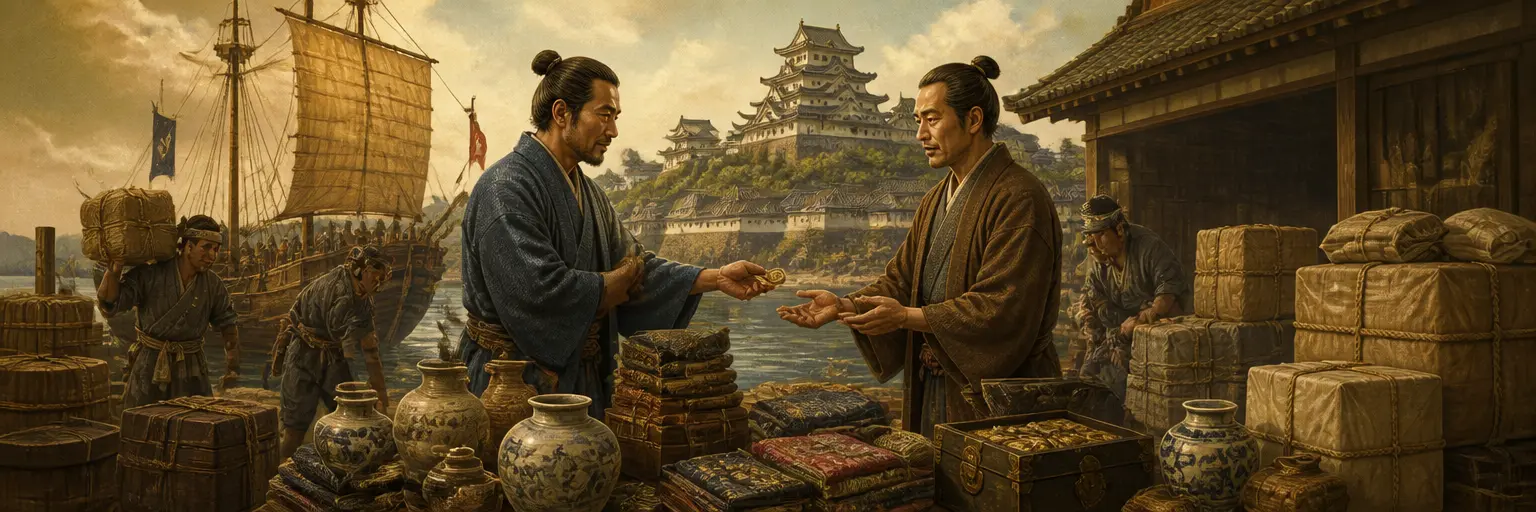
Explore the history of trade and commerce in feudal Japan, a vital subcategory of Economic History on Feudal Japan History. Discover how merchants, markets, ports, guilds, taxation systems, and long-distance trade shaped Japanese society from the Kamakura period through the Muromachi, Sengoku, and Edo eras. Our expert-driven articles examine the movement of rice, silk, tea, ceramics, timber, metals, weapons, and luxury goods, while explaining how commercial networks connected <b samurai domains, rural villages, castle towns, Buddhist temples, and overseas markets.
🏯 Markets, Merchants, and Castle Towns
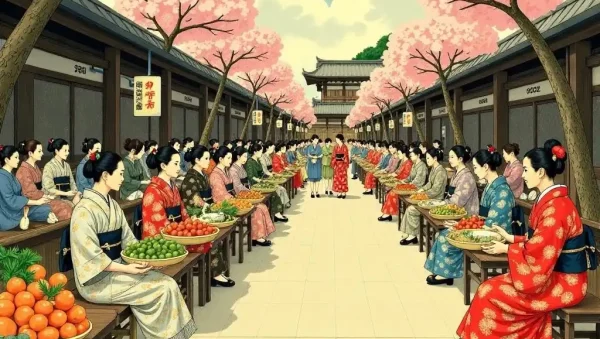
Learn how local marketplaces and expanding castle towns became centers of economic activity during Japan’s feudal period. Articles explore the role of merchant districts, market days, shopkeepers, wholesalers, peddlers, and urban consumers, showing how commercial communities supported the growth of cities such as Kyoto, Osaka, Sakai, Edo, and regional castle towns.
Readers can expect clear explanations of how daimyo policies, population growth, transportation routes, and agricultural surpluses encouraged urban commerce. Discover how markets operated, how prices were influenced by supply and demand, and why castle towns became essential to the political and economic structure of feudal Japan.
⛵ Domestic and Overseas Trade Networks
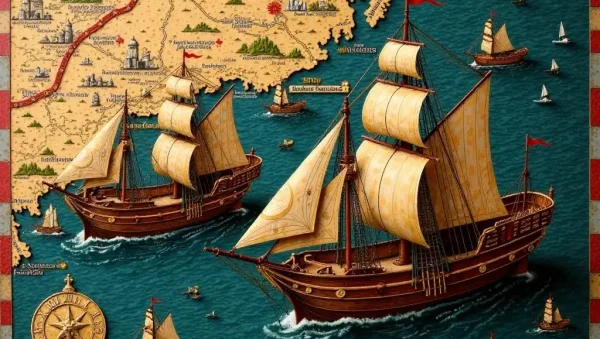
Investigate the major trade routes that connected Japan’s provinces with one another and with neighboring regions. This section examines coastal shipping, inland roads, maritime merchants, and the movement of goods between the Japanese archipelago, Korea, China, the Ryukyu Kingdom, and Southeast Asia.
Articles explain the importance of Japanese maritime trade, tribute missions, licensed commerce, foreign merchants, and port cities. Readers will learn how political alliances, piracy, warfare, diplomatic restrictions, and changing government policies influenced international trade during the medieval and early modern periods.
💰 Currency, Taxation, and Economic Exchange
Discover how money and taxation functioned in feudal Japan. Explore the use of rice as a measure of wealth, along with copper coins, gold, silver, barter, land assessments, stipends, and commercial credit. These systems helped determine the power of daimyo, samurai, temples, merchants, and rural landholders.
Our content examines kokudaka assessments, rice taxation, domain finances, merchant loans, debt, and price fluctuations. You will gain a deeper understanding of how economic exchange supported military governments and how financial pressures affected samurai households, farmers, artisans, and merchant families.
🌾 Agricultural Production and Commercial Goods
Learn how agriculture formed the foundation of feudal Japanese commerce. Rice was central to taxation and political authority, but Japan’s economy also depended on wheat, barley, soybeans, tea, cotton, silk, fish, salt, timber, lacquerware, ceramics, and other regional products.
Readers can explore how specialized production created distinctive commercial regions and encouraged the development of craft industries. Detailed articles reveal how farmers, artisans, fishermen, miners, and merchants contributed to trade, while transportation and storage systems determined how goods reached local and national markets.
⚔️ Daimyo Power, Samurai Society, and Commerce
Examine the relationship between feudal authority and economic activity. Daimyo controlled land, taxation, roads, ports, mines, and strategic markets, while samurai depended on rice stipends and domain administration. Commercial wealth often influenced political decisions, military organization, and social status.
This section explains how rulers encouraged or restricted trade through tolls, licenses, monopolies, merchant privileges, and market regulations. Discover how economic change gradually challenged traditional status divisions and increased the influence of wealthy merchant houses during the late feudal and Tokugawa periods.
🛍️ Merchant Guilds, Za, and Commercial Organizations
Explore the history of merchant guilds and professional associations, including the medieval za. These organizations helped control access to markets, protect commercial privileges, regulate prices, and provide security for specialized producers and traders.
Articles also examine the rise of powerful merchant families and urban commercial networks. Learn how guilds, wholesalers, moneylenders, and shipping groups shaped medieval Japanese commerce and laid important foundations for the sophisticated marketplace of the Edo period.
📚 Frequently Asked Questions About Trade and Commerce
What were the main goods traded in feudal Japan?
Important goods included rice, silk, cotton, tea, salt, fish, timber, metals, ceramics, lacquerware, weapons, horses, and luxury products. Regional specialization allowed provinces to exchange goods through domestic markets and maritime trade routes.
How did rice influence the economy of feudal Japan?
Rice was both a staple food and a measure of wealth. Daimyo domains were assessed according to rice production, while samurai stipends were commonly calculated in rice. This system connected agricultural output with taxation, military power, and political authority.
Did merchants have power in feudal Japanese society?
Although merchants were placed below samurai, farmers, and artisans in the formal social hierarchy, successful merchant families could accumulate substantial wealth. Their financial influence grew through moneylending, shipping, wholesale trade, and relationships with daimyo and local governments.
How did Japan trade with other countries during the feudal period?
Japan traded with China, Korea, the Ryukyu Kingdom, and Southeast Asia through diplomatic missions, licensed merchants, port communities, and maritime networks. Overseas commerce changed over time because of piracy, warfare, political restrictions, and government-controlled trade policies.
Why were castle towns important to commerce?
Castle towns concentrated samurai residences, administrative offices, markets, craftsmen, transport routes, and storage facilities. They became important centers for taxation, distribution, retail trade, and regional economic growth throughout the Sengoku and Edo periods.