The Unexpected Arrival: How Commodore Perry Changed Japan's Path Forever
🌅 Commodore Perry's impact on Japan was transformative, shattering centuries of isolation and paving the way for modernization. His arrival in 1853…
Read article
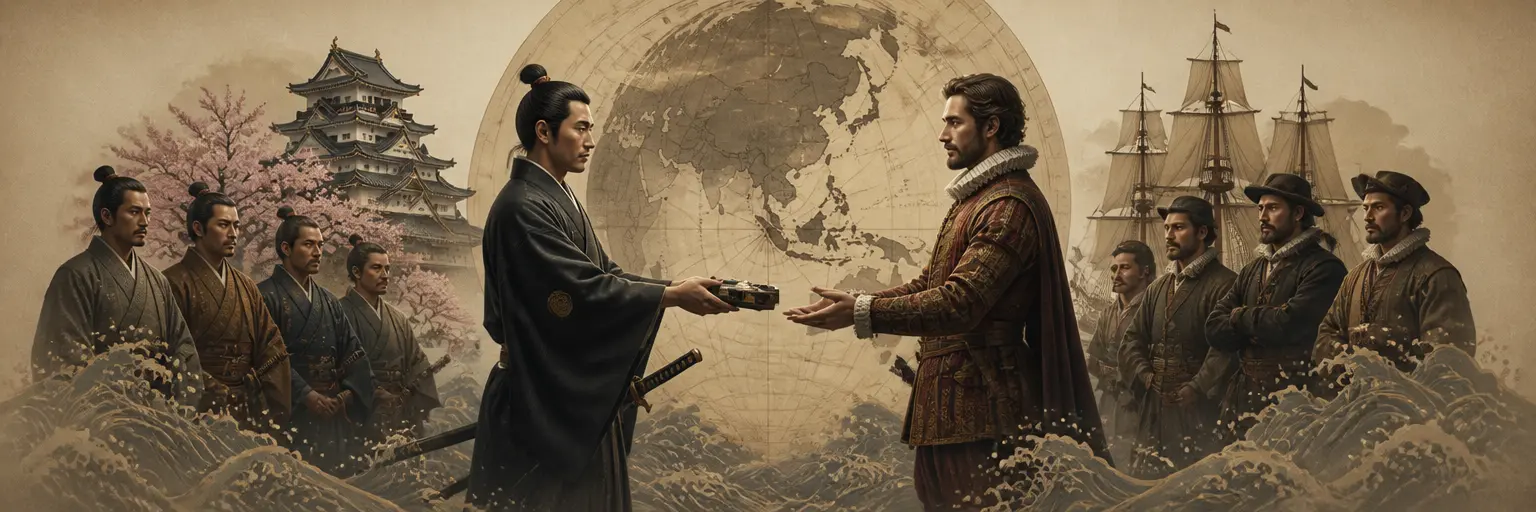
Explore Foreign Relations in Feudal Japan and discover how diplomacy, trade, cultural exchange, and shifting isolationist policies shaped the nation’s history. Learn about Japan’s connections with Korea and China, encounters with Western powers, and the arrival of Commodore Perry—key developments that transformed Japanese society, politics, and international influence.
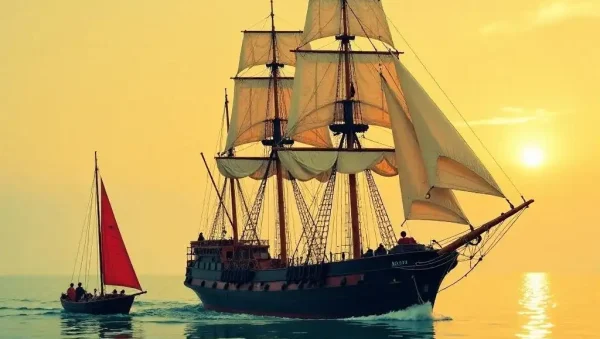
🌅 Commodore Perry's impact on Japan was transformative, shattering centuries of isolation and paving the way for modernization. His arrival in 1853…
Read article
🌏 Western diplomats in feudal Japan played a crucial role in fostering dialogue between diverse cultures, navigating complex societal dynamics while influencing…
Read article
🌏 Japan's feudal era history reveals a complex tapestry of isolation and cultural richness. This article delves into the socio-political dynamics that…
Read article
🌸 The intricate tapestry of Japanese culture was profoundly enriched through trade influences from China and Korea, fostering a dynamic exchange of…
Read article
🌏 Japan's isolationist policies impact not only shaped its feudal society but also influenced cultural exchanges, trade dynamics, and social hierarchies. This…
Read article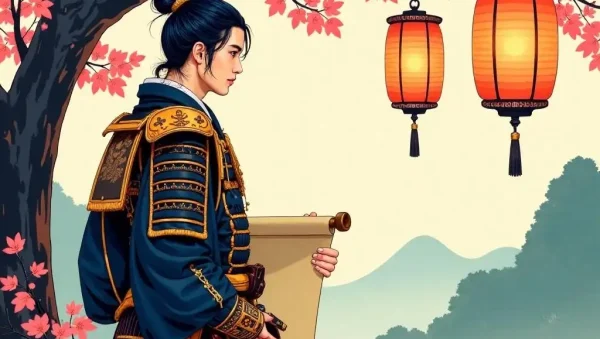
🌸 The intriguing dynamics between samurai and merchant reveal a fascinating tapestry of cultural exchange in Japan's feudal era. These unexpected alliances…
Read article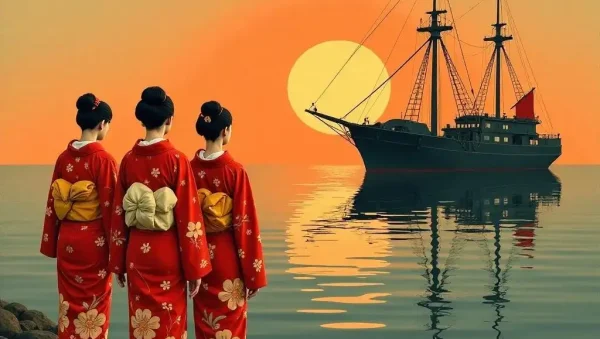
🌏 Commodore Perry's arrival in Japan marked a pivotal moment in naval history, catalyzing modernization efforts that transformed Japan's maritime capabilities. This…
Read article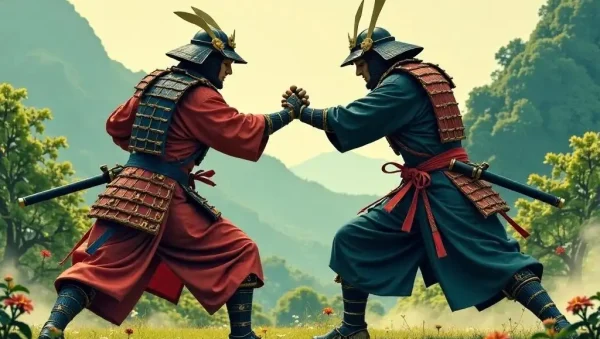
Martial arts in feudal Japan evolved through intricate cross-cultural exchanges, blending indigenous traditions with foreign influences. This article delves into the historical…
Read article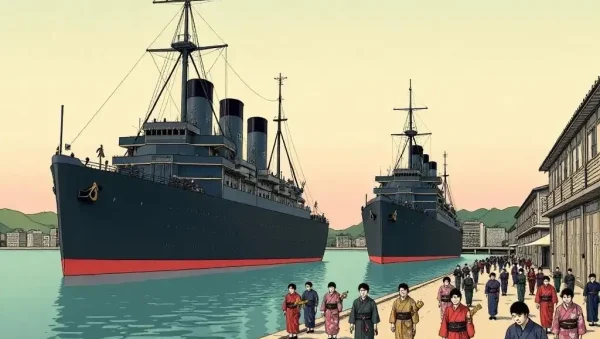
In 1853, Commodore Perry's arrival in Japan marked a pivotal moment, igniting the nation's journey toward industrialization. This encounter challenged Japan's isolationist…
Read article
🎶 Music in Feudal Japan served as a vital conduit for cultural exchange, enriching social interactions and fostering connections among diverse classes.…
Read article
🌏 The intricate web of Japan's feudal political alliances significantly shaped trade dynamics with Korea and China, influencing cultural exchanges and economic…
Read article
In "Artistic Crossroads: The Fusion of Japanese and Western Design," explore the captivating evolution of Japanese Western design fusion, where centuries-old traditions…
Read articleExplore the complex world of Foreign Relations in Feudal Japan, where diplomacy, trade, warfare, religion, and cultural exchange shaped the country’s history for centuries. This category examines how Japanese rulers, warriors, merchants, missionaries, and intellectuals interacted with neighboring countries and distant Western powers during the feudal era.
From early connections with China and Korea to the arrival of European traders and the dramatic appearance of Commodore Perry’s fleet, these articles reveal how Japan responded to foreign influence while protecting its political independence and cultural identity. Discover the development of international trade routes, diplomatic missions, maritime policies, Christian encounters, sakoku restrictions, and cross-cultural exchange through carefully researched historical analysis.
This section explores the movement of ideas, technologies, religions, artistic traditions, and customs between Japan and other societies. Readers can learn how Buddhism, Confucianism, writing systems, architecture, textiles, weapons, and scientific knowledge influenced Japanese life during the feudal period.
Articles also examine the people who carried these influences across borders, including monks, scholars, merchants, artisans, and diplomatic envoys. Expect insights into cross-cultural communication, cultural adaptation, religious exchange, and the lasting influence of foreign traditions on Japanese society.
Discover how Japan encountered European powers during the sixteenth and seventeenth centuries. This subcategory covers the arrival of Portuguese and Spanish traders, the spread of Christianity, the activities of Jesuit missionaries, and Japan’s changing understanding of the wider world.
Readers will also learn about firearms, maritime commerce, diplomatic efforts, and the political responses of Japanese leaders. These articles explain how European contact affected warfare, trade, religion, and domestic authority while highlighting Japan’s selective approach to foreign influence.
Japan’s relationships with Korea and China were central to its political, economic, and cultural development. This section investigates tribute missions, merchant networks, official embassies, piracy, port cities, and the exchange of luxury goods, books, technologies, and diplomatic information.
Expect detailed coverage of East Asian trade routes, Korean embassies, Chinese cultural influence, maritime commerce, and regional diplomacy. The articles place Japan within a broader network of Asian states rather than viewing its history in isolation.
Learn how Commodore Matthew Perry’s arrival in 1853 challenged Japan’s long-standing foreign policy and exposed the weaknesses of the Tokugawa shogunate. This section explains the significance of the American fleet, the negotiations that followed, and the treaties that opened Japanese ports.
Readers can explore the political and social consequences of Perry’s expedition, including debates over national defense, imperialism, modernization, and the authority of the shogunate. These articles provide essential context for understanding the end of Japan’s isolation and the transition toward the Meiji Restoration.
This subcategory examines the Tokugawa shogunate’s restrictions on foreign travel, overseas trade, Christianity, and international contact. Rather than presenting isolation as complete or absolute, the articles explain the controlled channels through which Japan continued to communicate with China, Korea, the Dutch, and the Ryukyu Kingdom.
Explore the origins, enforcement, and consequences of sakoku policies, including maritime laws, religious persecution, regulated trade, and the role of Nagasaki and Dejima. Readers will gain a clearer understanding of how controlled isolation supported domestic stability while limiting Japan’s access to global developments.
Feudal Japan maintained important relations with China, Korea, the Ryukyu Kingdom, the Dutch, Portugal, Spain, and later the United States. These relationships involved trade, diplomacy, warfare, religious missions, cultural exchange, and maritime regulation.
No. Tokugawa Japan restricted foreign contact but did not eliminate it entirely. Trade and diplomacy continued through controlled channels, especially with the Dutch and Chinese at Nagasaki, Korea through formal embassies, and the Ryukyu Kingdom through regional networks.
China and Korea influenced Japan through Buddhism, Confucian philosophy, writing, political ideas, artistic styles, technologies, books, and diplomatic practices. Korean scholars and artisans also played important roles in transmitting knowledge to Japan.
Commodore Perry’s arrival in 1853 pressured Japan to open its ports to American ships. The resulting agreements weakened the Tokugawa shogunate’s authority, intensified political debate, and contributed to the collapse of the shogunate and the Meiji Restoration.
Sakoku is commonly translated as “closed country” and describes the Tokugawa shogunate’s system of restricting foreign travel, Christianity, and overseas contact. Modern historians often emphasize that Japan was not entirely closed but operated under carefully controlled international relations.