The Flow of Ideas: How Trade with China and Korea Enriched Japanese Culture
🌸 The intricate tapestry of Japanese culture was profoundly enriched through trade influences from China and Korea, fostering a dynamic exchange of…
Read article
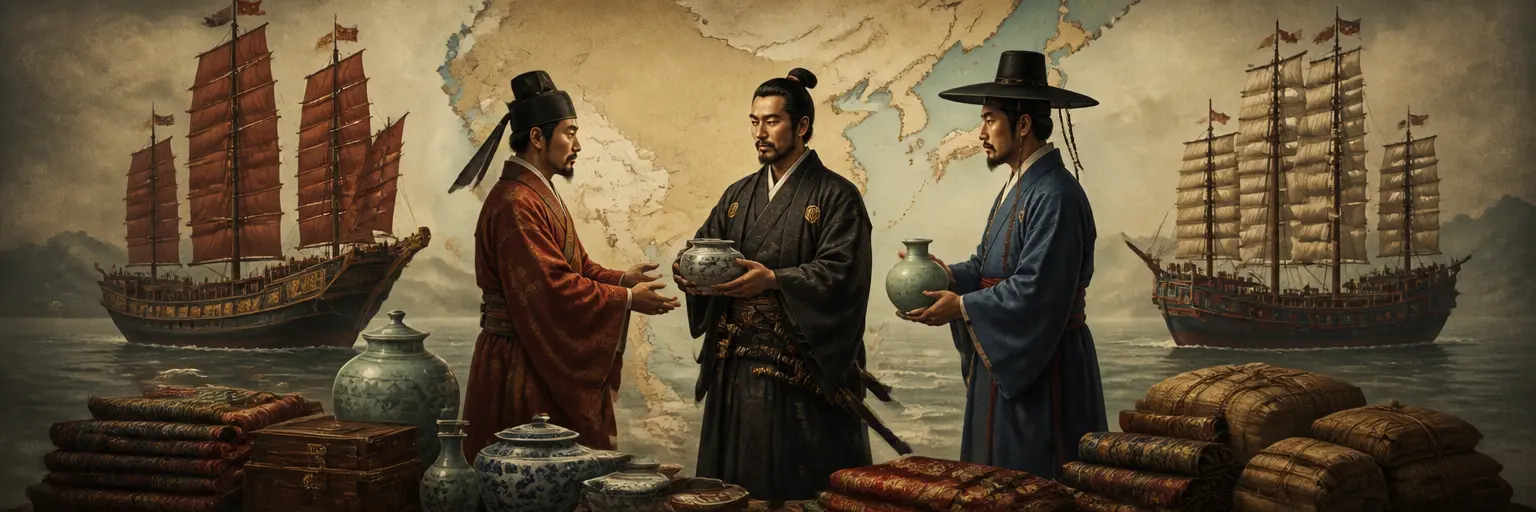
Explore Japan’s dynamic trade with Korea and China during the feudal era, when maritime routes, diplomatic missions, and cultural exchange shaped regional history. Discover how commerce connected Japan to East Asia through goods, technology, religion, and ideas—from Korean ceramics and Chinese silk to writing systems, Buddhism, and political influence. ⚓🌏 Gain expert insight into the ports, merchants, agreements, and challenges that defined Japan’s foreign relations and strengthened its place in medieval East Asian trade.
🌸 The intricate tapestry of Japanese culture was profoundly enriched through trade influences from China and Korea, fostering a dynamic exchange of…
Read article
🌏 The intricate web of Japan's feudal political alliances significantly shaped trade dynamics with Korea and China, influencing cultural exchanges and economic…
Read article
🌏 Feudal Japan trade connections were pivotal in shaping the country's interactions with the world. This article delves into the intricate networks…
Read article
In "Feudal Japan’s Economic Strategies: Leveraging Trade for Power and Influence," we delve into feudal Japan trade strategies, revealing how regional leaders…
Read article
🌏 Language trade between Japan, Korea, and China has been pivotal in shaping economic relationships. This article delves into how linguistic nuances…
Read article
🌸 Women in Japanese trade history played a pivotal role during the feudal era, influencing commerce through their entrepreneurial spirit and skills.…
Read article
Exploring the Namban trade's historical significance reveals how Western influence transformed Japan’s feudal society, fostering cultural exchanges and economic shifts. This intricate…
Read article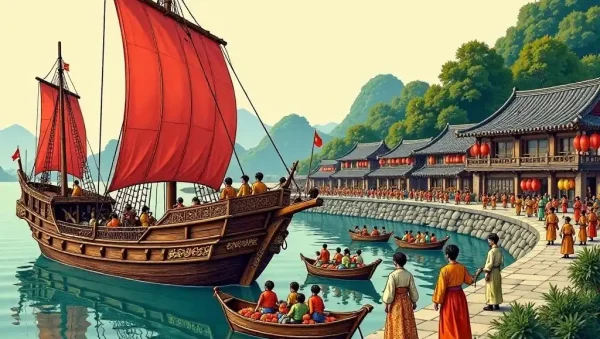
🌊 Japanese merchants in East Asian trade played a pivotal role during Japan's feudal era, facilitating cultural exchanges and economic growth. Their…
Read article
🌏 The Silk Road trade impact Japan was profound, facilitating cultural exchanges and economic growth. This article delves into how interactions with…
Read article
🌏 The intricate Japan-Korea-China trade relations forged during the feudal era significantly influenced Japan's cultural and economic development, creating a complex tapestry…
Read article
🌏 The cultural currents of the feudal era reveal significant Korean and Chinese influence on Japan, shaping societal norms, artistic expressions, and…
Read article
The impact of trade on feudal Japan catalyzed the emergence of a prosperous merchant class, reshaping social hierarchies and fostering economic growth.…
Read articleExplore the history of trade with Korea and China during feudal Japan, a vital part of Japan’s foreign relations, diplomacy, economy, and cultural development. This subcategory examines how Japanese rulers, merchants, Buddhist monks, envoys, and coastal communities connected with the Korean Peninsula and China through maritime commerce, tribute missions, diplomatic exchanges, and regional networks. Discover how imported goods, political ideas, religious traditions, technologies, and artistic influences shaped Japanese society from the medieval period through the late feudal era.
Readers can expect detailed articles about Japan’s changing relationships with medieval Korea and imperial China, including diplomatic missions, royal correspondence, trade agreements, and conflicts over regional influence. These connections were influenced by political events such as the rise of warrior governments, shifting Korean dynasties, Chinese imperial policies, and the ambitions of powerful Japanese rulers.
This section places international commerce within the broader history of East Asian foreign relations. Articles explain how Japanese shoguns, daimyo, merchants, and religious institutions negotiated access to overseas markets while responding to piracy, coastal security concerns, tribute systems, and diplomatic customs.
Learn how ships and merchant networks connected Japan with Korean and Chinese ports across the East China Sea. Content may explore important maritime routes, trading hubs, harbor settlements, and the seasonal challenges faced by sailors traveling between the Japanese archipelago, the Korean Peninsula, and mainland China.
Readers will also discover the role of ports such as Hakata and other Kyushu centers, which served as gateways for foreign commerce and cultural exchange. These locations linked Japanese traders with Korean envoys, Chinese merchants, Buddhist communities, translators, and intermediaries involved in international trade.
Feudal Japan relied on overseas trade to obtain valuable goods unavailable or difficult to produce domestically. Articles in this subcategory examine imports such as silk, ceramics, books, medicines, metal goods, coins, textiles, tea-related items, and luxury objects, as well as the economic and social meaning attached to them.
These imported materials influenced Japanese consumption, craftsmanship, religious practice, elite culture, and political prestige. Readers can learn how Chinese porcelain, Korean ceramics, written texts, technologies, and artistic models were collected, adapted, and eventually incorporated into distinctly Japanese traditions.
Trade between Japan, Korea, and China was also a powerful channel for religious and intellectual exchange. Buddhist monks and scholars traveled across the region, bringing scriptures, ritual objects, temple practices, philosophical teachings, and information about developments in Chinese and Korean religious communities.
This section explores how overseas connections affected Japanese Buddhism, education, literature, calligraphy, architecture, painting, and government administration. Readers will see that trade was not limited to commercial goods; it also carried ideas that transformed Japanese culture during the feudal period.
International trade was often shaped by violence and insecurity. Articles cover wakō piracy, coastal raids, naval conflict, smuggling, diplomatic tensions, and attempts by Japanese and foreign governments to control maritime activity. These issues affected relations with both Korea and China and influenced the organization of official trade.
Readers can expect explanations of how authorities responded to piracy through licenses, port regulations, tribute missions, military campaigns, and restrictions on private commerce. Understanding these conflicts provides important context for the challenges of maintaining stable Japan–Korea and Japan–China relations.
Discover the people who made regional commerce possible, including Japanese merchants, Korean envoys, Chinese traders, interpreters, monks, shipbuilders, officials, and local port administrators. Their experiences reveal how international trade functioned beyond the decisions of emperors, shoguns, and daimyo.
Articles also examine official embassies and diplomatic missions, including the exchange of gifts, letters, credentials, and ceremonial obligations. These encounters demonstrate how commerce and diplomacy were closely connected in premodern East Asia.
Japan traded commodities such as silver, sulfur, copper, swords, lacquerware, folding screens, and other crafted goods. In return, Japanese traders and authorities sought silk, ceramics, books, medicines, coins, textiles, artworks, and religious materials. The exact goods changed according to the period, political conditions, and availability of resources.
Korea and China were central to Japan’s foreign relations because they were nearby centers of political power, trade, scholarship, technology, and religious culture. Contact with these regions helped Japan acquire valuable goods while also introducing ideas that influenced Buddhism, writing, government, art, architecture, and education.
Buddhism reached Japan through complex networks involving the Korean kingdoms, China, monks, diplomatic missions, and maritime travelers. Over time, Japanese religious communities maintained connections with the Asian mainland, importing scriptures, ritual practices, temple models, and philosophical teachings that shaped Japanese Buddhist history.
Wakō was a term used for maritime raiders and traders active around the coasts of Japan, Korea, and China. Their activities included piracy, smuggling, and commercial exchange, although their identities and origins varied. Wakō activity created diplomatic tension and encouraged governments to introduce stronger coastal controls and trade regulations.
Overseas trade contributed to the development of Japanese ceramics, painting, tea culture, literature, religious institutions, luxury consumption, and technology. Imported objects and ideas were often adapted locally, creating new Japanese styles while preserving visible connections to Korean and Chinese civilization.