The Samurai and the Merchant: Unexpected Alliances in Cultural Exchange
🌸 The intriguing dynamics between samurai and merchant reveal a fascinating tapestry of cultural exchange in Japan's feudal era. These unexpected alliances…
Read article
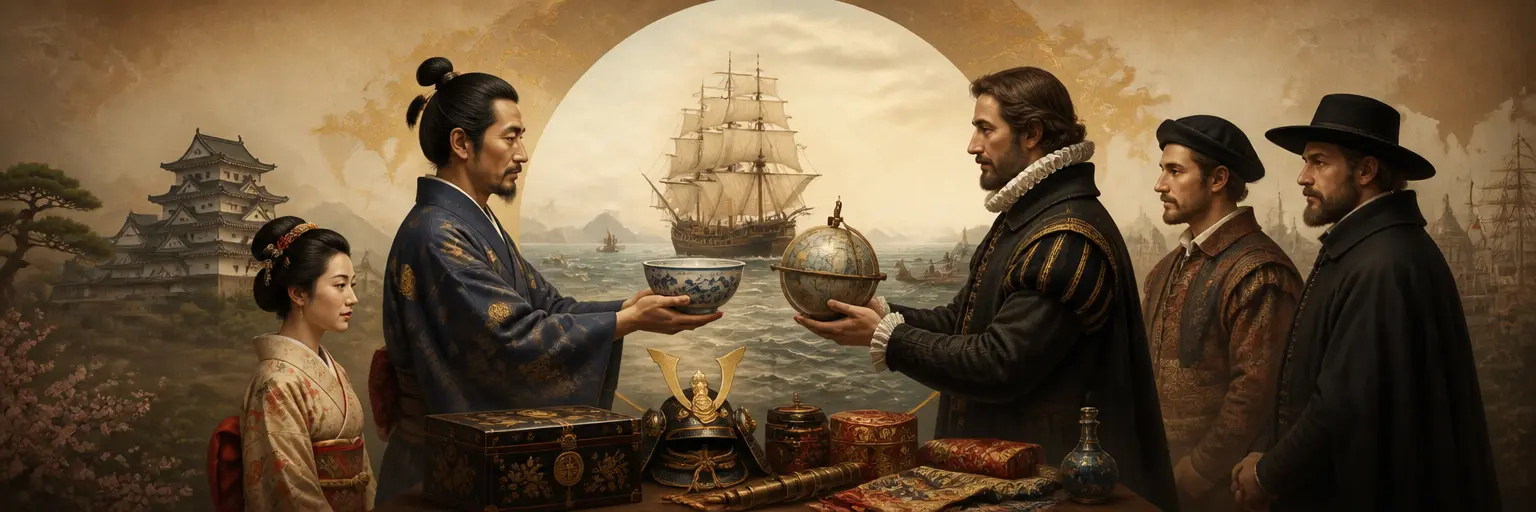
Discover how cultural exchanges shaped Foreign Relations in feudal Japan 🌏⚔️ Explore the movement of ideas, art, religion, technology, trade, and traditions between Japan and neighboring societies. From diplomatic missions and international commerce to the influence of China, Korea, and beyond, uncover how cross-cultural connections transformed Japanese politics, society, and daily life during the feudal era. 📜✨
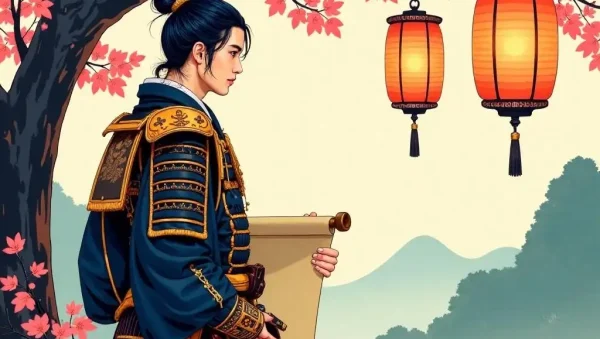
🌸 The intriguing dynamics between samurai and merchant reveal a fascinating tapestry of cultural exchange in Japan's feudal era. These unexpected alliances…
Read article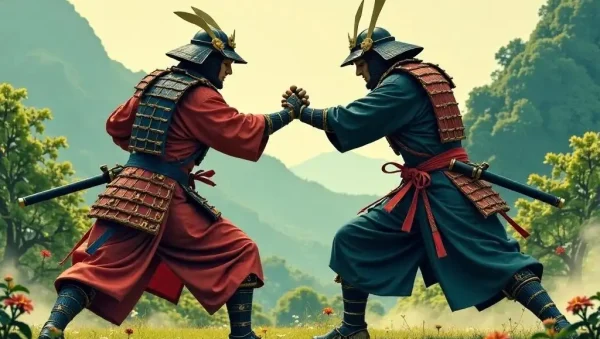
Martial arts in feudal Japan evolved through intricate cross-cultural exchanges, blending indigenous traditions with foreign influences. This article delves into the historical…
Read article
🎶 Music in Feudal Japan served as a vital conduit for cultural exchange, enriching social interactions and fostering connections among diverse classes.…
Read article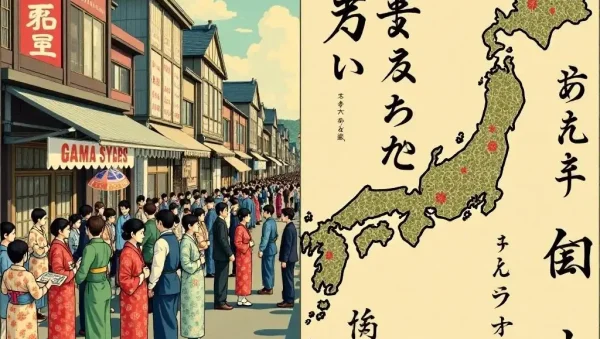
The Japanese language has evolved significantly through foreign borrowings, integrating elements from Chinese, Dutch, and English. This article explores how these influences…
Read article
Buddhism's influence on feudal Japan profoundly shaped its cultural landscape, intertwining spiritual beliefs with art, politics, and daily life. This article delves…
Read article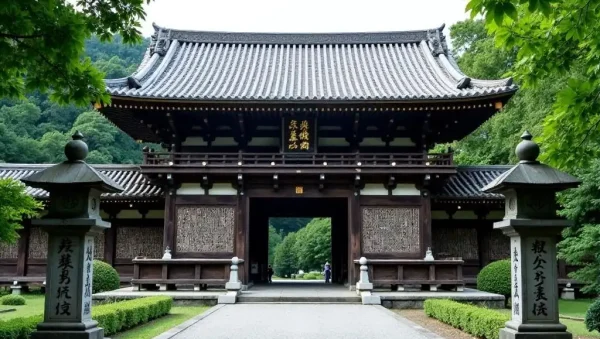
🌏 Cultural syncretism during Japan's feudal era illustrates the profound Shinto foreign beliefs fusion, where indigenous practices intertwined with external influences, shaping…
Read article
🌸 The interplay between samurai and European chivalry influence reveals profound lessons in honor, loyalty, and combat ethics. This encounter not only…
Read article
🕊️ The exchange of architectural styles during Japan's feudal era reveals the profound Western influence on Japanese architecture, blending traditional designs with…
Read article
🌏 The arrival of Western science influence in Japan during the late feudal era marked a pivotal transformation, reshaping traditional beliefs and…
Read article
🌱 The Japan feudal tea trade history reveals a profound exchange of culture and ideas, as tea became a symbol of social…
Read article
🌏 The intricate relationship between Japanese art and foreign influence unveils a rich tapestry of cultural exchange. This exploration reveals how external…
Read article
The Silk Road’s influence on feudal Japan catalyzed a rich exchange of cultural and artistic ideas, shaping societal norms and aesthetics. This…
Read articleExplore how cultural exchanges shaped feudal Japan through diplomacy, trade, religion, warfare, migration, and intellectual connections with neighboring regions. This subcategory examines Japan’s foreign relations with China, Korea, the Ryukyu Kingdom, Southeast Asia, and European powers, revealing how ideas, technologies, artistic traditions, and customs entered Japan and were adapted within Japanese society. Discover expert-driven articles about international influence during Japan’s feudal era, from the Nara and Heian legacies to the Kamakura, Muromachi, Azuchi–Momoyama, and early Edo periods.
Readers can expect detailed explanations of Japan’s historical connections with China and Korea, including diplomatic missions, Buddhist transmission, writing systems, Confucian learning, governmental models, architecture, ceramics, and court culture. These exchanges helped shape Japanese political institutions, religious practices, literary traditions, and artistic development across the medieval and early modern periods.
Articles will also examine the important role of Korean envoys, artisans, monks, scholars, and craftsmen in transmitting knowledge to Japan. By placing these relationships within the broader history of East Asian foreign relations, this section explains both the influence Japan received and the distinctive ways Japanese rulers, samurai, temples, and communities adapted outside traditions.
Discover how maritime trade routes connected feudal Japan to the wider world. Topics may include the Japan–Korea trade relationship, Chinese merchant networks, Japanese ports, licensed trade, diplomatic missions, piracy, and the movement of luxury goods such as silk, porcelain, tea, spices, books, and metalwork.
This section explores how commerce encouraged cultural interaction while also creating political competition. Readers will learn how shoguns, daimyo, merchants, temples, and port communities participated in international exchange, making trade an essential part of medieval Japanese history and the development of regional power.
Learn how religious exchange transformed Japanese culture through the arrival and development of Buddhist teachings, monastic institutions, rituals, scriptures, and artistic forms. Articles cover the influence of continental Buddhism, Zen traditions, Pure Land movements, esoteric practices, and the relationship between temples and political authority.
Readers will also discover how monks served as diplomats, teachers, translators, and cultural intermediaries. The movement of religious ideas influenced Japanese philosophy, education, painting, sculpture, garden design, literature, and social organization, creating enduring connections between Japan and the broader Buddhist world.
Explore the international origins and local adaptations of Japanese art, literature, architecture, weaponry, textiles, ceramics, printing, navigation, and agricultural techniques. This subcategory highlights how cultural exchange shaped recognizable features of Japanese civilization while showing that feudal Japan was never isolated from global developments.
Expect evidence-based discussions of artistic styles, imported objects, translated texts, technological innovations, and the artisans who carried expertise across borders. Each topic explains how foreign influences were transformed into distinctively Japanese cultural traditions by courts, samurai households, religious institutions, and urban communities.
Examine Japan’s first sustained contacts with European powers during the sixteenth century. Articles may explore Portuguese merchants, Jesuit missionaries, Christian daimyo, firearms, maritime commerce, European maps, new foods, clothing, and changing diplomatic strategies during the Sengoku period and the unification of Japan.
This section presents European contact within the complex political landscape of feudal Japan rather than treating it as a simple story of outside influence. Readers will learn how Oda Nobunaga, Toyotomi Hideyoshi, Tokugawa Ieyasu, missionaries, merchants, and local communities responded to Christianity, global trade, and early modern globalization.
Discover the important role of the Ryukyu Kingdom as a maritime bridge between Japan, China, Korea, and Southeast Asia. Its commercial and diplomatic networks connected Okinawa with ports across the region, helping circulate goods, languages, religious practices, artistic techniques, and political information.
Readers can expect a broader understanding of Japanese foreign relations that includes southern maritime routes and island societies. These articles demonstrate how cultural exchange extended beyond the Japanese archipelago and contributed to the interconnected history of East and Southeast Asia.
Cultural exchange influenced feudal Japan by introducing new religions, writing systems, political ideas, technologies, artistic styles, goods, and intellectual traditions. Japanese rulers and communities adapted these influences to local needs, producing distinctive developments in government, samurai culture, architecture, literature, and religion.
China and Korea maintained some of the most important cultural and diplomatic connections with Japan. The Ryukyu Kingdom, Southeast Asian trading centers, and European powers—especially Portugal and Spain during the sixteenth century—also played significant roles in Japan’s foreign relations and cultural development.
Buddhism served as a major channel for the transmission of philosophy, education, literature, art, architecture, rituals, and political ideas. Monks frequently acted as scholars, translators, diplomats, and cultural intermediaries between Japan and other parts of East Asia.
Yes. Portuguese merchants and Jesuit missionaries reached Japan in the sixteenth century, followed by contact with other European powers. These encounters introduced firearms, Christianity, new commercial opportunities, foreign goods, and new diplomatic challenges during the Sengoku and early unification periods.
No. Although some later Tokugawa policies restricted foreign contact, feudal Japan remained connected through trade, diplomacy, religion, migration, maritime routes, and intellectual exchange. Its history reflects selective engagement with China, Korea, the Ryukyu Kingdom, Southeast Asia, and Europe.