
The Arrival of Western Science: Transformations in Feudal Japan


Welcome to Feudal Japan History, where we embark on a journey through the intricate tapestry of Japan’s feudal era. Here, we delve into the profound impacts and transformations that shaped society, culture, and governance during this captivating period. In our featured article, “The Arrival of Western Science: Transformations in Feudal Japan,” we explore the fascinating interplay between Eastern traditions and Western innovations, unveiling the remarkable influence of Western science on Japan's development. Prepare to uncover the layers of history that have defined an era, and let your curiosity lead you deeper into the captivating world of feudal Japan.
Introduction to Western Science Influence in Japan
The arrival of Western science in Japan during the feudal era marked a pivotal transformation in the nation’s historical and cultural trajectory. This period, characterized by a rich tapestry of isolation and gradual openness to foreign ideas, saw the infusion of Western scientific knowledge into a society deeply rooted in traditional practices and beliefs.
The influences of Western science not only reshaped Japan's technological landscape but also initiated profound changes in its worldview, educational systems, and societal structures. Understanding the intricacies of this exchange is essential to grasp the complexities of Japan's modernization and the broader implications of cultural interactions during this era.
Overview of Feudal Japan and Its Cultural Context
Feudal Japan, spanning from the late 12th century until the mid-19th century, was a time marked by the rise of samurai culture, rigid social hierarchies, and a unique blend of indigenous Shinto beliefs with imported Buddhist practices. The Tokugawa shogunate, established in 1603, enforced a policy of national seclusion (sakoku) that limited foreign influence and interaction.
Despite this isolation, the cultural landscape was rich with art, literature, and philosophical thought, demonstrating both resilience and adaptability. The eventual opening of Japan to Western influences in the 19th century led to a re-evaluation of these cultural tenets, setting the stage for the integration of Western scientific ideas.
Significance of Western Science in the Global Context
The period of Western scientific advancement, particularly from the 16th to the 18th centuries, was pivotal not only for Europe but also for the world at large. This era produced groundbreaking discoveries in various fields, including astronomy, medicine, and physics, which challenged prevailing notions and encouraged a spirit of inquiry.
The dissemination of scientific knowledge coincided with the Age of Enlightenment, reshaping societal norms and fostering a culture of critical thinking. When this wave of scientific thought reached Japan, it sparked a cultural renaissance that would alter the course of Japanese history, allowing for a dialogue between traditional Japanese practices and Western methodologies.
Historical Background of Western Science in Japan
Early Encounters with European Traders and Missionaries
Japan's first significant interactions with Western culture began in the mid-16th century when Portuguese traders and Jesuit missionaries arrived on its shores. These early encounters introduced new goods, technologies, and ideas that were previously unknown to the Japanese. The Jesuits, in particular, played a crucial role in disseminating Western knowledge, including scientific concepts, to the Japanese elite. Their efforts laid the groundwork for a broader engagement with Western thought, although the shogunate's suspicion of foreign influence ultimately led to an aggressive campaign to suppress Christianity and limit contact with Europeans.
The Role of the Dutch in Introducing Western Knowledge
Following the expulsion of most European missionaries, the Dutch emerged as the primary conduit of Western knowledge in Japan during the Edo period. The Dutch East India Company established a trading post on the artificial island of Dejima in Nagasaki, where they engaged in a limited exchange of goods and ideas.
Dutch scholars and traders brought with them scientific texts, medical knowledge, and technological innovations, which were translated into Japanese and studied by the educated elite. This exchange, known as Rangaku (Dutch Learning), played a vital role in fostering a new intellectual environment that encouraged the exploration of Western science.
Key Figures in the Introduction of Western Science
Throughout this transformative period, several key figures emerged as champions of Western science in Japan. Scholars such as Sugita Genpaku, who translated European medical texts, and Hiraga Gennai, known for his contributions to botany and chemistry, were instrumental in bridging the gap between Eastern and Western scientific thought.
Their work not only advanced medical and scientific understanding in Japan but also inspired subsequent generations to pursue knowledge beyond traditional confines, laying the groundwork for Japan's modernization in the late 19th century. As Western science took root, it began to permeate various aspects of Japanese life, ultimately leading to significant societal transformations.
The Impact of Western Science on Japanese Society
The arrival of Western science in Japan during the late Edo period brought profound transformations to various aspects of Japanese society. This influx of new knowledge challenged traditional beliefs and practices, leading to a period of rapid modernization and adaptation. As Japan opened its doors to the West, Western scientific principles began to permeate Japanese education, health, agriculture, and industry. This integration not only enhanced Japan’s technological capabilities but also altered social structures and cultural paradigms, ultimately paving the way for the Meiji Restoration and the country's emergence as a modern nation-state.
Transformations in Medicine and Healthcare Practices
Western medicine introduced significant advancements in healthcare practices in Japan. Prior to the influence of Western science, traditional Japanese medicine, which relied heavily on herbal remedies and acupuncture, dominated the healthcare landscape. However, the introduction of Western medical education, techniques, and practices began in the 19th century, particularly with the establishment of the first medical school in Nagasaki in 1857.
Key transformations included:
- Vaccination and Public Health: The introduction of vaccination against diseases such as smallpox dramatically improved public health outcomes. This knowledge was vital in combating epidemics that had previously devastated populations.
- Anatomy and Surgery: Western surgical techniques and anatomical studies revolutionized medical practices. Japanese physicians began to adopt dissections and other methods of studying human anatomy, which were not part of traditional practices.
- Pharmaceuticals: The Western approach to pharmaceuticals, including the synthesis of medicines and the establishment of pharmaceutical companies, transformed how medications were produced and distributed.
These changes not only improved health outcomes but also altered societal perceptions of health and wellness, emphasizing scientific evidence over traditional beliefs.
Changes in Agricultural Techniques and Food Production
The introduction of Western agricultural techniques significantly enhanced food production in Japan. Traditional farming methods, while effective, were often labor-intensive and limited in scope. The influence of Western science introduced new methods and technologies that increased efficiency and crop yields.
Significant changes included:
- Crop Rotation and Fertilization: Western agricultural science promoted crop rotation and the use of chemical fertilizers, leading to more sustainable farming practices and improved soil quality.
- Mechanization: The introduction of agricultural machinery, such as plows and threshers, reduced the labor required for farming and increased productivity.
- New Crops: Western science facilitated the introduction of new crops, such as potatoes and corn, diversifying the Japanese diet and improving food security.
These advancements not only bolstered Japan's agricultural output but also contributed to the country's economic growth and urbanization.
Advancements in Navigation and Maritime Technology
Western influence brought about significant advancements in navigation and maritime technology, crucial for a nation that relied heavily on its maritime capabilities. The introduction of Western navigational techniques and tools transformed Japan's approach to maritime activities.
Key advancements included:
- Improved Maps and Cartography: The introduction of Western-style maps provided more accurate representations of coastlines and sea routes, improving navigation.
- Shipbuilding Techniques: Western shipbuilding methods, which emphasized sturdiness and speed, led to the construction of more efficient vessels capable of longer voyages.
- Navigation Instruments: The adoption of instruments such as the sextant and compass enhanced sailors' ability to navigate accurately, which was vital for trade and exploration.
These advancements not only bolstered Japan's maritime prowess but also facilitated greater international trade and cultural exchanges.
Cultural Exchanges: Western Science and Japanese Tradition
The intersection of Western science and Japanese tradition led to a unique cultural exchange that reshaped Japanese identity. While Western scientific thought introduced new ideas and technologies, it also prompted a reevaluation of traditional Japanese beliefs and practices, resulting in a dynamic synthesis of cultures.
Interactions between Western Scientific Thought and Japanese Philosophy
The engagement with Western scientific thought sparked a reexamination of Japanese philosophical traditions. Scholars began to explore how Western ideas could coexist with or enhance traditional Japanese philosophies such as Confucianism and Shinto.
Notable interactions included:
- Rationalism vs. Spiritualism: The emphasis on rational, evidence-based thinking in Western science challenged spiritual and metaphysical interpretations prevalent in traditional Japanese thought.
- Syncretism: Some Japanese scholars sought to integrate Western scientific principles with Eastern philosophical concepts, leading to a unique hybrid worldview that valued both empirical evidence and spiritual understanding.
- Educational Reforms: The adoption of Western scientific curricula in educational institutions fostered a generation of thinkers who bridged the gap between these two worlds.
This philosophical exchange not only enriched Japanese intellectual life but also contributed to a more nuanced understanding of science and its role in society.
The Influence of Western Art and Literature on Japanese Culture
The arrival of Western art and literature during this period also had a lasting impact on Japanese culture. The exposure to Western styles and themes introduced new artistic expressions and literary forms that resonated with Japanese audiences.
Key influences included:
- Visual Arts: The incorporation of Western techniques, such as perspective and oil painting, transformed Japanese art. Artists began to experiment with new styles, leading to movements that blended Western and traditional Japanese aesthetics.
- Literature: Western literature introduced new genres and narrative styles, influencing Japanese writers to explore themes of individualism and modernity. Authors like Natsume Sōseki and Mori Ōgai began to incorporate Western literary techniques into their works.
- Performing Arts: Western music and theater inspired new forms of performance, leading to the creation of hybrid genres that combined Western and Japanese elements.
These cultural exchanges enriched Japan's artistic landscape, fostering a vibrant and diverse cultural milieu that continues to influence contemporary Japanese culture.
Case Studies: Notable Japanese Scholars and Their Contributions
Several notable Japanese scholars played pivotal roles in bridging Western science and Japanese tradition during this transformative period. Their contributions laid the groundwork for Japan's modernization and integration into the global community.
Prominent figures include:
- Fukuzawa Yukichi: An influential thinker and educator, Fukuzawa emphasized the importance of Western science and education. He founded Keio University and advocated for the adoption of Western knowledge as essential for Japan's progress.
- Itō Hirobumi: A statesman and scholar, Itō was instrumental in shaping Japan’s modern political system. He studied Western constitutional law and helped draft Japan's first constitution in 1889, integrating Western legal principles into Japanese governance.
- Kitasato Shibasaburō: A prominent physician and bacteriologist, Kitasato studied under Robert Koch and made significant contributions to the understanding of infectious diseases. His work on the plague and tetanus vaccines helped advance public health in Japan.
These scholars exemplified the transformative impact of Western science on Japan, demonstrating how cultural exchanges can lead to significant societal advancements and modernization.
Resistance and Adaptation: A Dual Approach to Western Science
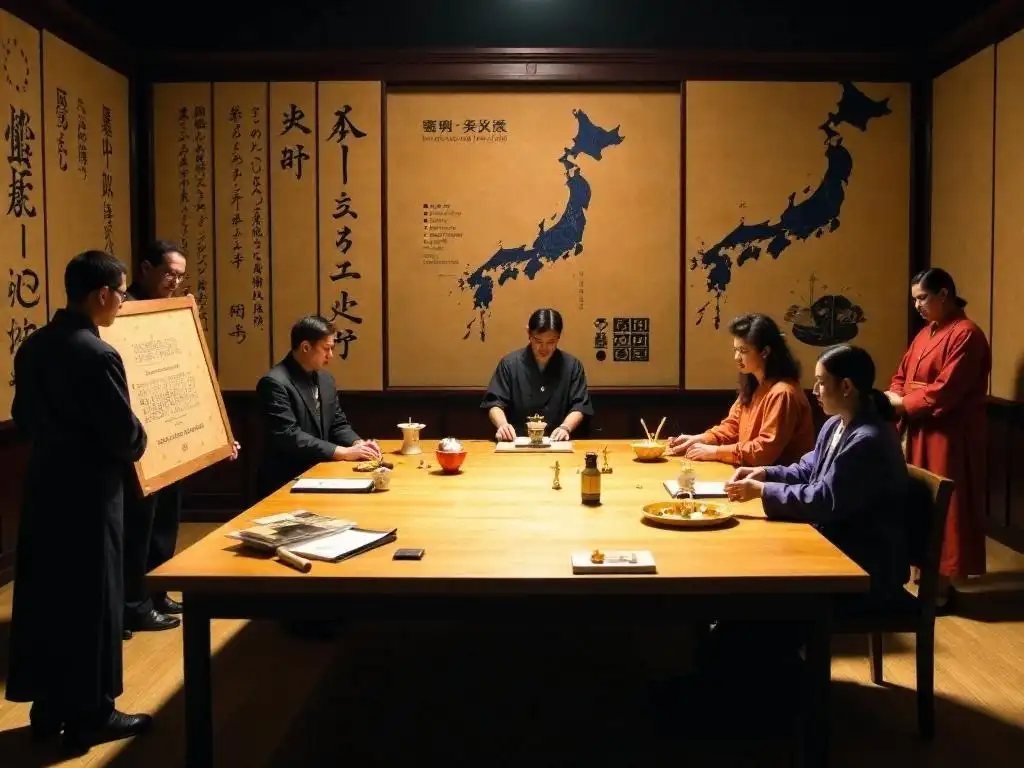
The arrival of Western science in Japan during the late feudal period sparked a complex interplay of resistance and adaptation among various segments of society. This dual approach shaped not only the reception of Western ideas but also the evolution of Japanese science and culture as a whole. Traditionalists often viewed Western science as a threat to Japan's established social and cultural norms, while progressive scholars and thinkers sought ways to integrate these new ideas into the existing frameworks. This dynamic tension ultimately laid the groundwork for significant transformations that would influence Japan's trajectory in the modern era.
Initial Resistance from Traditionalists in Feudal Japan
At the onset of Western influence, many traditionalists in feudal Japan were cautious, if not outright resistant, to the influx of foreign ideas and practices. This resistance stemmed from a deep-seated belief in the superiority of Japanese culture and the Confucian ideals that underpinned the social hierarchy. Scholars and samurai, who held significant sway over public opinion, often viewed Western science as a challenge to their authority and the established order.
The Tokugawa shogunate, which had maintained a policy of sakoku (closed country) for over two centuries, was particularly wary of foreign influences. The government feared that exposure to Western innovations could destabilize the social fabric and erode the values that had sustained its rule. Consequently, any engagement with Western science was often met with skepticism, and efforts to promote it were stifled. This initial resistance, however, would not last indefinitely, as the tides of change began to shift.
Adaptation Strategies Employed by Japanese Scholars
In contrast to the resistance exhibited by traditionalists, many Japanese scholars recognized the potential benefits of integrating Western scientific knowledge. These scholars developed various adaptation strategies, seeking to reconcile Western ideas with Japanese traditions. They began by studying Western texts, often translated from Dutch or Portuguese, to better understand the scientific principles that were being introduced.
One notable strategy was the establishment of informal study groups and networks among scholars interested in Western science. These groups facilitated the sharing of knowledge and fostered a collaborative environment, allowing for a more nuanced understanding of Western ideas. Additionally, some scholars began to advocate for the incorporation of Western scientific methods into existing educational frameworks, which helped to bridge the gap between traditional Japanese thought and emerging Western paradigms.
Through these adaptation strategies, scholars were able to cultivate a growing interest in Western science, laying the groundwork for a more systematic and widespread acceptance of these new ideas.
The Emergence of Rangaku (Dutch Learning)
The term Rangaku, or "Dutch learning," refers to the study of Western sciences and technologies that emerged during Japan's isolationist period. It became a crucial conduit for Western knowledge, primarily through the Dutch traders who were granted limited access to Japan via the island of Dejima. These traders provided a unique window into the scientific advancements of Europe, as their interactions with Japanese scholars allowed for the exchange of ideas and texts.
Rangaku encompassed a wide range of subjects, including medicine, astronomy, geography, and physics, and it played a pivotal role in transforming Japan’s scientific landscape. Notable figures such as Sugita Genpaku and Matsumoto Junan emerged during this period, translating key Western texts and disseminating knowledge among their peers.
Through the efforts of Rangaku scholars, Japan was able to adapt and integrate Western scientific knowledge while simultaneously preserving its cultural identity. This blend of tradition and innovation would set the stage for significant advancements in various fields, ultimately contributing to Japan's modernization in the late 19th century.
The Long-term Effects of Western Science on Japan's Development
The influence of Western science extended far beyond the immediate context of feudal Japan, leaving enduring impacts that would shape the nation’s trajectory in the modern world. As Japan began to embrace Western scientific principles, it experienced profound transformations across multiple sectors, from education to governance. The long-term effects of this integration can be seen in the critical developments that followed the end of the feudal era.
The Role of Western Science in the Meiji Restoration
The Meiji Restoration of 1868 marked a pivotal moment in Japan's history, representing a conscious effort to modernize and compete with Western powers. Western science played a crucial role in this transformation, as the Meiji government actively sought to adopt Western technologies and knowledge systems to enhance Japan's military, industrial, and educational capacities.
One of the most significant steps taken was the establishment of universities and institutions that focused on Western sciences, effectively reshaping Japan's educational landscape. The government recruited foreign experts and sent Japanese students abroad to study, ensuring that the nation could harness the latest advancements. This commitment to Western science not only strengthened Japan's position on the global stage but also fostered a spirit of innovation and inquiry that would resonate for generations.
Lasting Changes in Japanese Education Systems
The integration of Western science necessitated fundamental changes in Japan's education systems. Traditional Confucian-based education was gradually replaced by a more modern curriculum that emphasized scientific literacy and technical skills. The introduction of subjects such as mathematics, natural sciences, and engineering transformed the way knowledge was imparted.
The establishment of the Imperial University and other institutions facilitated the training of a new generation of scholars and professionals who would play vital roles in Japan’s modernization efforts. As a result, the Japanese education system became increasingly aligned with international standards, fostering a culture of research and innovation that would propel the nation forward.
Influence on Modern Japanese Identity and Global Positioning
The influence of Western science on Japan's development also had profound implications for the nation's identity and global positioning. As Japan embraced modern science and technology, it began to cultivate a sense of national pride and identity rooted in its ability to compete with Western powers. This shift was reflected in various aspects of society, including art, literature, and philosophy, as Japanese thinkers sought to blend Western ideas with traditional values.
Moreover, Japan's successful modernization efforts positioned it as a formidable player on the world stage, culminating in its emergence as a major imperial power by the early 20th century. The legacy of Western science continues to resonate in contemporary Japan, where the nation is recognized for its technological innovations and contributions to global scientific discourse. This legacy is a testament to the transformative power of cultural exchanges and the adaptability of Japanese society in the face of external influences.
Conclusion: The Legacy of Western Science Influence in Japan
The arrival of Western science in Japan during the late feudal era marked a significant turning point in the nation’s history. This period not only transformed Japan’s scientific and technological landscape but also reshaped its cultural identity and societal structures. As Western knowledge permeated various fields such as medicine, astronomy, and engineering, Japan began to adopt and adapt these ideas, leading to groundbreaking advancements.
The legacy of this influence is evident in modern Japan, where the integration of Western science laid the groundwork for a robust educational system and a thriving industrial sector. The shift in perspectives fostered by this cultural exchange encouraged a spirit of inquiry and innovation that propelled Japan into the ranks of the world’s leading nations. The enduring impact of Western science can be seen in Japan's contemporary achievements, illustrating the profound and lasting effects of this historical encounter.
Summary of Key Transformations in Feudal Japan
During the feudal period, several key transformations emerged as a direct result of Western scientific influence:
- Medical Advancements: The introduction of Western medicine led to the establishment of modern medical practices, which replaced traditional methods. This included the translation of key medical texts and the training of Japanese physicians in Western techniques.
- Technological Progress: Innovations in engineering and technology, such as the introduction of firearms and modern shipbuilding techniques, significantly altered Japan's military and maritime capabilities.
- Educational Reform: The establishment of schools and institutions focused on Western sciences encouraged a shift in educational priorities, promoting a curriculum that included mathematics, physics, and chemistry.
- Astronomical Developments: The adoption of Western astronomy allowed for more accurate navigation and calendar systems, impacting agriculture and trade.
These transformations not only modernized Japan but also facilitated its emergence as a significant player on the global stage.
Reflections on the Cultural Exchange Between East and West
The cultural exchange between East and West during the feudal era was complex and multifaceted. It was characterized by both the adoption of new ideas and a critical reassessment of traditional practices. While some Japanese scholars embraced Western knowledge, others were cautious, leading to a rich dialogue that challenged existing norms and fostered intellectual growth.
This exchange also encouraged a unique synthesis of Western and Japanese thought, resulting in a distinctive approach to science and technology that retained a deep respect for tradition while embracing innovation. The interactions between Japanese scholars and Western scientists laid the groundwork for a more open and inquisitive society, paving the way for Japan’s modernization in the Meiji era and beyond.
Further Reading on Western Science Influence in Japan
To delve deeper into the influence of Western science in Japan, a variety of resources are available for those interested in exploring this fascinating topic further.
Recommended Books and Articles
- "The Making of Modern Japan" by Bruce Cummings: This comprehensive book explores the political, social, and cultural transformations of Japan, including the impact of Western science.
- "Japan's Modern History: 1857-1937" by Masao Maruyama: A detailed examination of the changes in Japanese society and governance during the period of Western influence.
- "Western Science in Modern Japan: A Historical Perspective" by David G. Wittner: This work focuses specifically on the integration and adaptation of Western scientific knowledge in Japan.
Notable Museums and Historical Sites to Explore
- National Museum of Nature and Science, Tokyo: This museum showcases the history of science and technology in Japan, including exhibits on the impact of Western science.
- The Tokugawa Art Museum, Nagoya: While primarily an art museum, it also includes artifacts and exhibitions related to the cultural exchanges during the feudal era.
- Kushiro City Museum, Hokkaido: This museum highlights local history and the influence of Western science in the development of Hokkaido.
Exploring these resources and locations will provide a richer understanding of the profound transformations initiated by Western science in feudal Japan and their lasting legacy in contemporary society.
- Introduction to Western Science Influence in Japan
- Historical Background of Western Science in Japan
- The Impact of Western Science on Japanese Society
- Cultural Exchanges: Western Science and Japanese Tradition
- Resistance and Adaptation: A Dual Approach to Western Science
- The Long-term Effects of Western Science on Japan's Development
- Conclusion: The Legacy of Western Science Influence in Japan
- Further Reading on Western Science Influence in Japan
- What was the impact of Western science on feudal Japan?
- How did feudal Japan initially respond to Western ideas?
- What role did European traders play in the introduction of Western science?
- Were there any specific fields where Western science had a major influence?
- How did the cultural exchange between Japan and the West evolve over time?
Frequently Asked Questions
What was the impact of Western science on feudal Japan?
The arrival of Western science introduced new technologies and methods that transformed various aspects of Japanese society, including medicine, agriculture, and military practices.
How did feudal Japan initially respond to Western ideas?
Initially, feudal Japan was cautious and often resistant to Western ideas, focusing on maintaining traditional values while gradually adopting beneficial practices.
What role did European traders play in the introduction of Western science?
European traders acted as intermediaries, bringing scientific instruments, books, and knowledge that sparked interest and curiosity among Japanese scholars and leaders.
Were there any specific fields where Western science had a major influence?
Yes, Western science significantly impacted fields such as medicine, navigation, and military technology, leading to improved practices and innovations in feudal Japan.
How did the cultural exchange between Japan and the West evolve over time?
The cultural exchange evolved from initial skepticism to a more integrated approach, as feudal Japan began to embrace Western science while still preserving its unique cultural identity.
Final Reflection: The Enduring Influence of Western Science in Japan
The arrival of Western science in feudal Japan marked a pivotal transformation that reshaped not only the nation’s approach to knowledge but also its cultural identity. Today, as we navigate an increasingly interconnected world, the impact of this scientific awakening is more relevant than ever. The synthesis of Western scientific principles with traditional Japanese practices has fostered a unique blend of innovation and heritage that continues to influence various fields, from technology to medicine.
The integration of Western science into Japan's societal fabric has not only propelled advancements but has also sparked a cultural renaissance. The dialogue between Eastern and Western thought has enriched Japan's intellectual landscape, allowing for a dynamic exchange of ideas that resonates to this day. As the philosopher and historian Yuval Noah Harari aptly stated, "> The ability to create and share knowledge is what distinguishes humans from other animals." This underscores the profound significance of knowledge exchange, highlighting how the fusion of Western science with Japanese tradition has led to remarkable progress and cultural depth.
As we reflect on the lessons from the arrival of Western science in Japan, let us consider how we can apply this spirit of openness and curiosity in our own lives. Embrace the idea of learning from diverse perspectives, and seek to integrate new knowledge with your own experiences. In a world that often feels divided, the legacy of Japan's scientific transformation serves as a reminder of the power of collaboration and understanding. Take a moment to ponder how you can contribute to this ongoing dialogue and foster a culture of innovation in your community.
Embrace the Transformative Power of Knowledge!
Thank you for diving into the fascinating history of the arrival of Western science in feudal Japan! You’ve uncovered the profound transformations that shaped the nation's future. Now, it’s time to take that inspiration and turn it into action.
Here’s how you can engage further and deepen your understanding:
- Dive Deeper: Explore additional resources on the interplay between Western science and Japanese culture. Consider checking out books, documentaries, or online courses that delve into this significant historical period.
- Share the Knowledge: Spread the word! Discuss these transformations with friends or family, or share your insights on social media to ignite conversations about the impact of science across cultures.
- Join a Community: Connect with fellow enthusiasts. Find forums or local groups interested in history and science to exchange ideas and learn from one another.
What aspect of Western science’s impact on feudal Japan fascinates you the most, and how do you believe it has shaped modern Japan?