Unraveling the Mystery of Japan's Seclusion: A Historical Perspective
🌏 Japan's feudal era history reveals a complex tapestry of isolation and cultural richness. This article delves into the socio-political dynamics that…
Read article

Explore Isolationist Policies in Feudal Japan 🌸 to understand how the shogunate regulated foreign contact, controlled trade, and shaped Japan’s political and cultural development. Discover the impact of sakoku, restricted diplomacy, maritime regulations, and limited international exchange on Japanese society, economy, religion, and security. This expert-focused history resource offers valuable insights into Japan’s complex approach to foreign relations and its enduring legacy.

🌏 Japan's feudal era history reveals a complex tapestry of isolation and cultural richness. This article delves into the socio-political dynamics that…
Read article
🌏 Japan's isolationist policies impact not only shaped its feudal society but also influenced cultural exchanges, trade dynamics, and social hierarchies. This…
Read article
🌏 The Sakoku policy profoundly influenced Japan's foreign relations, establishing a period of isolation that shaped its cultural and societal development. This…
Read article
In examining the Feudal Japan isolationism strategy, we uncover how this defensive approach shaped the nation’s cultural identity and societal structures, offering…
Read article
The impact of isolation on samurai profoundly shaped their identity and societal roles during Japan's feudal era. This article delves into how…
Read article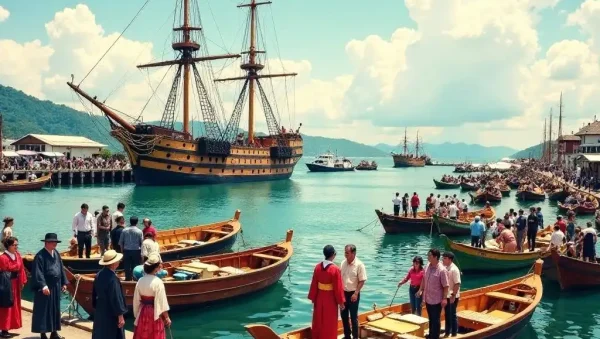
🌏 Dutch traders in Edo Japan played a crucial role in bridging cultural gaps during a time of isolation. Their unique position…
Read article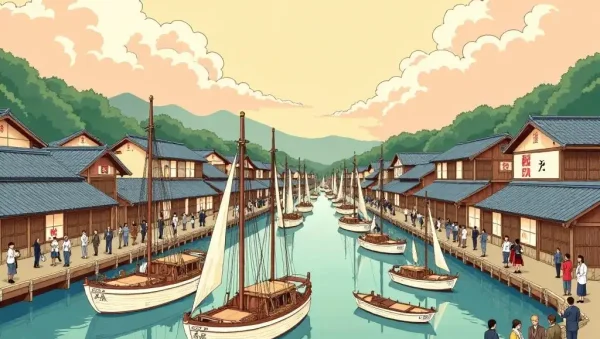
The end of Japan's Sakoku, a period of isolation, was triggered by a confluence of internal unrest, foreign pressures, and the desire…
Read article
Buddhism significantly influenced Japan's isolationist ideals, shaping its feudal culture and societal norms. This article delves into how Buddhist philosophies fostered a…
Read article
🌏 In Post-Isolation Japan foreign relations, the transition from insularity to global engagement reshaped cultural exchanges and diplomatic strategies, reflecting a nation…
Read article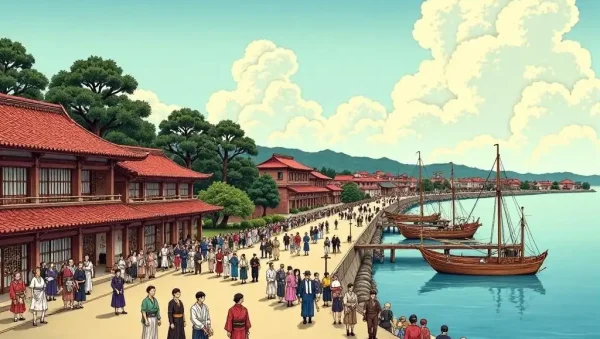
🌏 Japan's reopening in the 19th century marked a pivotal shift from isolation to engagement with the world, reshaping its cultural landscape…
Read article
🌍 The Ainu culture and isolation policies of Japan's feudal era reveal the profound effects of governmental neglect on indigenous communities. This…
Read article
🌸 Japan's feudal isolationism history profoundly shaped its national identity, fostering a unique cultural landscape. This article delves into how the country's…
Read articleExplore the history of isolationist policies in feudal Japan, with particular attention to the Tokugawa shogunate, sakoku, foreign relations, maritime restrictions, and Japan’s carefully regulated contact with the outside world. This subcategory explains how political authority, national security, trade, religion, and social order shaped Japan’s interactions with China, Korea, the Dutch, European merchants, and neighboring regions. Readers can expect expert-driven articles that place Japanese isolationism within the wider history of the Edo period and Japan’s evolving foreign policy.
Learn how the Tokugawa shogunate developed a centralized approach to foreign relations after the political upheaval of the Sengoku period. Articles examine how the bakufu used diplomacy, controlled maritime movement, and regulated overseas trade to protect its authority and preserve domestic stability.
This section also explores the relationship between isolationist policies and the feudal structure of Edo Japan. Discover how daimyo, samurai administrators, port officials, and regional domains operated within a system designed to limit unauthorized foreign influence while maintaining carefully supervised international connections.
Discover the origins and historical meaning of sakoku, the term commonly associated with Japan’s restricted foreign relations during the Edo period. Rather than describing a complete closure, sakoku involved a network of laws, permits, checkpoints, maritime controls, and diplomatic arrangements that managed how people, goods, and information entered or left Japan.
Readers will learn why historians often describe Tokugawa Japan as selectively isolated rather than entirely cut off. The subcategory examines the limits of the sakoku concept, showing how Japan continued to communicate and trade through approved channels while restricting uncontrolled travel, missionary activity, and foreign settlement.
Explore the maritime laws that shaped Japan’s foreign relations, including restrictions on overseas travel, shipbuilding, and unauthorized commerce. These policies aimed to prevent piracy, suppress unregulated trade, and reduce the possibility that rival powers could exploit Japan’s coastal regions.
Articles also explain how coastal surveillance and port administration supported the Tokugawa political system. From controlled harbors to official travel documents, readers can discover how the shogunate managed the movement of merchants, missionaries, sailors, and foreign vessels throughout early modern Japan.
Understand why Christian missions became a major concern for the Tokugawa government. Portuguese and Spanish missionaries established influential networks in Japan during the sixteenth century, and some daimyo converted to Christianity, creating fears that religious allegiance could undermine political loyalty.
This section examines the suppression of Christianity, the persecution of Japanese Christians, and the use of temple registration systems to identify suspected believers. It also considers how religious control became an important part of Japan’s isolationist policies and domestic security strategy.
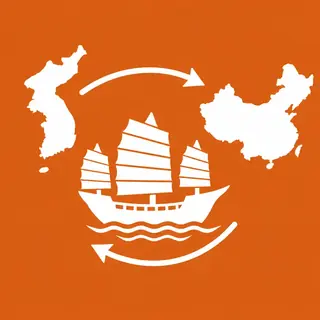
Learn how Japan maintained important international relationships despite its restrictive foreign policy. Chinese merchants, Korean diplomatic missions, and Dutch traders all played distinctive roles in the foreign relations of the Tokugawa period, operating through regulated ports and officially recognized channels.
Readers can explore the commercial and cultural exchanges that continued during the Edo period, including the movement of silk, books, medicine, scientific knowledge, art, and luxury goods. These connections demonstrate that Tokugawa isolationism was a policy of controlled engagement rather than total separation from the world.
Discover why Nagasaki became the central gateway for Japan’s limited contact with foreign countries. Through the Dutch trading post at Dejima, the shogunate obtained access to European goods, news, maps, medical texts, and technical knowledge while keeping foreign merchants under strict supervision.
This section introduces Rangaku, or “Dutch learning,” and explains how restricted foreign exchange influenced Japanese science, medicine, geography, astronomy, and military knowledge. Articles reveal how intellectual curiosity continued to flourish within the boundaries imposed by Tokugawa foreign policy.
Examine how isolationist policies affected different groups within feudal Japanese society. Samurai, farmers, merchants, religious institutions, coastal communities, and foreign visitors experienced the regulations of the shogunate in different ways, making isolation a complex social and political system.
Readers will also learn about travel restrictions, alternate attendance, domain obligations, and the ways domestic mobility was monitored. These policies strengthened centralized control while helping the Tokugawa government manage daimyo power and maintain peace across Japan.
Explore the long-term effects of Japan’s restricted foreign relations, including the development of a stable domestic economy, urban culture, commercial networks, and distinctive intellectual traditions. Isolationist policies helped shape the character of the Edo period, but they also created challenges as global maritime powers expanded their presence in East Asia.
This section follows the gradual breakdown of sakoku, from increasing contact with Russia and European powers to the arrival of Commodore Matthew Perry and the United States in the nineteenth century. Discover how the end of Tokugawa isolation contributed to the collapse of the shogunate and the transformation of Japan’s foreign policy during the Meiji Restoration.
Isolationist policies were regulations used primarily by the Tokugawa shogunate to control Japan’s foreign relations, overseas travel, Christian activity, maritime trade, and contact with foreign powers. These measures limited unauthorized interaction while preserving selected diplomatic and commercial relationships.
No. Japan was not completely cut off from the outside world. The shogunate permitted controlled exchanges with China, Korea, the Dutch, and the Ryukyu Kingdom through designated ports and official channels, especially at Nagasaki.
Sakoku is commonly translated as “closed country” and is used to describe Tokugawa Japan’s restrictive foreign policy. Modern historians often emphasize that sakoku involved regulated international contact rather than absolute national isolation.
The shogunate viewed Christianity as a potential threat because missionaries could build powerful transnational networks and encourage loyalty to religious authorities outside Japan. Christian activity was therefore associated with political instability, foreign intervention, and challenges to Tokugawa rule.
Japan’s isolationist system weakened as foreign ships increasingly entered East Asian waters. The arrival of Commodore Perry in 1853 pressured the shogunate to open ports, leading to unequal treaties, political conflict, and the eventual collapse of the Tokugawa regime in 1868.