
The Zen Influence: How Buddhism Shaped Japan's Isolationist Ideals


Welcome to Feudal Japan History, where we embark on an intriguing journey through the rich tapestry of Japan's feudal era. Here, we delve deep into the historical, cultural, and societal threads that wove this captivating period. In our featured article, "The Zen Influence: How Buddhism Shaped Japan's Isolationist Ideals," we uncover the profound impact of Buddhism on Japan's foreign relations and isolationist policies. Curious about how a spiritual path influenced a nation’s stance toward the world? Join us as we explore the delicate balance between faith and diplomacy, enticing you to delve deeper into the mysteries of feudal Japan.
The interplay between Buddhism and Japan's isolationist ideals is a compelling narrative that transcends mere historical facts, delving into the very fabric of Japanese identity and societal structure. During the feudal era, particularly from the 12th to the 19th centuries, Japan adopted a policy of sakoku, or "locked country," which significantly restricted foreign influence and interaction.
Central to this policy were the teachings of Zen Buddhism, which not only shaped the spiritual landscape of Japan but also reinforced the nation’s inclination towards self-sufficiency and isolation. In this article, we will explore how Buddhism influenced Japan’s isolationist mentality, focusing on historical developments, cultural implications, and the broader societal shifts that emerged during this pivotal era.
The Historical Context of Buddhism in Japan
Buddhism was introduced to Japan from Korea in the 6th century, gradually intertwining with the indigenous Shinto beliefs. By the time of the Kamakura period (1185-1333), Zen Buddhism had gained prominence among the samurai class, emphasizing discipline, meditation, and a direct experience of enlightenment. This period marked a significant transformation in Japanese society, as the teachings of Zen began to permeate various aspects of daily life and governance.
- Key Developments:
- The establishment of Zen monasteries as centers of learning and culture.
- The influence of Zen on samurai ethics and conduct.
- The intersection of Zen philosophy with the arts, including tea ceremonies and ink painting.
The adoption of Zen Buddhism provided a framework through which the samurai class interpreted their role in society, emphasizing values such as loyalty, honor, and a deep connection to nature. As these ideals took root, they contributed to a collective mindset favoring seclusion from external influences.
The Role of Zen Buddhism in Shaping Isolationist Policies
During the Edo period (1603-1868), the Tokugawa shogunate implemented a series of isolationist policies aimed at maintaining internal stability and minimizing foreign interference. The principles of Zen Buddhism played a crucial role in justifying these policies:
- Self-Reliance: Zen teachings encouraged self-sufficiency and a focus on the inner self, fostering an environment where reliance on foreign goods or ideas was viewed with skepticism.
- Detachment from Materialism: The Zen emphasis on simplicity and minimalism resonated with the shogunate's desire to curb the influence of Western commercial interests.
- Cultural Homogeneity: Zen’s focus on unity and harmony reinforced a sense of national identity that was crucial in the face of potential foreign threats.
This ideological framework was pivotal in shaping Japan's response to Western encroachment, culminating in the sakoku policy that lasted for over two centuries.
Cultural Implications of Buddhism on Isolationist Ideals
The cultural landscape of Japan during its isolationist period was deeply influenced by Zen Buddhism, which permeated art, literature, and social customs.
- Art and Aesthetics: The Zen philosophy of wabi-sabi, which embraces the beauty of imperfection and transience, found expression in traditional Japanese arts such as ceramics, gardening, and poetry. This aesthetic not only reflected a cultural identity but also a resistance to foreign artistic influences.
- Social Customs: Zen practices, such as the tea ceremony, became emblematic of Japanese culture, fostering a sense of community and shared values that were introspective and self-contained.
The cultural implications of Buddhism extended beyond mere artistic expression; they laid the groundwork for a unique Japanese identity that thrived in isolation.
Conclusion
The relationship between Buddhism and Japan's isolationist ideals is a fascinating study of how spiritual beliefs can shape national policies and cultural identity. As we delve further into the various facets of this topic, it becomes clear that the Zen influence not only fortified Japan's resolve to remain isolated but also enriched its cultural heritage in profound ways. Through understanding this intricate connection, we gain valuable insights into the historical trajectory of Japan and the enduring legacy of its feudal era.
- The Historical Context of Buddhism in Japan
- The Role of Zen Buddhism in Shaping Isolationist Policies
- Cultural Implications of Buddhism on Isolationist Ideals
- Conclusion
- What is the main theme of the article "The Zen Influence: How Buddhism Shaped Japan's Isolationist Ideals"?
- How did Buddhism contribute to Japan's isolationist ideals?
- What role did Zen Buddhism play in shaping Japan's culture?
- How did Japan's feudal system interact with Buddhism?
- What were the societal impacts of Buddhism on feudal Japan?
Introduction to Buddhism and Japan's Isolation

Buddhism, as a profound philosophical and religious system, has played a pivotal role in shaping Japan's identity, particularly during its isolationist periods. The relationship between Buddhism and Japan's isolation is multifaceted, reflecting the ways in which Buddhist teachings influenced not only the spiritual landscape but also the sociopolitical framework of the nation. This section will explore the arrival of Buddhism in Japan and its subsequent impact on society, laying the groundwork for understanding how these elements contributed to Japan's isolationist ideals.
Overview of Buddhism's Arrival in Japan
Buddhism was introduced to Japan in the mid-6th century, primarily through cultural exchanges with the Korean kingdom of Baekje. Historical texts, such as the Nihon Shoki (Chronicles of Japan), document this significant event around 552 CE when a delegation from Baekje presented the Japanese Emperor with Buddhist scriptures and images. This introduction marked the beginning of a transformative period in Japanese history.
- Key Events Leading to Buddhism's Introduction:
- 552 CE: Arrival of Buddhism in Japan via Baekje.
- Spread of Buddhist Texts: Initial dissemination of Buddhist texts and practices among the Japanese elite.
- Support from the Imperial Family: The early adoption of Buddhism by influential figures, including Empress Suiko and Prince Shotoku, who promoted Buddhist teachings.
As Buddhism took root, it began to interact with the indigenous Shinto beliefs, leading to a unique syncretism that characterized early Japanese spirituality. This blend of beliefs fostered a culture that valued both the spiritual guidance of Buddhism and the ancestral worship of Shinto.
The Initial Impact of Buddhism on Japanese Society
The arrival of Buddhism in Japan had profound implications for various aspects of society, including politics, culture, and social structure.
- Political Influence:
- Buddhism provided a framework that legitimized the authority of the imperial family. The teachings emphasized the moral responsibility of rulers to govern justly, aligning with the Confucian ideals that were also gaining traction at the time.
- Temples became centers of political power and influence; for instance, the Horyu-ji Temple, established in the 7th century, served as a symbol of the imperial family's commitment to Buddhism.
- Cultural Developments:
- The introduction of Buddhist art and architecture transformed the Japanese aesthetic landscape. Temples, sculptures, and paintings reflected the core tenets of Buddhism, influencing various artistic expressions throughout the centuries.
- Literary works such as the Tale of Genji incorporated Buddhist themes, illustrating the integration of Buddhist philosophy into Japanese literature.
- Social Structure:
- The establishment of monastic communities created a new social class, leading to the rise of monks as influential figures in society. These monks often acted as mediators between the ruling class and the common people, helping to disseminate Buddhist teachings.
- The Buddhist concept of impermanence resonated with the Japanese worldview, fostering a culture of introspection and contemplation, which can be seen in practices such as Zen meditation.
The initial impact of Buddhism on Japanese society laid the groundwork for a cultural and spiritual identity that would later influence Japan’s isolationist policies. The teachings and practices that emerged from Buddhism played a crucial role in shaping societal norms, ultimately contributing to the development of Japan's unique approach to foreign relations and self-isolation.
The Role of Zen Buddhism in Shaping Isolationist Ideals

Zen Buddhism: Principles and Practices
Zen Buddhism, a prominent school of Mahayana Buddhism, emerged in China and later flourished in Japan from the late 12th century onward. It emphasizes direct experience and meditation (zazen) as paths to enlightenment, rather than reliance on scriptures. Central to Zen practice are several key principles:
- Simplicity: Zen encourages a minimalist lifestyle, promoting clarity and focus.
- Mindfulness: Practitioners are urged to live in the present moment, cultivating awareness in daily activities.
- Non-attachment: Zen teaches the importance of letting go of material desires and ego, fostering a sense of inner peace.
These principles foster an environment conducive to introspection and self-discipline, which would later resonate with Japan’s isolationist policies. The aesthetic of Zen also influenced various forms of Japanese art, including garden design, tea ceremonies, and calligraphy, all reflecting the values of simplicity and harmony with nature.
The Connection Between Zen Philosophy and Isolationism
The philosophical underpinnings of Zen Buddhism played a pivotal role in shaping Japan's isolationist ideals, particularly during the Edo period (1603-1868). Here are some critical connections:
- Emphasis on Self-Reliance: Zen's focus on individual meditation and enlightenment encouraged a mindset of self-sufficiency, reducing reliance on foreign influences. This concept aligned well with the Tokugawa shogunate’s policies that aimed to limit foreign contact.
- Cultivation of Inner Peace: The Zen pursuit of tranquility and detachment from worldly affairs helped justify Japan’s withdrawal from international engagement. The belief that spiritual fulfillment could be achieved through introspection led to a preference for isolation over external conflicts.
- Cultural Uniformity: Zen’s promotion of a cohesive national identity contributed to the shogunate's desire for a homogenous society, free from foreign ideas that could disrupt social order.
Through these connections, Zen Buddhism not only influenced personal spirituality but also provided a philosophical foundation for Japan’s broader isolationist strategies.
How Zen Influenced Japanese Culture and Governance
Zen Buddhism's impact on Japanese culture and governance is profound and multifaceted. Notable influences include:
- Art and Aesthetics: Zen principles permeated various art forms, fostering unique styles that emphasized simplicity and natural beauty. This aesthetic is evident in traditional Japanese gardens, where elements like rocks and water symbolize harmony and tranquility.
- Education and Literature: Zen teachings inspired a wave of literature and poetry that valued brevity and depth. Works like haiku poetry reflect the Zen ethos, capturing profound insights in minimalistic forms. Educational institutions during the Edo period also adopted Zen principles, emphasizing moral education and self-discipline.
- Political Philosophy: The governance structures during the Edo period were influenced by Zen’s ideals of order and discipline. The shogunate's policies often reflected a Zen-like approach, prioritizing societal harmony over individual freedoms. The practice of samu (work as meditation) was encouraged among the samurai class, linking governance with Zen principles of diligence and mindfulness.
Zen Buddhism significantly shaped not only Japan's cultural landscape but also its governance during the isolationist era, reinforcing the notion that internal harmony and self-sufficiency were paramount for a stable society.
Historical Context of Japan's Isolationist Policies
The historical context of Japan's isolationist policies is deeply intertwined with various socio-political and cultural influences, notably the teachings of Buddhism. This era, particularly during the Edo period, marked a significant departure from external engagement, as Japan turned inward to develop its unique identity. The isolationist policies, known as Sakoku, were established in the 17th century under the Tokugawa shogunate and lasted until the mid-19th century.
The motivations behind these policies were multifaceted, including the desire to maintain social order, control foreign influence, and preserve Japanese culture. The ruling class feared that uncontrolled foreign interactions could destabilize the political landscape and lead to unrest. Consequently, Buddhism played a crucial role, as its principles of peace, introspection, and self-cultivation resonated with the ideals of a harmonious society, reinforcing the need for isolation.
The Edo Period: A Time of Isolation
The Edo period (1603-1868) was characterized by profound changes in Japan’s political, social, and cultural fabric. Under Tokugawa Ieyasu's rule, Japan experienced significant stability, which allowed for the flourishing of various cultural practices, including Buddhism. The Tokugawa shogunate implemented strict regulations regarding foreign relations, limiting contact primarily to the Dutch and Chinese, while completely prohibiting any interactions with Western nations.
During this time, Buddhism influenced the populace in several ways:
- Cultural Development: Zen Buddhism, in particular, flourished during the Edo period, promoting arts such as ink painting, flower arranging, and the tea ceremony. These practices encouraged a deep appreciation for nature and simplicity, aligning with isolationist ideals.
- Social Order: Buddhist teachings emphasized moral discipline and community cohesion, which helped to maintain social harmony in a society that was largely agrarian and stratified.
- Philosophical Underpinnings: The focus on self-examination and mindfulness within Buddhism provided a philosophical backdrop that justified isolation as a means to cultivate a more profound national identity.
Through these channels, the Edo period solidified Japan's commitment to isolation, shaping its cultural and societal norms.
Key Figures in Japan's Isolationist Policies
Several key figures were instrumental in shaping Japan's isolationist policies. Their ideas and actions were influenced by Buddhist teachings and contributed to the formation of a cohesive national identity centered on isolation. Notable figures include:
- Tokugawa Ieyasu: The founder of the Tokugawa shogunate, Ieyasu's policies laid the groundwork for Sakoku. His emphasis on Confucianism and Buddhism as moral guides helped to legitimize the shogunate's authority and its isolationist stance.
- Matsura Takanobu: A feudal lord who initially engaged with foreign traders but later supported isolationist policies. His shifting stance reflects the broader tensions between engagement and isolation during the period.
- Yamamoto Tsunetomo: A samurai and author of "Hagakure," Tsunetomo's writings on Bushido and the samurai code intertwined with Buddhist ideals, reinforcing the value of loyalty and the importance of a self-contained society.
- Mizuno Tadakuni: As a reformist, Mizuno's policies during the early 19th century aimed to restore traditional values and strengthen isolationist policies, reflecting the enduring influence of Buddhism on governance.
These figures, through their actions and philosophies, contributed to the establishment and maintenance of Japan's isolationist policies during this pivotal period.
The Influence of Buddhism on Policy Formation
Buddhism's influence on Japan's isolationist policies can be observed in several key areas:
- Philosophical Justifications: Buddhist teachings provided a moral framework that justified the isolationist policies. The emphasis on inner peace and stability resonated with the ruling elite’s desire to avoid the chaos often associated with foreign influence.
- Education and Ideology: Buddhist institutions played a significant role in educating the populace about the virtues of self-sufficiency and introspection, promoting an isolationist ethos. This educational influence helped to cultivate a culture that valued internal development over external engagement.
- Art and Culture: Artistic expressions influenced by Buddhist principles, such as Zen gardens and minimalist aesthetics, became symbols of Japanese identity during the Edo period. This cultural reinforcement further legitimized the policies of isolation.
- Political Legitimacy: The Tokugawa shogunate utilized Buddhist institutions to bolster their political power, ensuring that the ideological underpinnings of isolation were deeply embedded within the governance structure.
Through these mechanisms, Buddhism significantly shaped the formation and execution of Japan's isolationist policies, underscoring its role in fostering a unique Japanese identity during a crucial historical epoch.
Buddhism's Contribution to Japan's Unique Identity

Buddhism has played a pivotal role in shaping the unique identity of Japan throughout its history, particularly during the feudal era. As a religious and philosophical system that arrived in Japan in the 6th century, Buddhism intertwined with Shinto beliefs and local customs, contributing to a distinct cultural identity. Its teachings influenced the social hierarchy, arts, and governance, establishing a framework for understanding life and death, which resonated deeply within Japanese society.
The introduction of different Buddhist sects, such as Tendai, Shingon, and Zen, brought a wealth of diverse philosophies and practices that encouraged personal introspection and meditation. These sects shaped the way individuals interacted with each other and their environment, emphasizing harmony, simplicity, and the impermanence of life. In this context, Buddhism became more than a religion; it served as a cornerstone of Japan's cultural identity, shaping its customs, art, and even its political landscape.
The Integration of Buddhist Values in Feudal Society
Buddhism's integration into feudal Japanese society can be observed through various aspects, particularly in the way it influenced the samurai class. Samurai were not only warriors but also scholars and practitioners of Zen Buddhism. The principles of Zen, with its focus on discipline, mindfulness, and the pursuit of enlightenment, found fertile ground among the samurai. This led to a unique blend of martial prowess and spiritual depth, where the warrior's path was seen as a means to achieve personal enlightenment.
In addition, the Buddhist concept of karuna (compassion) permeated social relations, promoting a sense of duty and loyalty. This was crucial in maintaining the feudal hierarchy, as vassals were expected to demonstrate loyalty to their lords, who, in turn, were charged with protecting their subjects. The resulting social contract was underpinned by Buddhist ethics, creating a stable environment where feudal relations could flourish.
Buddhism also influenced art and architecture during this period. Temples and gardens, designed to reflect the principles of nature and tranquility, became central to Japanese aesthetics. For example, the famous Zen gardens exemplify the integration of Buddhist values into everyday life, promoting meditation and reflection. Thus, the integration of Buddhist values in feudal society not only shaped individual behavior but also defined cultural practices and artistic expressions.
How Buddhism Fostered a Sense of National Identity
Buddhism's role in fostering a sense of national identity in Japan cannot be overstated. As the country faced numerous external threats and cultural influences, Buddhism served as a unifying force, helping to solidify a distinct Japanese identity. The shared beliefs and practices associated with Buddhism transcended regional differences and created a common cultural framework.
During the Edo period, the Tokugawa shogunate utilized Buddhism to reinforce social order and stability. By promoting certain sects and aligning with Buddhist institutions, the shogunate was able to control the populace and maintain peace. The emphasis on harmony and social responsibility in Buddhist teachings resonated well with the ideological underpinnings of the shogunate, further intertwining Buddhism with national identity.
Moreover, the artistic expressions of Buddhism, such as calligraphy, painting, and sculpture, contributed to a cultural narrative that celebrated Japan's unique heritage. The imagery and symbolism found in Buddhist art often reflected indigenous themes, reinforcing the idea of a cohesive national identity that was distinctly Japanese. This blending of cultural elements not only enriched Japan's artistic landscape but also solidified its national consciousness.
The Role of Buddhism in Cultural Isolation
Buddhism played a significant role in Japan's cultural isolation, especially during the Edo period (1603-1868), when the country adopted an isolationist policy known as sakoku. Under this policy, Japan severely limited foreign interactions, which allowed Buddhism to flourish in a relatively undisturbed environment. The absence of foreign influences led to a distinct evolution of Japanese Buddhism, emphasizing local practices and interpretations.
The isolationist policies encouraged the development of unique Buddhist schools, such as the Jodo Shinshu, which emphasized universal salvation and made Buddhism accessible to the common people. This democratization of Buddhism allowed for a broader participation in its practices and a deeper embedding of its values into the social fabric of Japan.
Cultural isolation also facilitated the preservation of traditional Japanese arts and crafts that were influenced by Buddhist aesthetics. The intricate designs of ceramics, textiles, and architecture reflected Buddhist themes and philosophies, creating a cohesive cultural identity that remained intact during periods of external pressure.
Buddhism's influence on Japan's isolationist ideals is profound. It not only shaped the nation's cultural identity and societal values but also provided a framework for understanding isolation as a means of preserving and cultivating a unique Japanese ethos.
The Relationship Between Buddhism and Foreign Relations
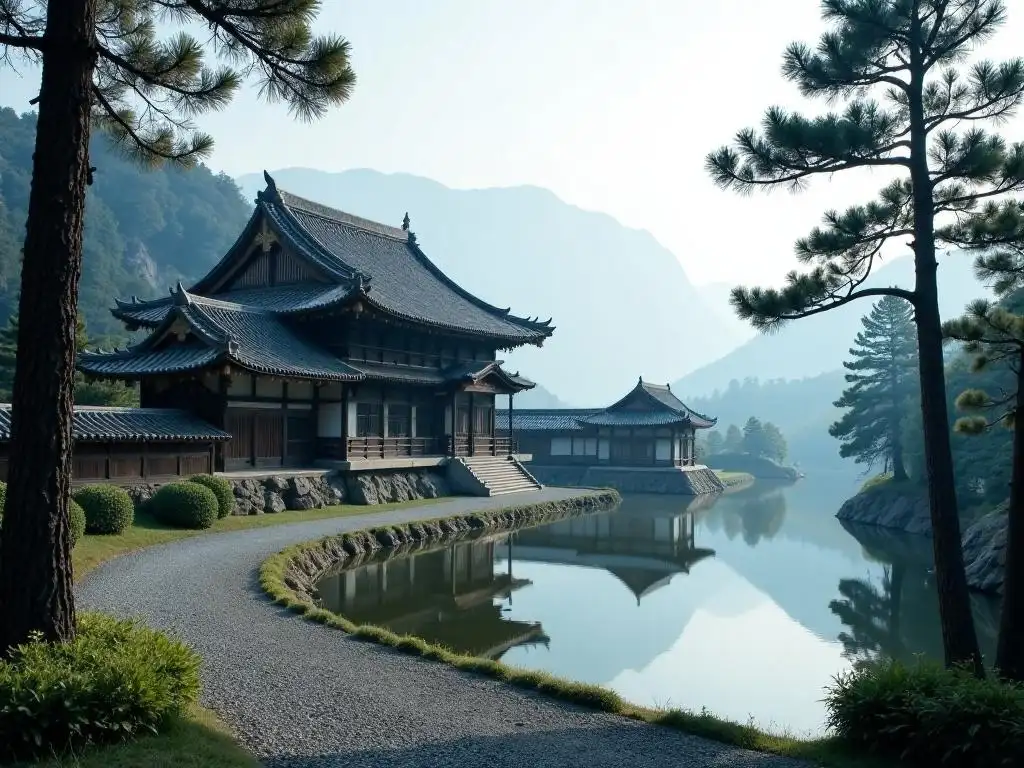
Buddhism's Stance on Foreign Influence and Trade
Buddhism, with its origins in India, made its way to Japan through cultural and commercial exchanges. However, as it established itself in Japanese society, the religion adopted a nuanced stance towards foreign influence and trade. Buddhism's core teachings emphasize detachment from material possessions and worldly desires, which inherently conflicts with the motivations behind trade and commerce.
In the context of Japan's isolationist policies, especially during the Edo period (1603-1868), Buddhist teachings encouraged a more introspective way of life. Monastic communities often viewed foreign interactions as distractions from spiritual pursuits. Temples encouraged the populace to focus on inner peace and enlightenment rather than the acquisition of wealth through foreign trade.
This philosophical stance was manifested in the way Japan approached foreign relations. While initial interactions were marked by curiosity and trade, the growing sentiment against foreign influence led to stricter regulations. The Tokugawa shogunate, influenced by these Buddhist principles, established a policy of sakoku (closed country) that limited foreign trade to only a few select entities, notably the Dutch, who were allowed to trade at Nagasaki under stringent regulations.
The Impact of Buddhist Teachings on Diplomatic Relations
Buddhist ideals significantly shaped Japan's diplomatic relations, particularly in how the nation interacted with its neighbors. The concept of ahimsa, or non-violence, prevalent in Buddhist teachings, fostered a diplomatic approach that prioritized peace and harmony over conflict.
Through the lens of Buddhism, diplomatic relations were often viewed as opportunities for mutual benefit and understanding rather than mere political maneuvering. For instance, during the Nara period (710-794), Japan actively engaged in diplomatic missions to Tang China, motivated by a desire to adopt Buddhist practices and knowledge. This era was characterized by the importation of Buddhist texts and the establishment of temples, which served as cultural bridges between nations.
Moreover, Buddhism’s emphasis on compassion influenced Japan's foreign policies, leading to a preference for negotiation over aggression. Such principles were evident during the Heian period (794-1185), where diplomatic envoys were often sent to China and Korea to foster goodwill and share cultural and religious knowledge rather than to assert dominance.
Case Studies of Foreign Relations Influenced by Buddhist Principles
Examining specific historical instances reveals how Buddhist principles directly influenced Japan's foreign relations.
- The Kamakura Period (1185-1333): During this time, the Mongol invasions prompted a strong national response. While the military leaders prepared for defense, Buddhist monks played a crucial role in rallying the population through prayers and rituals aimed at invoking divine protection. The eventual repulsion of the Mongols was seen not just as a military victory, but as a spiritual one, reinforcing the idea that Japan was under the protection of Buddhist deities.
- The Meiji Restoration (1868): This period marked a significant shift as Japan opened up to the West. However, Buddhist leaders and institutions were initially hesitant about too much foreign influence. They sought to adapt Buddhist teachings to modernize Japan while maintaining a sense of cultural identity. The tensions between embracing new foreign relations and preserving Buddhist values were evident in the debates surrounding the adoption of Western customs and practices.
- Diplomatic Relations with Korea: In the 17th century, Japan's relations with Korea were largely influenced by Buddhist ties. The shared cultural and religious heritage fostered a sense of kinship, which was critical in negotiations during periods of tension. Buddhist monks often acted as intermediaries, promoting peace and dialogue between the two nations, highlighting how Buddhism served as a diplomatic tool.
Buddhism's influence permeated Japan's foreign relations, shaping not only diplomatic strategies but also the very ethos of how Japan engaged with the world. The religion's emphasis on peace, introspection, and compassion created a framework that guided Japan's approach to foreign relations, particularly during times of isolation.
Conclusion: The Lasting Legacy of Buddhism on Japan's Isolationist Ideals

The interplay between Buddhism and Japan's isolationist ideals has left an indelible mark on the nation’s historical trajectory. The infusion of Buddhist philosophy into Japanese culture provided a framework through which the Japanese viewed their relationship with the outside world. This connection is evident in several key aspects:
- Philosophical Foundations: Buddhism introduced concepts such as impermanence and detachment, which influenced the Japanese mindset toward foreign interactions. By embracing these ideals, Japan cultivated a sense of self-reliance and introspection, laying the groundwork for its isolationist policies.
- Cultural Practices: Various Buddhist practices, including meditation and the appreciation for nature, fostered a distinct cultural identity that prioritized internal harmony over external engagement. This cultural introspection contributed significantly to Japan’s decision to limit foreign influence during the Edo period.
- Political Decisions: The Tokugawa shogunate, influenced by Buddhist teachings, implemented the sakoku policy, which restricted foreign trade and interaction. This political stance was not merely a strategic move but a reflection of deeply rooted Buddhist values that emphasized stability and order within society.
Summary of Key Points on Buddhism and Isolationism
- Buddhism’s Role: Buddhism played a critical role in shaping Japan’s worldview, fostering a sense of detachment from the chaotic external world.
- Cultural Identity: The insights derived from Buddhist philosophy helped form a unique cultural identity that valued inner peace and self-sufficiency.
- Historical Policies: The isolationist policies enacted during the Edo period were not just political strategies but were deeply intertwined with the spiritual and philosophical beliefs of the time.
| Key Aspect | Influence of Buddhism |
|---|---|
| Philosophical Views | Encouraged detachment and introspection |
| Cultural Practices | Promoted appreciation for nature and simplicity |
| Political Strategies | Led to the establishment of the sakoku policy |
Reflecting on the Modern Implications of Historical Isolationism
The legacy of Buddhism on Japan’s isolationist ideals extends into contemporary society, offering insights into how historical paradigms can influence modern governance and cultural identity. Today, Japan's unique blend of traditional and modern values reflects a continuity of the introspective nature fostered by Buddhism.
- Cultural Resilience: The emphasis on self-reliance and internal harmony continues to resonate in Japan's approach to foreign relations. This resilience is evident in economic policies that prioritize local industries while engaging selectively with global markets.
- Spiritual Reflection: The meditative practices rooted in Buddhism remain a significant aspect of Japanese culture, promoting mindfulness and a balanced approach to modern challenges.
- Global Interactions: While Japan has opened up to the world, the historical context of isolationism serves as a reminder of the importance of preserving cultural identity amidst globalization. This balance mirrors the Buddhist principle of navigating between attachment and detachment, offering a pathway for Japan to engage with the world without losing its unique heritage.
The profound influence of Buddhism on Japan's isolationist ideals not only shaped historical policies but also continues to inform the nation’s cultural and political landscape today. Understanding this legacy is crucial for comprehending Japan's distinctive approach to foreign relations in the modern era.
References and Further Reading on Buddhism and Japan's Isolation
Recommended Books and Articles
-
"Buddhism and the State in Sixteenth-Century Japan" by John W. Hall
This book explores the intricate relationship between Buddhism and political power during Japan's feudal period. Hall provides a detailed analysis of how Buddhist institutions influenced the governance and isolationist policies that emerged.
-
"Zen Mind, Beginner's Mind" by Shunryu Suzuki
A foundational text on Zen Buddhism, this book delves into the philosophical underpinnings of Zen practice. It offers insight into how these principles may have influenced Japan's cultural isolation and self-perception during the Edo period.
-
"The Culture of Japan as Seen through Its Literature" by Donald Keene
Keene examines various literary works that reflect the cultural milieu of Japan, including the impact of Buddhism on societal norms and isolationist attitudes. This resource is invaluable for understanding the broader cultural context.
-
"The Buddhist World of Southeast Asia" by Donald K. Swearer and Susan L. Huntington
While focused on Southeast Asia, this book provides comparative insights into how Buddhism shaped regional identities, which can help contextualize Japan's unique path toward isolationism.
-
"Japan's Isolation: A Cultural and Historical Overview" by Michael E. Auerbach
This article provides a comprehensive overview of the historical factors contributing to Japan's isolation, including the role of Buddhism as a unifying force that distanced Japan from external influences.
Additional Resources for Understanding Japanese Isolationism
-
Online Archives and Databases
Many universities and research institutions maintain online databases with primary sources related to Japanese history. Notable collections include:
- The National Diet Library of Japan
- The Tokyo University Historical Archives
- The Library of Congress - Japanese Historical Collections
-
Documentaries and Lectures
Various documentaries provide visual insights into Japan's feudal era and isolationist policies. Noteworthy recommendations include:
- "The Last Samurai: A Journey Through Japan's Feudal Era"
- "Japan's Isolation: A Historical Perspective"
-
Academic Journals
Journals such as The Journal of Asian Studies and Japanese Journal of Religious Studies frequently publish articles on Buddhism's influence on Japanese culture and isolationist policies.
-
Webinars and Online Courses
Platforms like Coursera and edX offer courses focused on Japanese history, providing in-depth analysis of Buddhism and its impact on isolationism.
These resources will provide a comprehensive foundation for further understanding the complex interplay between Buddhism and Japan's isolationist ideals.
Frequently Asked Questions
What is the main theme of the article "The Zen Influence: How Buddhism Shaped Japan's Isolationist Ideals"?
The article explores how Buddhism influenced Japan's isolationist policies, emphasizing the cultural and societal changes during the feudal era.
How did Buddhism contribute to Japan's isolationist ideals?
Buddhism encouraged self-reflection and inner peace, which fostered a preference for localized culture and a retreat from foreign influences during the feudal period.
What role did Zen Buddhism play in shaping Japan's culture?
Zen Buddhism emphasized simplicity and minimalism, significantly impacting Japanese art, architecture, and philosophy, thereby reinforcing isolationist values.
How did Japan's feudal system interact with Buddhism?
The feudal system allowed Buddhism to flourish under the support of samurai and daimyos, who saw it as a means to promote order and discipline in society.
What were the societal impacts of Buddhism on feudal Japan?
Buddhism provided a framework for moral conduct and community life, establishing a sense of identity and purpose that aligned with Japan's isolationist stance.
Final Reflection: Embracing the Harmony of Buddhism and Japan's Isolation
The profound connection between Buddhism and Japan's isolationist ideals continues to resonate in today's world. As we navigate an increasingly interconnected global landscape, the lessons of balance, introspection, and harmony that Buddhism offers are more relevant than ever. The intricate relationship between these two elements not only shaped Japan's historical trajectory but also serves as a reminder of the importance of mindful living in our fast-paced lives.
Culture is a living tapestry, woven from the threads of history, belief, and practice. The influence of Buddhism on Japan's isolationist policies has left an indelible mark on the nation's identity, fostering a unique blend of spirituality and self-reliance. As we witness the ongoing dialogue between tradition and modernity, we can appreciate how these ideals continue to shape societal values. In the midst of movement and chaos, keep stillness inside of you.
This quote encapsulates the essence of finding peace amidst the noise, a principle that remains vital in our contemporary society.
As we reflect on the teachings of Buddhism and their impact on Japan's isolation, let us take a moment to consider how we can incorporate these principles into our own lives. I invite you to explore the balance between engagement with the world and the need for personal reflection. In a time when distractions abound, embracing the wisdom of Buddhism can guide us toward a more centered and meaningful existence. By fostering a deeper understanding of ourselves and our surroundings, we can cultivate a sense of harmony that transcends borders and enriches our collective experience.
Embrace the Wisdom of Zen – Take Action Today!
Thank you for exploring the profound connection between Buddhism and Japan's isolationist ideals. You've uncovered insights that not only deepen your understanding of history but also invite you to reflect on your personal journey. Now, let’s put that knowledge into action!
- Read a Zen classic: Begin your exploration by immersing yourself in a significant Buddhist text, such as The Heart Sutra or The Dhammapada, to enrich your understanding of Zen principles.
- Practice mindfulness: Incorporate a daily mindfulness practice, whether through meditation or mindful walking, to truly embody the philosophies of Zen in your everyday life.
- Share your insights: Engage with friends or share your thoughts on social media. Connect with others interested in the topic by using the hashtag #ZenInJapan!
Which unique aspect of Zen teachings resonates with you the most, and how will you integrate it into your daily routine?