
The Unexpected Arrival: How Commodore Perry Changed Japan's Path Forever

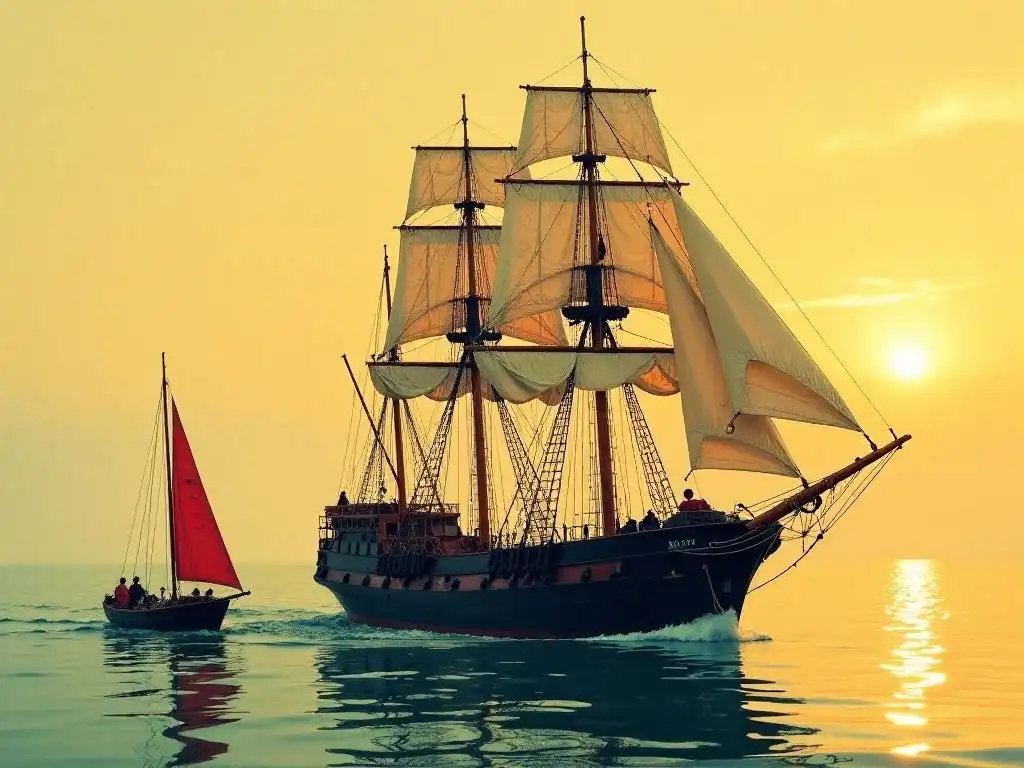
Welcome to Feudal Japan History, where we take you on a fascinating journey through the intricate tapestry of Japan's feudal era. Dive deep into the transformative moments that shaped a nation, starting with the compelling story of Commodore Perry and his unexpected arrival. Discover how this pivotal event not only altered Japan's foreign relations but also set the stage for a remarkable evolution in its societal landscape.
Are you ready to unravel the impact of Perry's mission and explore the ripple effects it had on Japan's future? Continue reading to uncover the layers of history that define this extraordinary period.
Introduction to Commodore Perry's Arrival in Japan
The arrival of Commodore Matthew Perry in 1853 marked a pivotal moment in Japanese history, ushering in an era of profound transformation that would alter the nation's trajectory forever. Perry, representing the United States Navy, sailed into Tokyo Bay with a fleet of "black ships," symbolizing the Western powers' growing interest in Japan and the broader Asia-Pacific region.
This encounter was not merely a maritime event; it signified the beginning of Japan's engagement with the outside world after centuries of self-imposed isolation under the Tokugawa shogunate. As we delve into the Commodore Perry impact on Japan, we will explore how this encounter catalyzed significant social, political, and economic changes, ultimately leading Japan towards modernization and a redefined role on the global stage.
Overview of Commodore Perry's Mission
Commodore Perry's mission was primarily aimed at establishing diplomatic and trade relations with Japan, which had been largely closed to foreign influence since the early 17th century. The United States sought to secure coaling stations for its whaling and merchant ships, as well as to protect American sailors and their interests in the region.
Perry's approach was characterized by a combination of diplomacy and military might, leveraging his naval power to compel the Japanese to engage in negotiations. His arrival set in motion a series of events that would ultimately force Japan to reckon with the realities of a changing world.
Historical Context of Japan Prior to Perry's Arrival
Before Perry's arrival, Japan was under the rule of the Tokugawa shogunate, which had maintained a strict isolationist policy known as sakoku. This policy limited foreign relations to a select few trading partners, such as the Dutch and the Chinese, and restricted Japanese citizens from traveling abroad. The cultural and societal landscape of Japan was heavily influenced by Confucian ideals, emphasizing social hierarchy and stability.
However, internal pressures, such as economic stagnation and peasant uprisings, were beginning to bubble beneath the surface, indicating that change was on the horizon. Understanding this historical context is crucial to grasping the magnitude of Perry's impact on Japanese society.
The Impact of Commodore Perry on Japan
Commodore Perry's Influence on Japanese Society
Perry's arrival had a profound influence on Japanese society, challenging long-held beliefs and practices. His insistence on trade and communication with the West forced Japanese leaders to reconsider their isolationist stance. As a result, a wave of Westernization began to permeate various aspects of Japanese life, including education, military organization, and even fashion. The Japanese elite, notably the samurai class, found themselves at a crossroads, grappling with the need to modernize while retaining their cultural identity. This tension laid the groundwork for significant societal shifts in the years that followed.
The Shift in Japanese Foreign Relations Post-Perry
The immediate aftermath of Perry's expedition resulted in the Treaty of Kanagawa in 1854, which marked Japan's first formal engagement with a Western power. This treaty not only opened two ports to American ships but also paved the way for similar agreements with other nations, leading to an era of unequal treaties.
Japan transitioned from a state of isolation to one of increased foreign interaction, which would eventually contribute to its emergence as a global player. This shift in foreign relations was critical in shaping Japan's diplomatic strategies and its approach to international affairs in the late 19th and early 20th centuries.
Economic Changes Initiated by Commodore Perry's Arrival
The economic repercussions of Commodore Perry's mission were equally significant. The influx of Western goods and technologies spurred economic modernization in Japan. The introduction of steam-powered vessels and Western industrial techniques transformed not only trade practices but also local economies. As Japan began to engage with the global market, it experienced rapid industrialization, leading to the establishment of a more robust and diversified economy. This economic transformation played a crucial role in supporting Japan's aspirations for modernization and military strength, ultimately altering its position in international politics.
As we continue to explore the Commodore Perry impact on Japan, we will delve deeper into each of these areas, uncovering the layers of change that reshaped Japan in the wake of this unexpected arrival.
The Treaty of Kanagawa: A Turning Point
The Treaty of Kanagawa, signed on March 31, 1854, marked a significant turning point in Japan's history and its relationship with Western powers. This agreement was the first of its kind that Japan entered into with a foreign nation, symbolizing a shift from its centuries-long policy of isolation under the sakoku (closed country) policy.
Commodore Matthew Perry's expedition to Japan, with his "black ships" and demands for trade, forced Japan to reconsider its stance on foreign relations. The treaty not only opened Japan's ports to American vessels but also set the stage for further international engagements, ultimately leading to the modernization of Japan.
The signing of the treaty led to a seismic shift in Japan's political landscape, as it challenged the existing power structures and ideologies. The shogunate, which had maintained strict isolationist policies, faced criticism for its inability to protect Japanese sovereignty. This event catalyzed the eventual decline of the Tokugawa shogunate and increased the call for reform, paving the way for the Meiji Restoration in 1868.
Key Provisions of the Treaty of Kanagawa
The Treaty of Kanagawa included several key provisions that fundamentally altered Japan's relations with the world:
- Opening of Ports: The treaty mandated the opening of two ports, Shimoda and Hakodate, to American ships for supplies and repairs.
- Establishment of a Consulate: The United States was granted permission to establish a consulate in Shimoda, facilitating diplomatic and trade relations.
- Protection of American Citizens: The treaty included clauses ensuring the safety and protection of American nationals in Japan, laying the groundwork for future foreign interactions.
- Facilitation of Trade: While the treaty did not establish formal trade terms, it opened the door for subsequent negotiations that would lead to commercial treaties with other Western nations.
These provisions were not merely administrative; they represented a significant departure from Japan's previous isolationist policies and set the foundation for Japan's engagement with global trade and diplomacy.
Reactions within Japan to the Treaty
The reactions to the Treaty of Kanagawa within Japan were mixed, reflecting a spectrum of opinions that ranged from support to vehement opposition.
- Supporters of Opening: Some factions, particularly those who recognized the necessity of modernization and engagement with the West, supported the treaty. They argued that embracing foreign trade and technology was crucial for Japan's survival and development.
- Opponents of the Treaty: Conversely, many others viewed the treaty as a capitulation to foreign powers and a threat to Japan's sovereignty. Nationalists and traditionalists were particularly vocal, fearing that opening Japan would lead to cultural and political domination by the West.
This internal conflict highlighted the growing tensions within Japanese society and politics, setting the stage for more significant upheavals in the following decades.
Long-term Effects of the Treaty on Japan's Development
The long-term effects of the Treaty of Kanagawa were profound, influencing Japan's trajectory in multiple dimensions:
- End of Isolation: The treaty dismantled the long-standing policy of isolation, encouraging further treaties with Western nations and leading to a more open Japan.
- Modernization Efforts: In response to the perceived threats from Western powers, Japan initiated significant reforms aimed at modernization, including military, economic, and educational reforms.
- Rise of Nationalism: The reaction to foreign encroachment fostered a sense of nationalism that fueled movements advocating for the restoration of imperial rule and the eventual Meiji Restoration.
- Global Engagement: Japan's entry into international politics and trade set the stage for its emergence as a global power by the late 19th and early 20th centuries.
These effects were pivotal in transforming Japan from a feudal society into a modern nation-state, reshaping its identity and role in the world.
Cultural Exchanges Prompted by Commodore Perry
Commodore Perry's arrival did not only mark a political and diplomatic shift; it also initiated a rich exchange of culture between Japan and the West. The interactions that followed were instrumental in redefining Japanese society, arts, and intellectual life.
Introduction of Western Ideas and Technology
The influx of Western ideas and technology profoundly influenced Japanese society. As Japan opened its doors to the West, it began to adopt various Western advancements, particularly in:
- Industry and Infrastructure: The introduction of steamships, railroads, and telegraph systems revolutionized Japan’s transport and communication networks.
- Political Ideologies: Concepts such as democracy, individual rights, and constitutional government began to permeate Japanese thought, sparking debates about governance and society.
- Science and Medicine: The Western approach to science and medicine led to significant advancements in public health and education, as Japan sought to modernize its healthcare system.
This exchange of ideas contributed to a rapid transformation in Japanese society, aligning it more closely with contemporary global developments.
Changes in Japanese Art and Literature Influenced by the West
The arrival of Western culture also had a substantial impact on Japanese art and literature. Artists and writers began to experiment with new styles and themes, leading to innovations in traditional forms. Key changes included:
- Art Movements: The introduction of Western painting techniques and perspectives led to the emergence of new art movements in Japan, blending traditional Japanese aesthetics with Western influences.
- Literary Themes: Japanese literature began to explore themes of individualism and existentialism, inspired by Western literary traditions, which marked a departure from the collective narratives of the past.
- Cultural Fusion: The synthesis of Eastern and Western elements created a unique cultural landscape, reflected in the works of artists and authors who sought to define a new Japanese identity.
These changes fostered a vibrant cultural scene that played a crucial role in shaping modern Japanese identity.
The Impact on Japanese Education and Scientific Advancements
The cultural exchanges initiated by Commodore Perry also had a lasting impact on education and scientific advancements in Japan. In response to the challenges posed by Western powers, Japan recognized the need for an educated populace capable of navigating the complexities of modernity.
- Educational Reforms: Japan established a new educational system modeled after Western institutions, promoting literacy and technical skills among its citizens. Schools began teaching subjects such as mathematics, science, and foreign languages, essential for modernization.
- Scientific Research: The influx of Western scientific knowledge stimulated research and innovation in various fields, including medicine, engineering, and agriculture. Japan's commitment to scientific advancement became evident as it began to produce its own researchers and scholars.
- Cultural Institutions: The establishment of museums, libraries, and universities facilitated the dissemination of new knowledge and cultural exchange, further embedding Western ideas within Japanese society.
These educational improvements laid the groundwork for Japan’s rapid modernization, enabling it to emerge as a formidable global power by the early 20th century.
Resistance and Adaptation: Japan's Response to Change

The arrival of Commodore Matthew Perry in 1853 marked a significant turning point in Japan’s history, triggering a complex interplay of resistance and adaptation within Japanese society. Initially, the Tokugawa shogunate, which had maintained a policy of isolation for over two centuries, faced a profound crisis upon encountering Western powers. The immediate reaction was one of resistance; many leaders and samurai were deeply concerned about the implications of foreign influence on Japanese sovereignty and traditional culture.
However, as the reality of the situation began to set in, Japan's response evolved. Faced with the technological superiority of Perry's fleet and the potential threat of military action, the shogunate was compelled to negotiate. This shift exemplified a broader trend of adaptation where, instead of outright rejection of foreign influence, Japan began to selectively assimilate Western technologies and ideas. This duality of resistance and adaptation laid the groundwork for Japan's subsequent modernization efforts, as the nation sought to preserve its cultural identity while embracing necessary changes.
The Samurai Class and Their Reaction to Commodore Perry
The samurai class, traditionally the defenders of the Tokugawa regime, had mixed reactions to Commodore Perry's arrival. Initially, many samurai were staunchly opposed to any form of foreign engagement, viewing it as a direct threat to their way of life and the status quo of the feudal system. They believed that opening Japan to international trade would undermine their authority and lead to the erosion of Japanese culture.
However, as the political landscape shifted and the reality of Japan's precarious position in the face of Western imperialism became evident, some samurai began to reconsider their stance. Influential figures within the class recognized the necessity of modernization to strengthen Japan against foreign powers. This internal conflict among the samurai ultimately contributed to the rise of factions that supported engagement with the West, leading to a reevaluation of their roles in a rapidly changing society.
The Role of the Meiji Restoration in Embracing Change
The Meiji Restoration of 1868 was a pivotal moment in Japan's history that encapsulated the nation's embrace of change following Perry's arrival. This period marked the end of the Tokugawa shogunate and the restoration of imperial rule under Emperor Meiji. It represented a collective acknowledgment among Japanese leaders that the country's survival depended on rapid modernization and reform.
The Meiji government implemented sweeping changes, including the abolition of the feudal class system, the establishment of a centralized government, and the adoption of Western technologies and educational practices. This transformation was fueled by the desire to compete on an equal footing with Western powers and to prevent the fate that befell other Asian nations that succumbed to colonial domination. The Meiji Restoration not only redefined Japan's political landscape but also instilled a sense of national unity and purpose, guiding the nation towards becoming a formidable global power.
How Commodore Perry's Arrival Sparked Reform Movements
Commodore Perry's arrival in Japan ignited a series of reform movements that profoundly changed the course of Japanese society. His demand for Japan to open its ports for trade with the United States was a wake-up call that highlighted the urgent need for modernization. In response, various factions emerged, advocating for different approaches to reform.
The most notable reform movement was the "Sonno Joi" (Revere the Emperor, Expel the Barbarians) ideology, which initially called for the rejection of foreign influence and a return to imperial rule. However, as the implications of Perry's visit became clearer, many reformers shifted their focus towards modernization and learning from the West. This culminated in various initiatives aimed at industrialization, military reform, and educational advancements, all of which were critical in shaping Japan's trajectory in the late 19th century.
Commodore Perry's Legacy in Japanese History
Commodore Perry's legacy in Japanese history is multifaceted, reflecting both his role as a catalyst for change and the complexities of Japan’s response to his arrival. His expeditions forced Japan out of isolation and into the international arena, setting off a chain reaction that transformed the nation. Perry’s impact can be seen in Japan’s rapid modernization and the eventual emergence as a world power.
Perry is often remembered for his controversial methods, including the display of naval might to coerce Japanese compliance. Nonetheless, his actions prompted Japanese leaders to confront the realities of Western imperialism and initiate significant reforms that would alter their society forever. His legacy is thus a testament to the complexities of intercultural encounters and the ability of nations to adapt in the face of external pressures.
Long-term Consequences of Commodore Perry's Impact on Japan
The long-term consequences of Commodore Perry's impact on Japan are profound and far-reaching. His arrival catalyzed the end of Japan's isolationist policies and ushered in an era of modernization that reshaped every aspect of Japanese life. The reforms initiated during the Meiji Restoration laid the foundation for Japan's transformation into an industrialized nation.
Moreover, Perry's influence extended beyond economic and political domains; it also affected Japan's cultural identity. As Japan opened up to the West, it began to assimilate foreign ideas, technologies, and practices while striving to maintain its unique cultural heritage. This balancing act continues to define Japan's relationship with the world today, where traditional values coexist with modern advancements.
The Evolution of Japan's Role in International Relations
Following Perry's arrival, Japan underwent a remarkable evolution in its role within international relations. The forced opening of Japan led to increased engagement with Western powers, and over time, Japan transitioned from a nation seeking to defend itself against imperialism to one that actively participated in global affairs.
By the early 20th century, Japan had emerged as a regional power, engaging in diplomatic negotiations and military conflicts, including the Sino-Japanese War and the Russo-Japanese War. This shift marked a significant departure from the isolationist policies of the Tokugawa shogunate, illustrating how Perry's initial intrusion set in motion a series of events that would ultimately allow Japan to assert itself on the world stage.
Commodore Perry's Place in Japanese Historical Narrative
Commodore Perry occupies a controversial yet pivotal place in Japanese historical narrative. He is often viewed as the harbinger of change, a figure whose actions forced Japan to confront the realities of modernity and international relations. While some regard him as an unwelcome invader, others see him as an unintentional catalyst for Japan's growth and modernization.
The duality of Perry’s legacy reflects the complexities of Japan’s historical narrative. His arrival is frequently framed within discussions of national pride, sovereignty, and the struggle against Western imperialism. As Japan continues to navigate its identity in a globalized world, Commodore Perry remains a significant figure in understanding the historical context of this transformation. His impact is a reminder of how external forces can shape the trajectory of a nation, leading to profound and lasting changes.
Conclusion: Reflection on Commodore Perry's Impact on Japan
Commodore Matthew Perry's arrival in Japan in 1853 marked a pivotal moment in the country's history. His mission to open Japan to the West not only ended over two centuries of self-imposed isolation but also initiated profound changes in Japan's political, social, and cultural landscape. The consequences of Perry's expedition extended far beyond his immediate goals, shaping Japan's trajectory into the modern era.
The impact of Perry's actions can be seen in the rapid modernization that followed, as Japan embraced Western technology and ideas. This transformation ultimately allowed Japan to emerge as a significant world power by the early 20th century. As such, Perry's influence can still be felt today, making him a key figure in understanding Japan's evolution from a feudal society to a modern nation-state.
Summary of Commodore Perry's Significant Influence
Commodore Perry's influence on Japan can be summarized through several key aspects:
- End of Isolation: Perry's arrival signified the end of the Tokugawa shogunate's isolationist policies, compelling Japan to engage with the outside world.
- Treaty of Kanagawa: The signing of the Treaty of Kanagawa in 1854 established formal relations between Japan and the United States, paving the way for future treaties with other Western powers.
- Catalyst for Reform: Perry's expedition acted as a catalyst for the Meiji Restoration, a period characterized by significant political and social reforms aimed at modernizing Japan.
- Cultural Exchange: The opening of Japan led to a rich exchange of ideas, technology, and culture between Japan and the West, impacting Japanese society in numerous ways.
These points underscore Perry's role in transforming Japan, making him a historical figure of immense importance.
The Lasting Effects on Modern Japan's Identity and Foreign Policy
The effects of Commodore Perry's arrival continue to resonate in modern Japan's identity and foreign policy:
- National Identity: The transition from isolation to engagement with the world contributed to the development of a unique Japanese identity that blends traditional values with modern influences.
- Foreign Relations: Japan's approach to foreign policy has been shaped by its historical interactions with Western nations. The desire to maintain sovereignty while engaging globally can be traced back to the events initiated by Perry.
- Economic Growth: The modernization efforts that stemmed from Perry's arrival laid the groundwork for Japan's economic rise in the late 19th and early 20th centuries, influencing its position in international trade and diplomacy.
- Cultural Diplomacy: Today, Japan actively engages in cultural diplomacy, showcasing its heritage while participating in global dialogues, a practice that can be linked back to the opening of its borders in the 19th century.
These lasting effects illustrate how Commodore Perry's impact has shaped not just historical events but also the very fabric of contemporary Japan.
Further Reading and Resources
For those interested in exploring more about Commodore Perry and his lasting impact on Japan, the following resources provide valuable insights:
Recommended Books on Commodore Perry and Japan's Transformation
-
"Commodore Perry in the Land of the Shogun" by Rhoda Blumberg
This book provides a detailed account of Perry's journey and the context of his mission.
-
"The Opening of Japan: Commodore Perry and the Black Ships" by William A. P. Martin
A comprehensive exploration of the events surrounding Perry's arrival and the subsequent changes in Japan.
-
"Japan and the United States: A Cultural History" by John W. Dower
This book examines the broader implications of U.S.-Japan relations, including the impact of Perry's expedition.
Articles and Journals for In-Depth Understanding of Perry's Impact
-
"The Impact of Commodore Perry on Japanese Society" - Journal of Asian Studies
This academic article analyzes the societal changes triggered by Perry's arrival in Japan.
-
"Perry's Expedition and Its Aftermath" - The Diplomat
An insightful article that discusses the immediate and long-term consequences of Perry's mission on Japan's foreign relations.
-
"A New Era: Japan's Transformation Post-Perry" - Modern Asian Studies
This journal article delves into the political and economic reforms that followed Perry's arrival, shaping modern Japan.
These resources will provide a deeper understanding of the complex interplay between Commodore Perry's actions and Japan's transformation, enriching your knowledge of this critical period in history.
- Introduction to Commodore Perry's Arrival in Japan
- The Impact of Commodore Perry on Japan
- The Treaty of Kanagawa: A Turning Point
- Cultural Exchanges Prompted by Commodore Perry
- Resistance and Adaptation: Japan's Response to Change
- Commodore Perry's Legacy in Japanese History
- Conclusion: Reflection on Commodore Perry's Impact on Japan
- Further Reading and Resources
- What was the main purpose of Commodore Perry's expedition to Japan?
- How did Commodore Perry's arrival affect Japan's economy?
- What cultural changes were triggered by Commodore Perry's expedition?
- How did the Japanese government respond to Perry's demands?
- What long-term effects did Perry's expedition have on Japan?
Frequently Asked Questions
What was the main purpose of Commodore Perry's expedition to Japan?
Commodore Perry aimed to open Japan to Western trade and establish diplomatic relations, which marked the end of Japan's isolationist policies.
How did Commodore Perry's arrival affect Japan's economy?
Perry's arrival led to the opening of Japanese ports to foreign trade, significantly impacting Japan's economic structure and initiating a shift towards modernization.
What cultural changes were triggered by Commodore Perry's expedition?
The expedition introduced Western ideas, technologies, and practices to Japan, leading to a cultural transformation and the eventual Meiji Restoration.
How did the Japanese government respond to Perry's demands?
The Japanese government initially resisted, but eventually signed the Treaty of Kanagawa in 1854, which established formal relations and opened two ports to American ships.
What long-term effects did Perry's expedition have on Japan?
Perry's expedition set Japan on a path of rapid modernization and industrialization, leading to its emergence as a major global power by the early 20th century.
Final Reflection: The Enduring Legacy of Commodore Perry's Impact on Japan
The arrival of Commodore Perry in 1853 marked a pivotal moment in Japan's history, ushering in an era of transformation that resonates profoundly in today's global landscape. The encounter between Perry and Japan not only opened the nation to the West but also set in motion a series of events that would redefine its cultural, political, and economic identity. This historical juncture serves as a reminder of how a single event can alter the course of a nation forever.
Commodore Perry's impact on Japan is a testament to the power of cross-cultural exchange and the complexities of modernization. The forced opening of Japan led to a rapid transformation that influenced everything from governance to societal norms, shaping the nation into a formidable player on the world stage. As we reflect on this legacy, we recognize that the tensions and dialogues initiated by Perry's arrival continue to inform Japan's interactions with the global community today. History is not a burden on the memory but an illumination of the soul.
– Lord Acton. This quote encapsulates the essence of how we can learn from the past to navigate our present and future.
As we contemplate the lessons from Commodore Perry's journey, let us challenge ourselves to embrace change and foster understanding across cultures. The unexpected arrival of new ideas and perspectives can lead to profound growth, both personally and collectively. I invite you to reflect on how you can apply the spirit of openness and adaptability in your own life, recognizing that each encounter has the potential to shape your path in unexpected ways. Embrace the journey of discovery, for it is in the uncharted territories that we often find our greatest opportunities for transformation.
Uncover the Legacy of Commodore Perry!
Thank you for exploring the pivotal moment in history when Commodore Perry transformed Japan's destiny! Your interest in this remarkable event reflects a commitment to understanding the intricacies of cultural interactions. Now, it's time to translate that knowledge into meaningful action!
- Explore further: Seek out historical accounts or biographies that provide an in-depth look at Perry’s journey and Japan’s response. Consider visiting your local library or browsing online resources for unique perspectives!
- Share your insights: Engage with friends or social media communities about the impact of Perry's arrival. Initiating a conversation can ignite new ideas and foster a deeper understanding of global history.
- Join a discussion group: Look for local or online groups dedicated to Japanese history or international diplomacy, where you can exchange thoughts, perspectives, and insights.
What do you think was the most significant change in Japan following Perry's arrival, and how do you believe it shaped modern Japanese society? We invite you to share your thoughts below!