
Commodore Perry and the Rise of Japanese Nationalism


Welcome to Feudal Japan History, where we invite you to embark on a captivating journey through the intricate tapestry of Japan’s feudal era. In our featured article, “Commodore Perry and the Rise of Japanese Nationalism,” we delve into the pivotal moments that shaped Japan's identity and its response to foreign influence. Discover how Commodore Perry’s arrival ignited a spark of nationalism that would forever alter the course of Japanese history. Are you ready to uncover the layers of cultural transformation and societal evolution? Join us as we explore this fascinating intersection of foreign relations and national pride!
Introduction to Commodore Perry's Mission
The arrival of Commodore Matthew Perry in Japan during the mid-19th century marked a pivotal turning point in Japanese history, setting the stage for the rise of Japanese nationalism. This era was characterized by the clash between Japan's centuries-old isolationist policies and the external pressures exerted by Western powers seeking trade and influence.
Commodore Perry's expeditions were not just military endeavors; they represented a significant shift in Japan's engagement with the world, leading to a reevaluation of its national identity and aspirations. The ensuing interactions between Perry and the Japanese authorities catalyzed a transformation that ultimately contributed to the emergence of a modern Japanese state, fostering a sense of nationalism that would shape the course of Japan's future.
Background of Commodore Matthew Perry
Commodore Matthew Perry, an officer in the United States Navy, played a crucial role in shaping U.S. foreign policy during the mid-19th century. Born in 1794, Perry was a man of the sea, known for his strategic acumen and diplomatic skills. His career was marked by significant achievements, including commanding naval operations in the Caribbean and the Mediterranean. However, it was his mission to Japan that would cement his legacy in history.
Perry's background as a naval officer equipped him with the necessary skills to navigate complex diplomatic waters. He was not just a military leader; he was also a proponent of American expansionism, driven by the belief that trade and commerce could foster international relations. His experiences and motivations shaped his approach to Japan, reflecting the broader context of U.S. interests in expanding trade with Asia.
Objectives of Perry's Expedition to Japan
The primary objective of Commodore Perry's expedition to Japan in 1853 was to establish diplomatic relations and open Japanese ports to American trade. The U.S. government, recognizing the strategic importance of Japan as a gateway to Asia, aimed to secure favorable trading terms that would benefit American merchants and bolster the nation's economic interests. Perry was tasked with delivering a letter from President Millard Fillmore to the Japanese Emperor, urging Japan to end its isolationist policies.
Perry's mission was also driven by broader geopolitical considerations. The United States sought to counterbalance European colonial ambitions in Asia and establish itself as a significant player on the global stage. By engaging Japan, Perry aimed to promote American values and establish a foothold in the region, paving the way for future diplomatic and commercial endeavors.
Historical Context: Japan in the 19th Century
In the 19th century, Japan was a nation steeped in tradition and isolation, governed by the Tokugawa shogunate. For over two centuries, Japan had followed a policy of Sakoku, which restricted foreign influence and trade, with the exception of limited interactions with the Dutch and Chinese. This isolation created a unique cultural and social environment, but it also left Japan vulnerable to external pressures from Western powers.
Amidst technological advancements and imperialist ambitions in the West, Japan faced a critical juncture. The arrival of Perry's fleet coincided with internal strife and a growing sense of unease among Japanese leaders regarding their ability to resist foreign encroachment. This historical backdrop set the stage for the confrontation between Perry and the Japanese authorities, ultimately leading to significant changes in Japan’s political landscape and the rise of nationalist sentiments among its people.
The Arrival of Commodore Perry in Japan

The Black Ships: Significance and Symbolism
The arrival of Commodore Perry's "Black Ships" in Edo Bay in July 1853 was a momentous event that symbolized the clash of cultures and the shifting dynamics of power. The term "Black Ships" referred to the steam-powered vessels that Perry commanded, which were unlike anything the Japanese had seen before. Their imposing presence represented not only military might but also the technological advancements of the West.
The ships served as a stark reminder of Japan's vulnerability in the face of industrialized nations. The sight of these vessels, with their black hulls and smokestacks, struck fear and fascination into the hearts of the Japanese people. This encounter forced Japanese leaders to confront the reality of their isolation and the need to reconsider their policies regarding foreign interaction.
Initial Reactions from Japanese Authorities
The initial reactions from Japanese authorities to Perry's arrival were mixed, reflecting the complexities of the political landscape at the time. The shogunate was caught off guard by the sudden appearance of a foreign fleet, and the leadership was divided on how to respond. Some officials advocated for a hardline approach, emphasizing the need to maintain Japan's isolationist stance, while others recognized the necessity of engaging with Perry to protect national interests.
The tension created by Perry's arrival ultimately led to a series of diplomatic meetings, where the Japanese struggled to balance their desire for sovereignty with the pressures from the West. The initial encounters revealed the deep-seated fears and uncertainties within Japan's political elite, setting the stage for a broader national discourse on identity, modernization, and the implications of foreign relations.
Perry's Diplomatic Strategy and Tactics
Commodore Perry's diplomatic strategy was characterized by a blend of firmness and pragmatism. Understanding the delicate nature of his mission, he employed a combination of military showmanship and diplomatic engagement. Perry's approach involved demonstrating the technological superiority of the U.S. Navy while simultaneously extending an olive branch for peaceful negotiations.
During his meetings with Japanese officials, Perry combined demands for trade with expressions of goodwill, emphasizing that diplomatic relations could be mutually beneficial. His tactics often included showcasing the capabilities of his ships and crew, aiming to impress the Japanese and convey the strength of the United States. This strategic balance played a crucial role in facilitating the eventual signing of the Treaty of Kanagawa in 1854, which opened Japan to American trade and marked the beginning of a new era in Japanese foreign relations and nationalism.
The Impact of Commodore Perry on Japanese Society
Commodore Matthew Perry's arrival in Japan in 1853 marked a pivotal moment in Japanese history, fundamentally altering the nation's societal landscape. His expedition, which aimed to establish trade relations between the United States and Japan, brought with it a wave of transformative effects that reverberated through various aspects of Japanese life. The arrival of Perry is often viewed as a catalyst for change, challenging the long-standing customs and isolationist policies that had defined Japan for centuries.
Shift in Perception of Foreign Relations
Before Perry's arrival, Japan had adhered to a strict policy of sakoku, or isolation, which limited foreign influence and trade. This approach fostered a perception that Japan was self-sufficient and superior to other nations. However, Perry's display of naval power and his insistence on opening Japan to the West forced a reevaluation of this stance. The Japanese government and its people began to recognize the importance of engaging with foreign nations, leading to a gradual shift in attitudes toward international relations. This newfound openness not only altered diplomatic ties but also ignited curiosity about Western culture, technology, and governance.
Commodore Perry's Role in Ending Sakoku (Isolation)
The pivotal moment of Perry's arrival heralded the end of sakoku, Japan's isolationist foreign policy that lasted over two centuries. In 1854, after a tense standoff, Perry succeeded in signing the Treaty of Kanagawa, which established diplomatic relations and opened two ports for American trade. This treaty was a watershed moment, as it signaled Japan's willingness to engage with the global community.
The repercussions were profound; it set a precedent for other Western powers to demand similar concessions, leading to the eventual collapse of Japan's isolationist policies. As a result, Japan transitioned from a secluded nation to an active participant in international affairs.
Influence on Japanese National Identity Formation
Perry's expedition and the subsequent opening of Japan prompted a significant transformation in national identity. The Japanese began to grapple with the implications of Western influence, which challenged traditional values and practices. The encounter with Perry and his fleet sparked a sense of urgency among Japanese leaders and intellectuals to modernize and strengthen the nation.
This drive for reform was not merely an adoption of Western ideals; rather, it became a quest to define a unique Japanese identity in the face of external pressure. The blending of Western ideas with indigenous culture laid the groundwork for a burgeoning sense of nationalism, as the Japanese sought to assert their sovereignty and cultural heritage.
Commodore Perry and the Emergence of Japanese Nationalism
The interactions with Commodore Perry were instrumental in the emergence of Japanese nationalism during the mid-19th century. As Japan navigated the complexities of opening its borders and modernizing, a collective identity began to form, rooted in both a response to foreign aggression and a desire for self-determination. This era saw the rise of a national consciousness that would influence Japanese society for generations to come.
Nationalism Defined: Understanding Its Roots in Japan
Nationalism in Japan during the 19th century can be understood as a movement that sought to unify the people around a common identity, culture, and purpose. It emerged as a reaction to the perceived threats posed by foreign powers, particularly after Perry's arrival. The concept of "Nihonjinron," or discourse on Japanese identity, began to flourish as thinkers and leaders sought to articulate what it meant to be Japanese. This discourse emphasized the uniqueness of Japanese culture, history, and values, fostering a collective pride that spurred political and social movements aimed at preserving sovereignty and promoting national unity.
The Reaction of Japanese Intellectuals and Leaders
The reaction of Japanese intellectuals and leaders to Perry's expedition was multifaceted. Many recognized the need for urgent reforms to protect Japan's sovereignty. Figures such as Fukuzawa Yukichi advocated for modernization and learning from the West, urging the adoption of Western technologies and ideas while preserving Japanese cultural essence. Conversely, some leaders viewed the Western intrusion as a threat to traditional values and sought to reinforce Japan's cultural heritage. This dichotomy of thought contributed to the rise of nationalist sentiments, as various factions within society debated the best path forward for a rapidly changing Japan.
The Role of Media in Promoting Nationalism
The media played a crucial role in shaping and promoting nationalism in Japan following Perry's arrival. Newspapers and periodicals became platforms for discussing national issues, spreading ideas about modernization, and fostering a sense of collective identity. Through literature, art, and pamphlets, the message of national pride and unity gained traction among the populace.
The media highlighted the importance of sovereignty and cultural pride, mobilizing public sentiment against foreign domination. As a result, the emergence of a vibrant media landscape not only informed the public but also galvanized support for nationalist movements, ultimately contributing to Japan's evolution into a modern nation-state.
The Treaty of Kanagawa and Its Consequences
The Treaty of Kanagawa, signed on March 31, 1854, marked a significant turning point in Japanese history, symbolizing the end of over two centuries of isolation under the Tokugawa shogunate. This treaty was not merely a diplomatic agreement but was also a catalyst for Japanese nationalism, as it compelled the nation to reassess its identity and place in the world. The arrival of Commodore Matthew Perry and his black ships in 1853 had created an urgent need for Japan to engage with Western powers, leading to this pivotal treaty.
The consequences of the Treaty of Kanagawa were profound, influencing Japan's socio-political landscape and igniting a sense of national consciousness among its people. As Japan began to open its ports to foreign trade, it confronted the realities of Western influence and the challenges associated with modernization. This encounter with the West stimulated a nationalist sentiment that sought to reclaim Japan's sovereignty and cultural identity in the face of external pressure.
Key Provisions of the Treaty
The Treaty of Kanagawa consisted of several key provisions that laid the groundwork for Japan's interactions with foreign powers:
- Opening of Ports: The treaty mandated the opening of two ports, Shimoda and Hakodate, to American vessels for supplies and trade.
- Safety for Shipwrecked Sailors: It established a framework for the humane treatment of shipwrecked American sailors, ensuring their safety and return.
- Diplomatic Representation: The agreement allowed for the establishment of a U.S. consulate in Shimoda, facilitating diplomatic relations.
- Trade Opportunities: Although limited, it set the stage for further trade agreements with the United States and other Western nations.
These provisions fundamentally altered Japan's foreign relations and initiated a series of treaties with other Western countries, leading to the gradual erosion of the Tokugawa shogunate's power.
Short-term Effects on Japanese Society and Economy
In the short term, the Treaty of Kanagawa had a transformative impact on Japanese society and economy:
- Economic Disruption: The newfound openness to foreign trade disrupted traditional economic practices, leading to fluctuations in local economies and challenges for merchants who were unaccustomed to competition with foreign goods.
- Cultural Exchange: Increased contact with the West introduced new ideas, technologies, and cultural practices, which began to permeate Japanese society, affecting everything from fashion to education.
- Social Unrest: The treaty sparked significant dissent among those who believed that opening Japan to foreign influences was a betrayal of national integrity. This unrest was particularly evident among the samurai class and nationalist factions who sought to preserve Japan's sovereignty.
The immediate aftermath of the treaty was marked by a mixture of excitement and trepidation, as Japan grappled with its new reality.
Long-term Implications for Japanese Nationalism
The long-term implications of the Treaty of Kanagawa were profound, fostering a burgeoning sense of Japanese nationalism:
- Awakening of National Identity: The treaty catalyzed a reevaluation of what it meant to be Japanese, as citizens began to embrace a unifying national identity in response to foreign encroachment.
- Political Mobilization: Nationalist sentiments contributed to increased political activity among various factions, driving demands for reform and modernization in governance.
- Crisis of the Tokugawa Shogunate: The treaty further exacerbated existing discontent with the shogunate, leading to a decline in its authority and ultimately paving the way for the Meiji Restoration in 1868, which sought to restore imperial power and national unity.
The Treaty of Kanagawa can thus be seen as a critical juncture that not only opened Japan to the world but also ignited a powerful wave of nationalism that would shape its future.
Case Studies in Japanese Nationalism Post-Perry
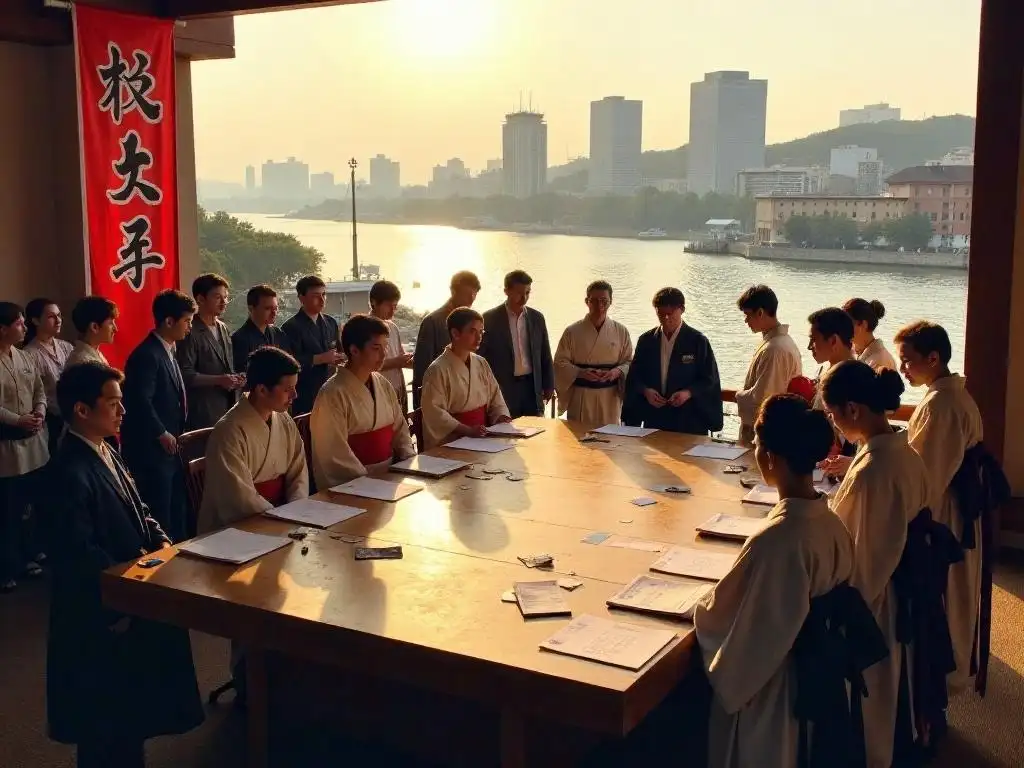
The Meiji Restoration: A Nationalist Response
The Meiji Restoration, which began in 1868, was a direct response to the challenges posed by Commodore Perry's arrival and the subsequent treaties. This period marked the restoration of imperial rule under Emperor Meiji, and it was characterized by a strong nationalist movement that aimed to modernize Japan and assert its sovereignty. Key features of the Meiji Restoration included:
- Political Reforms: The dismantling of the feudal system and the establishment of a centralized government allowed for more effective national governance.
- Modernization Initiatives: The government prioritized industrialization and technological advancement, drawing inspiration from Western nations to build a strong, modern state.
- National Mobilization: The new regime fostered a sense of unity and national pride, encouraging citizens to contribute to the nation’s strength and development.
The Meiji Restoration was a crucial moment in Japan’s history, solidifying the drive for nationalism and self-determination.
Cultural Renaissance: Art, Literature, and National Identity
The period following Perry's arrival also witnessed a cultural renaissance that played a vital role in shaping Japanese nationalism:
- Revival of Traditional Arts: Artists and writers began to explore and revive traditional Japanese themes, integrating them with Western techniques to create a unique cultural identity.
- Literary Movements: Literature flourished during this time, with authors like Natsume Sōseki and Mori Ōgai addressing themes of national identity, modernity, and cultural pride.
- National Symbols: The emergence of national symbols, such as the cherry blossom, became potent representations of Japanese identity and resilience, fostering a collective pride among the populace.
This cultural renaissance not only reinforced a sense of national identity but also provided a platform for expressing and solidifying Japan's unique character in a rapidly changing world.
Military Reforms and National Strengthening
As part of its response to the challenges posed by Western powers, Japan embarked on significant military reforms aimed at strengthening national defense and asserting its sovereignty:
- Adoption of Western Military Practices: Japan studied and integrated Western military strategies, leading to the establishment of a modern army and navy.
- Conscription System: The implementation of a conscription system ensured that all able-bodied men served in the military, fostering a sense of duty and national pride.
- Military Victories: The successful outcomes in conflicts, such as the First Sino-Japanese War (1894-1895) and the Russo-Japanese War (1904-1905), further solidified Japan’s status as a formidable power and a source of national pride.
These military reforms not only enhanced Japan's defense capabilities but also contributed to the rise of nationalism, as the nation emerged as a powerful player on the global stage.
Conclusion: Commodore Perry's Legacy in Japanese Nationalism
Commodore Matthew Perry's arrival in Japan in 1853 marked a pivotal moment in the nation’s history, triggering a profound transformation that would shape its trajectory into the modern era. His expedition, which forced Japan to open its ports to American trade, not only challenged the long-standing isolationist policies of the Tokugawa shogunate but also ignited a sense of nationalism among the Japanese people. This newfound awareness of their sovereignty and cultural identity laid the groundwork for a nationalistic movement that sought to unify and strengthen Japan against foreign influence.
The legacy of Perry's actions can be seen in the way Japan navigated its subsequent modernization efforts, embracing Western technologies and reforms while striving to preserve its unique cultural identity. This balancing act between modernization and nationalism would characterize Japan's development as it emerged as a global power in the early 20th century.
Lasting Effects on Japan's Global Relations
The immediate effect of Perry's arrival was the establishment of treaties that opened Japan to the West, which fundamentally altered Japan's global relations. The Treaty of Kanagawa in 1854, followed by subsequent agreements, marked the beginning of a new era of engagement with foreign powers. While initially perceived as a loss of sovereignty, these treaties gradually fostered a sense of urgency among Japanese leaders to modernize and reform their military and economic structures.
As Japan embraced Western practices, it sought to reassert its place in the world. This shift led to the rise of a more assertive foreign policy, culminating in Japan's victories in conflicts such as the First Sino-Japanese War (1894-1895) and the Russo-Japanese War (1904-1905). These successes not only solidified Japan's status as a formidable power but also instilled a sense of national pride and unity among its citizens, further deepening the roots of Japanese nationalism.
Commodore Perry as a Catalyst for Change
Commodore Perry's role as a catalyst for change cannot be overstated. His arrival was the spark that ignited a series of events leading to the Meiji Restoration of 1868, which fundamentally transformed Japanese society. The shogunate's inability to effectively respond to foreign pressures contributed to its downfall, paving the way for the restoration of imperial rule under Emperor Meiji.
This period of rapid modernization and reform was characterized by the adoption of Western technologies, educational systems, and governmental structures. The Japanese people, inspired by Perry's challenge, began to embrace the idea of a cohesive national identity, leading to efforts to unify disparate regions and cultures under a single nationalistic banner. This newfound sense of identity played a crucial role in Japan's ability to modernize quickly and effectively, allowing it to emerge as a competitive nation on the world stage.
Reflection on Nationalism's Role in Japan's Modernization
The rise of nationalism in Japan, catalyzed by Perry's expedition, served as both a driving force and a framework for the nation’s modernization. Nationalism fueled the desire to strengthen Japan against perceived threats from Western powers, leading to significant reforms in various sectors, including military, education, and industry.
As Japan sought to assert its identity and sovereignty, the concept of nationalism evolved into a powerful ideology, shaping policies and societal attitudes. This period saw the promotion of cultural heritage, language, and traditions, which were crucial in fostering a sense of unity among the Japanese populace. The interplay between nationalism and modernization also led to significant social changes, including shifts in gender roles and the rise of a more educated citizenry, all of which would have lasting implications for Japan's development in the 20th century.
References
Notable Texts on Commodore Perry and Japanese Nationalism
- "Commodore Perry in the Land of the Shogun" by Rhoda Blumberg - This book offers a comprehensive narrative of Perry's expedition and its implications for Japan.
- "Japan: The Story of a Nation" by Edwin O. Reischauer: - This text provides insights into Japan's transformation, including the impact of Perry's arrival.
- "The Emergence of Japan's Modern State" by Thomas C. Smith - Smith discusses the socio-political changes in Japan following Perry's arrival.
Academic Articles and Journals for Further Reading
- "Perry's Expedition and the Opening of Japan" in the Journal of Asian Studies - An analytical piece exploring the effects of Perry's mission on Japanese society.
- "Nationalism and Modernization in Japan" in the Modern Japan Studies Journal - This article delves into the relationship between Japanese nationalism and modernization efforts post-Perry.
Suggested Resources for Understanding Feudal Japan History
- "A History of Japan" by George Sansom - This multi-volume work provides a thorough overview of Japan's history, including the feudal era.
- Online databases and archives that focus on Japanese history, such as the National Diet Library of Japan and various university resources offering access to historical documents and scholarly articles.
- Documentaries and lectures on platforms like Kanopy and YouTube that explore the intersections of Commodore Perry's expedition and its lasting impact on Japanese nationalism and modernization.
- Introduction to Commodore Perry's Mission
- Background of Commodore Matthew Perry
- Objectives of Perry's Expedition to Japan
- Historical Context: Japan in the 19th Century
- The Arrival of Commodore Perry in Japan
- The Impact of Commodore Perry on Japanese Society
- Commodore Perry and the Emergence of Japanese Nationalism
- The Treaty of Kanagawa and Its Consequences
- Case Studies in Japanese Nationalism Post-Perry
- Conclusion: Commodore Perry's Legacy in Japanese Nationalism
- References
- What was the significance of Commodore Perry's arrival in Japan?
- How did Commodore Perry impact Japanese society?
- What role did nationalism play in Japan during the feudal era?
- How did the interaction with the West influence Japanese culture?
- What were the long-term effects of Perry's expedition on Japan?
Frequently Asked Questions
What was the significance of Commodore Perry's arrival in Japan?
Commodore Perry's arrival in 1853 marked the end of Japan's isolationist policies, leading to increased interaction with the West and the eventual rise of Japanese nationalism as a reaction to foreign influence.
How did Commodore Perry impact Japanese society?
Perry's expedition forced Japan to confront the realities of modernization and industrialization, which spurred a wave of nationalism that aimed to unify the country and strengthen its sovereignty against foreign powers.
What role did nationalism play in Japan during the feudal era?
During the feudal era, nationalism began to take shape as a response to external threats, particularly after Commodore Perry's visit, fostering a sense of identity and unity among the Japanese people.
How did the interaction with the West influence Japanese culture?
The interaction initiated by Commodore Perry introduced Western ideas and technologies, which significantly influenced Japanese art, politics, and social structures, contributing to the emergence of a modern national identity.
What were the long-term effects of Perry's expedition on Japan?
Perry's expedition set the stage for the Meiji Restoration in 1868, which transformed Japan into a modern state and solidified a sense of nationalism that would steer its future in the global arena.
Final Reflection: The Legacy of Commodore Perry and the Birth of Japanese Nationalism
The encounter between Commodore Perry and Japan was not merely a historical event; it marked the beginning of a profound transformation in Japanese identity and nationalism. Today, as we navigate a world increasingly defined by globalization and cultural exchange, the lessons from Perry's expedition resonate more than ever. The clash of cultures that ensued from this meeting ignited a sense of national consciousness in Japan, leading to a remarkable journey of self-discovery and modernization that continues to shape the nation today.
Commodore Perry's arrival in Japan serves as a pivotal moment that catalyzed the rise of Japanese nationalism, influencing not only the political landscape but also the cultural identity of the nation. The reverberations of this encounter can still be felt in contemporary Japan, where a blend of tradition and modernity coexists. As noted by historian John Dower, “The encounter with the West forced Japan to confront its own identity and destiny.” This ongoing dialogue between Japan's past and its aspirations for the future underscores the enduring impact of Perry's expedition on Japanese society.
As we reflect on the themes of Commodore Perry and Japanese nationalism, I invite you to consider how historical encounters shape our own identities today. What lessons can we draw from Japan's journey of self-assertion and resilience? Embrace the opportunity to explore your own cultural heritage and engage with the world around you, fostering a sense of unity and understanding. By doing so, we not only honor the past but also pave the way for a more inclusive and harmonious future.
Unveil the Spirit of Japanese Nationalism Today!
Thank you for diving into the fascinating world of Commodore Perry and the rise of Japanese nationalism! Your interest in this pivotal moment enriches your understanding of Japan's journey and its complexities. Now, it’s time to take that knowledge further and engage with the power of nationalism.
Here are some inspiring ways to act on what you’ve learned:
- Join a community discussion: Find online forums or local groups interested in Japanese history and share your insights, what surprised you, or how you see nationalism shaping cultures today.
- Explore more: Delve deeper into the events surrounding Commodore Perry's expedition by reading relevant books or articles, or watching documentaries to gain a broader perspective on international relations during that era.
- Create and share: Write your reflections or a blog post about how nationalism influenced Japan's modernization, and compare it with the experiences of other nations.
What aspect of nationalism do you believe has the most significant impact on modern cultures worldwide? Let's discuss!