
Commodore Perry's Arrival: A Precursor to Modern Japanese Identity

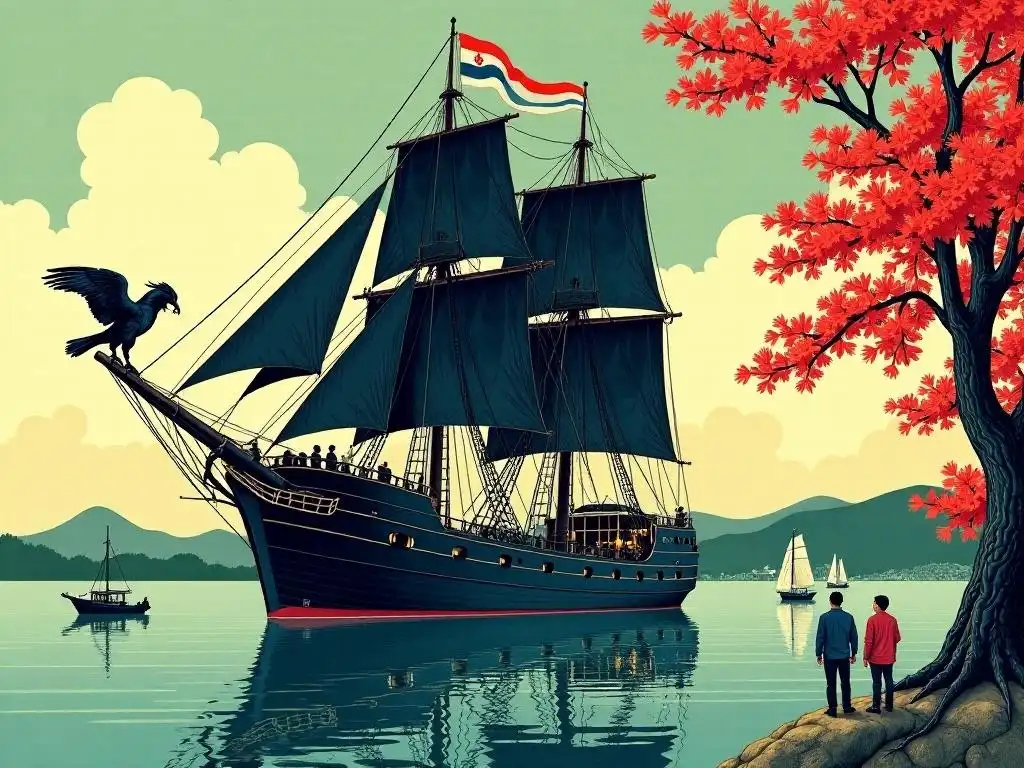
Welcome to Feudal Japan History! Step into a captivating journey through the intricate tapestry of Japan’s feudal era. Here, we unravel the profound impact of Commodore Perry on Japan, a pivotal moment that set the stage for the nation's transformation and emergence into the modern world.
As you delve deeper into our expert-driven articles, you’ll discover how this historic encounter not only reshaped Japan's foreign relations but also laid the foundation for its evolving identity. Curious about how one man's arrival changed the course of a nation? Join us as we explore the fascinating intersections of culture, society, and history that continue to resonate today!
Introduction to Commodore Perry's Impact on Japan
The arrival of Commodore Matthew Perry in 1853 marked a pivotal moment in Japanese history, serving as a catalyst for profound changes within the nation. This event not only dismantled centuries of isolationist policies but also set the stage for the emergence of a modern Japanese identity. Perry’s expeditions to Japan were driven by the United States' desire to establish trade relations and secure coaling stations for its whaling fleet in the Pacific.
However, the implications of his arrival extended far beyond mere trade; it initiated a series of transformations that would redefine Japan's social, political, and cultural landscapes in the following decades. Understanding the impact of Commodore Perry on Japan is essential for comprehending the subsequent modernization efforts that would shape the nation into what it is today.
Overview of Commodore Perry's Mission
Commodore Perry's mission was primarily to open Japan to international trade, which had been largely restricted under the Tokugawa shogunate’s Sakoku (closed country) policy. In July 1853, Perry arrived in Tokyo Bay with a fleet of four warships, known as the "Black Ships," creating a spectacle that astonished the Japanese. His approach was characterized by a blend of diplomacy and show of military might, which he believed would compel the Japanese to negotiate.
The letter he carried from President Millard Fillmore outlined the benefits of trade, emphasizing the need for Japan to engage with the Western world. Perry's tenacity and strategic maneuvering during his two visits in 1853 and 1854 ultimately led to the signing of the Treaty of Kanagawa, which marked the end of Japan's isolationist stance.
The Significance of Perry's Arrival in Japanese History
The significance of Perry's arrival cannot be overstated, as it represented a turning point in Japan's foreign relations and internal dynamics. This event catalyzed the collapse of the Tokugawa shogunate, which struggled to cope with external pressures and internal dissent. The treaty established a framework for future foreign interactions and laid the groundwork for Japan's rapid modernization during the Meiji Restoration.
Perry’s mission also ignited debates within Japan regarding national identity and the need to adapt to an increasingly interconnected world. Consequently, his arrival can be seen as the beginning of Japan's transformation from a feudal society to a modern nation-state, reshaping its identity on the global stage.
Historical Context of Japan Before Commodore Perry
The Isolationist Policies of the Tokugawa Shogunate
Before Perry's arrival, Japan was under the rule of the Tokugawa shogunate, which enforced strict isolationist policies for over two centuries. The Sakoku edict, established in 1635, severely limited foreign interaction, allowing only the Dutch and Chinese to trade under tightly controlled conditions. This isolation was rooted in a desire to maintain political stability and prevent the influence of foreign ideologies, particularly Christianity.
As a result, Japan developed a unique culture, but it also faced challenges that would later necessitate change. The increasing pressure from Western nations, exemplified by Perry's expedition, forced Japan to reconsider its isolationist stance and the implications of its long-standing policies.
Cultural and Economic Conditions in Pre-1853 Japan
Culturally, pre-1853 Japan was vibrant and rich, characterized by developments in art, literature, and philosophy. The Edo period, under the Tokugawa shogunate, saw the flourishing of unique cultural practices, including Ukiyo-e woodblock prints and Kabuki theater. However, economically, Japan was facing difficulties due to the lack of foreign trade and interaction.
While the agrarian economy was stable, it was increasingly insufficient to support a growing population and the demands of modernization. The arrival of Commodore Perry thus not only disrupted the status quo but also highlighted the need for Japan to engage with the global economy and embrace new ideas and technologies. The tension between maintaining traditional values and adapting to new realities would play a crucial role in shaping Japan's future.
The Journey of Commodore Perry to Japan
Commodore Matthew Perry's journey to Japan was not merely a military expedition; it was a pivotal moment in the history of U.S.-Japan relations and a significant turning point for Japan itself. In 1852, Perry was tasked by the U.S. government to lead a naval expedition to Japan with the objective of establishing diplomatic relations and securing trade agreements. This mission arose from Japan's long-standing isolationist policies, which had kept foreign influences at bay for over two centuries.
Perry's fleet, known as the "Black Ships" due to their steam-powered, black-hulled vessels, set sail from the U.S. in November 1852. The fleet consisted of four ships: the USS Powhatan, the USS Mississippi, the USS Saratoga, and the USS Plymouth. These ships were equipped with advanced technology for the time, including steam engines and heavy artillery, symbolizing the industrial might of the United States. After a long journey across the Pacific, Perry and his crew arrived in Tokyo Bay on July 8, 1853.
The arrival was met with a mixture of curiosity and apprehension from the Japanese, who had not seen Western ships for decades. Perry's decision to display the technological superiority of the U.S. navy was strategic; he aimed to impress upon the Japanese the necessity of engaging with the modern world to ensure their own survival and prosperity. The subsequent interactions between Perry and Japanese officials marked the beginning of a new era in Japan's foreign relations.
Key Events Leading to the Arrival of Commodore Perry
Several key events set the stage for Commodore Perry's arrival in Japan. First and foremost was the increasing pressure from Western powers in the mid-19th century to open up Japan to trade. The U.S. was particularly interested in establishing a coaling station for its whaling fleet in the Pacific, as well as securing a reliable market for its goods.
In addition, the U.S. had already established trade relations with other Asian countries, such as China. The successful opening of China to trade after the Opium Wars highlighted the potential benefits of engaging with Asian markets. This situation created a sense of urgency for the U.S. to pursue similar opportunities in Japan.
Moreover, the internal dynamics within Japan also played a crucial role. The Tokugawa shogunate, which ruled Japan, faced increasing pressure from both internal factions advocating for modernization and external threats from Western nations. The growing discontent among the samurai class and other segments of society regarding the shogunate's isolationist policies made Japan ripe for change.
These factors converged to create a context where Perry's expedition could be seen as both a threat and an opportunity. The need for reform and external support would soon lead Japan to reconsider its longstanding isolationist stance.
The Role of U.S. Foreign Policy in Perry's Expedition
The U.S. foreign policy of the mid-19th century was characterized by a desire to expand trade and influence, particularly in Asia. Under the leadership of President Millard Fillmore, the U.S. aimed to establish a foothold in Japan to counterbalance European powers that were also vying for access to the region. American expansionism, often driven by the belief in Manifest Destiny, further motivated the need to extend influence beyond North America.
Perry's expedition was not merely a mission of diplomacy but was also closely tied to the geopolitical strategy of the time. The U.S. sought to demonstrate its military prowess and technological advancements, which would compel Japan to engage in negotiations. Furthermore, the expedition was positioned as a benevolent mission intended to open Japan for the benefits of trade and cultural exchange.
The approach of using naval power as a means of diplomacy was a hallmark of U.S. foreign policy during this period. Perry's instructions from the government emphasized the importance of showing strength while also maintaining a diplomatic facade. This dual approach would ultimately shape the interactions between the U.S. and Japan, leading to significant developments in the ensuing years.
The Impact of Commodore Perry on Japan’s Foreign Relations

Commodore Perry's arrival in Japan marked a dramatic shift in the country's foreign relations, transitioning from isolation to engagement with the world. The repercussions of his expedition were profound, leading to a series of treaties that would redefine Japan's position on the global stage.
Opening Japan to the West: Treaties and Agreements
The most significant outcome of Perry's expedition was the Treaty of Kanagawa, signed on March 31, 1854. This agreement, which followed Perry's initial visit, established formal diplomatic relations between Japan and the United States. Key provisions of the treaty included:
- Opening of Two Ports: The treaty permitted American ships to access the ports of Shimoda and Hakodate for supplies and repairs.
- Protection for Shipwrecked Sailors: It included clauses to protect American citizens in Japan, ensuring their safety and legal rights.
- Establishment of a U.S. Consulate: The treaty allowed the U.S. to establish a consulate in Japan, facilitating ongoing diplomatic relations.
The Treaty of Kanagawa served as a precursor to subsequent treaties with other Western nations, such as Britain, France, and Russia. These agreements further eroded Japan's isolation and led to the establishment of trade networks that would integrate Japan into the global economy.
The Shift from Isolation to Engagement with Foreign Powers
Perry's expedition catalyzed a profound transformation in Japan's foreign relations, prompting the country to abandon its isolationist policies. The realization that Western powers would not relent in their demands for trade and engagement compelled Japanese leaders to reconsider their stance.
The subsequent years witnessed a series of reforms known as the Meiji Restoration, which began in 1868. This period marked Japan's commitment to modernization and westernization, aiming to strengthen the nation to compete with Western powers. As a result, Japan rapidly industrialized, adopting Western technologies and political systems.
The shift from isolation to engagement also fostered a new sense of national identity among the Japanese. The blending of traditional values with new ideas from the West laid the groundwork for Japan's emergence as a modern state. The impact of Commodore Perry's arrival thus extended far beyond diplomacy; it fundamentally altered Japan's trajectory, enabling it to navigate the complexities of international relations in the modern era.
Commodore Perry's Influence on Japanese Society and Culture
Commodore Matthew Perry's arrival in Japan in 1853 marked a significant turning point in the nation's history, resulting in profound changes to its society and culture. His mission to open Japan to international trade catalyzed a series of transformations that not only affected the political landscape but also permeated daily life, arts, and education. The introduction of Western ideas and technologies initiated a period of rapid modernization, which influenced the very fabric of Japanese identity.
As Perry's black ships entered Tokyo Bay, they brought with them an array of foreign concepts, goods, and practices that contrasted sharply with Japan's longstanding traditions. This created a complex interplay between resistance and acceptance within Japanese society. The fascination with Western innovations, such as steam power and new communication methods, began to reshape the cultural landscape, leading to a reevaluation of Japan's place in the world.
The Introduction of Western Ideas and Technologies
The arrival of Commodore Perry prompted the Japanese to confront the realities of Western civilization, which had been largely unknown to them prior to this encounter. Among the most notable introductions were:
- Industrial Technologies: The Japanese were exposed to steam engines, textile machinery, and advanced shipbuilding techniques. These innovations spurred the beginning of the Meiji Restoration and the subsequent industrial revolution in Japan.
- Education Systems: Perry's influence led to the adoption of Western-style education, emphasizing science and mathematics over traditional subjects. This shift laid the groundwork for Japan's modern educational framework.
- Cultural Exchange: The influx of Western literature, art, and philosophy began to permeate Japanese culture. Artists and writers started to incorporate Western styles and themes into their work, leading to a unique blend of Eastern and Western influences.
This exchange was not merely one-sided; Japanese artisans began to adapt Western techniques to traditional crafts, thereby enriching both their cultural heritage and the broader artistic landscape.
Changes in Japanese Identity Following Perry's Arrival
The changes brought about by Perry's arrival fundamentally altered how the Japanese viewed themselves and their nation. The forced opening of Japan ignited a nationalistic fervor, leading to a critical reassessment of cultural values and identity. Key transformations included:
- Awareness of Global Dynamics: The realization that Japan was not isolated from the world prompted a shift in perspective, leading to increased interest in international affairs, diplomacy, and trade.
- Rise of Nationalism: As Japan began to modernize, there was a growing sense of pride in national identity, spurred by the desire to compete with Western powers. This nationalism played a crucial role in unifying the country during the tumultuous years of the Meiji Restoration.
- Cultural Syncretism: The blending of Western and Japanese elements resulted in a unique cultural hybrid, evident in new art forms, architectural styles, and even cuisine. This syncretism is still visible in contemporary Japanese culture.
The impact of Perry’s arrival was thus not just about modernization; it was a catalyst for a profound transformation of Japanese identity that continues to resonate in modern Japan.
Resistance and Adaptation: Japan's Response to Perry's Presence
The initial encounter with Commodore Perry elicited a complex response from the Japanese government and its people. While some factions recognized the necessity of adapting to new realities, others were resistant to the perceived threats posed by Western encroachment. This dichotomy of responses shaped the course of Japanese history in the following decades.
The Initial Reactions of the Japanese Government and People
The Japanese government's response to Perry's demands was marked by internal conflict. Key reactions included:
- Diplomatic Hesitation: Initially, the Tokugawa shogunate sought to maintain Japan's isolationist stance, reflecting a deep-rooted desire to protect traditional values and institutions. However, the overwhelming power demonstrated by Perry's fleet forced a reconsideration of this policy.
- Public Sentiment: Among the populace, reactions varied widely. While some were intrigued by the foreign presence and the potential benefits of trade, many felt apprehensive about losing cultural autonomy. This tension was reflected in protests against the shogunate's handling of foreign relations.
- Rising Factions: The arrival of Perry catalyzed the formation of groups advocating for either modernization or preservation of traditional values. These factions would later play pivotal roles in the political upheaval that led to the Meiji Restoration.
The Role of Key Figures in Shaping Japan’s Response
Several influential figures emerged during this period, advocating for various approaches to Perry's presence:
- Admiral Isoroku Yamamoto: Although he would rise to prominence later, Yamamoto's early views on Western naval power influenced many military leaders in Japan, advocating for modernization to prevent subjugation.
- Saigo Takamori: A key proponent of modernization, Takamori recognized the need for Japan to embrace Western technology and military strategies to ensure national survival.
- Kido Takayoshi: Another prominent statesman, Kido played a crucial role in fostering diplomatic ties and advocating for reform, emphasizing the importance of adopting Western ideas while maintaining Japanese cultural integrity.
These figures, alongside many others, shaped the national discourse surrounding Perry's arrival, leading to a complex yet ultimately transformative response that set Japan on a course toward modernization and resurgence on the world stage.
The Long-Term Effects of Commodore Perry's Arrival

Commodore Matthew Perry's arrival in Japan in 1853 marked a pivotal moment in the nation's history, catalyzing a series of transformations that would shape its national identity and global standing. Initially, Perry's mission aimed to establish trade relations and open Japan to the West, which was met with resistance from the Tokugawa shogunate, as the country had maintained a policy of isolation for over two centuries. However, the subsequent treaties forced upon Japan signaled the beginning of profound changes that reverberated throughout the society.
The long-term effects of Perry's arrival included the erosion of feudal governance, the reformation of economic systems, and the eventual embrace of Westernization. These changes laid the groundwork for Japan to transition from a secluded, agrarian society into a modern industrial state, thereby altering its trajectory on the global stage.
How Perry's Mission Altered Japan's National Identity
Perry's mission significantly transformed Japan's national identity by challenging its isolationist policies and prompting the citizens to reevaluate their place in the world. The sudden exposure to Western technology, ideas, and culture created a sense of urgency among Japanese leaders and intellectuals to reform and modernize. This shift was characterized by a growing awareness of national sovereignty and pride, leading to a collective push towards modernization.
Moreover, the reaction to Perry's arrival fostered a sense of unity among the Japanese people. The perceived threat from foreign powers galvanized various factions within Japan, leading to a rise in nationalism. This newfound identity was a crucial factor in the eventual overthrow of the Tokugawa shogunate and the restoration of imperial rule, as it inspired the populace to envision a future where Japan could stand as an equal among Western nations.
The Prelude to Modernization and the Meiji Restoration
The arrival of Commodore Perry set in motion a series of events that would ultimately culminate in the Meiji Restoration of 1868. Following the signing of the Treaty of Kanagawa in 1854, which opened Japan to American trade, similar treaties with other Western powers soon followed. These agreements exposed Japan to foreign influence, leading to significant social, political, and economic changes.
The Meiji Restoration was marked by a deliberate effort to adopt Western technologies and governance structures. The leaders of this movement recognized the necessity of modernization to avoid colonization and to compete on the global stage. Educational reforms, industrialization, and the establishment of a modern military were all direct responses to the challenges posed by Perry's arrival.
This period saw Japan transform rapidly, moving from a feudal society to a modern state, which ultimately redefined its national identity and place in the world. The success of the Meiji Restoration would later position Japan as a major global power by the early 20th century.
Conclusion: The Lasting Legacy of Commodore Perry in Japan
The legacy of Commodore Perry's arrival in Japan is multifaceted and profound. His mission acted as a catalyst for change, leading to the dismantling of the Tokugawa shogunate and the rise of a new, modern Japan. The repercussions of this encounter extended far beyond immediate trade agreements, shaping the social fabric and governance of the nation.
Reflection on the Impact of Commodore Perry on Modern Japanese Identity
Reflecting on the impact of Commodore Perry reveals a narrative of resilience and adaptation. As Japan faced the pressures of modernization, it cultivated a unique identity that blended traditional values with new ideas. This synthesis laid the groundwork for a national consciousness that emphasized both pride in cultural heritage and openness to global influences. In many ways, Perry's arrival forced Japan to confront its identity in a rapidly changing world, ultimately leading to a self-defined modernity.
Commodore Perry's Role in Shaping Japan's Global Position
Perry's influence extended into shaping Japan's position on the global stage. By breaking Japan's isolation, he inadvertently facilitated its transformation into a significant player in international relations. The swift modernization efforts that followed his arrival allowed Japan to engage with Western powers on more equal terms, rather than as a subjugated nation.
Ultimately, Perry's role in opening Japan to the world can be seen as a double-edged sword: while it introduced the nation to Western ideologies and technologies, it also instigated a period of intense national introspection and evolution. Today, Japan's unique blend of tradition and modernity stands as a testament to the lasting impact of Perry's arrival and the resilience of the Japanese spirit.
References and Further Reading on Commodore Perry's Impact in Japan
Understanding the significance of Commodore Perry's arrival in Japan requires a comprehensive exploration of various scholarly works, articles, and resources. Below is a curated list that offers insights into Perry's impact on Japan and the broader implications for Japanese identity and foreign relations.
Suggested Books and Articles on Commodore Perry
-
"Commodore Perry in the Land of the Shogun" by Edward Rice
This biography delves into Perry's life, detailing his mission to Japan and the subsequent opening of the country to the West. It provides a vivid narrative of the cultural clashes and negotiations that transformed Japan.
-
"The Opening of Japan 1853-1854" by John W. Dower
Dower’s work offers a critical analysis of the events surrounding Perry's arrival, emphasizing the historical context and the reactions of Japanese society to foreign influence.
-
"The Impact of Commodore Perry on Japan: A Historical Perspective" by Richard J. Smethurst
This article focuses on the political and social ramifications of Perry's arrival, discussing the shift in Japan's international stance and its eventual modernization.
-
"Perry's Expedition to Japan: The Role of Diplomacy" by Susan Hanley
This scholarly piece examines the diplomatic strategies employed by Perry and the U.S. government, providing insights into how these strategies influenced Japan's foreign relations.
-
"Japan’s Modern History: 1868-1912" by James L. McClain
While focusing on the Meiji Restoration, this book contextualizes Perry's arrival as a crucial turning point in Japan’s transition from feudalism to modernization.
Additional Resources for Understanding Japan's Feudal Era and Foreign Relations
-
The National Diet Library of Japan
This online resource offers a wealth of historical documents, articles, and primary sources related to Japan's feudal era and foreign relations, including the impact of Commodore Perry.
-
The Japan Times Archives
A collection of articles from the Japan Times provides contemporary perspectives and analyses on the events following Perry's arrival, essential for understanding the long-term effects on Japanese society.
-
The Japan Society
This organization offers various educational resources and publications focused on Japan’s history, culture, and international relations, including the influence of Western powers during the 19th century.
-
"Japan: A Cultural, Social, and Political History" by John W. Hall
This comprehensive text covers the evolution of Japanese society from the feudal era through the modern period, offering context for Perry's mission and its aftermath.
-
Online Courses and Lectures
Websites like Coursera and edX provide courses on Japanese history that include modules on Perry's expedition and its significance, ideal for those seeking a structured learning experience.
These resources collectively provide a deeper understanding of Commodore Perry's impact on Japan, its feudal society, and the ensuing transformation that paved the way for modern Japanese identity.
- Introduction to Commodore Perry's Impact on Japan
- Historical Context of Japan Before Commodore Perry
- The Journey of Commodore Perry to Japan
- The Impact of Commodore Perry on Japan’s Foreign Relations
- Commodore Perry's Influence on Japanese Society and Culture
- Resistance and Adaptation: Japan's Response to Perry's Presence
- The Long-Term Effects of Commodore Perry's Arrival
- Conclusion: The Lasting Legacy of Commodore Perry in Japan
- References and Further Reading on Commodore Perry's Impact in Japan
Frequently Asked Questions
What was the impact of Commodore Perry on Japan?
Commodore Perry's arrival in 1853 marked a turning point for Japan, leading to the end of its isolation and the opening of trade with Western nations. This event significantly influenced Japan's modernization and national identity.
How did Perry's expedition affect Japanese culture?
The expedition prompted a cultural exchange between Japan and the West, introducing new ideas and technologies that began to transform Japanese society. This interplay laid the groundwork for the Meiji Restoration and subsequent cultural shifts.
What role did Commodore Perry play in Japan's political landscape?
Perry's actions challenged the Tokugawa shogunate, which had maintained Japan's isolation for over two centuries. His arrival ultimately led to the political upheaval and the eventual restoration of imperial power in Japan.
How is Perry remembered in Japanese history today?
Commodore Perry is often viewed as a catalyst for change in Japan. While his methods were seen as aggressive, his expedition is recognized as a crucial event that set Japan on a path toward modernization and engagement with the global community.
What were the long-term effects of Perry's arrival on Japan's identity?
The opening of Japan to foreign influence reshaped its national identity, blending traditional elements with Western practices. This transformation was fundamental in developing a unique Japanese identity that embraced modernization while retaining cultural heritage.
Final Reflection: The Enduring Impact of Commodore Perry on Japanese Identity
The arrival of Commodore Perry in 1853 marked a pivotal moment in Japan's history, a turning point that set the stage for the complex interplay of tradition and modernization that defines modern Japanese identity. Today, as we navigate an increasingly globalized world, the lessons from this historical encounter resonate more than ever. The impact of Commodore Perry on Japan is not merely a chapter in history; it is a lens through which we can understand the ongoing evolution of cultural identity in response to external influences.
The legacy of Perry's arrival continues to shape Japan's cultural and social landscape, influencing everything from art and literature to politics and international relations. The tension between embracing modernity and preserving tradition is a theme that echoes throughout Japanese society. As we reflect on this historical moment, we can appreciate how it has fostered a unique blend of Eastern and Western influences, creating a rich tapestry of identity. In every encounter with the other, we discover a part of ourselves.
This quote encapsulates the essence of how external interactions can lead to profound self-discovery and transformation.
As we conclude this exploration of Commodore Perry's impact on Japan, I invite you to consider how historical events shape not only nations but also our individual identities. Reflect on the ways in which your own experiences with change and adaptation have influenced who you are today. Embrace the lessons of the past as you navigate your own journey, and recognize the power of cultural exchange in fostering understanding and growth. Let us carry forward the spirit of inquiry and openness that Perry's arrival ignited, as we collectively shape the future of our identities in an interconnected world.
Unveil the Rich Tapestry of Japanese Identity!
Thank you for exploring the remarkable story of Commodore Perry's arrival and its profound impact on Japan's modern identity. Your interest in this pivotal moment helps illuminate the intricate web of history that shapes cultural narratives. Now, it's time to bring this knowledge to life!
Here are a few ways you can deepen your understanding and engage with this fascinating history:
- Explore related historical events: Delve into the stories surrounding the Meiji Restoration and its influence on Japan's evolution.
- Join a local discussion group or online forum: Share your insights and hear diverse perspectives on Japan's historical transformations.
- Write a reflection on the lasting resonance of Commodore Perry's arrival: Consider its implications in modern geopolitics and culture.
Are you ready to connect the past with the present and reflect on how history shapes our identities? What aspect of Commodore Perry’s arrival do you find most intriguing?