
The Feudal Vocabulary: Understanding the Terms of Japan’s Past


Welcome to Feudal Japan History, where we invite you to embark on an extraordinary journey through the Japanese feudal era. Here, you’ll uncover the rich tapestry of historical, cultural, and societal elements that shaped this fascinating period. Our featured article, “The Feudal Vocabulary: Understanding the Terms of Japan’s Past,” delves into the intricate terminology that defines this era, offering insights that will enhance your understanding and appreciation of Japan’s legacy. Prepare to ignite your curiosity and deepen your knowledge as you explore the unique language that has echoed through centuries!
The feudal era of Japan, spanning several centuries from the 12th to the 19th, was a time of profound change and development in the archipelago's history. This period saw the rise of powerful clans, the establishment of samurai as a dominant warrior class, and the intricate relationships between lords and vassals. Understanding the terminology from this era is essential for anyone looking to delve deeper into Japan's rich history.
In this article, we will explore key terms and concepts that define the Japanese feudal era terminology. By unraveling these terms, we aim to provide history buffs with a clearer insight into the social, political, and cultural dynamics that shaped feudal Japan.
Introduction to Japanese Feudal Era Terminology
The language of the Japanese feudal period is filled with unique terms that reflect the complexities of its societal structure. From the various classes of people to the intricate political relationships, each term carries significant weight in understanding the historical context. This section will introduce you to the foundational vocabulary, paving the way for a comprehensive exploration of the Japanese feudal era terminology.
Key Concepts in Japanese Feudal Era Terminology
Defining the Japanese Feudal System
The Japanese feudal system was characterized by a hierarchical structure that established relationships based on land ownership and loyalty. At the top of this hierarchy was the shogun, the military ruler who held the real power, while the emperor was often seen as a symbolic figurehead. Below the shogun were the daimyōs, powerful landowners who governed their territories and maintained their own armies of samurai. The system was built on mutual obligations, where vassals pledged loyalty to their lords in exchange for protection and land.
Key elements of this system include:
- Shogunate: The government led by the shogun.
- Daimyō: Feudal lords who ruled over specific regions.
- Samurai: The warrior class dedicated to serving their lords.
- Vassalage: The bond of loyalty and service between a lord and his vassal.
Essential Terms Related to Governance and Power
Understanding the terms associated with governance and power is crucial for grasping the complexities of feudal Japan. Some of the essential terms include:
- Bushi: Refers to the warrior class, synonymous with samurai, emphasizing their role as military leaders.
- Kugyō: The high-ranking court nobles who wielded significant influence in the imperial court.
- Kokudaka: A system of land assessment and taxation, which determined a lord's wealth based on rice production.
- Gokenin: The lower-ranking vassals who served directly under the daimyōs, often in exchange for land or stipends.
By familiarizing yourself with these terms, you will gain a deeper understanding of the political landscape of feudal Japan and the relationships that defined its history. As we continue to explore the vocabulary of this era, we will uncover more terms that reflect the cultural and social dynamics of Japan's past.
The feudal era in Japan was marked by a rich tapestry of social and cultural dynamics that shaped the lives of its people. Understanding the vocabulary from this period is essential for grasping the complexities of Japanese society during these times. Key terms often reflect the hierarchical structure, values, and lifestyles of the era, which revolved around loyalty, honor, and duty.
Understanding the Samurai Culture
The term samurai itself is deeply ingrained in Japanese culture, referring to the warrior class that upheld the principles of Bushido (the way of the warrior). This code emphasized virtues like loyalty, honor, and self-discipline. The samurai were not only warriors but also patrons of the arts, often engaging in poetry, calligraphy, and tea ceremonies.
Other important terms include:
- Ronin: Samurai without a master, often depicted in literature and film as wandering warriors seeking purpose.
- Daimyo: Feudal lords who owned vast lands and had their own samurai armies. Their power dynamics significantly influenced Japanese politics.
- Shogun: The military leader who held actual power, often overshadowing the emperor in governance.
These terms encapsulate the intricate relationships and structure within samurai culture, illustrating the blend of martial prowess and cultural sophistication.
Daily Life Vocabulary in Feudal Japan
Daily life in feudal Japan was governed by a rigid social hierarchy and various cultural practices. The vocabulary from this era provides insight into the everyday experiences of different social classes.
Key terms include:
- Peasant (Hyakusho): The backbone of feudal society, responsible for agriculture and sustenance. Their lives were marked by hard work and limited rights.
- Artisan (Shokunin): Skilled craftsmen who contributed to society through their trades, creating everything from weapons to textiles.
- Merchant (Shōnin): Though often looked down upon, merchants played a crucial role in the economy, facilitating trade and commerce.
Understanding these terms allows one to appreciate the diverse roles that individuals played in the societal fabric of feudal Japan.
The Language of Conflict: War and Strategy Terms
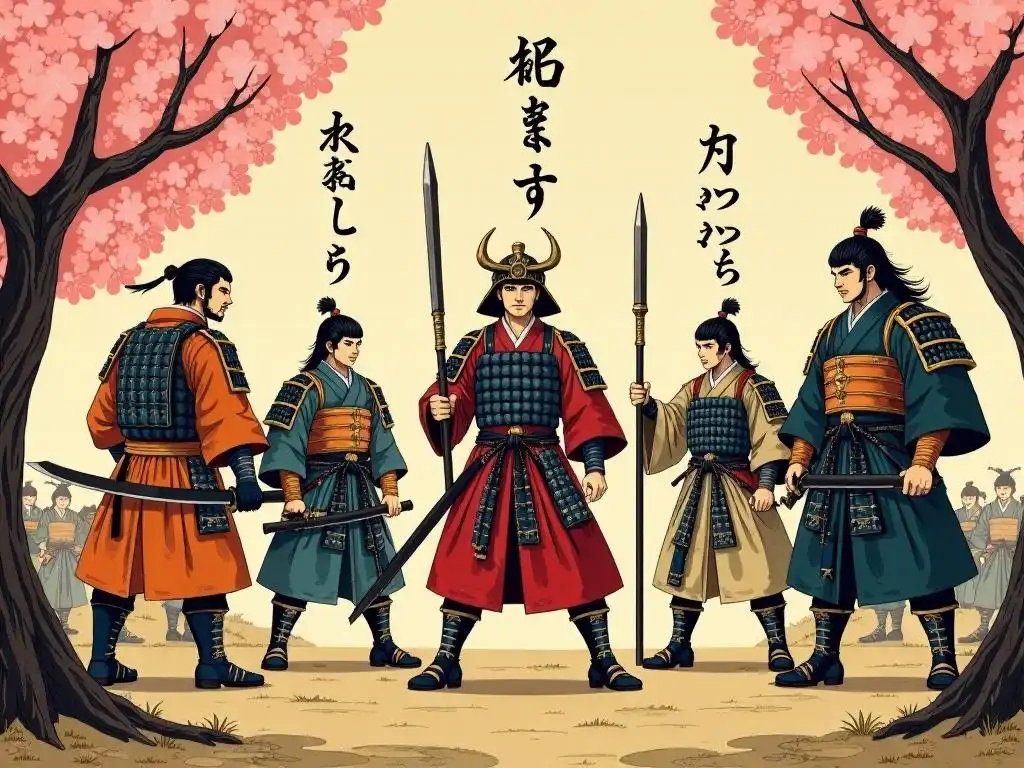
Conflict was a defining characteristic of the feudal era, shaping the political landscape and the lives of its people. The terminology associated with warfare and strategy is essential for comprehending the military aspects of this historical period.
Terminology Related to Feudal Warfare
Key terms related to warfare include:
- Bushi: Another term for samurai, emphasizing their role as warriors in battle.
- Kenshi: Referring to a swordsman, this term highlights the importance of swordsmanship in combat.
- Sengoku: Literally meaning "warring states," this term describes the period of intense military conflict and political fragmentation in the late 15th to the early 17th century.
These terms illustrate the significance of martial culture and the intricate strategies employed in battles, providing a window into the military mindset of feudal Japan.
Notable Battles and Campaigns
Several key battles and campaigns defined the feudal era and are essential to understanding the historical narrative of Japan. Notable terms include:
- Battle of Sekigahara (1600): A decisive battle that established the Tokugawa shogunate, marking the beginning of a long period of peace and stability known as the Edo period.
- Genpei War (1180–1185): A conflict between the Taira and Minamoto clans that led to the establishment of the Kamakura shogunate, setting the stage for samurai rule.
- Onin War (1467–1477): A civil war that resulted in the destruction of Kyoto and the rise of local warlords, illustrating the fracturing of power during the Sengoku period.
These battles not only shaped the political landscape but also influenced the cultural and social dynamics of feudal Japan, making their study integral to understanding the terminology of this era.
The Influence of Religion and Philosophy on Terminology
The rich tapestry of Japan’s feudal era is deeply interwoven with the influences of religion and philosophy, which significantly shaped the language and terminology of the time. This interplay created a unique lexicon that reflected the values, beliefs, and social structures of feudal Japan. Understanding these influences is crucial for anyone delving into Japanese feudal era terminology.
In feudal Japan, the coexistence of Shinto and Buddhism played a pivotal role in shaping societal norms and, consequently, the language. Shinto, the indigenous spirituality of Japan, emphasized the veneration of kami (spirits or gods) and the importance of rituals and ceremonies. This focus on nature and ancestral reverence contributed terms related to spirituality and governance, such as kami (神) and miko (巫女), which refers to shrine maidens.
Buddhism, introduced from China and Korea, further enriched the vocabulary, particularly in ethical and philosophical contexts. Concepts such as karma (カルマ) and samsara (輪廻) became integral to discussions about morality and the human experience. The interaction between Shinto and Buddhism resulted in a unique blend of terminology that continues to influence Japanese culture and language today.
Shinto and Buddhism in Feudal Japan
Shinto and Buddhism coexisted and often merged, resulting in a vocabulary that reflected their combined impact on society. The term shinbutsu shūgō (神仏習合), meaning the syncretism of Shinto and Buddhism, exemplifies this relationship. This blending is evident in language, rituals, and even in the governance of the era, where the divine right of rulers was often articulated through religious terminology.
Key terms originating from these religions include:
- Kami (神): Deities or spirits revered in Shinto.
- Butsu (仏): Referring to Buddha or the concept of enlightenment in Buddhism.
- Dharma (法): The teachings of the Buddha, which influenced ethical and social conduct.
These terms not only encapsulated spiritual beliefs but also influenced the political and social hierarchies of the time, reflecting the divine nature attributed to feudal lords and the moral obligations of samurai.
Modern Implications of Feudal Vocabulary
Today, the terminology from Japan's feudal era continues to resonate, influencing contemporary language, culture, and identity. Many of the terms have transcended their historical significance, finding relevance in modern discussions about ethics, governance, and cultural heritage. Exploring these implications offers insight into how the past shapes the present.
The continued use of feudal terminology is particularly evident in various aspects of Japanese culture, including literature, art, and even popular media. Terms such as samurai (侍) and bushi (武士) evoke the ideals of honor, loyalty, and martial prowess, which are celebrated in modern narratives.
The Legacy of Feudal Terms in Contemporary Japan
The legacy of feudal vocabulary in contemporary Japan is both profound and multifaceted. As Japan navigates its identity in a globalized world, these terms serve as cultural touchstones that connect modern society with its historical roots.
For example, the concept of bushido (武士道), the way of the warrior, continues to be a source of inspiration in discussions about ethics and personal conduct. It underscores values such as loyalty, honor, and self-discipline, which are still celebrated in various forms, from corporate culture to martial arts.
Additionally, many feudal terms have been adapted into modern language, influencing everything from everyday conversation to academic discourse. The richness of these terms provides a lens through which to understand Japan’s historical journey and its ongoing cultural evolution.
The terminology from the feudal era is not merely historical but continues to inform and enrich contemporary Japanese language and culture, illustrating the enduring legacy of Japan's complex past.
Conclusion: The Importance of Understanding Feudal Vocabulary

Understanding the terminology of the Japanese feudal era is crucial for anyone looking to delve deeper into the rich tapestry of Japan's history. The specific terms associated with this period—such as samurai, daimyō, and shōgun—are not merely words; they encapsulate the social structure, cultural norms, and political dynamics of feudal Japan. Each term carries with it layers of meaning that reflect the complexities of life during this time.
By familiarizing oneself with feudal vocabulary, history enthusiasts can gain a clearer understanding of historical texts, literature, and discussions surrounding Japan's past. This knowledge allows individuals to engage more meaningfully with various aspects of feudal life, from the roles of warriors and landowners to the intricacies of governance and societal hierarchy. Moreover, appreciating the language of the era enriches the exploration of Japan’s cultural heritage, providing insights into art, philosophy, and even modern Japanese society, which has roots in its feudal history.
Ultimately, understanding feudal vocabulary empowers learners to connect with Japan's past on a deeper level, fostering a greater appreciation for its historical narratives and cultural evolution.
Recommended Resources for Learning More About Feudal Japan
For those eager to expand their understanding of feudal Japan and its unique terminology, various resources can offer valuable insights:
- Books:
- "The Samurai: A Military History" by Stephen Turnbull provides an engaging overview of the samurai class and their role in feudal Japan.
- "Japan's Feudal Period: The Age of the Samurai" by Robert T. Smith offers a comprehensive look at the social and political structures of the era.
- Online Courses:
- Websites like Coursera and edX often feature courses on Japanese history that include modules focused on the feudal period.
- The Great Courses also offers lectures specifically covering Japan's feudal system and its implications.
- Documentaries and Films:
- Documentaries such as "The Last Samurai" delve into the life of samurai and the changing socio-political landscape during the end of the feudal era.
- Films by Akira Kurosawa, like "Seven Samurai", provide artistic representations of feudal life and its challenges.
- Museums and Historical Sites:
- Visiting museums dedicated to Japanese history can provide tangible connections to the feudal era, showcasing artifacts, weapons, and clothing.
- Historical sites like Himeji Castle or the ruins of feudal estates can offer immersive experiences that bring the past to life.
Call to Action: Explore More with Our Feudal Japan Resources
Eager to deepen your understanding of Japan's feudal era? Explore our comprehensive range of resources dedicated to feudal Japan! From detailed articles and terminology glossaries to expert analyses of historical events, our collection is designed for history buffs like you.
- Join our community to discuss and share insights about feudal history, engage with fellow enthusiasts, and collaborate on learning projects.
- Subscribe to our newsletter for regular updates on new articles, featured topics, and exclusive content that dives deeper into Japan’s feudal past.
- Visit our resource section for curated links to books, documentaries, and online courses that can further enhance your knowledge.
Let’s embark on this journey together and uncover the fascinating world of feudal Japan!
- Introduction to Japanese Feudal Era Terminology
- Key Concepts in Japanese Feudal Era Terminology
- Cultural and Social Terms from the Feudal Era
- The Language of Conflict: War and Strategy Terms
- The Influence of Religion and Philosophy on Terminology
- Modern Implications of Feudal Vocabulary
- Conclusion: The Importance of Understanding Feudal Vocabulary
- Recommended Resources for Learning More About Feudal Japan
- Call to Action: Explore More with Our Feudal Japan Resources
Frequently Asked Questions
What is the Japanese feudal era?
The Japanese feudal era refers to a period in Japan's history, roughly from the 12th to the 19th century, where the samurai class and feudal lords (daimyos) held power, governing lands and providing military service in exchange for loyalty.
Why is understanding feudal vocabulary important?
Understanding feudal vocabulary is crucial for grasping the historical context and cultural significance of Japan's past, as it highlights the social structure, governance, and the roles of different classes during the Japanese feudal era.
What are some key terms associated with the Japanese feudal era?
Key terms include shogun (military ruler), daimyo (feudal lord), samurai (warrior class), and ronin (masterless samurai), which are essential for comprehending the societal hierarchy and political dynamics of the time.
How has the Japanese feudal terminology influenced modern Japan?
Many terms from the Japanese feudal era have persisted into modern language and culture, influencing literature, arts, and martial traditions, thus shaping Japan's national identity.
Where can I learn more about feudal Japan terminology?
You can explore more about feudal Japan terminology and its historical context through in-depth articles on dedicated history websites, such as "Feudal Japan History," which offers expert-driven insights into this fascinating era.
Final Reflection: Embracing the Legacy of Japanese Feudal Era Terminology
The exploration of Japanese feudal era terminology offers us a unique lens through which to understand not only the past but also the intricate tapestry of modern Japanese culture. As we delve into the meanings and implications of these terms, we uncover the values, hierarchies, and social dynamics that shaped a nation. This understanding is crucial today, as it allows us to appreciate the historical context behind contemporary Japanese society and its enduring traditions.
The influence of feudal terminology extends far beyond mere words; it reflects a cultural heritage that continues to resonate in Japan's social fabric. From the samurai code of honor to the intricate relationships between lords and vassals, these terms encapsulate a worldview that informs modern interactions and societal structures. To understand the past is to understand the present,
a sentiment that rings true as we navigate the complexities of our own cultural identities in a globalized world.
As we reflect on the lessons embedded in the vocabulary of Japan's feudal era, I invite you to consider how this knowledge can enrich your own understanding of history and culture. Let us take the time to explore the roots of our own traditions and values, recognizing that the words we use carry the weight of our history. In doing so, we not only honor the past but also empower ourselves to shape a more informed and connected future.
Unlock the Secrets of Feudal Japan Vocabulary!
Thank you for diving into the intricate world of Japan’s feudal past! We hope you feel inspired by the rich tapestry of terms that shape this fascinating history. Now that you are equipped with valuable knowledge, it’s time to take the next steps to deepen your understanding and share your insights with others.
- Start a conversation! Share a feudal term that intrigued you the most with friends or family and discuss its relevance in today's context.
- Explore further! Visit our resource page to discover recommended readings and websites that provide a deeper understanding of Japan’s feudal system.
- Consider joining our community by subscribing to our newsletter for exclusive content, discussions, and updates about Feudal Japan!
What aspects of the feudal vocabulary do you find most relevant to today's society, and why? Let's discuss in the comments below!