
Daimyo and the Merchant Class: Economic Interactions in Feudal Society


Welcome to Feudal Japan History, where we invite you to embark on a fascinating journey through the intricate tapestry of Japan’s feudal era. In our featured article, "Daimyo and the Merchant Class: Economic Interactions in Feudal Society," we delve into the dynamic relationships that shaped the economic landscape during this pivotal time. Discover how the powerful daimyo and the enterprising merchant class navigated their roles, influencing trade and society in profound ways.
As you explore the depths of feudal Japan's economic interactions, prepare to uncover surprising insights that challenge conventional narratives and illuminate the complexities of a society in transition. Your adventure into the past begins here!
- Introduction to Feudal Japan Economic Interactions
- The Role of Daimyo in Feudal Japan
- The Merchant Class in Feudal Japan
- Economic Interactions Between Daimyo and Merchants
- Case Studies of Economic Interactions
- The Impact of Economic Interactions on Feudal Society
- Conclusion: The Legacy of Daimyo and Merchant Economic Interactions
- Further Reading on Feudal Japan Economic Interactions
-
Frequently Asked Questions
- What role did the daimyo play in feudal Japan's economy?
- How did the merchant class influence economic interactions during feudal Japan?
- Were there any restrictions on the merchant class in feudal Japan?
- What were the key trade goods exchanged during this period?
- How did economic interactions evolve throughout the feudal period?
- Final Reflection: Understanding the Economic Interactions of Feudal Japan
- Unveil the Legacy of Feudal Economic Ties!
Introduction to Feudal Japan Economic Interactions
In the intricate tapestry of Feudal Japan, the interplay between various social classes was pivotal in shaping the economic landscape of the era. Central to this dynamic were the daimyo, powerful feudal lords who governed vast domains, and the merchant class, whose economic activities were essential to the sustenance and growth of feudal society.
This article delves into the multifaceted economic interactions between these two groups, exploring how their relationships influenced not only trade and commerce but also the broader societal structures and cultural developments within Japan's feudal framework. By examining these interactions, we gain insights into the foundational aspects of feudal Japan's economy and the roles that both the daimyo and merchants played in this historical context.
Overview of the Feudal Era in Japan
The feudal era in Japan, spanning from the late 12th century to the mid-19th century, was characterized by a decentralized political structure where power was held by local lords rather than a central authority. This system emerged from the collapse of the Heian period and the rise of the samurai class, leading to a society organized around land ownership and military allegiance.
During this time, the country was divided into numerous domains, each ruled by a daimyo. These lords not only controlled land but also the agricultural production that supported their households and samurai retainers. The economy during this period was largely agrarian, with rice serving as the primary currency and measure of wealth.
However, as the population grew and urban centers began to emerge, the merchant class started to gain prominence. Although initially looked down upon by the samurai and nobility, merchants became crucial in facilitating trade, both locally and internationally, contributing significantly to the economic framework of feudal Japan.
Importance of Economic Interactions in Feudal Society
Understanding the economic interactions between the daimyo and the merchant class is essential for several reasons:
- Trade Networks: The daimyo relied on merchants to facilitate trade, not only within their domains but also with other regions. This interaction helped to establish extensive trade networks that connected rural agricultural areas with urban markets.
- Taxation and Resources: Merchants played a vital role in the collection of taxes, which were essential for the daimyo to maintain their power and fund their military. These economic transactions ensured that both parties benefitted, creating a symbiotic relationship.
- Cultural Exchange: The economic interactions between these classes also led to cultural exchanges. As merchants traveled and traded, they brought new ideas, technologies, and cultural practices back to their home regions, enriching feudal society as a whole.
- Social Mobility: While the feudal system was rigid, the economic power of merchants allowed for some degree of social mobility. Successful merchants could accumulate wealth and influence, challenging the traditional hierarchies of feudal Japan.
The economic interactions between the daimyo and the merchant class were not merely transactional; they were foundational to the development of feudal society, influencing everything from governance and military power to cultural and social structures. Through this exploration, we will uncover the complexities of these relationships and their lasting impact on Japan's history.
The Role of Daimyo in Feudal Japan

Definition and Responsibilities of Daimyo
In feudal Japan, the term daimyo refers to powerful feudal lords who governed vast territories of land on behalf of the shogunate. They were pivotal figures in the political and social structure of the era, often commanding the loyalty of samurai warriors. The responsibilities of a daimyo extended beyond mere governance; they were responsible for maintaining order, collecting taxes, and ensuring the welfare of the people within their domains.
Daimyo were expected to uphold the law and protect their subjects, which often included settling disputes and enforcing local regulations. They were also tasked with overseeing agricultural production, managing resources, and fostering trade within their territories. In many cases, a daimyo would establish a castle town, which served as the administrative and economic center, attracting merchants and craftsmen. This urbanization contributed to the development of local economies and facilitated interactions with the merchant class.
Economic Power and Land Ownership
The economic power of the daimyo was intrinsically linked to their land ownership. Each daimyo controlled vast tracts of arable land, and the wealth generated from agriculture was the backbone of their economic influence. The land was typically measured in koku, a unit that represented the amount of rice sufficient to feed one person for a year. A single daimyo might control tens of thousands of koku, translating into significant agricultural output and wealth.
Table: Economic Influence of Daimyo
| Daimyo | Land (in Koku) | Estimated Wealth (in contemporary terms) |
|---|---|---|
| Oda Nobunaga | 160,000 | $4 million |
| Toyotomi Hideyoshi | 2,000,000 | $50 million |
| Tokugawa Ieyasu | 2,500,000 | $62 million |
The wealth amassed by daimyo allowed them to maintain large armies of samurai, invest in infrastructure, and engage in trade. They could also influence the market by controlling the production of certain goods, leading to a complex relationship with the merchant class. As landowners, daimyo often imposed taxes on agricultural produce, which further solidified their economic dominance in feudal Japan.
Influence on Local Economies
Daimyo exerted considerable influence over local economies through their policies and practices. Their decisions regarding land use, taxation, and trade regulations directly impacted the livelihoods of the peasantry and the merchant class. For instance, when a daimyo invested in irrigation projects or improved agricultural techniques, it resulted in increased production, benefiting both farmers and merchants.
Moreover, daimyo engaged in economic interactions with merchants to stimulate trade and commerce. By granting privileges such as reduced taxes or exclusive rights to trade certain goods, daimyo could attract merchants to their domains. This symbiotic relationship was crucial, as merchants provided the necessary goods and services that supported the daimyo's political and military ambitions.
In addition to agricultural trade, daimyo often participated in inter-regional commerce, exchanging resources such as rice, textiles, and metals. These economic interactions not only enriched the daimyo but also contributed to the rise of a vibrant merchant class, which played a significant role in the development of feudal Japan's economy.
The economic interactions between daimyo and the merchant class were fundamental to the structure of feudal Japan. Through their land ownership, wealth, and influence, daimyo shaped local economies, fostering an environment where trade and commerce could thrive. As a result, this dynamic created a complex web of economic relationships that were vital to the sustainability of the feudal system.
The Merchant Class in Feudal Japan

In feudal Japan, the merchant class occupied a unique and often paradoxical position within the societal hierarchy. Traditionally, Japanese society was structured in a rigid class system known as the Four Divisions of Society: samurai, farmers, artisans, and merchants. Merchants were typically placed at the bottom of this hierarchy, considered necessary for trade yet often viewed with suspicion and disdain by the samurai and agricultural classes.
Despite their lowly status, merchants played a crucial role in the economy of feudal Japan. They were the facilitators of commerce, responsible for the distribution of goods produced by farmers and artisans. The Tokugawa shogunate, which ruled from 1603 to 1868, further solidified this perception by enforcing strict class distinctions and limiting the rights of merchants. However, as the economy evolved, so did the influence of the merchant class.
- Status Characteristics:
- Economic Power: While they had no political power, successful merchants could accumulate significant wealth.
- Cultural Influence: They contributed to the cultural landscape, funding arts, theater, and education.
- Social Mobility: Some merchants, particularly those who amassed great wealth, could elevate their status, blurring class lines.
Economic Activities of the Merchant Class
The merchant class engaged in a variety of economic activities that were vital to the functioning of feudal Japan's economy. These activities can be broadly categorized into several key areas:
- Trade: Merchants facilitated trade between regions, transporting goods such as rice, textiles, and pottery. They operated through transport networks, utilizing rivers and roads to move products efficiently.
- Banking and Finance: With their growing wealth, merchants began to offer financial services, including loans and credit systems. The practice of money lending, while frowned upon by the samurai, became a significant aspect of merchant activities.
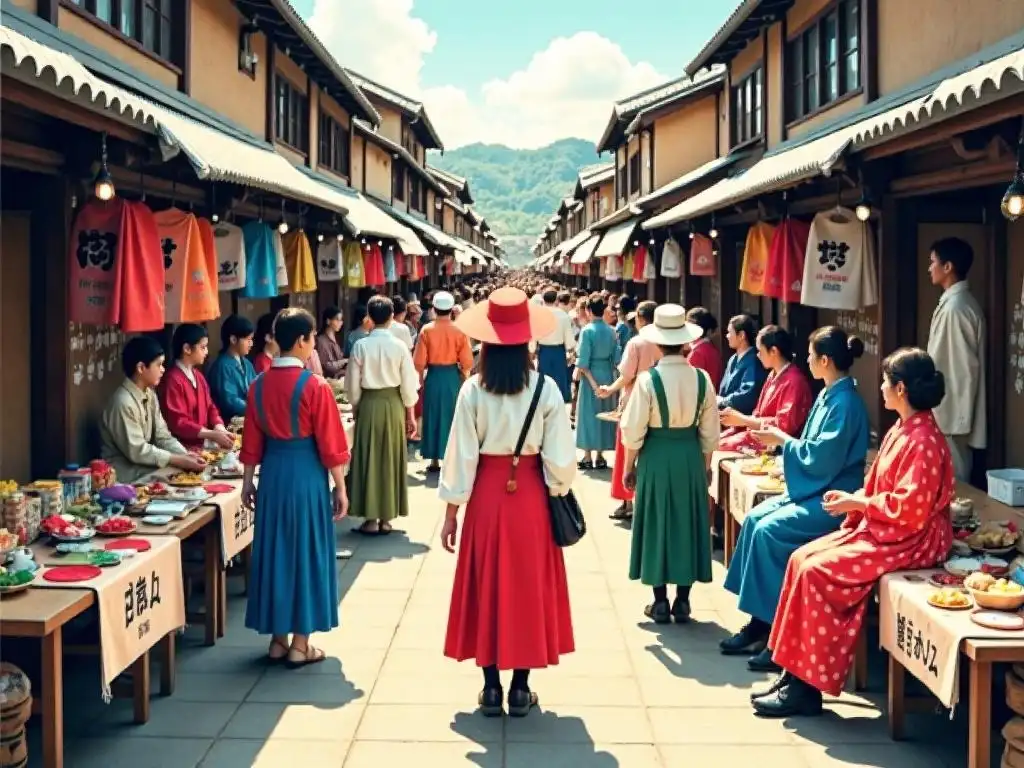
- Market Operations: Merchants established markets, known as ichiba, where goods were bought and sold. These markets became essential for local economies, providing a venue for trade and commerce.
- Guild Formation: Over time, merchants formed guilds to protect their interests, regulate prices, and maintain quality in their goods. These guilds often held considerable influence in urban governance.
| Economic Activity | Description |
|---|---|
| Trade | Movement of goods between regions |
| Banking | Provision of loans and credit services |
| Market Operations | Establishment of local markets for trade |
| Guild Formation | Organization of merchants for mutual benefit |
The Rise of Urban Centers and Trade
The late feudal period saw the emergence of urban centers as hubs of economic activity, significantly altering the landscape of feudal Japan economic interactions. Cities such as Edo (modern-day Tokyo), Osaka, and Kyoto transformed into bustling trade centers, attracting merchants and artisans alike.
- Urbanization: The rise of urban centers was driven by several factors:
- Increased Trade: With the expansion of trade routes and improved infrastructure, cities became focal points for commerce.
- Population Growth: As cities flourished, they attracted people seeking economic opportunities, leading to a burgeoning merchant class.
- Cultural Exchange: Urban centers not only facilitated economic interactions but also became melting pots of culture. Merchants played a key role in the dissemination of ideas, art, and literature, contributing to the cultural prosperity of the Edo period.
- Economic Impact: The flourishing of urban centers and the merchant class led to significant economic changes:
- Market Economy: The merchant class helped transition from a subsistence economy to a market-oriented economy, where supply and demand began to dictate prices.
- Innovation: Increased competition among merchants spurred innovation in production and distribution methods, further enhancing economic interactions.
The intricate web of economic interactions among the daimyo, merchants, and the broader population during feudal Japan laid the foundation for the economic landscape of modern Japan, highlighting the merchant class's essential role in shaping the historical trajectory of Japanese society.
Economic Interactions Between Daimyo and Merchants
The economic interactions between the daimyo and the merchant class during the feudal era of Japan are critical for understanding the complexities of feudal Japan's economy. This relationship was characterized by a unique blend of cooperation and tension, with each class relying on the other for various economic functions. The daimyo, as the feudal lords, sought to enhance their power and wealth, while merchants aimed to expand their commercial activities amidst the rigid social structure of the time.
Trade Agreements and Economic Dependencies
Trade agreements between daimyo and merchants often formed the backbone of local economies. Each daimyo controlled specific territories rich in resources, which they used to negotiate favorable terms with merchants. For instance, certain regions were known for particular goods, such as:
- Silk from Kanto
- Rice from the Kinki region
- Pottery from Kyushu
These geographical advantages allowed daimyo to engage in trade agreements that not only benefited their own domains but also established economic dependencies.
Merchants, in return, provided essential supplies, including:
- Agricultural products
- Crafts and manufactured goods
- Luxuries for the samurai class
The nature of these trade agreements often involved a combination of direct barter and monetary transactions. Merchants would pay a portion of their earnings to the daimyo as a form of tribute or protection money, which further entrenched the economic dependency between these two classes.
Taxation and Economic Policies
Taxation was a significant element of the economic interactions between daimyo and merchants. Daimyo imposed various taxes on the merchant class, which included:
- Sales tax on goods traded
- Road taxes for goods transported through their territories
- Licensing fees for merchant activities
These taxes were essential for the financial stability of the daimyo's domain, as they funded military endeavors and administrative duties. The economic policies enacted by the daimyo often aimed to promote local trade while simultaneously ensuring a steady flow of revenue into their coffers.
In some instances, daimyo implemented favorable policies to encourage merchant activities, such as:
- Granting monopolies on specific goods
- Establishing market days to boost commerce
- Providing protection against bandits
However, these policies could shift based on the political climate, leading to periods of tension where merchants felt overburdened by the demands of the daimyo. The balance of power in these interactions was crucial, as a strong merchant class could challenge the authority of the daimyo, while a weakened merchant class could lead to economic stagnation.
The Role of Merchants in Daimyo's Wealth Accumulation
Merchants played a pivotal role in the wealth accumulation of the daimyo, serving as crucial facilitators of economic prosperity. As primary agents of commerce, they not only supplied goods but also participated in the financing of the daimyo's ventures. The relationships formed between merchants and daimyo often extended beyond mere trade; they included:
- Investment in land and agricultural projects
- Funding for military campaigns
- Loans for infrastructure development
The merchant class, equipped with capital and resources, could significantly influence the economic landscape of a domain. Successful merchants often gained status and political influence, forging alliances with daimyo that could enhance their own power and security. This led to a symbiotic relationship where the prosperity of one could directly impact the other's fortunes.
Moreover, the rise of merchant guilds during this period further complicated these interactions. Guilds provided merchants with collective bargaining power and facilitated trade across regions, allowing them to challenge the traditional hierarchical structures dominated by the samurai class.
The economic interactions between daimyo and the merchant class in feudal Japan were multifaceted and essential for the overall economic fabric of the society. These relationships were marked by interdependence, strategic alliances, and sometimes conflict, shaping the course of Japan's feudal economy in profound ways.
Case Studies of Economic Interactions

Case Study 1: The Interaction Between Tokugawa Ieyasu and Merchant Houses
The economic interactions during the feudal period of Japan, particularly under the Tokugawa shogunate, provide a compelling lens through which we can examine the relationship between the ruling class and merchant houses. Tokugawa Ieyasu, the founder of the Tokugawa shogunate, established a centralized government that profoundly influenced trade and commerce.
Ieyasu recognized the pivotal role of merchant houses in the economic framework of feudal Japan. He implemented policies that encouraged trade, particularly in urban centers such as Edo (modern-day Tokyo). For instance, the establishment of the Edo period (1603-1868) marked a significant shift where commerce flourished due to relative peace and stability, known as the Pax Tokugawa.
Key elements of this interaction included:
- Investment and Patronage: Ieyasu and subsequent shoguns often relied on merchant houses for financial resources, particularly during military campaigns. This led to a symbiotic relationship where merchants gained favor and protection in exchange for financial support.
- Regulation and Control: The shogunate imposed regulations on trade, limiting the types of goods that could be traded and the markets in which merchants could operate. This control ensured that the shogunate could collect taxes effectively while maintaining order.
- Cultural Exchange: Wealthy merchants became patrons of the arts, sponsoring cultural developments such as Noh theater, kabuki, and ukiyo-e woodblock prints. This interaction not only enriched the merchant class but also contributed to the cultural landscape of the time.
The interaction between Tokugawa Ieyasu and merchant houses exemplifies how feudal Japan economic interactions were shaped by a mix of support, regulation, and cultural patronage.
Case Study 2: The Economic Relationship Between the Matsudaira Clan and Local Artisans
The Matsudaira clan, known for its powerful presence in the Tokugawa period, presents another significant case study in the realm of economic interactions in feudal Japan. They controlled various domains, including Mikawa and Echizen, and their relationship with local artisans was crucial for both economic and cultural development.
The Matsudaira clan fostered an environment where artisans could thrive, which had several implications:
- Trade and Craftsmanship: Local artisans were encouraged to produce goods for both local consumption and trade. The Matsudaira clan often commissioned unique crafts, which allowed artisans to gain recognition and improve their skills. This led to the rise of specific industries, such as textiles, ceramics, and metalwork.
- Guild Formation: The artisans often organized into guilds, which facilitated collaboration, quality control, and the sharing of techniques. The Matsudaira clan supported these guilds, recognizing their importance for local economies and the prestige they brought to the domain.
- Economic Stability: By fostering these relationships, the Matsudaira clan secured a stable economic base in their territories. As artisans thrived, they contributed to the overall wealth of the domain, allowing the Matsudaira to collect taxes and maintain their power.
This case study illustrates how the economic interactions between the Matsudaira clan and local artisans were not only about economic gain but also about strengthening social bonds and cultural identity within feudal Japan.
Analysis of Outcomes and Impacts on Society
The economic interactions between the daimyo and various social classes, particularly merchants and artisans, had profound outcomes on feudal Japanese society. These interactions led to several notable impacts:
- Economic Diversification: The collaboration between daimyo and merchant houses resulted in a more diversified economy. As trade expanded, various sectors flourished, leading to greater economic complexity.
- Social Mobility: Economic interactions allowed for increased social mobility, particularly for merchants who could ascend the social hierarchy through wealth accumulation. This shift began to blur the rigid class distinctions typical of feudal society.
- Cultural Flourishing: The wealth generated through these economic interactions also contributed to a cultural renaissance in Japan. As merchants sponsored artists and craftsmen, the flourishing of arts and culture became a hallmark of the period.
- Political Stability: A stable economy underpinned by strong relationships between daimyo and the merchant class contributed to the overall political stability of the Tokugawa shogunate. This stability allowed for the long-lasting peace that characterized the era.
The study of feudal Japan economic interactions reveals a complex network of relationships that shaped not only the economy but also the social and cultural fabric of the time. The case studies of Tokugawa Ieyasu and the Matsudaira clan highlight the multifaceted nature of these interactions, emphasizing their lasting impact on Japanese society.
The Impact of Economic Interactions on Feudal Society

In feudal Japan, the rigid social structure was significantly influenced by economic interactions, particularly between the daimyo and the merchant class. Traditionally, Japanese society was organized hierarchically, with the emperor and nobles at the top, followed by the samurai, peasants, artisans, and merchants. However, as the economy evolved, so too did the dynamics of this hierarchy.
- Rise of Wealthy Merchants:
- Merchants began accumulating wealth, primarily through trade and commerce. The emergence of successful merchant families, such as the Mitsui and Sumitomo, allowed them to gain both financial power and social influence.
- This newfound wealth led some merchants to engage in land purchases and investments, challenging the traditional land-owning elite, the samurai.
- Patronage Relationships:
- Daimyo often relied on merchants for funding military campaigns and administrative expenses. In return, merchants would gain protection and favorable trading conditions.
- Such relationships blurred the lines between social classes. For instance, a wealthy merchant could attain a position of influence, serving as an advisor or financial backer to a daimyo.
- Impact on Samurai Status:
- The samurai class, originally revered for their martial prowess, found themselves increasingly dependent on merchants for sustenance and economic stability.
- As a result, some samurai began to adopt mercantile practices, leading to a shift in their societal roles. This evolution occasionally resulted in conflicts between traditional warrior values and emerging economic interests.
Cultural Exchange Through Trade
Economic interactions during the feudal era facilitated significant cultural exchange, enriching Japanese society in various ways. Trade routes established by the daimyo and merchants not only supported the economy but also acted as conduits for the flow of ideas and cultural practices.
- Introduction of Foreign Goods:
- The influx of goods from abroad, particularly during the 16th century with increased European contact, introduced new products such as textiles, spices, and weaponry.
- These goods often influenced local craftsmanship and fashions, leading to a blending of styles and techniques.
- Cultural Practices and Ideas:
- Trade also enabled the exchange of ideas, philosophies, and religions. For instance, the arrival of Christianity and Western scientific knowledge during this period had lasting impacts on Japanese culture.
- The merchant class played a vital role in this cultural exchange, often acting as intermediaries between foreign traders and local communities.
- Art and Literature:
- The economic prosperity brought about by trade allowed for the flourishing of arts and literature. Merchants not only consumed art but also commissioned works, leading to the development of new artistic styles and genres.
- Notable examples include the rise of ukiyo-e (woodblock prints), which depicted scenes of everyday life and interactions among different social classes.
Long-Term Economic Effects on Feudal Japan
The economic interactions between daimyo and the merchant class during the feudal era had profound long-term effects on Japan's socio-economic landscape, shaping the trajectory of the nation well beyond the feudal period.
- Transition to a Market Economy:
- The interactions between these classes laid the groundwork for a more market-oriented economy. As merchants gained power, they began to form guilds, regulate trade practices, and establish market days, contributing to the growth of commerce.
- This shift gradually undermined the traditional barter system, paving the way for a cash economy that would flourish in the Edo period.
- Decline of Feudalism:
- The increasing economic power of the merchant class contributed to the decline of feudalism. As merchants grew wealthier and more influential, they began to challenge the authority of the samurai and daimyo, leading to social unrest and eventual reforms.
- By the late 19th century, the Meiji Restoration marked the end of the feudal system, transitioning Japan into a modern state driven by industrialization and capitalist principles.
- Legacy of Economic Interactions:
- The legacy of these economic interactions can still be observed today in Japan's strong emphasis on commerce and trade. The historical ties between the merchant class and regional leaders have laid a foundation for Japan's contemporary economic landscape, characterized by robust trade networks and a dynamic market economy.
The economic interactions in feudal Japan not only affected immediate social hierarchies and cultural exchanges but also played a critical role in shaping the nation's long-term economic development, ultimately leading to the transformation from a feudal society to a modern economic powerhouse.
Conclusion: The Legacy of Daimyo and Merchant Economic Interactions
Summary of Key Points
The economic interactions between daimyo and the merchant class during feudal Japan played a pivotal role in shaping the social and economic landscape of the era. Key points to consider include:
- Daimyo's Economic Power: The daimyo, as feudal lords, wielded significant economic influence, controlling land and resources. Their decisions directly impacted local economies and trade routes.
- Merchant Class's Growth: The rise of a wealthy merchant class was facilitated by the daimyo’s policies, which often encouraged commerce to generate revenue. As a result, merchants became crucial players in the economic framework of feudal Japan.
- Trade Networks: Economic interactions facilitated the development of intricate trade networks, connecting various regions. This not only boosted local economies but also fostered cultural exchanges.
- Taxation and Regulation: The relationship between daimyo and merchants was often governed by taxation policies. Daimyo imposed taxes on merchants, which, while benefiting the feudal lords, sometimes led to tensions and conflicts.
- Socio-Economic Classes: The interactions between these two classes contributed to the stratification of society, with merchants gradually gaining social status and wealth, challenging the traditional hierarchy.
Reflection on Feudal Japan Economic Interactions and Their Significance
The economic interactions that transpired between the daimyo and the merchant class during feudal Japan were not merely transactional; they laid the groundwork for a complex network of dependencies that influenced the trajectory of Japanese society.
This dynamic interplay fostered an environment where economic policies and practices evolved, reflecting broader socio-political changes. For instance, as merchants gained wealth, they began to exert influence over local governance, challenging the rigid class structures entrenched in feudal society. Their increasing prominence ultimately contributed to the decline of the feudal system in Japan, as the rise of a prosperous merchant class began to shift power dynamics.
Understanding these feudal Japan economic interactions is essential for comprehending the broader historical context of the era. The legacy of these interactions is evident in the ways they transformed both economic practices and societal structures, paving the way for the modernization of Japan in the subsequent centuries. The intricate relationships formed during this time continue to resonate in contemporary Japanese society, illustrating the lasting impact of the feudal era on Japan's economic and cultural landscape.
Further Reading on Feudal Japan Economic Interactions
Recommended Books and Articles
For those looking to delve deeper into the feudal Japan economic interactions, several key texts provide valuable insights into the complex relationships between the daimyo and the merchant class. These resources explore various facets of economic life, trade practices, and the social ramifications of these interactions.
- "The Economic History of Feudal Japan" by Kenji Shimizu
- This book presents a comprehensive overview of the economic systems in place during the feudal era, detailing the roles of various classes, including the daimyo and merchants.
- "Samurai, Warfare and the State in Early Medieval Japan" by James L. McClain
- McClain provides an examination of the military and political aspects of the daimyo's power, which directly influenced their economic dealings and relationships with merchants.
- "The Merchant Class in Early Modern Japan" by Richard C. Wylie
- Wylie’s work focuses on the evolution of the merchant class, analyzing how they navigated their position within a society dominated by the samurai and daimyo.
- "The Rise of the Samurai: A History of the Samurai Class" by Stephen Turnbull
- This book discusses the socio-political context of the samurai class, including their economic interactions with merchants and the impact on feudal society.
- "Feudal Japan: The History and Legacy of the Samurai Era" by Charles River Editors
- A detailed account that includes information on the economic systems and trade networks that emerged during the feudal period.
Relevant Historical Documents and Sources
To gain a more nuanced understanding of feudal Japan economic interactions, it's essential to examine historical documents and primary sources that shed light on the socio-economic dynamics of the time. Below are some significant documents and sources:
- The "Shugo" and "Han" Records:
- These documents detail the administrative and economic structures of the provinces, providing insight into how daimyo managed their territories and interacted with merchants.
- The "Watanabe Family Letters":
- A collection of correspondence among merchant families that reveals the nature of trade agreements and economic strategies employed during the feudal period.
- The "Taiheiki" (Chronicles of the Great Peace):
- This historical narrative includes references to socio-economic interactions among warriors and merchants, illustrating the complexities of feudal relationships.
- Taxation Records from the Edo Period:
- These records provide valuable data on the economic burdens placed on the merchant class and how these influenced their relationships with the daimyo.
- "The Book of Five Rings" by Miyamoto Musashi:
- While primarily a treatise on strategy, Musashi’s text also touches upon the economic realities that influenced samurai and their interactions with the merchant class.
By exploring these texts and documents, readers can better understand the intricate web of feudal Japan economic interactions and how these shaped the society of the time.
Frequently Asked Questions
What role did the daimyo play in feudal Japan's economy?
The daimyo, or feudal lords, controlled vast territories and managed agricultural production, impacting the economic stability of their regions through taxes and resource allocation.
How did the merchant class influence economic interactions during feudal Japan?
The merchant class facilitated trade and commerce, connecting local economies with broader markets, which increased access to goods and contributed to the economic development of feudal Japan.
Were there any restrictions on the merchant class in feudal Japan?
Yes, the merchant class faced social restrictions and legal limitations imposed by the ruling samurai class, which often viewed them as lower in the social hierarchy despite their economic importance.
What were the key trade goods exchanged during this period?
Key trade goods included rice, textiles, and metals, which were vital for both local consumption and export, driving economic interactions between the daimyo and merchants.
How did economic interactions evolve throughout the feudal period?
Economic interactions evolved from a self-sufficient system to a more complex market economy, influenced by increased trade routes, urbanization, and the rise of the merchant class.
Final Reflection: Understanding the Economic Interactions of Feudal Japan
The intricate economic interactions between the daimyo and the merchant class in feudal Japan remain remarkably relevant today, as they illustrate the foundational principles of trade, power, and social dynamics. In an era where globalization and economic interdependence dominate our lives, understanding these historical relationships offers profound insights into how economies function and evolve. The lessons learned from feudal Japan remind us that economic systems are not merely transactional; they are deeply intertwined with culture, politics, and social hierarchy.
The legacy of these economic interactions continues to shape our cultural and social landscapes, emphasizing the importance of collaboration and negotiation in any society. The merchants, often seen as the underdogs in a rigid class system, played a pivotal role in the economic prosperity of their regions, demonstrating that innovation and adaptability can thrive even in constrained environments. The merchant's role in society is not merely to trade goods but to weave the fabric of community and culture.
This observation highlights how economic interactions can transcend mere commerce, fostering relationships that build resilient communities.
As we reflect on the lessons from feudal Japan, I invite you to consider how these historical dynamics resonate in your own life. How can you apply the principles of collaboration and understanding economic interdependence in your personal and professional relationships? By embracing the spirit of the merchant class—innovative, resourceful, and adaptable—you can navigate the complexities of today's economic landscape with a renewed perspective. Let the story of the daimyo and the merchants inspire you to forge meaningful connections and contribute to a thriving community, both locally and globally.
Unveil the Legacy of Feudal Economic Ties!
Thank you for exploring the intricate world of the daimyo and the merchant class in feudal Japan! You've uncovered the fascinating dynamics that shaped their economic interactions. Now, it’s time to take this knowledge further and explore practical steps to deepen your understanding and engagement with this pivotal aspect of history.
- Dive deeper into the topic: Explore related articles on our site to discover more about the economic systems of feudal Japan and their lasting impacts on modern society.
- Join the conversation: Share your thoughts and insights in the comments below! What aspect of the relationship between the daimyo and merchants surprised you the most?
- Spread the knowledge: Connect with fellow history enthusiasts by sharing this article on social media or inviting friends to read it.
In what ways do you think the economic interactions between the daimyo and merchants have influenced contemporary business practices in Japan?