
How the Tokugawa Shogunate Established Stability in a Warring Nation


Welcome to Feudal Japan History! Dive into the captivating world of Japan's feudal era, where power struggles and cultural transformations shaped a nation. In our featured article, "How the Tokugawa Shogunate Established Stability in a Warring Nation," we unravel the intricate strategies and policies that brought unprecedented peace to a once-chaotic landscape. What secrets lay behind the Tokugawa Shogunate's enduring stability? Join us as we embark on this insightful journey through political history, uncovering the layers of Japan's past that continue to influence its present. Your exploration starts here!
- Introduction to the Tokugawa Shogunate
- Background of the Warring States Period
- The Rise of the Tokugawa Shogunate
- Mechanisms of Stability Established by the Tokugawa Shogunate
- Economic Policies and Their Impact on Stability
- Social Structures Under the Tokugawa Shogunate
- The Role of Religion and Philosophy in Promoting Stability
- The Tokugawa Shogunate's Foreign Relations
- Challenges to Tokugawa Stability
- The Legacy of the Tokugawa Shogunate's Stability
- Conclusion: Lessons from the Tokugawa Shogunate
- References
- Frequently Asked Questions
- Final Reflection: The Enduring Legacy of Tokugawa Shogunate Stability in Japan
- Take a Step Toward Understanding Japan's Transformation!
Introduction to the Tokugawa Shogunate
The Tokugawa Shogunate, which reigned from 1603 to 1868, marked a pivotal era in Japanese history characterized by its remarkable ability to maintain peace and stability in a nation long divided by civil strife. This period is often celebrated for its impressive governance and the socio-economic structures it established, which played a crucial role in unifying Japan after decades of warfare among rival clans.
Understanding how the Tokugawa Shogunate achieved such stability is essential not only for grasping the complexities of Japan's feudal past but also for recognizing the lasting impacts of this governance on contemporary Japanese society. By delving into the historical context, the mechanisms of control employed by the shogunate, and the cultural implications of their rule, we can better appreciate the intricate tapestry of stability woven during this transformative period in Japanese history.
Overview of the Tokugawa Period in Japanese History
The Tokugawa period, also known as the Edo period, is marked by significant political, social, and cultural changes. Following the tumultuous Sengoku period, where feudal lords, or daimyōs, battled for control, Tokugawa Ieyasu emerged victorious at the Battle of Sekigahara in 1600. His establishment of the Tokugawa Shogunate in 1603 laid the foundation for over two and a half centuries of relative peace and stability, often referred to as the "Great Peace."
During this time, the shogunate implemented a strict class structure divided into four main categories: samurai, peasants, artisans, and merchants. This stratification not only defined social roles but also facilitated control over the population, ensuring loyalty to the shogunate.
Moreover, the Tokugawa regime enforced policies that limited foreign influence, such as the sakoku (closed country) policy, which restricted trade and interaction with the outside world. This isolationist approach helped preserve Japanese culture and fostered a unique national identity, further contributing to the stability of the era.
Importance of Stability in Feudal Japan
The importance of stability during the Tokugawa Shogunate cannot be overstated. After years of chaos and warfare, the establishment of a centralized authority provided a framework for economic growth, cultural development, and social order. The shogunate's policies encouraged agricultural production and improved infrastructure, leading to increased trade and commerce.
Key factors contributing to the stability included:
- Political Control: The shogunate maintained a delicate balance of power among the daimyōs through a system of alternate attendance (sankin-kōtai), which required them to spend every other year in Edo (modern-day Tokyo). This kept the daimyōs financially strained and under the watchful eye of the shogunate.
- Cultural Flourishing: With peace came the opportunity for cultural pursuits. The period saw the rise of various art forms such as ukiyo-e (woodblock prints), kabuki theater, and the tea ceremony, all of which contributed to a rich cultural landscape.
- Social Stability: The rigid class system created a sense of order, where individuals understood their roles and obligations. This predictability in society helped mitigate conflicts and foster community cohesion.
The Tokugawa Shogunate's approach to establishing stability in Japan was a multifaceted endeavor that not only ended the cycle of warfare but also cultivated a society that thrived culturally and economically. Understanding this historical context is vital for appreciating the complexities of feudal Japan and its lasting legacy.
Background of the Warring States Period
The Warring States Period, known as the Sengoku period (戦国時代) in Japanese, lasted from the mid-15th century to the early 17th century. This time was marked by social upheaval, political intrigue, and continuous military conflict among various feudal lords, known as daimyōs, vying for control over Japan. The chaos that characterized this era set the stage for the eventual rise of the Tokugawa Shogunate, which would bring about a significant transformation in Japanese society and governance.
During the Sengoku period, the central authority of the Ashikaga shogunate weakened, leading to a power vacuum that regional leaders sought to fill. The fragmentation of power led to constant battles, shifting alliances, and treachery, as the daimyōs sought to expand their territories and influence. This era produced notable figures such as Oda Nobunaga, Toyotomi Hideyoshi, and Tokugawa Ieyasu, who played crucial roles in the eventual unification of Japan.
Causes of Instability in Japan Before Tokugawa
The instability preceding the Tokugawa Shogunate can be attributed to several interrelated factors:
- Weak Central Authority:
- The Ashikaga shogunate, established in the 14th century, struggled to maintain control over the daimyōs. As the power of regional lords grew, the shogunate's influence diminished, leading to a fragmented political landscape.
- Feudal Rivalries:
- The feudal system fostered competition among daimyōs, resulting in frequent conflicts. Each lord sought to expand their territory, leading to skirmishes and full-scale battles. The Battle of Okehazama in 1560 is a prime example, where Oda Nobunaga defeated a larger force led by Imagawa Yoshimoto.
- Economic Strain:
- The constant warfare drained resources and disrupted agriculture, leading to famine and unrest among the peasantry. This economic strain exacerbated social tensions and fueled further instability.
- Social Discontent:
- The peasants, burdened by heavy taxes and forced labor, often revolted against their daimyōs. These uprisings contributed to the overall chaos, as local leaders struggled to maintain order and control.
- Cultural Factors:
- The rise of the samurai class and their code of honor, bushidō, contributed to a culture that glorified warfare. This mindset perpetuated violence and conflict as a means to achieve status and honor.
Key Players in the Warring States Period
Several key figures emerged during the Warring States Period, each playing a pivotal role in shaping Japan's future:
- Oda Nobunaga (1534-1582):
- A revolutionary leader who initiated the unification process. Nobunaga was known for his military innovations and ruthless tactics, including the use of firearms in battle. His conquest of Kyoto in 1568 marked a significant turning point in the struggle for power.
- Toyotomi Hideyoshi (1537-1598):
- A former servant of Nobunaga, Hideyoshi rose to power following Nobunaga's assassination. He completed the unification of Japan and implemented significant reforms, including land surveys and the class system. His policies laid the groundwork for the Tokugawa Shogunate.
- Tokugawa Ieyasu (1543-1616):
- The founder of the Tokugawa Shogunate, Ieyasu was a skilled strategist who capitalized on the chaos of the Sengoku period. After defeating Hideyoshi's forces at the Battle of Sekigahara in 1600, he established a regime that would enforce stability and peace across Japan for over 250 years.
- Daimyōs:
- Local feudal lords such as Uesugi Kenshin and Takeda Shingen played significant roles in the power struggles of this era. Their rivalries and alliances shaped the landscape of feudal Japan, influencing the course of history leading up to the Tokugawa Shogunate.
The interplay of these factors and figures illustrates the complex environment of the Warring States Period, ultimately leading to the establishment of the Tokugawa Shogunate—a regime that would bring stability to a nation long plagued by conflict.
The Rise of the Tokugawa Shogunate

The Tokugawa Shogunate, established in 1603, marked the beginning of a prolonged era of peace and stability in Japan, known as the Edo period. This significant transition followed centuries of political turmoil and warfare among rival clans during the Sengoku period. The rise of the Tokugawa Shogunate was not merely a result of military might; it was a carefully orchestrated combination of strategic alliances, social reforms, and governance that allowed Ieyasu Tokugawa to consolidate power and establish a centralized feudal system.
The foundation of the Tokugawa Shogunate rested on the intricate political landscape of Japan at the time. Ieyasu's adeptness in navigating alliances and rivalries among samurai clans proved crucial. His victory at the pivotal Battle of Sekigahara in 1600, which decisively defeated the forces loyal to the Toyotomi clan, effectively positioned him as the preeminent power in Japan. Following this event, Ieyasu was granted the title of shogun in 1603 by the emperor, solidifying his authority and marking the official start of the Tokugawa era.
Under Ieyasu's leadership, the Tokugawa Shogunate implemented a structured system of governance that emphasized stability, control, and economic prosperity. By enforcing strict social hierarchies, the Shogunate ensured loyalty and order among the samurai, peasants, and merchants. The policies established during this era would set the stage for over 250 years of relative peace, often referred to as the Pax Tokugawa.
Ieyasu Tokugawa: The Architect of Stability
Ieyasu Tokugawa, often regarded as the architect of stability in Japan, played a pivotal role in shaping the political framework that characterized the Tokugawa Shogunate. His leadership style was marked by pragmatism and foresight, enabling him to implement a series of policies aimed at consolidating power and promoting national stability.
One of Ieyasu's most significant contributions was the establishment of the Bakuhan system, a dual government structure that divided power between the shogunate and the daimyōs (feudal lords). This system allowed the shogunate to maintain control over the daimyōs through a network of alliances and vassalage, ensuring that local lords remained loyal while also managing their domains independently.
Ieyasu also emphasized the importance of Confucian principles, promoting a societal structure based on hierarchy and loyalty. By instilling Confucian values, the Tokugawa regime fostered a sense of duty among samurai and commoners alike, reinforcing the idea that social stability was essential for the prosperity of the nation.
Moreover, Ieyasu's focus on economic development through trade and agriculture helped stabilize Japan’s economy. Policies encouraging the cultivation of rice and the expansion of domestic trade networks reduced the reliance on foreign goods and fostered economic self-sufficiency.
Key Battles and Events Leading to Tokugawa Control
The rise of the Tokugawa Shogunate was not a sudden event; it was preceded by a series of key battles and political maneuvers that shaped the landscape of Japan. Understanding these pivotal moments provides insight into how the Tokugawa Shogunate established stability in a nation rife with conflict.
- Battle of Sekigahara (1600): This decisive battle marked the turning point in Ieyasu's quest for power. The victory over the Toyotomi forces allowed him to eliminate major opposition and secure his position as the dominant military leader in Japan.
- Siege of Osaka (1614-1615): The Tokugawa's conflict with the Toyotomi clan culminated in the Siege of Osaka, where Ieyasu's forces successfully besieged the castle, leading to the death of Toyotomi Hideyori. This effectively ended the Toyotomi legacy and solidified Tokugawa rule.
- Establishment of the Sankin-kōtai System: Introduced in 1635, this policy required daimyōs to alternate residence between their domains and Edo (modern-day Tokyo). This system not only contributed to the economic stability of the Shogunate but also prevented rebellious actions by keeping the daimyōs and their families under the watchful eye of the shogunate.
- Policies on Trade and Foreign Relations: The Tokugawa Shogunate implemented strict regulations on foreign trade, including the Sakoku (closed country) policy that limited interactions with outside nations. This allowed for the strengthening of domestic markets and reduced the risk of foreign influence destabilizing Japan.
Through these strategic battles and policies, the Tokugawa Shogunate was able to establish a stable political environment, reduce conflict, and foster a sense of national unity, laying the groundwork for the long-lasting peace of the Edo period.
Mechanisms of Stability Established by the Tokugawa Shogunate
Centralization of Power and Governance
The Tokugawa Shogunate, established in 1603, marked a pivotal transformation in Japan's political landscape, primarily through the centralization of power. This new regime sought to eliminate the fragmented feudal structure that had characterized the preceding Sengoku period, which was rife with warfare and instability. The shogunate imposed a rigid class hierarchy and a centralized bureaucratic system, consolidating authority under the shogun while limiting the power of regional daimyos.
- Bureaucratic Structure: The Tokugawa regime developed an extensive bureaucratic system that facilitated governance across its territories. The shogunate appointed officials known as daimyo, who were responsible for their respective domains. This allowed the central government to maintain oversight, ensuring that local rulers adhered to shogunal policies.
- Legal Reforms: The introduction of a codified legal system helped standardize laws throughout Japan. This legal framework not only curbed the arbitrary rule of local lords but also established a sense of order and predictability within society. The Tokugawa Code, which included various laws and regulations, became the foundation of governance, promoting stability and reducing conflict.
- Control of the Military: By centralizing military power, the Tokugawa Shogunate effectively reduced the likelihood of uprisings and internal conflicts. The shogunate restricted the daimyo's ability to maintain private armies and required them to submit to shogunal authority, thereby preventing the resurgence of civil war.
The Role of the Samurai Class in Maintaining Order
The samurai class played a crucial role in the Tokugawa Shogunate's efforts to maintain stability. As the warrior elite, samurai were not only military leaders but also key agents of the shogunate in upholding law and order.
- Enforcement of Shogunal Authority: Samurai were tasked with enforcing the shogun's laws and maintaining peace within their domains. They served as local enforcers of the shogunate's policies, acting as both administrators and military leaders. This dual role helped ensure compliance with the central authority.
- Cultural Influence: The samurai class also contributed to the cultural stability of Japan. Through their patronage of the arts, literature, and philosophy, samurai cultivated a sense of shared identity among the populace. This cultural cohesion helped pacify potential dissent and fostered loyalty to the Tokugawa regime.
- Economic Engagement: Many samurai took on roles beyond military service, engaging in trade and agriculture. This economic involvement not only provided them with a source of income but also helped stabilize local economies, which were vital for the overall stability of the shogunate.
Implementation of the Sankin-kotai System
One of the most significant mechanisms for maintaining stability during the Tokugawa period was the Sankin-kotai (alternate attendance) system. This policy required daimyo to spend every other year in Edo (modern-day Tokyo), the shogunate's capital, while their families remained in Edo as virtual hostages.
- Control of Daimyo: By mandating the alternate attendance of the daimyo, the Tokugawa Shogunate effectively limited their power and influence. This system reduced the risk of rebellion, as the daimyo could not gather their forces in their home provinces without the shogunate's knowledge.
- Economic Burden: The financial burden of maintaining residences in Edo and traveling back and forth served to weaken the economic power of the daimyo. Consequently, they were less able to challenge the shogunate's authority. The costs associated with the Sankin-kotai system ensured that the daimyo remained dependent on the shogunate for their economic survival.
- Cultural Exchange: The Sankin-kotai system also facilitated cultural exchange between the samurai and the common people of Edo. This interaction helped to unify the nation culturally and politically, as the daimyo brought their local customs and traditions to the capital, enriching the cultural tapestry of Japan.
The stability of the Tokugawa Shogunate was a multifaceted achievement, grounded in the centralization of power, the influential role of the samurai class, and innovative policies such as the Sankin-kotai system. These mechanisms not only fostered a stable environment but also laid the groundwork for Japan's subsequent modernization in the 19th century.
Economic Policies and Their Impact on Stability

The economic policies implemented by the Tokugawa Shogunate were crucial in establishing and maintaining stability in Japan during a time marked by centuries of warfare. These policies focused on agricultural reforms, trade regulations, and the promotion of internal commerce, which collectively fostered a sense of order and security across the nation. By integrating economic strategies with political governance, the Tokugawa Shogunate successfully transformed Japan into a more prosperous and stable society.
Agricultural Reforms and Food Security
One of the fundamental aspects of the Tokugawa Shogunate's economic policies was its emphasis on agricultural reforms. Recognizing that a stable food supply was essential for the well-being of the populace and the overall stability of the nation, the shogunate implemented several key initiatives:
- Land Reforms:
- The shogunate conducted surveys to assess land productivity and ownership, redistributing land to improve agricultural output.
- By promoting the cultivation of rice, which was the staple food and currency of the time, they ensured that more land was effectively utilized for farming.
- Irrigation and Technology:
- The Tokugawa government invested in irrigation systems and agricultural technology, improving crop yields and reducing the risk of famine.
- Techniques such as crop rotation and the use of fertilizers were encouraged, leading to enhanced productivity.
- Food Storage Systems:
- Establishing granaries and food storage facilities helped manage surplus during good harvests, which could be used in times of crisis.
- This strategic food management not only secured the food supply but also quelled potential unrest due to scarcity.
These agricultural reforms led to increased food security, which directly contributed to the stability of the Tokugawa Shogunate. A well-fed population was less likely to revolt, allowing the shogunate to maintain its power without constant military suppression.
Trade Regulations and Economic Growth
In addition to agricultural reforms, the Tokugawa Shogunate established a series of trade regulations that stimulated economic growth while ensuring stability in Japan. These regulations included:
- Sakoku Policy (Closed Country Edict):
- Instituted in the early 17th century, this policy restricted foreign influence by limiting international trade primarily to the Dutch and Chinese.
- By controlling foreign interactions, the shogunate minimized the risk of foreign interference in domestic affairs and maintained cultural integrity.
- Promotion of Domestic Trade:
- The Tokugawa Shogunate invested in road infrastructure, enhancing trade routes between different regions.
- Markets began to flourish, allowing for the exchange of goods and services, which contributed to economic growth and fostered a sense of community and interdependence.
- Merchant Class Empowerment:
- The rise of a wealthy merchant class played a significant role in the economy. While samurai were traditionally seen as the elite, the merchants gained influence through their economic power.
- This new class contributed to the stability of the shogunate by supporting the government financially and providing a buffer against potential uprisings.
The combination of restrictive trade policies and the promotion of domestic commerce allowed the Tokugawa Shogunate to create a stable economic environment. This stability was essential in maintaining peace and order, as it diminished the likelihood of rival factions challenging the shogunate’s authority.
The Tokugawa Shogunate's economic policies, particularly in agricultural reforms and trade regulations, were instrumental in fostering stability in Japan. By ensuring food security and promoting economic growth, the shogunate was able to maintain control over a nation that had once been plagued by conflict and instability.
The Tokugawa Shogunate, which ruled Japan from 1603 to 1868, established a complex social structure that played a crucial role in maintaining stability during a time of significant political upheaval. The shogunate's social hierarchy was rigidly defined, delineating clear roles and responsibilities for each class. This stratification not only reinforced the authority of the shogunate but also fostered a sense of order and predictability in daily life.
The Caste System and Its Role in Society
At the heart of Tokugawa society was a well-defined caste system that categorized people into distinct social classes, which were known as "shi-no-ko-sho". This system consisted of four primary classes:
- Samurai (Shi): The ruling military class, samurai were the elite warriors who served the shogunate and the daimyo (feudal lords). They were granted lands and stipends, and their status was marked by a strict code of honor known as bushido. The samurai played a crucial role in enforcing the shogunate's policies and maintaining order throughout the realm.
- Farmers (No): Often regarded as the backbone of the economy, farmers produced the food necessary to sustain the population. They were highly respected for their role in society, as agricultural productivity was vital for the stability of the nation. Farmers paid taxes in the form of rice, which was a significant currency and measure of wealth during this period.
- Artisans (Ko): Artisans were skilled workers who crafted goods and services essential for daily life. Their contributions included everything from pottery to textiles, and they held a valued position in society. Artisans were often organized into guilds, which regulated their trade and ensured quality.
- Merchants (Sho): Although merchants were economically influential, they were placed at the bottom of the social hierarchy. The Tokugawa regime viewed them with suspicion, as their wealth derived from trade and commerce, often at the expense of the agricultural class. However, as the economy grew, some merchants amassed significant wealth and power, leading to tensions within the established order.
This caste system was not merely a reflection of social standing; it was a mechanism for maintaining stability. By clearly defining roles, the Tokugawa Shogunate minimized social unrest and facilitated the control of various societal elements.
Cultural Developments that Fostered National Unity
The Tokugawa period was marked by significant cultural developments that contributed to a sense of national unity amongst the Japanese population. These cultural advancements not only strengthened the social fabric but also aligned with the shogunate's objectives, creating a cohesive national identity.
- Education and Literacy: The Tokugawa regime promoted education, establishing schools known as terakoya for commoners and universities for the samurai class. This emphasis on literacy fostered a culture of learning and increased the populace's awareness of the wider world, which in turn cultivated a sense of shared identity.
- Theater and Literature: The emergence of popular theater forms such as Kabuki and Noh, along with the rise of literature like Ukiyo-zoshi (books of the floating world), contributed to a shared cultural experience. These art forms often depicted themes of loyalty, honor, and the struggles of everyday life, resonating with the common experiences of the Japanese people.
- Religion and Festivals: The Tokugawa Shogunate endorsed Shinto and Buddhism as means of promoting moral values and social cohesion. Religious festivals became communal events that reinforced local identities while also promoting a sense of unity across different regions of Japan.
- Art and Aesthetics: The development of traditional Japanese arts, such as sumi-e (ink painting) and ikebana (flower arranging), emphasized harmony and balance, ideals that mirrored the shogunate's vision of a stable society. This focus on aesthetics helped to unify the cultural landscape of Japan.
These cultural developments, alongside the rigid social structure, played a pivotal role in establishing and maintaining the Tokugawa Shogunate's stability in Japan. By fostering a shared identity and promoting social harmony, the Tokugawa regime effectively quelled dissent and solidified its power over a previously fragmented nation.
The Role of Religion and Philosophy in Promoting Stability
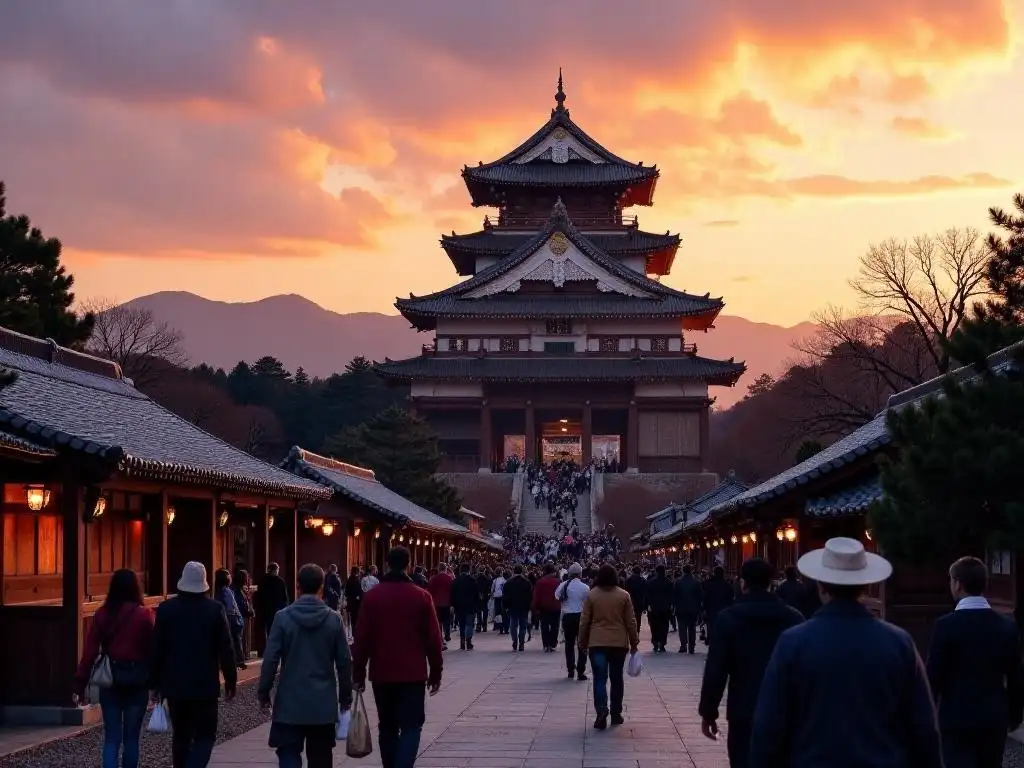
The Tokugawa Shogunate, which ruled Japan from 1603 to 1868, established a remarkable period of stability known as the Edo period. Central to this stability was the intertwining of religion and philosophy with governance. The Shogunate skillfully utilized these systems to foster loyalty, order, and social harmony among the populace, effectively minimizing conflict in a nation that had previously been rife with civil wars.
Confucianism and Its Influence on Governance
Confucianism, primarily based on the teachings of Confucius, became a cornerstone of Tokugawa governance. The Shogunate adopted Confucian principles to promote a hierarchical social order that aligned with their own political structure. This philosophy emphasized the importance of duty, respect for authority, and the moral obligation of rulers to govern wisely.
Key Aspects of Confucian Influence:
- Emphasis on Hierarchy: Confucian ideals reinforced the existing class structure, which categorized society into four main classes: samurai, farmers, artisans, and merchants. Each class had its defined roles and responsibilities, promoting societal stability.
- Education and Moral Development: The Tokugawa regime established Confucian academies that educated the samurai and the elite. This aimed not only at cultivating knowledgeable leaders but also at instilling moral values throughout society, which were crucial for maintaining order.
- Benevolent Governance: Rulers were encouraged to act in the best interests of their subjects, fostering a sense of loyalty. The belief that a benevolent ruler would yield a loyal populace helped to legitimize the Shogunate’s authority.
Confucianism thus served as a powerful tool for the Tokugawa Shogunate, reinforcing its political legitimacy and social cohesion in an era marked by its previous conflicts.
The Impact of Buddhism on Tokugawa Society
Buddhism also played a significant role during the Tokugawa era, contributing to the cultural and spiritual landscape that supported stability. The Shogunate recognized the unifying power of Buddhism and sought to harness it to promote social order and cultural identity.
Key Aspects of Buddhism's Impact:
- Cultural Integration: By supporting various Buddhist sects, such as Zen and Pure Land, the Tokugawa Shogunate helped integrate diverse cultural practices into the fabric of society, fostering a sense of belonging and community among the populace.
- Moral Framework: Buddhist teachings on compassion and mindfulness provided a moral framework that encouraged peaceful coexistence. This was particularly important in a society recovering from years of conflict, as it promoted introspection and a focus on communal wellbeing.
- Temples as Community Centers: Buddhist temples served as vital community hubs where people gathered for festivals, education, and social services. This not only reinforced local governance but also strengthened communal ties, further contributing to societal stability.
Both Confucianism and Buddhism were instrumental in shaping the Tokugawa Shogunate's approach to governance and societal organization. By leveraging these philosophical and religious traditions, the Shogunate was able to cultivate a stable and harmonious society, marking a significant departure from the chaotic conditions that preceded its rule. Through careful integration of these ideologies, the Tokugawa Shogunate established a framework that ensured stability in Japan during a critical historical juncture.
The Tokugawa Shogunate's Foreign Relations
The Tokugawa Shogunate's foreign relations were pivotal in shaping Japan's political landscape during the feudal era. The Shogunate, which ruled from 1603 to 1868, adopted a unique approach to international relations that emphasized isolationism and control, which was instrumental in establishing stability in a nation previously plagued by civil strife.
Isolationist Policies and Their Effects on Stability
The most defining aspect of the Tokugawa Shogunate's foreign relations was its implementation of sakoku (鎖国), or "locked country" policies, which effectively isolated Japan from the outside world. This policy was instituted in the 1630s and had several key components:
- Severing Foreign Contacts: The Shogunate restricted foreign trade to a few designated ports, primarily Nagasaki, which was open only to the Dutch and Chinese. This limited interaction minimized the influence of foreign powers and reduced the risk of external conflicts.
- Restriction of Christianity: The Shogunate viewed Christianity as a threat to its authority, leading to the persecution of Christians and the banning of missionary activities. This decision was pivotal in maintaining the Shogunate's power and enforcing a unified national identity centered on Japanese traditions.
- Control of Trade and Commerce: By controlling trade routes and limiting foreign influence, the Shogunate aimed to create a self-sufficient economy. This control over commerce helped prevent the rise of powerful merchant classes that could challenge the ruling elite.
The effects of these isolationist policies were profound:
- Political Stability: By reducing the number of foreign influences and potential conflicts, the Tokugawa Shogunate fostered a stable political environment. The absence of external threats allowed the Shogunate to focus on internal governance.
- Cultural Homogeneity: The isolationist policies contributed to a unique Japanese culture that flourished with minimal foreign interference. The arts, literature, and traditional practices saw significant development during this period.
- Economic Control: The Shogunate's restrictive trade policies ensured that economic power remained centralized, reducing the chances of internal dissent driven by economic disparities.
Overall, the isolationist policies of the Tokugawa Shogunate were a strategic choice that played a crucial role in establishing and maintaining stability in Japan during its feudal era.
Trade with the West and Its Controlled Nature
While the Tokugawa Shogunate primarily focused on isolationism, it did engage in limited trade with Western nations, albeit under strict regulations:
- Dutch Trade Influence: The Dutch were allowed to trade at the port of Nagasaki, serving as Japan's only direct contact with European powers. This relationship was carefully managed, with the Dutch required to adhere to strict regulations regarding their activities in Japan.
- Controlled Exchange of Ideas: The Shogunate allowed for the importation of Western knowledge, particularly in fields like medicine and astronomy, but limited the influence of Western culture and ideologies. This selective engagement helped Japan modernize in certain areas while maintaining its cultural integrity.
- Economic Benefits: The controlled nature of trade with the West allowed the Shogunate to benefit economically from the exchange of goods without compromising its political stability. Goods such as silk and spices were imported, and Japanese products like silver were exported, creating a regulated flow of wealth.
The approach to Western trade had several implications:
- Economic Growth: By engaging in controlled trade, the Tokugawa Shogunate was able to stimulate economic growth without the destabilizing effects of unrestricted foreign trade. This contributed to a prosperous economy during the Edo period.
- Strategic Diplomacy: The careful management of foreign relations demonstrated the Shogunate's diplomatic skills, allowing Japan to navigate the complex dynamics of international politics while prioritizing national stability.
- Foundation for Future Changes: The limited engagement with the West laid the groundwork for future interactions, particularly as Japan would eventually open up to the world in the mid-19th century. The Tokugawa era’s controlled trade practices would influence Japan's later modernization efforts.
The Tokugawa Shogunate's foreign relations, characterized by isolationist policies and controlled trade, were essential in establishing stability in a previously tumultuous Japan. These strategies not only ensured political and economic stability but also set the stage for the nation’s future interactions with the world.
Challenges to Tokugawa Stability

The Tokugawa Shogunate, which ruled Japan from 1603 to 1868, is often credited with establishing a long period of peace and stability known as the Edo Period. However, this stability was not without significant challenges. Internal conflicts, rebellions, and external pressures posed constant threats to the shogunate's authority and control over the nation. Understanding these challenges is crucial to comprehending how the Tokugawa Shogunate managed to maintain stability in Japan despite these formidable obstacles.
Internal Conflicts and Rebellions
The Tokugawa regime faced various internal conflicts that threatened its stability. One of the most notable challenges was the daimyo (feudal lord) system, which, while crucial for maintaining control over the territories, also led to rivalries and power struggles among the daimyo. This rivalry sometimes resulted in uprisings, as local lords sought to gain more power or territory at the expense of others.
- The Shimabara Rebellion (1637-1638): This was one of the most significant internal conflicts during the Tokugawa era. It was primarily driven by discontent among the peasantry, exacerbated by heavy taxation and religious persecution against Christians. The rebellion, although ultimately suppressed, highlighted the social tensions within Japanese society and the potential for widespread unrest.
- The Kōzuke and Jōshū Uprisings: These smaller conflicts also showcased the dissatisfaction among the lower samurai and peasant classes. They were fueled by economic hardship and the rigid class structure of Tokugawa society, which restricted mobility and opportunities for those at the lower end of the social hierarchy.
Through a combination of military might and strategic alliances, the Tokugawa Shogunate was able to quell these rebellions. However, the constant threat of internal strife necessitated a strong and sometimes harsh response, which included the enforcement of strict laws and surveillance of potential dissenters.
External Pressures and the Threat of Change
In addition to internal conflicts, the Tokugawa Shogunate faced significant external pressures that challenged its stability. The arrival of foreign powers and the changing dynamics of international trade posed a threat to the isolationist policies that the shogunate had implemented.
- Western Influence: The most notable event was the arrival of Commodore Matthew Perry and his "black ships" in 1853, which forced Japan to open its ports to foreign trade. This was a direct challenge to the shogunate's policy of sakoku (locked country), which had kept Japan isolated from much of the world for over two centuries. The inability to effectively respond to this external pressure led to a crisis of legitimacy for the Tokugawa government.
- The Opium Wars: The experience of neighboring countries, such as China during the Opium Wars, served as a cautionary tale for Japan. The shogunate was acutely aware of the potential dangers of foreign intervention and the impact it could have on Japanese sovereignty. This awareness spurred debates within the ruling class about the need for reform and modernization to resist foreign dominance.
In response to these external pressures, the Tokugawa Shogunate attempted to adopt certain modernization strategies, yet it struggled to balance these changes with its traditional governance structure. Ultimately, the inability to reconcile these external challenges with internal stability contributed to the shogunate's decline and the eventual Meiji Restoration in 1868.
The challenges to Tokugawa stability were complex and multifaceted, involving both internal conflicts that arose from the rigid social structure and external pressures that emerged from global changes. Understanding these factors is essential to appreciating the delicate balance the Tokugawa Shogunate attempted to maintain during its rule over Japan. The interplay between these challenges and the strategies employed by the shogunate to address them shaped the course of Japanese history during this pivotal era.
The Legacy of the Tokugawa Shogunate's Stability
The Tokugawa Shogunate, which reigned from 1603 to 1868, is often credited with establishing a remarkable era of stability in Japan, known as the Edo period. This stability had profound and lasting effects on Japanese society, culture, and governance, shaping the nation’s trajectory well beyond the shogunate's fall.
Long-Term Effects on Japanese Society and Culture
The stability brought by the Tokugawa Shogunate had several long-term effects that continue to influence Japan today:
- Social Hierarchy and Structure:
- The Tokugawa regime established a rigid social hierarchy, which divided society into distinct classes: the samurai, farmers, artisans, and merchants. This stratification created a sense of order and clear roles within society.
- Samurai: The warrior class, who served as the ruling elite, maintained the peace and were responsible for governance.
- Farmers: Seen as the backbone of the economy, they were respected but heavily taxed.
- Artisans and Merchants: Although they contributed to economic growth, they were considered lower in status, which influenced social dynamics and economic relationships.
- Cultural Flourishing:
- The peace of the Edo period allowed for significant cultural developments. The flourishing of arts, literature, and philosophy can be attributed to the stability of the time.
- Notable cultural milestones include the rise of Ukiyo-e (woodblock prints), the emergence of Kabuki theater, and the development of classic literature such as The Tale of Genji by Murasaki Shikibu, which was influential in shaping Japanese narrative forms.
- Economic Growth:
- The shogunate promoted a stable agrarian economy, leading to increased agricultural output and trade. The establishment of a national currency facilitated commerce, boosting the merchant class's power and influence.
- Cities like Edo (modern-day Tokyo) became cultural and economic hubs, enriching the entire nation.
- Isolationist Policies:
- The Tokugawa Shogunate implemented a policy known as Sakoku, or "closed country," which severely limited foreign influence and trade. While this isolationism protected Japan from colonial powers, it also led to stagnation in scientific and technological advancements compared to the West.
- Legal Codification and Governance:
- The shogunate established a comprehensive legal system that provided stability and order. The Buke Shohatto outlined the duties of samurai and the governance structure, which created a framework for law and order in society.
The legacy of the Tokugawa Shogunate is a complex interplay of stability and stagnation, with its societal structures and cultural achievements laying the groundwork for modern Japan.
Transition to the Meiji Restoration
The transition from the Tokugawa Shogunate to the Meiji Restoration (1868) marked a significant turning point in Japanese history, characterized by radical changes in political, social, and cultural spheres.
- End of the Feudal System:
- The overthrow of the Tokugawa regime initiated the dismantling of the feudal system that had governed Japan for over two centuries. The Meiji government sought to create a centralized state, abolishing the daimyōs' (feudal lords) power and redistributing land.
- Modernization and Westernization:
- The Meiji Restoration led to extensive reforms aimed at modernizing Japan to compete with Western powers. This included the adoption of Western technologies, the establishment of a modern military, and the reformation of educational systems.
- The phrase "Rich Country, Strong Army" encapsulated the Meiji vision, prompting significant industrial growth and infrastructural development.
- Cultural Renaissance:
- As Japan opened to foreign ideas, a cultural renaissance began. Traditional practices were blended with Western influences, leading to a unique fusion of arts, literature, and philosophy that defined the Meiji era.
- The introduction of Western-style education fostered a new intellectual class and prompted movements towards democracy and civic rights.
- Political Centralization:
- The political landscape shifted from a feudal shogunate to a constitutional monarchy, culminating in the establishment of the Meiji Constitution in 1889, which emphasized the emperor's role while introducing parliamentary structures.
The transition to the Meiji Restoration fundamentally altered Japan's trajectory, leading it from a feudal society into a modern nation-state, influenced by the stability and societal structures established during the Tokugawa Shogunate. The enduring effects of this era continue to resonate in contemporary Japan, shaping its national identity and cultural heritage.
Conclusion: Lessons from the Tokugawa Shogunate

The Tokugawa Shogunate represents a pivotal period in Japanese history, marked by its remarkable ability to maintain stability in a nation that had previously been engulfed in conflict. As we reflect on the lessons derived from this era, it becomes clear that effective governance, strategic policies, and a deep understanding of societal needs are crucial for fostering a peaceful and prosperous society.
The Importance of Governance for National Stability
The Tokugawa Shogunate's governance model offers valuable insights into how political authority can be structured to support national stability. The shogunate implemented a centralized feudal system that balanced power between the ruling shogun and the daimyos (feudal lords). This hierarchical structure ensured that local governance was aligned with national interests, minimizing the risk of rebellion and fragmentation.
Key features of Tokugawa governance included:
- Bureaucratic Organization: A well-defined bureaucratic system was established to manage the vast territories of Japan. This included the creation of various administrative roles, which ensured that laws and policies were uniformly enforced.
- Social Hierarchy: The rigid social structure—composed of samurai, farmers, artisans, and merchants—created clear roles and responsibilities. This stratification fostered a sense of order and predictability in society.
- Economic Policies: The shogunate promoted agricultural production and controlled trade practices, which stabilized the economy. By regulating the flow of goods and resources, the Tokugawa Shogunate ensured that communities were self-sufficient and less reliant on external forces.
In essence, the governance strategies employed by the Tokugawa Shogunate exemplify how a well-organized political framework can lead to long-term stability, a lesson that continues to resonate in today's political discourse.
Reflections on Tokugawa Stability in Modern Context
As we consider the principles of Tokugawa stability in a modern context, several parallels can be drawn. The challenges faced by contemporary societies—such as political polarization, economic disparity, and social unrest—echo the conditions that prompted the Tokugawa Shogunate to implement its stability measures.
- Importance of Cohesion: The Tokugawa era illustrates the necessity of fostering national cohesion. In today's globalized world, governments must prioritize unity among diverse populations to mitigate conflict and promote progress.
- Adaptability in Governance: The shogunate's ability to adapt its policies to the changing needs of society is a critical lesson for modern political leaders. Responsive governance that considers public sentiment can enhance stability and trust in government institutions.
- Balancing Power Dynamics: Just as the Tokugawa Shogunate balanced power among the daimyos, contemporary governments must navigate the complexities of power distribution to ensure that no single entity can dominate. This balance is essential for democratic stability and societal harmony.
The lessons gleaned from the Tokugawa Shogunate's approach to stability in Japan serve as a framework for understanding the intricate relationship between governance and societal peace. By examining these historical precedents, modern leaders can glean insights into fostering stability in their own nations, ultimately striving for a harmonious society that reflects the enduring legacy of the Tokugawa era.
References
Recommended Reading on the Tokugawa Shogunate
To deepen your understanding of the Tokugawa Shogunate and its role in establishing stability in Japan, the following books and resources are highly recommended:
- "Shogun: The Life of Tokugawa Ieyasu" by John Man
- This biography delves into the life of Tokugawa Ieyasu, the founder of the shogunate, providing insights into his strategies and policies that led to a stable Japan.
- "The Tokugawa World" edited by John W. Hall and Nobushige Hozumi
- A collection of essays covering various aspects of Tokugawa society, economy, and politics, this book offers a comprehensive overview of the era.
- "Tokugawa Japan: The Social and Economic Antecedents" by Michael E. C. K. G. Kiyoshi
- This work discusses the social and economic structures that underpinned the Tokugawa regime, contributing to its long-standing stability.
- "The Making of Modern Japan" by Bruce Corty
- While focusing on the transition from feudalism to modernity, this book provides essential context on the lasting impacts of the Tokugawa Shogunate.
- "Tokugawa Ieyasu" by John W. Hall
- An essential scholarly work that explores the political acumen of Ieyasu and how his governance set the foundation for over 250 years of peace.
Scholarly Articles on Feudal Japan and Political History
For those looking for in-depth academic analysis, the following scholarly articles offer valuable insights into the political history of feudal Japan, particularly focusing on the Tokugawa Shogunate:
-
"The Impact of the Tokugawa Shogunate on Japanese Society"
This article examines the social structures established under the Tokugawa regime and their implications for stability and governance.
-
"Peace and Stability in Tokugawa Japan: An Analysis of the Bakuhan System"
An exploration of the Bakuhan system, which divided power between the shogunate and regional daimyo, revealing how it contributed to internal peace.
-
"The Role of the Samurai in the Tokugawa Period"
This paper discusses the samurai class’s transformation during the shogunate, focusing on their role in maintaining order and stability.
-
"Economic Policies of the Tokugawa Shogunate: Foundations of Stability"
An analysis of the economic strategies employed by the shogunate, illustrating how they fostered a stable society through agriculture and trade.
-
"Cultural Developments During the Tokugawa Era: Stability Through Culture"
This article highlights how cultural advancements, including literature and arts, contributed to societal cohesion and stability during the Tokugawa period.
By engaging with these resources, readers can gain a deeper appreciation of the complexities surrounding the Tokugawa Shogunate's efforts to establish stability in a previously warring nation.
Frequently Asked Questions
What was the Tokugawa Shogunate?
The Tokugawa Shogunate was a feudal regime in Japan that lasted from 1603 to 1868, established by Tokugawa Ieyasu. It marked a significant shift towards political stability after a long period of civil wars.
How did the Tokugawa Shogunate contribute to stability in Japan?
The Tokugawa Shogunate implemented strict social hierarchies and centralized power, which helped to maintain order and peace in a previously chaotic environment. This era is known for its socio-economic stability and cultural development.
What were the key policies of the Tokugawa Shogunate?
Key policies included the Sankin-kōtai system, which required feudal lords to alternate residence between their domains and Edo, promoting loyalty to the shogunate. They also enforced rigid social classes to prevent uprisings.
How did the Tokugawa Shogunate impact Japanese culture?
The era saw a flourishing of arts and culture, including theater, poetry, and tea ceremonies. The stability provided by the shogunate allowed for advancements in education and commerce, enriching Japanese culture.
What led to the end of the Tokugawa Shogunate?
The Tokugawa Shogunate faced growing internal and external pressures, including economic hardships, Western influence, and the rise of the samurai class. These factors culminated in the Meiji Restoration of 1868, which marked the end of feudalism in Japan.
Final Reflection: The Enduring Legacy of Tokugawa Shogunate Stability in Japan
The Tokugawa Shogunate's remarkable ability to establish stability in a previously warring nation is not just a historical footnote; it serves as a powerful reminder of the importance of governance and social cohesion in today's world. In an era where conflicts and divisions often dominate headlines, the lessons drawn from the Tokugawa period resonate profoundly, illustrating how effective leadership can transform chaos into harmony. The Shogunate's policies, which prioritized peace and order, laid the groundwork for a flourishing society that thrived for over two centuries, a testament to the lasting impact of stability.
Culture and society during the Tokugawa era were profoundly shaped by the Shogunate's commitment to stability, influencing everything from art to commerce. The peace established by the Tokugawa regime allowed for the flourishing of the arts, education, and trade, creating a rich cultural tapestry that continues to influence Japan today. In times of peace, the arts flourish, and society thrives.
This quote encapsulates the essence of how stability fosters creativity and innovation, reminding us that the foundations of a prosperous society are built on the pillars of peace and security.
As we reflect on the lessons of the Tokugawa Shogunate, let us consider how we can apply these principles in our own lives and communities. How can we contribute to creating a more stable and harmonious environment around us? Whether through fostering understanding in our relationships, advocating for peaceful resolutions in conflicts, or supporting initiatives that promote social cohesion, we all have a role to play. Embrace the spirit of the Tokugawa era, and let us work together to build a future where stability and peace are not just historical achievements but ongoing realities.
Take a Step Toward Understanding Japan's Transformation!
Thank you for diving into the intriguing history of the Tokugawa Shogunate and its role in establishing stability during a tumultuous period. Your interest in this pivotal era highlights its lasting impact on Japan’s cultural and political landscape. Now, let’s turn that knowledge into action!
Here are some engaging steps you can take:
- Explore Further: Begin your journey by reading our comprehensive articles on daily life during the Edo period.
- Join the Conversation: Share your thoughts or questions in the comments below to connect with fellow history enthusiasts.
- Uncover Hidden Gems: Visit local museums or explore online exhibitions to discover artifacts from the Tokugawa era.
What aspect of the Tokugawa Shogunate do you find most fascinating, and how do you believe it influences Japan today?