
Japan's Response to Western Pressure: The Aftermath of Perry's Arrival

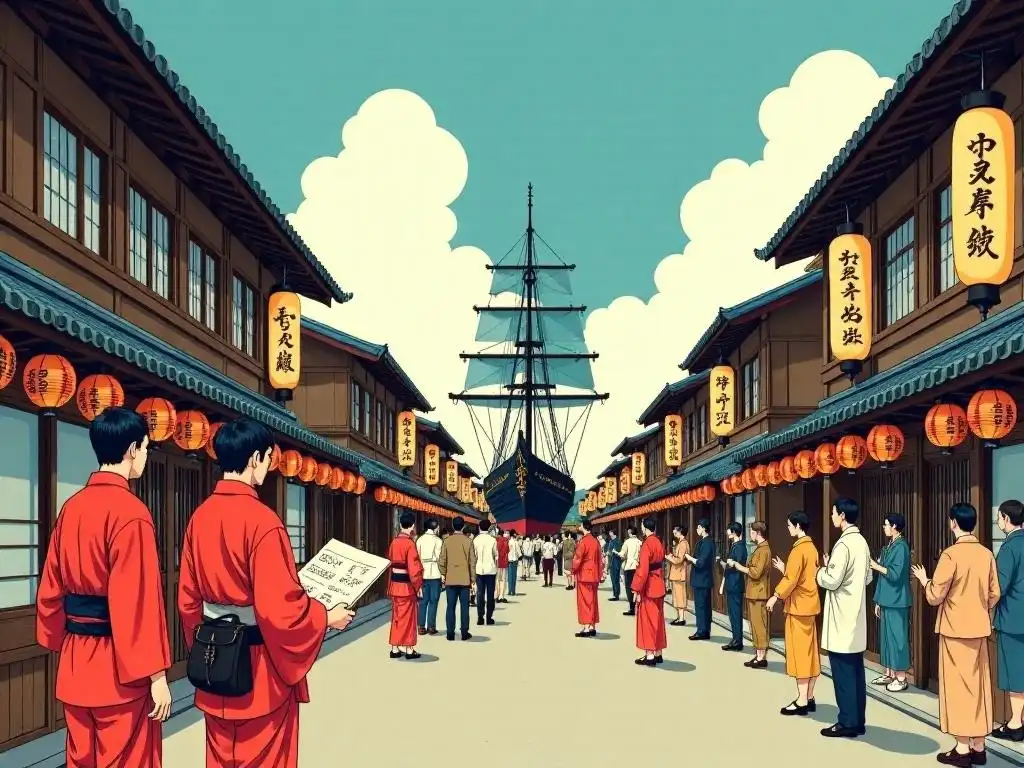
Welcome to Feudal Japan History, where we embark on a fascinating journey through the intricate tapestry of Japan's feudal era. Here, we delve deep into the rich historical, cultural, and societal narratives that shaped this remarkable period. In our featured article, "Japan's Response to Western Pressure: The Aftermath of Perry's Arrival," we explore the pivotal moments following Commodore Perry's arrival and how they catalyzed a profound transformation in Japan.
What were the implications of this encounter, and how did it alter the course of Japanese history? Join us as we uncover the layers of this compelling story and reveal the forces that propelled Japan into a new era of Westernization. Your exploration begins now!
Introduction to Japan's Westernization after Perry
The arrival of Commodore Matthew Perry in 1853 marked a pivotal moment in Japanese history, serving as a catalyst for the country's transformation from a secluded feudal society to a modern nation-state. Perry's expedition, driven by the United States' desire to establish trade relations, confronted Japan with the realities of Western imperialism and technological advancements. This encounter not only forced Japan to reevaluate its isolationist policies but also initiated a profound period of Westernization that would reshape its political, economic, and cultural landscapes.
In the wake of Perry's arrival, Japan faced the daunting task of navigating the pressures of modernization while maintaining its unique cultural identity. The subsequent years witnessed significant reforms, including the Meiji Restoration, which sought to integrate Western ideas and technologies while preserving traditional values.
This article delves into the intricate dynamics of Japan's response to Western pressure, exploring how the nation balanced adaptation and resistance in the face of transformative change. Through this exploration, we will uncover the profound implications of Perry's arrival, not only for Japan but also for the broader context of global interactions during this era.
Overview of Commodore Perry's Arrival
Commodore Perry's arrival in Japan in July 1853 was a watershed moment that disrupted centuries of isolationist policy practiced by the Tokugawa shogunate. His mission, characterized by a display of military might and diplomacy, aimed to open Japan to American trade. Perry's fleet of "black ships," so named for their steam-powered vessels, was a stark contrast to the traditional sailing ships that Japan had known.
Key Aspects of Perry's Mission:
- Diplomatic Objectives:
- Establishing formal trade relations between the United States and Japan.
- Ensuring the safety of American sailors shipwrecked in Japanese waters.
- Military Show of Force:
- The impressive display of naval power was intended to persuade the Japanese leadership of the might of Western nations.
- Perry's tactics included sailing into Tokyo Bay and anchoring his ships, showcasing technological superiority.
- Cultural Impact:
- Perry's arrival challenged the Japanese worldview, introducing new ideas and concepts, including the notion of diplomacy and international trade.
The initial response from the Japanese authorities was one of shock and apprehension. The Tokugawa shogunate, which had maintained strict control over foreign interactions, found itself at a crossroads. The encounter with Perry ultimately set in motion a series of events leading to the eventual opening of Japan to the West, culminating in the signing of the Treaty of Kanagawa in 1854. This treaty marked the beginning of a new era, as Japan began to embrace Westernization and grapple with the complexities of modernization amidst external pressures.
The Context of Western Pressure on Japan
Japan's encounter with Western powers in the mid-19th century marked a pivotal moment in its history. The arrival of Commodore Matthew Perry in 1853 was not just a singular event; it was the culmination of various pressures and transformations happening both within Japan and on a global scale. Understanding this context is crucial to grasping the complexities of Japan's subsequent Westernization after Perry.
Historical Background of Japan’s Isolation
For over two centuries, Japan had embraced a policy of sakoku, or closed country, which effectively isolated it from the outside world. This policy was initiated during the Tokugawa shogunate in the early 17th century, aimed at eliminating foreign influence, particularly from Christian missionaries and European traders. Japan allowed only limited trade through the port of Nagasaki, primarily with the Dutch and Chinese, and prohibited the entry of Western nations.
The isolationist policy fostered a unique Japanese culture and societal structure, but it also left Japan vulnerable to external pressures. By the mid-19th century, the global landscape was shifting dramatically, with Western powers expanding their reach into Asia, driven by industrialization, economic ambitions, and a desire for new markets. This context set the stage for Perry's arrival, which would challenge Japan’s longstanding isolation and force it to confront the realities of a rapidly changing world.
Global Trends Leading to Western Expansion
The mid-19th century was characterized by significant global changes, particularly in the realms of technology, economy, and imperial ambition. The Industrial Revolution had transformed European economies, leading to a surge in production capacity and the need for new markets to absorb surplus goods. As Western nations sought to expand their influence, they turned their gaze toward Asia, viewing it as a land ripe for trade and exploitation.
The United States, emerging as a growing power, was particularly interested in opening trade routes with Japan. The need for coal and provisions for ships traveling to and from China made Japan’s strategic location attractive to American interests. Additionally, the ideological undercurrents of Manifest Destiny and the belief in the superiority of Western civilization fueled the drive to "civilize" and "modernize" non-Western societies.
This confluence of technological advancement, economic necessity, and imperial ambition created a perfect storm that culminated in Commodore Perry's expedition to Japan. His arrival was not merely an act of diplomacy but a representation of Western pressures that would ultimately lead Japan to reconsider its isolationist policies.
Immediate Reactions to Perry's Arrival
The immediate reactions to Perry's arrival in Japan were complex and multifaceted. They encompassed responses from the government, military, and ordinary citizens, reflecting a society on the brink of transformation.
The Japanese Government's Initial Response
Upon Perry's arrival, the Tokugawa shogunate found itself in a precarious position. The shogunate was initially unprepared to confront the technological superiority of Perry's fleet, which included steam-powered warships. The Japanese government faced a dilemma: to resist the demands of the foreign powers could lead to military conflict, while compliance could threaten its authority and the traditional way of life.
After much debate, the shogunate decided to engage in negotiations with Perry, recognizing that isolation was no longer a viable option. In 1854, the Convention of Kanagawa was signed, leading to the opening of Japanese ports to American ships for supplies and trade. This marked a significant shift from decades of isolation and set off a cascade of similar treaties with other Western powers, fundamentally altering Japan's foreign relations.
Public Sentiment and Cultural Reactions
The public sentiment surrounding Perry's arrival and the subsequent opening of Japan was varied and often polarized. Many within the samurai class and conservative factions viewed the arrival of foreign powers as a threat to Japan's sovereignty and cultural integrity. They feared that Western influence would corrupt Japanese traditions and instigate social upheaval.
Conversely, some intellectuals and merchants recognized the potential benefits of engaging with the West. They argued that modernization and the adoption of Western technology could bolster Japan's defenses and economic standing. This tension between conservatism and progressivism led to intense debates within Japanese society.
Cultural reactions also manifested in art, literature, and public discourse, reflecting a society grappling with its identity amidst external pressures. The introduction of Western ideas and technologies prompted a reevaluation of Japanese culture, setting the stage for the broader transformations that would follow in the years to come. The period following Perry's arrival saw Japan not only opening its doors to trade but also embarking on a journey of modernization and Westernization that would redefine its national identity.
The Treaty of Kanagawa and Its Implications
The Treaty of Kanagawa, signed on March 31, 1854, marked a pivotal moment in Japan's history, effectively ending over two centuries of self-imposed isolation under the Tokugawa shogunate. This treaty was not merely a diplomatic agreement but a watershed moment that set the stage for Japan's rapid transformation into a modern nation-state.
The arrival of Commodore Matthew Perry's black ships in 1853, which showcased the technological superiority of the Western powers, served as a catalyst for this change. The treaty allowed for the opening of two Japanese ports to American ships, thereby initiating a shift from isolationism to engagement with the global community.
The implications of the Treaty of Kanagawa were profound, as it not only established formal diplomatic relations with the United States but also prompted similar treaties with other Western nations. This new era of engagement would lead Japan to reassess its political, military, and economic structures, ultimately paving the way for modernization.
Key Provisions of the Treaty
The key provisions of the Treaty of Kanagawa were significant and set a precedent for future foreign relations. The treaty included several critical points:
- Opening of Ports: The treaty stipulated that the ports of Shimoda and Hakodate would be opened for American vessels, allowing them access for trade.
- Protection of American Citizens: It guaranteed the safety and protection of American citizens residing in Japan, ensuring that they would not be subject to Japanese law.
- Coaling Stations: The treaty also allowed the establishment of coaling stations for American ships, facilitating further American maritime activity in the region.
- Future Trade Agreements: It laid the groundwork for additional trade agreements, indicating Japan’s willingness to engage in commerce with the West.
These provisions not only marked a departure from Japan's isolationist policies but also initiated a series of unequal treaties with other Western powers, deeply affecting Japan’s sovereignty and leading to widespread internal dissent.
Impact on Japan's Foreign Relations
The impact of the Treaty of Kanagawa on Japan's foreign relations was profound and transformative. Following the treaty, Japan found itself compelled to sign similar agreements with other Western nations, including Britain, France, and Russia. These treaties often contained unfavorable terms for Japan, such as extraterritoriality and low tariffs, which ignited public discontent and a sense of national humiliation.
The influx of foreign influence also marked a shift in Japan's diplomatic strategies. No longer could Japan afford to remain isolated; it had to navigate the complex waters of international politics. As a response, Japan began to modernize its military and diplomatic institutions, seeking to renegotiate the terms of these unequal treaties. This period of rapid change laid the groundwork for Japan's emergence as a global power by the early 20th century.
The Shift from Isolationism to Engagement
The shift from isolationism to engagement was a monumental change for Japan. For over 200 years, the Tokugawa shogunate had maintained a strict policy of sakoku (closed country), limiting foreign influence and trade. However, Commodore Perry's arrival shattered this isolation and revealed the vulnerabilities of Japan's feudal system.
The signing of the Treaty of Kanagawa symbolized a broader acceptance of the need for reform. Japanese leaders recognized that they must engage with Western powers not only to prevent colonization but also to learn from their technological advancements. This transition led to the Meiji Restoration in 1868, a period characterized by sweeping reforms aimed at modernizing Japan's political, military, and economic systems. The once insular nation began to embrace Western technology and culture, setting the foundation for its rapid development into a modern industrialized state.
The Process of Westernization in Japan
The process of Westernization in Japan was multifaceted, encompassing economic, social, and cultural dimensions. This transformation was fueled by the necessity to compete with Western powers and to reclaim Japan’s sovereignty. The changes were both profound and far-reaching, affecting nearly every aspect of Japanese life.
Economic Changes Induced by Westernization
Westernization brought about significant economic changes in Japan, leading to the establishment of a modern economy. The government recognized the need for industrialization to compete with Western nations, which led to several key developments:
- Infrastructure Development: The construction of railways, telegraph lines, and ports facilitated trade and communication, linking rural areas with urban centers.
- Rise of Industries: The government invested in industries such as textiles, machinery, and shipbuilding, fostering a new industrial base.
- Banking System: The introduction of a banking system and currency reforms helped stabilize the economy and encourage investment.
- Trade Expansion: Japan began to engage in international trade, exporting silk and other goods while importing machinery and technology.
These economic changes laid the foundation for Japan's emergence as a significant player in the global economy by the late 19th century.
Social and Cultural Transformations
The social and cultural transformations during the Westernization process were equally significant. As Japan opened its doors to the West, its society began to undergo profound changes:
- Cultural Exchange: The influx of Western ideas and customs influenced Japanese art, literature, and fashion, leading to a blend of traditional and modern styles.
- Social Reforms: The abolition of the caste system and the promotion of meritocracy altered social structures, allowing for greater social mobility.
- Women’s Rights Movement: The Western model of women's rights began to take root, leading to increased advocacy for women's education and participation in public life.
These shifts in social dynamics contributed to a more modern and egalitarian society, although they also sparked debates about identity and the preservation of traditional values.
The Role of Education in Japan’s Modernization
Education played a crucial role in Japan’s modernization and Westernization. Recognizing the importance of an educated populace, the Meiji government implemented several significant reforms in the education sector:
- Establishment of a Public Education System: A national education system was established, providing compulsory education for children, which emphasized not only literacy but also science and technology.
- Western Curriculum: The curriculum was influenced by Western education models, incorporating subjects such as mathematics, science, history, and foreign languages.
- Higher Education Institutions: Universities were founded, such as the University of Tokyo, which became centers for advanced learning and research.
These educational reforms were instrumental in cultivating a skilled workforce capable of contributing to Japan's rapid industrialization and modernization efforts. By prioritizing education, Japan created a foundation for a knowledgeable citizenry that would drive its progress into the modern era.
Resistance and Adaptation to Western Influence
Japan's encounter with Western powers in the mid-19th century marked a significant turning point in its history. The arrival of Commodore Matthew Perry in 1853 forced Japan to confront the reality of Western influence, leading to a complex interplay of resistance and adaptation. Initially, there was widespread opposition to opening Japan's borders, spurred by a strong desire to maintain its sovereignty and cultural identity. Traditionalists, including samurai and conservative political factions, resisted the influx of foreign ideas, fearing that Westernization would undermine their societal structures.
However, as the pressure from Western nations grew, Japan began to adapt to the changing landscape. This adaptation was not merely passive; it involved strategic decisions to learn from the West while attempting to preserve its cultural heritage. The government implemented reforms to modernize the military and economy, recognizing that to resist Western domination, Japan needed to adopt some of their technologies and practices. This dual approach of resistance and adaptation laid the groundwork for Japan's eventual transformation into a modern state.
Internal Conflicts and Opposition
Within Japan, the response to Western pressures was far from uniform, leading to significant internal conflicts. The ruling Tokugawa shogunate faced opposition from various factions, including the samurai class and anti-shogunate groups, who viewed the shogunate's concessions to the West as a betrayal of traditional values. The arrival of Perry catalyzed these tensions, leading to an increased demand for political reform and a reevaluation of Japan's foreign policy.
As the shogunate struggled to maintain control, the ideological divide deepened. On one side were the conservatives, who advocated for isolationism and strict adherence to traditional Japanese culture. On the other were the progressives, who called for modernization and engagement with Western powers. This schism culminated in violent uprisings, such as the Ansei Purge and the Satsuma Rebellion, which highlighted the profound societal rifts and the urgent need for a cohesive national strategy.
The Meiji Restoration: A New Era
The internal conflicts and dissatisfaction with the Tokugawa regime ultimately led to the Meiji Restoration in 1868. This pivotal event marked the end of feudal rule and the restoration of imperial authority under Emperor Meiji. The Restoration was characterized by a commitment to modernization and Westernization, as Japan sought to transform itself into a competitive nation on the global stage.
During the Meiji era, the government undertook extensive reforms in various sectors, including education, military, and industry. The establishment of a centralized government replaced the fragmented feudal system, enabling a more unified approach to modernization. Japan adopted Western technologies and practices while simultaneously fostering a sense of national identity. This period saw a remarkable transformation, as the nation transitioned from an isolated feudal society to an emerging industrial power.
Balancing Tradition and Modernity
As Japan embraced modernization, the challenge of balancing tradition and modernity became increasingly prominent. While the government encouraged Western practices, there was a conscious effort to preserve key elements of Japan's cultural heritage. This balancing act manifested in various aspects of society, including art, architecture, and social customs.
Cultural synthesis became a hallmark of the Meiji period, as traditional Japanese aesthetics merged with Western influences. For instance, the adoption of Western clothing and architectural styles coexisted with the preservation of traditional arts like tea ceremonies and kabuki theater. This duality allowed Japan to forge a unique identity that honored its rich history while embracing the innovations of the modern world, ultimately contributing to a distinct Japanese ethos that would define its path forward.
The Long-term Effects of Perry's Arrival
The aftermath of Commodore Perry's arrival had profound and lasting effects on Japan, shaping its trajectory well into the 20th century. The initial shock of Western intrusion catalyzed a series of transformations that would redefine Japan's place in the world.
Impact on Japan's National Identity
Perry's arrival and the subsequent interactions with Western powers prompted a reevaluation of Japan's national identity. No longer could Japan remain isolated; it was compelled to confront the realities of globalization. This encounter stirred a sense of nationalism, as citizens began to take pride in their unique cultural heritage while also aspiring to compete with Western nations. The blending of traditional values with modern aspirations contributed to a more cohesive national identity, one that emphasized both resilience and progress.
The Emergence of Japan as a Global Power
The reforms initiated during the Meiji Restoration positioned Japan as a formidable player on the global stage. By the early 20th century, Japan had successfully transformed its military and economy, becoming an imperial power in its own right. The victory in the Sino-Japanese War (1894-1895) and later in the Russo-Japanese War (1904-1905) showcased Japan's newfound strength and marked its emergence as a global power. This shift not only altered the balance of power in East Asia but also set the stage for Japan's future expansionist policies.
Lessons Learned from Western Interaction
Japan's response to Western pressure provides crucial lessons in adaptability and resilience. The ability to learn from external influences while maintaining a core identity allowed Japan to navigate the complexities of modernization successfully. The experience of confronting Western powers underscored the importance of strategic flexibility and the need to balance tradition with innovation. Japan's journey serves as a poignant reminder of the potential for growth and transformation in the face of external challenges, a lesson that resonates in contemporary discussions on globalization and cultural exchange.
Conclusion: Legacy of Japan's Westernization after Perry
The arrival of Commodore Perry in 1853 marked a pivotal turning point in Japanese history, setting the stage for rapid transformation and modernization. The subsequent opening of Japan to Western influence not only altered its foreign relations but also spurred significant internal changes. One of the most notable legacies of this Westernization was the Meiji Restoration of 1868, which aimed to consolidate imperial power and modernize the nation.
Japan's response to Western pressure led to the adoption of Western technologies and institutions, fundamentally reshaping its military, educational, and economic systems. By studying Western methods and incorporating them into their own frameworks, Japan successfully transitioned from a feudal society to a modern state. This transformation enabled Japan to emerge as a formidable power on the global stage by the early 20th century, showcased by its victories in conflicts such as the Sino-Japanese War (1894-1895) and the Russo-Japanese War (1904-1905).
Moreover, the legacy of Japan's Westernization can be seen in its cultural exchanges. While Japan integrated Western practices, it also sought to preserve its unique cultural identity, resulting in a dynamic synthesis of tradition and modernity. This duality is reflected in various aspects of Japanese life, from art and literature to technology and fashion.
Ultimately, the legacy of Japan's Westernization after Perry is characterized by resilience and adaptability. Despite the pressures to conform to foreign norms, Japan crafted a unique path that allowed it to maintain sovereignty while thriving in a rapidly changing world. This legacy continues to influence Japan's contemporary society, positioning it as a bridge between Eastern and Western cultures.
Reflection on the Historical Significance of the Aftermath of Perry's Arrival
The aftermath of Perry's arrival is historically significant for several reasons. Firstly, it symbolizes the end of Japan's isolationist policies that had defined its foreign relations for over two centuries. The forced opening of Japanese ports not only exposed the nation to Western powers but also ignited a sense of urgency among Japanese leaders to modernize. This shift was crucial as it laid the groundwork for Japan to become an industrialized nation.
Secondly, the events following Perry's arrival highlighted the global power dynamics of the 19th century. Japan's response to Western encroachment showcased its strategic maneuvering, allowing it to navigate the delicate balance between embracing modernization and resisting complete subjugation. This period led to the establishment of a new national identity that emphasized both pride in Japanese culture and the necessity of adapting to global advancements.
Additionally, the aftermath fostered discussions about governance and societal structure within Japan. The realization that Western nations could impose their will prompted debates about the effectiveness of the Tokugawa shogunate and the need for political reform. These discussions ultimately contributed to the overthrow of feudal practices and the establishment of a constitutional government under the Emperor.
In a broader context, Japan's experience following Perry's arrival serves as a historical lesson for other nations facing similar pressures. It illustrates the complexities of cultural exchange, the challenges of modernization, and the importance of maintaining sovereignty in the face of external forces. This reflection on Japan's past continues to resonate, as contemporary societies grapple with globalization and the impacts of Western influence.
- Introduction to Japan's Westernization after Perry
- Overview of Commodore Perry's Arrival
- The Context of Western Pressure on Japan
- Immediate Reactions to Perry's Arrival
- The Treaty of Kanagawa and Its Implications
- The Process of Westernization in Japan
- Resistance and Adaptation to Western Influence
- The Long-term Effects of Perry's Arrival
- Conclusion: Legacy of Japan's Westernization after Perry
- Reflection on the Historical Significance of the Aftermath of Perry's Arrival
Frequently Asked Questions
What was the significance of Perry's arrival in Japan?
Perry's arrival in 1853 marked the beginning of Japan's forced opening to the West, leading to the end of over two centuries of isolation. This event catalyzed significant political, social, and economic changes in Japan.
How did Japan respond to Western pressure following Perry's arrival?
Japan initiated the Meiji Restoration in 1868, focusing on modernization and industrialization. This involved adopting Western technologies and governmental structures to strengthen the nation against foreign influence.
What societal changes occurred in Japan due to Westernization?
The period saw the emergence of a new social structure, with the decline of the samurai class and the rise of a modern workforce. Educational reforms also introduced Western ideas and practices.
How did Japan's economy transform during this period?
Japan transitioned from a feudal economy to a capitalist system, embracing industrialization. The government invested in infrastructure, which facilitated trade and improved manufacturing capabilities.
What were the cultural impacts of Westernization in Japan?
Westernization led to a blending of cultures, with the introduction of Western art, fashion, and literature. This period also saw a rise in nationalism, as Japan sought to assert its identity while adopting modern influences.
Final Reflection: Embracing Change in the Wake of Perry's Arrival
Japan's journey towards modernization and Westernization after Perry's arrival is a testament to the resilience and adaptability of a nation faced with unprecedented external pressures. The events that unfolded in the mid-19th century not only transformed Japan's political and social landscape but also set the stage for its emergence as a global power. Today, as we navigate an increasingly interconnected world, the lessons from Japan's response to Western influence remain profoundly relevant, reminding us of the power of adaptability in the face of change.
The impact of Japan's Westernization extends far beyond its borders, influencing global cultural dynamics and international relations. The Meiji Restoration, fueled by the desire to modernize and compete on the world stage, serves as a powerful example of how a nation can harness external pressures to forge a new identity.
As historian John W. Dower aptly stated, "> The Japanese experience of modernization was not merely a response to Western imperialism; it was a complex interplay of adaptation, resistance, and reinvention." This ongoing influence is evident in contemporary Japan, where traditional values coexist with cutting-edge technology, illustrating the delicate balance between heritage and progress.
As we reflect on Japan's remarkable transformation after Perry's arrival, let us consider how we can apply these lessons in our own lives. Embrace change, seek knowledge, and remain open to new perspectives, for it is through these actions that we can grow and thrive in an ever-evolving world. Take a moment to ponder how you can incorporate the spirit of adaptability and resilience into your own journey, recognizing that every challenge presents an opportunity for growth and reinvention.
Embrace the Legacy: Dive Deeper into Japan's Transformative Era!
Thank you for exploring the pivotal moments of Japan's response to Western pressure with us! By understanding the aftermath of Perry's arrival, you've gained insight into a critical period that shaped modern Japanese identity and international relations.
Now, let’s take your engagement further with these actionable steps:
- Reflect and Share: **Consider writing a personal reflection on how Japan's adaptations influence global cultures today. Share your thoughts in our comments section or on your social media platforms. **
- Explore Related Stories: **Delve deeper into this fascinating era by reading articles that highlight the cultural shifts and revolutionary changes during Feudal Japan. **
- Join the Conversation: **Engage with fellow history enthusiasts in our community forum to discuss how these historical events resonate with contemporary issues in international relations. **
What aspect of Japan's transformation fascinates you the most, and how can we learn from history to shape our future?