Engaging with History: Learning Japanese Through Feudal Samurai Stories
📜 Discover the captivating world of feudal Japan as you immerse yourself in samurai stories. Learning Japanese through samurai history not only…
Read article
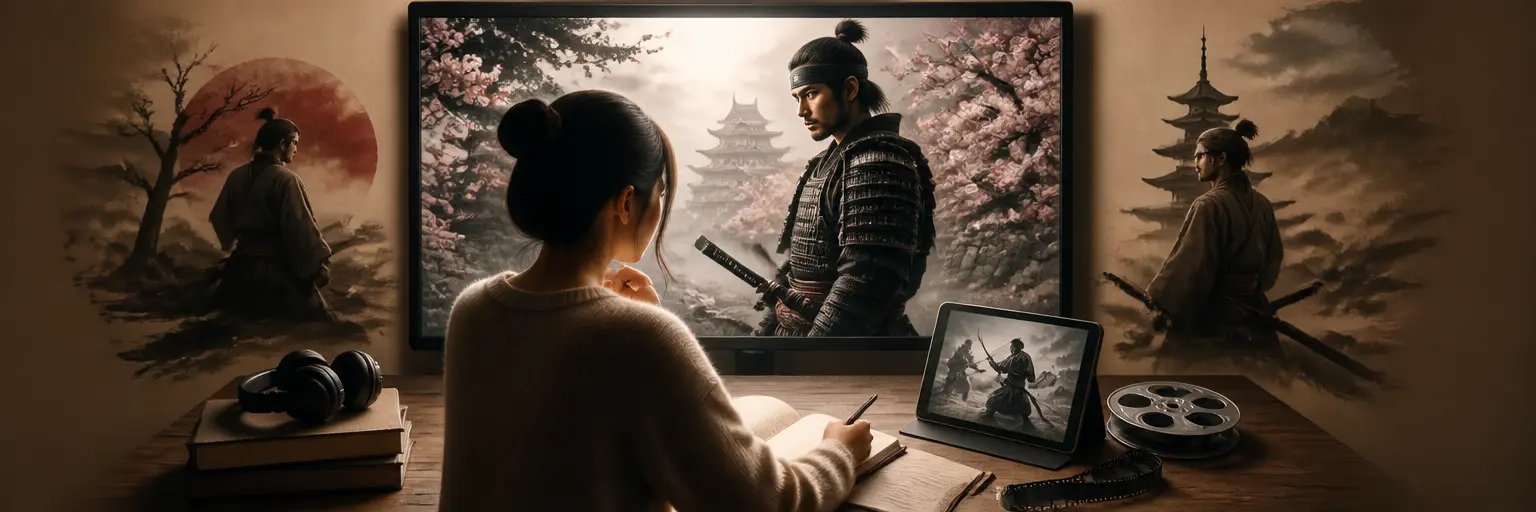
🎬 Learn Japanese through samurai films and bring the language of feudal Japan to life! Explore authentic dialogue, period expressions, cultural context, and essential vocabulary while discovering iconic warriors, traditions, and historical stories. This engaging approach combines Japanese language learning with immersive samurai history, helping you improve listening skills, pronunciation, and cultural understanding—one captivating scene at a time.

📜 Discover the captivating world of feudal Japan as you immerse yourself in samurai stories. Learning Japanese through samurai history not only…
Read article
Discover how samurai cinema has shaped modern Japanese language, enriching vocabulary and expressions while reflecting the cultural ethos of Japan's feudal era.…
Read article
Discover how to learn Japanese through samurai action scenes, blending thrilling narratives with language acquisition. This article delves into the cultural significance…
Read article
🎬 Dive into the art of Japanese pronunciation in samurai films, where classic cinema not only showcases epic battles but also offers…
Read article
🌟 Samurai films for Japanese learning offer a captivating way to immerse yourself in the language while exploring Japan’s rich feudal history.…
Read article
🌸 Samurai cinema language learning offers a captivating approach to mastering Kanji and vocabulary through the lens of Japan’s feudal era. By…
Read article
🎥 Samurai films for language learning offer immersive narratives that enhance listening comprehension in Japanese. By engaging with authentic dialogue and cultural…
Read article
🌸 Discover the nuances of samurai movies language analysis as we delve into the dialogue that shapes character relationships and cultural values.…
Read article
The evolution of language is vividly illustrated through samurai films and Japanese language, reflecting societal shifts and cultural transformations in Japan's feudal…
Read article
Embracing a samurai mindset in language learning transforms the journey into an art of discipline and resilience. By incorporating feudal values, learners…
Read article
Immerse yourself in the captivating world of samurai films, where learning Japanese phrases becomes an engaging journey. Discover how these cinematic masterpieces…
Read article
🗡️ Explore how samurai dialogue in epics not only conveys powerful narratives but also reflects the intricate cultural values of Japan’s feudal…
Read articleDiscover an engaging way to study Japanese with samurai films, historical dramas, and classic jidaigeki cinema. This subcategory combines language learning with the history, culture, and social traditions of feudal Japan, helping readers understand Japanese vocabulary, grammar, pronunciation, and communication through memorable scenes and authentic historical settings. Explore how warriors, farmers, merchants, lords, and household members speak while gaining valuable insight into Japanese honor, etiquette, hierarchy, religion, and everyday life.
Samurai films provide rich language-learning material for students interested in Japanese cinema and feudal Japanese history. Through carefully selected dialogue, learners can study greetings, commands, expressions of respect, emotional phrases, battlefield language, and traditional forms of speech. Each article can help you identify useful Japanese words and understand how context changes meaning.
Readers can expect explanations of Japanese dialogue, subtitles, pronunciation, and vocabulary from famous samurai movies and historical films. Whether you are a beginner learning basic Japanese or an advanced student exploring classical expressions, these resources connect language practice with compelling storytelling.
Japanese spoken in historical films often differs from modern conversational Japanese. Samurai characters may use formal speech, archaic words, military commands, honorific language, or expressions influenced by social rank. Studying these differences helps learners recognize how language reflects class, authority, loyalty, and personal relationships in feudal Japan.
This section explains which expressions are historically meaningful, which are commonly used for dramatic effect, and which should not be copied in everyday conversation. Readers will gain a clearer understanding of classical Japanese phrases, samurai vocabulary, keigo, dialects, and historical dialogue while improving listening comprehension.
Learning Japanese through samurai films is more effective when language is studied alongside cultural context. Bowing, sword etiquette, tea ceremonies, religious practices, household roles, and references to daimyo, shogun, ronin, and bushido can all influence the meaning of a scene. Understanding these traditions makes Japanese dialogue easier to interpret.
Articles in this subcategory connect vocabulary and grammar with the social structure of feudal Japan. Readers can learn why characters speak differently to a lord, elder, retainer, enemy, family member, or stranger, gaining a deeper appreciation for Japanese customs, samurai culture, historical etiquette, and social hierarchy.
Jidaigeki films introduce learners to specialized vocabulary related to warfare, weapons, travel, villages, castles, religion, government, and traditional occupations. Lessons may highlight Japanese terms for swords, armor, clans, retainers, battle formations, food, clothing, and household life, with translations and explanations.
Readers can build practical vocabulary lists while learning how words are pronounced and used in context. Each topic encourages active study through film subtitles, repetition, listening exercises, Japanese script, romanization, and example sentences, making historical movies a valuable supplement to textbooks and language courses.
Watching samurai films with Japanese subtitles is an excellent way to improve listening skills and reading speed. Learners can pause scenes, compare Japanese and English subtitles, identify particles, and repeat lines to practice pronunciation. This method supports immersive Japanese learning without separating language from visual context.
Our film-based resources explain how to use subtitles effectively at different levels. Beginners may start with English subtitles and short vocabulary lists, while intermediate and advanced learners can progress to Japanese subtitles, dictation, shadowing, and scene analysis. These techniques make Japanese study more engaging and memorable.
Samurai cinema includes influential works from directors such as Akira Kurosawa, Masaki Kobayashi, Hideo Gosha, and other filmmakers who shaped the historical drama genre. Studying selected scenes can introduce learners to cinematic Japanese, dramatic storytelling, traditional costumes, feudal settings, and major themes such as loyalty, justice, sacrifice, and revenge.
Each film discussion can combine language notes with historical accuracy, cultural interpretation, and character analysis. Readers interested in the best samurai movies for learning Japanese can discover which films offer accessible dialogue, authentic cultural details, challenging vocabulary, or valuable insight into Japan’s warrior tradition.
Stories make new language easier to remember because vocabulary is connected to characters, emotions, action, and historical events. A dramatic exchange between a samurai and his lord can make formal Japanese memorable, while a village scene can introduce everyday words and regional expressions.
By combining entertainment with structured study, learners can improve Japanese listening comprehension, reading ability, pronunciation, vocabulary retention, and cultural awareness. Samurai films offer an immersive path for anyone who wants to study Japanese through history, cinema, and authentic-feeling dialogue.
Yes. Beginners can start with short scenes, English subtitles, basic vocabulary lists, and simple pronunciation practice. It is important to remember that samurai films often use formal or historical language, so learners should treat them as supplementary material alongside a modern Japanese course or textbook.
Some films aim for historical authenticity, while others use modern language, theatrical expressions, or exaggerated dialogue for dramatic effect. Film analysis can help distinguish historical Japanese, modern Japanese, archaic expressions, and cinematic language so learners know which phrases are useful today.
Both options are useful. English subtitles help beginners understand the story, while Japanese subtitles support reading practice, vocabulary recognition, and listening accuracy. A productive method is to watch a scene with English subtitles first, then rewatch it with Japanese subtitles before listening without subtitles.
Samurai films may teach vocabulary connected to greetings, commands, weapons, armor, social rank, family, travel, religion, warfare, castles, villages, and traditional occupations. They also provide examples of honorifics, formal speech, emotional expressions, and terms related to bushido and feudal Japanese society.
Yes, when viewed critically and with historical context. Films can introduce important ideas about loyalty, duty, honor, hierarchy, religion, gender roles, conflict, and social customs. However, movies are interpretations rather than complete historical records, so they should be combined with reliable research on feudal Japan.