
The Merchant Guilds of Tokugawa Japan: Power Players in the Economy


Welcome to Feudal Japan History, where we invite you to embark on a captivating journey through the intricate tapestry of Japan’s feudal era. In our featured article, “The Merchant Guilds of Tokugawa Japan: Power Players in the Economy,” we delve into the fascinating world of merchant guilds that flourished under the Tokugawa shogunate. Discover how these powerful entities shaped not only the economic landscape but also the social fabric of the time.
Are you ready to unravel the secrets of these influential players and their lasting impact on Japan’s history? Continue exploring with us to uncover the rich narratives that define this extraordinary period!
The Tokugawa era, spanning from 1603 to 1868, marked a significant transformation in Japan's socio-economic landscape. During this time, merchant guilds emerged as pivotal entities that not only facilitated trade but also shaped the economic policies of the Tokugawa shogunate. These guilds played a crucial role in the lives of merchants, influencing their operations, regulations, and interactions with the government.
As we delve into the intricate world of merchant guilds in Tokugawa Japan, we will explore their definition, historical context, and the impact they had on the economy. Understanding these guilds provides insight into how commerce flourished during this period, ultimately laying the groundwork for Japan’s modern economic systems.
Introduction to Merchant Guilds in Tokugawa Japan
Definition of Merchant Guilds
Merchant guilds, known as "kō" in Japanese, were organizations formed by merchants to protect their interests and regulate trade practices. These guilds operated under specific rules and were often recognized by local authorities, granting them a degree of influence and legitimacy. Their primary functions included:
- Setting Trade Standards: Establishing norms for pricing, quality, and business practices.
- Collective Bargaining: Representing members in negotiations with government entities or other guilds.
- Mutual Aid: Providing support in times of economic hardship or natural disasters.
Historical Context of Tokugawa Japan
The establishment of the Tokugawa shogunate ushered in an era characterized by peace and stability, known as the Edo period. This stability significantly contributed to the growth of commerce and the rise of merchant guilds. Key factors influencing this development included:
- Urbanization: Growth of cities like Edo (Tokyo), which became vibrant centers of trade.
- Increased Demand for Goods: A burgeoning population led to higher demand for various goods, creating opportunities for merchants.
- Regulatory Framework: The shogunate implemented policies that both restricted and facilitated trade, requiring merchants to organize into guilds to navigate these regulations effectively.
Importance of Merchant Guilds in the Economy
Merchant guilds were instrumental in shaping the economic landscape of Tokugawa Japan. They facilitated not only trade but also the distribution of goods across regions. Their importance can be highlighted through several aspects:
- Economic Stability: Guilds contributed to market stability by regulating prices and ensuring fair competition among members.
- Cultural Exchange: They acted as conduits for cultural exchanges, introducing new goods and ideas.
- Political Influence: Guilds often wielded significant power, negotiating with the shogunate and local daimyos to protect their interests.
The Structure of Merchant Guilds in Tokugawa Japan
Types of Merchant Guilds
Merchant guilds in Tokugawa Japan varied widely in terms of their focus and structure. Some of the most notable types included:
- Regional Guilds: Focused on specific geographic areas, regulating local trade practices.
- Commodity-Specific Guilds: Organized around particular goods, such as textiles, rice, or sake.
- Trade Route Guilds: Managed and protected trade along key routes, ensuring safe passage for merchants.
Membership and Hierarchies
Membership in merchant guilds was typically stratified, with clear hierarchies established among members. Roles within the guilds often included:
- Guild Leaders (Kōsō): Responsible for overseeing operations and representing the guild in dealings with authorities.
- Senior Merchants: Established traders who provided mentorship and guidance to junior members.
- Apprentices and Assistants: Individuals learning the trade, often under the tutelage of senior members.
Roles and Responsibilities of Guild Members
Each member of a merchant guild had specific roles and responsibilities that contributed to the overall functioning of the organization. These included:
- Compliance with Guild Rules: Adhering to established practices and regulations to maintain order within the guild.
- Participation in Meetings: Engaging in regular meetings to discuss issues, make decisions, and vote on guild matters.
- Contribution to Guild Funds: Providing financial support for guild activities, including collective marketing and community aid initiatives.
The merchant guilds of Tokugawa Japan were not merely organizations for trade; they were complex entities that influenced economic policies, societal structures, and cultural exchanges during a transformative period in Japanese history. Their legacy continues to be felt in modern Japan's economic practices and organizational structures.
Economic Impact of Merchant Guilds in Tokugawa Japan
The merchant guilds of Tokugawa Japan played a crucial role in shaping the economic landscape of the era, significantly influencing both local economies and broader trade routes. These guilds operated within a structured framework, fostering commerce, establishing market regulations, and enhancing the overall economic vibrancy of Japan during the Tokugawa period (1603-1868). Their impact can be categorized into several key areas.
Contribution to Local Economies
Merchant guilds were instrumental in the sustenance and growth of local economies across Japan. They provided a platform for merchants to collaborate, share resources, and pool their knowledge to improve their businesses. This cooperation led to:
- Standardization of Practices: Guilds established standardized practices and quality control measures, which assured consumers of the reliability of goods.
- Economic Stability: By controlling prices and managing supply, merchant guilds helped stabilize local markets, reducing the volatility that could arise from competition among individual merchants.
- Job Creation: The activities of the guilds resulted in job creation not only for merchants but also for artisans and laborers who were part of the supply chain.
The influence of these guilds extended beyond mere economic transactions; they became integral to the very fabric of local communities, shaping social structures and norms.
Influence on Trade and Commerce
Merchant guilds in Tokugawa Japan significantly impacted trade dynamics, both domestically and internationally. Their influence can be seen in several aspects:
- Facilitation of Trade Networks: Guilds established extensive networks that connected various regions of Japan, facilitating the movement of goods like silk, rice, and ceramics. This connectivity allowed for a more efficient distribution of resources.
- Regulation of Trade Practices: They enforced rules regarding fair trade practices, which helped to mitigate conflicts and foster trust among traders. This regulation was vital in a time when legal systems were not as developed.
- International Trade Relationships: Certain guilds, especially those in port cities, played a key role in establishing trade links with foreign nations, thus contributing to Japan's economic engagement with the global market.
The ability of merchant guilds to influence trade allowed them to amass considerable wealth and power, further entrenching their status in the Tokugawa economy.
Merchant Guilds and Taxation Policies
The interaction between merchant guilds and taxation policies was a defining feature of the Tokugawa economic landscape. The guilds were deeply involved in the collection and regulation of taxes, which had broad implications for both their operations and the overall economy:
- Tax Collection: Guilds often took on the responsibility of tax collection on behalf of local lords or the shogunate, ensuring a steady revenue stream for the government while also managing the economic affairs of their members.
- Negotiation of Tax Rates: Through their collective bargaining power, merchant guilds could negotiate favorable tax rates, which allowed their businesses to thrive while simultaneously supporting local economies.
- Financial Support for Governance: The revenues generated from merchant activities helped fund local governance, infrastructure, and public works, creating a symbiotic relationship between the guilds and the Tokugawa administration.
This relationship underscored the importance of merchant guilds not just as economic entities but as key players in the governance and fiscal health of Tokugawa Japan.
Political Power of Merchant Guilds during the Tokugawa Era
The political clout of merchant guilds in Tokugawa Japan was as significant as their economic influence. Their power stemmed from their wealth, organization, and strategic relationships with political authorities.
Relationship with the Tokugawa Shogunate
The Tokugawa Shogunate recognized the importance of merchant guilds in maintaining economic stability and promoting trade. This relationship was characterized by:
- Mutual Dependence: The shogunate depended on the guilds for tax revenue and economic activity, while the guilds relied on the shogunate for protection and regulatory support.
- Political Leverage: Wealthy guilds often wielded considerable influence in local politics, with members sometimes acting as intermediaries between the shogunate and the local populace.
- Advisory Roles: Certain guild leaders were consulted on economic matters, highlighting their role as economic advisors to the shogunate.
This collaboration allowed merchant guilds to navigate the complex political landscape of the era, granting them a significant degree of power.
Guilds as Political Entities
Merchant guilds evolved into political entities in their own right, participating actively in local governance and advocating for their members' interests. Key aspects of this political role included:
- Representation in Local Councils: Many guilds held seats on local councils, allowing them to influence decisions that directly affected trade and commerce.
- Lobbying for Policies: Guilds organized to lobby for favorable policies, such as reduced taxation or improved infrastructure, which showcased their collective power.
- Conflict Resolution: They often acted as mediators in disputes, both among merchants and between merchants and local authorities, further embedding their role in the political framework.
This political involvement not only solidified their status but also allowed them to shape the policies that governed their economic activities.
Case Studies of Influential Merchant Guilds
Several merchant guilds exemplified the power and influence that these organizations held during the Tokugawa era. Notable examples include:
- The Sakai Merchant Guild: Based in Sakai, this guild was pivotal in maritime trade and established strong connections with foreign traders, particularly the Dutch. Their wealth and influence made them key players in Kyoto's economic affairs.
- The Omi Merchants: Known for their extensive network across Japan, Omi merchants specialized in rice and commodities. They were instrumental in shaping trade routes and established a reputation for their financial acumen.
- The Kanazawa Merchants: This guild thrived in the production and trade of textiles. Their ability to negotiate trade deals and manage supply chains allowed them to become one of the wealthiest merchant guilds of the period.
These case studies illustrate how individual merchant guilds leveraged their economic power to gain political influence, shaping the trajectory of trade and governance in Tokugawa Japan.
Challenges Faced by Merchant Guilds in Tokugawa Japan
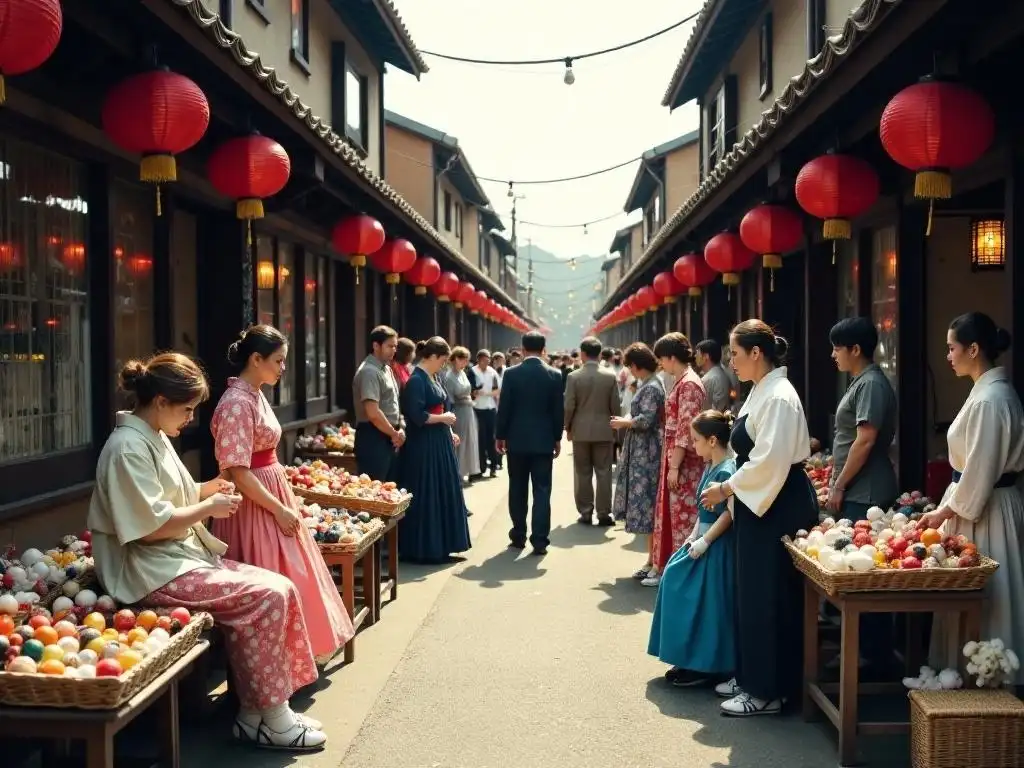
The merchant guilds of Tokugawa Japan were not without their challenges. Despite their significant role in the economy, these guilds had to navigate a complex landscape of internal conflicts, external pressures from the shogunate, and shifting economic conditions that threatened their stability and operations. Understanding these challenges provides insight into the resilience and adaptability of these organizations during a pivotal period in Japanese history.
Internal Conflicts within Guilds
Internal conflicts often arose within merchant guilds due to competition among members and differing visions for the guild's direction. Disputes could stem from:
- Resource Allocation: Members frequently disagreed on how profits and resources should be distributed, leading to factionalism within the guild.
- Leadership Struggles: The choice of guild leaders could spark rivalries, as different factions vied for control and influence.
- Market Strategies: Diverging opinions on pricing, marketing tactics, and ethical practices created tension, sometimes resulting in splinter groups forming to pursue alternative strategies.
These internal conflicts could undermine the guild’s unity, making it more challenging to negotiate with external entities, including the shogunate and other guilds.
External Pressures from the Shogunate
The Tokugawa shogunate imposed strict regulations on merchant guilds, which were designed to maintain control over trade and economic activities. Key pressures included:
- Licensing Requirements: The shogunate required guilds to obtain licenses to operate, which could be revoked if the guild was deemed to be acting against state interests.
- Taxation: Heavy taxation on profits limited the financial resources available to guilds, stifling growth and innovation.
- Market Restrictions: The shogunate often restricted trade routes and practices, forcing guilds to adapt quickly to changing regulations that could impact their livelihoods.
These external pressures created an environment of uncertainty, compelling guilds to navigate a delicate balance between compliance with shogunate demands and the pursuit of their economic interests.
Economic Shifts and Their Effects
The Tokugawa period saw significant economic changes, including urbanization and the rise of a consumer culture. These shifts had profound effects on merchant guilds:
- Urban Migration: As people migrated to cities in search of better economic opportunities, merchant guilds had to adapt their strategies to cater to a growing urban population.
- Changing Consumer Preferences: The emergence of a middle class created new demands for goods and services, prompting guilds to innovate and diversify their offerings.
- Competition from Outside Markets: Increased competition from non-guild merchants and emerging markets posed threats to traditional guild operations, compelling them to rethink their business models.
These economic shifts required guilds to remain agile, often pushing them to collaborate or compete more aggressively with one another to secure their place in a transforming economy.
The Legacy of Merchant Guilds in Tokugawa Japan
The merchant guilds of Tokugawa Japan left a lasting legacy that extended beyond their immediate economic contributions. Their influence can be seen in the evolution of business practices and the broader economic landscape of Japan.
End of the Tokugawa Era and Its Impact on Guilds
The end of the Tokugawa era in 1868, marked by the Meiji Restoration, significantly impacted merchant guilds. The new government sought to dismantle the feudal system, leading to:
- Dissolution of Guilds: Many guilds were disbanded or absorbed into new commercial entities, disrupting traditional networks and practices that had been in place for centuries.
- Emergence of Modern Corporations: The transition paved the way for the establishment of modern business practices, as former guild members adapted to new forms of organization and competition.
- Shift in Economic Policies: The focus shifted from protectionism to free trade, altering the dynamics in which former guild members operated.
This transformation marked the end of an era but also the beginning of new economic opportunities for enterprising individuals.
Evolution of Merchant Practices Post-Tokugawa
Post-Tokugawa, merchant practices evolved significantly as Japan opened to the world. Key developments included:
- Adoption of Western Business Models: Many former guild members embraced Western-style business practices, such as limited liability companies and joint-stock enterprises.
- Increased Specialization: There was a shift towards specialization in various sectors, allowing for greater efficiency and innovation in production and distribution.
- Expansion into Global Markets: As Japan integrated into the global economy, former guild members began exporting goods, leading to the establishment of Japan as a competitive player in international trade.
These changes reflected a significant departure from the traditional guild system while retaining some core values of cooperation and community.
Lasting Influence on Modern Japanese Economy
The influence of Tokugawa merchant guilds can still be felt in the modern Japanese economy. Aspects of their legacy include:
- Cooperative Business Practices: Many contemporary businesses in Japan still emphasize collaboration and collective decision-making, reminiscent of guild dynamics.
- Cultural Emphasis on Quality: The commitment to quality and craftsmanship established by guilds continues to be a hallmark of Japanese products today.
- Economic Networks: The historical networks formed by merchant guilds laid the groundwork for current business associations and trade organizations that facilitate economic collaboration.
In essence, the merchant guilds of Tokugawa Japan played a crucial role in shaping not only the economic landscape of their time but also the foundational principles that continue to define Japan's economy today.
Conclusion: The Role of Merchant Guilds in Shaping Tokugawa Japan’s Economy
The merchant guilds during the Tokugawa period (1603-1868) played a pivotal role in the economic landscape of Japan. These organizations not only facilitated trade but also influenced socio-political dynamics, thus contributing to the stability and prosperity of Tokugawa Japan. With their structured approach to commerce, merchant guilds established a framework that allowed for the growth of a more organized market system. They regulated prices, ensured quality standards, and provided mutual support among members, which helped in building trust and reliability within the economy.
As the Tokugawa shogunate sought to maintain order and control over the populace, merchant guilds emerged as essential players in mediating economic relations. Their ability to negotiate with local authorities and even the shogunate itself granted them a significant degree of power and influence. Ultimately, the legacy of these guilds can be observed in the evolution of Japan's modern economic systems, highlighting their importance in the historical context of Japanese commerce.
Summary of Key Points
- Merchant guilds were essential for regulating trade and commerce in Tokugawa Japan.
- They provided a support network for merchants, ensuring stability and mutual assistance.
- Guilds influenced the socio-political landscape by negotiating with authorities and the shogunate.
- The structured nature of these guilds contributed to the emergence of a more organized market system.
- Their legacy continues to impact Japan's modern economic frameworks.
Reflection on the Importance of Merchant Guilds in Economic History
The significance of merchant guilds in Tokugawa Japan cannot be overstated. They represent a vital chapter in the narrative of Japan’s economic history, showcasing how collective organization can lead to enhanced efficiency and stability in trade. By fostering a cooperative environment among merchants, these guilds not only bolstered individual businesses but also contributed to the broader economic health of the nation.
In reflecting on their importance, one can appreciate how the merchant guilds served as a precursor to modern business practices. Their operations and governance models laid the groundwork for future economic institutions in Japan. Additionally, understanding the role of these guilds offers invaluable insights into the socio-economic fabric of feudal Japan, demonstrating the interconnectedness of commerce, culture, and governance.
Further Reading on Merchant Guilds and Tokugawa Japan
Recommended Books and Articles
- "The Merchant Class of Tokugawa Japan" by Philip C. Brown explores the socio-economic dynamics of merchant guilds and their impact on Japanese society.
- "Economic History of Japan: 1600-1990": by Takafusa Nakamura provides a comprehensive overview of Japan’s economic evolution, including detailed discussions on merchant guilds.
- "Commerce and Society in Tokugawa Japan" by Tetsuo Najita examines the interactions between commerce and social structures during the Tokugawa era.
Suggested Online Resources
- Japanese History Online – A comprehensive portal with articles and resources related to the Tokugawa period and merchant activities.
- The National Museum of Japanese History – Offers digital exhibits and research papers on the economic practices of feudal Japan, including merchant guilds.
- The Japan Times – Features a section on historical analyses that often touches on economic history, including the role of merchant guilds in shaping modern Japan.
These resources provide a deeper dive into the complexities of merchant guilds and their lasting influence on Japan’s economic history during the Tokugawa period.
- Introduction to Merchant Guilds in Tokugawa Japan
- The Structure of Merchant Guilds in Tokugawa Japan
- Economic Impact of Merchant Guilds in Tokugawa Japan
- Political Power of Merchant Guilds during the Tokugawa Era
- Challenges Faced by Merchant Guilds in Tokugawa Japan
- The Legacy of Merchant Guilds in Tokugawa Japan
- Conclusion: The Role of Merchant Guilds in Shaping Tokugawa Japan’s Economy
- Further Reading on Merchant Guilds and Tokugawa Japan
Frequently Asked Questions
What were the merchant guilds in Tokugawa Japan?
Merchant guilds were organized associations of traders and merchants that played a crucial role in the economy during the Tokugawa period, facilitating trade and protecting members' interests.
How did merchant guilds influence the economy of Tokugawa Japan?
These guilds held significant economic power by controlling trade routes, setting prices, and regulating market practices, which allowed them to thrive during this era.
What role did merchant guilds play in society?
Merchant guilds not only boosted the economy but also contributed to the social structure by fostering community ties among members and providing a sense of identity and solidarity.
Were there any regulations governing merchant guilds in Tokugawa Japan?
Yes, the government imposed strict regulations on merchant guilds, including licensing and taxation, to ensure order and stability in the marketplace.
How did the rise of merchant guilds impact the samurai class?
The rise of merchant guilds challenged the traditional power of the samurai class, as wealth began to shift from land ownership to trade, leading to a new social hierarchy in Tokugawa Japan.
Final Reflection: The Enduring Legacy of Merchant Guilds in Tokugawa Japan
The merchant guilds of Tokugawa Japan were not merely economic entities; they were pivotal players in shaping the social and political landscape of their time. Today, as we navigate complex global economies, the lessons learned from these guilds resonate more than ever. Their ability to wield influence and foster community amidst strict regulations offers a striking reminder of the power of collective action in driving economic success.
Culture and commerce are inextricably linked, and the merchant guilds of Tokugawa Japan exemplify this connection. Their practices and structures not only facilitated trade but also established a sense of identity and belonging among merchants. As historian William McNeill once noted, “Trade is not merely an economic activity; it is a social one, intertwining the lives of people across distances.” This observation underscores the ongoing influence of merchant guilds, as they laid the groundwork for modern economic systems that prioritize collaboration and community engagement.
As we reflect on the significance of merchant guilds in Tokugawa Japan, let us consider how their legacy can inspire our actions today. I invite you to explore the ways in which collective efforts can enhance your own community, whether through local businesses, cooperative initiatives, or social enterprises. By embracing the spirit of collaboration that these guilds embodied, we can create a more interconnected and resilient society, ensuring that the lessons of the past continue to illuminate our path forward.
Unleash the Influence of Tokugawa Merchant Guilds!
Thank you for diving into the fascinating world of Tokugawa Japan and uncovering the pivotal role played by merchant guilds in shaping the economy. Your interest in this key historical theme not only enriches your understanding but also connects you to the vibrant tapestry of Japanese heritage.
Now, it’s time to take action and explore further!
- Join a local or online discussion group focused on Japanese history to share insights and learn from fellow enthusiasts.
- Dive deeper by exploring literature or documentaries that highlight the influence of merchant guilds on contemporary trade practices.
- Consider visiting a museum or historical site where you can view artifacts related to commerce during the Tokugawa era.
As you reflect on the power dynamics of the past, what aspects of the merchant guilds do you believe hold the most relevance to today’s economy? Let’s keep the conversation going!