
The Intersection of Class and Gender in Feudal Japan

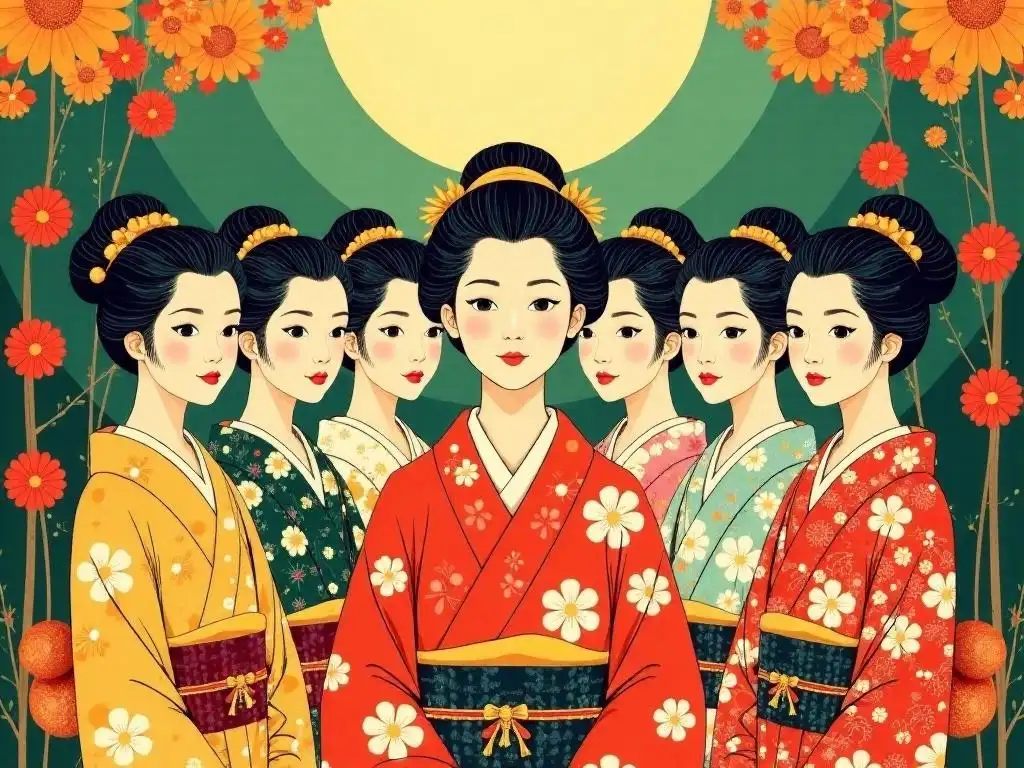
Welcome to Feudal Japan History, where we invite you to embark on a journey through the intriguing complexities of Japan's feudal era. Here, you will uncover the intricate tapestry of class and gender roles that shaped societal dynamics and influenced cultural paradigms. Our featured article, "The Intersection of Class and Gender in Feudal Japan," delves deep into how these roles interplayed, often dictating the lives and opportunities of individuals. Are you ready to unravel the stories of those who lived in this fascinating time? Dive in and explore the layers of history that continue to resonate today!
The interplay between class and gender in Feudal Japan presents a rich tapestry of historical dynamics that shaped the lives of individuals and the structure of society. This era, spanning from the 12th to the 19th centuries, was marked by a rigid class hierarchy, where social status dictated not only one's opportunities and privileges but also the roles and expectations tied to gender.
Understanding the nuances of this relationship is essential for grasping the complexities of social interactions, cultural practices, and individual experiences within Feudal Japan. In this article, we will delve deep into the class structure that defined this period, followed by an exploration of gender roles that were intricately linked to class distinctions, revealing how these elements coalesced to influence the very fabric of Japanese society.
Understanding Class Structure in Feudal Japan
Overview of Feudal Class Hierarchy
The class structure of Feudal Japan was meticulously organized, primarily divided into four main categories: the samurai, farmers, artisans, and merchants. Each class had its own distinct roles and responsibilities, contributing to the overall functioning of society.
- Samurai: The warrior class, serving as military nobility and upholders of peace and order.
- Farmers: Considered the backbone of the economy, responsible for food production and agricultural labor.
- Artisans: Skilled workers who created goods but were often viewed with less esteem than farmers.
- Merchants: Engaged in trade and commerce, yet positioned lower in the hierarchy due to their perceived lack of contribution to society.
This hierarchy was not merely a social construct; it was reinforced by laws and customs that dictated interactions between classes, emphasizing loyalty and obligation.
Roles of Nobility, Samurai, and Peasantry
The nobility, including daimyōs (feudal lords) and samurai, held significant power and influence. They were tasked with governance, military leadership, and the protection of their lands. The samurai, in particular, adhered to a strict code of conduct known as Bushido, which emphasized loyalty, honor, and martial prowess.
On the other hand, the peasantry, primarily composed of farmers, faced a different reality. Though they were vital for sustenance, their lives were often burdened with heavy taxation and labor demands. This stark contrast between the warrior class and the peasantry highlighted the disparities in power and privilege within the feudal system.
The Impact of Class on Social Status
Class not only determined one's occupation but also significantly influenced social status, wealth, and power dynamics. Higher classes enjoyed privileges such as land ownership, political influence, and access to education, while those from lower classes often experienced limited mobility and opportunities.
The impact of class on social status can be seen in various aspects of life, including marriage, education, and even cultural participation. For instance, samurai families arranged marriages to maintain or enhance their status, while peasant families focused on labor and survival, often foregoing aspirations for social elevation.
Gender Roles in Feudal Japan
Traditional Gender Expectations in Society
In Feudal Japan, gender roles were distinctly defined, with expectations deeply rooted in cultural traditions and societal norms. Men were primarily viewed as warriors and providers, while women were often relegated to domestic roles, responsible for managing the household and raising children.
- Men: Expected to be the primary breadwinners and protectors.
- Women: Tasked with nurturing the family and maintaining the household, with limited opportunities for independence.
These gender roles were further complicated by class distinctions, as women from noble families experienced different expectations compared to those from peasant backgrounds.
Women's Roles in the Samurai Class
Women from the samurai class occupied a unique position in society. While they were often expected to uphold the family honor and manage household affairs, some women also held significant power and influence. They were trained in martial arts and could inherit and manage family estates, especially in the absence of male heirs.
This blending of traditional roles with the need for resilience and leadership illustrates how gender roles in the samurai class were not monolithic but rather complex and varied.
Female Peasants: Duties and Responsibilities
In contrast, female peasants faced a more arduous existence, characterized by labor-intensive roles that included farming, weaving, and domestic chores. They played a crucial role in sustaining their families and communities, often working alongside men in the fields. Despite their contributions, they remained largely invisible in the historical narrative, with their voices and experiences overshadowed by the more prominent samurai class.
Understanding the duties and responsibilities of female peasants reveals the essential yet often unrecognized role they played in the feudal economy, highlighting the intersection of class and gender in a society marked by strict hierarchies.
The Interaction of Class and Gender Roles
In Feudal Japan, the interplay between class and gender roles created a complex social fabric that influenced every aspect of life from daily activities to governance. The hierarchical structure of society was rigidly defined, with the samurai class at the top, followed by farmers, artisans, and merchants. Each class had distinct roles and responsibilities, which were further complicated by gender expectations. Men were typically seen as the primary decision-makers and warriors, while women were often relegated to domestic duties. However, this binary view oversimplifies the nuanced realities of women’s experiences across different classes.
Within the samurai class, women were expected to embody virtues such as loyalty and honor, often managing households and educating children in the ways of the bushido code. In contrast, women from lower classes had to engage actively in agricultural work or trade, often blurring the lines of traditional gender roles. The interaction of these class dynamics alongside gender expectations led to a diverse range of experiences and societal contributions from women, challenging the notion of a unidimensional female experience during this era.
How Class Influenced Gender Expectations
Class significantly influenced the gender expectations placed upon individuals in Feudal Japan. Women of the samurai class, for instance, were often educated in arts, literature, and the martial disciplines, reflecting their family's status and the need to maintain social propriety. They were expected to support their husbands and uphold family honor, which sometimes meant actively participating in political intrigue or managing family affairs, especially during their husbands' absences.
Conversely, peasant women faced a vastly different reality. Their roles were primarily linked to survival and labor, often working alongside men in the fields. Despite the hard work, these women had a crucial role in sustaining their families and communities, though their contributions were frequently undervalued. This disparity in class status not only shaped the expectations of women’s roles but also dictated the opportunities available to them, reinforcing the intersectionality of class and gender in determining societal standing and personal agency in Feudal Japan.
Case Studies of Prominent Women in Feudal Japan
Several notable women from the feudal period exemplify the diverse experiences shaped by class and gender. One such figure is Tomoe Gozen, a legendary female warrior and samurai during the late Heian and early Kamakura periods. Tomoe is often depicted as an embodiment of the ideal warrior woman, fighting alongside men in battles and earning recognition for her bravery and skill.
Another significant figure is Hojo Masako, the wife of Minamoto no Yoritomo, who played a crucial political role during the Kamakura shogunate. She effectively wielded power after her husband's death, showcasing how women in the upper echelons of society could influence governance and politics, despite societal restrictions.
In stark contrast, Murasaki Shikibu, the author of "The Tale of Genji," represents the cultural contributions of women in the courtly class. Her literary work not only highlights the experiences of women in the Heian court but also reflects the complexities of gender roles and class dynamics through the nuanced portrayal of female characters.
These case studies illuminate how women navigated their societal roles, illustrating that while class restrictions existed, women were able to carve out unique spaces for influence and recognition.
The Impact of Class on Women's Opportunities
The stratification of society in Feudal Japan had profound implications for women's opportunities. Women of higher social standing often had access to education, the arts, and political influence, allowing them to engage in cultural and intellectual pursuits. They were more likely to have their voices heard, whether through literature, art, or political maneuvering.
In contrast, women from lower classes faced significant barriers to education and advancement. Their opportunities were primarily limited to labor-intensive roles that contributed to the household's economic stability. Despite these limitations, lower-class women often exhibited resilience and resourcefulness, playing vital roles in local economies and community life.
This disparity in opportunities underscores the importance of class in shaping women's lived experiences in Feudal Japan. While some women managed to transcend their class boundaries, many remained confined to the roles expected of them based on their social status.
The Evolution of Class and Gender Dynamics

The dynamics of class and gender in Feudal Japan were not static; they evolved significantly over time, particularly during periods of political and social change. The rise of the samurai class and the establishment of the shogunate introduced new power structures that affected both men and women.
Changes in Gender Roles During Different Periods
Throughout the feudal era, gender roles transformed in response to shifting political landscapes. During the Heian period, women enjoyed greater social and cultural freedoms, with many participating actively in court life and literature. However, as the samurai class rose to prominence in the Kamakura period, women's roles began to shift towards more domestic responsibilities, emphasizing loyalty and support for their warrior husbands.
Later, during the Edo period, the emergence of a merchant class allowed some women to assume roles in commerce, challenging traditional gender norms. This period also saw increased restrictions on women's mobility and freedom, as the samurai class sought to reinforce its status. The ebb and flow of gender roles reflected the broader societal changes, highlighting the resilience and adaptability of women in response to external pressures.
The Influence of Religion and Spirituality on Class and Gender
Religion played a pivotal role in shaping class and gender dynamics in Feudal Japan. Shinto and Buddhism influenced societal values and expectations, often reinforcing traditional gender roles. For instance, the veneration of female deities in Shinto provided a spiritual framework that acknowledged women's roles in society, albeit within a limited context.
Buddhism also contributed to the perception of women, often viewing them through a lens of moral and spiritual purity. This duality led to a complex relationship between gender and spirituality, as women were both revered and restricted by religious doctrines. The intersection of religion, class, and gender further complicated the societal roles women played, often dictating their status and opportunities within the feudal hierarchy.
The Role of Literature and Art in Shaping Perspectives
Literature and art in Feudal Japan served as powerful mediums for expressing and shaping societal views on class and gender. Works such as "The Tale of Genji" not only entertained but also offered insights into the lives and desires of women within the courtly class. The nuanced portrayal of female characters challenged existing stereotypes and provided a lens through which the complexities of women's experiences could be understood.
Additionally, visual arts, including ukiyo-e, depicted women from various classes, often idealizing their beauty while simultaneously reinforcing societal roles. These artistic representations contributed to the collective consciousness surrounding gender and class, influencing public perceptions and expectations.
The intersection of class and gender roles in Feudal Japan is a rich area of exploration that reveals the intricacies of societal dynamics. The evolution of these roles reflects the broader historical transformations that shaped the experiences of women across different strata of society, highlighting both the constraints and the agency available to them in this era.
Conclusion: The Complexity of Class and Gender in Feudal Japan
The intricate interplay between class and gender in feudal Japan reveals a multifaceted social structure that defined the lives of its inhabitants. The stratified class system, characterized by a rigid hierarchy, influenced gender roles significantly. It shaped expectations, responsibilities, and the opportunities available to individuals based on their social standing and gender. While the samurai class enjoyed privileges and power, women in this era navigated their identities within a complex framework that often restricted their agency but also allowed for varying degrees of influence depending on their class.
Summary of Key Findings on Class and Gender Roles
- Class Hierarchy: Feudal Japan was marked by a distinct class hierarchy, comprising the emperor, shogun, samurai, farmers, artisans, and merchants. Each class had defined roles and responsibilities, with the samurai class wielding significant political and military power.
- Gender Expectations: Gender roles were deeply ingrained, with men typically occupying positions of authority and women often relegated to domestic roles. However, the responsibilities of women varied widely depending on their social class. For instance, while peasant women worked alongside men in the fields, noblewomen were expected to manage households and uphold family honor.
- Cultural Norms: Cultural narratives and literature from the period reflect the ideals of masculinity and femininity, with samurai embodying virtues such as loyalty and bravery, while women were often depicted as nurturing and supportive. These cultural norms reinforced the existing class and gender structures.
- Variability Across Classes: The experience of gender roles was not monolithic; women in the samurai class, for example, could wield considerable influence, especially in managing family affairs and estates, while peasant women often had more labor-intensive roles.
The Legacy of Feudal Class Structures and Gender Expectations
The legacy of feudal class structures and gender expectations continues to influence contemporary Japanese society. While Japan has undergone significant social transformations since the end of the feudal era, remnants of these historical class distinctions and gender roles persist, often surfacing in discussions around workplace equality, family roles, and societal expectations.
- Cultural Influence: The historical narratives surrounding samurai and their families continue to permeate Japanese culture, influencing modern perceptions of honor, duty, and gender roles. This historical context shapes how gender and class are understood and discussed in contemporary Japan.
- Social Movements: Modern social movements addressing gender equality and class disparity often draw upon historical injustices rooted in feudal Japan. Understanding this legacy is crucial for advocates seeking to dismantle persistent stereotypes and inequalities.
Implications for Modern Understanding of Gender and Class in Japan
The exploration of class and gender roles in feudal Japan offers valuable insights into the complexities of these issues in modern society. Recognizing how historical structures have shaped contemporary attitudes towards gender and class allows for a more nuanced understanding of current social dynamics.
- Awareness of Historical Context: Acknowledging the historical context of gender and class roles enhances discussions about modern inequalities. It fosters a deeper comprehension of the challenges faced by various social groups today.
- Intersectionality: The intersectionality of class and gender in feudal Japan serves as a model for analyzing contemporary issues. It encourages a multifaceted approach to understanding how different identities interact and influence experiences of privilege or oppression.
- Future Research: Continued research into the historical intersections of class and gender can shed light on persistent issues within Japan and beyond. This ongoing inquiry is essential for educators, policymakers, and social advocates aiming to promote equity and inclusivity.
The intersection of class and gender in feudal Japan is a rich field of study that not only informs historical knowledge but also provides crucial perspectives for understanding the complexities of modern Japanese society.
- Understanding Class Structure in Feudal Japan
- Gender Roles in Feudal Japan
- The Interaction of Class and Gender Roles
- The Evolution of Class and Gender Dynamics
- Conclusion: The Complexity of Class and Gender in Feudal Japan
Frequently Asked Questions
Feudal Japan was characterized by a hierarchical structure consisting of nobility, samurai, farmers, artisans, and merchants. Each class had its own roles and responsibilities, influencing their societal status.
How did gender roles manifest in Feudal Japan?
In Feudal Japan, gender roles were heavily defined, with men typically holding powerful positions such as samurai or landowners, while women's roles were largely confined to domestic responsibilities and supporting their families.
What impact did class differences have on daily life?
Class differences significantly affected access to resources, education, and opportunities. The nobility and samurai enjoyed privileges, while farmers and artisans faced economic challenges and limited social mobility.
Were there any notable female figures in Feudal Japan?
Yes, there were notable female figures, such as Tomoe Gozen, a renowned female warrior, and Murasaki Shikibu, the author of The Tale of Genji. These women challenged traditional gender norms and contributed to Japanese culture.
How did class and gender roles evolve over time in Feudal Japan?
Over time, class and gender roles experienced gradual changes, particularly during the Edo period, where the rise of the merchant class created new dynamics. Women began to gain some social influence, challenging earlier constraints.
Final Reflection: The Enduring Legacy of Class and Gender Roles in Feudal Japan
The exploration of class and gender roles in Feudal Japan remains profoundly relevant today, as it sheds light on the historical roots of contemporary societal structures. Understanding how these dynamics shaped the lives of individuals in the past allows us to critically assess the ongoing implications of class and gender in our modern world. The intricate interplay between social hierarchy and gender expectations not only defined the lives of those in Feudal Japan but also echoes in the challenges we face today regarding equality and representation.
Clearly, the legacy of class and gender roles in Feudal Japan continues to influence our cultural and social landscape. The rigid hierarchies and gender expectations of that era have left an indelible mark on Japanese society and beyond, affecting how we perceive and navigate class and gender today. As we reflect on this historical context, we can draw parallels to contemporary issues, reminding us that "the past is never dead; it's not even past." > William Faulkner. This quote encapsulates the idea that history is a living force that shapes our present and future.
As we conclude this exploration, I invite you to reflect on your own experiences with class and gender in your life. Consider how the lessons drawn from Feudal Japan can inspire you to challenge existing norms and advocate for a more equitable society. Embrace the opportunity to engage in conversations about these topics, and let the stories of the past guide you in creating a future where everyone, regardless of class or gender, can thrive. Together, we can honor the lessons of history while forging a path toward a more inclusive world.
Unveil the Rich Tapestry of Feudal Japan!
Thank you for exploring the intricate dynamics of class and gender in feudal Japan with us. Your curiosity has illuminated how these factors shaped society and influenced the lives of individuals during this captivating period. Now, it’s time to take that knowledge further and deepen your understanding!
Here are some exciting steps to enrich your journey:
- Dive deeper into the topic: Read additional articles on our site to uncover more about the lives of samurai, farmers, and women in feudal Japan.
- Join the conversation: Share your thoughts on our forum! Discuss how class and gender roles are reflected in contemporary society.
- Engage with history: Visit a local museum or explore virtual tours that showcase artifacts from feudal Japan to see history come alive!
What aspect of class or gender in feudal Japan has surprised you the most, and how do you see these themes reflected in today’s world?