
The Cultural Significance of the Mizuya: The Japanese Kitchen Space

Welcome to Feudal Japan History, where we embark on a captivating journey through the intricate tapestry of Japan’s feudal era. Here, we delve into the cultural significance of Mizuya, the traditional kitchen space that played a vital role in daily life and societal customs. What secrets lie within this humble area that shaped the culinary practices and social interactions of its time?
Join us as we peel back the layers of history, exploring the rich traditions and fascinating stories that await you in our in-depth articles. Prepare to be inspired and enlightened as you uncover the essence of feudal Japan!
Introduction to the Mizuya
The Mizuya, a pivotal component of traditional Japanese domestic architecture, serves as a distinct kitchen space that embodies the intricate relationship between culture, functionality, and social dynamics in feudal Japan. This area not only facilitated the essential act of cooking but also reflected the values and customs of a society deeply rooted in communal living and harmony with nature. Understanding the cultural significance of the Mizuya allows us to appreciate its role beyond mere utility, highlighting how it contributed to the daily lives of the Japanese people and their culinary heritage.
Definition and Purpose of the Mizuya
The term "Mizuya" translates to "water room" in English, aptly describing its primary functions related to water management, food preparation, and cooking. Typically located adjacent to the main living quarters, the Mizuya was designed to ensure efficient workflow and cleanliness in food preparation. Key purposes of the Mizuya included:
- Food Preparation: Serving as the main area for cooking and preparing meals for the household.
- Water Management: Housing water sources such as wells or storage for water, vital for cooking and cleaning.
- Storage Space: Providing storage for kitchen tools, utensils, and ingredients, ensuring organization and accessibility.
This multifunctional space was integral to daily life, embodying the values of cleanliness and order that were essential in Japanese culture.
Overview of Japanese Kitchen Spaces in Feudal Japan
In feudal Japan, the kitchen was more than just a place for cooking; it was a reflection of social status, family dynamics, and regional customs. The design and layout of kitchen spaces varied significantly based on factors such as:
- Social Class: Nobility often had larger, more elaborate kitchens, while commoners maintained simpler, functional spaces.
- Regional Differences: Kitchens in coastal areas might focus more on seafood preparation, while those in agricultural regions prioritized rice and vegetable dishes.
- Cultural Traditions: Local customs influenced the tools and methods used, leading to regional variations in kitchen design and cooking practices.
The Mizuya, therefore, was not only a practical space but also represented the cultural identity and culinary traditions of its inhabitants.
Historical Context of the Mizuya
To grasp the profound cultural significance of the Mizuya, it is essential to explore its historical context within the broader framework of Japanese feudal society. The evolution of this kitchen space reflects changes in domestic architecture, social structures, and cultural practices throughout the centuries.
Evolution of the Mizuya Through the Feudal Era
The Mizuya's design and function transformed significantly from the Heian period (794-1185) through the Edo period (1603-1868). Initially, kitchens were rudimentary and often integrated into other living spaces. However, as society became more structured, the Mizuya developed into a dedicated space with distinct architectural features:
- Heian Period: Early kitchens were simple and often shared with other household functions.
- Kamakura and Muromachi Periods: The rise of samurai culture led to more defined kitchen spaces that catered to specific culinary needs.
- Edo Period: The Mizuya became a hallmark of domestic architecture, showcasing advancements in design and functionality.
This evolution illustrates how the Mizuya adapted to the changing needs of society, reflecting both cultural advancements and the increasing importance of culinary practices.
The Role of the Mizuya in Daily Life
In the context of daily life, the Mizuya was central to not only sustenance but also to the cultural practices surrounding food. It facilitated the preparation of traditional dishes that were integral to various rituals and celebrations. The significance of the Mizuya can be summarized through its roles:
- Culinary Hub: It was where families gathered to prepare and share meals, fostering community bonds.
- Cultural Practices: The Mizuya played a vital role in seasonal festivals and ceremonies, where specific dishes were prepared to honor traditions.
- Reflection of Values: The cleanliness and organization of the Mizuya reflected the broader societal values of aesthetics, simplicity, and harmony with nature.
Understanding the Mizuya’s role in daily life unveils a deeper appreciation for its cultural significance, highlighting how this kitchen space was woven into the fabric of Japanese society throughout the feudal era.
Architectural Features of the Mizuya
The Mizuya, traditionally known as the Japanese kitchen space, is characterized by several distinctive architectural features that not only enhance its functionality but also reflect cultural aesthetics. Central to its design is the open layout, which allows for efficient movement while preparing meals. Typically, the Mizuya is separated from the main living areas to minimize the transfer of cooking odors and heat, preserving the cleanliness and tranquility of the home.
Another notable feature is the Tokonoma, a recessed alcove often found in Japanese homes, which may be incorporated into the Mizuya. This space serves as a decorative area to display seasonal flowers or traditional crafts, emphasizing the connection between nature and domestic life.
The use of sliding doors, or fusuma, is prevalent in Mizuya architecture, allowing for flexible partitioning of space. These doors can be opened or closed to create an expansive or intimate cooking environment. Furthermore, the inclusion of natural light through strategically placed windows or skylights enhances the ambiance, making the kitchen a welcoming space.
Traditional Design Elements of the Mizuya
Traditional design elements of the Mizuya encapsulate the essence of Japanese cultural values, emphasizing simplicity, functionality, and harmony with nature. Tatami mats are commonly used as flooring, providing a soft, natural surface that absorbs sound and contributes to the serene atmosphere. The walls are often adorned with natural wood paneling, showcasing the beauty of the material while ensuring durability.
In the Mizuya, one can often find a Hibachi or a traditional Japanese heating device, which highlights the importance of warmth in both cooking and family gatherings. Storage solutions, such as built-in cabinets and shelves, are designed to organize utensils and ingredients efficiently, reflecting the Japanese ethos of minimalism and order.
The color palette in a Mizuya is typically muted, featuring earth tones that promote a sense of calm and connection to the environment. This thoughtful approach to design creates a kitchen space that is not only functional but also a place of cultural expression.
Materials Used in Mizuya Construction
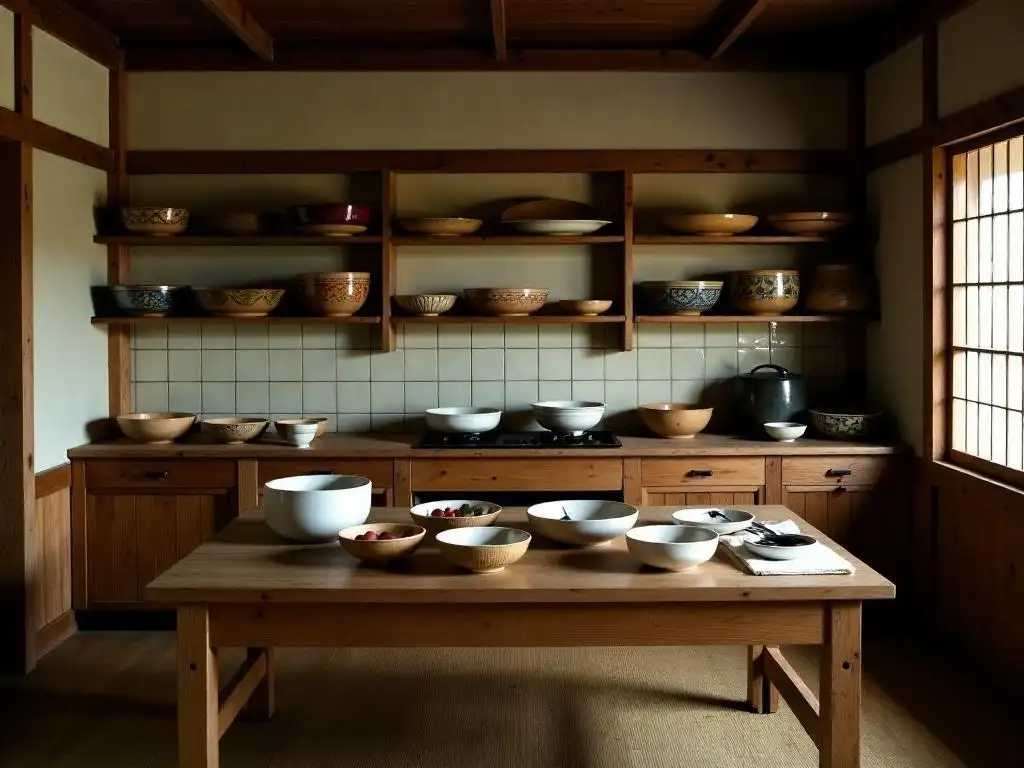
The construction of the Mizuya employs a variety of materials that emphasize sustainability and local craftsmanship. Wood, particularly cedar and cypress, is the primary material used for structural elements due to its availability and natural resistance to moisture and pests. This choice not only enhances the aesthetic appeal of the kitchen but also aligns with the Japanese appreciation for natural materials.
Bamboo is often used for decorative elements and utensils, valued for its strength and flexibility. In addition to wood and bamboo, stone may be utilized for countertops or flooring, providing durability and a natural touch to the kitchen environment.
The use of clay for cooking vessels, such as donabe (earthenware pots), reflects the traditional cooking methods that prioritize flavor and health. These materials combined contribute to the overall functionality and cultural resonance of the Mizuya, making it an integral part of Japanese daily life.
The Cultural Significance of Mizuya
The Mizuya holds profound cultural significance in Japanese society, serving as more than just a cooking space. It embodies the principles of wa, or harmony, where the family gathers to share meals and experiences. This shared space fosters bonds between family members and highlights the importance of communal living in Japanese culture.
Moreover, the Mizuya represents a connection to tradition and heritage. It is often a space where family recipes are passed down through generations, preserving cultural practices and culinary skills. The kitchen acts as a living archive of family history, reinforcing the significance of food in social and cultural identity.
The architectural design and functionality of the Mizuya also reflect the Japanese philosophy of simplicity, emphasizing the beauty of everyday life and the value of mindful living.
Symbolism of the Mizuya in Japanese Culture
The Mizuya is rich in symbolism, representing nurturing and sustenance within the household. It is often viewed as the heart of the home, where meals are prepared with care and shared among family members. This nurturing aspect of the Mizuya reinforces the idea of familial love and support, essential values in Japanese culture.
Furthermore, the Mizuya symbolizes the connection between nature and domestic life. The use of natural materials and the incorporation of light and air into the kitchen space serve to remind inhabitants of their relationship with the environment. This harmony with nature is a central theme in Japanese aesthetics and philosophy.
Additionally, the Mizuya often serves as a space for ritual practices, such as preparing offerings during festivals or ceremonies. This reinforces the kitchen's role in maintaining cultural traditions and spiritual practices, deepening its significance beyond mere cooking.
Historically, the design and size of the Mizuya have reflected the social status of its inhabitants. In wealthier households, the Mizuya would be larger and more elaborately designed, featuring intricate woodwork and high-quality materials. This not only provided functionality for larger families but also showcased the family's prosperity and status within the community.
Conversely, in more modest homes, the Mizuya would be smaller and simpler, yet still designed with care and thoughtfulness. This underscores the Japanese principle of valuing quality over quantity, where even smaller spaces can embody beauty and significance.
Moreover, the Mizuya's functionality can also indicate social status through the availability of specialized cooking tools and equipment. Families of higher social standing would often have access to a wider range of utensils and cooking methods, reflecting their culinary sophistication and cultural knowledge.
The Mizuya serves as a multifaceted space that encapsulates the essence of Japanese culture, tradition, and social structure, making it a vital component of daily life in feudal Japan.
The Mizuya in Daily Life

The mizuya, or Japanese kitchen space, holds a central role in the daily lives of individuals and families during the feudal era of Japan. It served not only as a functional area for food preparation and cooking but also as a social hub where family members gathered to share meals, stories, and cultural practices. The layout and design of the mizuya were meticulously crafted to facilitate an efficient workflow, allowing for seamless transitions between food preparation, cooking, and dining.
Traditionally, the mizuya was characterized by its simplicity and practicality. It often featured a stone or tiled floor to accommodate water spills during the washing of utensils and food items. The use of natural materials, such as wood and bamboo, helped create a warm and inviting atmosphere. In the feudal context, the mizuya was not merely a kitchen; it was a reflection of the household's status and cultural values, showcasing the relationship between food, family, and social hierarchy.
Daily Activities and Practices in the Mizuya
In the mizuya, daily activities revolved around the preparation of meals and the maintenance of household duties. The women of the household primarily occupied this space, engaging in various tasks such as washing rice, preparing vegetables, and cooking traditional dishes like miso soup and grilled fish. The mizuya was often equipped with essential tools such as large wooden bowls, knives, and earthenware pots, which facilitated these activities.
Key practices included:
- Preparation of Rice: Rice was a staple in Japanese cuisine, and its preparation involved multiple steps, including washing, soaking, and steaming. This ritual was often performed with care, emphasizing the importance of rice in Japanese culture.
- Utilization of Seasonal Ingredients: The mizuya was a space where seasonal changes were reflected in the choice of ingredients. Household members would source fresh produce from local markets or their gardens, emphasizing the connection between food and nature.
- Cleaning and Maintenance: Hygiene was paramount in the mizuya. Regular cleaning of utensils, surfaces, and the kitchen area ensured that the space remained functional and welcoming. This practice also reflected broader societal values regarding cleanliness and order.
Seasonal Changes and Their Impact on the Mizuya
The mizuya was deeply influenced by the changing seasons, with various practices and ingredients adapted to reflect the time of year. In spring, the mizuya would often be filled with vibrant vegetables like asparagus and bamboo shoots, symbolizing renewal and growth. Summer brought an abundance of fresh fish and lighter dishes, while autumn saw the use of root vegetables and preserved foods in preparation for winter.
Each season not only impacted the types of food prepared but also influenced cooking techniques and the overall atmosphere of the mizuya. For instance, the warmer months might see the use of outdoor cooking methods, while colder months encouraged the preparation of hearty stews and soups. This cyclical relationship between the seasons and the mizuya reinforced the importance of nature in Japanese culture, fostering a deeper appreciation for the environment and its offerings.
Comparisons with Other Cultural Kitchen Spaces
The mizuya, while unique in its cultural significance and design, can be compared to kitchen spaces in other cultures, revealing both distinct differences and unexpected similarities. Understanding these comparisons provides insight into how various societies approach the concept of a kitchen and its role in daily life.
Mizuya vs. Western Kitchen Designs
The mizuya starkly contrasts with Western kitchen designs, which often emphasize openness and modernity. In Western kitchens, space is usually configured to promote social interaction, with large islands and dining areas integrated into the cooking space. In contrast, the mizuya maintains a more compartmentalized approach, focusing on functionality and efficiency.
Key differences include:
- Design and Layout: Western kitchens often prioritize an open floor plan, while mizuya designs are typically more enclosed, reflecting a focus on practical workflow rather than socializing.
- Materials and Aesthetics: The mizuya uses natural materials like wood and stone, creating a warm ambiance that contrasts with the stainless steel and tiles often found in Western kitchens.
- Cultural Practices: In Japan, the mizuya is a space of respect and ritual, where food preparation is viewed as an art form. In Western cultures, the kitchen is frequently seen as a multifunctional space for entertainment and gathering.
Similarities with Other Asian Kitchen Traditions
Interestingly, the mizuya shares several similarities with kitchen traditions found in other Asian cultures. For example, the Chinese kitchen often emphasizes the importance of fresh ingredients and seasonal cooking, mirroring practices observed in the mizuya. Similarly, the Indian kitchen values the preparation of meals as a communal activity, often involving family members in the cooking process.
Commonalities include:
- Seasonal Ingredients: Just as the mizuya incorporates seasonal changes into meal preparation, many Asian kitchens prioritize the use of fresh, locally sourced ingredients.
- Culinary Rituals: The significance of food preparation as a ritualistic practice is prevalent in both the mizuya and other Asian kitchens, highlighting the cultural importance of cooking in fostering family bonds.
- Functional Design: Like the mizuya, many Asian kitchens are designed for efficiency, with tools and utensils arranged for optimal workflow, allowing for smooth transitions between preparation and cooking.
The mizuya's cultural significance extends beyond its functional role in food preparation; it is a space steeped in tradition, reflecting the values and practices of Japanese society during the feudal era. Its comparisons with both Western kitchen designs and other Asian culinary traditions underscore the unique yet interconnected nature of kitchen spaces across cultures.
Preservation of Mizuya in Modern Japan
The preservation of Mizuya, the traditional Japanese kitchen space, holds significant cultural value in contemporary Japan. As societal dynamics shift towards modernity, the essence of Mizuya reflects a deep-rooted connection to Japan’s culinary customs, social interactions, and architectural heritage. The Mizuya is not merely a functional space; it embodies the harmonious relationship between nature and household activities, emphasizing cleanliness, order, and the importance of food preparation in daily life.
In modern settings, the Mizuya has often been adapted to accommodate contemporary kitchen appliances and conveniences, yet its traditional elements remain intact. Key features, such as tatami flooring, sliding doors (fusuma), and natural materials like wood, continue to be cherished. This blend of old and new illustrates the Japanese commitment to maintaining cultural heritage while embracing innovation.
Contemporary Uses of Mizuya in Japanese Homes
In present-day Japanese households, Mizuya serves various purposes that extend beyond mere cooking. While it retains its primary function as a kitchen space, it has also transformed into a multifunctional area for family gatherings, socializing, and even artistic expression. Many families utilize the Mizuya as a dining area, especially during special occasions, where traditional meals are prepared and enjoyed together.
Moreover, the aesthetics of Mizuya play a crucial role in contemporary Japanese design. Homeowners often decorate their Mizuya with traditional utensils, ceramics, and seasonal decor, enhancing the visual appeal and cultural resonance of the space. This emphasis on presentation reflects the broader Japanese cultural value placed on beauty and harmony in domestic environments.
Efforts to Preserve Traditional Mizuya Architecture
Various initiatives are underway to preserve the architectural integrity of traditional Mizuya. Institutions, such as cultural heritage organizations and local government bodies, promote the conservation of historical buildings, including those featuring authentic Mizuya designs. Workshops and educational programs are organized to raise awareness about the importance of traditional architecture and cooking practices.
In addition, some local communities are actively restoring old homes that feature Mizuya, ensuring that these spaces remain functional while preserving their historical significance. These efforts not only protect the architectural style but also keep alive the culinary traditions associated with the Mizuya, allowing future generations to experience and appreciate this vital aspect of Japanese culture.
Conclusion
The Mizuya holds a profound cultural significance that transcends its utilitarian purpose. As a space where culinary traditions are upheld and family bonds are nurtured, it serves as a cornerstone of Japanese domestic life.
Recap of the Cultural Importance of the Mizuya
The Mizuya is more than just a kitchen; it is a reflection of Japanese values related to family, tradition, and aesthetics. Its design and function are deeply intertwined with cultural practices surrounding food preparation and communal dining. The Mizuya symbolizes the balance between practicality and beauty, showcasing the Japanese philosophy of living harmoniously with one’s environment.
The Future of Mizuya in Japanese Society
Looking ahead, the future of the Mizuya in Japanese society appears promising. As awareness of cultural heritage continues to grow, there is a renewed interest in maintaining traditional practices alongside modern lifestyles. The integration of Mizuya into contemporary homes, coupled with ongoing preservation efforts, ensures that this cherished space remains a vibrant part of Japanese culture. By fostering a deeper appreciation for the Mizuya, future generations can continue to explore and celebrate the rich culinary and architectural traditions that define Japan.
- Introduction to the Mizuya
- Historical Context of the Mizuya
- Architectural Features of the Mizuya
- Traditional Design Elements of the Mizuya
- Materials Used in Mizuya Construction
- The Cultural Significance of Mizuya
- Symbolism of the Mizuya in Japanese Culture
- The Mizuya as a Reflection of Social Status
- The Mizuya in Daily Life
- Comparisons with Other Cultural Kitchen Spaces
- Preservation of Mizuya in Modern Japan
- Conclusion
- What is a Mizuya in the context of Japanese culture?
- How does the Mizuya contribute to Japanese culinary practices?
- What materials are commonly used in Mizuya construction?
- How does the Mizuya reflect Japanese societal values?
- Why is understanding the Mizuya important for appreciating Japanese culture?
Frequently Asked Questions
What is a Mizuya in the context of Japanese culture?
A Mizuya is a traditional kitchen space in Japanese homes, designed for food preparation and washing. It reflects the cultural values of functionality and harmony with nature.
How does the Mizuya contribute to Japanese culinary practices?
The design of the Mizuya promotes efficiency in cooking and food presentation, emphasizing the importance of fresh ingredients and seasonal dishes typical in Japanese cuisine.
What materials are commonly used in Mizuya construction?
Mizuya are often built using natural materials such as wood and bamboo, which are valued for their aesthetic appeal and ability to blend with the surrounding environment.
How does the Mizuya reflect Japanese societal values?
The Mizuya embodies simplicity and minimalism, showcasing the Japanese ideals of cleanliness and order. It serves as a space for family gatherings, reinforcing social bonds.
Why is understanding the Mizuya important for appreciating Japanese culture?
Studying the Mizuya provides insight into the cultural significance of domestic spaces in Japan, revealing how traditions, values, and daily life intertwine in the Japanese way of living.
Final Reflection: Embracing the Cultural Significance of Mizuya
The cultural significance of Mizuya transcends mere functionality; it embodies a rich tapestry of tradition, community, and the art of living. In today's fast-paced world, where convenience often overshadows heritage, the Mizuya stands as a poignant reminder of the importance of mindful living and the spaces we inhabit. This traditional Japanese kitchen space not only serves as a practical area for food preparation but also as a sanctuary for family bonding and cultural expression.
Mizuya has profoundly influenced the way we perceive domestic spaces and their roles in our lives. The kitchen, often considered the heart of the home, becomes a canvas for cultural practices, storytelling, and shared experiences. As we navigate modernity, the essence of Mizuya continues to resonate, reminding us of the beauty found in simplicity and the importance of nurturing relationships. The kitchen is the heart of the home, a place where love is stirred and memories are made.
As you reflect on the cultural significance of Mizuya, consider how you can incorporate its values into your own life. Take a moment to appreciate your kitchen space, not just as a place for cooking, but as a hub for connection and creativity. Embrace the traditions that resonate with you, and let the spirit of Mizuya inspire you to cultivate a home that honors both heritage and innovation. In doing so, you contribute to a legacy that celebrates the richness of culture and the bonds that unite us all.
Unveil the Heart of Japanese Culture Today!
Thank you for taking the time to explore the cultural significance of the Mizuya with us. You've delved into a unique aspect of Japanese heritage that highlights the beauty and functionality of traditional kitchen spaces. Now, it's time to transform that knowledge into action!
Here are a few ways you can deepen your connection to this fascinating aspect of Japanese culture:
- Get Inspired: Consider incorporating elements of Mizuya design in your own kitchen. Start with simple touches, such as using natural materials or creating organized storage for your cookware.
- Share Your Insights: Engage in conversations about the importance of cultural spaces with friends or family. Host a gathering to introduce them to Japanese culinary traditions and share your newfound knowledge.
- Explore Further: Visit a local museum or cultural center that features Japanese exhibits or events. Experiencing these traditions in person can be truly enlightening!
Which aspect of Japanese culture would you like to explore next, and how can it inspire your own culinary practices?