
Samurai, Farmers, and Merchants: A Deep Dive into Feudal Japan's Social Classes


Welcome to Feudal Japan History, where we embark on an intriguing journey through the captivating landscape of Japan’s feudal era. Delve into our latest article, “ Samurai, Farmers, and Merchants: A Deep Dive into Feudal Japan's Social Classes,” and uncover the intricate social hierarchy that defined a nation. What roles did the samurai play beyond their legendary status? How did the lives of farmers and merchants intertwine in this complex tapestry? Prepare to be fascinated as we unravel the layers of history that shaped society during this remarkable period. Join us as we explore the rich narratives that await!
- Introduction to Feudal Japan's Social Hierarchy
- The Samurai Class: The Warrior Elite
- The Farmers: The Backbone of Feudal Society
- The Merchant Class: The Rising Influencers
- The Interrelationship Between Samurai, Farmers, and Merchants
- Conclusion: The Legacy of Feudal Japan's Social Hierarchy
- Additional Resources for Understanding Feudal Japan's Social Hierarchy
- Frequently Asked Questions
- Final Reflection: Understanding the Layers of Feudal Japan's Social Hierarchy
- Uncover the Rich Tapestry of Feudal Japan Today!
The social hierarchy of Feudal Japan is a fascinating tapestry woven from the threads of history, culture, and societal norms that defined the era from the 12th century to the 19th century. This intricate structure was established during a time when power was predominantly held by the samurai class, supported by farmers and merchants, each playing a vital role in the economy and governance of the time.
Understanding this social hierarchy is essential for grasping how it influenced the behaviors, interactions, and relationships among the different classes in Japanese society. From the noble samurai, who were revered as warriors and leaders, to the humble farmers, who cultivated the land, and the merchants, who facilitated trade, each class contributed uniquely to the stability and development of Feudal Japan.
In this article, we will delve into the specifics of these social classes, exploring their roles, responsibilities, and the profound impact they had on the fabric of Japanese life during this pivotal period.
Overview of Feudal Japan's Class Structure
Feudal Japan's class structure was characterized by a rigid hierarchy that determined the social standing and responsibilities of individuals within society. The four primary classes in this system were:
- Samurai: The elite warrior class, known for their martial skills and adherence to the code of Bushido, which emphasized loyalty, honor, and courage.
- Farmers: Often regarded as the backbone of the economy, farmers worked the land and produced the food necessary for survival, earning respect for their vital contributions.
- Artisans: Skilled craftsmen who produced goods ranging from pottery to textiles, artisans held a unique position, respected for their skills but often ranked below farmers in the hierarchy.
- Merchants: While they played a crucial role in trade and the economy, merchants were often viewed with suspicion and ranked lowest in the social hierarchy due to their focus on profit rather than production.
This class structure created a clear delineation of roles and expectations, fostering a sense of order and stability within society. Each class was interdependent, relying on one another for survival and prosperity.
Understanding the social classes of Feudal Japan is paramount for several reasons. Firstly, it provides insight into the daily lives of individuals during this period, revealing how class dictated one's occupation, social interactions, and even opportunities for advancement.
Additionally, recognizing the significance of social hierarchy helps to unpack the cultural values of the time. The reverence for samurai and the agricultural lifestyle of farmers are deeply rooted in Japanese culture, influencing art, literature, and philosophy.
Moreover, this knowledge allows us to explore the shifts and changes within the hierarchy, especially during times of unrest, such as the rise of the merchant class, which challenged traditional norms and led to socio-economic transformations. By examining these dynamics, we gain a clearer understanding of how Feudal Japan laid the groundwork for modern Japanese society.
The Samurai Class: The Warrior Elite

Historical Background of Samurai in Feudal Japan
The samurai class emerged in Japan during the late Heian period (794-1185) and became prominent in the Kamakura period (1185-1333). Initially, they were provincial warriors hired by landowners to protect their estates. Over time, as the central authority of the imperial court weakened, these warriors began to form a distinct social class. The samurai played a crucial role in the rise of the shogunate system, where military leaders, known as shoguns, held power over the emperor and the country.
The samurai were not only warriors but also landowners, and their status was closely tied to land ownership and military service. This social class was characterized by a strict hierarchy and a code of loyalty to their lords, known as daimyo. The feudal Japan social hierarchy solidified the samurai's position, marking them as the elite military class until the Meiji Restoration in the late 19th century, which led to the dissolution of the samurai class.
Roles and Responsibilities of Samurai
The samurai held a multifaceted role within feudal society, extending beyond mere warfare. Their primary responsibilities included:
- Military Service: Samurai were expected to serve their daimyo in battle, providing protection and engaging in warfare to expand or defend their lord's territories.
- Governance: Many samurai were appointed as local rulers or administrators, managing lands and collecting taxes on behalf of their daimyo. This role often required them to maintain law and order in their domains.
- Cultural Patronage: Samurai were also known for their contributions to the arts and culture. They sponsored poets, artists, and scholars, which helped to cultivate a rich cultural heritage during the feudal era.
- Education and Training: Samurai were educated not only in martial arts but also in literature, philosophy, and the arts. This education fostered a well-rounded individual capable of both governance and cultural appreciation.
Their responsibilities were deeply intertwined with their identity, reinforcing the samurai’s role as the protectors and cultivators of Japanese culture and society.
The Code of Bushido: Ethics and Conduct
At the heart of the samurai ethos was Bushido, the "Way of the Warrior." This code of conduct was not codified in any formal document but developed over centuries as a set of guiding principles for samurai behavior. Key tenets of Bushido included:
- Loyalty: A samurai's loyalty to their lord was paramount. Betrayal was considered one of the gravest sins.
- Honor: Personal honor was highly valued; samurai were expected to uphold their reputation and act with integrity.
- Courage: Facing danger without fear was essential. Samurai were trained to confront adversities head-on.
- Compassion: Despite their warrior status, samurai were encouraged to show compassion and benevolence towards others, including the common people.
- Discipline: Rigorous training and self-control were vital for maintaining the skills and mental fortitude necessary for a warrior.
Bushido also emphasized a sense of duty towards family and community, further reinforcing the samurai's role as a pillar of feudal society. The principles of this code not only governed the samurai's actions in battle but also shaped their interactions in daily life, embodying the moral framework of feudal Japan’s social hierarchy.
The Decline of the Samurai Class
The decline of the samurai class in feudal Japan was a gradual process influenced by various political, social, and economic factors over several centuries. By the late Edo period (1603-1868), several key elements contributed to the weakening of this once-mighty warrior elite.
One significant factor was the political stability established by the Tokugawa shogunate. The era of relative peace known as the Pax Tokugawa saw a reduction in military conflict, which diminished the samurai's primary role as warriors. With fewer battles to fight, many samurai found themselves without purpose, leading to a stagnation of their martial skills and a shift in their societal roles.
Additionally, the economic changes during the Edo period played a crucial role in the samurai's decline. The rise of a merchant class and the growth of commerce shifted the economic power dynamic. As towns developed and trade flourished, merchants began to accumulate wealth, challenging the traditional status of the samurai. This socio-economic shift led to resentment among samurai who struggled to maintain their status while witnessing merchants become increasingly prosperous.
Another critical aspect was the introduction of Western influences in the mid-19th century. The arrival of Commodore Perry in 1853 and the subsequent opening of Japan to foreign trade brought not only new technologies but also new ideas about governance and society. The samurai, who had long held a privileged position within the rigid class structure, faced challenges as Japan began to modernize and adopt Western practices. The Meiji Restoration in 1868 marked a radical transformation, abolishing the feudal system and the samurai's special status.
Furthermore, the political reforms of the Meiji period effectively dismantled the samurai class. The government sought to create a modern state and army, leading to the disbandment of samurai clans and the establishment of a conscript army. Many samurai were left without their traditional roles and, in some cases, were forced to adapt to new societal norms, including seeking employment in civil service or business.
The combination of these factors ultimately led to the decline of the samurai class as a distinct social group. While their cultural legacy remains significant in modern Japan, the samurai's role as the warrior elite was transformed and diminished, marking the end of an era that had defined much of Japan's history.
The Farmers: The Backbone of Feudal Society

The Role of Agriculture in Feudal Japan
Agriculture was the cornerstone of Feudal Japan's economy and society, playing a pivotal role in sustaining the population and supporting the samurai class. The majority of the Japanese populace during this period were farmers, primarily engaged in rice cultivation, which was the staple food and a measure of wealth.
Rice paddies dominated the landscape, and various regions specialized in different types of crops, such as barley, millet, and vegetables. This agricultural diversity was crucial for food security and local economies. Farmers adopted techniques such as irrigation and crop rotation to enhance productivity. Additionally, the use of tools like wooden plows and sickles improved efficiency, allowing for more substantial yields.
The importance of agriculture extended beyond mere sustenance; it was also tied to the social structure of Feudal Japan. Land was considered a source of power, and the samurai class depended on the agricultural output of farmers to maintain their status and lifestyle. Thus, farmers were integral not only to the economy but also to the feudal social hierarchy itself.
Responsibilities and Rights of Farmers
Farmers in Feudal Japan held a unique position within the social hierarchy, characterized by a mix of obligations and limited rights. They were bound to the land they cultivated, often working on estates owned by the samurai or local lords. This tenant system meant that farmers had to pay a portion of their harvest as rent, which could be as high as 50% in some regions.
While they were obligated to serve their lords, often providing labor during harvest seasons or participating in local defenses, farmers did possess certain rights. For example, they could appeal to higher authorities if they faced unjust treatment from their lords. Additionally, in times of famine or natural disasters, some farmers were granted temporary relief from taxes, allowing them to survive harsh conditions.
Despite these rights, farmers lived under constant pressure. The threat of war, natural disasters, and fluctuating market prices could lead to poverty and hardship. Their status, while essential to society, was precarious, illustrating the complexities of life in Feudal Japan.
Farmers’ Contribution to the Economy and Society
The contributions of farmers to the economy and society of Feudal Japan were profound and multifaceted. As the primary producers of food, they supported not only their local communities but also the samurai and merchant classes, creating an interdependent economic system.
Farmers also played a crucial role in trade. Surpluses from harvests allowed some farmers to engage in local markets, selling their goods and facilitating the exchange of products. This activity contributed to the rise of towns and the growth of commerce in the Edo period, ultimately leading to a more diversified economy.
Socially, farmers were vital to the cultural fabric of Japan. They participated in festivals and rituals connected to the agricultural calendar, reinforcing community bonds and traditions. The respect for rice, seen as a gift from the gods, underscored the deep cultural significance of farming in Japanese society.
The farmers of Feudal Japan were not merely laborers; they were the backbone of the social hierarchy, contributing significantly to the economy, society, and culture of their time. Their role exemplifies the intricate connections within the feudal system, highlighting the importance of each class in maintaining the stability and prosperity of the era.
The Life of a Peasant: Challenges and Rewards
The life of a peasant in feudal Japan was marked by a complex interplay of challenges and rewards, deeply rooted in the agricultural economy that supported the entire social structure. Peasants, primarily farmers, played a crucial role in sustaining the population and were often regarded as the backbone of feudal society. However, their existence was fraught with difficulties that shaped their daily lives and overall experience.
Daily Struggles in Agriculture
Peasants were responsible for cultivating rice and other crops, which were vital for both sustenance and trade. Their daily life revolved around the agricultural calendar, requiring intensive labor during planting and harvest seasons. The work was physically demanding, often involving long hours in the fields under harsh weather conditions.
- Labor Intensity: The farming process included plowing, sowing, weeding, and harvesting, all of which required significant physical effort and skill.
- Environmental Risks: Natural disasters, such as droughts, floods, and typhoons, posed severe threats to crop yield, putting peasants' livelihoods at risk.
Moreover, peasants were subject to the demands of their lords, who could impose heavy taxes or labor obligations, further complicating their lives. This system of feudal obligations often left little room for personal agency or economic advancement.
Economic Pressures and Taxation
In feudal Japan, peasants were typically bound to the land they worked, often paying a substantial portion of their harvest as tax to their feudal lord. The taxation system was rigid and could vary significantly depending on the region and the specific demands of local lords.
- Tax Burdens: Peasants might be required to pay up to 40% of their produce as tax, which significantly limited their ability to save or invest in better farming methods.
- Debt and Servitude: Many peasants fell into cycles of debt, leading to servitude or loss of land. This created a precarious existence where a single poor harvest could result in dire consequences.
Community and Social Dynamics
Despite the harsh realities of their lives, peasants often found solace and support within their communities. Villages functioned as tight-knit units where cooperation was necessary for survival.
- Collective Efforts: Farmers would often engage in communal activities, such as shared labor during harvests or festivals, fostering a sense of belonging and mutual support.
- Cultural Traditions: Festivals related to the agricultural cycle, such as rice planting festivals, provided opportunities for social interaction and cultural expression, allowing peasants to celebrate their hard work and bond with neighbors.
Limited Rewards and Social Mobility
While the life of a peasant was primarily characterized by hardship, there were moments of reward that made the struggle worthwhile. A successful harvest could provide not only sustenance but also a sense of accomplishment and community pride.
- Culinary Rewards: Peasants enjoyed the fruits of their labor, sharing meals that celebrated the harvest, which often included rice, vegetables, and fish.
- Social Recognition: Occasionally, skilled farmers could gain recognition and respect within their communities, leading to opportunities for minor social mobility, such as becoming village leaders or gaining land rights.
The life of a peasant in feudal Japan was a tapestry of struggles and rewards, with agricultural labor at its core. While they faced significant challenges from environmental factors, economic pressures, and societal obligations, their communal bonds and cultural practices provided a sense of identity and resilience, crucial for navigating the complexities of feudal society.
The Merchant Class: The Rising Influencers
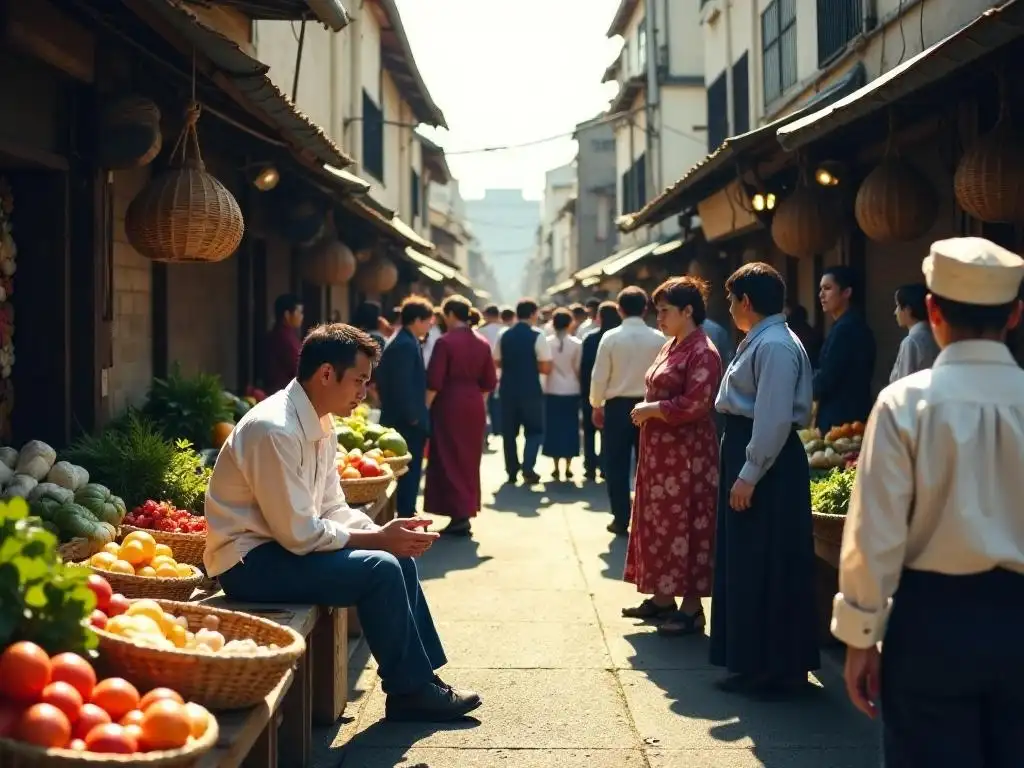
Historical Context of Merchants in Feudal Japan
During the feudal era in Japan, which spanned from the 12th to the 19th century, the merchant class underwent significant transformations that shaped their role within the Feudal Japan social hierarchy. Initially, merchants were viewed with suspicion and held a low social status, often seen as opportunists who profited from the labor of others. This perception stemmed from Confucian ideals that prioritized agricultural production over commerce.
In the early years of the feudal system, Japan's economy was predominantly agrarian. The samurai, as the ruling military class, emphasized the importance of land and farming, relegating merchants to a secondary role. However, as the Tokugawa shogunate (1603-1868) established relative peace and stability through the Edo period, trade flourished, leading to a gradual shift in the merchant class's importance. The urbanization of cities like Edo (Tokyo), Osaka, and Kyoto became pivotal in this economic expansion, creating a vibrant marketplace where merchants could thrive.
Merchants’ Role in the Economy of Feudal Japan
Merchants played a crucial role in the economy of Feudal Japan, especially during the Edo period. This era saw the rise of a sophisticated economic framework characterized by:
- Trade Networks: Merchants established extensive trade routes that connected local markets to international trade, exchanging goods such as silk, rice, and ceramics.
- Financial Innovations: The emergence of new financial practices, including the use of bills of exchange and credit systems, allowed merchants to facilitate trade and manage risks effectively.
- Cultural Exchange: Merchants were instrumental in the diffusion of culture, ideas, and technologies. They introduced new goods and practices, contributing to the cultural richness of the period.
The economic prowess of merchants enabled them to accumulate wealth, leading to the establishment of a merchant elite. This new class not only impacted the economy but also began to influence the political landscape as they forged alliances with the samurai class.
Despite their economic success, the social status of merchants within the Feudal Japan social hierarchy remained complex. While they were no longer at the bottom of the social ladder, they faced persistent stigma. The traditional class structure of samurai, farmers, artisans, and merchants (in descending order) meant that merchants were often viewed with disdain by the samurai class, who believed that the pursuit of profit undermined the values of honor and loyalty.
The perception of merchants began to gradually shift, particularly as they sponsored cultural and artistic endeavors, including theater, literature, and the development of the ukiyo-e (floating world) art form. This cultural patronage helped elevate their status, transforming them into influential figures in society.
However, the social divide persisted, and merchants were often required to adhere to strict regulations imposed by the samurai government, which sought to maintain order and prevent any challenge to the established social order. They were also subject to heavy taxation, which further complicated their relationship with the ruling class.
While merchants in Feudal Japan navigated a complex social landscape marked by both opportunity and limitation, their contributions to the economy and culture ultimately helped redefine their place within the social hierarchy, paving the way for a more nuanced understanding of class dynamics in Japan's history.
The Impact of Trade on Feudal Society
Trade played a pivotal role in shaping the social and economic landscape of feudal Japan. As the country transitioned from a predominantly agrarian society to one increasingly influenced by commerce, the merchant class emerged as a significant player in the feudal hierarchy. This transformation had profound implications for the structure of society, the distribution of wealth, and the dynamics of power.
One of the most notable impacts of trade was the economic prosperity it brought to various regions. The establishment of trade routes, both domestically and internationally, allowed for the exchange of goods such as rice, textiles, and ceramics. This flow of commerce not only enriched merchants but also provided farmers with new markets for their produce, thereby enhancing agricultural productivity. As a result, local economies began to flourish, leading to the growth of towns and urban centers.
Moreover, the rise of the merchant class began to challenge the traditional social hierarchy. While the samurai and landowning aristocracy held significant power and status, the increasing wealth of merchants allowed them to gain influence in political and social spheres. Many merchants began to invest in land and establish connections with the ruling classes, blurring the lines between the established social orders. This shift marked a gradual redefinition of status, where wealth could sometimes supersede hereditary privilege.
In addition to economic changes, trade facilitated cultural exchanges that enriched feudal society. As merchants traveled to different regions and interacted with foreign traders, they brought back new ideas, technologies, and cultural practices. This exchange fostered a dynamic environment where innovations in agriculture, craftsmanship, and even governance could take root. For instance, the introduction of new agricultural techniques from the Chinese and Korean traders significantly improved farming efficiency, which in turn supported population growth and urbanization.
However, the increasing prominence of the merchant class also led to social tensions. Many samurai viewed merchants with disdain, considering them to be socially inferior despite their growing wealth. This disdain was rooted in the samurai code of honor, which prioritized martial prowess and loyalty over economic gain. As merchants accumulated wealth, they often sought to elevate their status through patronage of the arts, sponsorship of religious institutions, and even the construction of elaborate residences, further complicating the dynamics of social standing.
The impact of trade on feudal society was multifaceted, driving economic growth and cultural exchange while simultaneously challenging established social norms. As the merchant class rose to prominence, they not only influenced the economy but also played a crucial role in reshaping the feudal social hierarchy, paving the way for Japan's eventual transition into a more modern society.
The Interrelationship Between Samurai, Farmers, and Merchants

How the Classes Interacted and Influenced Each Other
In Feudal Japan, the social hierarchy was not a rigid structure but rather a dynamic system where the classes—Samurai, Farmers, and Merchants—interacted in complex ways. The Samurai, as the warrior class, held political power and enforced the will of the ruling shogunate. Their role was not solely combative; they also governed and managed the land. This governance required collaboration with farmers, who were essential to the agrarian economy.
Farmers, considered the backbone of feudal society, provided food and resources that sustained both the Samurai and the broader population. The relationship between farmers and Samurai was often symbiotic; while Samurai protected the lands and enforced order, farmers worked diligently to cultivate the fields. In return, Samurai were responsible for ensuring the farmers' safety from bandits and rival clans.
Merchants, on the other hand, occupied a more ambiguous position within this hierarchy. Although they were often viewed with disdain by the Samurai—who considered trade to be beneath them—merchants played a critical role in the economy. They facilitated the flow of goods, including rice, textiles, and tools, fostering economic growth. As trade expanded, some merchants accumulated significant wealth, which allowed them to exert influence and even challenge the Samurai's authority, particularly during the later periods of the Edo period.
While the interactions between Samurai, Farmers, and Merchants were often cooperative, conflicts were inevitable due to differing interests and societal expectations. Samurai were bound by a code of honor (Bushido) that emphasized loyalty, honor, and martial prowess. This sometimes led to tensions with the merchant class, whose primary focus was profit and trade. Merchants, despite their wealth, were often subjected to social stigma, viewed as opportunists who did not contribute to society in the same way as the Samurai or Farmers.
Farmers also faced hardships, including heavy taxation imposed by the Samurai. This taxation often led to peasant uprisings and revolts, as farmers sought to protect their livelihoods against oppressive feudal obligations. Notable uprisings, such as the Tensho Ikkō-ikki in the 16th century, showcased the potential for conflict when the needs of farmers clashed with the demands of Samurai.
Despite these conflicts, there were instances of cooperation. For instance, during times of famine or natural disaster, Samurai would sometimes reduce taxes or provide aid to farmers to ensure food production continued. Merchants would also engage in philanthropy, supporting local communities, which helped to foster goodwill between classes.
The feudal social hierarchy of Japan evolved significantly over the centuries, particularly during the transition from the Kamakura period to the Edo period. Initially, the Samurai class was a small group of elite warriors, but as feudalism solidified, their numbers increased, and they gained more political power. This shift was largely influenced by the rise of powerful clans, such as the Minamoto and Taira, who competed for control over land and influence.
As the Edo period progressed (1603-1868), the rigid structure of the social hierarchy became more pronounced. The Tokugawa shogunate instituted a strict caste system that categorized individuals into four main classes: Samurai, Farmers, Artisans, and Merchants. This classification sought to maintain order and stability in a time of peace, but it also restricted social mobility.
By the late Edo period, the status of merchants began to rise, as urbanization and trade flourished. Wealthy merchants started to challenge the traditional dominance of the Samurai class, leading to a gradual shift in power dynamics. This evolution culminated in the Meiji Restoration of 1868, which dismantled the feudal system entirely, allowing for a more fluid social structure that paved the way for modern Japan.
The interrelationship between Samurai, Farmers, and Merchants in Feudal Japan reveals a complex web of cooperation and conflict that shaped the social landscape of the time. Understanding these dynamics is essential in grasping the broader historical and cultural context of Japan's feudal era.

The social hierarchy of feudal Japan, established primarily during the Kamakura (1185-1333) and Muromachi (1336-1573) periods, has left a profound legacy that continues to influence Japanese society today. The rigid class structure, characterized by a clear demarcation of roles and responsibilities, shaped not only the political landscape but also the cultural and economic fabric of the nation. The interplay between the samurai, farmers, merchants, and artisans created a dynamic system, where each class contributed to the overall stability and growth of feudal Japan.
The Lasting Impact of Class Structure on Modern Japan
The implications of feudal Japan's social hierarchy are still visible in contemporary Japan. Although the caste system was officially abolished in the late 19th century during the Meiji Restoration, remnants of this structure can be observed in various aspects of Japanese life. The emphasis on hierarchy, respect for authority, and a strong work ethic are deeply rooted in the values established during the feudal era.
- Cultural Influences: The samurai ethos, characterized by bushido (the way of the warrior), continues to resonate in modern Japanese culture. Principles such as loyalty, honor, and discipline are revered and often reflected in popular culture, including literature, film, and martial arts.
- Economic Dynamics: The roles of merchants and farmers have evolved, but the foundational elements of trade and agriculture remain vital to Japan’s economy. The merchant class, once looked down upon, has transformed into a driving force behind Japan’s economic prowess, leading to the rise of major corporations and global trade networks.
- Social Interactions: The historical stratification of society has fostered a culture of respect and formality in social interactions. Hierarchical relationships are still significant in business and personal contexts, influencing communication styles and social etiquette.
Understanding the feudal Japan social hierarchy provides critical insights into the historical context of the era. Each class not only fulfilled specific functions but also contributed to the broader socio-political landscape.
- Samurai's Role: As the warrior class, samurai were not just soldiers but also landowners and administrators, playing a crucial role in governance. Their code of conduct and loyalty to their lords shaped the feudal system's stability.
- Farmers' Contribution: Farmers, often regarded as the backbone of the economy, produced the food that sustained society. Their status reflects the agrarian nature of feudal Japan, where land and its cultivation were paramount.
- Merchants' Evolution: Initially marginalized, the merchant class eventually gained economic power, challenging the existing social order. Their rise illustrates the dynamic nature of social classes and the potential for mobility within the hierarchy.
The feudal Japan social hierarchy not only defined the social structure of its time but also laid the groundwork for the complexities of modern Japanese society. By exploring the roles and significance of different classes, we gain a deeper appreciation for the historical context that has shaped contemporary Japan. The study of this hierarchy is crucial for understanding the ongoing influences of Japan's past on its present and future.
Recommended Reading and Literature
To gain a deeper understanding of the Feudal Japan social hierarchy, a variety of texts offer insightful perspectives on the complexities of social classes during this era. Here are some recommended readings:
- "Bushido: The Soul of Japan" by Inazo Nitobe
- This classic work explores the code of ethics of the samurai, providing a glimpse into the values that shaped their role in society.
- "The Tale of the Heike" (translated by Helen Craig McCullough)
- A historical epic that offers narratives about warriors, farmers, and the shifting social structures of feudal Japan.
- "Samurai: The World of the Warrior" by Stephen Turnbull
- Turnbull provides an in-depth look at the samurai class, examining their societal position and cultural significance.
- "The Making of Modern Japan" by Jonah S. Goldstein
- This book provides context on how the social hierarchy of feudal Japan influenced the modern state and its class structures.
- "Japan: A History" by John W. Dower
- Dower's work gives a comprehensive overview of Japan's historical development, including the feudal system's impact on society.
Documentaries and Visual Resources
Visual resources can greatly enhance one's understanding of the feudal social hierarchy in Japan. Here are some notable documentaries and series:
- "The Samurai" (PBS)
- This documentary explores the lives, culture, and social roles of samurai throughout the feudal period, providing a visual representation of their influence.
- "The Last Samurai" (2003)
- Although a dramatization, this film captures the essence of the samurai class and the transitional period leading to the end of feudalism.
- "Japan's Feudal Era" (NHK World)
- A documentary series that delves into the societal structures, culture, and conflicts of the feudal period in Japan.
- "Tales from the Old Japan" (Documentary Series)
- This series presents stories and historical insights about the various social classes during feudal Japan, including samurai, farmers, and merchants.
Academic Journals and Articles on Feudal Japan
For those seeking scholarly articles on the Feudal Japan social hierarchy, here are some essential academic journals and resources:
- "Japan Review"
- This journal publishes articles on various aspects of Japanese history, culture, and society, including analyses of feudal social structures.
- "The Journal of Japanese Studies"
- Offers rigorous scholarly work on Japanese history, including studies focused on the class system in feudal Japan.
- "Monumenta Nipponica"
- This journal features research articles that cover a wide range of topics, including social hierarchy and the roles of different classes in historical contexts.
- "Asian Studies Review"
- A platform for interdisciplinary research, this journal includes articles that explore the socio-economic structures of feudal Japan.
By engaging with these resources, readers can enhance their understanding of the complexities and nuances of the social hierarchy that defined feudal Japan.
Frequently Asked Questions
The Feudal Japan social hierarchy consisted of several key classes: samurai, farmers, and merchants, each with distinct roles and responsibilities within society.
How did the samurai influence Feudal Japan's society?
The samurai were not only skilled warriors but also served as administrators and landowners, significantly shaping the political and cultural landscape during the feudal era.
What role did farmers play in Feudal Japan?
Farmers were vital to the economy, as they produced the food necessary for survival. They were respected but often bore heavy tax burdens imposed by the ruling samurai class.
Why were merchants considered the lowest class in Feudal Japan?
While merchants played an important role in trade and economic growth, they were often viewed as socially inferior because they did not produce goods but instead profited from the labor of others.
The Feudal Japan social hierarchy dictated individuals' rights, privileges, and responsibilities, impacting everything from occupation to social mobility and personal relationships within the society.
The intricate social hierarchy of Feudal Japan remains a compelling lens through which we can examine the complexities of societal structure and human relationships. As we navigate our modern world, the lessons from the past resonate with our current social dynamics, highlighting the importance of understanding our roles within a community. The rigid class distinctions of samurai, farmers, and merchants not only shaped the lives of individuals in that era but also offer profound insights into the ongoing conversations about class and privilege today.
The legacy of Feudal Japan's social classes continues to influence cultural narratives and social constructs around the globe. The interplay between honor, duty, and economic status in this historical context invites us to reflect on our own societal roles and the values we uphold. The past is never dead. It's not even past.
— William Faulkner. This quote encapsulates the notion that the lessons learned from Feudal Japan are not merely historical footnotes but are alive in our contemporary discussions about equity, respect, and the importance of each individual's contribution to society.
As we conclude this exploration of Feudal Japan's social hierarchy, I invite you to reflect on your own position within the social fabric of today. Consider how the values of respect, responsibility, and community can shape your interactions and contributions in the modern world. By understanding the past, we can forge a more equitable future, where each class—be it in profession, culture, or ideology—plays a vital role in the tapestry of society. Let us carry these lessons forward, ensuring that history informs our actions and aspirations for a more harmonious world.
Uncover the Rich Tapestry of Feudal Japan Today!
Thank you for exploring the fascinating world of Feudal Japan's social classes! We hope you’ve gained valuable insights into the intricate roles of samurai, farmers, and merchants. Now, it’s time to take what you’ve learned and bring it to life. Here’s how you can continue your journey into this captivating era:
- Explore Further: Dive into our extensive archives on feudal Japan. Discover related topics that intrigue you and expand your knowledge!
- Engage with Us: Join our community by sharing your favorite insights or questions in the comments. Let’s discuss and learn together!
- Spread the Knowledge: Share this article with friends or on social media to spark discussions about the incredible history of Feudal Japan.
What aspect of Feudal Japan's social structure intrigues you the most, and how do you think it shapes our understanding of modern society?