
From Patriarchy to Matriarchy: Unraveling Gender Dynamics in Feudal Japanese Families

Welcome to Feudal Japan History, where we invite you to embark on a fascinating journey through the intricate tapestry of Japan's feudal era. In this exploration, we delve into the complex gender roles that shaped family dynamics and societal structures during this pivotal time. Our featured article, "From Patriarchy to Matriarchy: Unraveling Gender Dynamics in Feudal Japanese Families," promises to unveil the surprising shifts in power and responsibility that defined the lives of men and women alike.
Curious about how these dynamics influenced daily life and culture? Join us as we uncover the layers of history that continue to resonate today!
- Introduction to Gender Roles in Feudal Japan
- Historical Context of Gender Roles in Feudal Japan
- Understanding Patriarchy in Feudal Japan
- The Emergence of Matriarchal Influences
- Gender Roles in Daily Life
- Cultural Practices and Gender Dynamics
- Transition from Patriarchy to Matriarchy
- Conclusion: The Legacy of Gender Dynamics in Feudal Japan
- Frequently Asked Questions
- Final Reflection: Revisiting Gender Roles in Feudal Japan for a Modern Understanding
- Unveil the Power of Gender Dynamics!
Introduction to Gender Roles in Feudal Japan
In the intricate tapestry of feudal Japan, gender roles played a pivotal role in shaping family structures and societal norms. Understanding these roles provides a deeper insight into the daily lives of individuals during this era, revealing not just the hierarchical systems in place but also the underlying cultural values that influenced relationships and responsibilities.
This exploration of gender dynamics—from the patriarchal expectations that dominated early feudal Japan to the more nuanced roles women began to play—offers a comprehensive view of how families operated and adapted within a rigidly stratified society. By delving into the interactions between male and female members of the household, we can better appreciate the complexities of family life and the broader implications for Japanese society as a whole.
Overview of Feudal Japanese Society
Feudal Japan, spanning from the 12th to the 19th century, was characterized by a rigid social hierarchy, where power and influence were often concentrated in the hands of a few. At the top were the shoguns, followed by daimyos (feudal lords), samurai (warriors), and the peasantry, which included farmers and laborers. Each of these classes had distinct roles and responsibilities, which were further influenced by gender.
- Men's Roles:
- Generally held positions of authority and responsibility.
- Engaged in warfare, governance, and economic management.
- Expected to uphold family honor and lineage.
- Women's Roles:
- Primarily focused on domestic responsibilities, such as managing the household and raising children.
- In some cases, women of higher classes could wield significant influence through marriage alliances and property management.
- Their roles varied significantly depending on class and region, with peasant women often taking on more labor-intensive roles.
This societal structure created a framework within which gender roles were defined and enforced, leading to distinct experiences for men and women in feudal Japan.
Importance of Gender Dynamics in Understanding Family Structures
Grasping the gender dynamics within feudal Japanese families is crucial for several reasons:
- Cultural Insights: Gender roles provide valuable insights into the cultural norms and values of the time. The expectations placed on men and women reflected broader societal beliefs about power, honor, and duty.
- Family Dynamics: Understanding how these roles influenced family interactions can illuminate the everyday realities faced by individuals. For instance, the patriarchal system often dictated familial hierarchies, affecting everything from decision-making to inheritance.
- Evolution Over Time: Exploring the transition from a predominantly patriarchal system to moments where women gained more agency reveals the fluidity of gender roles in response to societal changes, such as economic shifts or political turmoil.
- Impact on Society: The roles of men and women within the family unit had broader implications for society, affecting everything from legal rights to social mobility.
By dissecting these elements, we can better understand the foundational structures of feudal Japanese society and how they influenced the lives of its people, ultimately enriching our appreciation of this complex historical period.
Historical Context of Gender Roles in Feudal Japan

The Influence of Patriarchy in Early Japanese Families
In feudal Japan, the structure of families was deeply influenced by patriarchal norms, rooted in both Confucian ideals and indigenous traditions. The father or husband was typically seen as the head of the household, responsible for making significant decisions that affected the family's welfare. This patriarchal system dictated not only familial hierarchies but also social interactions and economic roles.
- Inheritance Practices:
- Land and property were predominantly inherited by male heirs. This practice reinforced the notion that men were the primary providers and protectors of the family unit.
- Women's rights to property were limited; they could own possessions, but these were often considered subordinate to the male lineage.
- Roles and Responsibilities:
- Men engaged in external affairs, such as agriculture, trade, and military pursuits, while women were largely confined to domestic roles.
- Women were responsible for managing the household, raising children, and sometimes assisting in agricultural tasks, reflecting a division of labor based on gender.
- Cultural Narratives:
- Literature and folklore from this era often depicted women in supportive roles, reinforcing the belief that their primary purpose was to serve the family and uphold the household's honor.
- The concept of "Onna Daigaku", or "Lessons for Women," emerged, emphasizing virtues such as obedience and fidelity, thus perpetuating the patriarchal framework.
Development of Matriarchal Elements in Feudal Society
While patriarchal values dominated, there were notable instances where matriarchal elements emerged within feudal Japanese society, particularly in certain regions and among specific social classes. This duality in gender roles highlights a complex social structure.
- Influence of the Samurai Class:
- Women in samurai families, known as "Onna-bugeisha," sometimes took on martial roles, defending their homes and managing estates in the absence of men.
- High-ranking women could wield significant influence, often acting as advisors or even commandants during conflicts, thus challenging traditional gender expectations.
- Religious and Spiritual Roles:
- Shinto practices often placed women in positions of spiritual authority, such as priestesses ( "miko"), who held significant sway in religious ceremonies and community decisions.
- These roles allowed women to step outside the confines of domesticity, granting them a degree of respect and power in social contexts.
- Regional Variations:
- Certain regions, particularly in the rural provinces, exhibited more egalitarian practices, where women had greater autonomy in managing family affairs and economic decisions.
- The rise of merchant classes also contributed to shifting gender dynamics, allowing women to participate in trade and commerce, further altering traditional roles.
Key Historical Events Shaping Gender Dynamics
Several pivotal events throughout feudal Japan's history profoundly impacted gender dynamics, contributing to the evolution of gender roles in society.
- The Genpei War (1180-1185):
- This conflict between the Taira and Minamoto clans not only reshaped political power structures but also saw women, like Tomoe Gozen, emerge as formidable figures in battle, challenging the traditional narrative of passive femininity.
- The Sengoku Period (1467-1603):
- During the "Warring States" era, the lack of stable governance led to women taking on more responsibilities in both familial and military domains. Women managed households and defended their domains, showcasing adaptability in gender roles.
- The Edo Period (1603-1868):
- With the establishment of a more stable regime under the Tokugawa shogunate, there was a resurgence of Confucian ideals that emphasized male dominance. However, the economic growth fostered by merchant activities allowed women to find niches outside their homes.
- The introduction of formal education for women in some classes during this time also began to change their societal roles, albeit slowly.
The gender roles in feudal Japan were not static; they evolved through a complex interplay of cultural, social, and economic factors, revealing a rich tapestry of male and female dynamics that would shape Japanese society for centuries to come.
Understanding Patriarchy in Feudal Japan
Defining Patriarchy in the Context of Japanese Families
Patriarchy in feudal Japan refers to a societal system where men held primary power, dominating in roles of political leadership, moral authority, social privilege, and control of property. This system was deeply entrenched in the family structure, influencing gender roles in feudal Japan significantly.
In the traditional Japanese family, known as ie, the male head (often the eldest male) was the authority figure responsible for making critical decisions regarding the family's welfare, including financial matters and marriage arrangements. Women, while essential for domestic tasks and the upbringing of children, were expected to adhere to the standards set by their fathers and husbands, thereby reinforcing their subordinate status in the familial hierarchy.
The legal and cultural frameworks of feudal Japan supported this patriarchal system. For instance, the Code of the Samurai emphasized loyalty to male lineage and the importance of male heirs, further emphasizing the need for women to remain within defined roles. This resulted in a society where women's contributions, although crucial, were often minimized or taken for granted.
Roles and Responsibilities of Men in Feudal Japan
In feudal Japan, the roles and responsibilities of men were multifaceted, ranging from warriors to household leaders. Here are the primary roles:
- Samurai Warriors: Men, particularly samurai, were expected to uphold the values of loyalty and bravery. They trained rigorously in martial arts, and their primary duty was to protect their lord's territory. The samurai's role extended beyond warfare; they were also tasked with maintaining order and administering justice within their domains.
- Family Providers: Men were the primary breadwinners, responsible for the financial stability of the family. They engaged in agriculture, trade, or crafts, depending on their social status. The economic responsibilities often dictated the family's prosperity and social standing.
- Decision Makers: Within the ie structure, men were the ultimate decision-makers. They determined family arrangements, including marriages, which were often strategic alliances aimed at consolidating power or wealth.
- Cultural Custodians: Men also played a crucial role in the transmission of culture and values. They were responsible for educating their sons in the ways of the samurai and preserving family traditions, ensuring continuity through generations.
These responsibilities reinforced the patriarchal system, establishing a societal norm where men's roles were prioritized above those of women, who were primarily expected to manage the domestic sphere.
Impact of Samurai Culture on Gender Roles
The samurai culture profoundly impacted gender roles in feudal Japan, shaping societal expectations and the lived realities of men and women alike. While samurai ideals promoted bravery and honor among men, they also dictated how women were perceived and treated.
- Honor and Duty: The samurai ethos emphasized honor, duty, and loyalty, which were predominantly male attributes. This cultural framework placed immense pressure on men to conform to these ideals, often sidelining women’s contributions and roles within the family.
- Women's Roles in Samurai Households: Women in samurai families, while often relegated to domestic duties, held significant influence within the household. They were tasked with managing finances and education of children, particularly daughters. This duality created a complex interplay of power, where women could exert control indirectly.
- Martial Training for Women: In some samurai families, women received martial training, particularly in the event of their husbands' absence. This practice, however, was often viewed as a necessity rather than an acknowledgment of women's capabilities, reinforcing the idea that their primary role was still one of support.
- Cultural Narratives: Literature and storytelling of the time often portrayed women as passive figures, reinforcing the patriarchal narrative. However, there are instances, such as in the tales of the Onna-bugeisha (female warriors), that highlight women's agency in feudal Japan. These narratives, while not mainstream, serve to challenge traditional gender roles and reflect the complexities of women's experiences.
The samurai culture played a pivotal role in reinforcing gender roles in feudal Japan, creating a dichotomy where men's valor was glorified while women's contributions were often minimized. This enduring legacy of patriarchy would shape the dynamics of Japanese families for centuries, leading to a gradual evolution in gender roles over time.
The Emergence of Matriarchal Influences
The emergence of matriarchal influences in feudal Japan is a topic that unveils the complexities of gender roles within Japanese families. While patriarchy was predominant, certain regions and periods exhibited noteworthy matriarchal elements, especially in rural settings where women's contributions were vital to family survival and prosperity.
One of the key factors contributing to the rise of matriarchal influences was the socio-economic structure of feudal Japan. In agrarian societies, women's labor was critical. Families depended heavily on agricultural production, and women often managed these operations, influencing decisions about land use and resource allocation. This economic reliance allowed women to hold a significant degree of authority within their families.
Moreover, the inheritance practices in some clans favored women. In certain instances, property and titles were passed down through maternal lines, enabling women to assume leadership roles in family and community affairs. This practice often resulted in matriarchs who wielded considerable influence, shaping the family's social standing and economic vitality.
Rituals and cultural beliefs also played a role in bolstering matriarchal authority. In many traditions, women were revered as the bearers of life and custodians of family lineage, which granted them a sacred status within the household. This duality of reverence and authority contributed to a complex social structure where women could exercise power despite the overarching patriarchal system.
Characteristics of Matriarchy in Feudal Japanese Households
Matriarchy in feudal Japanese households displayed distinct characteristics that set it apart from traditional patriarchal structures. These characteristics included:
- Matrilineal Inheritance: In certain regions, inheritance was traced through the female line, allowing women to inherit property and titles. This practice enabled women to have a stake in family wealth and decision-making.
- Economic Authority: Women often managed household finances, agricultural production, and labor. Their ability to make economic decisions positioned them as key players in maintaining family stability.
- Social Influence: Matriarchs often held significant sway over familial and community matters. Their opinions were respected, and they played vital roles in social and cultural rituals.
- Cultural Reverence: Women were often associated with fertility and nurturing, leading to a cultural reverence that afforded them a unique status within the family hierarchy. This reverence sometimes translated into power over family affairs.
These characteristics highlight how matriarchal influences were not merely exceptions but integral aspects of certain feudal Japanese households, showcasing a nuanced understanding of gender dynamics.
Women's Roles in Agriculture and Family Life
In feudal Japan, women's roles in agriculture and family life were multifaceted and crucial for the functioning of society. Women participated actively in various agricultural tasks, which included:
- Planting and Harvesting: Women were directly involved in planting seeds, tending crops, and harvesting. Their labor was essential in ensuring food production, which was the backbone of the feudal economy.
- Household Management: Beyond agricultural work, women managed domestic affairs, which encompassed cooking, weaving, and child-rearing. Their ability to balance these responsibilities often dictated the household's success.
- Decision-Making: In many households, women took on decision-making roles regarding land use and resource management, particularly when male family members were absent due to warfare or other obligations.
- Community Involvement: Women often engaged in community agricultural practices, such as cooperative farming. This involvement fostered social bonds and collective efforts, further amplifying their influence in both family and communal settings.
Overall, women's contributions to agriculture were not limited to physical labor; they encompassed strategic decision-making and community leadership, reinforcing their importance in the feudal social structure.
Case Studies of Notable Matriarchs in Feudal Japan
Examining notable matriarchs in feudal Japan provides insight into the impactful roles women played in shaping family and societal dynamics. Here are a few significant cases:
- Hojo Masako (1181-1225): Known as the "Shikken" (regent) of the Kamakura shogunate, Masako was instrumental in political matters following her husband's death. She wielded considerable power and influence, shaping the governance of the shogunate while navigating the complexities of a patriarchal system.
- Tamako of the Takeda Clan: Tamako played a vital role in managing her family's affairs during her husband's military campaigns. She was known for her shrewd decision-making and ability to maintain her family's power and influence in the region.
- Kikuchi Takanobu’s Wife: This unnamed matriarch managed the Kikuchi family's estate during her husband's absence. Her leadership ensured the family's stability and economic prosperity, showcasing the essential function of women in feudal governance.
These case studies illustrate how matriarchs not only contributed to their families' well-being but also influenced broader societal structures, challenging the notion that women were relegated solely to subordinate roles within feudal Japan.
The exploration of gender roles in feudal Japan reveals a complex interplay of power, authority, and societal norms, where matriarchal influences contributed significantly to the fabric of family life and community dynamics. Understanding these roles provides a richer perspective on the historical narrative of Japan’s feudal era.
Gender Roles in Daily Life
Family Structure and Hierarchy in Feudal Japan
In feudal Japan, the family was the cornerstone of social structure, deeply intertwined with the rigid hierarchy of society. Families were typically patriarchal, with the eldest male serving as the head. This position conferred authority over family decisions, finances, and the upbringing of children. The ie system, or household structure, was prevalent, where lineage and inheritance were emphasized, and the continuity of family name and honor was paramount.
- Patriarchal Dominance: The father or eldest male was responsible for maintaining the family's honor, often engaging in local governance or military service. This role extended to the management of family assets, which included land and labor.
- Matriarchal Influence: Despite the patriarchal framework, women held significant roles within the household. They managed daily affairs and were responsible for the upbringing of children, thereby exerting a subtle yet powerful influence on family dynamics.
- Marriage and Alliances: Marriages were often strategic, aimed at strengthening alliances between families. Women, particularly from samurai or wealthy merchant families, were sometimes seen as pawns in these arrangements, yet they could wield considerable power through their ability to produce heirs.
The familial hierarchy not only defined relationships within the home but also influenced broader societal interactions, emphasizing the importance of lineage and loyalty in feudal Japan.
The Division of Labor: Men vs. Women
The division of labor in feudal Japan was starkly defined along gender lines, reflecting societal expectations and roles that shaped daily life.
- Men’s Roles: Men were primarily responsible for outdoor work and tasks that required physical strength. This included farming, military service, and trade. Samurai men, in particular, were expected to uphold the bushido code, which dictated honor, loyalty, and martial prowess.
- Women’s Roles: Women, conversely, managed domestic responsibilities. Their tasks included:
- Child-rearing: Women were the primary caregivers, instilling cultural values and social norms in their children.
- Household Management: They oversaw food preparation, weaving, and other crafts essential for sustaining the family.
- Agricultural Support: In agrarian settings, women often participated in farming activities, contributing significantly to agricultural output.
This division of labor not only reinforced gender roles but also ensured that both men and women played crucial, albeit different, roles in the sustenance and stability of their families and communities.
Education in feudal Japan was largely influenced by gender, with distinct pathways for boys and girls that reflected societal norms.
- Boys' Education: Sons, especially from samurai families, received formal education focused on martial skills, ethics, and governance. They were trained in the art of war, literature, and philosophy, preparing them for roles as future leaders or warriors.
- Girls' Education: In contrast, girls were primarily educated at home, with an emphasis on domestic skills. Their education included:
- Household Skills: Learning to cook, sew, and manage a household were deemed essential.
- Cultural Instruction: Girls were also taught poetry, music, and the arts, which were valuable for their roles in marriage and family life.
- Socialization Processes: Socialization into gender roles began early. Boys were taught the values of strength and honor, while girls were socialized into nurturing roles, emphasizing obedience and servitude. This early conditioning played a critical role in perpetuating traditional gender roles throughout the feudal era.
The education and socialization processes in feudal Japan were instrumental in shaping gender dynamics, ensuring that both men and women understood their respective roles within the family and society at large. As the feudal era evolved, these gender roles would be challenged and transformed, paving the way for future societal changes.
Cultural Practices and Gender Dynamics
Rituals and Traditions Reflecting Gender Roles
In feudal Japan, cultural practices and rituals significantly mirrored the gender dynamics of the time. The patriarchal structure dominated most aspects of society; however, certain rituals allowed for a nuanced understanding of gender roles. For instance, Shinto rituals, which permeated daily life, often featured a division of labor based on gender. Women were frequently associated with rice cultivation and domestic tasks, while men assumed roles in public ceremonies and governance.
Key rituals included:
- Mizuko kuyo: A memorial ceremony for deceased children, where women played a central role in the grieving process, showcasing their emotional depth and societal importance.
- Seijin shiki: Coming-of-age ceremonies, which highlighted the transition from childhood to adulthood. For men, this often included formal training in martial arts, while women were taught domestic skills.
These rituals not only reinforced existing gender roles but also provided women with a platform to express their agency within the confines of societal expectations.
Art and Literature Depicting Gender Relations
Art and literature in feudal Japan served as powerful vehicles for expressing and challenging gender roles. Ukiyo-e, a genre of woodblock prints, often depicted the lives of women in the pleasure quarters, illustrating both their allure and the limitations placed upon them. Notable artists like Kitagawa Utamaro focused on portraying the inner lives of women, revealing their strength, aspirations, and struggles in a patriarchal society.
In literature, the Tale of Genji by Murasaki Shikibu offers a profound exploration of gender dynamics. The narrative illustrates the complexities of male-female relationships, highlighting the emotional and social constraints women faced. The characters often navigate their roles within the rigid hierarchy, revealing a spectrum of experiences that challenge the simplistic view of women as mere subordinates to men.
Through these artistic expressions, societal norms surrounding gender were both reinforced and critiqued, creating a rich tapestry of understanding regarding gender roles in feudal Japan.
The Role of Religion in Shaping Gender Dynamics
Religion played a pivotal role in shaping the gender dynamics of feudal Japan, particularly through the influence of Buddhism and Shintoism. Both religions contributed to the perception of gender roles and the societal expectations of men and women.
- Buddhism introduced the concept of enlightenment, which was often more accessible to men than women. Monastic communities were predominantly male, and while there were female practitioners, they faced significant barriers to achieving the same status as their male counterparts.
- Conversely, Shintoism often revered female deities, such as Amaterasu, the sun goddess. This reverence for the feminine in divine contexts allowed for a complex interplay between veneration and the societal relegation of women to subordinate roles in daily life.
Religious practices and beliefs continually influenced family structures and gender roles, dictating the behaviors expected of men and women, and reinforcing the notion of a hierarchical society. In this way, religion served both as a stabilizing force and a source of tension in the ongoing evolution of gender dynamics in feudal Japan.
Transition from Patriarchy to Matriarchy
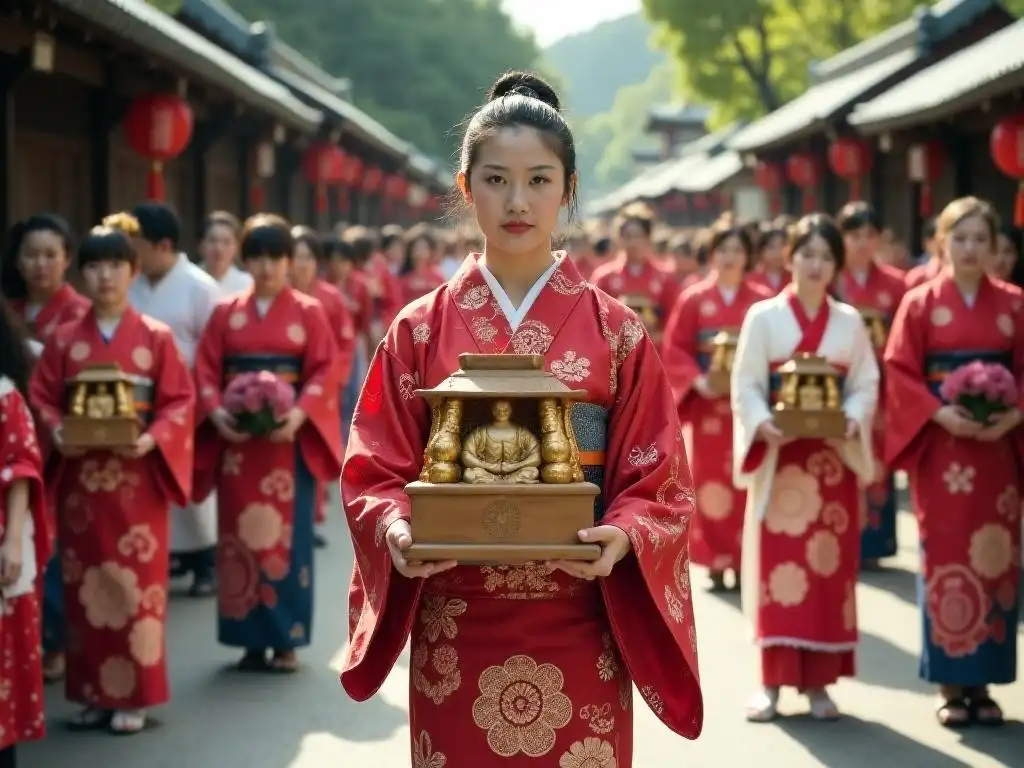
The transition from patriarchy to matriarchy in feudal Japan is a complex phenomenon that reflects the evolving dynamics of gender roles within Japanese families. This shift can be traced back to various socio-economic and cultural factors that influenced family structures and gender expectations over time.
Factors Leading to Shifts in Gender Roles
Several key factors contributed to the gradual shift in gender roles during the feudal period in Japan:
- Economic Changes: The rise of agriculture and trade led to increased wealth among certain families, particularly in rural areas. As families became more economically self-sufficient, women's roles in managing household finances and resources gained prominence.
- Political Influence: The emergence of powerful matriarchs, especially during times of political instability, allowed women to wield considerable influence. Notable examples include the wives of samurai and landowners, who often acted as intermediaries in political negotiations and family alliances.
- Cultural Shifts: The influence of Buddhism and Shinto beliefs promoted a more balanced view of gender roles. Some sects of Buddhism even emphasized the spiritual power of women, allowing for a greater acceptance of female leadership within families and communities.
- Educational Opportunities: As education became more accessible, women began to gain knowledge and skills that allowed them to participate in decision-making processes. This education often included teachings on ethics and governance, which further empowered women within their families.
Analysis of Changes in Family Structures Over Time
The family structures in feudal Japan underwent significant changes, particularly in terms of authority and responsibilities:
- Early Feudal Period: In the early stages, patriarchal norms dominated, with men holding primary authority and decision-making power within the household. Women were primarily responsible for domestic duties and child-rearing.
- Late Feudal Period: By the late feudal period, particularly during the Edo period (1603-1868), women began to take on more active roles in the family business and economic activities. This change was partly due to the necessity of managing family affairs in the absence of men who were often engaged in warfare or politics.
- Matriarchal Influence: Some families began to adopt matriarchal elements where lineage and property were passed down through the female line. This influence can be seen in certain regions where women held significant control over inheritance and family decisions.
Comparison of Gender Roles in Different Regions of Japan
The variations in gender roles across different regions of Japan highlight the diversity of family structures and societal expectations:
- Kanto Region: In the Kanto area, particularly around Edo (modern-day Tokyo), the rise of urban centers led to women participating more actively in commerce and trade. This economic involvement allowed women to gain a degree of independence and influence within their households.
- Kansai Region: Conversely, in the Kansai region, where traditional agricultural practices were more prevalent, patriarchal structures remained dominant for a longer period. Women were often confined to domestic roles, with limited opportunities for economic engagement.
- Rural vs. Urban Dynamics: The contrast between rural and urban settings also played a significant role. While urban families began to embrace more egalitarian practices due to economic necessity, rural families often adhered to traditional roles, with men as the primary breadwinners and women as homemakers.
The evolution of gender roles in feudal Japan is a testament to the dynamic interplay between economic, political, and cultural factors. As families adapted to changing circumstances, the roles of women gradually expanded, leading to a more nuanced understanding of gender dynamics within Japanese society.
Conclusion: The Legacy of Gender Dynamics in Feudal Japan
Summary of Key Insights on Gender Roles
The exploration of gender roles in feudal Japan reveals a complex tapestry woven from the threads of social hierarchy, cultural expectations, and familial obligations. Throughout the feudal era, the patriarchal structure predominantly defined family dynamics, where men held primary authority and responsibility. However, as we delve deeper, we uncover nuanced roles that women played within these constraints, often subverting typical expectations.
Key insights include:
- Patriarchal Authority: Male heads of families, typically samurai or wealthy landowners, exercised significant control over familial decisions, finances, and lineage.
- Women's Agency: Despite their subordinate status, women in feudal Japan possessed agency in specific contexts, particularly in managing household affairs and education of children when men were away.
- Cultural Nuances: Various regions exhibited different practices and beliefs about gender roles, impacted by local customs and the socio-economic status of families.
These insights illustrate that while gender roles were largely defined by a patriarchal framework, women often negotiated their positions within this system, thereby contributing to familial stability and continuity.
Implications for Understanding Modern Japanese Society
The legacy of gender dynamics from feudal Japan continues to resonate in contemporary Japanese society. Understanding the historical context of gender roles aids in comprehending the ongoing issues related to gender equality and women's rights in Japan today.
- Cultural Continuity: Many traditional values from the feudal era still influence modern Japanese familial structures and societal expectations, where the division of labor often reflects historical roles.
- Evolving Gender Norms: As Japan grapples with modernity, shifts in gender roles are evident, with increasing participation of women in the workforce and political spheres. However, remnants of feudal attitudes can still hinder full equality.
- Educational Influence: The educational roles women assumed historically have evolved, leading to a more educated female population that challenges traditional norms and advocates for change.
Recognizing these implications provides a broader perspective on how historical gender roles shape and inform current societal dynamics and debates in Japan.
Future Research Directions on Gender in Historical Contexts
To further enrich our understanding of gender roles in feudal Japan, additional research is necessary. Here are some promising directions for future studies:
- Regional Variations: Investigating how gender roles differed across various provinces and social classes can yield insights into the localized nature of feudal society.
- Comparative Studies: Analyzing gender dynamics in feudal Japan alongside those in other feudal societies, such as Europe or China, can help elucidate universal versus culturally specific trends.
- Influence of Religion and Philosophy: Exploring how Shinto, Buddhism, and Confucianism shaped gender expectations and family structures can provide a more rounded view of their impact on society.
- Women’s Voices in History: Archival research into women's writings, oral histories, and legal documents can help recover the narratives of women that have been overlooked in traditional historical accounts.
By pursuing these research avenues, scholars can contribute to a more nuanced understanding of gender roles, not only in feudal Japan but across different historical contexts and cultures.
Frequently Asked Questions
What were the primary gender roles in feudal Japan?
In feudal Japan, gender roles were largely defined by patriarchal structures, where men held dominant positions in society, while women were primarily responsible for household duties and upbringing of children.
Social status significantly influenced gender dynamics; women of higher status had more authority and could inherit property, while lower-class women often faced greater restrictions and labor demands.
Were there any notable exceptions to traditional gender roles?
Yes, there were exceptions such as the Onna-bugeisha, female warriors who participated in battles, and women in the samurai class who could wield power in their own right, showcasing a more complex gender landscape.
How did cultural beliefs shape gender perceptions in feudal Japan?
Cultural beliefs, influenced by Confucianism and Shintoism, emphasized male superiority and female submission, but also respected women’s roles as mothers and nurturers, creating a duality in gender perceptions.
When did significant changes in gender roles begin to occur?
Significant changes in gender roles began during the Edo period, as urbanization and economic shifts allowed women more opportunities for employment and education, leading to gradual shifts towards greater equality in the following eras.
Final Reflection: Revisiting Gender Roles in Feudal Japan for a Modern Understanding
The exploration of gender roles in feudal Japan reveals a complex tapestry of power dynamics that resonate deeply in today's society. As we dissect the transition from patriarchy to matriarchy within Japanese families, we uncover not only the historical significance but also the enduring relevance of these gender dynamics in contemporary discussions about equality and representation. The past serves as a mirror, reflecting the ongoing struggle for gender equity that persists across cultures and eras.
Clearly, the evolution of gender roles in feudal Japan has left an indelible mark on our cultural and social landscape. The insights gleaned from this historical context continue to shape our understanding of gender today, prompting us to question and redefine our own roles within society. As we navigate the complexities of modern gender dynamics, we can draw inspiration from the resilience and adaptability of those who came before us. History is not a burden on the memory but an illumination of the soul.
This quote encapsulates the importance of learning from the past to inform our present and future.
As you reflect on the themes discussed in this article, I invite you to consider how the lessons of feudal Japan can be applied to your own life. What can you learn from the shifting gender roles of the past? Embrace the opportunity to challenge traditional norms and advocate for a more equitable future. Let the stories of those who navigated these dynamics inspire you to engage in meaningful conversations and actions that promote understanding and equality in your own community. Together, we can continue to unravel the complexities of gender roles and work towards a more inclusive society.
Unveil the Power of Gender Dynamics!
Thank you for diving into the fascinating world of feudal Japanese family structures! Your interest in these rich historical narratives enhances our understanding of how gender roles have evolved over time. Now, let’s translate this knowledge into practical steps that encourage meaningful engagement in this ongoing conversation.
- Take action by sharing your insights with friends or on social media—spark discussions about historical gender roles and their impacts on contemporary society!
- Join our community forum dedicated to feudal Japanese history, where you can connect with like-minded individuals and share your thoughts or questions.
- Explore additional resources—immerse yourself in books, documentaries, or online courses that provide a deeper understanding of matriarchy and historical contexts!
How do you believe the insights gained from studying gender dynamics in feudal Japan can influence today's discussions around gender equality?