
The Evolution of Trade Ports: Key Locations in Feudal Japan’s Foreign Relations


Welcome to Feudal Japan History, where we embark on a fascinating journey through the intricate tapestry of Japan's feudal era. Dive deep into the evolution of trade ports, pivotal locations that shaped the nation's foreign relations and cultural exchange. As you explore our expert-driven articles, you'll uncover the secrets of these bustling hubs and their impact on Japan's historical landscape. What drove the development of these trade ports, and how did they influence Japan's global connections? Join us as we unravel the mysteries of Trade Ports in Feudal Japan—the gateway to understanding a transformative period in history.
- The Evolution of Trade Ports in Feudal Japan
- Historical Context of Trade Ports in Feudal Japan
- Major Trade Ports in Feudal Japan
- The Role of Trade Ports in Cultural Exchange
- Strategic Significance of Trade Ports
- Challenges Faced by Trade Ports in Feudal Japan
- Conclusion: The Legacy of Trade Ports in Feudal Japan
-
Frequently Asked Questions
- What were the main trade ports in Feudal Japan?
- How did trade ports influence Japan's economy during the feudal era?
- What foreign countries did Japan trade with during the feudal period?
- How did the isolation policy affect trade ports in Japan?
- What role did trade ports play in cultural exchange in Feudal Japan?
- Final Reflection: The Enduring Legacy of Trade Ports in Feudal Japan
- Unveil the Secrets of Feudal Japan's Trade!
The Evolution of Trade Ports in Feudal Japan
Introduction to Trade Ports in Feudal Japan
The feudal era of Japan, spanning from the late 12th century to the mid-19th century, was a transformative period marked by significant political, social, and economic changes. Among the pivotal elements that shaped this era were the trade ports, which served as crucial hubs for foreign relations and cultural exchange. These ports not only facilitated the flow of goods, but also ideas, technologies, and cultural practices between Japan and neighboring countries, particularly Korea and China.
During this period, trade ports evolved from simple coastal trading posts into complex commercial centers that played a vital role in Japan's interactions with the rest of the world. Key locations such as Kagoshima, Nagasaki, and Hakata became instrumental in fostering diplomatic ties and economic exchanges. The strategic positioning of these ports allowed for the import of essential resources, including rice, textiles, and metals, while also enabling the export of Japanese goods, such as silk and pottery.
As we delve deeper into the history and significance of these trade ports, it becomes evident that they were not merely economic gateways but also cultural conduits that influenced Japan's development throughout the feudal era. This article aims to provide a comprehensive exploration of the evolution of trade ports in feudal Japan, focusing on their role in shaping foreign relations and the dynamics of trade with Korea and China.
Importance of Trade Ports in Foreign Relations
The trade ports of feudal Japan were indispensable in establishing and maintaining foreign relations, particularly with neighboring countries like Korea and China. These ports served multiple functions, including:
- Economic Exchange: They enabled the import and export of a diverse range of goods, which enriched local economies and contributed to national wealth. For example, silk and ceramics were highly sought after in foreign markets, while Japan imported essential items like iron and spices.
- Cultural Exchange: The influx of foreign traders and diplomats brought new cultural influences, including religious practices, artistic styles, and technological advancements. This exchange significantly impacted Japanese culture, as seen in the adoption of Chinese characters and the introduction of Buddhism.
- Diplomatic Relations: Trade ports acted as venues for diplomatic negotiations and alliances. The establishment of formal treaties and trade agreements often took place in these locations, facilitating peaceful relations and mutual benefits.
- Strategic Military Significance: Control of trade ports also had military implications, as they provided crucial supply routes and bases for naval activities. This was especially important during periods of conflict or when attempting to assert dominance over regional trade.
The importance of trade ports in foreign relations cannot be overstated. They were vital in connecting Japan with the broader world, laying the groundwork for future diplomatic efforts and economic collaborations that would shape Japan's trajectory in the centuries to come. As we continue to explore the specific ports and their functions, we will gain a deeper understanding of how these locations were integral to Japan's historical narrative.
Historical Context of Trade Ports in Feudal Japan

The trade ports of feudal Japan played a pivotal role in shaping the country's foreign relations, particularly with neighboring countries such as Korea and China. These ports served not only as gateways for goods but also as conduits for cultural exchange, diplomatic negotiations, and the introduction of foreign ideas and technologies.
The Rise of Trade during the Feudal Era
During the feudal era, particularly from the 12th to the 16th centuries, Japan experienced significant growth in trade, both internally and externally. The rise of the samurai class and the establishment of a centralized government under various shogunates enabled more organized trade practices. Key developments in this period include:
- Increased Agricultural Production: With advancements in farming techniques, surplus crops were produced, which facilitated trade. This surplus allowed for the growth of market towns and trade ports.
- Maritime Innovations: The development of shipbuilding technology, including the design of larger vessels capable of ocean travel, enhanced Japan’s ability to engage in maritime trade. This included the use of junk ships, which were well-suited for long-distance voyages.
- Growth of Urban Centers: Cities such as Kamakura and later Edo (modern-day Tokyo) became bustling trade hubs. These urban centers attracted merchants from across Japan and abroad, leading to increased commercial activities.
The rise of trade altered the socio-economic landscape of feudal Japan, as merchants gained wealth and influence, challenging the traditional hierarchical structure of society dominated by the samurai class.
Key Influences on Trade Relations with Korea and China
The trade ports in feudal Japan were profoundly influenced by the relationships with Korea and China, two countries that played significant roles in shaping Japan’s trade policies and practices. Several key factors influenced these relations:
- Cultural Exchange: Trade with China and Korea facilitated the introduction of Chinese characters, Buddhism, and various cultural practices, which were absorbed into Japanese society. This cultural exchange was often conducted through the ports of Hakata and Nagasaki.
- Diplomatic Relations: The establishment of official trade routes was often tied to diplomatic relations. For instance, the Ming Dynasty in China had a significant influence on trade regulations, leading to the establishment of the Red Seal Ships system, which authorized Japanese vessels to engage in trade.
- Economic Demand: The demand for luxury goods such as silk, ceramics, and spices from China prompted Japan to strengthen its trade ports. Conversely, Japan’s unique products, including swords and pottery, were sought after in international markets, further solidifying trade ties.
- Political Stability: The unification of Japan under Toyotomi Hideyoshi and later Tokugawa Ieyasu created a more stable environment conducive to trade. This political stability allowed for greater engagement with foreign nations, as ports like Nagasaki became official trading posts for the Dutch and the Chinese.
The evolution of trade ports in feudal Japan was not merely a matter of economics but a complex interplay of cultural, political, and social factors that significantly impacted Japan's foreign relations during this era. Understanding these dynamics provides valuable insight into the historical context of trade ports in feudal Japan and their lasting influence on the nation’s development.
Major Trade Ports in Feudal Japan

Port of Hakata: The Gateway to the West
The Port of Hakata, located in modern-day Fukuoka Prefecture, served as one of the most significant trade ports in Feudal Japan, particularly during the 13th to 16th centuries. This port was pivotal in establishing direct trade routes with the Asian continent, notably with Korea and China, making it a crucial gateway for foreign relations.
Hakata was known for its vibrant commerce and cultural exchanges, which were facilitated by its strategic location. The Hakata trade route allowed merchants to engage in various transactions, including silk, ceramics, and agricultural products. The port was not only a hub for Japanese goods but also a point of entry for foreign imports, enhancing Japan's economic landscape.
Key Features of Hakata Trade
- Cultural Exchange: The port facilitated cultural interactions, leading to the introduction of foreign customs, technologies, and even philosophies into Japan.
- Merchant Guilds: Various merchant guilds emerged in Hakata, showcasing the economic activity and the competitive nature of trade.
- Political Significance: Hakata's trade connections often influenced political relationships, with the port serving as a diplomatic channel for negotiations with neighboring countries.
Port of Nagasaki: A Center for Dutch and Chinese Trade
Nagasaki became a focal point of international trade during the Edo period, particularly after the establishment of the Sakoku policy, which limited foreign interaction. Despite this isolationist stance, Nagasaki remained open to trade, primarily with the Dutch and the Chinese, making it a vital trade port in Feudal Japan.
The Dutch East India Company established a trading post on Dejima, a small island in Nagasaki Bay, which became the sole window for European trade in Japan. This unique arrangement allowed for the exchange of goods while maintaining control over foreign influences.
Trade Dynamics in Nagasaki
- Imported Goods: The port primarily traded in luxury items such as spices, textiles, and technical knowledge, significantly impacting Japanese society.
- Cultural Influence: The presence of foreign traders brought new scientific ideas and Western technologies, influencing Japanese development.
- Regulated Trade: The government closely monitored trade activities in Nagasaki to control foreign influence, which shaped the nature of interactions.
Port of Osaka: The Economic Hub of Japan
Osaka emerged as the economic powerhouse of Feudal Japan, especially during the late Sengoku period and the early Edo period. Known as the "Nation's Kitchen," Osaka's port facilitated extensive trade activities, becoming the heart of commerce in Japan.
The port's location at the confluence of major waterways allowed for efficient transportation of goods from various regions. Its bustling markets and merchant houses played a crucial role in the distribution of rice, textiles, and other commodities, making it essential for Japan's internal economy.
Characteristics of Osaka's Trade Port
- Market Economy: Osaka's rich market environment fostered a thriving economy, where rice was often used as currency in trade.
- Commercial Infrastructure: The development of advanced commercial infrastructure, including warehouses and trading houses, supported the growth of trade.
- Cultural Melting Pot: The port attracted merchants from various regions, creating a diverse cultural landscape that influenced local customs and practices.
The evolution of these trade ports in Feudal Japan not only shaped economic policies but also laid the foundation for Japan's foreign relations and cultural exchanges that would resonate through history.
The Role of Trade Ports in Cultural Exchange

Trade ports in Feudal Japan served as vital conduits for cultural exchange, significantly impacting the societal landscape of the nation. These locations were not merely commercial hubs; they were melting pots where ideas, customs, and technologies from neighboring countries, particularly Korea and China, converged with Japanese traditions. The integration of these diverse elements fostered a rich cultural tapestry that defined the era.
Exchange of Goods and Ideas between Japan and Neighboring Countries
The exchange of goods at trade ports facilitated not only economic prosperity but also the sharing of ideas and innovations. Key trade ports such as Nagasaki and Sakai became instrumental in the following ways:
- Goods Exchange:
- Japanese ports imported silk, ceramics, and spices from China and Korea, while exporting unique items like swords and textiles.
- The demand for foreign goods stimulated local craftsmanship, leading to advancements in techniques and materials.
- Cultural Ideas:
- Religious Exchange: Buddhism, introduced through trade routes, had profound effects on Japanese spiritual practices. The evolution of Zen Buddhism, in particular, can be traced back to these interactions.
- Art and Literature: Influential literary works and artistic styles from China permeated Japanese culture. For instance, the adoption of Chinese calligraphy and painting techniques enriched local art forms.
- Technological Transfer:
- Innovations such as papermaking and printing techniques were brought over from China, revolutionizing Japanese literature and record-keeping practices.
- Agricultural advancements, including new farming techniques and tools from Korea, helped improve food production in Japan.
This vibrant exchange created a dynamic environment where both nations benefited culturally and economically, laying the groundwork for future interactions.
Influence of Korean and Chinese Culture on Japanese Society
The impact of Korean and Chinese culture on Japanese society during the feudal era was profound and multi-faceted:
- Language and Writing Systems:
- The introduction of Chinese characters (kanji) shaped the development of the Japanese writing system. This incorporation allowed for greater literary expression and communication.
- Korean influence also played a role in the evolution of spoken language, contributing to dialects and vocabulary that enriched the Japanese language.
- Culinary Influences:
- Trade led to the introduction of new ingredients and cooking techniques. The infusion of rice cultivation methods from Korea changed the dietary habits and agricultural practices in Japan.
- Chinese cuisine also influenced Japanese culinary traditions, leading to the creation of dishes that blended flavors and techniques.
- Fashion and Aesthetics:
- The influence of Chinese clothing styles can be observed in traditional Japanese garments, particularly the kimono, which adopted various design elements and fabrics from its Chinese counterparts.
- Art movements, such as the development of ink painting and calligraphy, were heavily inspired by Chinese artistic traditions, leading to distinctive Japanese styles that emerged during the feudal era.
The trade ports in Feudal Japan were not only gateways for commerce but also essential pathways for the transmission of culture. The interactions between Japan, Korea, and China during this period fostered a rich exchange that shaped the identity and development of Japanese society in profound ways.
Strategic Significance of Trade Ports
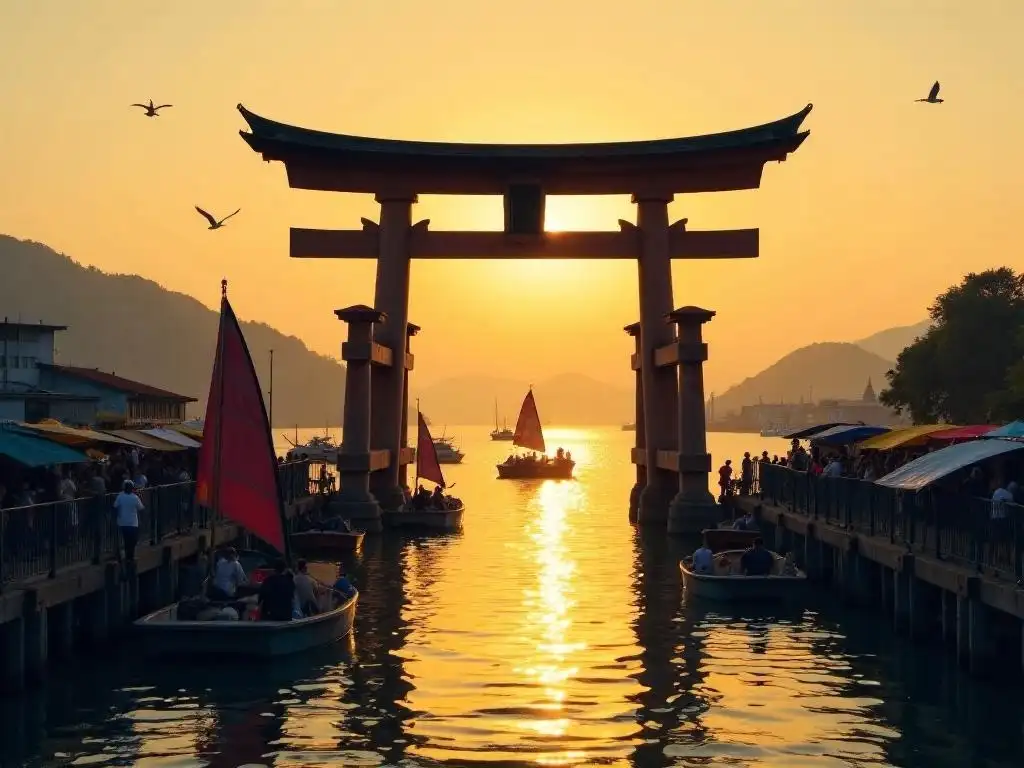
The trade ports of feudal Japan were not merely gateways for goods; they were strategic assets that played a pivotal role in shaping the nation’s military and economic landscape. Their locations, often at critical junctures of waterways and land routes, allowed Japan to engage with neighboring states, particularly Korea and China, fostering not only commerce but also diplomatic relations.
Military and Economic Implications of Key Trade Locations
The positioning of trade ports in feudal Japan had profound military and economic implications. Ports such as Kagoshima, Nagasaki, and Yokohama became essential for the transportation of troops, resources, and communication with foreign powers. These locations served as staging grounds for military expeditions, allowing Japan to project power and secure its interests in the region.
- Economic Growth: The influx of goods from China and Korea stimulated local economies. For example, the import of silk and ceramics from China not only enriched the Japanese market but also led to the development of local industries, such as textiles and pottery. The trade ports thus became centers of economic activity, boosting the wealth of feudal lords and enhancing their influence.
- Military Readiness: The accessibility of trade ports facilitated the rapid mobilization of forces during conflicts. The ability to quickly move resources and troops to areas of need proved crucial during periods of instability, such as the Mongol invasions in the late 13th century. The strategic placement of ports allowed for a robust defense against foreign threats, demonstrating the interconnectedness of trade and military strategy.
- Cultural Exchange: Trade ports also acted as conduits for cultural exchange. Interaction with foreign traders introduced new ideas, technologies, and practices, which were assimilated into Japanese society. This cultural infusion not only enhanced Japan's technological capabilities but also influenced its military tactics and organization.
The significance of trade ports in feudal Japan extends beyond mere economics; they were integral to the nation's strategy in maintaining sovereignty and promoting prosperity through well-planned military readiness and economic expansion.
The Impact of Trade Ports on Japan's Foreign Policy
The influence of trade ports on Japan's foreign policy cannot be understated. As Japan engaged with its neighbors, the dynamics of trade shaped diplomatic strategies and international relations.
- Diplomatic Relations: The establishment of trade routes necessitated formal diplomatic relations. Japan's ports became venues for negotiations, treaties, and exchanges. For instance, the Treaty of Kanagawa in 1854 was a significant turning point, leading to increased foreign presence and trade while radically altering Japan's isolationist stance.
- Balance of Power: The ability to trade with powerful neighbors like China and Korea positioned Japan as a significant player in regional affairs. This balance of power was critical during periods of expansion and conflict, allowing Japan to assert its influence while navigating the complexities of foreign relations.
- Crisis Management: Trade ports enabled Japan to respond to international crises effectively. For example, during the Opium Wars, Japan observed the repercussions on its neighbors and adjusted its foreign policy to avoid similar fates, leading to a more assertive stance in subsequent dealings with Western powers.
The trade ports in feudal Japan were not merely commercial hubs but critical components of the nation’s military and diplomatic strategies. Their strategic significance lay in their ability to facilitate trade, enhance military readiness, and shape foreign policy, ultimately contributing to Japan's evolution as a formidable power in East Asia.
Challenges Faced by Trade Ports in Feudal Japan

During the feudal era, trade ports in Japan played a crucial role in fostering economic exchanges with neighboring countries, particularly Korea and China. However, these ports faced significant challenges that affected their operations and overall effectiveness in facilitating trade. Two of the most pressing issues were piracy and security concerns, as well as political instability, both of which had profound implications for maritime commerce.
Piracy and Security Issues in Maritime Trade
Piracy emerged as a formidable threat to trade ports in feudal Japan, particularly during the 16th century when maritime trade routes were increasingly frequented by merchants and samurai. The following factors contributed to the rise of piracy:
- Increased Maritime Activity: As trade ports became busier with ships coming from Korea and China, the opportunities for piracy also grew. Pirates, known as wokou (倭寇), often targeted merchant vessels carrying valuable goods.
- Weak Naval Defense: Many trade ports lacked adequate naval defenses to protect against pirate attacks. Local lords often prioritized land-based security, leaving coastal areas vulnerable.
- Fragmented Governance: The feudal system created a patchwork of territories governed by various daimyō (feudal lords), each with their own interests. This fragmentation made it difficult to establish a unified defense strategy against piracy.
To mitigate these threats, several measures were implemented:
- Cooperation with Local Authorities: Trade ports often collaborated with local samurai to establish protective measures, such as patrols and early warning systems.
- Fortifications: Some ports invested in fortifications to deter pirate attacks, constructing watchtowers and other defensive structures.
- Diplomatic Efforts: Engaging in diplomatic relations with neighboring countries helped to secure trade routes and reduce pirate activities through mutual agreements.
Despite these efforts, piracy remained a significant obstacle for trade ports, impacting the flow of goods and the safety of merchants.
Political Instability and Its Effect on Trade Operations
Political instability during the feudal period also had profound effects on trade operations at Japanese ports. The following points illustrate how such instability challenged trade:
- Warring States Period (Sengoku Jidai): The constant conflict among feudal lords during the Sengoku period (1467-1603) created an environment of uncertainty. Trade routes became dangerous, and merchants hesitated to engage in long-distance commerce.
- Shifting Alliances: The fluid nature of alliances among daimyō often led to sudden changes in trade policies. A lord might close ports or impose tariffs on foreign goods in response to shifting power dynamics.
- Civil Unrest: Internal conflicts and uprisings, such as those instigated by peasant dissatisfaction, could disrupt trade activities, making it difficult for merchants to operate safely.
To cope with the challenges posed by political instability, trade ports adopted several strategies:
- Diversification of Trade Routes: Merchants began to explore alternative trade routes that were less affected by local conflicts, seeking safer passages to transport goods.
- Building Relationships: Establishing strong relationships with multiple daimyō allowed merchants to navigate the complexities of shifting political landscapes, ensuring access to various ports.
- Adaptation of Business Practices: Merchants adapted by forming guilds and trade associations that provided mutual support and protection against the unpredictable nature of feudal politics.
Trade ports in feudal Japan were vital to the nation's economic connections with Korea and China, yet they faced significant challenges. Addressing piracy and navigating political instability required innovative solutions and resilience from those involved in maritime trade. These historical challenges shaped the evolution of Japan’s trade practices and laid the groundwork for future developments in foreign relations.
Conclusion: The Legacy of Trade Ports in Feudal Japan
The evolution of trade ports in Feudal Japan was not merely a series of economic developments; it was a transformative journey that shaped the nation's foreign relations, cultural exchanges, and trade practices. As Japan opened its shores to foreign merchants, particularly from Korea and China, the trade ports became critical points of contact that facilitated the flow of goods, ideas, and cultural influences. These ports laid the groundwork for Japan's future interactions on the global stage, establishing a maritime tradition that would resonate throughout its history.
Lasting Impact on Modern Japanese Trade Relations
The influence of trade ports during the feudal era can still be felt in contemporary Japan. Many of the principles established during this time have evolved but remain integral to Japan's modern trade policies. For instance, the strategic positioning of ports such as Nagasaki and Hakata paved the way for Japan's current status as one of the world’s leading trading nations.
- Global Trade Networks: The connections formed in feudal Japan helped establish a network that would later facilitate international trade agreements and partnerships. Modern Japan continues to leverage these historical ties, particularly with neighboring countries like South Korea and China, to bolster economic cooperation.
- Cultural Exchange: The trade ports were not just gateways for goods but also conduits for cultural exchange. This historical legacy is evident today as Japan maintains a rich tapestry of cultural interactions with its neighbors, influencing everything from cuisine to arts and technology.
- Economic Strategies: The practices of commerce and negotiation developed during the feudal era have influenced contemporary economic strategies. Japan's focus on quality and innovation in trade can trace its roots back to the competitive nature of the trade ports where merchants sought to differentiate their goods.
Reflection on the Economic and Cultural Exchange in Feudal Japan
The economic and cultural exchanges that took place in feudal Japan through its trade ports were pivotal in shaping the country's identity and global standing.
- Economic Growth: Trade ports facilitated the influx of valuable resources and goods, such as silk, ceramics, and spices. This not only enriched the local economies but also stimulated a broader economic growth that impacted various regions of Japan.
- Cultural Synthesis: The interaction between Japanese traders and foreign merchants led to a unique cultural synthesis. For example, the introduction of Chinese literature, philosophy, and art influenced Japanese culture significantly. Additionally, Korean pottery techniques and textiles left a lasting impact on Japanese artisanship.
- Diplomatic Relations: The ports served as diplomatic gateways, where treaties and agreements were negotiated. These interactions often laid the foundation for future diplomatic relations, highlighting the importance of trade in establishing bonds between nations.
The legacy of trade ports in Feudal Japan is a testament to the profound impact of trade on the nation’s history. They not only catalyzed economic growth and cultural exchange but also set the stage for Japan's modern trade relations. Understanding this historical context enriches our appreciation of contemporary Japan's global position and its enduring connections with its neighbors.
Frequently Asked Questions
What were the main trade ports in Feudal Japan?
The main trade ports included Kagoshima, Nagasaki, and Osaka, which played crucial roles in foreign relations and the exchange of goods.
How did trade ports influence Japan's economy during the feudal era?
Trade ports significantly boosted the economy by facilitating the import of foreign goods and the export of Japanese products, enhancing commercial activities.
What foreign countries did Japan trade with during the feudal period?
Japan primarily traded with China, the Netherlands, and Korea, creating a network of international relations that impacted its cultural exchange.
How did the isolation policy affect trade ports in Japan?
The isolation policy (Sakoku) limited foreign trade to select ports, notably Nagasaki, which led to increased control and regulation of foreign interactions.
What role did trade ports play in cultural exchange in Feudal Japan?
Trade ports served as gateways for cultural exchange, introducing new ideas, technologies, and artistic influences from abroad that enriched Japanese culture.
Final Reflection: The Enduring Legacy of Trade Ports in Feudal Japan
The exploration of trade ports in feudal Japan reveals not only their historical significance but also their profound relevance in today's global economy. As we navigate an increasingly interconnected world, the lessons learned from these key locations remind us of the importance of trade as a catalyst for cultural exchange and economic growth. The evolution of these ports serves as a striking testament to how commerce can bridge divides and foster relationships, shaping nations and their identities.
The influence of trade ports extends far beyond their geographical boundaries; they have played a pivotal role in shaping the cultural and social landscape of Japan. The dynamic interactions that occurred within these bustling hubs fostered a rich tapestry of cultural exchange, blending traditions and ideas. As noted by historian John W. Hall, Trade is not merely an economic transaction; it is a dialogue between cultures.
This ongoing dialogue continues to resonate today, as we witness the impact of globalization and the importance of understanding diverse perspectives in our interconnected societies.
As we reflect on the lessons from the trade ports of feudal Japan, I invite you to consider how these historical insights can inform your own life and interactions. Embrace the spirit of openness and curiosity that characterized these ports, and seek to engage with others in meaningful ways. By fostering connections and understanding across cultures, we can contribute to a more harmonious and collaborative world, echoing the legacy of those vibrant trade hubs that once thrived in Japan.
Unveil the Secrets of Feudal Japan's Trade!
Thank you for diving into the intriguing world of feudal Japan and its pivotal trade ports! You’ve taken a step toward understanding how geography shaped foreign relations during this fascinating era. Now, it’s time to turn that knowledge into action and further explore the legacies of these historical locations.
Here’s how you can continue your journey:
- Dive Deeper into our extensive library of articles and resources on feudal Japan—connect the dots between trade, culture, and politics.
- Share your newfound insights with friends and fellow history enthusiasts! Discuss how these trading hubs influenced the development of modern Japan—your conversations could spark new ideas and connections.
- Consider visiting a local history museum or cultural exhibition. Engaging with artifacts can bring the stories of feudal Japan’s trade ports to life in an exciting way.
What fascinating aspects of feudal Japan's trade ports do you feel most inspired to explore further? We invite you to share your thoughts in the comments below!