
The Role of Nobunaga: The Strategist Who Laid the Foundations of a Unified Japan

Welcome to Feudal Japan History, where we invite you to embark on a captivating journey through the intricate tapestry of Japan’s feudal era. Dive deep into the fascinating world of Nobunaga's role in unifying Japan, a pivotal figure whose strategic genius and relentless ambition forever altered the course of history. As you explore our expert-driven insights and in-depth articles, you will uncover the cultural and societal nuances that shaped this remarkable period.
Are you ready to unravel the threads of political intrigue and discover how one man laid the foundations for a unified nation? Continue reading to unlock the secrets of this transformative era!
- Introduction to Nobunaga's Role in Unifying Japan
- Early Life and Influences of Oda Nobunaga
- Nobunaga's Rise to Power
- Strategic Innovations and Military Tactics
- Nobunaga's Political Maneuvering
- The Vision for a Unified Japan
- Legacy of Nobunaga in Unifying Japan
- Conclusion: Nobunaga's Role and the Unification of Japan
- Additional Resources on Nobunaga and Japanese Unification
- Frequently Asked Questions
- Final Reflection: The Enduring Legacy of Nobunaga's Strategic Vision
- Unleash Your Inner Strategist!
Introduction to Nobunaga's Role in Unifying Japan
Oda Nobunaga (1534-1582) stands as one of the most pivotal figures in Japan's history, often credited with laying the groundwork for the unification of the nation during the tumultuous Sengoku period. His strategic brilliance and innovative military tactics not only transformed the landscape of feudal Japan but also set the stage for subsequent leaders, such as Toyotomi Hideyoshi and Tokugawa Ieyasu, to complete the process of unification.
This article delves deep into Nobunaga's role in unifying Japan, exploring the historical context of his rise to power, the significance of his military campaigns, and the lasting impact of his policies on Japan's sociopolitical fabric.
Overview of Nobunaga's Historical Context
Nobunaga emerged during a time of great instability, characterized by constant warfare among rival clans vying for control. The late 15th and early 16th centuries saw Japan fragmented into numerous territories ruled by powerful daimyōs, each contesting for supremacy. This era, known as the Sengoku period, was marked by not only military conflicts but also social upheaval and economic strife. Nobunaga, born into a minor samurai family, quickly ascended the ranks through a combination of bold tactics, shrewd alliances, and ruthless decision-making.
His initial rise began with the capture of his home province of Owari, and he subsequently expanded his influence by defeating rival clans through innovative strategies that emphasized mobility and the effective use of gunpowder weaponry. Nobunaga's ability to forge alliances and engage in both diplomacy and warfare allowed him to consolidate power and establish a foothold in the rapidly changing political landscape of Japan.
Importance of Nobunaga in Japan's Feudal Era
Nobunaga's significance in Japan's feudal era cannot be overstated. As a military strategist, he was a pioneer in the use of firearms on the battlefield, having effectively incorporated muskets into his armies. This not only gave him a tactical advantage over opponents but also revolutionized Japanese warfare, influencing tactics for generations to come.
Moreover, Nobunaga's vision extended beyond mere conquest. He aimed to unify Japan under a strong central authority, moving away from the feudal system that had long fragmented the country. His policies promoted trade and commerce, encouraged cultural exchanges, and laid the foundation for a more cohesive national identity.
Through his ambitious campaigns and visionary leadership, Nobunaga played a crucial role in shaping the future of Japan, transitioning it from a collection of warring states into a unified nation. His legacy continues to resonate in Japan's history, and understanding his role is essential to grasping the complexities of the country's path toward unification.
Early Life and Influences of Oda Nobunaga

Family Background and Upbringing
Oda Nobunaga was born on June 23, 1534, into the Oda clan, a minor feudal lord family in the province of Owari (modern-day Aichi Prefecture). He was the second son of Oda Nobuhide, a powerful daimyō who was known for his military capabilities and political ambitions. Nobunaga's early life was marked by the tumultuous socio-political landscape of Japan during the Sengoku period, a time characterized by constant military conflict and the struggle for power among various warlords.
Nobunaga's family background played a crucial role in shaping his future. He was exposed to the intricacies of governance and warfare from a young age, as his father was involved in various military campaigns to expand their territory. The Oda clan, though not the most powerful, had a reputation for strategic alliances and tactical prowess. This environment instilled in Nobunaga a sense of ambition and a desire to elevate his family's status.
Upon the death of his father in 1551, Nobunaga inherited leadership of the Oda clan at the tender age of 17. His ascension was not without challenges; he faced opposition from within the clan, particularly from his younger brother, Nobuyuki, and other relatives who questioned his capabilities. This internal strife led Nobunaga to adopt a ruthless approach to consolidate his power, ultimately leading to his brother's demise in 1556. This early experience of betrayal and conflict honed his strategic mindset, emphasizing his belief that decisive action was necessary to maintain control.
Key Influences on Nobunaga's Strategic Thinking
Nobunaga's strategic thinking was profoundly influenced by several key factors, including his education, exposure to military tactics, and the prevailing political landscape of his time.
- Education and Confucian Ideals: Nobunaga received a traditional education, which included studies in Confucianism. This philosophical framework emphasized governance, ethics, and the importance of a strong leader. Nobunaga integrated these teachings into his leadership style, promoting meritocracy and the importance of loyalty among his retainers.
- Military Innovations: Nobunaga was a keen observer of contemporary military practices and innovations. He recognized the potential of firearms, particularly the matchlock gun, which was relatively new to Japan. His strategic use of gunpowder in battles, such as the decisive victory at the Battle of Nagashino in 1575, revolutionized warfare in Japan, allowing him to defeat larger forces through superior tactics.
- Alliances and Diplomacy: Unlike many of his contemporaries, Nobunaga understood the value of diplomacy in warfare. He formed strategic alliances with powerful clans and influential figures, leveraging these relationships to strengthen his position. His marriage alliances, notably with the Azai clan, showcased his ability to blend military action with diplomatic strategy.
- Cultural Influences: Nobunaga was also influenced by the cultural milieu of his time. The rise of the tea ceremony, Noh theater, and other cultural practices provided him with a platform to cultivate relationships with the samurai class and the emerging merchant class. This engagement with culture allowed him to garner support from various societal sectors, which was crucial in his quest for unification.
Nobunaga's early life and the influences surrounding him were instrumental in shaping his strategic approach to unifying Japan. His ability to adapt, innovate, and leverage both military and diplomatic resources underscored his pivotal role in laying the foundations for a more centralized Japanese state.
Nobunaga's Rise to Power
Initial Military Campaigns and Key Victories
Oda Nobunaga's ascent to power in the late 16th century was marked by a series of calculated military campaigns and pivotal victories that would ultimately lay the groundwork for a unified Japan. Initially, Nobunaga began his military career as a minor daimyō in the Owari Province. His ambition and strategic acumen soon propelled him into conflict with rival clans, and his early campaigns were characterized by both boldness and innovation.
One of the significant aspects of Nobunaga's approach was his utilization of firearms, which had recently been introduced to Japan. He was one of the first daimyōs to effectively incorporate these weapons into his military strategy. This technological advantage allowed him to transform traditional battle tactics and engage larger armies with a smaller, better-equipped force.
Nobunaga's victory at the Battle of Ino in 1556 showcased his strategic brilliance. Facing a coalition of enemies, he employed a surprise night attack that caught his adversaries off guard, leading to a decisive victory that solidified his power in the region. Following this, Nobunaga expanded his control through a combination of military might and diplomacy, forging alliances and exploiting the weaknesses of rival clans.
His campaigns not only enhanced his military reputation but also contributed to the dismantling of the fractured feudal system. Nobunaga's innovative tactics, such as the use of combined arms and a focus on logistics, set him apart from his contemporaries. By the time Nobunaga had consolidated control over the Owari Province, he was already setting his sights on broader ambitions, aiming to unify Japan under his rule.
The Battle of Okehazama: A Turning Point in Nobunaga's Career
The Battle of Okehazama, fought in 1560, stands as a pivotal moment in Oda Nobunaga’s military career and his quest for unification. At the time, Nobunaga faced the formidable forces of the Imagawa clan, led by Imagawa Yoshimoto, who was a powerful daimyō and had ambitions of his own to seize Kyoto. The odds seemed overwhelmingly against Nobunaga, as he commanded an army of approximately 3,000 men compared to the 25,000 troops of Yoshimoto.
Despite the numerical disadvantage, Nobunaga demonstrated exceptional strategic foresight. He capitalized on the element of surprise, utilizing the terrain and weather to his advantage. As the battle approached, heavy rain caused chaos among the Imagawa forces, leading to disorganization and a lack of communication. Recognizing this opportunity, Nobunaga launched a daring attack on Yoshimoto’s camp, catching them entirely off guard.
The battle lasted only a few hours, but its impact was monumental. Nobunaga's forces killed Yoshimoto, which not only crippled the Imagawa clan but also significantly bolstered Nobunaga’s reputation as a military leader. This victory allowed him to expand his influence and territory, as many of Yoshimoto's vassals chose to align with Nobunaga following the defeat.
The success at Okehazama is often cited as a turning point that propelled Nobunaga on his path toward unifying Japan. It underscored his ability to leverage strategic planning and decisive action, qualities that would define his leadership style throughout his campaigns. This battle marked the beginning of Nobunaga's rise as a dominant figure in Japanese politics and military affairs, ultimately paving the way for his future conquests and the eventual unification of Japan.
Strategic Innovations and Military Tactics
Introduction of Gunpowder and Firearms in Warfare
During the late 16th century, the introduction of gunpowder and firearms revolutionized warfare in Japan, and Nobunaga was one of the first leaders to recognize and effectively utilize this emerging technology. The Portuguese first brought firearms to Japan in the 1540s, and Nobunaga quickly understood their potential for altering the dynamics of battle.
Nobunaga's forces notably utilized arquebuses, a type of early firearm, during the Battle of Nagashino in 1575. Here, he deployed over 3,000 soldiers armed with arquebuses in a well-coordinated volley fire strategy. This tactic allowed his troops to inflict devastating damage on the enemy, significantly contributing to his victory against the Takeda clan, known for their cavalry prowess.
The impact of firearms extended beyond mere firepower; they also changed the composition of armies. Nobunaga began to favor foot soldiers equipped with firearms over traditional samurai cavalry, shifting the focus of military engagements from chivalry to massed firepower. This strategic pivot not only enhanced his military effectiveness but also laid the groundwork for future leaders in Japan who would continue to evolve military strategies based on firearm technology.
Nobunaga's Unique Strategies in Battle
Nobunaga's approach to warfare was marked by a series of innovative strategies that demonstrated his keen understanding of both the battlefield and his enemies. One of his hallmark strategies involved the use of psychological warfare. He often employed tactics designed to demoralize opponents before battles even commenced. For instance, he would display the severed heads of defeated enemies to instill fear in his foes.
Another significant aspect of Nobunaga's military strategy was his emphasis on mobility and speed. He recognized the importance of quick maneuvers, allowing his forces to strike unexpectedly. This was particularly evident during his campaigns against the Imagawa clan and later the Miyoshi clan, where swift movements and rapid assaults caught his adversaries off guard.
Moreover, Nobunaga's implementation of logistics and supply lines ensured that his armies could sustain prolonged campaigns. His attention to resource management allowed him to maintain an edge over rivals, facilitating greater operational reach and endurance in conflicts.
Comparison of Nobunaga's Tactics with Previous Leaders
When comparing Nobunaga's tactics to those of previous leaders, several key differences emerge. Prior to Nobunaga, many daimyō employed traditional samurai warfare, which heavily relied on cavalry charges and individual combat prowess. Leaders like Takeda Shingen and Uesugi Kenshin exemplified this approach, often focusing on the valor of samurai warriors.
In contrast, Nobunaga's reliance on firearms and infantry formations marked a significant departure from these established norms. His innovative use of massed firearm tactics at Nagashino showcased how he was able to leverage technology to overcome the traditional advantages of cavalry.
Additionally, Nobunaga's willingness to adapt and integrate foreign techniques and strategies set him apart from his predecessors. While earlier leaders were often tied to traditional methods of warfare, Nobunaga embraced change, making him a pivotal figure in the evolution of military strategy in Japan. This adaptability not only allowed him to achieve significant victories but also positioned him as a key architect in the unification of Japan, highlighting his role as a strategist who laid the groundwork for future unification efforts.
Nobunaga's Political Maneuvering
Nobunaga's political maneuvering was characterized by a combination of strategic alliances, calculated rivalries, and opportunistic actions that significantly influenced the course of Japan's history during the late 16th century. His approach not only reflected his astute understanding of the feudal landscape but also laid the groundwork for a more unified Japan.
Alliances and Rivalries: The Political Landscape of Feudal Japan
The feudal era of Japan was marked by a complex web of alliances and rivalries among various clans and warlords. Nobunaga expertly navigated this treacherous political terrain, forging alliances that would bolster his power while simultaneously undermining his enemies.
- Strategic Alliances: Nobunaga understood the importance of alliances in achieving his goals. He often allied with powerful families to strengthen his military capabilities. For instance, his alliance with the Tokugawa clan was pivotal in consolidating power in the region. The Battle of Okehazama in 1560 exemplifies this strategy, where Nobunaga's forces, despite being outnumbered, secured a surprising victory over the Imagawa clan, showcasing his ability to leverage alliances effectively.
- Exploiting Rivalries: Nobunaga was adept at exploiting the rivalries among the various clans. He often played clans against each other, creating a chaotic environment that favored his ascendance. For example, he took advantage of the internal strife within the Takeda clan, which allowed him to expand his territory without engaging in direct conflict.
- Political Manipulation: Nobunaga's political acumen also extended to manipulating the loyalties of other clans. By promising protection or land to those willing to support him, he was able to weaken opposition forces. His approach to governance often involved co-opting local leaders, integrating them into his administration, and ensuring their allegiance through both rewards and threats.
Through these strategies, Nobunaga not only expanded his own power but also destabilized the existing feudal order, setting the stage for the unification of Japan. His ability to adapt to the ever-changing political landscape was a hallmark of his leadership, allowing him to become one of the most formidable figures of the period.
Nobunaga's Role in the Overthrow of the Ashikaga Shogunate
The Ashikaga Shogunate, which had ruled Japan for over two centuries, was characterized by weakened central authority and increasing regional power struggles. Nobunaga played a crucial role in dismantling this fragmented power structure, leading to the eventual unification of Japan under a single banner.
- Decline of the Shogunate: By the time Nobunaga rose to power, the Ashikaga Shogunate was already in decline, plagued by infighting and loss of control over the daimyos (feudal lords). Nobunaga seized this opportunity to challenge the Shogunate's authority directly. His military campaigns and strategic victories weakened the Shogunate's grip on power, diminishing its influence over the regional lords.
- The Siege of Kyoto: In 1568, Nobunaga marched into Kyoto, the heart of the Ashikaga Shogunate, and installed Ashikaga Yoshiaki as a puppet shogun. This move was not merely one of usurpation but a calculated strategy to legitimize his control while simultaneously undermining the Shogunate's authority. Nobunaga's forces quickly overran any resistance, asserting his military dominance.
- End of the Ashikaga Era: The final blow to the Ashikaga Shogunate came in 1573 when Nobunaga ousted Yoshiaki, effectively ending the Shogunate's rule. This bold act not only demonstrated Nobunaga's military prowess but also marked a significant turning point in Japanese history. With the Shogunate dismantled, Nobunaga was able to consolidate his power and further his agenda for unification.
Nobunaga's role in the overthrow of the Ashikaga Shogunate was pivotal in dismantling the outdated feudal structures that hindered Japan's unity. His strategic decisions and military campaigns reshaped the political landscape, paving the way for subsequent leaders like Toyotomi Hideyoshi and Tokugawa Ieyasu to complete the unification process. Through his actions, Nobunaga not only aimed for personal power but also set the foundations for a unified Japan that would emerge from the chaos of the Sengoku period.
The Vision for a Unified Japan
Oda Nobunaga's vision for a unified Japan was revolutionary, characterized by a strategic blend of military prowess and innovative governance. Nobunaga recognized the fragmented nature of the country during the Sengoku period, where powerful daimyos (feudal lords) controlled their territories with little regard for central authority. His ambition was not merely to conquer rival clans but to establish a cohesive nation-state, laying the groundwork for what would eventually become modern Japan.
Nobunaga's strategies included the unification of power through military alliances, territorial expansion, and centralization of authority. He understood that to achieve his goals, he needed to incorporate diverse aspects of Japanese society, including culture and religion, into his vision. His approach was multifaceted, often leveraging innovative tactics and technologies, such as the use of firearms, which played a crucial role in his military campaigns.
Nobunaga's Goals for National Unification
Nobunaga's primary objective was to eliminate the power of competing daimyos and to establish a centralized rule. His goals can be summarized as follows:
- Military Dominance: Nobunaga sought to defeat rival clans through strategic battles. His famous victory at the Battle of Okehazama in 1560 exemplified his ability to turn the tide against seemingly insurmountable odds. This battle not only solidified his reputation but also demonstrated his tactical genius.
- Political Centralization: Nobunaga aimed to reduce the autonomy of regional lords by implementing a system that favored loyalty to a central authority. This included imposing taxes and establishing direct control over economically vital regions.
- Economic Integration: Understanding the importance of commerce, Nobunaga encouraged trade and the development of infrastructure. He supported the establishment of markets and roads, which facilitated economic growth and connected disparate regions of Japan.
- Social Reform: Nobunaga’s policies also aimed at social restructuring. He promoted meritocracy over hereditary privilege, allowing talented individuals from lower classes to rise in ranks, which fostered a sense of loyalty and commitment to his regime.
Nobunaga’s relentless pursuit of these goals ultimately set the stage for the unification of Japan, paving the way for his successors, Toyotomi Hideyoshi and Tokugawa Ieyasu, to complete the process.
The Role of Culture and Religion in Nobunaga's Vision
Nobunaga’s vision for unification was not solely focused on military and political strategies; he also recognized the significance of cultural and religious factors in shaping Japanese society. His approach to culture and religion was pragmatic and often unconventional:
- Cultural Patronage: Nobunaga was a patron of the arts and encouraged the flourishing of culture within his domain. He supported Noh theater, tea ceremonies, and the development of traditional crafts. This cultural patronage helped foster a sense of national identity and unity among the people.
- Religious Tolerance: Unlike many of his contemporaries, Nobunaga practiced a policy of religious tolerance. He understood that Japan’s various religious factions, including Shinto, Buddhism, and emerging Christian influences, played crucial roles in society. By allowing these faiths to coexist, he aimed to minimize conflicts that could disrupt his unification efforts.
- Destruction of Monastic Power: Nobunaga’s military campaigns often targeted powerful Buddhist sects, such as the Ikko-Ikki, which opposed his rule. His decisive actions against these groups were not merely military but also served a strategic purpose: weakening their influence allowed him to consolidate power and diminish challenges to his authority.
- Promotion of Innovations: Nobunaga embraced Western technologies and ideas, particularly those brought by European traders and missionaries. His interest in firearms and military tactics showcased a forward-thinking mindset that recognized the importance of adapting to change for the sake of unification.
Nobunaga's role in unifying Japan was characterized by a comprehensive vision that intertwined military strategy, political reform, and cultural engagement. His multifaceted approach not only laid the groundwork for a unified Japan but also set a precedent for the future leaders who would continue his legacy.
Legacy of Nobunaga in Unifying Japan
Impact on Successors: Toyotomi Hideyoshi and Tokugawa Ieyasu
Nobunaga's strategies and reforms were pivotal in shaping the political landscape of Japan, directly influencing his successors, Toyotomi Hideyoshi and Tokugawa Ieyasu. His innovative approaches not only laid the groundwork for a unified Japan but also provided a framework that his successors would build upon to complete the unification process.
Toyotomi Hideyoshi: The Great Unifier
After Nobunaga's assassination in 1582, Toyotomi Hideyoshi, one of his most trusted generals, emerged as a key figure in the continuation of Nobunaga's vision. Hideyoshi adopted many of Nobunaga's tactics and policies, enhancing them to further consolidate power.
- Centralization of Power: Hideyoshi reinforced Nobunaga's efforts to centralize authority by implementing land surveys and tax reforms that increased state revenues. His Taikō reforms (1582-1598) aimed to stabilize and control the economy, which was crucial for maintaining a unified state.
- Military Innovations: Hideyoshi expanded on Nobunaga's military innovations, particularly in the use of firearms. He recognized the importance of modernizing the army and introduced the Ashigaru (foot soldiers), effectively utilizing mass infantry tactics that Nobunaga had pioneered.
- Cultural Integration: Hideyoshi also promoted cultural policies that encouraged loyalty and integration among the various clans, fostering a sense of shared identity. This cultural unification was essential in mitigating local rivalries that could threaten stability.
Tokugawa Ieyasu: The Architect of Peace
Following Hideyoshi's death, Tokugawa Ieyasu rose to prominence and ultimately established the Tokugawa shogunate, which would rule Japan for over 250 years. Ieyasu's governance was significantly influenced by Nobunaga's legacy:
- Political Structure: Ieyasu inherited and refined the political structure that Nobunaga and Hideyoshi had established. He implemented a system of daimyō control that ensured local lords were loyal to the shogunate, effectively preventing the fragmentation of power.
- Stability through Isolation: Ieyasu’s policies, such as the Sankin-kōtai system, required daimyōs to reside in Edo (modern-day Tokyo) for part of the year. This policy maintained a balance of power and minimized the likelihood of rebellion, reflecting Nobunaga's original intent to centralize authority.
- Cultural Legacy: The Tokugawa period witnessed the flourishing of arts and culture, a legacy that traces back to Nobunaga's patronage of the arts. Ieyasu recognized that cultural unity could reinforce political stability, ensuring that Nobunaga’s vision of a cohesive Japan endured.
Nobunaga's Enduring Influence on Japanese History
Nobunaga's role in unifying Japan transcended his lifetime, leaving a profound impact on the historical trajectory of the nation. His contributions can be understood through several enduring influences that shaped Japan’s future.
1. Military Reforms
Nobunaga's military strategies and innovations, particularly in the use of firearms and battlefield tactics, transformed the nature of warfare in Japan. His emphasis on strategic planning and logistics became foundational for subsequent leaders, establishing a military framework that emphasized discipline and modernization.
2. Administrative Innovations
The administrative reforms initiated by Nobunaga, such as land surveys and tax collection systems, introduced a level of bureaucratic efficiency that persisted long after his demise. These reforms laid the groundwork for a more organized and centralized government, influencing governance models in subsequent eras.
3. Cultural Impact
Nobunaga's patronage of the arts and his role in promoting cultural exchanges fostered a rich cultural environment that continued to thrive under his successors. His influence on Noh theatre, tea ceremonies, and other cultural practices established a legacy that would characterize Japanese culture for centuries.
4. Ideological Changes
Nobunaga's defiance of traditional authority and his willingness to embrace new ideas created a shift in societal norms. His actions challenged the status quo of the samurai class and the power of Buddhist institutions, paving the way for a more secular and centralized approach to governance in Japan.
Nobunaga's role in unifying Japan was not just a precursor to the achievements of Hideyoshi and Ieyasu but also a transformative force that reshaped the political, cultural, and military landscape of the nation. His legacy remains a fundamental chapter in the history of Japan, illustrating the complexities of power, leadership, and cultural integration during one of the most turbulent periods in Japanese history.
Conclusion: Nobunaga's Role and the Unification of Japan
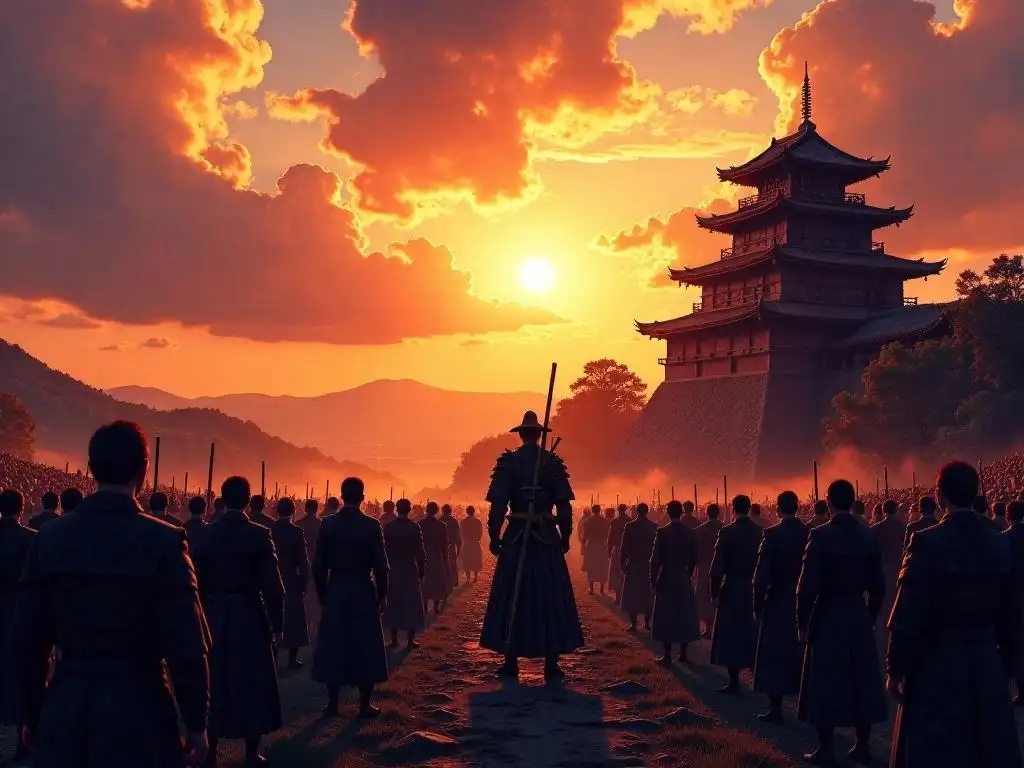
Summary of Nobunaga's Contributions
Oda Nobunaga, a pivotal figure in Japanese history, played an instrumental role in the unification of Japan during the late 16th century. His contributions were multifaceted, encompassing military strategy, political reforms, and cultural influences.
- Military Innovations: Nobunaga revolutionized warfare in Japan by introducing the use of gunpowder and firearms. His strategic acumen was evident in battles such as the Battle of Okehazama (1560), where a significantly smaller force defeated the much larger army of Imagawa Yoshimoto. This victory not only showcased his military prowess but also set the stage for his subsequent conquests.
- Centralization of Power: Nobunaga sought to dismantle the traditional power structures dominated by the samurai and daimyōs. He implemented a system of land surveys and taxation that centralized authority, allowing him to exert greater control over his territories. His policies aimed at reducing the power of the ashigaru (foot soldiers) created a more unified military force under his command.
- Cultural Patronage: Beyond his military and political achievements, Nobunaga was a patron of the arts and culture. He supported the tea ceremony and Noh theater, helping to refine Japan’s cultural landscape during this tumultuous period. His encouragement of trade and interaction with Europeans also introduced new ideas and technologies to Japan, fostering a more cosmopolitan society.
- Legacy of Unification: Nobunaga's assassination in 1582 did not halt his vision for a unified Japan. His successors, particularly Toyotomi Hideyoshi and Tokugawa Ieyasu, built upon his foundations to further consolidate power and eventually complete the unification process. Nobunaga's strategies and reforms laid the groundwork for the Tokugawa shogunate, which maintained peace for over two centuries.
Reflection on Nobunaga's Place in Japanese History
Nobunaga's role in unifying Japan is often characterized by his boldness and willingness to embrace change. His innovative military strategies and administrative reforms were revolutionary in a period marked by fragmentation and chaos.
In the context of Japanese history, Nobunaga is frequently viewed as a catalyst for the Sengoku period's end. His vision of a unified Japan was not merely about conquest; it represented a shift towards modern governance, where the principles of centralized authority began to take root.
The complexities of Nobunaga's character—his ruthless ambition juxtaposed with his cultural patronage—have led historians to debate his legacy. While some view him as a tyrant, others celebrate him as a visionary leader who recognized that Japan's strength lay in unity. His actions initiated a series of events that ultimately transformed Japan into a cohesive nation-state.
In the grand tapestry of Japanese history, Oda Nobunaga remains a towering figure whose strategic brilliance and relentless pursuit of unification have left an indelible mark on the nation. His legacy continues to resonate in discussions about leadership, governance, and the complexities of historical narratives, making him a subject of enduring fascination and scholarly inquiry.
Additional Resources on Nobunaga and Japanese Unification
Recommended Readings and Historical Texts
To gain a deeper understanding of Nobunaga's role in unifying Japan, the following books and historical texts are essential:
- "The Samurai: A Military History" by Stephen Turnbull
- This comprehensive text provides an overview of the samurai class and their impact on Japanese history, including Nobunaga's strategic innovations that influenced military tactics.
- "Oda Nobunaga: The Man Who Unified Japan" by John T. S. Morrow
- A focused biography that chronicles Nobunaga's life, his military campaigns, and the socio-political climate of Japan during his reign. Morrow's analysis highlights how Nobunaga's strategies paved the way for a unified Japan.
- "The Unification of Japan: A Study of the Role of Oda Nobunaga" by Richard A. B. F. Sato
- This scholarly work delves into the political maneuvers and military tactics employed by Nobunaga, illustrating his influence on the unification process and the subsequent establishment of the Tokugawa shogunate.
- "A History of Japan: 1334 to 1615" by George Sansom
- This historical account provides context for Nobunaga's actions within the broader tapestry of Japanese history, emphasizing the transitional nature of the period leading to unification.
- "Nobunaga's Ambition" (Video Game Series)
- While a fictional representation, this series offers insights into the strategic decisions of Nobunaga and the feudal landscape, making it a unique resource for understanding his historical significance.
Documentaries and Lectures on Nobunaga's Legacy
To visualize and comprehend Nobunaga's impact on Japanese unification, consider the following documentaries and lectures:
- "The Warlords of Japan" (Documentary Series)
- This series explores the lives of key figures during Japan's feudal era, including Nobunaga. It provides a visual narrative of his military campaigns and political strategies.
- "Oda Nobunaga: The Great Unifier" (YouTube Lecture by Dr. David A. E. O’Neil)
- This lecture breaks down Nobunaga's tactics and policies, emphasizing how his leadership contributed to the eventual unification of Japan. Dr. O’Neil’s engaging presentation style makes complex ideas accessible.
- "Samurai and the Unification of Japan" (Documentary)
- A thorough exploration of the samurai's role in the unification process, with significant focus on Nobunaga's contributions. This documentary combines expert interviews with dramatic reenactments.
- "The Rise of Nobunaga" (Podcast Series)
- This podcast series takes listeners through Nobunaga's life, detailing key events and decisions that shaped his role in Japanese history. Each episode features discussions with historians and cultural experts.
By engaging with these resources, readers can develop a comprehensive understanding of Nobunaga's role in unifying Japan, appreciating both his strategies and the cultural context of the period.
Frequently Asked Questions
What was Nobunaga's role in unifying Japan?
Nobunaga was a military strategist whose efforts in the late 16th century were pivotal for laying the foundations of a unified Japan by defeating rival clans and consolidating power.
How did Nobunaga's tactics differ from his contemporaries?
Nobunaga employed innovative tactics, including the use of firearms and effective battlefield strategies, which set him apart from other warlords who relied on traditional methods.
What impact did Nobunaga have on Japanese society?
Nobunaga's unification efforts led to significant social and economic changes, including the promotion of trade and commerce, which contributed to the development of a centralized government.
Who succeeded Nobunaga after his death?
After Nobunaga's assassination in 1582, his loyal general Tokugawa Ieyasu continued his legacy, eventually leading to the establishment of the Tokugawa shogunate, which ruled Japan for over 250 years.
Why is Nobunaga considered a controversial figure in Japanese history?
Nobunaga is viewed as a controversial figure due to his ruthless tactics and the destruction of temples and cities, which, while effective for unification, also led to significant cultural loss.
Final Reflection: The Enduring Legacy of Nobunaga's Strategic Vision
Nobunaga's role in unifying Japan remains a cornerstone of historical significance, illustrating how visionary leadership can shape the course of a nation. In today's world, where division often seems more prevalent than unity, the lessons drawn from Nobunaga's strategies resonate profoundly. His ability to forge alliances, adapt to change, and employ innovative tactics serves as a reminder that effective leadership is not merely about power but about the foresight to envision a cohesive future.
The impact of Nobunaga's strategies transcends the annals of history, influencing modern cultural and social dynamics in Japan and beyond. His approach to governance and military strategy has inspired countless leaders and thinkers, emphasizing the importance of adaptability and collaboration in achieving common goals. As historian John W. Hall noted, Nobunaga's vision was not just to conquer but to unify, laying the groundwork for a nation that would emerge stronger and more resilient.
This perspective invites us to reflect on how the principles of unity and strategic foresight can be applied in our contemporary lives.
As we contemplate Nobunaga's legacy, let us challenge ourselves to embody his spirit of innovation and collaboration in our daily interactions. Consider how you can contribute to unity in your community, workplace, or even within your own family. By embracing the lessons of the past, we can cultivate a future where collective strength and shared vision pave the way for a more harmonious society. Take a moment to reflect on your role in this journey—what steps can you take today to foster unity and understanding in your own sphere of influence?
Unleash Your Inner Strategist!
Thank you for diving into the fascinating world of Nobunaga and his monumental impact on Japan's history. You've uncovered the brilliance of a mastermind who shaped a nation. Now, it's time to put that inspiration into action!
- Join our community: Connect with fellow history enthusiasts and share your thoughts about Nobunaga's strategies on our forum.
- Explore further: Dive into recommended readings and documentaries to deepen your understanding of Japan's unification.
- Reflect and create: Develop a strategic plan for a contemporary challenge, inspired by Nobunaga's tactics and leadership style.
Which elements of Nobunaga's strategy resonate with you, and how can they inform your approach in today’s complex landscape?