
Commemorating the Black Ships: A Look Back at Commodore Perry's Historic Visit


Welcome to Feudal Japan History, your gateway to uncovering the fascinating tapestry of Japan's feudal era. Here, we delve into the intricate web of historical, cultural, and societal dynamics that shaped a nation. In our featured article, “Commemorating the Black Ships: A Look Back at Commodore Perry's Historic Visit,” we invite you to journey back to a pivotal moment in Japanese foreign relations.
What did Commodore Perry's arrival truly signify for Japan? Prepare to unlock the mysteries of this monumental encounter and discover its lasting impact on a nation poised on the brink of transformation. Dive deeper with us and let the exploration begin!
The arrival of Commodore Matthew Perry in Japan in 1853 marked a pivotal moment in the nation's history, effectively ending over two centuries of self-imposed isolation. This event, commonly referred to as the arrival of the "Black Ships," not only altered Japan's foreign relations but also initiated a wave of modernization and transformation that would shape the country for generations to come.
In this article, we will explore the historical context surrounding Perry's expedition, the significance of his ships, and the broader implications of this encounter for both Japan and the world, while centering our discussion on the keyword "Commodore Perry Japan history."
Introduction to Commodore Perry and Japan's Isolation
Overview of Japan's Isolationist Policy in the 19th Century
In the early 19th century, Japan was characterized by a strict isolationist policy known as sakoku. Enforced by the Tokugawa shogunate, this policy effectively closed Japan off from foreign influence, restricting trade primarily to the Dutch and Chinese, who were allowed limited access to the port of Nagasaki. The isolationist regime aimed to maintain stability and control within the country, fearing that foreign ideas and religious influences could disrupt the societal order. However, by the mid-1800s, external pressures began to mount, particularly from Western powers eager to establish trade relations.
Introduction to Commodore Matthew Perry: Background and Significance
Commodore Matthew Perry, a naval officer in the United States Navy, played a crucial role in the opening of Japan. Born in 1794, Perry had a distinguished military career, known for his strategic thinking and diplomatic skills. His mission to Japan was driven by a desire to expand American trade interests in the Asia-Pacific region and to secure safe harbor for American whaling ships. Perry's decision to sail to Japan in 1853, commanding a squadron of four ships, would ultimately lead to the signing of the Treaty of Kanagawa in 1854, effectively ending Japan's isolation.
The Black Ships: What They Represented
Description of Commodore Perry's Ships and Their Arrival
The term "Black Ships" refers to the steam-powered vessels commanded by Perry, notable for their imposing size and dark hulls. Upon their arrival in Tokyo Bay on July 8, 1853, these ships represented technological advancement and military might, contrasting sharply with Japan's traditional sailing vessels. The sight of the Black Ships struck fear and awe in the hearts of the Japanese, symbolizing the encroaching influence of Western powers. Perry's ships were not just a means of transport; they were a manifestation of a new world order that Japan could no longer ignore.
Symbolism of the Black Ships in Japan's History
The arrival of the Black Ships has become a powerful symbol in Japan's historical narrative. They are often seen as the catalyst for Japan's rapid modernization and transformation during the Meiji Restoration. The encounter prompted Japanese leaders to reassess their isolationist policies and ultimately embrace modernization to compete with Western powers. The Black Ships remain emblematic of the tensions between tradition and progress, serving as a reminder of how external forces can shape national identity and policy.
In this exploration of Commodore Perry's historic visit, we will delve deeper into the intricacies of this transformative period, examining its lasting impact on Japan's trajectory in the global arena.
The Historic Visit: Key Events and Interactions
Commodore Matthew Perry's visit to Japan in 1853-1854 was a pivotal moment in the history of Japan, marking the end of over two centuries of national seclusion. His arrival initiated a series of events that would dramatically alter Japan's trajectory in terms of foreign relations, cultural exchange, and modernization. This section delves into the key events and interactions that defined Perry's visit, highlighting the significance of each moment in the broader context of Japanese history.
Timeline of Commodore Perry's Arrival in Japan
- July 8, 1853: Commodore Perry's fleet, comprising four ships, arrived in Tokyo Bay. This marked the first time a Western military presence had entered Japanese waters since the early 17th century.
- July 14, 1853: Perry presented a letter from President Millard Fillmore to the Japanese authorities, outlining the United States' desire for trade and diplomatic relations.
- March 8, 1854: Perry returned to Japan with a larger fleet, reinforcing his intentions and showcasing American naval power.
- March 31, 1854: The Treaty of Kanagawa was signed, establishing a formal agreement between the United States and Japan, facilitating trade and diplomatic relations.
These key dates illustrate the rapid progression of Perry’s mission, from initial contact to the establishment of formal ties.
Initial Encounters: Perry's Diplomacy with Japanese Officials
Perry's interactions with Japanese officials were characterized by a blend of diplomacy and strategic showmanship. Upon his arrival, he was met with a mixture of curiosity and apprehension from the Japanese. Initially, Japanese authorities were hesitant to engage, adhering to their policy of isolation. However, Perry's insistence on dialogue marked a turning point.
Perry utilized a combination of diplomatic language and the display of technological superiority, showcasing the steam-powered ships and advanced weaponry of the U.S. Navy. His respectful demeanor, paired with the backing of naval power, convinced Japanese leaders of the necessity to negotiate. The initial meetings were crucial in establishing the tone for future relations and set the stage for the signing of the Treaty of Kanagawa.
The Impact of Perry's Visit on Japan's Foreign Relations
The impact of Perry's visit on Japan's foreign relations was profound and far-reaching. Prior to his arrival, Japan had maintained a strict isolationist policy, limiting foreign interactions primarily to the Dutch and Chinese. Perry's successful diplomacy not only opened Japan to American trade but also paved the way for subsequent engagements with other Western nations.
The Treaty of Kanagawa served as a catalyst for Japan's entry into the global community. It marked the beginning of the end for Japan's isolation, leading to increased foreign influence and the eventual signing of numerous unequal treaties with other Western powers. This shift significantly altered Japan's political landscape and initiated a period of introspection and modernization known as the Meiji Restoration, reshaping Japan’s identity on the world stage.
Commodore Perry's Japan Expedition: Objectives and Outcomes
Commodore Perry's expedition was driven by a clear set of objectives aimed at establishing a foothold for American interests in Asia. Understanding these goals provides valuable insight into the motivations behind his visit and the subsequent outcomes.
The Goals of Perry's Mission to Japan
Perry's primary goals were to:
- Secure Trade Relations: Establish a reliable trading partnership between the United States and Japan to facilitate commerce and ensure the safety of American sailors.
- Political Engagement: Foster diplomatic relations and assert the United States' presence in the Pacific region amidst growing competition from European powers.
- Humanitarian Considerations: Address the treatment of shipwrecked American sailors, ensuring their safety and facilitating their return to the U.S.
Perry's multifaceted approach highlighted the intersection of economic interests and humanitarian concerns, reflecting the complex motivations driving U.S. foreign policy during this era.
Analysis of the Treaty of Kanagawa: Key Provisions and Implications
The Treaty of Kanagawa, signed on March 31, 1854, was a landmark agreement that laid the groundwork for future U.S.-Japan relations. Key provisions included:
- Opening of Ports: The treaty allowed American ships access to two Japanese ports, Shimoda and Hakodate, for supplies and repairs.
- Consular Presence: It established a U.S. consulate in Japan, facilitating diplomatic interactions.
- Protection of Shipwrecked Sailors: The treaty ensured the humane treatment of shipwrecked American sailors and the safeguarding of their rights.
The implications of this treaty were significant, as it not only ended Japan's isolationist policies but also set a precedent for further treaties with other Western nations, leading to a period of rapid change in Japanese society.
Short-term and Long-term Effects on Japan's Society and Culture
The short-term effects of Perry's visit were immediate, leading to the opening of Japan to foreign trade and ideas. The influx of Western goods, technology, and cultural influences began to reshape Japanese society, spurring a wave of modernization.
In the long term, the consequences were even more profound. The exposure to Western ideologies and practices contributed to the Meiji Restoration, a transformative period that saw Japan transition from a feudal society to a modern nation-state. This era was marked by significant reforms in politics, economy, and culture, ultimately positioning Japan as a formidable player on the global stage.
Commodore Perry's visit to Japan was a watershed moment that forever altered the course of Japanese history, bridging the gap between isolation and engagement with the world.
The Legacy of Commodore Perry in Japan's History
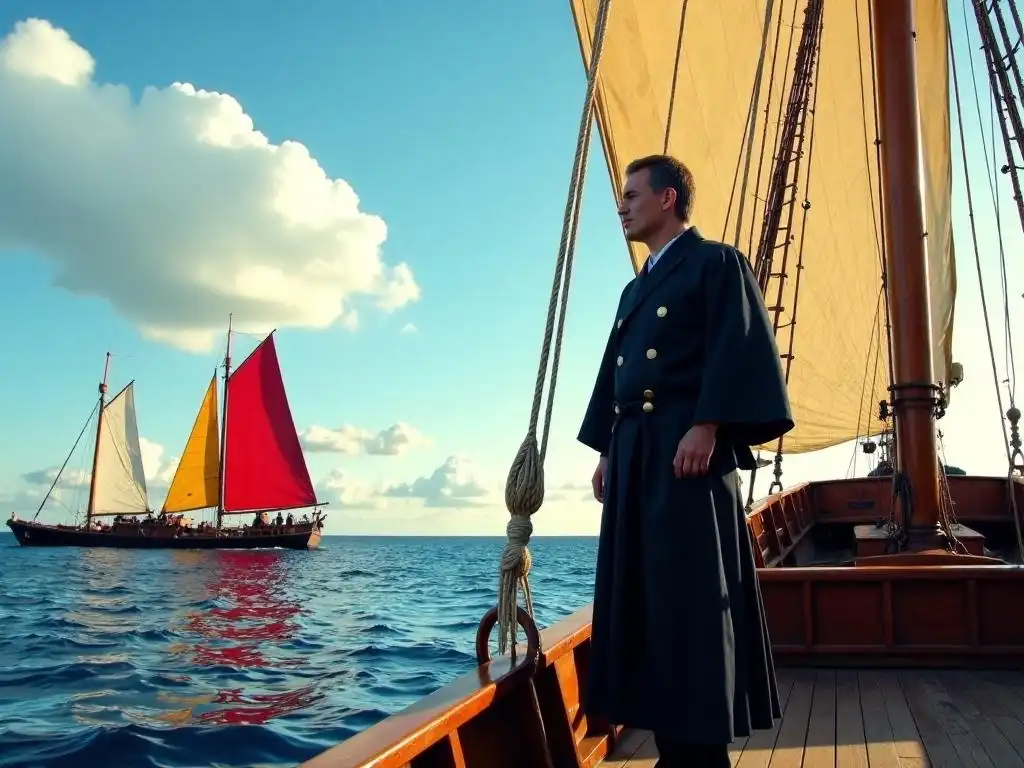
The legacy of Commodore Matthew Perry extends far beyond his immediate actions during his 1853-1854 expedition to Japan. His arrival marked a crucial turning point in Japanese history, transitioning the nation from centuries of isolation under the sakoku policy to a more open engagement with the world. Perry's insistence on establishing diplomatic relations with Japan introduced Western influence that would dramatically reshape Japanese society, politics, and economy.
Perry's mission was not solely to force Japan into submission; it was also a complex interaction that paved the way for modernization. His visit resulted in the Treaty of Kanagawa, which not only opened Japanese ports to American ships but also set a precedent for other Western powers to follow. This engagement initiated a series of reforms in Japan, leading to the Meiji Restoration and the eventual emergence of Japan as a formidable global power.
Commodore Perry’s Influence on Japan’s Modernization
Commodore Perry's influence on Japan's modernization cannot be overstated. His arrival catalyzed a series of profound changes that touched nearly every aspect of Japanese life. The forced opening of Japan under his direction exposed the nation to Western technologies, ideologies, and cultural practices.
In the wake of Perry's visit, Japan embarked on a mission to modernize its military, economy, and infrastructure. The government recognized the need to adopt Western technologies to avoid colonization and improve national security. This led to significant developments such as:
- Military Modernization: The establishment of a modern navy and army modeled after Western powers.
- Industrial Growth: The creation of factories and railways that laid the foundation for Japan's industrial revolution.
- Educational Reforms: The introduction of Western-style education systems that emphasized science and technology.
These reforms not only transformed Japan but also positioned it as a significant player on the global stage by the early 20th century.
Commemorations and Cultural References in Modern Japan
In modern Japan, Commodore Perry's legacy is commemorated through various cultural references and observances. His arrival is often depicted in literature, art, and public discourse as a symbol of the profound changes that swept through Japan.
One significant commemoration is the annual Perry Memorial Day, celebrated in Shimoda, where the American fleet first anchored. Events include parades, reenactments, and educational programs that reflect on the historical significance of Perry's visit.
Moreover, Perry's influence is evident in popular culture, from novels to anime, where he is often portrayed as a pivotal figure in Japan's transformation. These cultural references serve to remind contemporary society of the complex legacy of foreign relations and the importance of understanding history in shaping national identity.
Ongoing Historical Debates: Perspectives on Perry's Visit
The historical narrative surrounding Commodore Perry's visit to Japan is not without controversy. Scholars and historians continue to debate the implications of his actions and the broader consequences of Western imperialism in Japan.
Some view Perry as a catalyst for necessary change, arguing that his arrival ultimately led to Japan's modernization and emergence as a global power. Others, however, criticize his methods, suggesting that his use of gunboat diplomacy and intimidation set a troubling precedent for foreign intervention in Japanese affairs.
These differing perspectives highlight the complexity of Perry's legacy, as it intertwines with themes of sovereignty, imperialism, and cultural exchange. The ongoing debates encourage a deeper exploration of Japan’s historical narrative, inviting new interpretations and insights into the lasting impact of this pivotal moment.
Conclusion: The Significance of Commodore Perry in Japan's Historical Narrative
Commodore Perry's historic visit to Japan represents a critical juncture in the nation's trajectory. The events of 1853-1854 catalyzed a series of transformations that not only altered Japan's relationship with the world but also redefined its identity as a nation.
Reflection on Japan's Transformation Post-Perry
In reflecting on Japan's transformation post-Perry, it becomes evident that the nation underwent a remarkable evolution. The shift from isolationism to engagement with the global community laid the groundwork for the rapid modernization that followed. By embracing Western innovations while maintaining core cultural values, Japan successfully navigated the complexities of modernization, leading to a unique blend of tradition and progress.
The Role of Commodore Perry in Shaping Japan's Future Relations
Perry's role in shaping Japan's future relations is foundational. His actions not only opened Japan to the West but also established a framework for diplomatic engagement that would characterize Japan's international relations in the years to come. The principles of negotiation and diplomacy introduced during Perry's visit would influence Japan's approach to foreign relations, fostering a balance between embracing modernity and preserving cultural integrity.
In sum, Commodore Perry's legacy is a testament to the intricate interplay of history, culture, and international relations that defines Japan's journey from isolation to global engagement. Understanding this legacy is essential for appreciating Japan's historical narrative and its ongoing evolution on the world stage.
Further Reading on Commodore Perry and Japan History
To gain a deeper understanding of Commodore Perry's impact on Japan and the broader implications for Japanese history, a variety of resources are available. This section highlights key books, articles, and other materials that explore the complexities of Perry's visit and its historical context. These readings will help you appreciate the nuances of Japan's transition from isolation to engagement with the outside world.
Recommended Books and Articles on Commodore Perry
-
"The Opening of Japan: Commodore Perry and the American Expedition" by John P. McCormick
This comprehensive book provides an in-depth analysis of Commodore Perry's expedition to Japan, detailing his motivations, the political landscape of the time, and the consequences of his arrival. McCormick draws on primary sources to paint a vivid picture of the interactions between American and Japanese cultures.
-
"Commodore Perry in the Land of the Shogun" by Rhoda Blumberg
Targeted towards younger readers, this engaging narrative captures the essence of Perry's journey, making it accessible while providing rich historical context. It highlights the personalities involved and the cultural exchanges that took place.
-
"Japan's Response to the West: A History of the Foreign Relations of Japan" by John W. Hall
This scholarly work examines Japan's interactions with Western powers, including the pivotal role played by Commodore Perry. Hall places Perry’s visit within the larger framework of Japan's foreign policy evolution, offering insights into Japan's strategic decisions during the feudal era.
-
Articles from the Journal of Asian Studies
A collection of peer-reviewed articles discussing various aspects of Perry’s visit and its implications for Japan’s foreign relations can be found in this journal. These articles provide scholarly perspectives and analyses that are crucial for understanding the complexities of the time.
Key Resources for Understanding Japan's Foreign Relations in the Feudal Era
-
Online Archives of Japanese Historical Documents
Many universities and institutions house extensive collections of documents related to Japan's foreign relations during the feudal era. These archives often include letters, treaties, and governmental records that provide firsthand accounts of Japan's diplomatic activities.
-
The National Diet Library of Japan
The National Diet Library offers a wealth of resources, including books, manuscripts, and digital collections that delve into Japan's history. Their collections on international relations during the Edo period are particularly valuable for research on Commodore Perry's impact.
-
The Japan Times Archive
This English-language newspaper provides articles dating back to the 19th century, offering perspectives on the events surrounding Perry's arrival. Analyzing news reports from that time can provide insights into how the visit was perceived by both Japanese and foreign audiences.
-
Documentaries and Educational Videos
Various documentaries have been produced that chronicle Perry's expedition and its consequences for Japan. These visual resources often include expert interviews and historical reenactments, making the information accessible and engaging.
By exploring these recommended readings and resources, you can better understand the multifaceted relationship between Commodore Perry and Japan, as well as the broader implications for Japan's foreign relations during the feudal era.
- Introduction to Commodore Perry and Japan's Isolation
- The Black Ships: What They Represented
- The Historic Visit: Key Events and Interactions
- Commodore Perry's Japan Expedition: Objectives and Outcomes
- The Legacy of Commodore Perry in Japan's History
- Conclusion: The Significance of Commodore Perry in Japan's Historical Narrative
- Further Reading on Commodore Perry and Japan History
Frequently Asked Questions
What was the significance of Commodore Perry's visit to Japan?
Commodore Perry's visit in 1853 marked the end of Japan's isolationist period, leading to the signing of the Kanagawa Treaty which opened Japan to international trade.
How did Commodore Perry's arrival affect Japanese society?
Perry’s arrival initiated major social and political changes in Japan, including the transition from the Tokugawa shogunate to the Meiji Restoration, which modernized the nation.
What were the "Black Ships"?
The term "Black Ships" refers to the steam-powered vessels used by Commodore Perry during his expedition. Their imposing presence symbolized the superior technology of the West.
How did Commodore Perry’s actions influence Japan's foreign relations?
Perry’s actions forced Japan to reevaluate its diplomatic stance, leading to a series of treaties with Western powers that shaped Japan's future foreign relations.
What is the legacy of Commodore Perry in Japan today?
Commodore Perry is viewed as a controversial figure; he is credited with opening Japan to the world, yet his methods are often critiqued for being coercive and imperialistic.
Final Reflection: Commodore Perry's Legacy and Its Enduring Impact
The visit of Commodore Perry to Japan in 1853 was not merely a historical event; it was a pivotal moment that reshaped the course of Japanese history and its relationship with the world. Today, as we navigate an increasingly interconnected global landscape, the lessons from Perry's expedition resonate more than ever. The encounter between cultures, the clash of traditions, and the subsequent transformation of Japan into a modern state serve as a reminder of the complexities of diplomacy and the importance of understanding one another.
The cultural and social implications of Perry's visit continue to influence our world today. The opening of Japan to the West marked the beginning of a new era, one characterized by both opportunity and challenge. The ripple effects of this encounter can be seen in Japan's rapid modernization and its emergence as a global power. As historian John Dower aptly noted, The arrival of Perry's Black Ships was not just a confrontation; it was a catalyst for change that would redefine Japan's identity.
This ongoing influence invites us to reflect on how historical moments shape our present and future, urging us to consider the narratives we inherit and the paths we choose.
As we commemorate Commodore Perry's historic visit, I invite you to reflect on the importance of cross-cultural dialogue in your own life. Consider how you can engage with different perspectives, learn from diverse histories, and contribute to a more interconnected world. Let Perry's journey inspire you to seek understanding and foster connections, reminding us that history is not just about the past; it is a guide for our actions and relationships in the future.
Unveil the Legacy: Take Action on Commodore Perry’s Historic Visit!
Thank you for taking the time to explore the rich history of Commodore Perry and his monumental impact on Japan. Your interest in this pivotal moment helps preserve the narratives that shaped our world. Now, let’s channel that curiosity into action!
Here are some ways you can deepen your engagement and appreciation for this historical legacy:
- Dive into further reading: Explore our curated list of resources and books that expand on the themes of Perry's visit and its aftermath.
- Join the conversation: Share your thoughts on how Perry's visit influenced modern Japan in the comments section below.
- Plan a visit: Consider exploring local museums or historical sites that commemorate this era to witness the stories that unfolded firsthand.
What aspects of Commodore Perry's journey resonate most with you? How do you believe these events continue to echo in today's Japan? Your insights could help shape an enriching dialogue!