
From Rice to Gold: The Currency Evolution in Feudal Japan


Welcome to Feudal Japan History, your gateway to the captivating world of Japan’s feudal era! Here, we delve into the intricate tapestry of historical, cultural, and societal narratives that defined this fascinating period. In our featured article, “From Rice to Gold: The Currency Evolution in Feudal Japan,” we invite you to unravel the intriguing journey of currency development, from humble rice to precious gold.
What drove these changes, and how did they shape the economic landscape of feudal Japan? Prepare to embark on a thought-provoking exploration that reveals the hidden stories behind the coins and trade of a bygone era. Dive in and discover the wealth of knowledge waiting for you!
- Introduction to Currency History in Feudal Japan
- The Origins of Currency in Feudal Japan
- Evolution of Coinage in Feudal Japan
- The Impact of Currency on Feudal Society
- The Decline of Traditional Currency Practices
- The Legacy of Currency History in Feudal Japan
- Conclusion: Understanding Currency History in Feudal Japan
- Frequently Asked Questions
- Final Reflection: The Enduring Legacy of Currency Evolution in Feudal Japan
- Unveil Your Journey Through Japan’s Currency Transformation!
Introduction to Currency History in Feudal Japan
The study of currency history in feudal Japan unveils a fascinating narrative that intertwines with the broader economic, cultural, and societal developments of the era. From the emergence of agricultural practices to the intricate trade networks that spanned the archipelago, currency evolution played a pivotal role in shaping the economic landscape of feudal Japan.
This period, which extended from the late 12th century to the mid-19th century, witnessed significant transformations in how goods were exchanged and valued, reflecting broader societal changes and the influences of regional powers. Understanding this evolution not only provides insight into the economic mechanisms of the time but also enriches our appreciation of Japan's historical context and cultural heritage.
Overview of Feudal Japan’s Economic System
Feudal Japan was characterized by a hierarchical social structure where land ownership and agricultural productivity were central to wealth accumulation. The economy primarily revolved around agriculture, with rice serving as the main staple and a form of currency in itself.
- Key Features of the Economic System:
- Agriculture as the Backbone: Rice was cultivated extensively and functioned as both sustenance and a unit of exchange.
- Regional Autonomy: Local lords (daimyos) governed their territories, often implementing their own economic policies, leading to a patchwork of local currencies.
- Barter System: Before the formal introduction of minted coins, trade was largely conducted through bartering, where goods and services were exchanged directly.
As the economy evolved, the need for a standardized form of currency became increasingly evident. The introduction of coins and later, paper currency, marked significant milestones in Japan's economic history, facilitating more complex trade and commerce.
Importance of Currency in Trade and Commerce
The evolution of currency in feudal Japan was crucial for the development of trade and commerce, impacting both local and international exchanges.
- Facilitating Trade:
- Standardization of Values: Currency provided a common medium for trade, simplifying transactions and enhancing economic interactions.
- Growth of Marketplaces: The rise of merchant classes led to the establishment of bustling marketplaces, where currency played a vital role in daily commerce.
- Cultural and Social Implications:
- Cultural Exchange: The movement of currency allowed for increased interaction between different regions and cultures, contributing to the cultural richness of feudal Japan.
- Power Dynamics: Control of currency and trade routes often reflected the power dynamics among the ruling classes, influencing political relations.
Understanding the currency history in feudal Japan is essential for appreciating the intricate web of trade, culture, and societal structure that defined this remarkable period in Japan's history. The evolution from rice to gold not only illustrates the practical aspects of economic transactions but also highlights the interplay of cultural and political factors that shaped Japan's economic landscape.
The Origins of Currency in Feudal Japan

Early Barter Systems and Trade Practices
The roots of currency in feudal Japan can be traced back to early barter systems that prevailed long before the introduction of formal currency. In these systems, goods and services were exchanged directly, relying on mutual agreement regarding the value of items. This method of trade was common among agrarian communities, where rice, textiles, and tools formed the basis of exchange.
Barter systems had their limitations, notably the "double coincidence of wants"—the requirement that both parties desire what the other offers. To overcome this, individuals often relied on specific items that held intrinsic value, such as salt or fish, which were recognized by all participants in the trade. As communities grew and trade expanded, the inefficiencies of barter led to the search for a more standardized medium of exchange.
The Introduction of Rice as a Medium of Exchange
Rice played a pivotal role in the evolution of currency within feudal Japan. As the staple food of Japanese society, its significance extended beyond mere sustenance. By the 8th century, rice began to be used as a currency in various regions, with the value of rice being more stable and widely accepted compared to other goods.
The introduction of rice as a medium of exchange coincided with Japan's agrarian society, where rice production was linked to social status and wealth. Landowners often accumulated rice as a measure of their prosperity, and it became a standard unit for transactions, taxes, and even debts.
- Cultural Significance: Rice was not just a commodity; it held cultural and spiritual importance, often associated with agricultural rituals and festivals.
- Standardization: Various measurements of rice, such as the "koku" (a unit equivalent to approximately 180 liters), became standardized, allowing for more organized trade and taxation systems.
The use of rice as currency facilitated trade among local markets and contributed to a burgeoning economy, laying the groundwork for a more complex monetary system.
Transition from Rice to Coinage
As feudal Japan progressed, particularly during the Heian period (794-1185), the limitations of a rice-based currency became apparent. The growing complexity of trade, especially with the rise of merchant classes, necessitated a more efficient and portable form of currency. This led to the gradual transition from rice to coinage.
The first coins, known as wado kaichin, were introduced in the late 8th century, modeled after Chinese coinage. These bronze coins were stamped with characters and became widely accepted across different regions. The adoption of coinage marked a significant evolution in the currency history in feudal Japan, as it allowed for:
- Increased Trade: Coins simplified transactions, making it easier to conduct business beyond local markets and facilitating long-distance trade.
- Taxation Reform: The government could implement more efficient tax collection methods, as coins were easier to transport and store compared to rice.
- Economic Diversification: The introduction of coins encouraged the growth of a merchant class and led to the development of a more complex economy, including banking and credit systems.
The shift from rice to coinage represented a watershed moment in the currency history in feudal Japan, reflecting the broader changes in society, economy, and culture during this transformative period. This evolution not only enhanced trade practices but also contributed to the rise of new social classes and economic structures, ultimately shaping Japan's economic landscape for centuries to come.
Evolution of Coinage in Feudal Japan
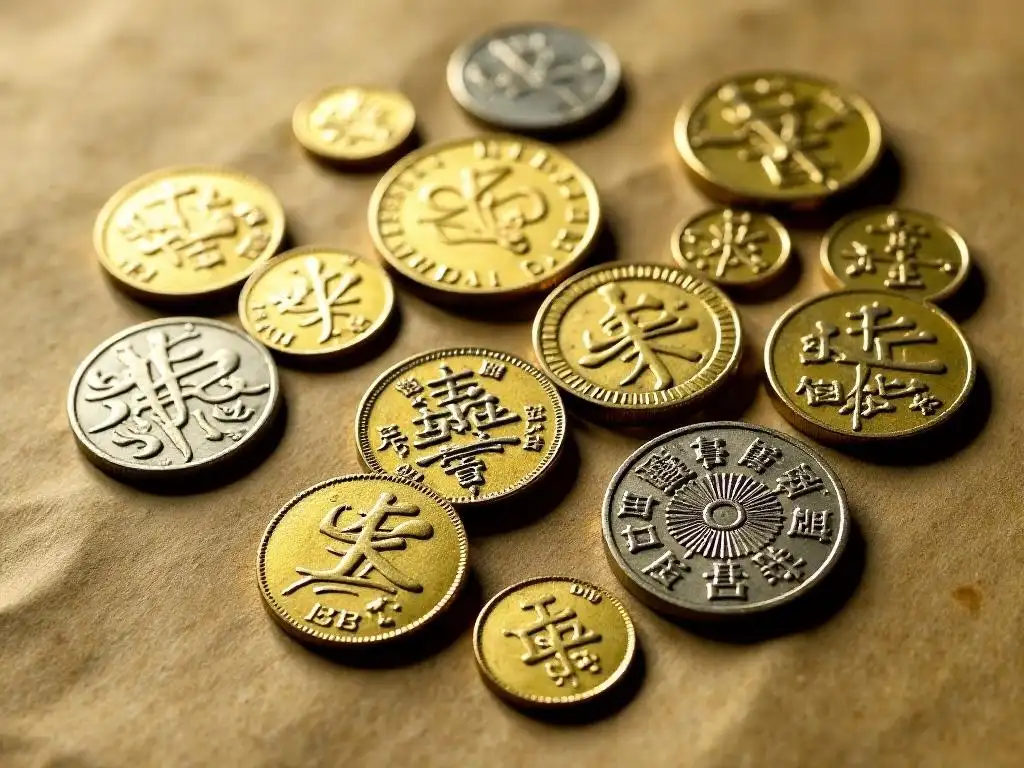
The First Coins: Kōdin and Wado Kaichin
The evolution of currency in feudal Japan began with the introduction of coins during the Asuka period (538-710 AD), leading to the creation of the Kōdin and Wado Kaichin coins. The Kōdin, also known as the "Kōin," was introduced during the early 7th century, influenced by Chinese currency systems. These coins were made of bronze and were primarily used in trade, signifying the beginning of a standardized monetary system in Japan.
- Kōdin Characteristics:
- Material: Bronze
- Design: Often featured inscriptions in Chinese characters.
- Weight: Varied, generally around 1.5 to 3 grams.
As time progressed, the Wado Kaichin emerged during the Nara period (710-794 AD) in 708 AD, marking a significant advancement in Japanese coinage. This coin was the first official currency minted by the Japanese government, designed to facilitate trade and improve economic stability.
- Wado Kaichin Features:
- Material: Silver
- Design: Featured the inscription "Wado Kaichin," meaning "Wado Currency."
- Weight: About 4 grams.
The introduction of these coins laid the groundwork for a more complex monetary system, transitioning from barter trade to a currency-based economy, which would evolve significantly throughout the feudal era.
Influence of Foreign Trade on Currency Development
Foreign trade played a pivotal role in shaping the currency history in feudal Japan. Beginning in the 8th century, Japan established trade relations with neighboring countries, particularly China and Korea. This interaction introduced new currencies and trading practices that influenced Japanese economic structures.
- Key Influences from Foreign Trade:
- Adoption of Chinese Currency: The use of Chinese coins, such as the "Tang" and "Song" coins, encouraged local adaptation and the eventual minting of Japanese coins that mirrored these designs.
- Introduction of Trade Goods: The influx of foreign goods, such as silk and spices, necessitated a more sophisticated currency system to facilitate transactions.
- Cultural Exchange: As trade expanded, so did cultural exchanges, impacting the designs and inscriptions on coins, often incorporating motifs and ideologies from Chinese culture.
These interactions not only diversified the types of currency used but also stimulated economic activities across the archipelago, leading to the establishment of regional trade hubs and marketplaces.
The Role of Local Governments in Minting Coins
During the feudal era, local governments played a crucial role in the minting and regulation of coins. While the central government initiated the currency system, local authorities took charge of producing and distributing coins to meet regional economic needs.
- Functions of Local Governments:
- Minting Authority: Local lords, or daimyō, often established their own mints to produce coins that reflected their power and influence. This led to a variety of regional coins, each with distinct designs and values.
- Regulation of Currency: Local governments were responsible for ensuring the integrity of the currency, overseeing weights and measures, and preventing counterfeiting. This was essential to maintain trust in the monetary system.
- Taxation and Trade: Coins were not only used for trade but also as a medium for taxation. Local governments collected taxes in currency, which facilitated the flow of money within the economy and supported local infrastructure.
This decentralized approach to currency minting allowed for a fluid economic environment that adapted to the needs of various regions, fostering local commerce and trade networks that were essential for the overall development of feudal Japan's economy.
The Impact of Currency on Feudal Society

In feudal Japan, currency was not merely a medium of exchange; it was a crucial element that helped solidify and reflect the social hierarchies of the time. The use of different types of currency often indicated the wealth and status of an individual or clan.
Typically, rice, being the staple crop, served as the primary form of currency. It was measured in koku, which represented the amount of rice needed to feed one person for a year. This form of currency was significant not just for trade but also for defining social status.
- Wealthy landowners and samurai were often paid in koku, granting them a tangible sense of power and influence.
- Commoners, on the other hand, might have received payment in smaller denominations of rice or other goods, which emphasized their lower status in the feudal hierarchy.
The varying forms of currency also contributed to the stratification of society. As the economy evolved, other types of currency, such as gold and silver, were introduced, further differentiating the wealth of the upper classes from that of the lower classes. This transition allowed for the emergence of a merchant class, which began to wield its own influence, albeit still subordinate to the samurai and noble classes.
The Relationship Between Currency and Land Ownership
Land ownership in feudal Japan was intrinsically linked to currency, creating a complex relationship between the two. The possession of land not only provided agricultural output but also dictated wealth through the control of currency.
- Feudal lords (daimyō) controlled large tracts of land and, correspondingly, the koku that could be derived from it. The wealth generated from their lands allowed them to maintain armies and secure their positions of power.
- Samurai, who were granted land by their lords, received a share of the agricultural produce, which further reinforced their loyalty and military service in exchange for sustenance and income.
As the economy matured, the rise of monetary systems began to shift the dynamics of land ownership. The introduction of coins made it possible to engage in trade beyond local markets, thus allowing landowners to monetize their land effectively. This change also led to:
- A more fluid economy where land could be bought and sold, rather than being strictly tied to hereditary ownership.
- The emergence of land leases, which allowed poorer farmers to cultivate land without owning it, thereby creating a new layer within the social structure.
Effects of Currency on Daily Life and Commerce
The evolution of currency in feudal Japan had a profound impact on daily life and commerce. As various forms of currency emerged, they facilitated trade and economic interactions among different social classes.
In local markets, currency allowed for:
- Barter systems to evolve into more sophisticated economic transactions, where goods were exchanged for currency rather than directly for other goods.
- Increased trade between regions as merchants began to travel and sell their goods, which expanded the variety of products available to consumers.
The introduction of coinage during the late feudal period marked a significant development in commerce. Coins such as the mon became widely accepted, further simplifying trade and allowing for more precise pricing. This led to:
- The establishment of marketplaces, where goods could be bought and sold, and currency was used as the standard of exchange.
- The rise of merchant guilds, which organized trade practices and established regulations that improved the reliability and fairness of commerce.
The currency history in feudal Japan was not only about the evolution of money but also about how it shaped social structures, economic practices, and daily life. The shift from rice to gold and the introduction of coins transformed the landscape of trade and commerce, leaving a lasting legacy on Japan's economic history.
The Decline of Traditional Currency Practices

As the feudal era progressed, Japan experienced significant economic turmoil that led to the decline of traditional currency practices. This period was characterized by a series of events that destabilized the established currency systems, leading to a shift in how individuals and merchants conducted trade.
Economic Turmoil and Currency Devaluation
During the late feudal period, several factors contributed to economic instability, including natural disasters, wars, and poor governance. Such turmoil often resulted in the devaluation of currency. For instance, the frequent occurrences of famines and earthquakes disrupted agricultural production, which was the backbone of Japan's economy. As the supply of rice—the primary currency—diminished, its value plummeted, leading to rampant inflation.
- Natural Disasters: Earthquakes and floods severely damaged rice paddies, resulting in decreased yields.
- Political Instability: The Warring States period (Sengoku Jidai) saw constant conflict, disrupting trade routes and creating a climate of fear that stifled economic activity.
- Inflation: With a reduced supply of rice, merchants began to inflate prices, leading to a vicious cycle of devaluation.
This economic turmoil forced many to seek alternatives to traditional currency, paving the way for new trading practices.
The Rise of Alternative Trade Practices
As trust in traditional currency waned, alternative trade practices began to emerge. Barter systems and the use of commodities became commonplace as people sought more stable means of exchange. This shift was particularly evident in rural areas, where direct exchanges of goods and services became more practical.
- Barter Systems: Communities began to rely on bartering goods directly, which allowed for immediate value exchange without the need for currency.
- Use of Commodities: Items such as silk, tea, and even salt started to take on currency-like qualities, depending on their desirability and availability.
- Merchant Guilds: These groups played a crucial role in standardizing trade practices, providing a network that facilitated the exchange of goods and services, effectively bypassing the need for currency.
These alternative practices not only sustained local economies but also laid the groundwork for future economic systems.
Shifts in Power and Their Impact on Currency Systems
The feudal era was marked by numerous shifts in power, which significantly impacted currency systems. As different clans rose and fell, their control over trade and currency issuance fluctuated.
- Samurai Influence: With the emergence of powerful samurai clans, control over land and resources often dictated currency practices. Samurai began to issue their own coins or promissory notes, further complicating the currency landscape.
- Centralization of Power: The eventual unification under leaders like Oda Nobunaga and Toyotomi Hideyoshi led to attempts to standardize currency. Hideyoshi's introduction of the "gold and silver coins" aimed to stabilize the economy and restore faith in currency systems.
- Impact on Trade: These shifts not only affected local economies but also influenced international trade relations with neighboring regions, as currency practices began to align more closely with global trading standards.
Overall, the decline of traditional currency practices in feudal Japan was a multifaceted process influenced by economic turmoil, rising alternative practices, and shifting power dynamics. The adaptations made during this period laid the foundation for Japan's future economic systems, highlighting the resilience and innovation of its people in the face of adversity.
The Legacy of Currency History in Feudal Japan

The evolution of currency in feudal Japan is a testament to the dynamic interplay of economic, social, and cultural factors that shaped the nation. Understanding this legacy is crucial for comprehending contemporary Japanese economic systems, as many foundational principles and practices have endured through centuries.
Long-term Effects on Japan’s Modern Economic Systems
The transition from barter systems to a sophisticated currency framework during the feudal era laid the groundwork for Japan’s current economic structures. The introduction of coins, such as the Wadōkaichin, marked a pivotal shift in trade practices. This coin, minted in the late 7th century, was one of the first official currencies and facilitated commerce across regions.
Key Long-term Effects:
- Standardization of Trade: The establishment of a common medium of exchange allowed for more complex trade networks, promoting regional economies. Modern Japan still benefits from this early standardization, as evidenced by contemporary systems like the yen.
- Banking Systems: Feudal practices evolved into banking concepts, with merchants and local lords managing funds and credit. Today’s banking institutions in Japan can trace their roots to these early financial practices, where trust and credit played pivotal roles.
- Influence on Government Policies: The historical reliance on currency influenced modern fiscal policies. The government’s role in regulating currency and promoting trade can be linked back to the practices established during the feudal era.
Lessons Learned from Feudal Currency Practices
Feudal Japan's currency practices offer valuable insights into economic resilience and adaptability. The various forms of currency used—ranging from rice to coins—demonstrate how societies can innovate in response to changing economic conditions.
Key Lessons:
- Diversification of Currency Types: The use of different currencies, including rice as a staple commodity, showcased the importance of diversification. Modern economies can learn the necessity of utilizing multiple forms of currency to stabilize markets.
- Trust and Credibility: The reliance on trust between merchants and lenders in feudal Japan emphasized the importance of credibility in financial transactions. This principle remains vital in contemporary finance, where trust underpins economic relationships.
- Adaptation to Economic Challenges: The ability to adapt and innovate currency practices in response to economic challenges, such as famine or war, is a crucial lesson. Modern economies continue to face crises, and the flexibility demonstrated in feudal Japan can inform current strategies.
The Cultural Significance of Currency in Historical Context
Currency in feudal Japan transcended mere economic function; it held profound cultural significance. The materials, designs, and uses of currency reflected the values, beliefs, and societal norms of the time.
Cultural Aspects of Currency:
- Symbolism of Currency: Coins often featured images of deities or imperial figures, representing authority and legitimacy. This practice illustrated how currency served as a tool of statecraft, reinforcing the power of the ruling class.
- Cultural Exchange: The trade facilitated by currency allowed for cultural exchanges between regions and with foreign nations. This interaction enriched Japanese culture, leading to the integration of new ideas and practices that shaped society.
- Artistry in Currency Design: The intricate designs of coins and currency reflected the artistry of the time, providing insights into the aesthetic values of feudal Japan. These artistic elements are now considered historical artifacts, offering a glimpse into the cultural heritage of the era.
The legacy of currency history in feudal Japan is deeply woven into the fabric of modern economic systems, offering lessons in adaptability, trust, and cultural significance that continue to resonate today. Understanding these aspects enriches our perspective on both historical and contemporary economic practices.
Conclusion: Understanding Currency History in Feudal Japan
Summary of Key Points
The currency history in feudal Japan is a multifaceted narrative that reflects the evolution of trade, commerce, and societal structure throughout various periods. Here are the significant points to consider:
- Early Currency Forms: Initially, Japan utilized a barter system, relying heavily on rice as a medium of exchange. This agricultural product not only served as sustenance but also established wealth and status among the samurai class and landowners.
- Introduction of Coins: The introduction of imported Chinese coins in the 7th century marked a pivotal shift. These coins facilitated trade and laid the groundwork for a more standardized currency system. The Wado Kaichin, Japan's first officially minted coin, emerged during the Nara period, symbolizing the state's recognition of the need for a regulated currency.
- Rise of Gold and Silver: By the late feudal period, the significance of gold and silver coins became apparent. The Koban and Ichibutsu coins were widely used, representing wealth and facilitating trade across regions, especially during the Edo period when commerce flourished.
- Impact of Trade Routes: The establishment of trade routes, both domestic and international, influenced currency circulation. Increased interaction with foreign traders introduced various currencies and necessitated the development of a more sophisticated monetary system.
- Transition to Paper Currency: The late feudal era saw the introduction of paper currency, a revolutionary change that simplified transactions and reflected the evolving economic landscape. This shift indicated a move towards a more modern economy, setting the stage for Japan's future financial systems.
Reflection on the Importance of Currency in Historical Context
The evolution of currency in feudal Japan is not just a tale of economic transactions; it encapsulates broader societal changes and the intricate relationship between power, trade, and culture.
- Social Hierarchies: Currency served as a means of reinforcing social hierarchies. The wealth accumulated through land and rice translated into economic power, which in turn affected political dynamics. Samurai families leveraged their control over resources to assert dominance, shaping Japan's feudal structure.
- Cultural Exchange: The introduction of coins and the eventual transition to paper currency facilitated cultural exchange. As trade expanded, so did the exchange of ideas, art, and technology, fostering a more interconnected society and contributing to Japan's unique cultural identity.
- Economic Resilience: The adaptability of Japan's currency system exemplifies the nation’s resilience. Throughout periods of strife, such as civil wars and economic downturns, the evolution of currency allowed for flexibility and innovation, which ultimately supported recovery and growth.
- Legacy: Understanding the currency history in feudal Japan provides insights into contemporary Japanese economic practices. Many foundational aspects of modern finance and commerce can be traced back to these early systems, highlighting the lasting impact of historical currency practices on today's economy.
The study of currency history in feudal Japan offers a profound understanding of how economic systems evolve in response to societal needs, political power, and cultural exchanges, painting a rich tapestry of Japan's past that continues to influence its present.
Frequently Asked Questions
What was the primary form of currency in feudal Japan?
The primary form of currency in feudal Japan was rice, which served as both a medium of exchange and a measure of wealth due to its agricultural significance.
How did the introduction of coins affect the economy?
The introduction of coins during the Heian period marked a significant shift, enabling easier trade and fostering a more complex economic system compared to the previous reliance on rice.
What role did gold play in feudal Japan's currency system?
Gold became important as a symbol of wealth and was used in transactions among the elite, influencing both the economy and the power dynamics of the feudal lords.
How did currency evolve throughout the feudal era?
Currency in feudal Japan evolved from rice and barter systems to the use of coins and gold, reflecting changes in trade practices and the structure of society over time.
What were the societal impacts of currency changes in feudal Japan?
The changes in currency impacted social hierarchy and power, as those who controlled the production and distribution of currency often held significant influence in feudal society.
Final Reflection: The Enduring Legacy of Currency Evolution in Feudal Japan
The evolution of currency in feudal Japan is not just a historical narrative; it is a testament to the profound impact that economic systems have on societal structures and cultural identity. As we navigate our modern economy, understanding the roots of currency history in feudal Japan reveals how financial systems shape power dynamics and social hierarchies, reminding us that the value we assign to money is deeply intertwined with our cultural heritage.
Currency in feudal Japan was more than a medium of exchange; it was a reflection of societal values and the intricate relationships between rulers and the ruled. The transition from rice to gold illustrates a significant shift in how value was perceived and utilized, influencing everything from trade to social status. As historian Edward W. Said once noted, “The past is never dead. It’s not even past.” > This quote resonates profoundly as we recognize that the lessons learned from Japan's currency evolution continue to inform our current economic practices and cultural understandings.
As you reflect on the journey from rice to gold, consider how the principles of value, trust, and exchange resonate in your own life. How do you perceive the worth of what you possess, and how does that influence your interactions with others? Embrace the opportunity to learn from the past, allowing the insights gained from the currency history in feudal Japan to inspire a more thoughtful approach to value and exchange in your daily life. Let this reflection guide you toward a deeper understanding of the economic forces that shape our world today.
Unveil Your Journey Through Japan’s Currency Transformation!
Thank you for diving into the intriguing world of currency evolution in feudal Japan! You’ve uncovered the significant role that rice and gold played in shaping the economy and society of this fascinating era. Now, it’s time to explore how this knowledge can enrich your understanding of history and even influence your daily life.
Here are some simple yet impactful steps to continue your journey:
- Dive Deeper: Explore related articles on feudal Japan to gain a more comprehensive view of its culture and economy. Look for titles that capture your interest!
- Join the Conversation: Share your insights on social media or in history forums. Engaging with others can deepen your understanding and foster meaningful discussions.
- Embrace the Past: Find connections between the currency systems of feudal Japan and contemporary economic practices. Reflect on how these historical lessons can inform your financial decisions today.
What new perspectives about value and exchange can you incorporate into your own life after learning about the currency evolution of feudal Japan?