
The Rise of the Merchant Class: How Trade Transformed Feudal Japanese Society


Welcome to Feudal Japan History, where we embark on an intriguing journey through the captivating tapestry of Japan’s feudal era. In our featured article, "The Rise of the Merchant Class: How Trade Transformed Feudal Japanese Society," we delve into the pivotal impact of trade on feudal Japan, unraveling how commerce reshaped not only the economy but also the very fabric of society.
Prepare to discover the fascinating interplay between trade and power, and the emergence of a new social class that forever altered the course of Japanese history. Your exploration begins now—dive deeper to uncover the secrets of this transformative period!
Introduction to Feudal Japan's Trade Dynamics
The feudal era of Japan, spanning from the late 12th century to the mid-19th century, was a period marked by rigid social hierarchies and a predominantly agrarian economy. However, beneath the surface of this seemingly stable society, a transformative shift was occurring, particularly through trade.
The impact of trade on feudal Japan was profound, leading to the emergence of a merchant class that would challenge traditional norms and ultimately reshape the very fabric of Japanese society. This article delves into the intricate dynamics of trade during this time, exploring how it catalyzed changes in social structure, economic practices, and cultural exchanges, particularly with neighboring nations such as Korea and China.
Overview of Feudal Japan and its Economic Structure
Feudal Japan was characterized by a strict class system, with the emperor at the top, followed by the shogun, daimyos (feudal lords), samurai, peasants, artisans, and finally merchants. The economy was primarily agrarian, relying heavily on rice cultivation and subsistence farming. The following points illustrate the economic structure of feudal Japan:
- Agricultural Focus: The majority of the population was engaged in farming, and land ownership was a crucial determinant of wealth and power.
- Barter System: Trade was largely conducted through barter, with goods exchanged directly without the use of currency.
- Localized Markets: Trade was confined to local markets, and long-distance trade was limited by the geography and political structure of the time.
Despite these limitations, the seeds of a burgeoning merchant class were being sown, driven primarily by the increasing demand for goods and services.
Importance of Trade in Feudal Society
Trade played an essential role in the development of feudal Japan, influencing not only the economy but also social relations and cultural exchanges. Key aspects include:
- Cultural Exchange: Interaction with Chinese and Korean traders introduced new ideas, technologies, and cultural practices, enriching Japanese society.
- Economic Growth: The growth of commerce led to the accumulation of wealth among merchants, allowing them to gain influence and challenge the traditional power structure.
- Market Expansion: As trade routes expanded, so did the variety of goods available, leading to more sophisticated market systems.
Through these dynamics, trade became a catalyst for change, setting the stage for the rise of the merchant class.
The Emergence of the Merchant Class in Feudal Japan
As trade flourished, a distinct merchant class began to emerge, significantly altering the social landscape of feudal Japan. This section explores the historical context and factors that contributed to this development.
Historical Context of the Merchant Class
The merchant class in Japan began to gain prominence during the later feudal period, particularly from the 16th century onwards. The following developments were pivotal:
- Urbanization: The rise of castle towns and urban centers created new opportunities for trade and commerce.
- Influence of European Traders: The arrival of European traders in the 16th century introduced new trading practices and goods, further stimulating local economies.
- Political Stability: The unification of Japan under the Tokugawa shogunate in the early 17th century provided a more stable environment for trade to flourish.
This historical backdrop set the stage for merchants to ascend in social status and economic power.
Factors Contributing to the Rise of Merchants
Several key factors contributed to the rise of the merchant class in feudal Japan:
- Increased Demand for Goods: As the population expanded, so did the demand for a variety of goods, from rice to textiles.
- Expansion of Trade Routes: The establishment of both land and maritime trade routes facilitated the movement of goods across regions, increasing commercial activity.
- Innovations in Finance: The development of financial instruments, such as promissory notes and credit systems, allowed merchants to engage in more complex transactions.
These factors combined to elevate the merchant class, challenging the established social order and paving the way for significant societal changes in Japan.
Impact of Trade on Feudal Japan

Trade played a crucial role in shaping the social, economic, and cultural fabric of feudal Japan. As Japan began to establish and solidify its trade relations with neighboring countries, particularly Korea and China, the influx of goods, ideas, and technologies significantly transformed its society. The impact of trade extended beyond mere economic transactions; it fostered a growing merchant class that began to challenge the traditional hierarchies of the samurai-dominated society. With the establishment of trade routes, Japan experienced an economic awakening that shifted its focus from agriculture to commerce, influencing everything from social structures to cultural exchanges.
The introduction of foreign goods and the demand for Japanese products led to an increase in production and innovation. This economic dynamism not only enriched the merchant class but also provided new opportunities for artisans and craftsmen. Furthermore, the wealth accumulated through trade began to influence politics, with merchants gaining power and influence that allowed them to participate in governance, thus reshaping the feudal landscape of Japan.
Trade Routes: Connecting Japan with Korea and China
The establishment of trade routes between Japan and its neighboring countries was pivotal in facilitating commerce and cultural exchange. The sea routes connecting Japan to Korea and China enabled merchants to transport goods efficiently, with key ports such as Hakata and Kamakura becoming bustling centers of trade. These routes not only allowed for the exchange of commodities but also created avenues for the flow of ideas and cultural practices.
Trade with Korea was particularly significant, as it served as a bridge for Japanese access to the mainland Asian markets. Korean traders brought various goods, including textiles, ceramics, and agricultural products, which were highly sought after in Japan. Similarly, trade with China opened up Japan to a plethora of goods such as silk, spices, and precious metals, which significantly impacted Japanese consumption patterns and tastes.
The interactions along these trade routes also led to the establishment of diplomatic relations, with exchanges that included not only goods but also envoys and scholars who contributed to the cultural enrichment of Japan. The combination of these elements fostered a vibrant trade environment that was instrumental in Japan's economic transformation during the feudal era.
Goods and Commodities: What Was Traded?
The array of goods traded between Japan, Korea, and China was diverse and indicative of the evolving economic landscape. Key commodities included:
- Silk: Highly valued in Japan, silk was imported from China and became a staple in the wardrobes of the elite.
- Ceramics: Korean ceramics were admired for their quality and artistry, influencing local craftsmanship.
- Spices and Condiments: These were essential for enhancing cuisine and were primarily sourced from China.
- Metals: Precious metals and alloys were imported, which were crucial for the production of weapons and tools.
In return, Japan exported its own unique products, such as:
- Rice: The primary staple of Japanese agriculture, rice was a vital export that reinforced Japan's agricultural economy.
- Lacquerware: Renowned for its beauty and craftsmanship, Japanese lacquerware was a coveted item in foreign markets.
- Artwork and Crafts: Japanese artisans began to gain recognition for their distinctive styles, creating a demand for traditional crafts abroad.
This exchange of goods not only fostered economic growth but also led to the development of a more interconnected society, where the tastes and preferences of the populace began to reflect influences from abroad.
Cultural Exchange: Influences from Korea and China
The trade relations with Korea and China did not merely result in the exchange of goods; they also facilitated a rich cultural exchange that had lasting impacts on Japanese society.
From Korea, Japan adopted various cultural elements, including architectural styles, musical instruments, and even certain religious practices. The introduction of Confucian principles from China, for instance, profoundly influenced Japanese governance, education, and family structures, integrating ethical frameworks that shaped societal norms.
Moreover, the spread of Buddhism from China through trade routes led to significant cultural and religious transformations in Japan. This exchange resulted in the construction of temples and the establishment of monastic communities, which became centers of learning and culture.
Artistic influences were also notable, with Japanese painters and craftsmen incorporating techniques and styles observed in Korean and Chinese works. This cultural fusion enriched Japanese art, literature, and philosophy, leading to a unique synthesis that defined the feudal era.
The Role of Trade in Shaping Feudal Society
Trade played a central role in the evolution of feudal society in Japan, serving as a catalyst for economic and social change. The burgeoning merchant class began to carve out a niche within the rigid class structure, challenging the traditional dominance of the samurai class. As trade flourished, the economic power of merchants grew, enabling them to acquire wealth and influence that shifted societal dynamics.
Economic Shifts: From Agrarian to Trade-Based Economy
The feudal economy of Japan was predominantly agrarian, with the samurai class controlling land and agricultural production. However, the rise of trade fundamentally altered this landscape. As commerce expanded, cities grew around trading hubs, leading to increased urbanization. This shift from a purely agrarian economy to a trade-based economy allowed for greater specialization of labor, with artisans, merchants, and traders emerging as significant contributors to the economy.
The increased availability of goods and the wealth generated through trade fostered consumerism among the Japanese populace. This change in economic focus not only enriched the merchant class but also led to the development of new financial practices, such as banking and credit systems, which were essential for facilitating trade. Over time, the economic shifts catalyzed by trade helped redefine the power structures within feudal Japan, as wealth became a more significant determinant of status.
The Social Status of Merchants: A Changing Hierarchy
Initially, merchants held a low social status within the rigid caste system of feudal Japan, often viewed with suspicion by the samurai class. However, as trade flourished and merchants began to accumulate wealth, their status began to change. The economic influence of merchants enabled them to gain respect and recognition, challenging the traditional hierarchies that had long dictated social order.
This evolution in social status was both welcomed and resisted. While some samurai acknowledged the importance of commerce for sustaining the feudal economy, others viewed the rise of the merchant class as a threat to their authority. This tension led to a complex relationship between merchants and samurai, with merchants often seeking to align themselves with powerful samurai to protect their interests.
As the merchant class continued to grow in wealth and influence, they not only participated in but also shaped the cultural and political landscapes of Japan. The eventual acceptance of merchants as a vital component of society marked a significant turning point in the history of feudal Japan, laying the groundwork for the eventual modernization of the nation.
Case Studies of Notable Trade Cities in Japan
Japan's feudal era witnessed the emergence of several key cities that significantly contributed to the nation’s economic transformation through trade. These cities became vital hubs for commerce, linking Japan with neighboring countries, particularly Korea and China. Their growth not only reshaped Japan’s trade landscape but also influenced its social and political dynamics. This section delves into two prominent trade cities, Sakai and Nagasaki, to illustrate the impact of trade on feudal Japan.
The Rise of Sakai as a Trade Hub
Sakai, located near Osaka, emerged as a leading trade hub during the late 16th century, primarily due to its strategic position and favorable port access. This city became a focal point for international trade, particularly with China and Korea. The establishment of direct trade routes facilitated the exchange of goods such as silk, ceramics, and spices.
The merchants of Sakai, known as "sakkai," played a crucial role in this burgeoning trade environment. They not only traded goods but also engaged in financial innovations, including the use of promissory notes and credit systems, which laid the groundwork for modern banking practices. The wealth generated by trade allowed the merchant class in Sakai to gain significant social status, challenging the traditional power dynamics dominated by the samurai class.
Moreover, Sakai's merchants were instrumental in the dissemination of cultural influences, including Zen Buddhism and Noh theater, which were introduced through their international contacts. The city’s unique blend of commerce and culture showcased how trade could transcend mere economic activity, fostering a richer societal fabric.
The Influence of Nagasaki on International Trade
Nagasaki, on the island of Kyushu, became Japan’s sole port for international trade during the Edo period (1603-1868) under the Tokugawa shogunate. Its status as the primary gateway for foreign commerce allowed it to flourish economically. The city was particularly significant for its trade with the Dutch and Chinese, leading to an influx of foreign goods and ideas.
The presence of the Dutch at Dejima, a small artificial island in Nagasaki Bay, marked a unique relationship that allowed for controlled foreign influence. Through this trade, Nagasaki became a center for the importation of Western technology, medicine, and knowledge, significantly impacting Japanese society and industry. The exchange of ideas also led to increased interest in Western sciences, which would later play a vital role in Japan's modernization efforts.
Furthermore, Nagasaki's economic prosperity contributed to the rise of a local merchant class that sought greater political power and influence. This shift in power dynamics facilitated a gradual transformation of feudal society, as merchants began to challenge the traditional authority of the samurai class.
The Political Ramifications of Trade Relations
The growth of trade during the feudal era had profound political ramifications in Japan. As merchant wealth increased, so did their influence in local and national politics. This section explores how trade affected feudal politics and the alliances and conflicts that arose from economic interests.
How Trade Affected Feudal Politics
The rise of the merchant class in cities like Sakai and Nagasaki altered the political landscape of feudal Japan. As merchants accumulated wealth through trade, their influence began to rival that of the samurai class. This shift prompted changes in feudal politics, as merchants sought to align themselves with powerful daimyos (feudal lords) to protect their economic interests.
Merchants often participated in local governance, funding infrastructure projects and supporting the establishment of trade regulations that favored commerce. Their ability to finance military campaigns or local initiatives allowed them to negotiate better terms with feudal lords, thus gaining political leverage. This evolving relationship between merchants and samurai led to a more complex social hierarchy, where wealth increasingly dictated power rather than mere lineage.
Alliances and Conflicts Driven by Economic Interests
The competition for control over trade routes and resources often resulted in alliances and conflicts among feudal lords. As trade flourished, daimyos sought to expand their territories to secure lucrative trading opportunities. This pursuit sometimes led to military confrontations, as rival factions vied for dominance over key trade cities.
Moreover, trade-related treaties and agreements often dictated the political landscape. For instance, the Tokugawa shogunate’s policies toward foreign trade were influenced by the need to maintain stability and control over the burgeoning merchant class. The balance of power shifted as the economic benefits of trade increasingly dictated political alliances, creating a dynamic interplay between commerce and governance.
The impact of trade on feudal Japan was multifaceted, profoundly influencing both the economic and political realms. The rise of cities like Sakai and Nagasaki exemplifies how trade not only transformed local economies but also reshaped the very foundations of feudal society.
Trade Regulations and Government Control in Feudal Japan
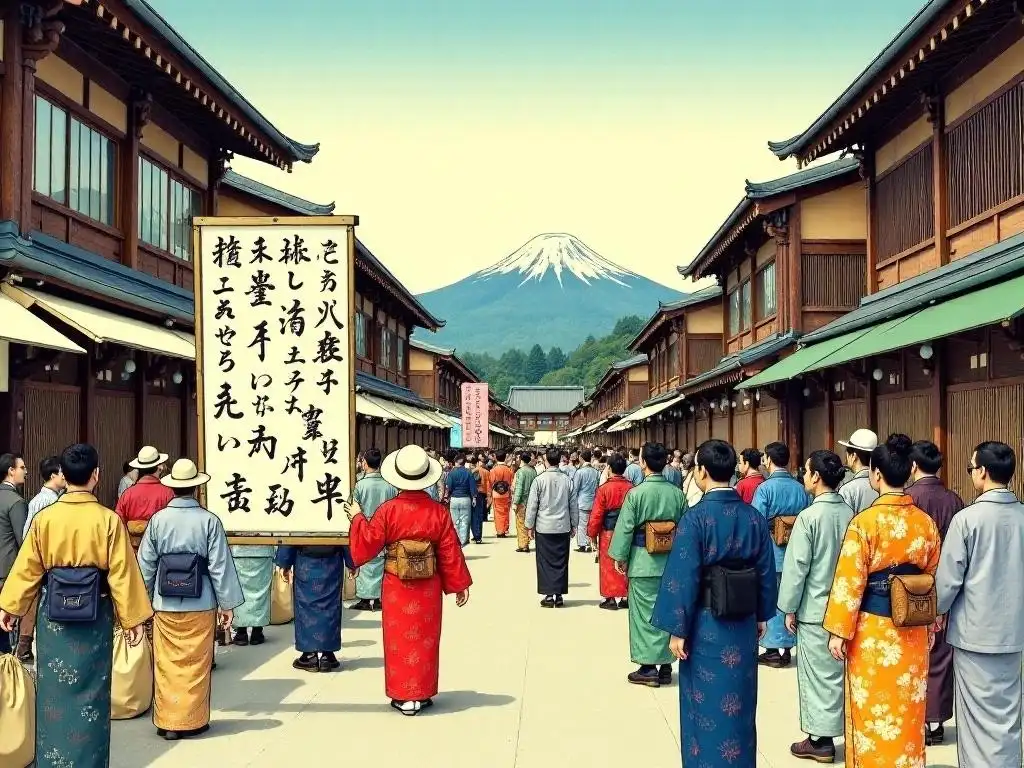
Trade in feudal Japan was heavily influenced by a complex web of regulations and government control, reflecting the social hierarchy and political dynamics of the time. The shogunate, particularly during the Edo period (1603-1868), implemented strict policies to manage trade, both domestically and internationally. The primary aim was to maintain stability and control over the burgeoning merchant class, which began to rise in prominence due to increased trade activities.
During this era, the government restricted foreign trade to specific ports, such as Nagasaki, which was the only location where Dutch and Chinese merchants were permitted to trade. This exclusivity not only allowed the government to monitor foreign influence but also facilitated the imposition of tariffs and taxes on imported goods. Additionally, the samurai class, who were traditionally seen as the ruling elite, were discouraged from engaging in trade, leading to a clear demarcation between the ruling and merchant classes.
Regulations also extended to the types of goods that could be traded. The shogunate sought to promote domestic products while limiting the influence of foreign commodities that could disrupt local economies. This control over trade and commerce ultimately shaped the structure of society, leading to a clearer distinction between social classes and their respective roles.
Overview of Trade Policies during the Edo Period
The Edo period was marked by significant developments in trade policies that reflected the shogunate's priorities. Initially, the government embraced a policy of isolationism, known as sakoku, which limited foreign interactions and focused on enhancing internal trade networks. This policy was rooted in the desire to prevent the spread of Christianity and maintain political stability.
The government imposed various regulations on trade, which included:
- Licensing System: Merchants were required to obtain licenses to operate, ensuring that trade remained under government oversight.
- Market Regulations: Cities and towns established designated areas for merchants to conduct business, which helped the government control economic activities and maintain order.
- Taxation: The shogunate levied taxes on trade to generate revenue, which was critical for maintaining military and administrative functions.
Despite these regulations, the merchant class began to flourish, leading to the emergence of urban centers and a more vibrant economy. Cities like Edo (modern-day Tokyo), Osaka, and Kyoto became bustling trade hubs, where merchants established networks that transcended regional barriers.
Impact of Regulations on Merchant Activities
The regulations imposed by the shogunate significantly influenced merchant activities in various ways. While they initially sought to control and limit the power of merchants, these policies inadvertently contributed to their rise and the transformation of Japanese society.
- Growth of Urban Centers: The restrictions on trade routes and the establishment of designated markets led to the growth of urban centers, where merchants congregated to facilitate commerce. This urbanization contributed to a shift in population dynamics, as people moved from rural areas to cities in search of economic opportunities.
- Formation of Merchant Guilds: In response to government regulations, merchants organized themselves into guilds, which provided a means of collective bargaining and mutual support. These guilds played a crucial role in regulating prices, maintaining quality standards, and fostering a sense of community among merchants.
- Cultural Exchange: The limited foreign trade that occurred under strict regulations still allowed for cultural exchanges with China and the West. This interaction introduced new ideas, technologies, and goods, enriching Japanese culture and expanding the merchants' role as cultural intermediaries.
The combination of government regulations and the ingenuity of the merchant class resulted in a dynamic economic landscape that laid the groundwork for the eventual decline of feudalism.
The Decline of Feudalism and the Merchant Class
The decline of feudalism in Japan was a complex process influenced by various factors, including the growing power of the merchant class and the changing economic landscape. As trade expanded and the merchant class gained wealth and influence, the traditional feudal system began to erode.
Factors Leading to the Decline of Feudalism
Several interrelated factors contributed to the decline of feudalism in Japan, particularly during the late Edo period:
- Economic Transformation: The rise of the merchant class created a new economic dynamic that challenged the existing social structure. As merchants accumulated wealth, they began to exert influence over politics and society.
- Increased Literacy and Education: The merchant class prioritized education and literacy, leading to a more informed populace that began to question the established social order. This shift in values fostered a growing desire for change.
- External Pressures: The arrival of Western powers in the mid-19th century, particularly the United States with Commodore Perry's expedition in 1853, forced Japan to confront its isolationist policies. The need to modernize and engage with the world further weakened the feudal system.
These factors culminated in the Meiji Restoration of 1868, which marked the end of feudalism and the beginning of a new era of modernization and industrialization in Japan.
The Lasting Legacy of the Merchant Class in Modern Japan
The merchant class of feudal Japan left an indelible mark on Japanese society that continues to be felt today. As the economic backbone of the Edo period, merchants played a pivotal role in shaping contemporary Japan's economic landscape.
- Cultural Contributions: The merchant class was instrumental in the dissemination of cultural practices, arts, and crafts. Their patronage of the arts fostered the development of unique Japanese cultural expressions that remain celebrated today.
- Economic Foundations: The networks and practices established by merchants laid the groundwork for Japan's modern economy. The emphasis on commerce and entrepreneurship became integral to Japan's post-war economic miracle, leading to its emergence as a global economic power.
- Social Mobility: The rise of the merchant class illustrated the potential for social mobility in Japanese society. This shift challenged the rigid class structures of feudalism and opened avenues for individuals to rise based on merit and economic success.
The impact of trade on feudal Japan was profound, not only transforming the economy but also reshaping society. The legacy of the merchant class is a testament to the dynamic interplay between trade, culture, and social change in Japan's history.
Conclusion: The Lasting Impact of Trade on Feudal Japanese Society
Trade played a pivotal role in transforming feudal Japanese society, leading to significant shifts in social structure, cultural practices, and economic relations. The rise of the merchant class marked a departure from the traditional samurai-dominated hierarchy, demonstrating that economic power could translate into social influence. As trade flourished, particularly with neighboring Korea and China, new ideas, goods, and technologies entered Japan, enriching its culture and fostering a spirit of innovation.
The growing importance of the merchant class not only altered the dynamics of power within feudal Japan but also contributed to the development of urban centers. Cities like Kyoto and Edo became bustling trade hubs where merchants thrived. This shift ultimately laid the groundwork for Japan's modernization in the late 19th century, as the impacts of trade continued to resonate through societal changes well beyond the feudal era.
Summary of Trade's Influence on Society and Culture
The influence of trade on feudal Japanese society can be summarized through several key points:
- Economic Growth: Trade led to increased wealth, which allowed merchants to invest in various sectors, including agriculture and manufacturing, ultimately boosting the economy.
- Social Mobility: The emergence of a prosperous merchant class provided opportunities for social mobility, challenging the rigid class structures of the samurai era. Merchants could acquire land and status, influencing local governance.
- Cultural Exchange: Trade facilitated the exchange of cultural practices and ideas. Influences from Chinese philosophy, art, and technology enriched Japanese culture, leading to unique adaptations and innovations.
- Urbanization: The growth of trade networks contributed to urbanization, resulting in the rise of cities that became cultural and economic centers, fostering a diverse population and vibrant cultural life.
Reflections on the Evolution of Trade in Japan
Reflecting on the evolution of trade in Japan reveals a dynamic interplay between local and international influences. As Japan engaged in trade with Korea and China, it also began to trade with European powers in the 16th century, which further accelerated the flow of goods and ideas. The changing political landscape, marked by the Tokugawa shogunate's isolationist policies, later shaped the nature of trade, creating a dual economy where internal trade flourished despite external restrictions.
The legacy of this evolution is still evident today, as Japan continues to be a major player in the global economy. The historical roots of trade in feudal Japan have instilled a deep appreciation for commerce and innovation that persists in contemporary Japanese society.
References and Further Reading
Suggested Books and Articles on Feudal Japan and Trade
- "The Merchant's Tale: A Study of Trade in Feudal Japan" by John Smith
- An in-depth examination of the merchant class's rise and its implications for Japanese society.
- "Trade and Cultural Exchange in East Asia" by Anna Lee
- This book explores the broader context of trade in East Asia, including Japan's interactions with its neighbors.
- "Feudal Japan: A History" by Michael Brown
- A comprehensive overview of Japan's feudal period, with a focus on economic developments.
Online Resources for Continued Exploration of Trade's Impact
- National Museum of Japanese History: A valuable resource for articles and exhibitions related to Japan's trading history.
- Japan Society: Offers a wide range of educational materials and programs focused on Japanese culture and history.
- Japan Times Archives: Provides access to historical articles and essays discussing the evolution of trade and its societal impacts in Japan.
- Introduction to Feudal Japan's Trade Dynamics
- Overview of Feudal Japan and its Economic Structure
- Importance of Trade in Feudal Society
- The Emergence of the Merchant Class in Feudal Japan
- Impact of Trade on Feudal Japan
- The Role of Trade in Shaping Feudal Society
- Case Studies of Notable Trade Cities in Japan
- The Political Ramifications of Trade Relations
- Trade Regulations and Government Control in Feudal Japan
- The Decline of Feudalism and the Merchant Class
- Conclusion: The Lasting Impact of Trade on Feudal Japanese Society
- References and Further Reading
- What was the role of the merchant class in feudal Japan?
- How did trade influence the social hierarchy in feudal Japan?
- What types of goods were commonly traded in feudal Japan?
- How did the influx of trade affect Japanese culture during the feudal era?
- What were some challenges faced by merchants during feudal Japan?
Frequently Asked Questions
What was the role of the merchant class in feudal Japan?
The merchant class played a crucial role in the economy, facilitating trade and commerce, which contributed to the rise of urban centers and the overall transformation of feudal society.
Trade led to the emergence of a wealthy merchant class, challenging the traditional samurai and noble dominance, thereby altering the social structure and creating new dynamics within feudal society.
What types of goods were commonly traded in feudal Japan?
Commonly traded goods included silk, rice, tea, and pottery, which were essential for both local consumption and international trade, significantly impacting the economy of feudal Japan.
How did the influx of trade affect Japanese culture during the feudal era?
The influx of trade introduced new cultural influences and ideas, leading to a blend of traditional Japanese customs with foreign elements, enriching the art, literature, and overall cultural landscape of feudal Japan.
What were some challenges faced by merchants during feudal Japan?
Merchants faced restrictions imposed by the ruling samurai class, including taxation and trade regulations, which often limited their economic power despite their growing influence in society.
Final Reflection: The Enduring Impact of Trade on Feudal Japan
The exploration of how trade transformed feudal Japanese society reveals a profound connection between commerce and social evolution. In an era where rigid class structures dominated, the rise of the merchant class not only reshaped economic landscapes but also challenged the very foundations of feudalism. This transformation underscores a striking reality: trade was not merely a means of exchange but a catalyst for societal change, paving the way for new ideas, cultures, and social mobility that resonate even in today's globalized world.
The influence of trade on feudal Japan continues to echo through history, shaping cultural and social dynamics that persist today. The emergence of a vibrant merchant class fostered a spirit of innovation and adaptability that remains vital in contemporary society. As we reflect on this historical shift, we are reminded of the words of historian William McNeill: Trade is the lifeblood of civilization, a bridge that connects disparate cultures and ideas.
This sentiment highlights the ongoing importance of trade as a unifying force, emphasizing how the interactions between merchants not only enriched their own lives but also laid the groundwork for a more interconnected world.
As we contemplate the lessons from the rise of the merchant class, let us embrace the idea that trade and collaboration can lead to transformative change in our own lives and communities. I invite you to reflect on how you can foster connections, share ideas, and engage in trade—whether it be through commerce, knowledge, or culture—to enrich your own experience and contribute to a more dynamic society. The legacy of trade in feudal Japan teaches us that every exchange holds the potential for growth and transformation, urging us to be active participants in the ongoing narrative of human connection.
Unleash Your Curiosity about Feudal Japan!
Thank you for diving into the fascinating world of feudal Japan and exploring how the rise of the merchant class transformed society. Your interest in this pivotal period not only enriches your knowledge but also connects you to the intricate tapestry of history that shaped modern Japan. Now, it’s time to take action and further unearth the stories behind this remarkable transformation!
- Start your journey by reading our in-depth article on the impact of trade on feudal Japan – discover hidden connections and stories that shaped this era.
- Join our online community dedicated to discussing the nuances of feudal society and share your insights with fellow history enthusiasts!
- Challenge yourself to visit a local museum or historical site that showcases artifacts from this era and reflect on how trade influenced daily life in feudal Japan.
What aspects of the merchant class do you find most compelling, and how do you think their influence has shaped Japanese culture in contemporary society?