
The Influence of Isolationism on Japan’s Maritime Economy

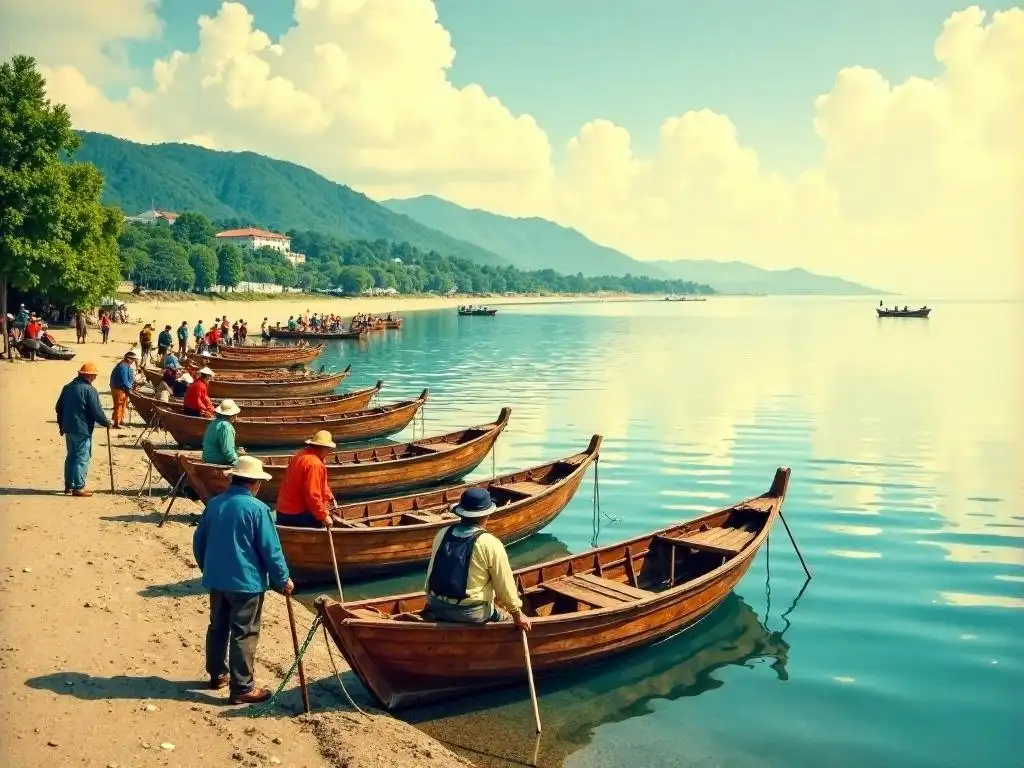
Welcome to Feudal Japan History, where we embark on a captivating journey through the shadows of Japan’s feudal era. Here, we delve into the intricate tapestry of historical, cultural, and societal aspects that shaped this fascinating period. In our featured article, discover how Japan's isolationism profoundly influenced its maritime economy, a topic that unveils the delicate balance between tradition and trade. Are you ready to explore the hidden currents that directed Japan's economic course during its isolation? Dive in and uncover the stories that shaped a nation!
Introduction to Japan's Isolationism and Maritime Economy
Japan's maritime economy has undergone significant transformations throughout its history, but perhaps none were as profound as during the period of isolationism that characterized the Edo period (1603-1868). This era of seclusion, officially known as sakoku, was marked by a series of policies that severely restricted foreign interaction and trade. Although these isolationist policies aimed to preserve Japanese culture and political stability, they also had profound implications for Japan's maritime economy.
Understanding the balance between isolation and economic necessity reveals how Japan navigated its relationship with the sea, and how these policies ultimately shaped its economic landscape. This article provides an in-depth examination of the intricate relationship between Japan's isolationism and its maritime economy, shedding light on the historical, cultural, and societal dynamics at play.
Overview of Japan's Isolationist Policies
The isolationist policies of Japan were formalized during the early years of the Edo period. The Tokugawa shogunate implemented strict regulations that limited trade and contact with foreign nations. Key components included:
- Severely restricted foreign trade: The shogunate allowed trade only through designated ports, such as Nagasaki, where the Dutch and Chinese were permitted to operate.
- Banning of Christianity: The suppression of Christianity aimed to eliminate foreign influence that could destabilize Japanese society.
- Strict regulations on travel: Japanese citizens were largely prohibited from traveling abroad, and foreigners were forbidden from entering the country.
These policies reflected a desire to maintain social order and cultural integrity but also led to a unique situation where maritime activities were limited yet strategically managed.
Significance of Maritime Economy in Feudal Japan
Despite the constraints imposed by isolationism, Japan's maritime economy remained vital. The country relied heavily on its extensive coastline and rich fishing grounds. Key aspects include:
- Fishing and aquaculture: Traditional fishing practices sustained local communities and contributed to food security.
- Domestic maritime trade: Coastal and riverine trade flourished, facilitating the exchange of goods among different regions of Japan.
- Shipbuilding industry: The demand for vessels, primarily for fishing and transport, spurred advancements in shipbuilding techniques.
These elements illustrate that even within the framework of isolationist policies, Japan's maritime economy adapted and thrived in response to internal demand.
Historical Context of Japan's Isolationism
To fully grasp the impact of isolationism on Japan's maritime economy, it is essential to explore the historical context surrounding these policies. The political landscape during this time was complex, marked by power struggles and the consolidation of authority.
Political Landscape During the Edo Period
The Edo period was characterized by a centralized feudal system under the Tokugawa shogunate. This era saw:
- Stability and peace: The long-lasting peace known as the Pax Tokugawa allowed for economic activities to flourish, albeit within the confines of isolationist policies.
- Social hierarchy: The rigid class structure influenced maritime activities, with samurai, merchants, and farmers each playing distinct roles in the economy.
- Internal trade networks: Increased internal trade supported local economies, as the shogunate encouraged agricultural production and consumption.
This political stability, coupled with isolationist policies, cultivated a unique maritime economy that was self-sufficient yet limited in external engagement.
Key Figures in the Adoption of Isolationist Policies
Several influential figures played crucial roles in shaping Japan's isolationist stance. Notable among them are:
- Tokugawa Ieyasu: The founder of the Tokugawa shogunate, he established the framework for isolationism as a means to consolidate power.
- Mitsukuni Tokugawa: A prominent shogunal figure who supported policies that aimed to limit foreign influence and bolster domestic unity.
- Dutch traders: While they were allowed limited access to Japan, their presence was heavily monitored, reflecting the delicate balance the shogunate maintained with foreign entities.
These key figures highlight the interplay of power and policy that defined Japan's approach to isolationism and its maritime economy, setting the stage for the transformations that would follow in the late 19th century.
Impact of Isolationism on Japan’s Maritime Trade
Japan's period of isolationism, particularly during the Edo period (1603-1868), profoundly affected its maritime trade. The government, under the Tokugawa shogunate, implemented strict policies that limited foreign interaction and controlled domestic activities related to the sea. This isolationist stance aimed to maintain social order and prevent foreign influence, but it also resulted in significant shifts within Japan's maritime economy.
Decline of International Trade Relations
During the isolationist era, Japan saw a marked decline in international trade relations. The shogunate enforced the Sakoku policy, which restricted foreign contact and trade primarily to the Dutch and Chinese, who were confined to the port of Nagasaki. This limited engagement led to a significant reduction in the diversity of goods available to the Japanese populace.
While the Dutch provided some access to Western knowledge and technology, the overall impact was a narrowing of Japan's economic interactions with the global market. Other nations were effectively barred from trading with Japan, resulting in a stagnant economy that missed out on the innovations and trade opportunities available elsewhere. The isolation not only diminished the volume of maritime trade but also curtailed the exchange of cultural and technological ideas that could have enriched Japanese society.
Shift from Open Seas to Controlled Waters
The isolationist policies also marked a shift from open seas to controlled waters. The Tokugawa government established strict regulations governing maritime activities. The focus shifted from open maritime exploration and trade to the management of domestic waterways and fishing practices.
This control was evident in the licensing system for ships, which required vessels to obtain permission to sail. The government monitored coastal activities, emphasizing local resource management over international commerce. The result was a more insular maritime environment where fishing and local trade flourished within controlled parameters, but opportunities for broader maritime ventures were severely limited.
Economic Ramifications of Isolationism on Maritime Activities
The economic ramifications of Japan's isolationism on maritime activities were profound, affecting both resource management and technological advancements within the maritime sector. As Japan focused inward, the implications for its economy were significant.
Changes in Fishing and Resource Management
One of the most notable changes during this period was in fishing and resource management. With emphasis placed on self-sufficiency and local fisheries, Japan developed sophisticated methods of managing fish stocks and coastal resources. This focus on sustainable practices led to advancements in local fishing techniques, promoting the use of nets and traps that allowed for a more controlled fishing environment.
However, the limited scope of maritime interactions meant that Japan could not fully exploit its rich marine resources. Instead of expanding fishing practices through trade and collaboration with other nations, Japan relied solely on domestic knowledge. This led to a stable but relatively stagnant fishing industry that lacked the innovations found in other maritime nations during the same period.
Effects on Shipbuilding and Maritime Technology
The isolationist policies also had significant effects on shipbuilding and maritime technology. With limited external influences and trade, Japan's shipbuilding practices remained largely traditional. The focus was on developing vessels that suited local needs rather than adopting or innovating based on global advancements.
While Japan maintained a strong tradition of shipbuilding, the lack of competition and exposure to international maritime technology inhibited progress. As a result, Japanese vessels, such as the "sampan" and "bune," evolved within the constraints of isolation, focusing on coastal and riverine navigation rather than the oceanic capabilities seen in other parts of the world. This ultimately limited Japan's ability to engage in larger-scale maritime activities and exploration, stunting the growth of its maritime economy during this crucial period of its history.
Cultural Implications of Japan's Isolationist Maritime Economy
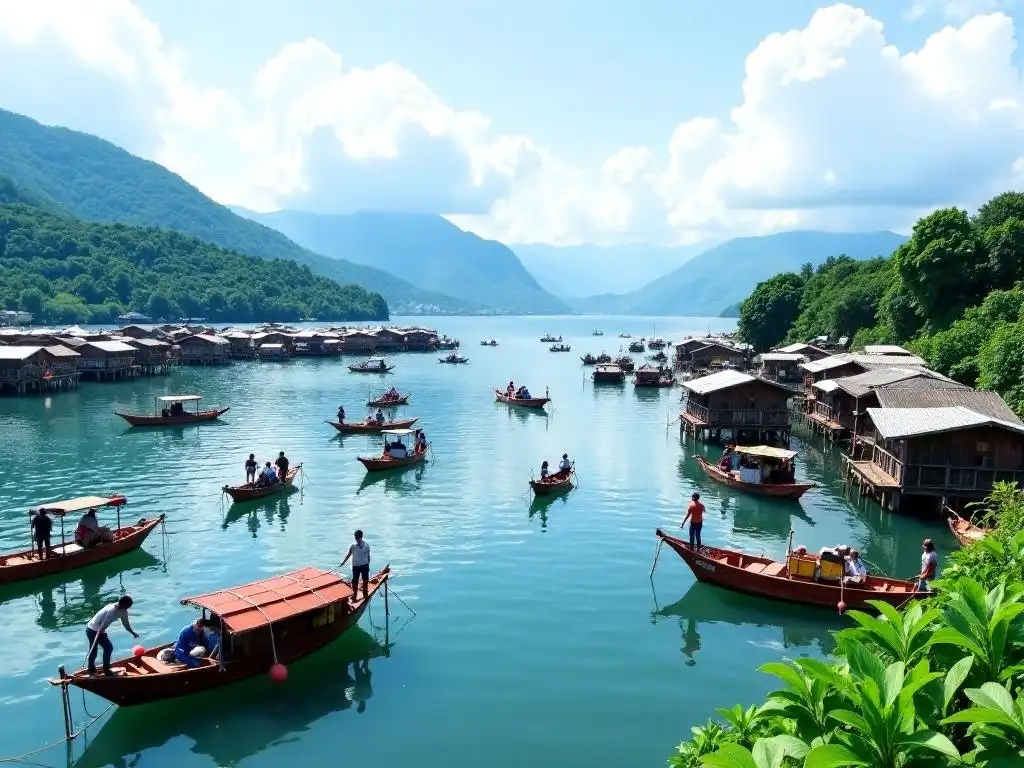
The isolationist policies adopted by Japan, particularly during the Edo period (1603-1868), had profound cultural implications that shaped the nation's maritime economy. By restricting foreign influence and trade, Japan fostered a unique maritime culture that emphasized self-sufficiency and local traditions. This isolation allowed Japanese society to develop its own customs, art forms, and technologies without the direct impact of foreign ideologies and practices, which in turn influenced the maritime economy. The emphasis on domestic production and consumption created a distinct maritime identity that celebrated local craftsmanship and resourcefulness.
The isolationist approach also affected Japan's relationship with the sea. Rather than relying on foreign maritime trade, Japanese communities became adept at using their immediate resources for fishing, shipbuilding, and trade within their own borders. This led to the development of specialized local industries and practices, including unique fishing techniques and ship designs that reflected the geographical and cultural contexts of various regions. The result was a rich tapestry of maritime traditions deeply rooted in Japanese identity, helping to preserve cultural practices that may have been lost in a more globally connected economy.
Influence on Maritime Culture and Traditions
The maritime culture of Japan during its period of isolation was characterized by a strong emphasis on local traditions and practices. With limited interaction with foreign nations, Japanese shipbuilders developed distinct designs, such as the "sampan" and "shinkansen", which were uniquely suited to the coastal waters and rivers of Japan. These vessels became symbols of regional pride and craftsmanship, often adorned with intricate carvings and paintings that told stories of local folklore and history.
Fishing communities also flourished under isolationism, developing techniques that were passed down through generations. Techniques like "ushi-iki" (traditional fishing using nets) and "yori-ami" (a method of catching fish using traps) became integral to local economies. Festivals celebrating the sea, such as the "Hamaori" and "Uminari", emerged, reinforcing communal ties and cultural identity.
Additionally, isolationism allowed for the preservation of Japanese aesthetics in maritime art. Traditional paintings and textiles often depicted maritime themes, illustrating Japan's deep connection to the sea. This cultural expression not only enriched Japan's artistic heritage but also reinforced the significance of maritime activities in everyday life.
Preservation of Japanese Identity Through Isolationism
Japan's isolationist policies played a crucial role in preserving its national identity during a time when many nations were opening up to global trade and cultural exchange. By limiting foreign influence, especially from Western powers, Japan was able to maintain its language, customs, and social structures. This preservation of identity was particularly significant in maritime contexts, where the sea was seen as both a resource and a boundary that separated Japan from potential external domination.
The cultural framework established during isolation allowed for a strong sense of nationalism to develop. Maritime narratives were infused with themes of resilience and self-reliance, reinforcing the notion that Japan could thrive independently of foreign resources and influence. This mindset contributed to a maritime economy that prioritized domestic products and services, further embedding the idea of a unique Japanese identity within the fabric of everyday life.
The result was a society that viewed itself through the lens of its maritime practices, celebrating local traditions and innovations while fostering a deep-seated pride in its heritage. By cultivating a sense of belonging tied to maritime activities, Japan was able to navigate the challenges posed by isolationism, ultimately leading to a rich and enduring cultural legacy.
Comparative Analysis: Japan’s Isolationism vs. Other Countries
Japan's isolationist policies during the Edo period provide a unique case study in how isolationism can shape a nation's maritime economy. Comparing Japan's experience with other countries that adopted similar policies reveals both similarities and differences in outcomes and cultural implications.
The stark contrast between Japan's isolationism and the experiences of other nations facing external pressures due to maritime expansion highlights the diverse ways in which societies can respond to isolationist policies. Countries such as China and Korea exhibited varying degrees of isolationism, yet the maritime economic impacts differed significantly, influenced by geographical, political, and cultural factors.
Isolationist Policies in Other Nations
Throughout history, several nations have implemented isolationist policies, often as a response to external threats or the desire to maintain cultural integrity. In the 17th century, the Qing Dynasty in China restricted foreign commerce and limited maritime activities, aiming to protect its sovereignty and cultural heritage. Similarly, Korea’s Joseon Dynasty adopted isolationist practices, known as "Sadae", which prioritized Confucian values and minimized foreign influence.
These isolationist policies, while protecting cultural identity, often led to economic stagnation and missed opportunities for maritime trade. Unlike Japan, which developed a robust internal maritime economy, these nations struggled with balancing cultural preservation and economic growth, resulting in vulnerabilities when faced with foreign pressures later on.
Differences in Maritime Economic Impact
The impact of isolationism on maritime economies varies significantly between Japan and other nations. Japan's policies led to a self-sufficient maritime economy that thrived on local resources and craftsmanship, creating a rich cultural identity linked to the sea. In contrast, China's and Korea's isolationist approaches resulted in economic challenges, as they remained less competitive in the global maritime trade landscape.
For instance, while Japan's local fishing and shipbuilding industries flourished, China and Korea's restrictions led to a decline in their maritime capabilities. This decline became evident when foreign powers began to exert influence in the 19th century, as both nations struggled to modernize their economies and maritime practices in response to external pressures, while Japan successfully transitioned into a major maritime power following the Meiji Restoration.
While isolationism can serve to protect cultural identity, the varying maritime economic impacts observed in Japan compared to other nations underscore the importance of context in shaping these policies' outcomes. Japan's experience illustrates how a well-managed isolationist approach can foster cultural resilience and economic prosperity, while other nations faced significant challenges due to their inability to adapt to changing global dynamics.
Conclusion: The Legacy of Isolationism on Japan's Maritime Economy
The period of isolationism, particularly during the Edo period (1603-1868), has left a profound and lasting impact on Japan's maritime economy. The Sakoku policy, which restricted foreign influence and trade, shaped not only Japan's economic landscape but also its cultural and societal development. By closing its borders to most foreign interactions, Japan fostered a unique domestic economy that thrived on internal trade and self-sufficiency. However, this isolation also meant that Japan missed out on significant technological advancements and global economic trends during this time.
The legacy of Japan's isolationist policies is evident in the way the nation approached maritime activities. While the restrictions led to the development of unique domestic industries, such as shipbuilding and fishing techniques that were adapted to local needs, they also curbed the potential for international trade and the modernization of maritime practices. Ultimately, Japan's brief re-emergence into the global economy in the mid-19th century, following the end of isolationism, revealed both the strengths and weaknesses fostered by centuries of maritime isolation.
Summary of Key Findings
- Economic Self-Sufficiency: Japan's isolationism led to the growth of a self-sufficient economy, with a focus on internal trade and local resources. The emphasis on domestic industries allowed Japan to develop unique fishing and shipbuilding technologies.
- Cultural Development: The limited foreign interaction fostered a distinct Japanese maritime culture, emphasizing local customs and practices, which influenced everything from culinary traditions to art and craftsmanship.
- Missed Opportunities: While Japan developed robust internal maritime practices, the country fell behind in adopting new technologies and maritime innovations that were prevalent in other parts of the world during the 17th and 18th centuries.
- Re-emergence and Adaptation: After the end of isolationism, Japan had to adapt quickly to a rapidly changing global economy, leading to significant reforms in its maritime policies and practices.
- Long-Term Economic Impact: The isolationist policies set the stage for Japan's eventual industrialization and emergence as a maritime power in the late 19th century, although the initial isolation created challenges that required substantial effort to overcome.
Future Research Directions on Japan's Economic Isolationism
Future research on Japan's economic isolationism can delve into various areas to better understand its complexities and nuances:
- Comparative Studies: Researchers could explore comparative studies between Japan's isolationist policies and those of other nations during similar periods, examining how isolationism affected their respective maritime economies.
- Technological Impacts: An in-depth analysis of the technological advancements that Japan missed during its isolation could provide insights into how these gaps influenced later maritime development and modernization efforts.
- Cultural Exchanges: Investigating the limited cultural exchanges that did occur during isolationism could reveal how even restricted interactions impacted Japan's maritime culture and practices.
- Regional Variations: Examining how different regions within Japan adapted to isolationist policies could illuminate diverse maritime economic strategies and their outcomes.
- Global Context: Placing Japan's isolationism within a broader global context could enhance the understanding of its implications on international trade dynamics and maritime relations in the 19th century.
By exploring these directions, scholars can contribute to a more comprehensive understanding of Japan's isolationist policies and their enduring legacy on the maritime economy.
- Introduction to Japan's Isolationism and Maritime Economy
- Historical Context of Japan's Isolationism
- Impact of Isolationism on Japan’s Maritime Trade
- Economic Ramifications of Isolationism on Maritime Activities
- Cultural Implications of Japan's Isolationist Maritime Economy
- Comparative Analysis: Japan’s Isolationism vs. Other Countries
- Conclusion: The Legacy of Isolationism on Japan's Maritime Economy
- What is Japan's isolationism during the feudal era?
- How did isolationism impact Japan's maritime trade?
- What were the key features of Japan's maritime economy before isolationism?
- Did isolationism completely halt maritime activities in Japan?
- What were the long-term effects of isolationism on Japan's economy?
Frequently Asked Questions
What is Japan's isolationism during the feudal era?
Japan's isolationism during the feudal era refers to the Sakoku policy, which restricted foreign influence and trade, significantly impacting the maritime economy.
How did isolationism impact Japan's maritime trade?
Isolationism limited Japan's interaction with foreign nations, leading to a decline in maritime trade and a focus on self-sufficiency, which shaped the domestic economy.
What were the key features of Japan's maritime economy before isolationism?
Before isolationism, Japan had a vibrant maritime economy characterized by fishing, trade with neighboring countries, and the development of various naval technologies.
Did isolationism completely halt maritime activities in Japan?
No, while isolationism restricted international trade, it did not completely halt maritime activities. Japan continued to engage in domestic fishing and limited trade with certain nations.
What were the long-term effects of isolationism on Japan's economy?
The long-term effects of isolationism included a stagnation of economic development in maritime sectors and a gradual shift toward modernization during the Meiji Restoration.
Final Reflection: The Enduring Legacy of Japan's Isolationism on Its Maritime Economy
The impact of Japan's historical isolationism is not merely a relic of the past; it continues to shape the dynamics of its maritime economy today. As we navigate an increasingly interconnected world, the lessons learned from Japan's unique approach to isolationism offer profound insights into how nations can balance self-sufficiency with global engagement. The delicate interplay between tradition and modernity in Japan's maritime practices serves as a striking reminder of the complexities inherent in economic policies influenced by cultural values.
The influence of Japan's isolationist policies has reverberated through its maritime economy, fostering a sense of resilience and innovation. This legacy is evident in the way Japan has cultivated its fishing industries and shipping practices, adapting to both domestic needs and international pressures. As noted by historian John Dower, “Japan's past is not just a story of isolation but a narrative of adaptation and transformation.” This observation underscores the ongoing relevance of Japan's maritime strategies, which continue to inspire discussions about sustainability and economic independence in a globalized context.
As we reflect on the lessons from Japan's isolationism, let us consider how these insights can inform our own lives and communities. How can we apply the principles of resilience and adaptability in our own economic pursuits? Embracing the balance between self-reliance and collaboration may empower us to navigate the complexities of our modern world. I invite you to explore these themes in your own context, drawing inspiration from Japan's journey to forge a maritime economy that honors its heritage while embracing the future.
Explore the Impact of Isolationism on Japan’s Future!
Thank you for diving into the fascinating interplay between isolationism and Japan's maritime economy! Your curiosity has uncovered how historical decisions shape modern realities. Now, it’s time to take your understanding further and make a difference.
Here are some ways you can engage with this topic:
- Dive Deeper: Read additional resources about Japan’s maritime history to enrich your knowledge and discover untold stories.
- Share Your Insights: Discuss this article with friends or on social media! Encourage conversations about how history influences today’s economic strategies.
- Get Involved: Join local or online historical discussion groups to connect with others who share your interest and broaden your perspective.
What aspect of Japan’s isolationist period do you find most intriguing, and how do you believe it shapes our world today?