
How Isolation Shaped Japan’s Domestic Economy During the Tokugawa Period

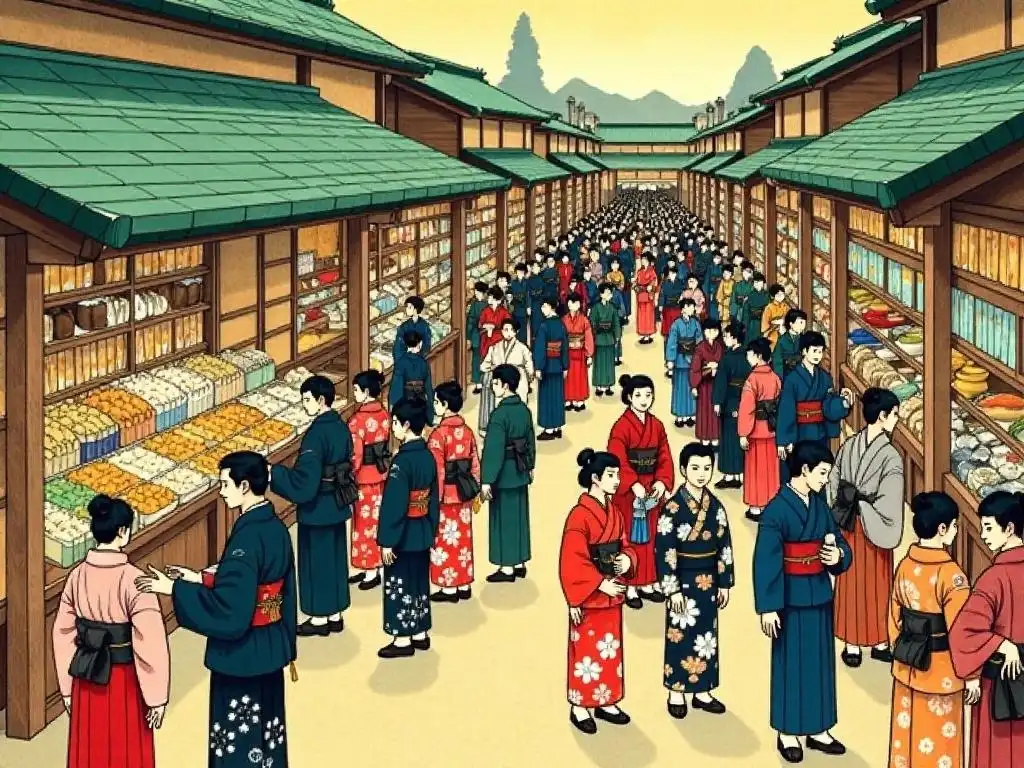
Welcome to Feudal Japan History, your gateway to the captivating world of Japan's feudal era! Here, we delve deep into the intricate tapestry of historical, cultural, and societal aspects that defined this remarkable time. In our featured article, "How Isolation Shaped Japan’s Domestic Economy During the Tokugawa Period," we invite you to uncover the profound impact of isolation on the economic landscape of the Tokugawa Period.
What secrets lie within this era of self-imposed seclusion? Join us as we explore the threads that wove together a unique domestic economy, inviting you to expand your understanding and appreciation of Japan's rich past. The journey begins now!
- Introduction to the Tokugawa Period Domestic Economy
- The Foundation of the Tokugawa Domestic Economy
- Isolationist Policies and Their Economic Implications
- Key Sectors of the Tokugawa Domestic Economy
- Challenges Faced by the Tokugawa Domestic Economy
- The Evolution of Economic Practices in Isolation
- Conclusion: The Legacy of the Tokugawa Period Domestic Economy
- References and Further Reading on Tokugawa Period Domestic Economy
- Frequently Asked Questions
- Final Reflection: The Enduring Legacy of the Tokugawa Period Domestic Economy
- Unveil the Lessons from Japan's Isolation: Take Action Today!
Introduction to the Tokugawa Period Domestic Economy
The Tokugawa Period, spanning from 1603 to 1868, marks a significant era in Japan's history characterized by political stability, social order, and economic transformation. During this time, the Tokugawa shogunate implemented strict isolationist policies that profoundly influenced Japan’s domestic economy. The deliberate choice to limit foreign interaction created a unique environment that fostered internal economic growth while simultaneously guarding against external threats. This article delves into the various aspects of the Tokugawa Period domestic economy, examining how isolation shaped agricultural practices, trade, and urban development, ultimately leading to a self-sufficient yet complex economic landscape.
Overview of the Tokugawa Period
The Tokugawa Period, also known as the Edo Period, was initiated by Tokugawa Ieyasu after his victory at the Battle of Sekigahara. This era is notable for the establishment of a feudal system that centralized power in the hands of the shogunate while allowing local daimyōs (feudal lords) to govern their domains with a degree of autonomy. The resulting political stability facilitated advancements in various sectors, including agriculture, commerce, and crafts.
Key Features of the Tokugawa Period:
- Political Structure: The shogunate maintained control through a rigid hierarchy and a system of alternate attendance (sankin-kōtai), which required daimyōs to spend every other year in Edo (modern-day Tokyo).
- Social Order: Society was classified into four primary classes: samurai, farmers, artisans, and merchants, which reinforced a structured social hierarchy.
- Cultural Flourishing: This period also saw a rich cultural development, with the rise of literature, theater, and traditional arts, influenced by the stability and prosperity of the time.
The combination of these elements created a fertile ground for economic growth, albeit within a confined framework dictated by isolationist policies.
Significance of Isolationist Policies on Economic Development
The isolationist policies, formally known as sakoku, were instituted in the 1630s and lasted for over two centuries. These policies severely restricted foreign trade and interaction, allowing only limited contact with the Dutch and Chinese through the port of Nagasaki. While these measures were primarily aimed at preventing the spread of Christianity and foreign influence, they had profound implications for Japan’s domestic economy.
Economic Impacts of Sakoku:
- Agricultural Self-Sufficiency: With limited access to foreign goods, Japan focused on enhancing agricultural production, leading to improvements in farming techniques and crop yields. This self-sufficiency was crucial for sustaining the population and fostering local markets.
- Emergence of Regional Economies: The isolation encouraged the development of regional economies, each specializing in different products. For instance, the Kanto region became known for rice production, while the Kansai area specialized in textiles. This specialization promoted internal trade and supported the growth of cities.
- Rise of Merchant Class: As the economy grew, so did the merchant class, which began to gain influence and wealth, challenging the traditional social order. The rise of commerce led to the emergence of urban centers like Edo, Osaka, and Kyoto, becoming bustling hubs of trade and culture.
The isolationist policies of the Tokugawa Period played a pivotal role in shaping Japan's domestic economy. By fostering a self-sufficient, regionally diverse economic landscape, these policies not only preserved Japan's cultural identity but also laid the groundwork for future economic developments in the Meiji Restoration and beyond.
The Foundation of the Tokugawa Domestic Economy
The Tokugawa Period, spanning from 1603 to 1868, was marked by a series of isolationist policies that profoundly influenced Japan’s domestic economy. This era saw the establishment of a stable, centralized government under the Tokugawa shogunate, which prioritized agricultural productivity and internal commerce.
The domestic economy during this period was primarily agrarian, with the majority of the population engaged in farming. Agricultural practices were heavily regulated, leading to significant advancements in techniques and crop yields. The Tokugawa regime implemented a system of land surveys and taxation that ensured a stable revenue stream for the shogunate while incentivizing farmers to improve their productivity.
The isolationist policies, particularly the Sakoku (locked country) policy, limited foreign trade and interaction. This allowed the Tokugawa shogunate to focus on developing a self-sufficient economy that relied heavily on domestic resources. As a result, local economies flourished as regions specialized in various agricultural products, leading to a more interconnected domestic market.
Agricultural Practices During the Tokugawa Era
Agriculture was the backbone of the Tokugawa domestic economy, with rice being the primary crop cultivated across the archipelago. The shogunate's focus on agricultural improvement led to several key practices that transformed farming during this period:
- Rice Cultivation: The Tokugawa government promoted wet-rice cultivation, which became the standard agricultural practice. This method allowed for multiple cropping seasons, significantly increasing the yield.
- Crop Rotation and Diversification: Farmers began implementing crop rotation and planting a variety of crops, such as millet, barley, and vegetables, which not only enhanced soil fertility but also reduced the risk of famine.
- Irrigation and Infrastructure: Investments in irrigation systems, such as canals and reservoirs, improved water management. This infrastructure supported increased agricultural production and helped stabilize food supplies.
- Agricultural Manuals: The publication of farming manuals disseminated knowledge about improved techniques and crop management practices, further boosting productivity.
As a result, the agricultural output during the Tokugawa Period not only supported the local populace but also facilitated trade and commerce that would emerge in urban centers.
The Role of Daimyo in Economic Management
The daimyo, feudal lords who governed various domains across Japan, played a crucial role in managing the domestic economy during the Tokugawa Period. Their influence extended beyond military leadership, as they were also responsible for economic policies and local governance. Key aspects of their involvement include:
- Land Management: Daimyo were tasked with overseeing the land within their domains, ensuring effective agricultural practices, and managing the distribution of resources. They implemented policies that encouraged farming and increased productivity.
- Taxation Systems: Each daimyo established their own taxation systems to collect rice and other goods from farmers. This not only provided revenue for the daimyo but also ensured that the local economy remained robust.
- Trade Regulation: The daimyo controlled trade routes and markets within their territories, allowing them to regulate prices and access to goods. This often resulted in localized economies that were somewhat insulated from fluctuations in the broader market.
- Investment in Infrastructure: Many daimyo invested in infrastructure projects, such as roads and markets, to promote trade and communication within their domains. This contributed to regional economic growth and inter-domain trade.
The economic policies of the daimyo were instrumental in shaping the Tokugawa domestic economy, creating a network of interdependent local economies that thrived under the shogunate’s isolationist policies.
The Impact of Feudalism on Local Economies
Feudalism had a profound impact on local economies during the Tokugawa Period, establishing a hierarchical structure that dictated economic interactions and resource distribution. The following points illustrate this influence:
- Local Autonomy: Under the feudal system, local lords governed their domains independently, allowing them to tailor economic policies to fit regional needs. This autonomy led to diverse economic practices and specialization.
- Market Development: The rise of markets in castle towns (jokamachi) became a hallmark of the Tokugawa economy. As merchants and artisans settled in these towns, they contributed to a burgeoning urban economy while maintaining ties to agricultural production.
- Social Stratification: The rigid social hierarchy of the Tokugawa Period meant that economic opportunities were often limited by one's class. While samurai and merchants enjoyed certain privileges, peasants were often bound to the land and subject to the demands of their lords.
- Trade Networks: The feudal structure facilitated the development of extensive trade networks among domains. Although the shogunate restricted foreign trade, domestic trade flourished, with goods such as textiles, ceramics, and handicrafts circulating between regions.
The Tokugawa Period's feudal system not only shaped local economies but also established a foundation for Japan's economic development, demonstrating how isolationist policies can lead to a unique and robust domestic economy.
Isolationist Policies and Their Economic Implications

Isolationist policies during the Tokugawa Period, specifically the implementation of Sakoku (鎖国), had profound effects on Japan's domestic economy. The shogunate's decision to limit foreign interactions was motivated by a desire to maintain political stability, control over society, and influence from foreign powers, particularly European nations. As a result, the Tokugawa government enforced strict regulations that not only shaped international trade but also significantly impacted domestic economic structures.
Sakoku: The Closed Country Edict
The Sakoku policy, established in 1635, was a series of edicts that effectively closed Japan to the outside world for over two centuries. This policy was primarily aimed at restricting the influence of Christianity and foreign trade that could destabilize the Tokugawa regime. Here are some key aspects of Sakoku:
- Limited Foreign Contact: Under this edict, foreign ships were barred from entering Japanese ports, except for designated Dutch and Chinese traders at Nagasaki. This created a controlled environment for foreign interaction, limiting it to specific times and places.
- Restrictions on Japanese Citizens: Japanese nationals were prohibited from traveling abroad. If any were found overseas, they faced severe penalties, including execution. This restriction aimed to prevent the introduction of foreign ideas and practices that could threaten the Tokugawa order.
- Economic Self-Sufficiency: The closed-country policy encouraged the development of a self-sustaining economy. The Tokugawa shogunate promoted domestic production and consumption, reducing reliance on foreign goods and services.
The Sakoku policy had lasting implications for Japan's economic landscape, setting the stage for a unique domestic economy that was insulated from external influences.
Effects of Isolation on Trade and Commerce
The isolationist policies of the Tokugawa Period brought about significant changes in trade and commerce within Japan. The following points illustrate these effects:
- Decline in International Trade: With most foreign trade restricted, Japan saw a substantial decline in international commerce. The trade that continued was heavily regulated, leading to a decrease in the variety of goods available to Japanese consumers.
- Emergence of Domestic Trade Networks: As foreign trade dwindled, domestic trade networks flourished. Regional markets developed, and merchants began to establish trade routes connecting different provinces. This led to the growth of local economies and the rise of merchant classes.
- Innovation in Local Industries: Isolation from foreign competition spurred innovation within local industries. Artisans and craftsmen were encouraged to improve their techniques and produce goods that met local demands. This resulted in the development of unique Japanese products, such as textiles, ceramics, and paper.
- Currency Standardization: The Tokugawa government also implemented reforms to standardize currency, which facilitated trade and commerce within Japan. This reform helped to stabilize the economy and enhance market activities.
While the isolationist policies curtailed international trade, they inadvertently stimulated domestic trade and fostered innovation in local industries, changing the landscape of commerce in Japan.
Domestic Market Growth in the Absence of Foreign Influence
The Tokugawa Period saw substantial growth in the domestic market, driven by the absence of foreign influence. Several factors contributed to this growth:
- Increased Agricultural Productivity: Agricultural advancements during this period led to a surplus in food production. Improved farming techniques and crop diversification allowed for greater food security, which, in turn, supported population growth and urbanization.
- Urban Centers Development: Major cities like Edo (modern-day Tokyo), Osaka, and Kyoto transformed into bustling urban centers. The concentration of population and wealth in these areas fostered a vibrant market for goods and services, leading to the growth of a consumer economy.
- Cultural Flourishing: The isolation also allowed for the development of a distinct culture, which influenced consumer preferences. Traditional crafts, performing arts, and literature flourished, creating a unique demand for locally produced cultural goods.
- Merchant Class Ascendancy: The rise of a powerful merchant class, known as the chōnin, played a crucial role in the domestic economy. This class wielded significant economic power and contributed to the growth of commerce and the expansion of markets.
The Tokugawa Period's isolationist policies, while limiting foreign interaction, ultimately led to a robust domestic economy characterized by increased agricultural production, urban growth, and cultural development. The Tokugawa Period domestic economy thrived in this unique environment, laying the groundwork for Japan's future economic transformations.
Key Sectors of the Tokugawa Domestic Economy
Agriculture: The Backbone of the Economy
During the Tokugawa Period (1603-1868), agriculture served as the critical foundation of Japan’s domestic economy. With the implementation of isolationist policies, the government emphasized self-sufficiency, leading to significant advancements in agricultural practices. The agrarian sector not only sustained the population but also generated the wealth necessary for the samurai class and the ruling shogunate.
Key Developments in Agriculture
- Land Reforms: The Tokugawa shogunate introduced land surveys that aimed to measure and classify agricultural land. This led to better tax assessments and encouraged efficient farming practices.
- Rice Production: Rice was the staple crop and served as the primary currency for taxes. The government established a system where rice was used to pay samurai and fund the shogunate, reinforcing its importance in the domestic economy.
- Technological Advancements: Innovations such as improved irrigation techniques, the introduction of new farming tools, and crop rotation methods significantly increased productivity. For instance, the use of the "yazuka" system allowed for multiple rice harvests throughout the year.
- Regional Specialization: Different regions began to specialize in specific crops. For example, the fertile plains of Kanto were renowned for rice, while regions like Akita excelled in producing sake rice. This diversification not only increased food security but also stimulated local economies.
The agricultural sector's growth supported Japan's population, which swelled to approximately 30 million by the late Tokugawa Period, fostering a stable society and economy.
Artisanal Craftsmanship and Local Industries
The Tokugawa Period saw a flourishing of artisanal craftsmanship, with local industries contributing significantly to the domestic economy. The isolationist policies of the era encouraged self-reliance, leading to the development of traditional crafts that became cornerstones of regional economies.
Notable Craftsmanship and Industries
- Textiles: The production of silk and cotton textiles thrived, particularly in regions like Nishijin and Kagawa. Artisans utilized intricate weaving techniques, producing high-quality fabrics that became highly sought after.
- Ceramics and Pottery: Local pottery styles emerged, with regions like Arita and Imari gaining prominence for their distinctive porcelain. These handcrafted goods not only catered to local markets but also became valuable trade items when Japan engaged in limited international trade.
- Metalwork: The crafting of swords, tools, and household items showcased the skill of Japanese blacksmiths. The production of katana, for instance, became an art form, with smiths employing traditional techniques passed down through generations.
- Woodblock Printing: The rise of ukiyo-e (floating world pictures) during this period illustrated the cultural vibrancy of the time. Artists like Hokusai and Hiroshige popularized this craft, and woodblock prints became a key cultural export, reflecting everyday life and landscapes of Japan.
The dedication to artisanal craftsmanship not only fostered local economies but also contributed to a unique cultural identity that persisted throughout the Tokugawa Period.
The Rise of Merchant Classes and Urbanization
As agriculture and craftsmanship thrived, a new social class—the merchants—began to emerge, significantly impacting the Tokugawa domestic economy. Despite their initial low status in the rigid class structure, merchants gained wealth and influence, leading to substantial urbanization.
Factors Contributing to Merchant Growth
- Increased Trade: The Tokugawa shogunate established a network of roads and waterways, facilitating trade between regions. The rise of transportation networks allowed merchants to transport goods more efficiently, enhancing commerce.
- Urban Centers: Cities like Edo (modern-day Tokyo), Osaka, and Kyoto became bustling economic hubs. Edo, in particular, grew into one of the largest cities in the world, with a population exceeding one million by the late 18th century. This urbanization spurred economic activities, leading to a vibrant marketplace culture.
- Financial Innovations: The development of credit systems, such as the "suehiro," allowed merchants to finance their activities and expand their businesses. This shift towards a more complex economy enabled the rise of banking practices and financial institutions.
- Cultural Exchange: As urban centers thrived, they became melting pots of culture, ideas, and commerce. The merchant class began to patronize the arts, leading to the flourishing of theater, literature, and other cultural forms that enriched Japanese society.
The rise of the merchant class and urbanization during the Tokugawa Period laid the groundwork for Japan's transition from a feudal economy to a more modern capitalist system, setting the stage for future economic developments.
Challenges Faced by the Tokugawa Domestic Economy
Resource Limitations and Economic Stagnation
During the Tokugawa Period (1603-1868), Japan's domestic economy faced significant challenges primarily due to resource limitations and a resultant economic stagnation. The isolationist policies implemented by the Tokugawa shogunate, often referred to as sakoku, greatly restricted foreign trade and interaction. This self-imposed isolation meant that resources which could have been acquired through international trade were limited to domestic sources, leading to a less dynamic economy.
Limited Access to Raw Materials
The scarcity of certain raw materials impacted various industries, particularly textiles and metallurgy. For instance, while Japan had access to rice and some timber resources, essential metals such as iron had to be sourced locally, which often proved insufficient. This reliance on domestic production stifled innovation and efficiency, ultimately leading to higher production costs and reduced competitiveness. The following factors contributed to this stagnation:
- Geographic Constraints: Japan's mountainous terrain limited agricultural expansion and resource exploitation.
- Population Pressure: The growing population put a strain on available arable land, leading to over-farming and diminishing returns.
- Inflexible Trade Policies: The rigid trade regulations prevented the import of raw materials that could have enhanced domestic production capabilities.
Natural Disasters and Their Economic Impact
Natural disasters played a crucial role in shaping the Tokugawa domestic economy. Earthquakes, floods, and typhoons were common and had devastating effects on agriculture, which was the backbone of the economy. For instance, the Genroku era (1688-1704) faced several calamities that disrupted food production and led to widespread famine.
Economic Consequences of Disasters
- Crop Failures: Disasters often resulted in crop failures, drastically decreasing food supplies and leading to inflation in grain prices. The shortage forced many peasants into poverty and increased social unrest.
- Infrastructure Damage: Natural disasters destroyed transportation routes and irrigation systems, further hampering trade and agricultural productivity.
- Response Mechanisms: The Tokugawa shogunate developed response mechanisms like the koku system to manage food distribution during famines, but the effectiveness varied by region.
Internal Conflicts and Regional Disparities
The Tokugawa Period was marked by internal conflicts, often stemming from regional disparities in wealth and power. The rigid class structure and the feudal system created divisions that affected economic conditions across different areas of Japan.
Regional Economic Disparities
- Wealth Concentration: Wealth was concentrated in certain domains, particularly among the daimyō (feudal lords), leading to significant disparities in economic power. Regions such as Echigo and Kōzuke were often better off due to fertile lands and effective governance, while others struggled.
- Conflict and Stability: Internal conflicts, although less frequent than in earlier periods, still occurred and disrupted trade routes and agricultural output. For example, clashes between rival daimyō could lead to temporary blockades that isolated certain regions economically.
- Market Fragmentation: The lack of a unified market due to regional barriers hindered trade and created inefficiencies in the economy. The absence of a standardized currency also complicated transactions, further exacerbating economic issues.
The Tokugawa Period domestic economy was significantly challenged by resource limitations, natural disasters, and internal conflicts. These challenges not only stifled economic growth but also contributed to social unrest, setting the stage for the eventual transformations that would follow in the Meiji Restoration.
The Evolution of Economic Practices in Isolation

The Tokugawa Period (1603-1868) marked a significant transformation in Japan's domestic economy, primarily influenced by the isolationist policies established by the Tokugawa shogunate. This era saw a shift in economic practices that not only shaped the domestic markets but also impacted the societal structure of Japan. The emphasis on self-sufficiency and restricted foreign influence led to innovative adaptations within the economy, cultivating a unique environment for trade, industry, and culture to flourish under a closed society.
Shift from Barter to Currency-Based Transactions
The shift from barter to currency-based transactions during the Tokugawa Period played a pivotal role in the evolution of Japan’s domestic economy. Initially, local economies relied heavily on barter systems, where goods and services were exchanged directly. However, as the Tokugawa shogunate sought to standardize economic practices, the introduction of currency became essential for facilitating trade.
- Introduction of Coins: The shogunate minted various coins, such as the gold oban, silver ryo, and copper mon, which standardized the medium of exchange across the archipelago. This currency revolutionized trade by providing a reliable metric for value.
- Urbanization and Market Development: The emergence of towns and cities, such as Edo (modern-day Tokyo), led to the rise of merchant classes and the establishment of marketplaces. The use of currency enabled merchants to engage in more complex transactions, paving the way for a more dynamic economy.
- Banking Systems: The Tokugawa Period also saw the development of primitive banking systems, where merchants could loan money and engage in credit transactions. This further embedded currency in daily economic activities, transitioning Japan into a more sophisticated economic framework.
The transition to a currency-based economy not only facilitated trade but also contributed to the growth of a merchant class that would eventually play a significant role in Japan's economic landscape.
Development of Trade Networks within Japan
Despite the isolationist policies of the Tokugawa shogunate, internal trade networks flourished, forming the backbone of the Tokugawa Period domestic economy. The shogunate’s regulations allowed for a controlled environment where trade could be strategically developed.
- Regional Trade Routes: The establishment of key trade routes, such as the Tokaido and Nakasendo, connected major cities and facilitated the movement of goods. These routes were vital for the transport of rice, textiles, and other commodities, allowing local economies to thrive.
- Rise of the Merchant Class: As trade intensively developed, a wealthy merchant class emerged, who began to influence local economies and even politics. These merchants established trading companies and guilds, which played critical roles in regulating supply and demand.
- Cultural Exchange: While international trade was limited, internal trade networks allowed for the exchange of cultural and artistic practices. The movement of goods and ideas contributed to a rich cultural tapestry that characterized the Tokugawa Period.
In essence, the development of trade networks within Japan during the Tokugawa Period illustrated how isolationist policies could foster economic growth by prioritizing internal cohesion and self-sufficiency.
The Influence of Confucianism on Economic Policies
Confucianism fundamentally influenced the economic policies during the Tokugawa Period, shaping the values and practices within the domestic economy. The adoption of Confucian principles played a crucial role in establishing a moral framework for economic conduct.
- Meritocracy and Governance: Confucian ideals emphasized merit-based governance and the importance of education. This led to an educated bureaucracy that could manage economic affairs more effectively, ensuring that policies were aligned with the welfare of society.
- Agricultural Focus: Confucianism valued agriculture as the foundation of a stable economy. The Tokugawa shogunate promoted agrarian policies, leading to increased agricultural production and self-sufficiency, which were seen as essential for national stability.
- Social Hierarchy and Economic Roles: The rigid social hierarchy established under Confucian ideals dictated economic roles and responsibilities. Samurais, peasants, and merchants had prescribed functions, which influenced economic interactions and societal structure.
The influence of Confucianism on economic policies during the Tokugawa Period not only shaped the domestic economy but also reinforced societal values that prioritized harmony, stability, and respect for authority. This philosophical underpinning created a distinctive economic landscape that characterized Japan during its isolationist phase.
Conclusion: The Legacy of the Tokugawa Period Domestic Economy
The Tokugawa Period, spanning from 1603 to 1868, stands as a pivotal chapter in Japan's economic history, profoundly shaping its domestic economy through isolationist policies. These policies, primarily driven by the sakoku (closed country) edict, restricted foreign influence and trade, ultimately leading to a self-sufficient economic structure. The legacy of this era can still be observed in various facets of modern Japan's economy and societal organization.
Lasting Effects of Isolationist Policies on Modern Japan
The isolationist policies of the Tokugawa Period fostered a unique economic environment that emphasized internal development over external trade. This focus had several long-term effects:
- Agricultural Innovation: The Tokugawa regime prioritized agriculture, leading to advancements in farming techniques, crop rotation, and the introduction of new crops. This agricultural base remains fundamental to Japan's food security and rural economy today.
- Merchants and Urban Growth: The rise of a merchant class during this period contributed to urbanization. Cities like Edo (modern Tokyo) became economic hubs. The legacy of these urban centers is evident in Japan's contemporary emphasis on urban economics and the concentration of economic activities in metropolitan areas.
- Cultural Preservation and Economic Identity: The isolation allowed for the preservation of unique Japanese cultural practices, such as traditional crafts and local industries. These elements not only define Japan’s cultural identity but also contribute to its economy through tourism and the global demand for authentic Japanese goods.
In essence, the Tokugawa Period's isolationist policies laid the groundwork for a robust domestic economy that continued to evolve, demonstrating resilience and adaptability in the face of globalization.
Reflection on the Tokugawa Era’s Economic Achievements and Limitations
While the Tokugawa Period is often celebrated for its economic stability and growth, it also faced significant limitations that would later impact Japan's trajectory:
- Economic Stratification: The rigid social hierarchy created disparities in wealth and access to resources. The samurai class maintained privileges that often limited the economic mobility of the lower classes, leading to tension and unrest that would eventually culminate in the Meiji Restoration.
- Limited Foreign Trade: The strict trade regulations, while protecting domestic industries, stunted the growth of international commerce. Japan's late entry into global markets after the isolationist policies were lifted in the mid-19th century posed challenges for adapting to the competitive industrial landscape.
- Resource Allocation: The focus on agriculture led to an underdevelopment of other sectors, such as manufacturing and technology. This lack of diversification would later hinder Japan's ability to compete on a global scale during the Industrial Revolution.
The Tokugawa Period's domestic economy was marked by significant achievements in self-sufficiency and cultural preservation but also faced notable limitations. The balance between these factors continues to influence Japan's economic strategies and policies in the modern era, making the study of this period essential for understanding Japan's current economic landscape.
References and Further Reading on Tokugawa Period Domestic Economy
Suggested Books and Articles
-
"The Tokugawa World" by Gary P. Leupp
This book provides a comprehensive overview of the Tokugawa Period, exploring its political, social, and economic landscapes. Leupp delves into how isolationist policies influenced domestic trade and agriculture, making it an essential resource for understanding the complexities of the Tokugawa domestic economy.
-
"Japan's Economic Ascent: International Trade, Growth, and Structural Change" by Christopher J. McEwan
McEwan's work focuses on the long-term economic developments in Japan, including the Tokugawa Period. It offers insights into how isolationism shaped market structures and domestic production, providing a broader context for Japan’s economic history.
-
"The Making of Modern Japan" by John W. Dower
This seminal text discusses the transformation of Japan from the late feudal era through the Meiji Restoration. Dower highlights the economic implications of the Tokugawa isolation, emphasizing the relationships between social structures and economic policies.
-
"Tokugawa Japan: The Social and Economic History" by Thomas C. Smith
Smith's analysis of Tokugawa Japan offers a detailed examination of the economic systems that developed during this period. His exploration of agricultural practices, trade, and the impact of government policies on the domestic economy is particularly valuable.
-
"Japan's Economic History: 1600-1990" by D.C. North
This book provides a thorough examination of Japan's economic evolution, focusing on the Tokugawa Period. North discusses the implications of isolationist policies on domestic markets and economic growth.
Documentaries and Educational Resources
-
"Samurai: Behind the Blade"
This documentary provides insights into the life of samurai during the Tokugawa Period, including their role in economic and social structures. It offers a visual understanding of how isolation impacted various aspects of Japanese life.
-
"The Last Samurai: The History of the Samurai in Japan"
While focused broadly on the samurai, this resource touches on the economic conditions during the Tokugawa Period. The film explores how the samurai class influenced the domestic economy and trade regulations.
-
Online Course: "Japan’s Economic History: From Feudalism to Globalization"
Offered by various educational platforms, this course includes modules specifically addressing the Tokugawa Period. It covers the economic policies and isolationist practices that shaped Japan’s domestic economy.
-
"A History of Japan: The Tokugawa Period" (YouTube Series)
This educational series provides episodes focused on the Tokugawa Period, discussing key economic policies and their effects on society. It's a great resource for visual learners seeking to understand this era in-depth.
These references and resources provide a solid foundation for anyone interested in exploring the Tokugawa Period's domestic economy and the broader implications of Japan's isolationist policies.
Frequently Asked Questions
What was the Tokugawa Period?
The Tokugawa Period, lasting from 1603 to 1868, was a time of peace and stability in Japan, characterized by a feudal system under the Tokugawa shogunate.
How did isolation impact Japan's domestic economy?
Japan's isolation during the Tokugawa Period led to a self-sufficient economy, limiting foreign trade and encouraging local production, which fostered agriculture and craftsmanship.
What role did agriculture play in the Tokugawa domestic economy?
Agriculture was the backbone of the Tokugawa domestic economy, with rice as the primary crop, serving as both a staple food and a currency for trade.
The social structure of the Tokugawa Period, which included samurai, farmers, artisans, and merchants, created a hierarchical system that dictated economic roles and responsibilities, promoting stability.
What were the effects of trade restrictions on Japan’s economy?
Trade restrictions during the Tokugawa Period limited foreign influences but allowed for the development of domestic industries, ultimately leading to a unique economic identity for Japan.
Final Reflection: The Enduring Legacy of the Tokugawa Period Domestic Economy
The Tokugawa Period domestic economy serves as a profound reminder of how isolation can shape a nation's identity and economic practices. In an era marked by seclusion, Japan developed unique systems of trade, agriculture, and social structure that not only sustained its population but also laid the groundwork for future economic transformations. The lessons learned from this period resonate today, as nations grapple with the complexities of globalization and the balance between openness and self-sufficiency.
Clearly, the Tokugawa Period has left an indelible mark on Japan's cultural and economic landscape. The isolationist policies fostered a sense of internal unity and innovation, allowing for the flourishing of local industries and crafts. As we reflect on this historical context, we can see how the principles established during this time continue to influence Japan's approach to economic resilience and cultural preservation. In the midst of isolation, we find the seeds of creativity and strength that define a nation.
As we consider the implications of the Tokugawa Period domestic economy, I invite you to reflect on your own relationship with the world around you. How can the lessons of self-sufficiency, innovation, and cultural pride from this historical period inspire you in your personal or professional life? Embrace the challenge of finding balance in your own pursuits, drawing from the rich tapestry of Japan's past to inform your future decisions. Let the story of Japan's isolation be a catalyst for your growth and understanding in an ever-connected world.
Unveil the Lessons from Japan's Isolation: Take Action Today!
Thank you for diving into the intriguing world of Japan's Tokugawa period! By exploring how isolation shaped its domestic economy, you've gained valuable insights into the intricate relationship between culture and commerce. Now, it's time to translate that knowledge into action.
Here are some steps you can take to deepen your understanding and engagement:
- Start a discussion: Join a local history group or an online community to share your thoughts on the effects of isolation on modern economies.
- Explore further: Read literature or watch documentaries that provide a deeper understanding of the Tokugawa era and its lasting impact on contemporary Japan.
- Share what you learned: Post your insights on social media to inspire others and ignite conversations about how historical events shape today's society.
What do you think is the most surprising way Japan's isolation during the Tokugawa period continues to influence its economy today?