
Japan and the West: A Timeline of Key Events in Foreign Relations

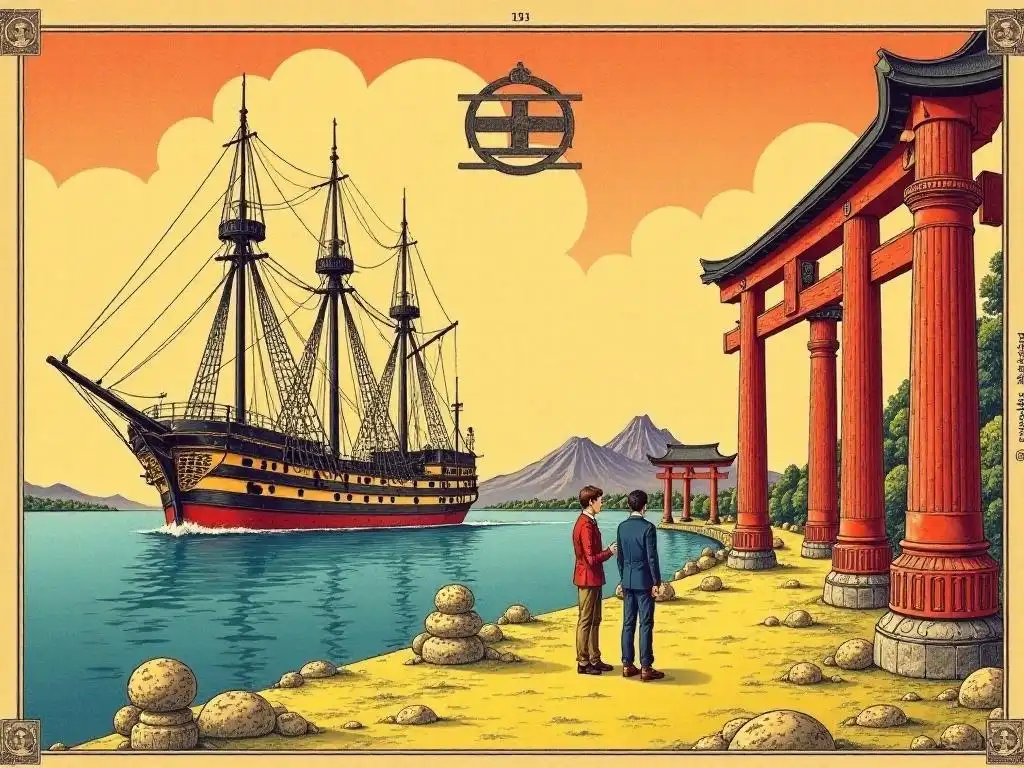
Welcome to Feudal Japan History, where we embark on a captivating journey through the intricate tapestry of Japan’s feudal era. Here, you will uncover the profound historical, cultural, and societal dynamics that shaped this remarkable period. Our featured article, "Japan and the West: A Timeline of Key Events in Foreign Relations," offers an eye-opening exploration of the pivotal moments that defined Japan's interactions with the West.
Prepare to dive deep into a world of intrigue and discovery, as we shed light on how these relationships influenced the course of history. Are you ready to expand your understanding of Japan's past? Let’s begin!
Introduction to Japan-West Foreign Relations
The history of Japan's interactions with Western nations is a fascinating narrative that spans centuries, encompassing myriad events that have shaped the cultural, political, and economic landscape of both Japan and the West. From the initial encounters of Portuguese traders in the 16th century to the complex diplomatic relations established in the modern era, understanding this timeline is crucial for grasping the broader implications of foreign relations in Japan.
This article aims to provide a detailed exploration of key events in Japan's foreign relations with the West, shedding light on how these interactions influenced Japan’s development and its place in the global arena.
Overview of the Historical Context
Japan's foreign relations have undergone significant transformations, particularly during the feudal era when the nation was largely isolated from the rest of the world due to its sakoku (closed country) policy. This isolation was challenged by the arrival of Western powers, which brought new ideas, technologies, and cultural influences.
Key points to consider include:
- Isolationism: Lasting from the early 17th century until the mid-19th century, Japan's isolationist policies sought to protect its cultural identity and political sovereignty.
- Western Intrusion: The arrival of European traders and missionaries introduced new religions and commodities, setting the stage for complex dynamics between Japan and Western nations.
- Modernization: The Meiji Restoration marked a pivotal shift, as Japan rapidly modernized in response to Western imperial pressures, transforming its foreign relations and global standing.
Importance of the Timeline in Understanding Foreign Relations
A comprehensive timeline of key events is invaluable for understanding the evolution of Japan's foreign relations with the West. It allows scholars and enthusiasts to:
- Track Changes: Observe how Japan's policies and attitudes evolved in response to external influences.
- Identify Key Players: Recognize the significant roles played by various Western nations in shaping Japan's modern identity.
- Analyze Outcomes: Evaluate the long-term implications of these interactions, including Japan's eventual emergence as a global power.
Early Interactions Between Japan and the West
The initial encounters between Japan and Western nations set the foundation for future relations, characterized by both collaboration and conflict.
The Arrival of Portuguese Traders in the 16th Century
In the mid-1500s, Portuguese traders made their way to Japan, marking the beginning of direct contact between Japan and European powers. This interaction was significant for several reasons:
- Trade Opportunities: The Portuguese introduced new goods, such as firearms and textiles, which greatly affected Japanese society and military practices.
- Cultural Exchange: Alongside trade, the arrival of Portuguese missionaries facilitated the introduction of Christianity, leaving a lasting impact on Japanese culture.
The Influence of Christianity in Japan
The introduction of Christianity by European missionaries, notably the Jesuits, created both opportunities and tensions within Japanese society. Key aspects include:
- Spread of Religion: Christianity gained a foothold in many regions, leading to a cultural exchange that influenced Japanese art, literature, and philosophy.
- Government Response: The Tokugawa shogunate eventually saw Christianity as a threat, resulting in persecution and the enforcement of anti-Christian policies.
Japan’s Early Trade Relations with the Dutch
Following the expulsion of most foreign missionaries, the Dutch became the primary European trading partner for Japan during the Edo period. This relationship was characterized by:
- Single Point of Contact: The Dutch were allowed to trade from the island of Dejima in Nagasaki, becoming the sole conduit for Western knowledge and goods.
- Cultural Exchange: Despite Japan's isolation, the Dutch introduced Western science and technology, influencing Japan's eventual modernization efforts.
Through these early interactions with Western nations, Japan laid the groundwork for a complex relationship that would evolve dramatically over the following centuries. Understanding these initial encounters is essential for grasping the full scope of Japan's foreign relations timeline with the West.
The Edo Period and Isolationism
The Edo period, spanning from 1603 to 1868, was marked by a significant policy of isolation known as Sakoku. This era was characterized by political stability under the Tokugawa shogunate, which sought to control foreign influence and maintain peace within Japan. The isolationist policies established during this time had profound implications for Japan's interactions with the West and shaped the trajectory of its foreign relations for centuries to come.
Sakoku: Japan’s Policy of Isolation
Sakoku, literally meaning "locked country," was a series of policies implemented by the Tokugawa shogunate that severely limited foreign contact and trade. This policy was primarily enforced from the 1630s and included the following key features:
- Restriction on Foreigners: Foreigners were largely banned from entering Japan, with the exception of a few Dutch and Chinese traders allowed to operate in the isolated port of Nagasaki.
- Seclusion of Japanese: Japanese citizens were prohibited from traveling abroad, and those who had already left were not permitted to return.
- Regulated Trade: The limited trade that did occur was highly regulated, with the shogunate controlling all aspects of foreign commerce.
This isolationist approach was rooted in a desire to prevent the influence of Christianity and foreign political ideologies, which the Tokugawa leaders viewed as threats to their authority and social order.
Impact of Isolation on Foreign Relations
The policy of isolation had significant effects on Japan's foreign relations:
- Limited Diplomatic Engagement: With minimal foreign interactions, Japan's diplomatic ties were restricted, leading to a lack of understanding of Western advancements in technology, science, and military organization.
- Cultural Stagnation: The isolation fostered a sense of cultural insularity, causing Japan to miss out on many developments occurring in the West, which would later create challenges as Western powers sought to expand their influence.
- Internal Development: Paradoxically, the isolation allowed Japan to develop its own unique culture, art, and philosophies during the Edo period, laying the groundwork for the modernization that would come in the late 19th century.
The Role of the Dutch in Maintaining Trade
Despite the strict isolationist policies, the Dutch played a crucial role in Japan's limited engagement with the outside world:
- Sole European Presence: The Dutch were the only Europeans permitted to trade with Japan during the Sakoku period, primarily through a small trading post on the artificial island of Dejima in Nagasaki.
- Cultural Transmission: Through their trade, the Dutch facilitated a flow of knowledge, particularly in the fields of medicine, science, and technology. This exchange, known as "Rangaku" or "Dutch learning," introduced Japan to Western innovations and ideas.
- Balancing Influence: The Dutch were careful to maintain a low profile and respect Japanese customs, which allowed them to continue their trade uninterrupted while other European powers were excluded.
The Opening of Japan in the 19th Century
The mid-19th century marked a turning point in Japan's foreign relations as the country was compelled to open its borders to the West due to external pressures. This shift would dramatically alter Japan's trajectory and set the stage for its modernization.
Commodore Perry’s Expedition and the Treaty of Kanagawa
In 1853, Commodore Matthew Perry of the United States led a naval expedition to Japan, aimed at establishing diplomatic relations and opening trade. His approach included:
- Gunboat Diplomacy: Perry arrived with a fleet of warships, demonstrating the military might of the United States, which pressured the Tokugawa shogunate to negotiate.
- Treaty of Kanagawa (1854): The negotiations culminated in the Treaty of Kanagawa, which marked the end of Japan's isolation. Key provisions included:
- Opening of two ports, Shimoda and Hakodate, for American ships.
- Establishment of a U.S. consulate in Japan.
- Assurance of safe treatment for shipwrecked American sailors.
This treaty was significant as it effectively ended over two centuries of Sakoku, leading to further engagements with Western powers.
Reactions within Japan to Western Pressure
The arrival of Perry and the subsequent treaties elicited mixed reactions among the Japanese populace and leadership:
- Fear and Resistance: Many samurai and conservative factions viewed the Western encroachment as a threat to Japan's sovereignty and traditional values, leading to a strong resistance to foreign influence.
- Calls for Modernization: Conversely, some leaders recognized the need to modernize Japan to resist colonization and improve military capabilities. This faction would eventually move towards the Meiji Restoration.
The tension between these two sentiments illustrated the complex dynamics of Japanese society at the time, which would shape the nation's future direction.
The Unequal Treaties and Their Impact on Foreign Relations
Following the Treaty of Kanagawa, Japan was subjected to a series of unequal treaties with various Western powers, which had lasting effects on its foreign relations:
- Concessions and Extraterritoriality: These treaties often forced Japan to concede trade rights and grant extraterritorial privileges to foreign nationals, undermining Japan's legal authority over foreign inhabitants.
- Economic Disruption: The influx of foreign goods and the imposition of unfavorable trade terms disrupted local economies and fueled resentment among Japanese merchants and artisans.
- Catalyst for Reform: The dissatisfaction with these unequal treaties became a rallying point for reformist leaders who sought to strengthen Japan and eliminate foreign dominance, ultimately leading to the Meiji Restoration in 1868.
The unequal treaties marked a significant shift in Japan's foreign relations, transitioning from isolation to active engagement with the world as it sought to redefine its place within the global order.
Modernization and the Meiji Restoration
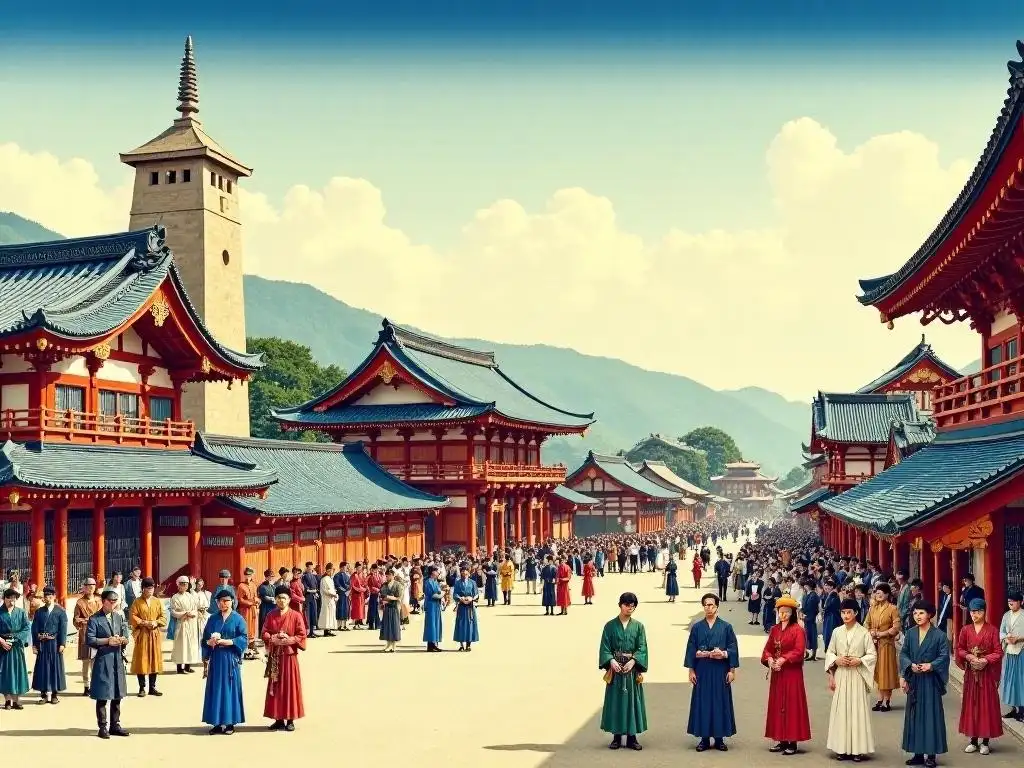
The Meiji Restoration, which began in 1868, marked a significant turning point in Japan’s history, transitioning the nation from a feudal society to a modern state. This era was characterized by sweeping political, social, and economic reforms aimed at strengthening Japan against Western imperialism. The Japanese leadership recognized the need to adopt Western technologies and administrative practices to avoid being colonized, as many Asian nations had been.
The central aspect of this modernization was the establishment of a centralized government, replacing the Tokugawa shogunate. The Meiji government implemented the constitution of 1889, which introduced a parliamentary system, although the emperor retained significant powers. This restructuring not only facilitated internal governance but also improved Japan's standing in the international arena, thereby reshaping its foreign relations.
During the Meiji period, Japan actively sought to engage with Western powers, importing Western science, technology, and culture. Educational reforms were instituted, leading to an increase in literacy and the emergence of a new generation that could engage with global issues. The focus on modernization was not just about technology; it also involved a rethinking of Japan’s identity and its place in the world, leading to a more assertive foreign policy.
The Shift in Japan’s Foreign Policy
The shift in Japan's foreign policy during the Meiji Restoration was driven by the desire for recognition as an equal among Western powers. Initially, Japan adopted a defensive stance, focusing on avoiding foreign domination. However, as modernization progressed, Japan's leaders began to adopt a more aggressive diplomatic and military stance.
This new foreign policy was characterized by a series of treaties with Western nations that favored Japan’s interests. The Treaty of Kanagawa in 1854, for instance, opened Japan to American trade and marked the end of its isolationist policy. Following this, Japan signed several unequal treaties with Western countries, sparking nationalist sentiments that ultimately led to a push for renegotiation of these agreements.
The Meiji government aimed to establish parity with Western powers by strengthening Japan’s military capabilities and asserting its influence in Asia. This shift was evident in Japan’s involvement in the First Sino-Japanese War (1894-1895) and the Russo-Japanese War (1904-1905), which not only demonstrated Japan’s military prowess but also solidified its position as a formidable power in international relations.
Key Events in Japan-West Relations during the Meiji Era
Several key events during the Meiji Era significantly shaped Japan's relations with the West:
- Treaty of Kanagawa (1854): This treaty marked Japan's first engagement with the West, ending its isolation and establishing trade with the United States.
- Anglo-Japanese Alliance (1902): This alliance with Britain was a crucial step in Japan's emergence as a global power, providing security against Russian expansionism.
- First Sino-Japanese War (1894-1895): Japan’s victory over China established it as a major regional power and led to significant territorial gains, including Taiwan.
- Russo-Japanese War (1904-1905): Japan’s defeat of Russia was a historic moment, showcasing Japan's military modernization and altering the balance of power in East Asia.
These events not only reinforced Japan's national identity but also set the stage for its future interactions with Western nations.
Japan’s Emergence as a World Power
By the early 20th century, Japan had firmly established itself as a world power. This transformation was marked by its military victories and growing economic strength, which allowed it to assert itself on the global stage. The successful modernization efforts during the Meiji Restoration laid the foundation for Japan's industrial growth, enabling it to compete with Western nations.
Japan's emergence was also evident in its diplomatic engagements. It began to participate in international organizations and treaties, seeking to influence global affairs. The nation played a critical role in the establishment of the League of Nations after World War I, further solidifying its status as a key player in international relations.
The combination of military strength, economic development, and diplomatic initiatives positioned Japan not only as a regional leader but also as a significant actor in global politics, setting the stage for future challenges and conflicts.
Japan and the West in the Early 20th Century
In the early 20th century, Japan's relationship with Western powers continued to evolve amidst a backdrop of global conflict and shifting alliances. The aftermath of World War I saw Japan asserting its influence, yet underlying tensions began to surface, foreshadowing future confrontations.
Japan’s Role in World War I
During World War I, Japan aligned itself with the Allies, primarily seeking to expand its influence in Asia and the Pacific. Japan seized the opportunity to occupy German territories in China and the Pacific, including the Shandong Peninsula and several islands in the South Pacific. This involvement not only allowed Japan to assert its military capabilities but also enabled it to gain strategic footholds in the region.
Japan’s contributions to the Allied war effort were significant, particularly in terms of naval power. The Imperial Japanese Navy played a crucial role in securing maritime routes and eliminating German naval presence in the Pacific, which was critical for the Allies' operations.
The Treaty of Versailles and Japan’s Territorial Gains
The Treaty of Versailles in 1919 marked a pivotal moment for Japan in its quest for international recognition. As a victor in World War I, Japan was granted several territorial gains, including the Shandong Peninsula and the German-held islands in the Pacific. Additionally, Japan was recognized as a member of the League of Nations, symbolizing its acceptance as an equal among Western powers.
However, the treaty also sparked resentment among other nations, particularly China, which viewed Japan's acquisitions as imperialistic. The racial equality proposal put forth by Japan during the conference was rejected, highlighting the ongoing complexities of race and power dynamics in international relations.
The Growing Tensions Leading to World War II
The years following World War I saw increasing tensions between Japan and the West, as Japan's ambitions clashed with Western interests in Asia. The 1920s and 1930s were marked by Japan's aggressive expansionist policies, particularly in China, where it sought to establish dominance.
Factors contributing to these tensions included:
- Economic Strain: The Great Depression of the 1930s significantly impacted Japan’s economy, leading to militaristic and expansionist policies as a means to secure resources.
- Military Influence: The rise of militarism in Japan, with the military gaining substantial political power, led to aggressive foreign policy decisions.
- U.S.-Japan Relations: The increasing hostility between Japan and the United States culminated in economic sanctions against Japan, further exacerbating tensions.
These escalating conflicts ultimately set the stage for Japan’s involvement in World War II, marking a dramatic shift in its relations with Western powers and leading to lasting geopolitical consequences.
World War II: Japan’s Relations with the West
The relationship between Japan and Western nations during World War II was characterized by tension, conflict, and significant political maneuvering. Prior to the outbreak of the war, Japan had been expanding its imperial ambitions throughout Asia, which raised concerns in the West. Economic embargoes and diplomatic isolation from countries like the United States increasingly strained relations, ultimately leading to military confrontations.
Japan's alliance with Germany and Italy, forming the Axis Powers, signaled a definitive shift toward hostility against Western powers. This period was marked by aggressive military campaigns, which included the invasion of China and the attack on various Pacific territories. The culmination of this conflict was the attack on Pearl Harbor on December 7, 1941, which prompted the United States to formally enter the war and marked a significant turning point in Japan-West relations.
Key Events and Turning Points in Foreign Relations
Several key events during World War II significantly shaped Japan's relations with Western nations:
- The Tripartite Pact (1940): This alliance with Germany and Italy solidified Japan’s position against Western powers, establishing military cooperation.
- The Attack on Pearl Harbor (1941): This surprise military strike aimed to incapacitate the U.S. Pacific Fleet and secure Japan's dominance in the Pacific, leading to the U.S. declaring war on Japan.
- The Battle of Midway (1942): A pivotal naval battle that marked a turning point in the Pacific Theater, resulting in a decisive victory for the United States and shifting the balance of power.
- The Bombing of Hiroshima and Nagasaki (1945): The atomic bombings led to Japan’s unconditional surrender, effectively ending World War II and redefining its foreign relations with the West.
These events not only altered the dynamics of Japan's foreign relations but also set the stage for the post-war occupation and reconstruction efforts.
The Impact of Pearl Harbor on Japan-West Relations
The attack on Pearl Harbor had profound implications for Japan-West relations. It transformed public opinion in the United States and among other Western nations, leading to a unified military response against Japan. The immediate aftermath saw the United States mobilizing its industrial and military resources, which would overwhelm Japanese forces in subsequent battles.
Moreover, Pearl Harbor resulted in a complete severance of diplomatic ties between Japan and the West, leading to widespread hostilities. The attack was not only a military strategy but also a catalyst for anti-Japanese sentiments in the West, which persisted long after the war. The repercussions of this event played a significant role in shaping post-war policies and attitudes toward Japan in the international community.
Post-War Occupation and Rebuilding Relationships
After Japan's surrender in 1945, the country underwent a significant transformation during the Allied occupation, led by the United States under General Douglas MacArthur. This period was marked by extensive reforms aimed at democratization, demilitarization, and economic recovery.
Key developments during the occupation included:
- The Constitution of 1947: This document enshrined democratic principles, including women's rights and civil liberties, fundamentally changing Japan's political landscape.
- Economic Reforms: Land reforms, labor rights, and the establishment of a market economy revitalized Japan’s economy, laying the groundwork for its post-war recovery.
- Reestablishing Diplomatic Relations: The San Francisco Peace Treaty of 1951 formally ended hostilities and reestablished Japan's sovereignty, allowing it to rebuild its relationships with Western nations.
By the end of the occupation in 1952, Japan had transitioned from a militaristic empire to a democratic nation, fostering more amicable relations with the West.
Contemporary Japan-West Foreign Relations

In contemporary times, Japan maintains a complex and multifaceted relationship with Western nations, particularly the United States and European countries. The evolution of these relations has been shaped by historical legacies, economic interdependence, and shared democratic values.
Japan’s Role in the Global Economy
Japan has emerged as a significant player in the global economy since its post-war recovery. As the third-largest economy in the world, it is a vital trading partner for many Western nations.
Key aspects of Japan's economic relations include:
- Trade Agreements: Japan actively participates in trade agreements, such as the Comprehensive and Progressive Agreement for Trans-Pacific Partnership (CPTPP), which enhances economic ties with Western countries.
- Investment: Japanese multinational corporations have substantial investments in Western nations, contributing to job creation and economic growth.
- Technological Collaboration: Japan is recognized for its advancements in technology and innovation, leading to collaborative ventures with Western firms in sectors such as automotive, electronics, and robotics.
Japan's economic influence continues to shape its relations with the West, fostering a climate of cooperation and mutual benefit.
Recent Diplomatic Developments with Western Nations
In recent years, Japan has sought to strengthen its diplomatic relations with Western nations through various initiatives:
- Security Partnerships: Japan has enhanced its security cooperation with the United States, particularly in response to regional threats such as North Korea's nuclear ambitions.
- Participation in International Organizations: Japan actively engages in multinational organizations like the United Nations, the G7, and the World Trade Organization, promoting stability and cooperation in global governance.
- Bilateral Summits: Regular meetings between Japanese and Western leaders, such as the U.S.-Japan Summit, facilitate dialogue on pressing issues, including trade, security, and climate change.
These diplomatic efforts reflect Japan's commitment to being an active participant in the international community and reinforcing its ties with Western allies.
Cultural Exchange and Soft Power in Foreign Relations
Japan's approach to foreign relations has been significantly influenced by its cultural diplomacy and soft power initiatives.
Prominent aspects include:
- Cultural Programs: Japan promotes its culture through various initiatives, including art exhibitions, film festivals, and educational exchanges, fostering mutual understanding and appreciation.
- Global Popularity of Japanese Culture: Phenomena such as anime, manga, and cuisine have gained global recognition, enhancing Japan's cultural influence and soft power in Western nations.
- International Cooperation in Arts and Education: Japan collaborates with Western countries to promote cultural exchange programs, scholarships, and research initiatives that strengthen bilateral relations.
Through these cultural exchanges, Japan not only enhances its global presence but also fosters goodwill and understanding with Western nations, contributing to a more harmonious international environment.
Conclusion: The Evolution of Japan-West Foreign Relations
The foreign relations between Japan and the West have undergone significant transformations over the centuries, shaped by a myriad of historical events, cultural exchanges, and diplomatic negotiations. From the initial encounters in the 16th century to the complex geopolitical dynamics of the 21st century, Japan's engagement with Western nations has evolved remarkably. This journey reflects not only the adaptation of Japan to foreign influences but also the impact of Japan's unique cultural identity on its interactions with Western powers.
The pivotal moments in this timeline, such as the arrival of Portuguese traders, the forced opening by Commodore Perry, and Japan's subsequent emergence as a global power, illustrate the nuanced nature of these relations. Each event not only altered Japan's domestic policies and societal structures but also redefined its position on the world stage. Understanding this evolution is crucial for comprehending the contemporary diplomatic landscape in which Japan operates today.
Summary of Key Events in the Japan West Foreign Relations Timeline
- 16th Century: Initial Encounters
- The arrival of Portuguese traders in 1543 marked the beginning of trade relations, introducing Christianity and Western technologies.
- 1639: Sakoku Policy
- Japan adopted a policy of isolation, limiting foreign influence and trade primarily to the Dutch and Chinese, which lasted until the mid-19th century.
- 1853: Commodore Perry's Expedition
- The arrival of U.S. Navy Commodore Matthew Perry in Edo Bay forced Japan to open its ports, leading to the Treaty of Kanagawa in 1854.
- 1868: Meiji Restoration
- The restoration of imperial rule initiated a period of rapid modernization and Westernization, transforming Japan into an industrialized nation.
- 1904-1905: Russo-Japanese War
- Japan's victory over Russia established it as a formidable military power and altered Western perceptions of Asian nations.
- 1910: Annexation of Korea
- Japan formally annexed Korea, expanding its imperial ambitions and solidifying its role in regional politics.
- 1945: Post-World War II
- Following Japan's defeat in World War II, the U.S. occupation led to significant political and economic reforms, reshaping Japan's foreign relations.
The Continuing Impact of Historical Relations on Modern Diplomacy
Japan's historical interactions with the West continue to influence its modern diplomatic strategies and international relations. The legacy of the Meiji Restoration can be seen in Japan's commitment to modernization and technological advancement, which remains a cornerstone of its foreign policy. Furthermore, the events of World War II and the subsequent U.S.-Japan alliance have fostered a unique partnership that emphasizes security cooperation and economic collaboration.
Contemporary challenges, such as territorial disputes and regional security concerns, are also framed by this historical context. Japan's diplomatic approach often reflects a desire to balance its historical experiences with the need for proactive engagement in global issues. The evolution of Japan-West relations is a testament to the complexities of diplomacy, where history, culture, and politics intersect to shape the present and future.
References
Key Sources and Further Reading on Japan-West Foreign Relations Timeline
- "Japan and the West: A History of Diplomatic Relations": - This comprehensive account explores the key events and figures in Japan's foreign relations with Western countries.
- "The Meiji Restoration: Japan's Transformation": - A detailed analysis of the socio-political changes during the Meiji period that impacted Japan's foreign relations.
- "Japan's Foreign Relations in Asia" - This book provides insights into how historical relations with Western powers influence Japan's contemporary interactions in Asia.
Suggested Academic Journals and Books for In-Depth Study
- "The Journal of Asian Studies" - An academic journal that publishes articles on various aspects of Asian history, including Japan's foreign relations.
- "Japan's Foreign Relations: A New Perspective": - Offers a modern analysis of Japan's diplomatic strategies and historical influences.
- "Modern Japan: A Historical Survey": - This text provides an extensive overview of Japan's history, including its interactions with the West, essential for understanding current relations.
- Introduction to Japan-West Foreign Relations
- Early Interactions Between Japan and the West
- The Edo Period and Isolationism
- The Opening of Japan in the 19th Century
- Modernization and the Meiji Restoration
- Japan and the West in the Early 20th Century
- World War II: Japan’s Relations with the West
- Contemporary Japan-West Foreign Relations
- Conclusion: The Evolution of Japan-West Foreign Relations
- References
- What are the key events in Japan's foreign relations with the West?
- How did the Meiji Restoration impact Japan's relations with Western countries?
- What role did trade play in Japan's foreign relations with the West?
- How did Japan's foreign policy change after World War II?
- What is the significance of the Japan-West foreign relations timeline?
Frequently Asked Questions
What are the key events in Japan's foreign relations with the West?
Japan's foreign relations with the West have evolved significantly, with key events including the arrival of Commodore Perry in 1853, the signing of the Treaty of Kanagawa, and the Meiji Restoration in 1868.
How did the Meiji Restoration impact Japan's relations with Western countries?
The Meiji Restoration marked a turning point, as Japan rapidly modernized its economy and military, leading to improved relations and strategic partnerships with Western nations.
What role did trade play in Japan's foreign relations with the West?
Trade was crucial in shaping Japan's foreign relations, particularly during the Edo period, when Japan initially isolated itself, only to later open its ports to Western merchants, fostering economic ties.
How did Japan's foreign policy change after World War II?
After World War II, Japan adopted a pacifist foreign policy, focusing on economic recovery and establishing strong diplomatic relations with Western countries, particularly the United States.
What is the significance of the Japan-West foreign relations timeline?
The Japan-West foreign relations timeline provides insight into the evolution of diplomatic, economic, and cultural interactions, highlighting how Japan transitioned from isolation to becoming a global power.
Final Reflection: Understanding the Evolution of Japan-West Foreign Relations
The intricate tapestry of Japan's foreign relations with the West is not just a historical narrative; it is a living testament to the complexities of cultural exchange and diplomacy. As we navigate an increasingly interconnected world, the lessons drawn from Japan's journey through foreign relations remind us of the importance of understanding and respecting diverse perspectives. The timeline of key events serves as a crucial reminder that history is not static; it continues to shape our global interactions today.
The evolution of Japan-West relations has profoundly influenced both cultural and social landscapes, fostering a dialogue that transcends borders. This ongoing exchange has led to a rich fusion of ideas, art, and technology that continues to resonate in contemporary society. As we reflect on this dynamic relationship, we are reminded of the words of the renowned Japanese philosopher, Daisaku Ikeda: The future belongs to those who believe in the beauty of their dreams.
This sentiment encapsulates the essence of Japan's engagement with the West, highlighting the potential for mutual growth and understanding.
As we close this exploration of Japan-West foreign relations, I invite you to reflect on your own connections with different cultures and histories. Consider how these interactions can enrich your life and contribute to a more harmonious global community. Embrace the lessons of the past, and let them inspire you to foster understanding and collaboration in your own relationships, both personal and professional. The future is indeed bright for those willing to engage with the world around them, learning from history while building a more inclusive tomorrow.
Unveil the Rich Tapestry of Japan's Foreign Relations!
Thank you for diving into the fascinating timeline of Japan's foreign relations with the West! By exploring these pivotal events, you’ve gained a deeper understanding of how these interactions shaped Japan's identity and its role in the global arena. Now, let’s take that knowledge and turn it into action!
- Engage with the Past: Start a discussion by sharing your favorite event from the timeline in the comments below and explain why it resonates with you.
- Expand Your Knowledge: Explore further by reading additional articles on our website about significant events or influential figures that caught your attention.
- Share Your Insights: Spread the word—share this article with friends or on social media to ignite discussions about Japan's intriguing history!
Which moment in Japan's foreign relations do you believe had the most lasting impact on its cultural identity?