
Japan's Trade Policies: Balancing Western Influence and Traditional Values


Welcome to Feudal Japan History, where we embark on a captivating journey through the intricate tapestry of Japan's feudal era. Here, we delve into the complex interplay of historical, cultural, and societal elements that shaped this remarkable period. In our featured article, "Japan's Trade Policies: Balancing Western Influence and Traditional Values," we explore the fascinating evolution of Japan's trade strategies and their profound impact on foreign relations.
What challenges did Japan face as it navigated the waters of modernization while holding steadfast to its rich traditions? Join us as we uncover the stories that define this pivotal chapter in history and inspire a deeper understanding of Japan's unique legacy.
- Japan's Trade Policies History: Balancing Western Influence and Traditional Values
-
Frequently Asked Questions
- What were the main trade policies in Japan during the feudal era?
- How did Western influence affect Japan's trade policies?
- What role did the Tokugawa shogunate play in trade policies?
- How did Japan's trade policies evolve after the Meiji Restoration?
- What impact did Japan's trade policies have on its society?
- Final Reflection: Navigating the Intersection of Tradition and Modernity
- Chart Your Course: Embrace Japan's Unique Trade Legacy!
Japan's Trade Policies History: Balancing Western Influence and Traditional Values
In the intricate tapestry of Japan's feudal era, trade policies played a pivotal role in shaping the nation’s interactions with foreign influences while simultaneously safeguarding its traditional values. This article delves into the historical evolution of these policies, highlighting the delicate balance Japan maintained as it navigated the waters of Western influence. By exploring the nuances of Japan's trade practices, particularly during pivotal moments such as the Meiji Restoration, we aim to provide a comprehensive understanding of how these policies have molded the country's identity and foreign relations.
Introduction to Japan's Trade Policies
Japan's trade policies throughout its history reflect a complex interplay between tradition and adaptation. With a rich cultural heritage that values self-sufficiency and community, Japan's approach to trade has evolved significantly, especially in response to external pressures and internal needs. The feudal era, characterized by a rigid social hierarchy and regional autonomy, set the stage for how Japan interacted with foreign traders and nations.
Overview of Historical Context
During the feudal period, Japan's trade was primarily limited to regional exchanges and select foreign interactions, notably with the Portuguese and Dutch. The Tokugawa shogunate (1603-1868) imposed strict regulations on foreign trade, aiming to maintain control over the flow of goods, ideas, and cultural influences. This era was marked by a policy of sakoku, or "closed country," which restricted foreign interactions while promoting domestic stability.
- Key Features of the Historical Context:
- Sakoku Policy: Limited foreign trade to select ports and countries.
- Cultural Isolation: Focus on preserving traditional Japanese culture and customs.
- Internal Trade: Development of a vibrant domestic economy despite external restrictions.
Importance of Trade Policies in Japan's Feudal Era
Trade policies during Japan’s feudal era were crucial not only for economic reasons but also for cultural preservation. By controlling foreign interactions, the shogunate aimed to minimize the influence of Western ideologies and protect the social order. The resulting policies affected various aspects of Japanese society, including:
- Economic Stability: Regulation of trade helped maintain local economies.
- Cultural Integrity: By limiting foreign influences, Japan was able to preserve its unique cultural identity.
- Political Power: Control over trade routes and foreign relationships enhanced the shogunate's authority.
The Evolution of Japan's Trade Policies
As Japan transitioned from its feudal past, its trade policies underwent significant transformations that reflected changing global dynamics and internal pressures. The interaction with Western nations, particularly in the 19th century, catalyzed a reevaluation of Japan's approach to trade.
Early Trade Practices in Feudal Japan
In the early stages of feudal Japan, trade was predominantly localized, with regional markets thriving on agricultural products, crafts, and textiles. The shogunate's restrictive policies limited foreign trade, which was largely confined to:
- The Nanban Trade (1543-1614): Initial interactions with Portuguese traders introduced new goods, including firearms and tobacco.
- Dutch Trading Posts: The Dutch, allowed limited trade access in Nagasaki, became a crucial source of Western knowledge while adhering to Japanese restrictions.
Influences of Western Trade in the 19th Century
The arrival of Western powers in the 19th century, especially following Commodore Perry's expedition in 1853, forced Japan to reassess its trade policies. The ensuing treaties marked a transition towards more open trade practices, leading to:
- Unequal Treaties: Agreements that favored Western powers and undermined Japan's sovereignty.
- Increased Imports: A surge of foreign goods, ideas, and technologies began to reshape Japanese society and economy.
The Meiji Restoration: A Turning Point in Trade Policies
The Meiji Restoration of 1868 signified a radical shift in Japan’s trade policies, as the nation sought to modernize and compete with Western powers. Key developments included:
- Abolition of Sakoku: Opening of Japan to global trade and diplomatic relations.
- Industrialization Efforts: Adoption of Western technologies and practices to bolster economic growth.
- Establishment of Trade Agreements: Negotiation of new treaties that aimed to level the playing field with Western nations.
Through these transformative years, Japan's trade policies evolved from isolation to engagement, illustrating a remarkable balance between embracing modernity and retaining cultural values.
Key Features of Japan's Trade Policies
Japan's trade policies have evolved significantly over the centuries, shaped by a combination of domestic priorities and external pressures. Key features of these policies can be categorized into several distinct areas:
- Protectionist Measures: Historically, Japan employed protectionist strategies to shield its nascent industries from foreign competition. Tariffs and import restrictions were common, particularly during the Edo period, when the country sought to maintain its economic sovereignty.
- Bilateral Agreements: As Japan opened its borders in the mid-19th century, it began to enter into bilateral trade agreements with Western powers. These agreements often favored foreign interests but laid the groundwork for Japan's eventual rise as an economic power.
- Regulatory Framework: The Japanese government established a comprehensive regulatory framework to oversee trade activities. This included strict quality standards and regulations designed to protect domestic producers while ensuring consumer safety.
- Strategic Industries: Japan has historically identified and supported strategic industries, such as textiles and electronics, through subsidies and government intervention, fostering innovation and competitiveness on the global stage.
- Adaptation to Global Trends: Over the years, Japan's trade policies have adapted to global economic trends, including shifts towards free trade and multilateral agreements, reflecting a balance between traditional values and the demands of modern commerce.
Protectionism vs. Free Trade: A Historical Perspective
The tension between protectionism and free trade has characterized Japan's trade history. Initially, during the Edo period, the Tokugawa shogunate implemented strict isolationist policies that severely limited foreign trade. This protectionism was rooted in a desire to maintain social order and cultural integrity.
However, the arrival of Commodore Matthew Perry in 1853 marked a pivotal shift. The subsequent Treaty of Kanagawa in 1854 forced Japan to open its ports to American ships, leading to a gradual dismantling of isolationist policies. This opened the door to a more complex relationship with trade, as Japan began to engage with Western economies while grappling with the implications of free trade.
In the late 19th and early 20th centuries, Japan transitioned towards a more open trading system, culminating in its participation in various international agreements. This shift was driven by the necessity to compete globally and secure resources, leading to a blend of protectionist and free trade policies that aimed to protect domestic industries while embracing the benefits of international commerce.
The Role of the Sakoku Edict in Isolationist Policies
The Sakoku Edict, issued in the early 17th century, was a cornerstone of Japan's isolationist policies. Enforced by the Tokugawa shogunate, this edict effectively closed Japan off from foreign influence for over 200 years. It restricted foreign trade to specific ports and limited interactions primarily to the Dutch and Chinese, who were seen as less threatening to Japanese culture.
The Sakoku policy aimed to preserve Japan's social structure and cultural identity by minimizing foreign intrusion. However, it also stunted economic growth by preventing the exchange of ideas, technology, and goods that could have fostered innovation. The edict was not fully rescinded until the mid-19th century, after which Japan had to rapidly modernize and adapt to the global trading system.
Modern Trade Agreements and Their Impact
In the contemporary era, Japan has engaged in numerous trade agreements that reflect its commitment to both free trade and the protection of domestic industries. The Japan-U.S. Trade Agreement, for instance, exemplifies a modern approach to balancing economic interests. This agreement sought to reduce tariffs and open markets while addressing concerns about the impact on local industries.
Additionally, Japan is a key player in regional agreements such as the Comprehensive and Progressive Agreement for Trans-Pacific Partnership (CPTPP), which promotes trade liberalization among member nations. These agreements are designed to enhance Japan's economic competitiveness while ensuring that traditional values and local interests are considered.
The impact of these modern agreements has been significant, as they have facilitated Japan's integration into the global economy, boosted exports, and stimulated economic growth. However, they also pose challenges, such as the need to adapt domestic industries to increased competition from foreign markets.
Balancing Western Influence and Traditional Values
Japan's trade policies reflect a complex interplay between embracing Western influence and preserving traditional values. This balance is crucial as the nation navigates globalization while maintaining its cultural identity.
The Impact of Westernization on Japan's Trade Policies
Westernization profoundly influenced Japan's trade policies, particularly during the Meiji Restoration in the late 19th century. The adoption of Western technologies, business practices, and legal frameworks was instrumental in modernizing Japan's economy. Trade policies were reformed to align with global standards, leading to significant economic growth.
However, this Western influence often clashed with traditional Japanese values. The rapid industrialization brought about social upheaval, prompting debates about the preservation of cultural heritage in the face of modernization. Japan's response has been to selectively integrate Western practices while retaining core cultural elements, leading to a unique blend of modern and traditional approaches in trade.
Preserving Cultural Identity Amidst Globalization
As Japan continues to engage with the global economy, the preservation of cultural identity has become a priority. Trade policies increasingly reflect this commitment, with initiatives aimed at protecting traditional industries, such as crafts and agriculture.
For example, the promotion of "Cool Japan" seeks to export Japanese culture and products while emphasizing their unique heritage. This approach not only enhances Japan's global image but also stimulates domestic pride and supports local economies.
Furthermore, regulations are often implemented to ensure that imported goods meet Japanese cultural standards, reinforcing the importance of maintaining a distinct identity in an increasingly homogenized world.
Case Studies of Successful Trade Policies
Several case studies illustrate the effectiveness of Japan's trade policies in balancing Western influence and traditional values.
- The Textile Industry: Japan's textile industry underwent significant transformation during the Meiji era, adopting Western techniques while preserving traditional craftsmanship. This dual approach allowed Japan to become a leading exporter of textiles, successfully merging innovation with heritage.
- The Automotive Sector: Companies like Toyota and Honda exemplify how Japan has leveraged Western technological advancements while maintaining a unique corporate culture rooted in traditional values, such as teamwork and quality.
- Cultural Exports: The global popularity of Japanese cuisine, anime, and fashion demonstrates successful trade policies that promote cultural exports while safeguarding local traditions. Initiatives that support these sectors have led to increased international demand, showcasing Japan's ability to thrive in a globalized market without losing its identity.
These case studies highlight the potential for Japan's trade policies to foster economic success while navigating the complexities of Western influence and cultural preservation.
Challenges Faced in Japan's Trade History
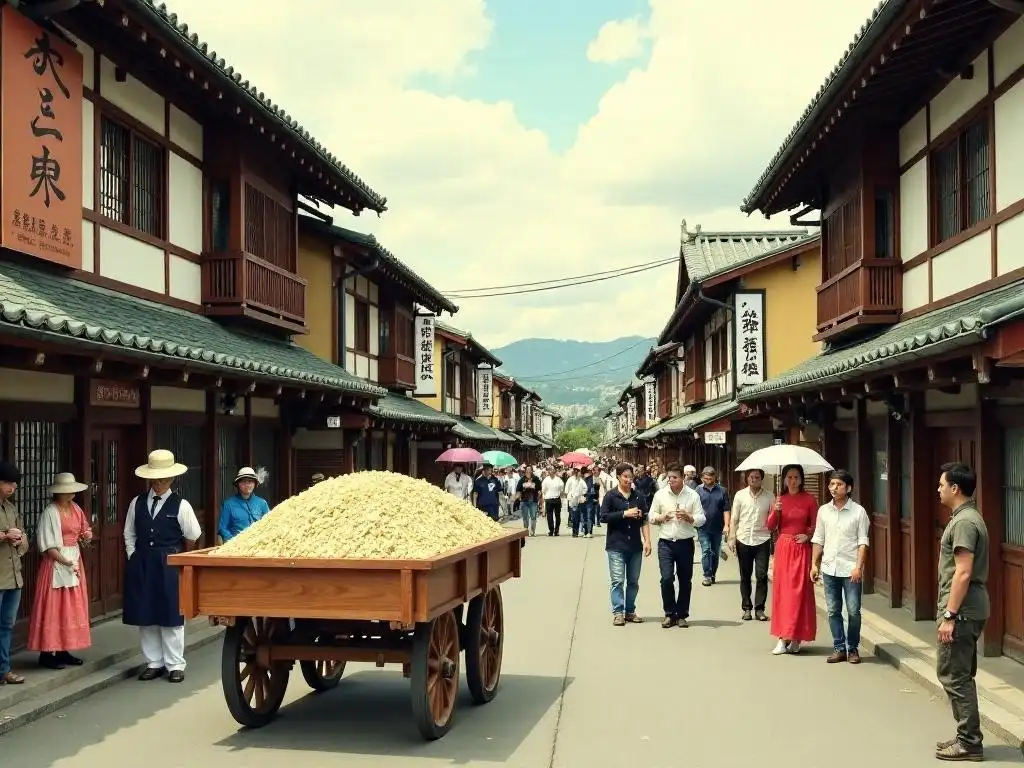
Japan's trade history is marked by various challenges that have shaped its policies and international relations. From the early days of feudalism to the modern era, Japan has navigated numerous obstacles that have influenced its stance on trade. These challenges can be broadly categorized into economic crises, trade wars, and the complexities of global trade dynamics. Each of these factors plays a significant role in understanding how Japan has balanced Western influence with its traditional values.
Economic Crises and Their Effect on Trade Policies
Japan has faced several economic crises that have directly impacted its trade policies. Notable among these was the asset price bubble of the late 1980s, which led to a prolonged economic stagnation known as the "Lost Decade." During this period, Japan struggled to maintain its competitive edge in global markets. The government responded by implementing a series of monetary and fiscal policies aimed at stimulating growth, including increased public spending and lower interest rates.
The Asian Financial Crisis in 1997 further exacerbated Japan's economic challenges, leading to a reassessment of its trade relationships with neighboring countries. The crisis prompted Japan to reevaluate its reliance on exports and consider diversifying its economic strategies. Consequently, trade policies began to reflect a more cautious approach, prioritizing stability over aggressive expansion.
Trade Wars and Diplomatic Relations
Throughout its trade history, Japan has experienced numerous trade disputes, particularly with Western nations. The most significant of these conflicts arose during the 1980s and 1990s when Japan's trade surpluses with the United States led to accusations of unfair trade practices. In response, the U.S. imposed tariffs on Japanese goods, resulting in a series of negotiations and agreements aimed at addressing trade imbalances.
These trade wars have not only shaped Japan's economic policies but also influenced its diplomatic relations. Japan learned the importance of maintaining strong ties with its trading partners while also advocating for fair trade practices. The experience highlighted the need for Japan to adapt its strategies to foster cooperation rather than confrontation in its international trade relations.
Navigating Global Trade Dynamics
As globalization intensified, Japan faced the challenge of navigating complex global trade dynamics. The rise of emerging economies and the shifting landscape of international trade agreements required Japan to reassess its approach. The Trans-Pacific Partnership (TPP) and other regional trade agreements became crucial for Japan's strategy to enhance its trade relationships while countering the influence of larger economies, such as China.
Japan's ability to adapt to these global changes has been key to its trade policies. By engaging in multilateral negotiations and promoting free trade, Japan has sought to position itself as a leader in the Asia-Pacific region. This adaptability has helped Japan maintain its economic stability and continue its commitment to balancing Western influences with its traditional values.
Conclusion: The Future of Japan's Trade Policies
Japan's trade policies are at a crossroads as the nation grapples with the dual pressures of globalization and the preservation of its cultural heritage. The lessons learned from its trade history serve as a foundation for shaping future strategies. By understanding the complexities of past challenges, Japan can better position itself to navigate the evolving landscape of international trade.
Lessons Learned from Japan's Trade Policies History
One of the key lessons from Japan's trade policies history is the importance of flexibility. The ability to adapt to changing economic conditions and international relationships has been crucial for Japan's success. Additionally, Japan has learned that fostering strong diplomatic ties is essential for maintaining favorable trade conditions. This balance between economic interests and cultural values has become a cornerstone of Japan's approach to trade.
Furthermore, Japan's experience with economic crises has underscored the need for proactive measures to prevent future downturns. Implementing robust economic policies and diversifying trade partnerships will be vital for Japan to sustain its growth in an increasingly competitive global environment.
Potential Directions for Future Trade Strategies
Looking ahead, Japan's trade strategies may focus on several potential directions. Strengthening ties with ASEAN countries and exploring new markets will be crucial for diversifying Japan's trade relationships. Additionally, Japan may continue to advocate for free trade agreements that emphasize fair practices and sustainable development.
Moreover, as environmental concerns become more prominent in global trade discussions, Japan could lead initiatives aimed at promoting eco-friendly practices in trade. By aligning its trade policies with sustainability goals, Japan can enhance its global reputation while staying true to its values.
Japan's trade policies history reveals a complex interplay of challenges and adaptations that will inform its future strategies. Balancing Western influence with traditional values will remain a central theme as Japan navigates the ever-evolving landscape of global trade.
References
In understanding Japan's trade policies throughout its history, particularly during the feudal era and the subsequent interactions with Western powers, it is crucial to engage with a variety of scholarly texts and articles that provide in-depth analysis and context.
Key Texts and Articles on Japan's Trade Policies
-
"The Making of Modern Japan" by John D. McCormack
This comprehensive volume explores the evolution of Japan's political and economic landscape, detailing the implications of trade policies from the Tokugawa period to the Meiji Restoration. McCormack provides insights into how these policies shaped Japan's interactions with Western nations.
-
"Japan's Trade Policy: A Historical Perspective" by Takatoshi Ito and Andrew K. Rose
This article offers a detailed examination of Japan's trade policies from a historical standpoint, analyzing key moments such as the Opium Wars and the Treaty of Kanagawa. The authors discuss the balance between maintaining traditional values and adapting to Western economic pressures.
-
"The Origins of Japan's Trade Policy" by Richard J. Samuels
In this work, Samuels delves into the historical roots of Japan's trade policies, tracing their development from isolationism to participation in global trade. He highlights the socio-political factors that influenced changes in policy.
-
"Japan's Foreign Relations in Asia and the Pacific" by Christopher W. Hughes
Hughes examines Japan's foreign relations, including trade dynamics, focusing on the implications of Western influence on Japan's traditional trade practices. The text provides a broad overview of Japan's interactions with its regional neighbors as well.
Suggested Readings for Further Exploration
-
"Japan and the Culture of the Four Seasons: Nature, Literature, and the Arts" by Haruo Shirane
This book provides a cultural context that complements the study of trade policies, exploring how Japan's appreciation for nature and seasonal change affected its economic interactions and policies.
-
"The Tokugawa World" edited by James L. McClain, John N. Maki, and Kenneth B. Pyle
This edited volume offers a multifaceted perspective on the Tokugawa period, including discussions on economic practices and trade policies amidst the backdrop of social and cultural developments.
-
"The New History of Japan" by John W. Dower
Dower's work is essential for understanding Japan's post-war identity and the long-term impacts of earlier trade policies. He discusses how historical trade decisions laid the groundwork for modern Japan.
-
"Japan's Economic Ascent: International Trade, Power, and the Future" by Thomas J. O'Brien
This text investigates the trajectory of Japan’s economic rise, analyzing how historical trade policies have influenced contemporary economic strategies and international relationships.
These references provide a robust foundation for understanding the intricate balance between Western influence and traditional values within Japan's trade policies. Engaging with these works will enrich your comprehension of the historical context and ongoing implications of Japan's trade interactions.
Frequently Asked Questions
What were the main trade policies in Japan during the feudal era?
Japan's trade policies during the feudal era were characterized by isolationism, particularly during the Edo period, where foreign trade was strictly controlled to balance Western influence with traditional values.
How did Western influence affect Japan's trade policies?
The influx of Western ideas and goods prompted Japan to reassess its trade policies, leading to a gradual opening of its markets in the mid-19th century, which was a pivotal moment in Japan's trade history.
What role did the Tokugawa shogunate play in trade policies?
The Tokugawa shogunate implemented a sakoku (closed country) policy, which effectively restricted foreign trade and interaction, maintaining Japanese cultural integrity while limiting Western influence.
How did Japan's trade policies evolve after the Meiji Restoration?
Following the Meiji Restoration, Japan shifted towards modernization and industrialization, leading to more liberal trade policies that embraced Western practices and expanded international trade relations.
What impact did Japan's trade policies have on its society?
The evolution of Japan's trade policies significantly influenced its societal structure, fostering a blend of traditional values and modern economic practices, which shaped Japan's identity in the global market.
In examining Japan's trade policies and their historical evolution, we uncover a complex interplay between Western influence and traditional values that continues to shape the nation's economic landscape today. As Japan stands at the crossroads of globalization and cultural preservation, it becomes increasingly clear that the choices made in trade policy are not merely economic decisions but reflections of national identity and resilience. The ongoing dialogue between embracing modernity and honoring tradition is more relevant than ever in our interconnected world.
The impact of Japan's trade policies extends far beyond its borders, influencing global markets and cultural exchanges. As we witness the rise of economic nationalism and the challenges of global trade dynamics, it is essential to recognize how Japan's historical context informs its current strategies. The delicate balance Japan maintains serves as a powerful reminder of the importance of cultural heritage in shaping economic practices. In the face of change, the essence of a nation is often found in its ability to adapt while remaining true to its roots.
As we reflect on the lessons from Japan's trade policies, let us consider how we can apply these insights in our own lives. Embrace the duality of progress and tradition, and recognize that our choices today will influence the cultural and economic landscapes of tomorrow. I invite you to ponder how you can contribute to a world where tradition and innovation coexist harmoniously, ensuring that our shared values guide us as we navigate the complexities of modern life.
Chart Your Course: Embrace Japan's Unique Trade Legacy!
Thank you for diving into the fascinating interplay of Japan’s trade policies, where tradition meets modern challenges. You've gained valuable insights into how these dynamics shape not only Japan but also global interactions. Now, it's time to put that knowledge into action!
- Explore local Japanese cultural events or markets to see firsthand how tradition influences modern commerce.
- Join online communities focused on international trade and cultural exchange to share your thoughts and learn from others.
- Consider subscribing to industry publications or blogs to stay updated on Japan's evolving trade strategies and their implications.
What unique aspect of Japan's trade policies do you find most fascinating, and how can it inspire your own approach to cultural understanding?