
The Use of Fortifications and Castles in Feudal Japanese Battle Plans


Welcome to Feudal Japan History, where we embark on a riveting journey through the intricate tapestry of Japan’s feudal era. In this exploration, we delve deep into the strategies of Japanese feudal castles, unveiling the architectural marvels and military tactics that shaped battles and influenced the course of history. Prepare to unlock the secrets of fortifications and their pivotal roles in battle plans, as we guide you through captivating insights and expert analyses. Are you ready to uncover the hidden stories behind these formidable structures? Let’s dive in!
Introduction to Japanese Feudal Castle Strategies
The feudal era in Japan, a period spanning from the late 12th century to the 19th century, was marked by a complex interplay of power, warfare, and strategy. At the heart of this tumultuous time were the impressive fortifications and castles that played a pivotal role in shaping the outcomes of battles and the control of territories. These structures were not merely defensive edifices; they were integral components of the military strategies employed by samurai lords and their clans.
Understanding the use of fortifications and castles in Japanese feudal battle plans reveals the sophisticated level of military strategy that characterized this era. This article delves into the various aspects of Japanese feudal castle strategies, shedding light on how these fortifications influenced warfare and the broader military landscape of feudal Japan.
Overview of Feudal Japan's Military Landscape
Feudal Japan was characterized by a decentralized political structure where power was often held by local warlords known as daimyōs. This fragmentation fostered a landscape rife with conflict, as clans vied for dominance. The military strategies during this period were heavily influenced by the geography of Japan, which is dotted with mountains, rivers, and coastal areas. Consequently, the strategic positioning of castles became crucial in both offense and defense.
- Key Features of the Military Landscape:
- Decentralization of Power: Local warlords controlled distinct territories.
- Resource Management: Access to resources often dictated military strategies.
- Geographical Advantages: Natural landscapes influenced the location and design of fortifications.
The intricate relationship between these elements led to the development of unique strategies that leveraged the strengths of fortified positions, transforming castles into formidable instruments of warfare.
Importance of Fortifications in Japanese Warfare
The significance of fortifications in Japanese warfare cannot be overstated. These structures served multiple purposes, from offering protection to troops and resources to acting as symbols of power and authority for the ruling clans.
- Functions of Fortifications:
- Defense: Castles protected against enemy attacks and sieges.
- Command Centers: They provided strategic vantage points for overseeing battlefields.
- Cultural Symbols: Castles represented the status and power of the daimyōs, often becoming centers of administration and culture.
The effectiveness of these fortifications was not merely due to their physical presence but also stemmed from the strategic planning that went into their construction and utilization in battle. By analyzing these elements, we can gain insights into the military philosophies that guided Japanese warfare during the feudal period.
Historical Context of Japanese Castles in Warfare
The evolution of Japanese castles reflects the changing dynamics of warfare and the socio-political landscape of feudal Japan. From simple wooden structures to elaborate stone fortresses, castles adapted to meet the challenges posed by advancements in military technology and tactics.
Evolution of Castle Design in Feudal Japan
Initially, castles were constructed as simple wooden fortifications, known as yamajiro, typically built on elevated terrains to maximize their defensive capabilities. As warfare evolved and the need for more robust fortifications arose, so too did the designs of these structures.
- Key Stages in Castle Development:
- Early Wooden Fortifications: Basic structures used for defense against rival clans.
- Stone Castles: Emergence of stone as a primary material, enhancing durability and resistance to siege tactics.
- Complex Designs: Integration of moats, walls, and keep towers, which provided layered defenses.
These innovations not only improved the defensive capabilities of castles but also allowed for more sophisticated battle strategies that could adapt to the changing nature of warfare.
Key Historical Battles Involving Castles
Several significant battles in Japanese history highlight the strategic importance of castles. These engagements illustrate how fortified structures were pivotal in determining the outcomes of conflicts.
- Notable Battles:
- The Siege of Osaka (1614-1615): A climactic conflict where the strategic use of Osaka Castle played a critical role in the siege tactics employed by Tokugawa Ieyasu.
- The Battle of Nagashino (1575): The defensive strategies employed at Nagashino Castle showcased the effectiveness of fortifications against cavalry charges.
These historical examples not only underscore the tactical significance of castles but also exemplify how they were integrated into broader military strategies, influencing the course of feudal Japanese history.
Key Features of Japanese Castles and Fortifications
Japanese castles, known as "shiro," were not only impressive architectural feats but also vital components of military strategy during the feudal era. Their designs reflected a deep understanding of the landscape and the requirements of defense. Key features included thick stone walls, moats, and a multi-tiered layout that utilized elevation for strategic advantages.
The use of natural terrain was paramount; many castles were built on hills or near rivers, enhancing their defensive capabilities. Additionally, the incorporation of wooden structures within stone frameworks allowed for flexibility and rapid construction. The distinctive style of "hirajiro" (flatland castles) and "yamajiro" (mountain castles) further illustrated the diversity in fortification strategies, catering to the geographical conditions of Japan.
Architectural Elements of Feudal Castles
The architectural design of feudal Japanese castles was characterized by various elements that contributed to their effectiveness as fortifications.
- Tenshukaku (Main Keep): The tallest structure, often symbolizing power, housed the lord and served as a lookout point for threats. Its height provided a tactical advantage in spotting enemy movements.
- Yagura (Watchtowers): These were strategically placed around the castle for observation and defense. They also served as storage units for weapons and supplies.
- Stone Walls (Ishi-no-ura): Constructed with massive stones, these walls were difficult to breach. The use of "masugata," or zigzag paths, limited the enemy’s approach, enhancing defense.
- Moats: Surrounding many castles, moats acted as barriers against assaults, making direct attacks more challenging. They also served the dual purpose of water supply.
- Gates (Mon): Fortified gates were designed with heavy doors and traps to deter intruders, often featuring intricate designs that reflected the castle's status.
Defensive Strategies Utilized in Castle Design
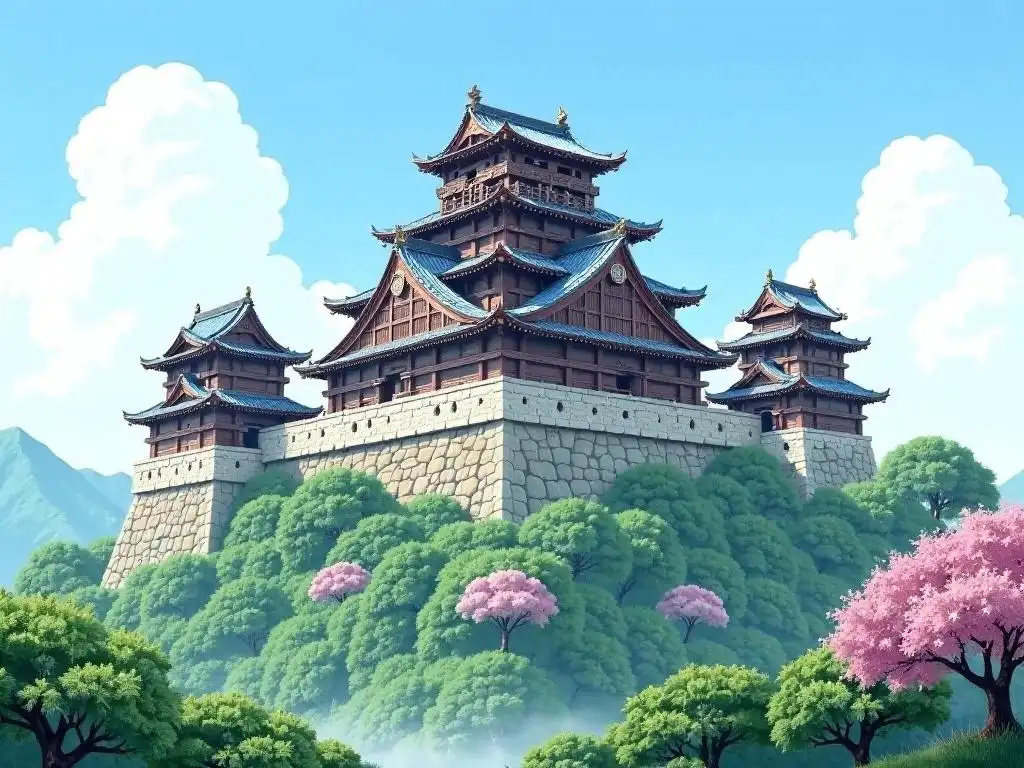
The defensive strategies in the design of Japanese castles were multifaceted, aimed at withstanding sieges and attacks.
- Elevation and Terrain Utilization: Castles were often built on elevated ground, allowing defenders to have a vantage point over approaching enemies. This also made it difficult for attackers to advance.
- Complex Layouts: The use of intricate layouts that included multiple gates and winding paths confused attacking forces. These designs often incorporated dead ends and chokepoints, creating natural traps.
- Integrated Defense Systems: Japanese castles featured a combination of walls, moats, and watchtowers that worked together as a cohesive defense mechanism. Each element was designed to complement the others, providing layers of protection.
- Use of Traps and Obstacles: Moats and pitfalls were common defensive features that could incapacitate attackers. Additionally, the placement of sharpened stakes and other obstacles around the castle perimeter was used to deter advances.
Role of Castles in Battle Plans
Castles were central to battle strategies during Japan's feudal era, serving not only as bastions of defense but also as crucial components in broader military operations. Their role extended beyond mere fortifications; they were integrated into the overall military tactics of clans.
Strategic Importance of Location in Japanese Castles
The strategic location of castles was paramount in determining their effectiveness in battle. Many were sited to control vital transportation routes, such as rivers and mountain passes, allowing for quick mobilization of troops.
- Accessibility: Castles located near trade routes or resource-rich areas could sustain longer sieges through access to supplies.
- Visibility: Elevated positions offered extensive views of the surrounding areas, enhancing reconnaissance capabilities and allowing for early warning systems against potential assaults.
- Political Control: By situating castles in contested territories, clans could assert dominance over regions, influencing local populations and deterring rival forces.
Castles as Command Centers in Military Campaigns
In addition to their defensive purposes, castles functioned as command centers for military campaigns. They provided a secure base for strategizing and launching operations.
- Logistical Hub: Castles served as storage points for weapons, food, and provisions, facilitating the movement of troops and resources during campaigns.
- Coordination of Forces: Leaders could effectively communicate and manage their forces from the safety of the castle, orchestrating movements and responses to enemy actions.
- Symbol of Authority: The presence of a castle demonstrated power and influence, rallying troops and local populations under a unified command during conflicts.
Overall, the integration of castles into the military strategies of feudal Japan underlines their significance in shaping the outcomes of battles and the course of history during this era.
Famous Castles and Their Tactical Use
Throughout Japan's feudal era, castles played a pivotal role in military strategy and defense. These fortifications were not merely residences for daimyō (feudal lords) but served as central hubs for administration, military planning, and troop mobilization. The architectural designs of these castles often reflected their strategic purposes, incorporating elements such as thick stone walls, moats, and elevated positions to maximize visibility and defense. Each castle was tailored to its specific environment, providing advantages against potential invaders while showcasing the power and influence of its lord.
Himeji Castle: A Model of Feudal Defense
Himeji Castle, often referred to as the "White Heron Castle" for its elegant appearance, stands as a quintessential example of feudal Japanese military architecture. Constructed in the early 17th century, it was strategically designed to be a stronghold against rival clans. The castle's location on a hill provided a commanding view of the surrounding landscape, allowing defenders to spot approaching foes from a distance.
One of the notable features of Himeji Castle is its complex series of defensive mechanisms. The entrance is protected by a series of gates and narrow passages that create choke points, forcing attackers to navigate a labyrinthine path, which could be used to the defenders' advantage. Furthermore, the castle's stone walls are thick and sloped, making it difficult for siege weapons to inflict damage. The use of multiple baileys, or courtyards, allowed for a layered defense system, ensuring that if one section fell, others could still provide refuge and continue the fight.
Matsumoto Castle and Its Strategic Advantages
Matsumoto Castle, known for its striking black exterior, is another exemplary feudal castle that illustrates the tactical use of fortifications. Built in the late 16th century, it served as a base for the Takeda clan and later the Matsumoto clan. Its design integrates both functionality and aesthetic beauty, with a layout that promotes both defense and visibility.
The strategic placement of Matsumoto Castle is noteworthy; it is surrounded by a moat and positioned near the Northern Alps, providing natural barriers against attacks. The castle’s multiple stories offer elevated vantage points, crucial for surveilling the surrounding area and spotting enemy movements. Additionally, the layout of the castle allows for effective communication and coordination among the defenders, which is essential during times of siege. The ability to move between the inner and outer defenses quickly was a significant advantage in battle situations.
Case Studies: Notable Battles and Their Castle Strategies
The historical significance of Japanese castles is best understood through specific battles that highlight their strategic use. Two prominent examples are the Siege of Osaka and the Battle of Nagashino, where fortifications played critical roles in the outcomes of these conflicts.
The Siege of Osaka: Tactics and Fortifications
The Siege of Osaka, occurring in the early 17th century, was a significant conflict that showcased the tactical importance of castles. The Tokugawa shogunate sought to eliminate the Toyotomi clan’s power, which was centered around Osaka Castle. The castle itself was fortified with extensive walls, moats, and a strategic layout designed to withstand prolonged sieges.
During the siege, defenders utilized the castle’s fortifications to launch counterattacks and maintain morale among their ranks. The extensive use of gunpowder artillery by the Tokugawa forces marked a turning point in siege warfare. Despite the castle's formidable defenses, the lack of adequate supplies and reinforcements ultimately led to its fall. The siege highlighted the necessity of not only robust fortifications but also the importance of logistical support in military strategy.
The Battle of Nagashino: The Role of Castles in Defense
The Battle of Nagashino in 1575 illustrates how castles influenced battle tactics and outcomes. The Takeda clan, known for their cavalry, faced the combined forces of the Tokugawa and the Unifier Oda Nobunaga. Although there were no major castles involved in the battle itself, the strategies employed were heavily influenced by the surrounding fortifications.
The defenders took advantage of the terrain and fortified positions to establish a defensive line, utilizing gunpowder weapons effectively against the advancing cavalry. This battle marked a shift in military tactics, where the use of defensive fortifications combined with innovative weaponry led to a decisive victory for the Tokugawa and Oda forces. The outcome of Nagashino emphasized how the principles of castle defense could inform tactics in open battle, thereby altering the course of Japanese military history.
The Decline of Castles in Japanese Warfare

The decline of castles in Japanese warfare can be traced back to several interrelated factors that began to emerge in the late 16th century. As Japan transitioned from the Warring States period (Sengoku Jidai) into the unification under the Tokugawa shogunate, the nature of warfare evolved significantly. Centralization of power led to the establishment of strong, centralized authorities that diminished the need for local lords to maintain extensive castle fortifications.
The introduction of gunpowder weaponry, particularly muskets, also played a crucial role in this decline. Traditional castle designs, which had been effective against earlier forms of siege warfare, became increasingly vulnerable to long-range gunfire and artillery. This shift forced military strategists to reconsider the operational effectiveness of castles, leading to the development of more mobile military units. As warfare became less about static defense and more about maneuverability and swift attacks, the strategic significance of castles diminished.
Furthermore, political stability under the Tokugawa shogunate meant that large-scale battles became rare, reducing the need for fortified structures. The focus shifted towards maintaining peace and stability, and castles began to transform into administrative centers rather than military strongholds. This change in function marked the beginning of a new era in Japanese military strategy, where fortifications were no longer deemed essential for defense.
Transition from Feudal Warfare to Modern Military Strategy
The transition from feudal warfare to modern military strategy in Japan was marked by significant changes in both military organization and technology. With the establishment of a centralized government, the samurai class transitioned from independent warriors to state soldiers, leading to a more organized military structure. This transformation necessitated a shift in battle tactics, which increasingly relied on combined arms and coordinated maneuvers rather than static defenses.
The Meiji Restoration in the late 19th century further accelerated this transition. As Japan opened up to Western influences, military leaders began to adopt modern tactics and technologies. The construction of modern barracks and the establishment of a standing army replaced the feudal system of samurai retainers. This new military model emphasized mobility, logistics, and the integration of advanced weaponry, rendering traditional castles largely obsolete as defensive structures.
The implication of this transition was profound, as Japan began to engage in overseas conflicts with modern armies, further highlighting the inadequacies of feudal castle strategies. The emphasis shifted from fortified positions to the strategic use of terrain, rapid deployment, and combined arms operations. Thus, the decline of castles was not merely a consequence of technological advancements but rather a reflection of a broader shift in military philosophy and state organization.
Impact of Changing Tactics on Castle Utilization
As military tactics evolved, the utilization of castles underwent a dramatic transformation. Initially, castles served as primary military strongholds where lords could defend against rival factions. However, as warfare became more dynamic, the role of castles shifted towards that of administrative and ceremonial sites.
One significant impact of changing tactics was the decline in the construction of new castles. Instead of building new fortifications, the focus shifted to reinforcing existing ones. Many castles were modified to accommodate new military technologies, such as thicker walls to withstand cannon fire, but this was often insufficient to maintain their strategic importance.
In addition, the increased use of mobility in warfare led to the creation of fortified encampments or temporary fortifications, which could be erected quickly and dismantled as needed. This flexibility contrasted sharply with the static nature of traditional castles, leading to their reduced relevance in contemporary battle plans. As a result, castles became more symbolic, representing the legacy of feudal power rather than functional military assets.
Conclusion: The Legacy of Japanese Feudal Castle Strategies
The legacy of Japanese feudal castle strategies is complex, reflecting an era of both military innovation and cultural significance. While the decline of castles marked the end of an era in military history, their influence persisted in various forms. The strategies developed during the feudal period laid the groundwork for future military operations, highlighting the importance of strategic planning and fortification, even as the nature of warfare evolved.
Lasting Influence on Modern Military Architecture
The architectural innovations of feudal Japanese castles have had a lasting influence on modern military architecture. Elements such as moats, stone walls, and strategic layouts can still be observed in contemporary military installations. The emphasis on incorporating terrain into defensive planning can be traced back to the principles established during the feudal era.
Moreover, the aesthetic aspects of castle construction, including the integration of natural landscapes and the use of local materials, have inspired modern architects. This blend of functionality and beauty reflects a deep understanding of both military needs and cultural values, ensuring that the legacy of these structures remains relevant in contemporary design.
Reflection on the Cultural Significance of Feudal Castles
Feudal castles in Japan also hold tremendous cultural significance, serving as symbols of power, heritage, and identity. They represent the complex interplay between military might and political authority during a tumultuous period in Japanese history. The castles are now cherished as historical sites, attracting visitors and serving as reminders of the samurai ethos.
In contemporary Japan, these castles embody a sense of nostalgia and pride in national history. Festivals and reenactments held at castle sites connect modern citizens to their feudal past, fostering a greater understanding of the values and strategies that shaped their nation. Thus, while military strategies may have evolved, the cultural impact of Japanese feudal castles endures, resonating with the identity of the Japanese people today.
Further Reading on Japanese Feudal Military History
To gain a deeper understanding of Japanese feudal military history, particularly the strategies surrounding fortifications and castles, exploring a variety of resources is essential. This section will guide you through recommended books, online archives, and documentaries that provide valuable insights into the military tactics and historical context of Japan’s feudal era.
Recommended Books and Resources
-
"The Samurai: A Military History" by Stephen Turnbull
This book provides an in-depth look at the samurai class and their role in Japanese warfare. Turnbull outlines the evolution of samurai tactics, including the strategic importance of castles in battle.
-
"Japanese Castle Architecture: A Cultural History" by Michael A. D. B. N. H. Watanabe
This resource delves into the architectural features of Japanese castles, their defensive capabilities, and how they influenced military strategies during the feudal period.
-
"The History of Japan" by Louis G. Perez
A comprehensive overview of Japanese history, this book covers significant military developments and the role of fortifications within the larger narrative of Japan's past.
-
"Warriors of Japan: The Story of the Samurai" by John M. Koller
This book focuses on the samurai's evolution and their warfare strategies, including the use of castles as strategic military hubs.
-
"The Rise of the Samurai: Military History of Japan" by David A. Eason
Eason’s work examines the transition from ancient to feudal Japan, highlighting the critical role of fortifications in shaping military engagements.
Online Archives and Documentaries on Feudal Japan
-
National Museum of Japanese History
This online resource offers access to a wealth of documents and artifacts related to Japan’s feudal period, including maps and blueprints of famous castles that illustrate their strategic designs.
-
Japanese Historical Text Initiative
An excellent digital archive that provides translations of historical texts, allowing researchers to explore first-hand accounts of military strategies and the significance of castles in warfare.
-
"Secrets of the Samurai: The Story of Japan’s Warriors" (Documentary)
This documentary provides an engaging visual account of the samurai culture and military techniques, emphasizing the strategic importance of fortifications and battle tactics during feudal Japan.
-
"The Great Japanese Castle" (Documentary)
This program explores the architectural evolution of Japanese castles, their defensive mechanisms, and their pivotal roles in historical battles.
-
"Samurai: Behind the Myth" (Documentary)
A critical examination of the samurai, this documentary discusses their military strategies and the influence of castle fortifications in the context of feudal Japan.
These resources will provide a comprehensive foundation for anyone interested in exploring the intricacies of Japanese feudal castle strategies and their impact on military history.
- Introduction to Japanese Feudal Castle Strategies
- Historical Context of Japanese Castles in Warfare
- Key Features of Japanese Castles and Fortifications
- Architectural Elements of Feudal Castles
- Defensive Strategies Utilized in Castle Design
- Role of Castles in Battle Plans
- Famous Castles and Their Tactical Use
- Case Studies: Notable Battles and Their Castle Strategies
- The Decline of Castles in Japanese Warfare
- Conclusion: The Legacy of Japanese Feudal Castle Strategies
- Further Reading on Japanese Feudal Military History
Frequently Asked Questions
What role did fortifications play in Feudal Japan?
Fortifications were crucial in Feudal Japan, serving as defensive structures that protected territories and resources during conflicts. They allowed samurai and their lords to strategize and control battlefields effectively.
How did Japanese feudal castle strategies evolve over time?
Japanese feudal castle strategies evolved with advancements in military technology and changing warfare tactics. Castles adapted to include features like moats, stone walls, and towers, enhancing their defensive capabilities.
What were the key features of a Japanese feudal castle?
A typical Japanese feudal castle included elements such as high walls, gatehouses, and watchtowers. These features not only provided defense but also facilitated the surveillance of approaching enemies.
How did samurai utilize castles in battle?
Samurai utilized castles as command centers during battles, where they could rally troops and coordinate strategies. Castles also served as safe havens for civilians and supplies during sieges.
What impact did castle architecture have on Japanese warfare?
Castle architecture significantly impacted Japanese warfare by influencing tactical decisions and battle outcomes. The design of castles allowed for strategic advantages such as better defense and mobility for troops.
Final Reflection: The Enduring Legacy of Japanese Feudal Castle Strategies
The intricate strategies behind Japanese feudal castles and fortifications remain profoundly relevant today, as they reveal the timeless principles of defense and strategic planning in warfare. In an era where modern conflicts still echo the need for tactical ingenuity, the lessons drawn from Japan's feudal past resonate with military strategists and historians alike. The architectural marvels of these castles were not merely stone structures; they were embodiments of power, culture, and the relentless pursuit of security.
The influence of these fortifications extends beyond the battlefield, shaping cultural narratives and societal structures in Japan. The castles served as symbols of authority and resilience, reflecting the values of the samurai class and the complexities of feudal loyalty. As historian John W. Hall noted, The castle was not just a military stronghold; it was a microcosm of the feudal order itself.
This observation underscores how the strategies employed in these castles continue to inform our understanding of social hierarchies and governance, even in contemporary contexts.
As we reflect on the significance of Japanese feudal castle strategies, let us consider how these historical lessons can inspire our own approaches to challenges in life. Embrace the idea of building your own 'castle'—a strong foundation of knowledge, resilience, and strategic thinking. In doing so, you not only honor the legacy of those who came before us but also equip yourself to navigate the complexities of the modern world with confidence and purpose.
Unveil the Secrets of Feudal Japanese Warfare!
Thank you for diving into the intricate world of feudal Japanese battle strategies with us! You've explored how fortifications and castles played a pivotal role in shaping warfare during this fascinating era. Now, it’s time to take the knowledge you've gained and put it into action!
- Visit a local museum or historical site to see real-life examples of fortifications and castles, deepening your understanding of their significance.
- Share your newfound insights with friends or on social media—start a conversation about the strategies that defined an entire era!
- Join a historical reenactment group or an online community to connect with others who share your passion for feudal Japan and discuss battle tactics in depth.
What aspect of feudal Japanese fortifications intrigues you the most, and how do you think they influenced the success of battles?