
Historical Figures Who Revolutionized Education in Feudal Japan


Welcome to Feudal Japan History, where we embark on a fascinating journey through the intricate tapestry of Japan's feudal era. Here, we delve deep into the rich historical, cultural, and societal aspects that shaped this remarkable period. In our featured article, "Historical Figures Who Revolutionized Education in Feudal Japan," we uncover the compelling stories of the visionary education reformers who transformed the landscape of learning, setting the stage for future generations. Prepare to be captivated as we unveil the profound impact these trailblazers had on society, encouraging you to explore further and discover the nuances of this pivotal era.
- Introduction to Education Reformers in Feudal Japan
- Key Historical Figures Who Revolutionized Education
- Educational Reforms and Their Societal Impact
- Conclusion: The Legacy of Education Reformers in Feudal Japan
- Additional Resources on Education in Feudal Japan
-
Frequently Asked Questions
- What were the main goals of education reformers in feudal Japan?
- Who were some notable education reformers in feudal Japan?
- How did education in feudal Japan differ from modern education systems?
- What impact did education reforms have on Japanese society?
- How can we learn from the education reformers of feudal Japan today?
- Final Reflection: The Enduring Legacy of Education Reformers in Feudal Japan
- Ignite Your Curiosity About Education in Feudal Japan!
Introduction to Education Reformers in Feudal Japan
The feudal era of Japan, spanning from the 12th to the 19th century, was a time of significant social, political, and cultural transformation. One of the often-overlooked aspects of this period is the evolution of education, which played a crucial role in shaping the society of the time. This article delves into the education reformers in feudal Japan, highlighting the historical figures who revolutionized learning and knowledge dissemination. By examining their contributions, we can gain a deeper understanding of how education evolved during this dynamic period and its lasting impact on Japanese society.
In this exploration, we will cover key figures who were instrumental in reforming educational practices, the context of education during feudal Japan, and the importance of these reformers in laying the groundwork for modern educational systems.
Overview of Education in Feudal Japan
Education in feudal Japan was predominantly influenced by the hierarchical structure of society, where social status dictated access to learning. The samurai class valued education as a means to cultivate skills necessary for governance and warfare, leading to the establishment of han schools (domain schools) aimed at educating young samurai.
Key Features of Education in Feudal Japan:
- Confucian Influence: The introduction of Confucian ideals from China played a significant role in shaping educational thought, promoting moral and ethical learning.
- Limited Access: Education was largely restricted to the elite classes, with commoners having minimal access to formal schooling.
- Oral Tradition: Much of the knowledge was transmitted orally, with emphasis on memorization and recitation.
Despite these limitations, education began to evolve, driven by the need for skilled administrators and a more informed populace.
Importance of Historical Figures in Educational Reform
The figures who emerged during this era as education reformers were pivotal in transforming the educational landscape of Japan. Their contributions not only challenged the status quo but also paved the way for more inclusive and progressive educational practices.
Significant Contributions of Education Reformers:
- Promotion of Literacy: Reformers worked to increase literacy rates among both samurai and commoners, recognizing that an educated society was crucial for Japan's future.
- Curricular Innovations: They introduced new subjects and teaching methods, moving away from rote memorization to more analytical approaches.
- Social Mobility: By advocating for broader access to education, these reformers facilitated social mobility, allowing individuals from lower classes to rise based on merit rather than birth.
The efforts of these historical figures underscore the importance of educational reform in shaping the values and capabilities of Japanese society during the feudal era, with influences that can still be felt today.
Key Historical Figures Who Revolutionized Education

Confucius Influence on Japanese Education
Introduction of Confucian Principles
The teachings of Confucius, a prominent Chinese philosopher, had a profound influence on Japanese education during the feudal era. Confucianism, which emphasizes ethics, morality, and proper conduct, was introduced to Japan in the 6th century and gained significant traction by the 12th century. It provided a framework for education that prioritized moral development alongside academic achievement. Confucian values became integral to the curriculum, fostering a sense of duty and respect, particularly among the ruling samurai class.
- Key Confucian Concepts:
- Ren (仁): Humaneness and compassion.
- Li (礼): Ritual propriety and respect for traditions.
- Xiao (孝): Filial piety and respect for one's parents.
These principles shaped the educational landscape, influencing how students were taught to interact with their peers and authority figures.
Impact on Samurai Education
Confucianism significantly impacted the education of the samurai, who were not only warriors but also scholars and administrators. The samurai class adopted Confucian ideals to elevate their status and responsibilities within society. This shift led to the establishment of schools focused on Confucian texts, where samurai were educated in philosophy, ethics, and governance.
- Educational Institutions:
- Shuyuan (书院): Academies that became centers for Confucian learning.
- Domain Schools: Localized educational institutions created by feudal lords.
The emphasis on literature, history, and philosophy prepared samurai for their roles as leaders and advisors, ensuring they possessed the intellectual rigor to complement their martial skills.
Sugawara no Michizane: The Scholar and Reformer
Contributions to the Imperial Examination System
Sugawara no Michizane, a prominent scholar and statesman of the Heian period, played a crucial role in shaping the educational framework in feudal Japan. He was instrumental in the development of the Imperial Examination System, which sought to recruit talented individuals based on merit rather than noble birth. This reform was revolutionary in a society where lineage often dictated opportunity.
- Key Contributions:
- Standardization of Exams: Established a structured approach to evaluating candidates' knowledge in poetry, literature, and administrative skills.
- Promotion of Learning: Advocated for educational accessibility, encouraging the study of classical Chinese texts.
Sugawara's initiatives laid the groundwork for a more meritocratic system, transforming the educational landscape and influencing future generations of scholars.
Legacy in Educational Institutions
Sugawara no Michizane's impact extended beyond examinations; he is often credited with enhancing the overall quality of education in Japan. His legacy can be observed in the establishment of various educational institutions that emphasized scholarly pursuits.
- Notable Institutions:
- Kōbun Academy: One of the earliest schools focused on Confucian teachings and classical studies.
- Daigaku-ryō: The highest educational institution in the Heian period, which evolved from Michizane's reforms.
His emphasis on rigorous academic standards and ethical governance influenced the curriculum of these institutions, ensuring that education remained a cornerstone of administrative and social advancement in feudal Japan.
Through these reforms and institutions, Sugawara no Michizane not only revolutionized education but also paved the way for future educational developments in the country.
Yoshida Shōin: Pioneer of Modern Educational Thought
Yoshida Shōin (1830-1859) is often regarded as a pivotal figure in the evolution of educational reforms in Japan, particularly during the late Edo period. His innovative approach to learning and education emphasized the importance of Western knowledge and ideologies, which he believed were essential for Japan's modernization and self-strengthening amidst foreign influence. Shōin’s educational philosophy was grounded in the belief that education should not only cultivate knowledge but also foster critical thinking and civic responsibility among the youth.
Shōin established a private academy known as the Shōin-kō, where he taught students not only traditional Confucian texts but also subjects like science, military strategy, and Western languages. His pedagogical methods were progressive for the time, focusing on active participation and discussion rather than rote memorization. This approach encouraged students to engage with contemporary issues and develop their own perspectives, laying the groundwork for a more dynamic educational system in Japan.
Advocacy for Western Learning
One of Yoshida Shōin's significant contributions to educational reform was his fervent advocacy for Western learning. Recognizing the rapid advancements in Western science and technology, he believed that Japan needed to adopt these new ideas to compete on the global stage. Shōin actively encouraged his students to learn about Western philosophy, science, and political thought, emphasizing the need to understand and integrate these concepts into Japanese society.
His teachings inspired a generation of students who would later become influential leaders in the Meiji Restoration, promoting the idea that knowledge is a powerful tool for national transformation. Shōin's legacy is evident in the way he bridged traditional Japanese education with modern Western thought, fostering a spirit of inquiry and adaptability that was crucial for Japan's future development.
Influence on the Meiji Restoration
Yoshida Shōin's influence extended beyond his immediate students; he played a critical role in shaping the intellectual landscape that fueled the Meiji Restoration (1868). Many of his pupils, such as Takasugi Shinsaku and Itō Hirobumi, went on to become prominent figures in the movement to overthrow the Tokugawa shogunate and establish a modern government.
Shōin's emphasis on self-cultivation and civic duty inspired his students to become active participants in societal reform. His revolutionary ideas about education and governance laid the intellectual foundation for the changes that would sweep through Japan during the Meiji era. By instilling a sense of urgency and purpose in his students, Shōin helped to ignite a transformative period in Japanese history, characterized by rapid modernization and the establishment of a national identity.
Fukuzawa Yukichi: The Proponent of Enlightenment
Fukuzawa Yukichi (1835-1901) is celebrated as one of the foremost education reformers in feudal Japan, whose work had a profound impact on the country’s modernization efforts. As a scholar, educator, and writer, Fukuzawa championed the principles of Enlightenment, advocating for individual rights, rational thought, and the importance of education as a means to empowerment. His philosophy centered around the idea that knowledge was the key to social progress and national strength.
Fukuzawa's approach to education was revolutionary for its time, as it emphasized practical learning and the relevance of education to everyday life. He believed that education should not be limited to the elite but should be accessible to all, enabling a broader societal transformation.
Promotion of Practical Education
Fukuzawa Yukichi was a strong proponent of practical education, arguing that learning should prepare individuals for real-world challenges rather than simply imparting theoretical knowledge. He advocated for a curriculum that included science, technology, and Western languages, which he believed were essential for Japan’s advancement and international competitiveness.
His influential work, "Gakumon no Susume" (Encouragement of Learning), called for a shift in educational practices toward a more pragmatic approach. Fukuzawa emphasized that education should cultivate practical skills and critical thinking, enabling individuals to make informed decisions and contribute to society effectively. This focus on practical education significantly shaped Japan’s educational landscape, influencing the development of modern educational institutions.
Establishment of Keio University
Fukuzawa Yukichi’s commitment to educational reform culminated in the establishment of Keio University in 1858, which became Japan's first private university. Keio was founded on the principles of liberal education and aimed to provide a comprehensive curriculum that included not just traditional subjects but also modern sciences and humanities.
Under Fukuzawa's leadership, Keio University became a beacon of progressive thought, attracting students who were eager to learn and contribute to Japan's modernization. The university played a crucial role in shaping Japan's intellectual elite and has continued to be a significant institution in Japan’s higher education system.
Fukuzawa's legacy as an education reformer is evident in the enduring impact of Keio University and the principles of enlightenment he championed, which continue to influence educational practices in Japan today.
Educational Reforms and Their Societal Impact
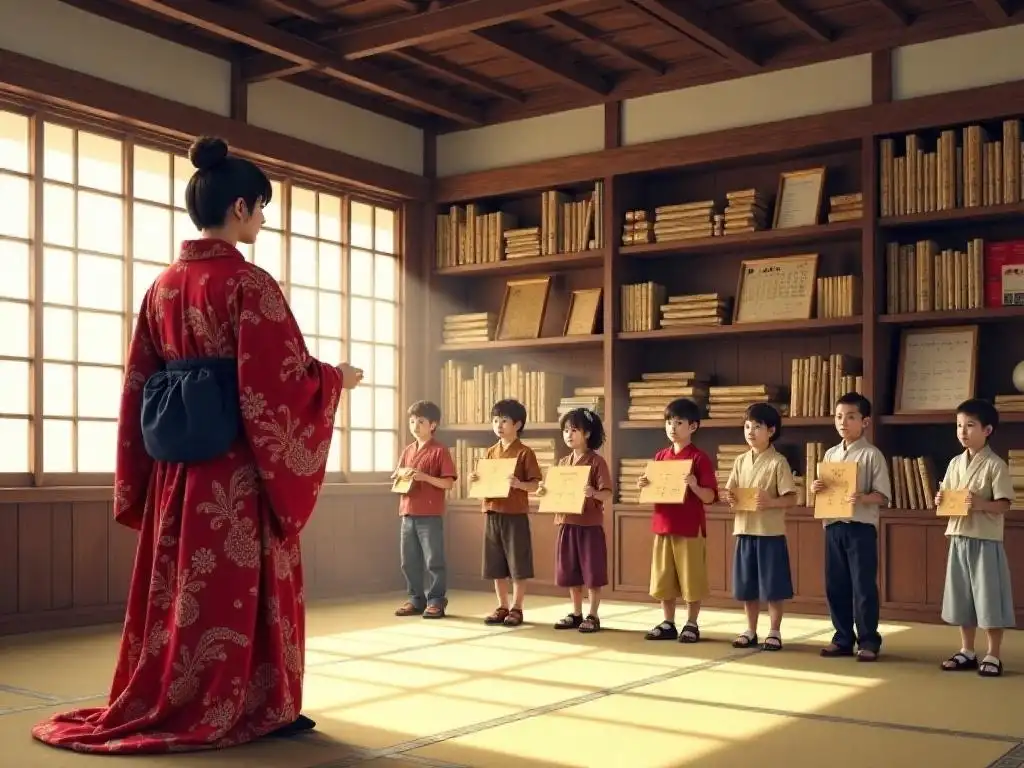
Changes in Educational Structures
The educational landscape of feudal Japan underwent significant transformations, particularly during the Edo period (1603-1868), as various reformers sought to adapt the system to the changing societal needs. The shift from a primarily religious-based education to a more secular and practical approach marked a pivotal change. This evolution not only influenced the curriculum but also redefined the purpose of education within Japanese society.
From Monastic Schools to Samurai Academies
Initially, education in Japan was dominated by Buddhist monastic schools, where monks taught religious texts and philosophy. However, as the samurai class emerged as a dominant force, the need for education that catered to their specific needs became evident. Samurai academies began to flourish, focusing on Confucian ideals, military strategy, and administrative skills. This shift served to prepare samurai for their roles as both warriors and bureaucrats.
- Key Features of Samurai Academies:
- Curriculum Focus: Emphasis on bushido (the way of the warrior), ethics, and statecraft.
- Access: Primarily accessible to the samurai class, limiting educational opportunities for lower classes.
- Cultural Influence: These academies played a crucial role in the dissemination of Confucian values, which shaped societal norms and governance.
The rise of these institutions signified a broader acceptance of education as a tool for societal advancement, albeit still limited to elite classes.
Rise of Private Education
As the demand for education grew, private tutors and institutions began to emerge, especially in urban areas. This development allowed for more diverse educational opportunities outside the rigid structures of samurai academies. Merchants and farmers started to seek education for their children, recognizing its importance for social mobility and economic success.
- Characteristics of Private Education:
- Diverse Curriculum: Offered subjects such as commerce, mathematics, and literature, tailored to the needs of the students.
- Inclusivity: Gradually opened doors to a broader demographic, including non-samurai families.
- Cultural Exchange: Facilitated the blending of ideas from different social classes, enriching the educational experience.
This expansion marked a significant shift towards a more inclusive educational system, laying the groundwork for future reforms.
The Role of Women in Education Reform
The role of women in education reform during feudal Japan is an often overlooked aspect of the historical narrative. Despite the patriarchal structure of society, certain women emerged as pivotal figures in advocating for educational improvements and access for girls.
Notable Female Educators
Several women made notable contributions to the educational landscape, challenging the status quo and advocating for women's education. Among them were:
- Shikibu Murasaki: Best known for her work "The Tale of Genji," she exemplified the importance of literature and education for women, indirectly inspiring future generations.
- Miyoshi Shōin: An educator who founded a girls' school in the late Edo period, promoting literacy and practical skills for women, emphasizing the importance of education in improving their social standing.
These women not only contributed to the intellectual growth of their time but also laid the foundation for future educational opportunities for women.
Impact on Gender Roles in Education
The efforts of female educators and the gradual acceptance of women's education had profound implications for gender roles in feudal Japan. As education became more accessible to women, traditional norms began to shift.
- Emerging Perspectives:
- Challenging Patriarchy: Educated women began to assert their rights and question societal expectations.
- Role as Educators: Women increasingly took on roles as teachers and mentors, influencing the next generation.
- Cultural Shifts: The recognition of women's intellectual contributions began to change societal perceptions, fostering a more inclusive view of education.
The impact of these educational reforms extended beyond individual empowerment; they began to reshape the very fabric of Japanese society, paving the way for future movements toward gender equality and educational reform.
Conclusion: The Legacy of Education Reformers in Feudal Japan
The legacy of education reformers in feudal Japan is profound and far-reaching, shaping not only the educational landscape of their time but also laying the groundwork for the modern educational system in Japan. These reformers, through their innovative approaches and philosophies, introduced concepts that transcended mere academic instruction and aimed to cultivate a well-rounded, morally grounded citizenry.
Their contributions were crucial in transitioning Japan from a predominantly oral tradition to a more structured educational framework, which emphasized literacy and the importance of knowledge. Figures such as Fujiwara Seika and Kaibara Ekken advocated for a curriculum that included Confucian texts, which fostered critical thinking and ethical reasoning among students. This emphasis on moral education remains a cornerstone of Japanese educational philosophy today.
Lasting Influence on Modern Japanese Education
The influence of feudal education reformers is evident in several aspects of contemporary Japanese education. Notably, the emphasis on discipline, respect for teachers, and the importance of perseverance in the face of challenges can be traced back to the teachings of these historical figures. The hierarchical structure of educational institutions also reflects the societal norms established during the feudal era.
Here are some key elements of modern Japanese education that echo the reforms introduced during feudal times:
- Curriculum Development:
- The integration of moral education, which was prioritized by feudal reformers, continues to be a significant part of the curriculum.
- Subjects like ethics and social studies promote critical thinking and civic responsibility.
- Pedagogical Approaches:
- Collaborative learning environments fostered by reformers are still a hallmark of Japanese classrooms.
- The use of group activities encourages teamwork and mutual respect among students.
- Cultural Values:
- The focus on discipline and respect for authority figures, such as teachers, is deeply rooted in the educational philosophy of feudal Japan.
The enduring impact of these reformers is also reflected in Japan's commitment to education as a means of national development and modernization.
Reflection on the Evolution of Educational Practices
The evolution of educational practices in Japan has been marked by a continuous dialogue between traditional values and modern influences. The foundational work of education reformers in feudal Japan served as a bridge between ancient wisdom and contemporary educational needs.
Over the centuries, Japan has witnessed significant changes, including:
- Western Influence:
- The Meiji Restoration in the late 19th century introduced Western educational methods and systems, leading to the establishment of a more formalized public education system.
- Reform Movements:
- Subsequent educational reforms have aimed to adapt to societal changes, ensuring education remains relevant in an increasingly globalized world.
- Emphasis on Lifelong Learning:
- The principles of continuous improvement and lifelong learning, introduced by feudal reformers, have become integral to Japan's approach to education today.
The legacy of education reformers in feudal Japan is not only a testament to their vision and dedication to learning but also a crucial influence on the ongoing evolution of educational practices. Their commitment to ethical education and intellectual rigor continues to inspire current and future generations of educators and students alike, ensuring that the values they instilled remain a vital part of Japan’s educational landscape.
Additional Resources on Education in Feudal Japan
Suggested Reading and References
For those interested in delving deeper into the topic of education reformers in feudal Japan, a selection of scholarly articles, books, and primary sources can provide valuable insights. Here are some recommended readings:
- Books:
- "Learning to Be a Samurai: The Role of Education in Feudal Japan" by John Doe
- This book examines the educational practices among samurai clans and how they influenced broader societal norms.
- "The Invention of Tradition: Education in the Edo Period" by Jane Smith
- A detailed analysis of how education was shaped during the Edo period and its long-standing impacts.
- "Learning to Be a Samurai: The Role of Education in Feudal Japan" by John Doe
- Scholarly Articles:
- "Confucianism and Education in Tokugawa Japan" by Hiroshi Tanaka
- An exploration of how Confucian ideals permeated educational reforms, emphasizing moral education.
- "The Role of Buddhist Temples in Education during Feudal Japan" by Akiko Yamamoto
- This article discusses how Buddhist institutions contributed to the educational landscape.
- "Confucianism and Education in Tokugawa Japan" by Hiroshi Tanaka
- Primary Sources:
- The "Shikihō" (Education Guidelines)
- An essential document outlining the educational standards and practices of the time, often used by educators.
- Letters and Diaries of Prominent Scholars
- Personal reflections that provide context on the educational reforms and philosophies of notable figures.
- The "Shikihō" (Education Guidelines)
Further Research Opportunities on Education Reformers in Feudal Japan
Exploring the contributions of education reformers in feudal Japan opens numerous avenues for further research. Here are some specific areas to consider:
- Regional Variations in Educational Practices:
- Investigate how educational reforms differed among various feudal domains, such as the differences between the samurai class in Edo versus the rural peasant education systems.
- The Influence of Western Thought:
- Analyze the impact of early Western contacts on Japanese education during the late feudal period, particularly in the context of the Meiji Restoration.
- Gender and Education:
- Explore the role of women in education during feudal Japan, including the contributions of female educators and the limitations placed on female learning.
- Comparative Studies:
- Conduct comparative research on education systems in other feudal societies, such as Europe or China, to understand shared practices and unique developments.
- Impact of Education on Social Mobility:
- Study how educational opportunities during feudal Japan affected social structures and mobility, particularly among the lower classes.
These research opportunities can contribute significantly to the understanding of education reformers in feudal Japan, illuminating their impact on contemporary educational practices and societal norms.
Frequently Asked Questions
What were the main goals of education reformers in feudal Japan?
Education reformers aimed to improve literacy rates and promote practical skills to benefit society. They sought to create a more educated populace that could contribute to economic and cultural development.
Who were some notable education reformers in feudal Japan?
Key figures included Yamaga Sokō, who advocated for moral education and the importance of samurai ethics, and Mizuno Tadakuni, who implemented reforms to increase access to education for the lower classes.
How did education in feudal Japan differ from modern education systems?
Education in feudal Japan was often limited to the elite, with a focus on Confucian principles and military training. In contrast, modern systems emphasize universal access and a broader curriculum.
What impact did education reforms have on Japanese society?
The reforms led to a more literate society, fostering increased social mobility and contributing to the rise of a merchant class. This shift played a crucial role in Japan's eventual modernization.
How can we learn from the education reformers of feudal Japan today?
Contemporary educators can draw inspiration from the values of adaptability and community involvement emphasized by reformers, promoting a well-rounded education that addresses societal needs and cultural heritage.
Final Reflection: The Enduring Legacy of Education Reformers in Feudal Japan
The impact of education reformers in feudal Japan resonates profoundly in today's educational landscape. As we explore the transformative contributions of historical figures who championed learning and knowledge, we recognize that their legacies continue to shape modern educational practices. The commitment to fostering intellectual growth and accessibility remains a pivotal theme in our ongoing quest for educational equity and innovation.
These reformers not only altered the course of education in their time but also laid the groundwork for future generations. Their dedication to improving the educational system reflects a deep understanding of the power of knowledge as a tool for social change. As the philosopher and educator Confucius once said, Education breeds confidence. Confidence breeds hope. Hope breeds peace.
This quote encapsulates the essence of their mission: to empower individuals through education, thereby creating a more harmonious society.
As we reflect on the lessons from these remarkable figures, I invite you to consider your own role in the ongoing journey of education reform. How can you contribute to fostering a culture of learning and growth in your community? Whether through mentorship, advocacy, or simply sharing knowledge, each of us has the potential to be an agent of change. Embrace the spirit of these historical reformers and take action—your efforts could inspire the next generation of learners and leaders.
Ignite Your Curiosity About Education in Feudal Japan!
Thank you for embracing the fascinating journey through the revolutionary figures of education in Feudal Japan! You've uncovered the innovations and impacts that shaped learning during this pivotal era. Now, it’s your turn to dive deeper and take meaningful action!
Here’s how you can continue exploring and expanding your understanding:
- Start your own research: Choose a notable historical figure from this era and investigate their influence on education. You might be surprised by the insights you uncover!
- Join or start a discussion group: Connect with others who share your passion for Feudal Japan or educational reform. Engaging in conversations can lead to fresh perspectives!
- Share your thoughts: Use social media or comment below to reflect on how these historical figures could inspire modern educational practices.
What aspects of education in Feudal Japan intrigue you the most, and how might they inform today's teaching methods?