
The Influence of Chinese Education on Feudal Japanese Samurai Training


Welcome to Feudal Japan History, where we embark on a captivating journey through the intricate tapestry of Japan’s feudal era. Here, you will uncover the profound influence of Chinese education on samurai training, a cornerstone of the warrior class that shaped Japan's rich cultural landscape. Prepare to delve into the depths of historical insights and societal transformations, as we explore how these educational exchanges forged a unique path for the samurai. What secrets lie within this cross-cultural connection? Join us as we unravel the layers of history that continue to resonate today!
Introduction to Chinese Education and Samurai Training
The relationship between Chinese education and feudal Japanese samurai training is a fascinating subject that unveils the intricate tapestry of cultural exchange and adaptation between two influential civilizations. During the feudal era in Japan, which spanned from the 12th to the 19th century, the samurai class emerged as the military nobility, deeply intertwined with the philosophical and educational frameworks inherited from China. This article delves into the impact of Chinese education on samurai training, exploring how Confucian ideals and educational practices shaped the values and skills of the samurai, ultimately influencing their role in Japanese society.
Overview of Chinese Educational Philosophy
Chinese education, especially during the Tang (618-907) and Song (960-1279) dynasties, was heavily influenced by Confucianism, which emphasized moral integrity, social harmony, and the importance of education for personal and societal development. Key aspects of this philosophy included:
- Moral Education: The cultivation of virtues such as loyalty, righteousness, and filial piety.
- Four Books and Five Classics: Texts that served as foundational materials for scholars, focusing on ethics, governance, and literature.
- Examinations: A rigorous system that assessed knowledge and understanding, providing a pathway for individuals to gain status and influence.
This educational framework not only defined the intellectual landscape of China but also permeated Japan, where it was adapted to fit the local context and societal needs.
The Role of Education in Feudal Japanese Society
In feudal Japan, education played a crucial role in shaping the samurai's identity and function within society. The samurai were not merely warriors; they were also expected to be educated and cultured individuals, embodying the ideals of bushido, the way of the warrior. Key elements of this educational influence included:
- Integration of Confucian Values: The adoption of Confucian teachings into samurai training, focusing on ethics, governance, and responsibility.
- Literacy and the Arts: Many samurai were trained in reading and writing, as well as in the arts such as calligraphy and poetry, which were seen as marks of a refined warrior.
- Martial Training and Philosophy: The combination of physical training and philosophical study helped to develop well-rounded individuals capable of leadership and moral decision-making.
Historical Context of Chinese Influence on Japan
The historical ties between China and Japan are rich and complex, with numerous events facilitating the exchange of ideas, culture, and education. Understanding this context is essential to grasp the extent of Chinese influence on samurai training.
The Introduction of Chinese Culture to Japan
Chinese culture began to significantly impact Japan during the Asuka period (538-710), when Buddhism and Confucianism were introduced alongside Chinese writing systems. This period marked a transformation in Japanese governance and education, leading to:
- The Adoption of Chinese Characters: The kanji writing system enabled the transmission of Chinese texts, including educational materials.
- Confucian Scholars: Japanese emissaries to China returned with knowledge and scholars who would lay the groundwork for educational systems in Japan.
Key Historical Events Facilitating Cultural Exchange
Several pivotal moments in history facilitated the deep cultural exchange between China and Japan, particularly regarding education:
- The Taika Reform (645): This series of administrative reforms aimed to centralize power and adopt Chinese bureaucratic practices, including education.
- The Nara Period (710-794): A time when the establishment of a centralized government led to the creation of educational institutions modeled after Chinese precedents.
- The Kamakura Period (1185-1333): During this era, the samurai class began to solidify its power, further integrating Confucian ideals into their training and governance.
The influence of Chinese education on feudal Japanese samurai training was profound and multifaceted, intertwining philosophical ideals and practical training that shaped the samurai's identity and role in society. Understanding this dynamic offers essential insights into the broader narrative of Japanese history and culture.
The Japanese Samurai: Definition and Role
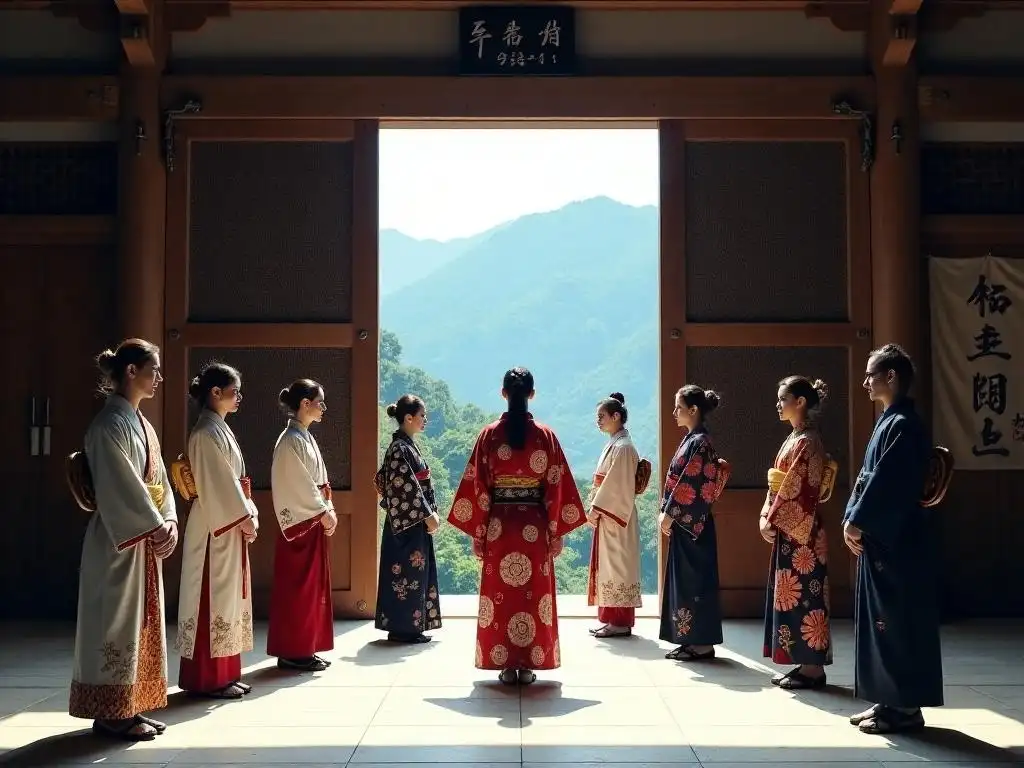
The samurai were a distinct and influential warrior class in feudal Japan, known for their martial prowess, loyalty, and adherence to a strict code of conduct known as Bushido. Emerging during the late Heian period (794-1185), samurai held positions not only as warriors but also as landholders, administrators, and cultural patrons. They played a pivotal role in Japanese society, navigating the intricate political landscape of feudal lords (daimyōs) and their vassals.
The samurai's identity was deeply intertwined with their military training and educational pursuits. Training was not limited to physical combat; it also included the study of literature, philosophy, and the arts, reflecting the samurai's multifaceted role in society. This blending of martial and intellectual pursuits set the samurai apart from mere soldiers, elevating them to a respected social status that would endure for centuries.
The Evolution of the Samurai Class
The samurai class evolved significantly from its origins to the Edo period (1603-1868). Initially, samurai were primarily armed retainers serving noble families, but as the power of the imperial court waned, they began to establish themselves as a dominant military force. By the Kamakura period (1185-1333), the samurai had gained substantial political power, leading to the establishment of the first shogunate, where military leaders held de facto control over the country.
Throughout the Muromachi period (1336-1573), the samurai class became more organized, with the rise of powerful clans and the emergence of a formal system of education. This period saw the samurai embracing not only martial training but also cultural and philosophical studies, influenced heavily by Chinese Confucianism and Zen Buddhism. The samurai sought to cultivate a refined character, combining martial arts with intellectual pursuits.
By the Edo period, the samurai's role shifted further from warriors to bureaucrats and cultural leaders, as Japan experienced a long period of peace. Despite the decline of their military function, samurai retained their status and continued to emphasize education, loyalty, and moral integrity, shaping the values of Japanese society.
The Importance of Training in Samurai Identity
Training was fundamental to the samurai's sense of identity and purpose. Physical training in martial arts, archery, and horseback riding was essential for survival and effectiveness in battle. However, samurai training extended beyond mere combat; it encompassed moral and philosophical instruction, which was vital to their self-image and societal role.
The concept of Bushido emphasized qualities such as loyalty, honor, and courage, which were ingrained through rigorous training regimes. Samurai education included lessons in calligraphy, poetry, and history, fostering a well-rounded character capable of both warfare and cultural appreciation. This dual focus on martial prowess and intellectual cultivation created a unique identity for samurai, distinguishing them as both warriors and scholars in Japanese culture.
Chinese Education Impact on Samurai Training
Chinese education had a profound impact on the training and development of the samurai class in Japan. The introduction of Confucian principles and educational practices during the Tang dynasty (618-907) began to influence Japanese educators and samurai alike. Chinese texts on ethics, governance, and military strategy became essential components of samurai education, shaping their worldview and approach to leadership.
As samurai studied Chinese literature and philosophy, they adopted key concepts such as loyalty, filial piety, and the importance of moral integrity. This adaptation of Chinese ideals helped establish a framework for samurai conduct, influencing their interactions both within their ranks and with the broader society. The integration of these principles contributed to the development of a distinctly Japanese form of education for the samurai, which combined martial training with moral and ethical considerations.
Core Principles of Chinese Education
Chinese education, particularly during the Confucian era, emphasized several core principles that directly influenced samurai training:
- Moral Integrity: Education was viewed as a means to cultivate virtue and moral character. The emphasis on ethical behavior resonated with the samurai's own values of loyalty and honor.
- Literary Knowledge: Mastery of classical Chinese texts was essential, providing a foundation for understanding governance, strategy, and philosophy.
- Ritual and Discipline: The structure of Chinese education fostered discipline and respect for authority, qualities that were critical in samurai training.
- Holistic Development: Education was not solely focused on martial training but also aimed at developing a well-rounded individual capable of contributing to society.
These principles were integrated into the samurai's educational framework, enhancing their training and shaping their identity.
Adaptation of Chinese Educational Techniques in Samurai Training
The adaptation of Chinese educational techniques in samurai training included several key elements:
- Formalized Instruction: The establishment of schools and academies, drawing inspiration from Chinese models, allowed for structured learning environments where samurai could study literature, philosophy, and military strategy.
- Mentorship and Apprenticeship: The samurai often engaged in a mentorship system, similar to Chinese practices, where experienced warriors imparted knowledge and skills to younger samurai, blending hands-on training with theoretical education.
- Integration of Arts: The incorporation of arts such as calligraphy, poetry, and music into samurai training reflected the Chinese belief in the importance of cultural refinement alongside martial abilities.
- Emphasis on Ethics: The teachings of Confucianism were adopted to reinforce the samurai's ethical framework, guiding their actions and decisions in both personal and political realms.
Through these adaptations, the samurai not only enhanced their combat skills but also cultivated the intellectual and moral qualities that defined their class, illustrating the lasting impact of Chinese education on feudal Japanese samurai training.
Curriculum Influences: Comparing Chinese and Samurai Training
The curriculum of samurai training in feudal Japan was significantly shaped by Chinese education, particularly during the periods of cultural exchange between the two nations. This influence can be seen in two primary domains: literary education and martial arts training. The samurai were not only warriors; they were also expected to be educated and cultured individuals. As such, their training encompassed a blend of Confucian philosophy, literature, and martial prowess, all of which were deeply rooted in Chinese traditions.
Literary Education and Confucian Values
At the heart of samurai education was a robust literary curriculum that emphasized the teachings of Confucianism, which had a profound impact on Japanese society. Confucian values such as loyalty, honor, and the importance of hierarchical relationships were integral to the samurai ethos. Samurai scholars studied Chinese texts, including the Analects of Confucius, which instilled ethical principles that governed both personal conduct and governance.
In addition to moral philosophy, samurai education included poetry, calligraphy, and history, allowing warriors to cultivate a refined character. The study of Chinese literature not only enriched their intellectual lives but also provided a framework for ethical decision-making in battle and beyond. This literary foundation was essential for fostering the cultural identity of the samurai class, distinguishing them as more than mere fighters but as custodians of Japanese culture and values.
Martial Arts Training and Strategic Thinking
Martial training among samurai was heavily influenced by Chinese martial arts, notably through the adoption of strategic concepts and combat techniques. Chinese military texts, such as Sun Tzu’s The Art of War, became essential reading for samurai, emphasizing the significance of strategy, deception, and psychological warfare. This strategic thinking was crucial on the battlefield, where samurai were expected to demonstrate not only bravery but also tactical acumen.
The integration of various martial arts styles from China, such as those focusing on weaponry and hand-to-hand combat, enriched the samurai’s training regimen. Samurai engaged in rigorous physical training that included swordsmanship, archery, and horseback riding, all while applying principles learned from their Chinese counterparts. This synthesis of techniques and strategies contributed to the development of a uniquely Japanese martial arts culture, rooted in both practicality and philosophical depth.
The Role of Zen Buddhism in Samurai Education
Zen Buddhism emerged as a vital component of samurai education during the late feudal period, offering a framework for personal development and mental discipline. With its origins in China, Zen brought a new dimension to samurai training, emphasizing mindfulness, meditation, and the concept of simplicity. These teachings were particularly resonant with samurai who sought to balance the chaos of battle with inner peace and clarity of thought.
Influence of Chinese Zen on Japanese Samurai Philosophy
The introduction of Zen Buddhism to Japan during the Kamakura period (1185-1333) had a lasting impact on the samurai class. Chinese Zen philosophies, particularly the ideas of direct experience and the importance of meditation, resonated with the samurai’s quest for self-mastery and enlightenment. The practice of Zen encouraged samurai to develop a focused mind, which was essential for both martial discipline and decision-making in high-pressure situations.
Moreover, the concept of wu wei, or effortless action, found its way into samurai philosophy, influencing their approach to combat and life. This principle taught samurai to act with spontaneity and grace, allowing their training and instincts to guide them effectively in battle.
Integration of Zen Practices in Samurai Training
Zen practices became integral to the daily routines of samurai training. Meditation sessions were common, allowing warriors to cultivate mental clarity and emotional resilience. These practices not only prepared samurai for the rigors of combat but also fostered a sense of tranquility that countered the violence and chaos of their lives.
Additionally, Zen teachings were woven into the arts practiced by samurai, including tea ceremonies, calligraphy, and even martial arts. The emphasis on presence and mindfulness in these activities reflected the Zen influence, transforming them into vital components of a samurai’s education. Through this integration, samurai were able to merge their martial skills with a profound philosophical understanding, creating a holistic approach to their training and way of life.
Case Studies: Notable Samurai Influenced by Chinese Education
The influence of Chinese education on samurai training during the feudal era of Japan is evidenced through several notable figures. These samurai not only embraced the teachings of Confucianism and Chinese martial arts but also integrated these elements into their training methodologies, reflecting a unique cultural synthesis. By examining specific case studies, we can gain insight into how Chinese education shaped the philosophies and practices of these warriors, ultimately affecting the broader samurai culture.
Yagyu Munenori and Their Training Methodologies
Yagyu Munenori, a prominent samurai and the founder of the Yagyu Shinkage-ryu school of swordsmanship, exemplifies the blend of Chinese educational principles with traditional samurai training. Munenori was heavily influenced by the Confucian ideals of discipline, ethics, and moral rigor, which he integrated into his teachings.
His training methodologies emphasized not only physical prowess but also mental and spiritual development. Munenori believed that a samurai's character was as important as their combat skills. He taught that understanding the philosophy behind martial arts was crucial, echoing the Confucian notion of li (礼), which refers to proper conduct and etiquette.
Moreover, Yagyu Munenori's teachings included elements of Chinese military strategy, which he adapted to suit the needs of Japanese warriors. His focus on strategy and the psychological aspects of combat helped to create a more rounded approach to samurai training, fostering both physical and intellectual discipline.
Miyamoto Musashi as a Case Study of Cultural Synthesis
Miyamoto Musashi, perhaps the most famous samurai in Japanese history, serves as another compelling case study of the impact of Chinese education on samurai training. Musashi's life and work illustrate the profound synthesis of Chinese and Japanese martial philosophies.
Musashi was not only a master swordsman but also a talented artist and strategist. His famous work, The Book of Five Rings, draws heavily on concepts derived from Chinese philosophy, particularly the teachings of Sun Tzu and the principles of Daoism. This synthesis allowed him to develop a unique perspective on combat that emphasized adaptability and fluidity in fighting techniques.
In his writings, Musashi stressed the importance of understanding one's opponent and the environment, reflecting the strategic depth found in Chinese military texts. He advocated for a holistic approach to training, merging physical skill with mental acuity and philosophical understanding. This approach not only enhanced samurai training but also left a lasting legacy on martial arts in Japan.
Challenges and Resistance to Chinese Educational Influence
Despite the significant impact of Chinese education on samurai training, there were challenges and resistance to these influences within the context of feudal Japan. Traditionalists often viewed the adoption of foreign ideas with skepticism, leading to internal conflicts within the samurai class regarding the direction of their training and education.
Internal Conflicts within Samurai Training
The integration of Chinese educational philosophies into samurai training was met with resistance from those who held firm to traditional Japanese values. Some samurai believed that the adoption of Chinese concepts diluted the essence of their warrior code, Bushido. This internal conflict was characterized by a struggle between innovation and adherence to tradition.
For example, while some schools of thought embraced the Confucian ideals of loyalty and ethics, others maintained a strict focus on martial discipline and honor. This divergence led to a fragmented approach to training, where different schools prioritized various aspects of education and combat, resulting in a lack of unified methodology across the samurai class.
The Balance Between Tradition and Innovation
The challenge of balancing tradition with innovation was particularly evident in the training regimens adopted by different samurai clans. While some embraced the strategic insights and philosophical underpinnings drawn from Chinese education, others feared that such influences would undermine the unique cultural identity of the samurai.
This ongoing tension necessitated a careful negotiation of values, with many samurai attempting to create a fusion of both worlds. The most successful among them managed to respect traditional samurai values while also integrating valuable lessons from Chinese education. This delicate balance allowed them to evolve as warriors, ensuring that they remained relevant and effective in an ever-changing social landscape.
The influence of Chinese education on samurai training is a complex interplay of adaptation and resistance, where notable figures like Yagyu Munenori and Miyamoto Musashi stand out as examples of cultural synthesis amidst challenges faced by the samurai class.
Conclusion: The Lasting Legacy of Chinese Education on Samurai Training
The influence of Chinese education on the training of samurai in feudal Japan has left an indelible mark on the development of Japanese martial culture and the societal values of the time. The adoption of Confucian principles, along with essential military strategies and philosophies from China, facilitated the emergence of a unique samurai ethos that blended martial prowess with ethical considerations. This synthesis not only shaped the individual samurai but also reinforced the hierarchical structure of society, where loyalty, discipline, and honor became paramount virtues.
The legacy of Chinese education can still be felt today in various aspects of Japanese culture, from martial arts to literature. The samurai's commitment to self-improvement and lifelong learning, as emphasized by the educational frameworks established during the feudal era, continues to resonate within modern Japan. By understanding this historical context, we gain insight into how foundational educational principles have influenced not only martial training but also broader cultural practices.
Reflection on the Cultural Exchange
The cultural exchange between China and Japan during the feudal period was not merely a one-way transfer of knowledge; it was a dynamic interaction that enriched both cultures. The samurai’s educational pursuits often included the study of Chinese literature, philosophy, and history, which helped to elevate their status and provide them with a broader worldview.
This exchange fostered an appreciation for intellectual discourse among samurai, who began to see themselves not just as warriors but as scholars as well. As a result, many samurai adopted the Chinese model of education, which prioritized moral integrity and civic responsibility alongside martial training. This shift contributed to the development of a unique Japanese identity that valued both martial and scholarly pursuits, ultimately leading to a more cohesive society.
Future Implications for Understanding Feudal Japanese Society
Understanding the impact of Chinese education on samurai training offers valuable insights into the broader social dynamics of feudal Japan. It highlights the importance of education in establishing social hierarchies, shaping values, and influencing the behavior of individuals within the samurai class. Furthermore, it underscores how educational practices can serve as a tool for cultural assimilation and adaptation.
As scholars continue to explore this intersection of education and martial training, it may reveal new perspectives on how samurai navigated their roles in society and responded to changes over time. This understanding can also contribute to the ongoing discourse on the evolution of Japanese culture, illustrating how historical exchanges have paved the way for contemporary practices and beliefs.
References
Suggested Readings on Chinese and Japanese Educational Systems
- "The Influence of Confucianism on Japanese Education" - A comprehensive overview of how Confucian principles were integrated into Japanese educational practices.
- "Education in Japan: A Historical Perspective" - This book explores the evolution of educational systems in Japan, with a focus on the impact of foreign influences.
Academic Journals and Articles on Samurai Training
- "Warriors and Scholars: The Samurai's Dual Identity" - An article examining the balance between martial training and intellectual pursuits in the lives of samurai.
- "Chinese Influence on Japanese Martial Arts: Historical Perspectives" - A journal article that delves into the historical links between Chinese martial practices and the training of samurai in Japan.
- Introduction to Chinese Education and Samurai Training
- Overview of Chinese Educational Philosophy
- The Role of Education in Feudal Japanese Society
- Historical Context of Chinese Influence on Japan
- The Japanese Samurai: Definition and Role
- Chinese Education Impact on Samurai Training
- Curriculum Influences: Comparing Chinese and Samurai Training
- The Role of Zen Buddhism in Samurai Education
- Case Studies: Notable Samurai Influenced by Chinese Education
- Challenges and Resistance to Chinese Educational Influence
- Conclusion: The Lasting Legacy of Chinese Education on Samurai Training
- References
- What was the significance of Chinese education in samurai training?
- How did Confucianism impact samurai values?
- What aspects of Chinese literature contributed to samurai training?
- In what ways did samurai education differ from Chinese education?
- How did the cultural exchange between China and Japan influence samurai training?
Frequently Asked Questions
What was the significance of Chinese education in samurai training?
Chinese education played a crucial role in shaping the intellectual and philosophical foundations of samurai training, emphasizing Confucian values and literature that influenced their conduct and ethics.
How did Confucianism impact samurai values?
Confucianism instilled a strong sense of duty, loyalty, and moral behavior among samurai, which became essential traits in their training and interactions within feudal society.
What aspects of Chinese literature contributed to samurai training?
Chinese literature, particularly texts on strategy and military tactics, provided samurai with valuable insights that were integrated into their training regimes, enhancing their skills in warfare and leadership.
In what ways did samurai education differ from Chinese education?
While both systems valued discipline and morality, samurai education was more focused on martial skills and practical applications, whereas Chinese education emphasized theoretical knowledge and philosophical teachings.
How did the cultural exchange between China and Japan influence samurai training?
The cultural exchange fostered by trade and diplomacy enabled samurai to adopt and adapt Chinese educational practices, leading to a more holistic approach to their training that blended martial prowess with intellectual development.
Final Reflection: The Enduring Legacy of Chinese Education on Samurai Training
The profound influence of Chinese education on feudal Japanese samurai training is a testament to the interconnectedness of cultures and the timeless pursuit of knowledge. Today, as we navigate an increasingly globalized world, the lessons drawn from this historical relationship remind us of the importance of learning from one another. The samurai, once the epitome of discipline and honor, were shaped by the educational philosophies of their Chinese counterparts, illustrating how knowledge transcends borders and time.
Cultural exchanges have always been pivotal in shaping societies, and the impact of Chinese education on samurai training is a prime example of this dynamic. The samurai not only adopted martial skills but also embraced Confucian ideals, which emphasized morality, ethics, and governance. This blend of martial prowess and intellectual rigor created a unique warrior class that valued both strength and wisdom. Education breeds confidence. Confidence breeds hope. Hope breeds peace.
– Confucius. This quote encapsulates the essence of how education can transform individuals and, by extension, societies.
As we reflect on this rich historical narrative, I invite you to consider how the principles of learning and cultural exchange can be applied in your own life. Embrace the opportunity to learn from diverse perspectives and experiences, for it is through this openness that we can cultivate a deeper understanding of ourselves and the world around us. Let the legacy of the samurai inspire you to honor the pursuit of knowledge and foster connections that transcend cultural boundaries, paving the way for a more harmonious future.
Unveil the Secrets of Samurai Training Today!
Thank you for diving into the fascinating world of how Chinese education shaped the training of the Japanese samurai. Your interest in such a rich historical narrative is commendable! Now, let’s take the next step on this journey together.
Here are a few ways you can expand your knowledge and engage further:
- Join a local history club or online community focused on feudal Japan to exchange insights and thoughts with fellow enthusiasts.
- Explore related topics such as the philosophy behind samurai ethics or the influence of Confucianism on their training by delving into our extensive collection of articles.
- Share this article with friends or on social media to spark discussions about the intriguing connections between cultures!
Which aspects of samurai training resonate with you the most? How do you believe these historical influences continue to shape modern perceptions of discipline and honor?