
The Role of Trade in Feudal Japan’s Global Connections


Welcome to Feudal Japan History, where we take you on an enlightening journey through the intricate tapestry of Japan's feudal era. Here, you’ll uncover the fascinating interplay of trade connections that shaped Japan's global relationships. In our featured article, "The Role of Trade in Feudal Japan’s Global Connections," we delve into how commerce not only facilitated the exchange of goods but also forged crucial ties with distant lands.
Prepare to be captivated as we explore the profound impact of these connections on Japan’s culture and society. Don’t miss out—dive deeper into this riveting exploration and discover the hidden stories behind the trade routes that defined an era!
Introduction to Feudal Japan Trade Connections
Feudal Japan, a period spanning from the 12th to the 19th century, was characterized by a complex social hierarchy, military governance, and a unique cultural evolution. Central to this era was the intricate web of trade connections that not only shaped the domestic economy but also established Japan's presence on the global stage.
The Feudal Japan trade connections were pivotal in facilitating the exchange of goods, ideas, and culture, particularly with neighboring countries such as Korea and China. This article delves into the multifaceted role of trade during this period, examining its historical context, origins, and the geographical influences that shaped these vital connections.
Overview of Feudal Japan's Historical Context
The feudal system in Japan was marked by a hierarchy that included the emperor, shoguns, daimyos, samurai, and peasants. This structure influenced various aspects of life, including trade. During this time, Japan experienced significant interactions with foreign powers, especially through trade routes that connected it to the Asian continent. The establishment of trade relationships was crucial for Japan's economic stability and cultural exchange, allowing for the importation of valuable resources and the exportation of local goods.
Importance of Trade in Feudal Societies
Trade played a fundamental role in the development of feudal societies. It provided essential resources that were not locally available, such as silk, spices, and metals. Moreover, trade fostered cultural exchanges, introducing new ideas, technologies, and artistic influences that enriched Japanese society. The dynamics of trade during feudal Japan also contributed to the emergence of merchant classes, which began to challenge the traditional power structures dominated by the samurai and the nobility.
The Origins of Trade in Feudal Japan
Early Trade Practices and Routes
The origins of trade in feudal Japan can be traced back to its early interactions with neighboring regions. Initially, trade was conducted through informal channels, with goods exchanged via coastal routes and overland trails. As the demand for foreign goods increased, more structured trade practices emerged, leading to the establishment of formal trade routes. Notable early trade routes included those connecting Japan to the Korean Peninsula and China, facilitating the exchange of not only commodities but also cultural practices and technologies.
Influence of Geography on Trade Connections
Japan's geographic position as an island nation significantly influenced its trade connections. Surrounded by water, Japan relied heavily on maritime trade routes to engage with continental Asia. The proximity to Korea and China made these regions pivotal partners in trade, allowing for the flow of goods such as rice, textiles, and pottery. The rugged terrain of Japan also meant that internal trade routes were less developed, placing greater emphasis on international trade as a means of accessing essential resources and fostering economic growth.
The trade connections established during feudal Japan were not just economic lifelines; they were vital conduits for cultural exchange and societal development, laying the groundwork for Japan's future interactions in the global arena.
Feudal Japan’s Trade Relations with Korea
Historical Overview of Japan-Korea Trade
Trade relations between Japan and Korea date back to ancient times, with documented exchanges occurring as early as the 4th century. During the early Heian period (794–1185), these interactions began to flourish, largely facilitated by maritime routes. Japanese merchants frequented the Korean peninsula, exchanging goods and ideas, which significantly influenced Japan's cultural and economic landscape.
The establishment of the Goryeo Dynasty in Korea (918–1392) marked a pivotal moment for trade. Goryeo merchants actively engaged with Japan, bringing commodities such as textiles and pottery. Despite occasional conflicts, including piracy and territorial disputes, trade persisted, reflecting the interdependence of the two nations. The later Joseon Dynasty (1392–1910) saw further expansions in trade relations, particularly after the signing of the Treaty of Ganghwa in 1876, which opened Japan to increased commerce with Korea.
Key Goods Traded Between Japan and Korea
The trade between Japan and Korea was characterized by a variety of goods that reflected the needs and resources of both regions. Some of the key goods exchanged included:
- Silk and Textiles: Korea was known for its high-quality silk, which was in demand in Japan, while Japan exported its unique textiles made from local materials.
- Pottery and Ceramics: Korean ceramics, especially celadon ware, were highly valued in Japan, while Japanese pottery began to gain popularity in Korea.
- Metals and Weapons: Japan exported metal products, including swords and tools, which were essential for both daily life and warfare.
- Fish and Marine Products: Given Japan's island geography, fish and seafood were abundant exports, while Korea provided dried fish and seaweed.
This exchange not only facilitated economic growth but also influenced culinary traditions and industrial practices in both regions.
Cultural Exchanges Facilitated by Trade
Trade between Japan and Korea was not limited to goods; it also played a crucial role in the exchange of culture and ideas. Through trade routes, elements of Korean culture, such as Confucian philosophy, Buddhism, and various artistic styles, found their way into Japan.
- Buddhism: The spread of Buddhism from Korea to Japan during the Asuka period significantly shaped Japan's spiritual landscape.
- Language and Literature: Korean scholars introduced Chinese characters to Japanese writing, which led to the development of early Japanese literature.
- Art and Aesthetics: The influence of Korean art styles can be seen in early Japanese paintings and ceramics, contributing to the evolution of Japanese aesthetics.
These cultural exchanges were instrumental in shaping Japan's identity during the feudal era, fostering a sense of interconnectedness in East Asia.
Feudal Japan’s Trade Relations with China

Historical Overview of Japan-China Trade
The trade relationship between Japan and China has deep historical roots, stretching back to the 7th century. During the Tang Dynasty (618–907), Japan sought cultural and technological advancements from China, leading to a significant influx of Chinese goods, philosophies, and practices. The flourishing maritime trade routes facilitated this exchange, particularly during the Song Dynasty (960–1279), when increased naval activity made it easier for Japanese merchants to engage with Chinese ports.
Throughout the feudal period, trade was regulated through official channels, often managed by the shogunate. The Ming Dynasty (1368–1644) further enhanced trade relations, with Japanese traders visiting ports like Ningbo and Quanzhou, where they exchanged local products for valuable Chinese goods.
Key Commodities in Japan-China Trade Connections
The trade between Japan and China involved a diverse array of commodities that highlighted the strengths and needs of both nations. Key commodities included:
- Silk: China's silk was highly prized in Japan, symbolizing status and wealth. Japanese merchants exchanged gold and silver for this luxurious fabric.
- Ceramics: Chinese porcelain was particularly sought after in Japan, inspiring local artisans to develop their own ceramic styles.
- Tea: The introduction of tea from China revolutionized Japanese drinking habits, leading to the creation of the tea ceremony, a defining aspect of Japanese culture.
- Spices and Medicinal Herbs: Chinese herbal medicine and spices were traded extensively, influencing Japanese cuisine and traditional medicine.
This trade not only provided material goods but also fostered economic ties and stimulated local industries.
Cultural and Philosophical Influences from China
The influence of China on Japan during the feudal period extended beyond trade goods; it permeated various aspects of Japanese society, philosophy, and governance. Key influences included:
- Confucianism: The teachings of Confucius became foundational to Japanese governance and social structure, promoting values such as hierarchy, education, and familial respect.
- Buddhism: Initially imported from Korea, Buddhism's doctrines were heavily influenced by Chinese schools, shaping Japanese spiritual and cultural practices.
- Artistic Techniques: Chinese painting and calligraphy techniques were adopted and adapted by Japanese artists, enriching Japan's artistic heritage.
These cultural exchanges helped forge a unique Japanese identity while simultaneously acknowledging and integrating Chinese influences, highlighting the complex interrelations between these two powerful nations during the feudal era.
Trade Networks and Their Impact on Feudal Japan
Trade networks during the feudal era of Japan played a crucial role in shaping its economic landscape and fostering connections with neighboring countries, particularly Korea and China. These networks were not merely about the exchange of goods; they were vital conduits for cultural exchanges, political alliances, and the spread of ideas. The flow of goods such as silk, ceramics, and precious metals between Japan and its continental neighbors significantly influenced Japanese society and culture.
The interdependence created by these trade routes led to the establishment of various port cities that became bustling centers of commerce. Cities like Hakata (now Fukuoka) and Kamakura thrived as commercial hubs, facilitating trade and cultural interactions. The relationships formed through trade often had long-lasting effects, as they influenced diplomatic ties and warfare strategies.
Moreover, the wealth generated from trade contributed to the rise of local warlords and the samurai class, who played pivotal roles in protecting trade routes and engaging in trade themselves. Thus, trade connections were integral to the socio-political fabric of feudal Japan, impacting everything from local economies to international relations.
Maritime Trade Routes and Their Significance
Maritime trade routes were essential for feudal Japan's connections with other regions, particularly during the Kamakura (1185–1333) and Muromachi (1336–1573) periods. The proximity of Japan to the Asian mainland facilitated maritime trade, with merchants navigating the waters between Japan, Korea, and China. These routes allowed for the exchange of not only goods but also cultural practices and technologies.
The significance of these routes can be seen in the vibrant trade of commodities such as rice, textiles, and metalwork. Japanese artisans were influenced by techniques and styles from China and Korea, leading to the evolution of distinct Japanese arts and crafts. Additionally, the importation of religious texts and philosophies, especially Buddhism from China, profoundly shaped Japanese culture and society.
The maritime routes also had a strategic importance in terms of defense and military logistics. Control over these routes enabled the samurai and feudal lords to secure trade, protect their territories, and project power. Thus, the maritime trade routes were not only economic lifelines but also played a critical role in the political and cultural development of feudal Japan.
Role of the Samurai in Trade Relations
The samurai class, traditionally seen as warriors, also played an essential role in the trade dynamics of feudal Japan. Their involvement in trade was largely motivated by the need for resources to support their military endeavors and maintain their status. Many samurai engaged in commerce, either directly or through partnerships with merchants, to supplement their income.
Samurai acted as protectors of trade routes, ensuring the safety of merchants and the goods being transported. This protective role contributed to the expansion of trade networks, as merchants felt more secure in conducting business. Additionally, samurai often established relationships with foreign traders, which helped to foster diplomatic ties.
Furthermore, the samurai's participation in trade influenced their cultural practices, as exposure to foreign goods and ideas enriched their lives. The blending of martial and mercantile practices eventually led to a unique cultural synthesis that characterized feudal Japan.
The Influence of Trade on Feudal Politics and Economy
Trade significantly influenced the political landscape of feudal Japan. The wealth generated from trade allowed feudal lords, or daimyo, to strengthen their power bases, which often led to conflicts over resources and territory. The competition for control of lucrative trade routes and markets played a critical role in the power struggles between various clans.
Economically, trade contributed to the development of a market-oriented economy, which began to reshape traditional agrarian practices. The influx of foreign goods led to a diversification of local economies, as communities began to specialize in the production of particular goods for trade. This shift had repercussions for social structures, as a new merchant class emerged, gaining wealth and influence, which sometimes challenged the established social order.
In essence, trade was a powerful force in shaping both the political dynamics and economic practices of feudal Japan, fostering a complex interplay between commerce, power, and society.
The Evolution of Trade Practices in Feudal Japan
The evolution of trade practices in feudal Japan can be traced through several distinct phases, influenced by both internal developments and external pressures. Initially, trade was largely conducted through barter systems, with goods exchanged directly between parties. However, as trade networks expanded, more sophisticated forms of commerce emerged.
The introduction of currency during the Kamakura period marked a significant turning point in trade practices. It facilitated larger transactions and increased trade volume, allowing for a more complex economic system. The rise of merchant guilds began to organize and regulate trade, providing a framework for commerce that included standards for weights and measures, as well as quality control.
Additionally, the influence of foreign trade practices, particularly from China, led to the adoption of new business strategies and technologies. This integration of external practices into Japanese commerce contributed to the maturation of trade networks, ultimately allowing them to flourish during the Muromachi period.
Changes in Trade Policies Over Time
Trade policies in feudal Japan underwent significant changes, particularly in response to shifting political landscapes and external threats. Initially, trade was relatively open, especially during the Heian period (794–1185), when cultural and economic exchanges flourished with neighboring regions.
However, as Japan entered the Kamakura period, the rise of the samurai class brought new policies aimed at regulating trade. The establishment of restrictions on foreign trade emerged, particularly concerning the influx of Chinese goods, which were seen as a threat to local industries. The samurai sought to control trade to ensure the stability of their power, leading to a more insular approach.
The Tokugawa shogunate (1603–1868) further institutionalized trade policies, implementing the Sakoku (closed country) policy, which severely limited foreign trade and contact. This policy aimed to control foreign influence and maintain social order but ultimately stunted Japan's trade connections until the mid-19th century, when the country was forced to open its ports to foreign nations.
The Rise of Merchant Classes and Their Influence
The emergence of a merchant class during the feudal era marked a significant shift in the socio-economic landscape of Japan. As trade expanded, particularly during the Muromachi period, merchants began to accumulate wealth and influence, challenging the traditional dominance of the samurai and aristocracy.
The rise of this merchant class was characterized by the establishment of powerful trading guilds, which organized commerce and provided services such as credit and insurance. These guilds facilitated trade across regions, contributing to the growth of urban centers and a more interconnected economy.
Moreover, the wealth of the merchant class enabled them to patronize the arts and culture, leading to a flourishing of artistic expression, including Noh theater and ukiyo-e prints. This cultural patronage further solidified their status in society, creating a new social hierarchy where merchants held significant power and influence.
The influence of the merchant class extended to political spheres as well, as they began to engage in local governance and form alliances with the samurai class. This dynamic relationship ultimately reshaped societal structures and contributed to the development of a more complex social fabric in feudal Japan.
Impact of External Forces on Trade Dynamics
External forces played a critical role in shaping the trade dynamics of feudal Japan. Interactions with neighboring countries, particularly Korea and China, introduced new goods, ideas, and technologies that significantly influenced Japanese society and culture. The ongoing demand for Japanese products like swords, textiles, and ceramics also stimulated trade relations and impacted local economies.
Furthermore, the arrival of European traders in the 16th century marked a turning point in Japan's trade history. The introduction of firearms, new agricultural techniques, and Western philosophies reshaped Japanese commerce and military practices. However, this influx of foreign influence also led to a reactionary stance from Japanese authorities, culminating in the Sakoku policy, which restricted foreign trade and contact.
Natural disasters, such as typhoons and earthquakes, also impacted trade dynamics by disrupting supply chains and trade routes. These external factors necessitated adaptive strategies among merchants and feudal lords, ultimately contributing to the resilience and evolution of trade practices throughout Japan's feudal era.
Through these various influences, trade in feudal Japan was a complex web of interactions shaped by internal developments and external pressures, leading to significant socio-economic and cultural changes.
Challenges and Limitations of Trade in Feudal Japan
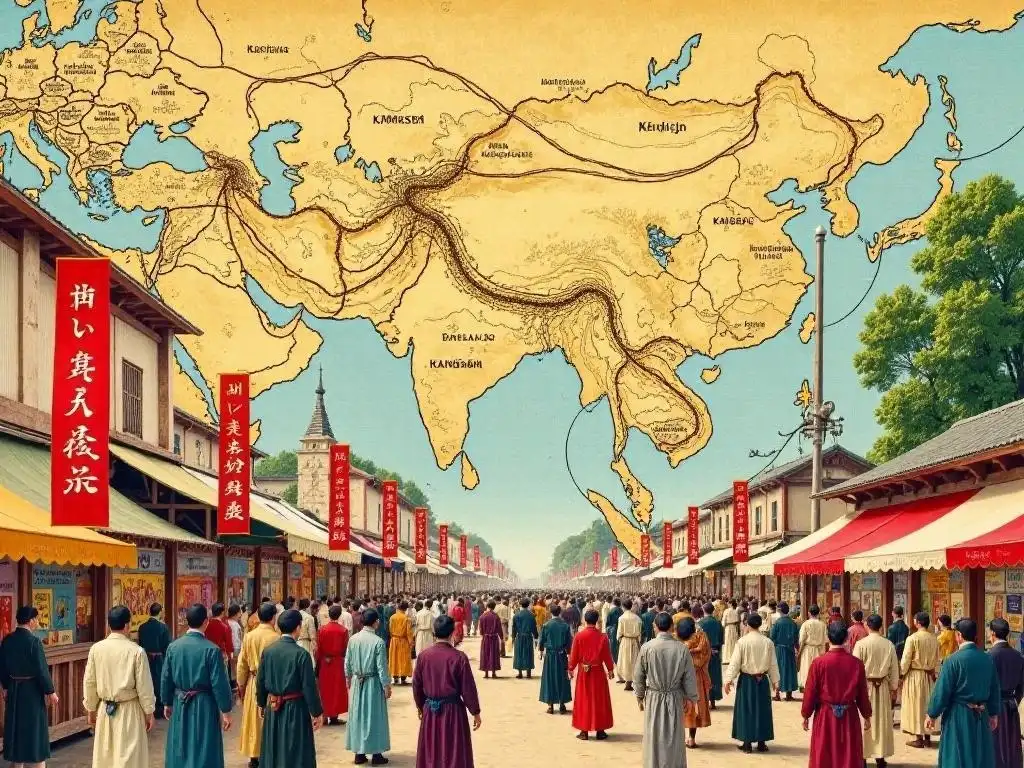
Feudal Japan experienced a myriad of challenges and limitations that significantly impacted its trade connections, particularly with neighboring countries such as Korea and China. These obstacles were multifaceted, ranging from political strife to environmental factors, all of which shaped the dynamics of trade during this period.
Political Conflicts Affecting Trade Relations
Throughout the feudal era, Japan was often embroiled in political conflicts that hindered trade relations. The numerous clan wars, such as the Genpei War (1180–1185) and the Sengoku period (1467–1603), created an unstable environment that deterred foreign merchants and disrupted established trade routes.
Additionally, the Tokugawa shogunate (1603–1868) adopted a policy of national seclusion, known as "sakoku," which limited foreign trade and interaction to designated ports. While it aimed to maintain political stability and control over foreign influences, it also severely restricted trade with countries like China and Korea, confining it to a few select Dutch and Chinese traders who were allowed to operate in Nagasaki.
Natural Disasters and Their Impact on Trade Routes
Natural disasters also played a significant role in disrupting trade in feudal Japan. Earthquakes, tsunamis, and typhoons were frequent occurrences that could devastate coastal towns, ports, and shipping routes. For instance, the 1605 Keicho earthquake severely affected the port of Nanao, disrupting trade with the Korean Peninsula.
Moreover, the geographical nature of Japan, being an archipelago, made it particularly vulnerable to such disasters. The reliance on maritime trade meant that any disruption caused by natural calamities could have cascading effects on the availability of goods, leading to shortages and economic instability.
The Role of Pirates and Banditry in Trade Disruption
The presence of pirates and banditry posed another considerable challenge to trade in feudal Japan. Known as "wokou," these pirates primarily operated along the coasts of Japan and the seas surrounding China and Korea. They were notorious for raiding ships and coastal settlements, creating an atmosphere of fear among traders.
The Tokugawa shogunate attempted to combat this threat by deploying naval forces and fortifying coastal defenses. However, these efforts were often insufficient to eradicate piracy entirely. The disruption caused by such criminal activities deterred foreign merchants from engaging in trade with Japan, thereby limiting the country's economic connections to the outside world.
Conclusion: The Legacy of Feudal Japan Trade Connections
The trade connections established during feudal Japan left a profound legacy that shaped the country's socio-economic landscape, influencing both historical and modern contexts.
Summary of Trade's Influence on Feudal Society
Trade during the feudal era significantly influenced Japanese society, fostering the growth of urban centers and enabling cultural exchanges. The influx of goods, ideas, and technologies from China and Korea contributed to advancements in various fields, including agriculture, craftsmanship, and philosophy. Furthermore, trade facilitated the rise of a merchant class that began to challenge the traditional social hierarchy dominated by the samurai and nobility.
Despite the challenges faced, the relationships developed through trade laid the groundwork for future economic interactions, demonstrating the importance of external connections in shaping Japan's historical trajectory.
Lasting Effects on Modern Japan's Trade Relationships
The legacy of feudal Japan's trade connections continues to resonate in modern Japan's global trade relationships. The historical ties established with neighboring countries during the feudal period have evolved into robust economic partnerships today. Japan's contemporary trade policies are informed by its historical experiences, fostering a balance between maintaining national interests and engaging in global commerce.
Moreover, the cultural exchanges initiated during the feudal era have left an indelible mark on Japan's identity, influencing everything from cuisine to art and technology. As Japan continues to navigate its place in the global economy, the lessons learned from its feudal trade connections remain relevant, highlighting the enduring significance of international relations in shaping a nation's destiny.
References and Further Reading on Feudal Japan Trade Connections
The study of trade in Feudal Japan offers a fascinating glimpse into the country's interactions with neighboring nations, particularly Korea and China. Below are curated resources that provide further insights into this pivotal aspect of Japan's history.
Suggested Books and Articles
-
"The Japanese Economy: A History" by Takafusa Nakamura
This book provides a comprehensive overview of Japan's economic history, including its trade relations during the feudal era. Nakamura outlines the significant role of trade in shaping Japan's economy and its connections with neighboring countries.
-
"Japan and China: Mutual Representations in the Modern Era" by Joshua A. Fogel
Fogel explores the historical interactions between Japan and China, with a focus on trade dynamics. This work helps illustrate how these connections influenced cultural and economic exchanges in Feudal Japan.
-
"The Feudal Society in Japan: A Study of the Social Structure" by Richard Storry
This text delves into the social hierarchies of Feudal Japan and discusses how trade played a role in these structures, illustrating the connections between commerce and social organization.
-
"Feudal Japan: The Age of the Samurai" by James G. McCafferty
This book provides an overview of the samurai era, including trade relations with Korea and China, emphasizing the global connections that formed during this period.
-
“Trade and Diplomacy in Japan-Korea Relations” by Ryuji Sato
Sato's article examines the complexities of trade and diplomacy between Japan and Korea, highlighting key events and policies that shaped their interactions.
Online Resources for Deeper Exploration
-
The National Diet Library of Japan
This online resource offers access to a wealth of documents and historical records concerning Japan's trade history. It includes digitized books, articles, and primary sources that can provide valuable insights into Feudal Japan's trade connections.
-
The Japan National Tourism Organization (JNTO)
The JNTO website features sections dedicated to Japan's cultural heritage, including historical trade routes and their impact on regional relations. It serves as an excellent starting point for understanding the broader context of trade in Feudal Japan.
-
The Asia-Pacific Journal: Japan Focus
This journal provides scholarly articles that discuss various aspects of Japan’s history, including trade relations with neighboring countries. It features both contemporary analyses and historical perspectives, making it a rich resource for further study.
-
The British Museum Collection
The British Museum hosts an extensive collection of artifacts from Feudal Japan, many of which are tied to trade. Their online catalog includes descriptions and historical contexts that can illuminate the connections between trade and cultural exchange.
-
Japan Society's Online Resources
The Japan Society offers a range of educational materials about Japan's history and culture, including sections dedicated to trade. Their resources often include articles, videos, and interactive materials catering to different learning styles.
These resources collectively provide a robust foundation for anyone looking to delve deeper into the trade connections of Feudal Japan, enriching their understanding of the historical, cultural, and economic dimensions of this fascinating era.
- Introduction to Feudal Japan Trade Connections
- The Origins of Trade in Feudal Japan
- Feudal Japan’s Trade Relations with Korea
- Feudal Japan’s Trade Relations with China
- Trade Networks and Their Impact on Feudal Japan
- The Evolution of Trade Practices in Feudal Japan
- Challenges and Limitations of Trade in Feudal Japan
- Conclusion: The Legacy of Feudal Japan Trade Connections
- References and Further Reading on Feudal Japan Trade Connections
Frequently Asked Questions
What were the main trade connections during Feudal Japan?
Feudal Japan had significant trade connections with countries such as China, Korea, and Southeast Asian nations, facilitating the exchange of goods, culture, and ideas.
How did trade influence Japanese society in the feudal era?
Trade led to the development of urban centers, increased wealth, and the rise of a merchant class, which ultimately influenced the social hierarchy in Feudal Japan.
What goods were commonly traded in Feudal Japan?
Feudal Japan traded items like silk, ceramics, spices, and metalwork, which were highly sought after both domestically and internationally, showcasing Japan’s artistic craftsmanship.
How did the shogunate affect trade policies in Feudal Japan?
The shogunate imposed regulations on trade to maintain control and stability, leading to a focus on domestic production while limiting foreign influence during certain periods.
What role did maritime trade play in Feudal Japan's global connections?
Maritime trade was crucial as it allowed Feudal Japan to establish and maintain global connections, enabling the exchange of cultural and economic resources across the seas.
Final Reflection: The Enduring Legacy of Feudal Japan's Trade Connections
The intricate web of trade connections in Feudal Japan not only shaped its economy but also forged lasting relationships with distant lands, illustrating that global connectivity has always been a fundamental aspect of human civilization. Today, as we navigate an increasingly interconnected world, the lessons from Feudal Japan's trade practices remind us of the importance of cultural exchange and economic collaboration in fostering mutual understanding and growth. The past teaches us that trade is not merely a transaction; it is a bridge that connects diverse cultures and ideas, enriching societies in profound ways.
Clearly, the trade networks established during Feudal Japan have left an indelible mark on both its own culture and the global landscape. The exchanges of goods, ideas, and traditions during this era laid the groundwork for Japan's unique identity while simultaneously influencing the cultures of its trading partners. As we reflect on this historical context, we can appreciate how trade continues to shape our world today. Trade is the lifeblood of any economy, and it is through trade that we come to understand one another.
This sentiment echoes the ongoing relevance of trade as a tool for diplomacy and cultural exchange in our modern society.
As we conclude this exploration of Feudal Japan's trade connections, I invite you to consider how the principles of collaboration and cultural exchange can be applied in your own life. Reflect on the ways you can engage with diverse perspectives and foster connections that transcend borders. Whether through travel, learning, or simply engaging with different communities, let us honor the legacy of Feudal Japan by embracing the spirit of trade and connection in our daily lives. Together, we can build a more interconnected and understanding world, just as those in Feudal Japan did centuries ago.
Unveil the Secrets of Feudal Japan’s Trade Network!
Thank you for diving into the fascinating world of Feudal Japan and its global connections! We hope you enjoyed discovering how trade shaped relationships and transformed cultures during this intriguing era. Now, it’s time to take that knowledge further and explore these actionable steps to enhance your appreciation of this historical tapestry!
- Dive deeper into the trade routes by researching a specific merchant’s journey through Feudal Japan and documenting your findings.
- Share your insights with friends or on social media: Discuss what surprised you most about the trade exchanges and their global impact.
- Join a local history group or online forum focused on Japanese history to engage in discussions and connect with fellow enthusiasts.
What aspect of Feudal Japan's trade network intrigues you the most, and how do you believe it influenced modern trade practices?