
The Role of Japanese Envoys in Shaping Foreign Relations with the West

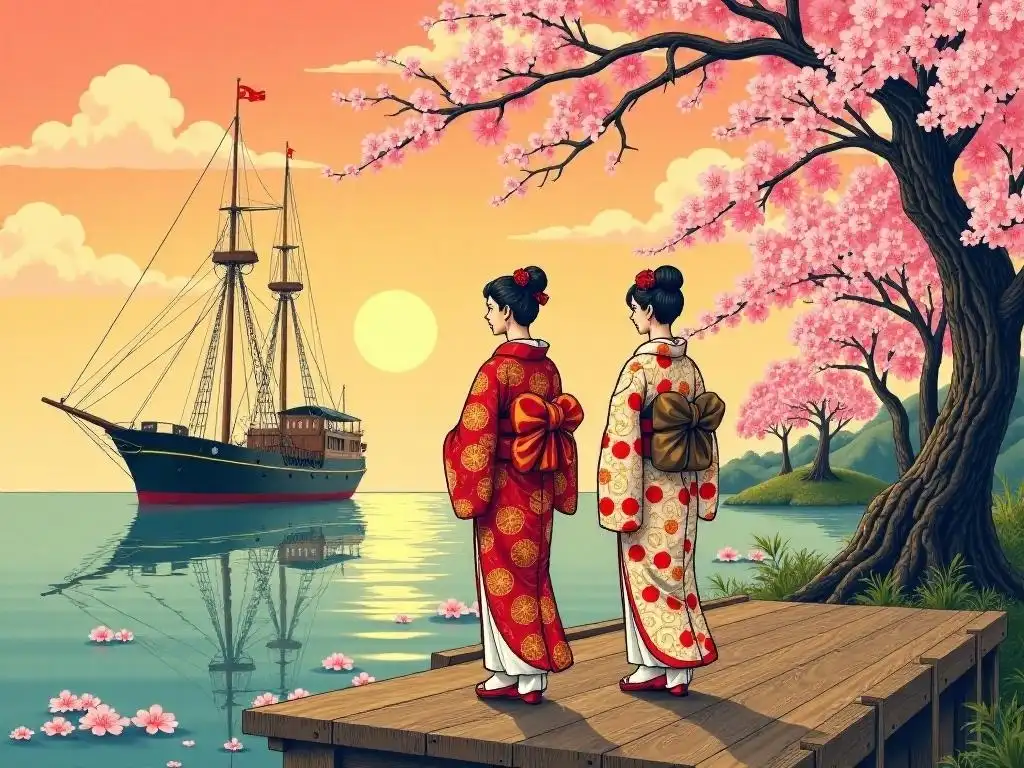
Welcome to Feudal Japan History, where we embark on a captivating journey through the intricate tapestry of Japan's feudal era. Here, we delve deep into the historical, cultural, and societal facets that defined this remarkable period. In our featured article, “The Role of Japanese Envoys in Shaping Foreign Relations with the West,” we uncover the pivotal moments and figures that influenced Japan’s interactions beyond its shores.
Discover how these envoys not only bridged cultures but also set the stage for a complex relationship with the West. Are you ready to explore the untold stories behind Japan's diplomatic endeavors? Dive in and let your curiosity lead the way!
Introduction to Japanese Envoys and Foreign Relations History
The history of Japanese envoys and their role in foreign relations with the West is a fascinating narrative that highlights the complexities and dynamics of diplomacy during Japan's feudal era. At a time when Japan was largely insular, these envoys acted as critical links between Japan and Western powers, facilitating not only trade but also cultural exchanges and political negotiations.
This article delves into the pivotal role these envoys played in shaping Japan’s interactions with Western nations, examining their historical, cultural, and societal impacts. Understanding the significance of these figures offers insight into how Japan navigated its foreign relations during a period marked by both isolation and an eventual opening to the world.
Overview of Japan’s Feudal Era
Japan’s feudal era, spanning from the late 12th century to the 19th century, was characterized by a decentralized political system dominated by powerful regional lords, known as daimyo. This period was marked by significant social stratification, with a rigid class structure that included the samurai warrior class, peasants, artisans, and merchants. The governance structure relied heavily on loyalty and land tenure, which shaped the interactions of the Japanese state with external powers.
During this time, Japan maintained a policy of sakoku, or national isolation, which restricted foreign influence and controlled trade. However, the arrival of Western powers in the 16th century began to challenge this isolationist stance, prompting the need for diplomatic envoys to manage these critical foreign relations.
Importance of Envoys in Diplomatic Relations
Japanese envoys were fundamental to establishing and maintaining relationships with Western nations. Their roles were multi-faceted, encompassing:
- Diplomatic Negotiation: Envoys negotiated treaties and agreements that would determine trade relations and political alliances.
- Cultural Exchange: They facilitated the introduction of Western knowledge, technology, and ideas to Japan, influencing various aspects of Japanese society.
- Intelligence Gathering: Envoys were responsible for collecting information about foreign nations, their technologies, and their political systems, which was crucial for Japan's strategic interests.
Understanding the impact of these envoys on Japan's foreign relations is essential to grasp how Japan transitioned from isolation to engagement with the global community.
The Emergence of Japanese Envoys
Historical Context of Japanese Diplomacy
The emergence of Japanese envoys can be traced back to the 16th century, a period marked by the arrival of European explorers and traders. Initially, these interactions were driven by commercial interests, but as the political landscape evolved, so did the role of Japan's diplomatic representatives. The need for formal diplomatic channels became increasingly apparent, especially as Japan faced pressures from foreign powers seeking trade and influence.
Throughout the late feudal period, Japan saw the establishment of various envoy missions, which were instrumental in negotiating treaties and fostering relationships with countries such as Portugal, Spain, and the Netherlands. These missions not only paved the way for economic exchanges but also set the stage for Japan’s later interactions with the United States and other Western nations.
Key Figures in Early Japanese Envoys
Several key figures emerged during the period of early Japanese envoys, each contributing significantly to the development of Japan's foreign relations:
- Francis Xavier: One of the first Jesuit missionaries, he played a crucial role in introducing Christianity and Western knowledge to Japan.
- Miyamoto Musashi: Though better known as a swordsman, his diplomatic endeavors illustrated the intersection of martial and diplomatic skills in feudal Japan.
- Tokugawa Ieyasu: As the founder of the Tokugawa shogunate, he understood the importance of foreign diplomacy and sent several missions to establish relations with Europe.
These figures exemplify the diverse roles that envoys played in shaping Japan's foreign relations, highlighting how diplomacy was intertwined with broader societal and cultural shifts during the feudal era.
Major Japanese Envoy Missions to the West

The 19th century marked a significant turning point in Japan's foreign relations, particularly with Western nations. This era saw the emergence of Japanese envoys who played crucial roles in navigating the complexities of international diplomacy. Their missions not only facilitated trade but also served as a means for Japan to project its sovereignty and cultural identity on the global stage. Below, we delve into the early diplomatic missions and the key figures who shaped Japan's interactions with the West.
The First Diplomatic Missions: 1853-1854 (Commodore Perry's Expedition)
The arrival of Commodore Matthew Perry in 1853 was a watershed moment in Japanese history, leading to the first formal diplomatic missions to the West. Perry's expedition, with its display of military might, aimed to open Japan to American trade, which had been largely isolated due to its sakoku (closed country) policy.
In response to Perry's demands, Japan sent its first official envoy to the United States in 1854. This mission, led by the samurai diplomat Katsu Kaishu, sought to negotiate the Treaty of Kanagawa, which ultimately opened two ports to American vessels and established a consular relationship. This mission was pivotal, as it signaled Japan's willingness to engage with Western powers, marking the end of over two centuries of self-imposed isolation.
Notable Envoys and Their Contributions
Several notable envoys emerged during this period, each contributing significantly to Japan's evolving foreign relations.
- Katsu Kaishu: As mentioned, Katsu was instrumental in negotiating the Treaty of Kanagawa and later served as a key figure in subsequent treaties with Western powers, promoting mutual understanding and cooperation.
- Inoue Kaoru: Another prominent diplomat, Inoue was involved in the negotiation of the Treaty of Amity and Commerce with the United States in 1858, which expanded trade relations and set a precedent for future treaties with other Western nations.
- Yamagata Aritomo: His diplomatic missions to Europe in the 1870s were crucial for modernizing Japan's military and political strategies, allowing Japan to learn from Western practices while reinforcing its own sovereignty.
These envoys not only negotiated treaties but also fostered cultural exchanges, significantly impacting Japan's modernization process.
Japanese Envoys and the Evolution of Foreign Relations
As Japan's engagement with Western powers deepened, the role of envoys evolved, reflecting the shifting dynamics of international relations. This evolution can be categorized into several key areas, including changes in diplomatic strategies and the role of envoys in trade agreements.
Changes in Diplomatic Strategies Over Time
Initially, Japan's diplomatic strategies were primarily reactive, focused on opening trade routes and responding to Western demands. However, as Japan became more confident in its international standing, it began to adopt a proactive approach.
- Adaptation and Learning: Japanese envoys started to study Western political systems, legal frameworks, and economic models, adapting them to fit Japan's unique context. This knowledge was crucial in negotiating better treaties and establishing Japan as a competitive player on the world stage.
- Strengthening Sovereignty: Over time, envoys like Inoue Kaoru and others worked tirelessly to renegotiate unequal treaties, striving to restore Japan's sovereignty and alter the terms to favor Japanese interests. Their efforts culminated in the successful revision of treaties in the 1890s, which were vital for Japan's emergence as an equal among Western powers.
The Role of Envoys in Trade Agreements and Treaties
The role of Japanese envoys in establishing trade agreements and treaties cannot be overstated. Through their diplomatic efforts, Japan was able to secure favorable terms that facilitated economic growth and modernization.
- Trade Treaties: The Treaty of Amity and Commerce (1858) initiated a series of trade agreements with various Western nations, leading to increased foreign investment and the introduction of Western technologies.
- Cultural Exchange: Beyond trade, these treaties also allowed for cultural exchanges that enriched Japanese society, introducing new ideas in education, science, and governance.
- Balancing Power: Envoys played a crucial role in balancing power dynamics, ensuring that Japan was not merely a passive recipient of Western influence but an active participant in shaping its own destiny in the international arena.
The contributions of Japanese envoys during the feudal era were instrumental in shaping the trajectory of Japan's foreign relations with the West. Their missions laid the groundwork for a more interconnected world, establishing Japan as a significant player on the global stage.
Cultural Exchanges Facilitated by Japanese Envoys
Japanese envoys played a pivotal role in fostering cultural exchanges between Japan and Western nations during the feudal era. These envoys were not merely diplomats; they were also cultural ambassadors who brought back knowledge, ideas, and technologies that would significantly influence Japan's development. Their travels often included visits to European countries, where they engaged with scholars, artisans, and political leaders. Through their interactions, they facilitated the exchange of not only goods but also philosophies, art forms, and scientific advancements, laying the groundwork for Japan's modernization.
The cultural exchanges initiated by these envoys were multifaceted. They not only introduced Western thought and practices but also allowed Japan to showcase its own rich cultural heritage. This two-way exchange was crucial in shaping perceptions and fostering mutual respect between Japan and the West, which had long-lasting implications for diplomatic relations. Additionally, the envoys' detailed reports and writings provided invaluable insights into the complexities of Western societies, further enriching Japan’s understanding of international relations.
Introduction of Western Ideas and Technologies
One of the most significant contributions of Japanese envoys in the context of foreign relations was the introduction of Western ideas and technologies to Japan. During the Edo period, particularly in the 17th and 18th centuries, envoys such as the famous Hasekura Tsunenaga traveled to Spain and the Vatican, among other places. These missions were crucial in bringing back knowledge of Western advancements in various fields, including navigation, military technology, and medicine.
For instance, the introduction of firearms and shipbuilding techniques revolutionized Japanese warfare and trade practices. The envoys also facilitated the dissemination of scientific knowledge, such as astronomy and mathematics, which were previously unknown in Japan. This influx of Western ideas prompted a re-evaluation of Japan’s own scientific and philosophical beliefs, fostering a spirit of inquiry and innovation that would later play a crucial role in the Meiji Restoration.
Influence on Japanese Art and Culture from Western Interactions
The impact of Western interactions on Japanese art and culture cannot be overstated. Japanese envoys helped to introduce new artistic styles and techniques, which blended with traditional Japanese aesthetics to create unique hybrid forms. For example, during the late Edo and early Meiji periods, the influence of Western painting techniques began to emerge in Japanese art, leading to the development of new genres such as Yōga (Western-style painting).
Furthermore, Western literature, music, and theater were introduced through these cultural exchanges, enriching Japan's artistic landscape. The adoption of Western techniques in arts and crafts, such as oil painting, perspective, and chiaroscuro, transformed the visual arts in Japan. This melding of cultures not only enhanced the richness of Japanese art but also laid a foundation for the modern Japanese cultural identity, which continues to reflect both indigenous and global influences.
The Legacy of Japanese Envoys in Foreign Relations History
The legacy of Japanese envoys extends far beyond their immediate diplomatic missions. Their efforts in fostering relationships with Western nations created a framework for future diplomatic engagement and international cooperation. The groundwork laid by these envoys proved essential as Japan navigated the complexities of modernization and globalization in the following centuries.
Long-term Effects on Japan-West Relations
The long-term effects of the activities of Japanese envoys are evident in the evolution of Japan-West relations. The cultural exchanges and diplomatic negotiations initiated during the feudal era paved the way for more formalized relationships in the 19th and 20th centuries. The knowledge and understanding gained by Japanese envoys allowed Japan to approach Western powers with a sense of confidence and purpose.
This foundational stage in international relations would eventually contribute to Japan's emergence as a significant global player. The interactions fostered by these envoys supported the idea that Japan could adapt and integrate Western practices while maintaining its unique cultural identity. As a result, Japan successfully positioned itself as a formidable entity in global diplomacy by the late 19th century.
Reflections on Historical Diplomatic Practices
Reflecting on the historical diplomatic practices of Japanese envoys reveals several important lessons about the nature of international relations. The envoys exemplified the importance of cultural diplomacy, demonstrating that mutual respect and understanding can lead to fruitful partnerships. Their efforts showed that diplomacy is not solely about formal agreements; it also involves engaging with different cultures and fostering goodwill.
Moreover, the historical context of Japanese envoys reminds us of the complexities of diplomacy in a rapidly changing world. Their experiences underscore the necessity for nations to adapt to new ideas while preserving their unique identities. As modern diplomacy continues to evolve, the lessons learned from the endeavors of Japanese envoys remain relevant, highlighting the enduring value of cultural exchange and mutual respect in fostering international relations.
Conclusion
The role of Japanese envoys in shaping foreign relations with the West is a fascinating aspect of Japan's feudal history, characterized by diplomacy, cultural exchanges, and strategic alliances. These envoys were not merely representatives; they were pivotal figures in navigating the complexities of international relations during a time of significant change. Their efforts laid the groundwork for Japan's eventual modernization and integration into the global community, demonstrating the profound impact that diplomatic missions can have on national identity and foreign policy.
Summary of the Role of Japanese Envoys in Shaping Foreign Relations
Japanese envoys played a crucial role in establishing and maintaining relationships with Western powers during the Edo period and beyond. The missions, such as those led by notable figures like Hasekura Tsunenaga, were instrumental in promoting trade, culture, and mutual understanding. These envoys not only carried political messages but also brought back knowledge, technology, and ideas that would influence Japan's development. The interactions facilitated by these missions helped Japan to position itself strategically in the global arena, transitioning from isolation to engagement with Western nations.
The Continuing Influence of Historical Envoys on Modern Diplomacy
The legacy of historical Japanese envoys continues to resonate in contemporary diplomacy. Their approaches to negotiation, cultural sensitivity, and strategic communication have informed modern diplomatic practices. Today, Japan's foreign relations are characterized by a blend of traditional values and modern strategies, reflecting the enduring influence of these early envoys. The skills and strategies employed by these pioneers serve as a foundation for Japan's current diplomatic efforts, highlighting the importance of historical context in understanding modern international relations.
References
Key Historical Texts and Sources
- The Records of the Japanese Envoys: A collection of documents detailing the missions and correspondence of Japanese envoys during the Edo period.
- "Japan’s Early Relations with the West" by John W. Hall: This book explores the initial encounters and negotiations between Japan and Western nations.
- "The Taika Reforms": Historical texts that outline Japan's rapid adaptation to foreign influences, including diplomatic practices.
Recommended Further Reading on Japanese Foreign Relations History
- "Japan and the West: The Perception of Japan in the West": by Christopher A. Reed: This work examines how Japan was viewed by Western nations during its early diplomatic efforts.
- "The Age of Samurai: Japan's Last Feudal Era": by Jonathan Clements: A detailed account of the political and social structures that influenced Japan's foreign relations.
- "From Isolation to Integration: Japan’s Foreign Relations in the Meiji Era": by Tessa Morris-Suzuki: This book discusses the evolution of Japan's foreign policy following the end of its isolationist period.
- Introduction to Japanese Envoys and Foreign Relations History
- Overview of Japan’s Feudal Era
- Importance of Envoys in Diplomatic Relations
- The Emergence of Japanese Envoys
- Major Japanese Envoy Missions to the West
- Japanese Envoys and the Evolution of Foreign Relations
- Cultural Exchanges Facilitated by Japanese Envoys
- The Legacy of Japanese Envoys in Foreign Relations History
- Conclusion
- References
- What were the main roles of Japanese envoys during the feudal era?
- How did Japanese envoys influence foreign relations with Western countries?
- What historical events highlight the significance of Japanese envoys?
- How did the role of Japanese envoys evolve over time?
- Why is the history of Japanese envoys important today?
Frequently Asked Questions
What were the main roles of Japanese envoys during the feudal era?
Japanese envoys primarily served as diplomatic representatives, facilitating trade agreements and establishing political alliances with foreign nations, particularly in the West.
How did Japanese envoys influence foreign relations with Western countries?
The actions of Japanese envoys played a crucial role in shaping foreign relations, as they introduced Western technologies, ideas, and cultural exchanges that impacted Japan's development.
What historical events highlight the significance of Japanese envoys?
Key events like the Perry Expedition in 1853 and the subsequent signing of treaties showcase how Japanese envoys navigated complex foreign relations and opened Japan to the West.
How did the role of Japanese envoys evolve over time?
Initially focused on trade and diplomacy, the role of envoys evolved to include cultural exchanges and political negotiations, reflecting Japan's changing stance towards foreign nations.
Why is the history of Japanese envoys important today?
Understanding the history of Japanese envoys helps us appreciate the foundations of modern international relations and the cultural influences that have shaped Japan's identity in a global context.
Final Reflection: The Enduring Legacy of Japanese Envoys in Foreign Relations
The role of Japanese envoys in shaping foreign relations with the West remains profoundly relevant today, as we navigate an increasingly interconnected world. The historical interactions initiated by these envoys laid the groundwork for diplomatic practices and international cooperation that continue to influence global relations. Their efforts not only bridged cultural divides but also established frameworks that resonate in contemporary diplomacy, reminding us that understanding and collaboration are essential in addressing modern challenges.
The impact of Japanese envoys on the cultural and social landscape is undeniable, as they fostered a spirit of dialogue and mutual respect. Their journeys were not merely about political negotiations; they were about building relationships that transcended borders. As we reflect on their legacy, we can appreciate the words of former Japanese Prime Minister Shinzo Abe: We must not forget that diplomacy is about building trust and fostering friendships.
This sentiment underscores the importance of the envoys' work, which continues to inspire current and future generations in their pursuit of peace and understanding.
As we contemplate the lessons from the history of Japanese envoys, I invite you to consider how you can embody their spirit of diplomacy in your own life. Reflect on the ways you can foster understanding and collaboration within your community and beyond. Whether through open conversations, cultural exchanges, or simply being a good listener, each of us has the power to contribute to a more harmonious world. Let us carry forward the legacy of these envoys, embracing the values of respect and cooperation as we shape our own relationships in an ever-evolving global landscape.
Engage with the Legacy of Japanese Diplomacy!
Thank you for taking the time to explore the fascinating dynamics of Japanese envoys and their profound impact on foreign relations with the West. You've gained valuable insights into how these historical figures shaped cultural exchanges and international diplomacy. Now, it's time to put that knowledge into action!
Here are a few steps you can take to deepen your understanding and share this rich history:
- Dive Deeper: Explore additional resources on the history of Japanese diplomacy by visiting our curated reading list to enhance your knowledge further.
- Share Your Thoughts: Discuss the significance of these envoys with friends or in online forums—start a conversation about how their decisions still resonate in today’s global relationships.
- Connect with Culture: Attend a local event or exhibition focused on Japanese culture or history to experience firsthand the continuing influence of these diplomatic efforts.
What aspect of Japanese diplomacy most surprises you, and how do you think it shapes our current worldview? Your thoughts could spark an enlightening conversation!