
The Influence of European Traders on Japan’s Feudal Economic Landscape

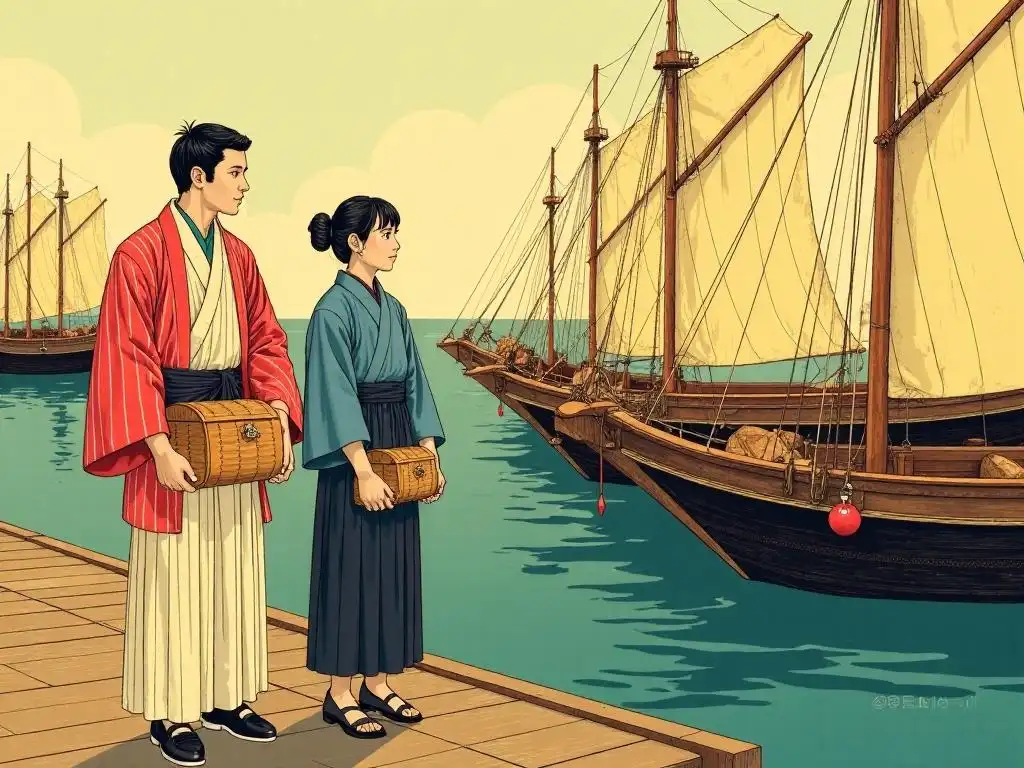
Welcome to Feudal Japan History, where we invite you to embark on an intriguing journey through the captivating tapestry of Japan's feudal era. Our exploration delves deep into the historical, cultural, and societal aspects that shaped this remarkable period. In our featured article, "The Influence of European Traders on Japan’s Feudal Economic Landscape," we unravel the unexpected connections and impacts that foreign traders had on Japan’s economy and society.
What secrets did these traders bring, and how did they intertwine with the local customs and practices? Prepare to uncover the answers as you dive into a world of fascinating insights and expert-driven narratives. Your adventure through the annals of history begins here!
Introduction to European Traders in Japan's Feudal Era
The interaction between European traders and Japan during the feudal era marked a significant shift in the economic landscape of the archipelago. This period, which lasted from the early 16th century to the early 19th century, was characterized by the arrival of various European traders, who introduced new commodities, technologies, and ideas that would ultimately influence Japan's internal dynamics and its position in the global economy.
Examining the role of these traders not only highlights the complexities of international trade during this time but also sheds light on the broader implications for Japanese society and culture. This article aims to explore the multifaceted impact of European traders in Japan's feudal era, focusing on their contributions to trade and commerce.
Overview of Japan's Feudal Economic Landscape
Japan's feudal economy was primarily agrarian, organized under a strict hierarchy of land ownership and a samurai class that governed the land. The economy was characterized by:
- Agriculture: The backbone of the economy, rice was the staple crop and a key measure of wealth.
- Craftsmanship and Trade: Local artisans produced goods, while regional markets facilitated trade among the clans.
- Self-Sufficiency: Many domains operated in isolation, focusing primarily on local production and consumption.
This closed economic structure began to evolve with the influx of European traders, who brought not only foreign goods but also new perspectives on commerce.
Significance of Trade in Feudal Japan
Trade during Japan's feudal era played a crucial role in:
- Cultural Exchange: Introduction of foreign ideas, customs, and technologies that enriched Japanese society.
- Economic Growth: Expanded opportunities for wealth generation through the import and export of goods.
- Political Power Dynamics: Trade routes often influenced the balance of power among feudal lords, leading to strategic alliances and disputes.
As European traders entered the scene, they introduced a new dimension to these economic activities, prompting a reevaluation of Japan's place in the global trade network.
Historical Context of European Trade in Japan
Arrival of European Traders in Japan
The first significant contact between Japan and European traders occurred in 1543 when Portuguese sailors arrived on the island of Tanegashima. This marked the beginning of direct trade relations, which would expand rapidly in the following decades. European traders brought with them not only goods such as firearms, textiles, and silver but also new technologies and knowledge that would reshape aspects of Japanese life.
Key Players: Portuguese, Dutch, and Spanish Traders
Several European nations sought to establish trade relations with Japan, each with distinct motives and impacts:
- Portuguese Traders: The first to arrive, they were instrumental in introducing firearms and Christianity to Japan.
- Dutch Traders: They became the primary European trading partners by the 17th century, focusing on trade without the missionary agenda of the Portuguese.
- Spanish Traders: Engaged primarily through the Philippines, their influence was significant in the southern regions of Japan.
Each of these players contributed uniquely to the development of Japan's trade networks and economic landscape.
Initial Economic Interactions and Trade Routes
The initial economic interactions between European traders and Japanese merchants involved the exchange of goods and the establishment of trade routes. Key elements included:
- Trade Goods: Europeans sought Japanese silk, ceramics, and silver, while Japan imported firearms, textiles, and other foreign products.
- Trade Ports: Key ports such as Nagasaki became focal points for international trade, facilitating not only commerce but also cultural exchange.
These early interactions laid the groundwork for a complex and evolving economic relationship that would have lasting impacts on Japan's feudal society.
Impact of European Traders on Japan’s Trade Policies
The presence of European traders in Japan during the feudal era significantly influenced the nation's trade policies and practices. Initially, the Portuguese arrived in the mid-16th century, followed by the Dutch, Spanish, and English, each bringing distinct trading practices and commodities. These interactions forced Japan to reevaluate its existing trade frameworks, leading to adjustments that would shape its economic landscape for centuries.
Changes in Trade Regulations and Protocols
As European traders established footholds in Japan, particularly in port cities like Nagasaki, the Japanese government began to adapt its trade regulations. The shogunate recognized the potential economic advantages of engaging with European merchants, which led to the establishment of specific protocols governing trade interactions. For instance:
- Limited Trade Access: Japan implemented restrictions that allowed only certain foreign traders, primarily the Dutch and Portuguese, to operate within designated areas. This was to control the influence of foreign powers while still benefiting from trade.
- Taxation and Tariffs: The shogunate introduced tariffs on goods imported from Europe, which became vital revenue sources for the government. This also helped regulate the flow of foreign goods and maintain a balance with domestic production.
- Regulated Exports: Specific commodities, such as silver and gold, were closely monitored. Japan's export policies evolved to ensure that valuable resources were not depleted through unchecked foreign trade.
These regulatory changes reflected a strategic approach by the Japanese authorities to harness foreign trade's economic benefits while safeguarding national interests.
Introduction of New Commodities and Technologies
European traders brought an array of new commodities and technologies that transformed Japan's economy. The influx of goods included:
- Textiles and Fabrics: European cloth and textiles, particularly from Portugal and the Netherlands, became highly sought after. This led to a shift in Japanese fashion and textile production, sparking local innovations in fabric weaving.
- Agricultural Products: New crops, such as sweet potatoes and tobacco, were introduced, diversifying the agricultural landscape of Japan and enhancing food security.
- Technological Advancements: European firearms and navigational tools revolutionized Japanese warfare and maritime trade practices. The introduction of European shipbuilding techniques enabled Japanese merchants to expand their trading networks.
The impact of these new commodities and technologies not only boosted trade but also fostered a cultural exchange that enriched Japanese society.
Influence on Japanese Merchant Classes
The arrival of European traders catalyzed the growth of Japan's merchant classes, particularly the rise of a wealthy and influential group known as the "chōnin." The interactions with Europeans led to several notable changes:
- Increased Wealth: Successful merchants who engaged in trade with Europeans amassed significant wealth, which allowed them to invest in local economies and cultural endeavors. This wealth contributed to the emergence of a consumer culture in urban centers.
- Expansion of Trade Networks: Japanese merchants began to establish their own trading networks, both domestically and internationally. They learned from European trading practices, adapting their strategies to maximize profitability.
- Cultural Prestige: The association with foreign trade conferred a degree of prestige upon the merchant class, challenging the traditional social hierarchy dominated by samurai and landowners. This shift laid the groundwork for the eventual rise of the merchant class as a powerful societal force.
Cultural Exchange through Trade
The interactions between European traders and the Japanese populace facilitated a rich cultural exchange that had lasting effects on both societies. This exchange was characterized by the introduction of foreign ideas, customs, and practices that blended with Japanese traditions.
European Goods and Their Influence on Japanese Culture
The influx of European goods transformed various aspects of Japanese culture. Notable influences included:
- Art and Aesthetics: European painting techniques and styles found their way into Japanese art, leading to the emergence of new artistic movements. The use of perspective and oil paints introduced by European artists influenced famous Japanese painters of the time.
- Cuisine: European culinary practices began to permeate Japanese kitchens, with the introduction of new cooking methods and ingredients. Dishes such as tempura, which originated from Portuguese frying techniques, became staples in Japanese cuisine.
- Fashion and Lifestyle: European fashions, particularly among the elite, inspired changes in clothing styles. The adoption of Western garments for special occasions showcased the blending of cultures.
These cultural exchanges enriched Japanese society, leading to an era of innovation and creativity.
The Role of Christianity in Trade Relations
Christian missionaries accompanied European traders, significantly impacting Japan's socio-political landscape. The introduction of Christianity brought about:
- Religious Tensions: While some Japanese embraced the new faith, others viewed Christianity with suspicion, leading to tensions between the shogunate and Christian converts. This culminated in the persecution of Christians and the eventual seclusion policy.
- Cultural Exchange: Despite the tensions, the presence of missionaries facilitated the exchange of ideas and knowledge. Educational institutions were established, leading to the spread of Western learning and sciences.
- Diplomatic Relations: The relationship between Christian missionaries and European traders often shaped diplomatic interactions. The shogunate's response to Christianity influenced how it engaged with European powers, balancing trade interests with domestic stability.
Language and Knowledge Exchange Between Cultures
The trade interactions between Europeans and Japanese were not limited to goods; they also extended to language and knowledge. This exchange included:
- Language Learning: Japanese merchants and officials often learned Portuguese and Dutch to facilitate trade negotiations. This linguistic exchange allowed for better communication and understanding between cultures.
- Scientific Knowledge: European traders and missionaries brought with them knowledge of medicine, astronomy, and mathematics. This new information was gradually assimilated into Japanese scholarly traditions, enriching their scientific community.
- Literature and Philosophy: The introduction of European philosophical ideas influenced Japanese intellectual circles. Works on ethics, politics, and science were translated and studied, contributing to Japan's cultural evolution.
This multifaceted cultural exchange helped shape Japan's trajectory during the feudal era, laying the groundwork for its modernization in the subsequent centuries.
Economic Outcomes of European Trade in Feudal Japan

The arrival of European traders in Japan during the feudal era marked a significant turning point in the nation’s economic landscape. The influx of foreign goods, ideas, and technologies from the 16th century onward not only transformed local economies but also stimulated new forms of commerce and trade relationships. Here, we will explore the key economic outcomes of this trade and how it reshaped Japan’s feudal system.
Growth of Ports and Trade Centers
As European traders began to establish routes to Japan, several key ports emerged as vital centers for international trade. Notable among these were Nagasaki, which became the primary hub for Dutch and Portuguese merchants, and Hakata, a significant trading post for interactions with the Chinese and Koreans. The growth of these ports facilitated the exchange of various goods, including silk, spices, and firearms, which were highly sought after by Japanese warlords and merchants alike.
The increased trade activity led to improvements in port infrastructure, with the construction of warehouses and docks to accommodate the influx of goods. Furthermore, these trade centers became melting pots of culture, where Japanese customs blended with European influences, enriching the local society. The economic vitality of these ports also attracted local artisans and merchants, thereby stimulating regional economies and fostering a spirit of entrepreneurship.
Shifts in Economic Power Among Feudal Lords
The introduction of European trade significantly altered the economic power dynamics among Japan's feudal lords (daimyō). Those who capitalized on the new trading opportunities gained wealth and influence, allowing them to expand their territories and strengthen their military capabilities. For instance, daimyōs who controlled access to major ports could leverage their positions to engage in lucrative trade deals, thus enhancing their status among peers.
Additionally, the competition for European goods and trade routes prompted some lords to form strategic alliances, which sometimes led to conflicts with others. This shifting landscape of power was crucial in the lead-up to the unification of Japan under leaders like Toyotomi Hideyoshi and Tokugawa Ieyasu, who recognized the importance of controlling trade as a means to consolidate power.
The Role of European Traders in the Rise of a Capitalist Economy
European traders played a pivotal role in the early development of a capitalist economy in Japan. The introduction of new commercial practices, such as credit systems and accounting methods, shifted the traditional barter-based economy towards a more market-oriented approach. As trade expanded, the concept of profit began to take root, leading to an increase in mercantile activities.
Furthermore, the demand for foreign goods, especially luxury items, initiated a class of wealthy merchants who began to rival the traditional power of the samurai class. This burgeoning merchant class sought to accumulate wealth through trade, thereby creating a more dynamic economic environment. The blending of European and Japanese business practices laid the groundwork for more extensive economic reforms in the years to come.
Challenges and Conflicts Arising from European Trade
While the economic benefits of European trade were significant, they also brought about a series of challenges and conflicts that would shape Japan’s response to foreign influence. The complexities of these interactions often led to tensions that impacted both economic and societal structures.
Tensions Between European Traders and Japanese Authorities
The presence of European traders was not without its controversies. As trade flourished, so did the influence of European powers, which often clashed with the interests of Japanese authorities. Issues arose over the treatment of Japanese subjects, the imposition of foreign customs, and the growing religious influence of missionaries in Japan.
Japanese authorities were wary of losing control over their territories and sought to regulate foreign trade to protect their sovereignty. Incidents such as the persecution of Christians and the expulsion of certain foreign traders highlighted the delicate balance that needed to be maintained between embracing foreign commerce and safeguarding national interests.
The Sakoku Policy: Isolation vs. Trade
In response to growing concerns about foreign influence, Japan enacted the Sakoku policy in the early 17th century, effectively isolating the nation from most foreign contacts. This policy restricted trade to a few select ports and limited interactions predominantly to the Dutch and Chinese. While Sakoku aimed to preserve Japanese culture and stability, it also resulted in a period of economic stagnation in some regions.
Despite isolation, the legacy of European trade remained. The knowledge and technologies introduced during the earlier trading period continued to influence Japanese society, albeit in a more controlled environment. This paradox of isolation versus the need for trade created a unique dynamic that would shape Japan's future interactions with the world.
Long-term Consequences of European Influence on Japanese Society
The long-term consequences of European trade during Japan’s feudal era are evident in various aspects of society. The exposure to Western ideas and technologies fostered a gradual transformation in Japanese culture, education, and industry. The seeds of modernization were sown, leading to significant developments in the Meiji Restoration era.
Moreover, the economic practices influenced by European traders contributed to the emergence of a more complex social hierarchy, where wealth and commerce began to eclipse the purely feudal structures based on land and military power. This shift laid the groundwork for Japan's eventual transition into a modern state, paving the way for its rise as a global power in the 19th and 20th centuries.
The influence of European traders on Japan's feudal economic landscape was profound and multifaceted, creating both opportunities and challenges that would resonate through Japan's history for centuries to come.
Conclusion: Legacy of European Traders in Japan’s Economic History
The interaction between European traders and Japan during the feudal era left an indelible mark on the economic landscape of the nation. The influx of foreign goods, ideas, and trade practices not only enriched Japanese society but also played a pivotal role in shaping its economic policies and systems. The legacy of these traders is evident in various aspects of Japan’s economic evolution, from the introduction of new commodities to the establishment of complex trade networks that bridged the East and West.
As Japan transitioned from a feudal society to a more modern state, the influences of European traders laid the groundwork for future economic developments. The initial contact fostered a sense of curiosity and adaptability within the Japanese, which would later become crucial to Japan's rapid industrialization in the Meiji period. The collaborative spirit and exchange of knowledge fostered by these interactions continue to resonate in Japan’s contemporary economic practices.
Lasting Effects on Japan's Economic Landscape
European traders, particularly the Portuguese and Dutch, introduced various goods such as firearms, textiles, and spices to Japan. These imports not only diversified the market but also stimulated local industries. For instance, the introduction of firearms revolutionized warfare in Japan, altering the power dynamics among feudal lords and leading to shifts in territorial control. Moreover, European traders influenced Japan's agricultural practices by introducing new crops and farming techniques, which contributed to improved food security and economic stability.
The trade practices established during this period also laid the foundation for Japan's future engagement with international markets. The establishment of trading outposts and the influx of European merchants led to a burgeoning merchant class in Japan, which began to play a more significant role in the economy. This shift marked a gradual transition from a primarily agrarian-based economy to one that recognized the importance of commerce and trade, setting the stage for Japan's later economic transformations.
Reflections on Trade and Cultural Exchange in Feudal Japan
The trade relations between European traders and Japan were not solely economic; they also facilitated significant cultural exchanges. European missionaries, for instance, introduced Western philosophy, science, and Christianity, which, despite the shogunate's later restrictions, had a lasting impact on Japanese thought and culture. This cultural fusion is reflected in art, literature, and even cuisine, as Japanese society began to incorporate foreign elements into its traditional practices.
Furthermore, the interactions with European traders prompted Japan to reassess its isolationist policies. While the Tokugawa shogunate eventually imposed strict regulations on foreign relations, the initial openness to European influences demonstrated a willingness to engage with the world. This duality of isolation and engagement would characterize Japan’s approach to foreign relations for centuries, ultimately influencing its modernization efforts in the 19th century.
References and Further Reading
Suggested Literature on European Traders in Japan's Feudal Era
-
"The Portuguese in Japan, 1543-1640" by John W. Dardess
This book provides a comprehensive overview of the Portuguese influence on Japan during the feudal era, detailing trade dynamics and cultural exchanges.
-
"Japan and the Dutch 1600-1853" by John W. Hall
Hall's work explores the unique relationship between Japan and the Dutch during the period of sakoku, offering insights into trade practices and diplomatic relations.
-
"The Hidden Christians of Japan: A Historical and Cultural Analysis" by J. Thomas Rimer
This literature delves into the impact of European missionaries and traders on Japanese society, focusing on the cultural and religious exchanges that occurred during this time.
Online Resources for In-Depth Studies on Trade and Commerce in Feudal Japan
-
National Diet Library of Japan
An extensive resource containing documents, articles, and historical records related to Japan's feudal trade practices.
-
The Japan Times
Offers articles and features that discuss the historical context of trade relations between Japan and Europe, as well as their impact on modern Japanese society.
-
Stanford University's East Asia Library
Provides access to a wealth of academic resources, including research papers and historical texts focusing on Japan's economic history and trade relations during the feudal era.
- Introduction to European Traders in Japan's Feudal Era
- Historical Context of European Trade in Japan
- Impact of European Traders on Japan’s Trade Policies
- Cultural Exchange through Trade
- Economic Outcomes of European Trade in Feudal Japan
- Challenges and Conflicts Arising from European Trade
- Conclusion: Legacy of European Traders in Japan’s Economic History
- References and Further Reading
- What role did European traders play in Japan's feudal economy?
- How did the arrival of European traders affect Japanese society?
- What were the primary goods traded by European traders in Japan?
- Did European traders have any influence on Japanese politics?
- How did Japan's feudal system respond to the influx of European traders?
Frequently Asked Questions
What role did European traders play in Japan's feudal economy?
European traders introduced new goods and trade practices, significantly impacting the local economy and fostering cultural exchanges.
How did the arrival of European traders affect Japanese society?
The presence of European traders led to increased international interactions and influenced local customs, including the adoption of Western technologies and ideas.
What were the primary goods traded by European traders in Japan?
European traders primarily exchanged items such as silk, spices, and firearms, which became valuable in the Japanese market during the feudal era.
Did European traders have any influence on Japanese politics?
While European traders mainly focused on commerce, their involvement sparked interest in diplomatic relations, leading to shifts in political dynamics within Japan.
How did Japan's feudal system respond to the influx of European traders?
The feudal system adapted by establishing regulated trade routes and managing foreign relationships, ensuring that Japanese interests were prioritized in international commerce.
Final Reflection: The Enduring Legacy of European Traders in Japan's Feudal Era
The influence of European traders in Japan's feudal era is not merely a historical footnote; it is a pivotal chapter that continues to resonate in our globalized world today. The interactions between European traders and Japanese feudal lords transformed economic practices, cultural exchanges, and even social structures, laying the groundwork for Japan's eventual modernization. This complex relationship highlights how trade can transcend borders, shaping nations and cultures in profound ways.
Clearly, the impact of these early interactions has woven itself into the fabric of Japan's cultural and economic identity. The exchange of goods, ideas, and technologies not only enriched Japan but also set the stage for future encounters with the West. As historian John W. Hall noted, The history of Japan is a history of encounters, and each encounter has left an indelible mark on its path.
This observation reminds us that the threads of history are intricately connected, and understanding these connections can deepen our appreciation for the present and the future.
As we reflect on the lessons from the past, let us consider how the legacy of European traders can inform our actions today. I invite you to explore how the spirit of collaboration and exchange can be harnessed in your own life. Whether through fostering international relationships, embracing cultural diversity, or seeking innovative solutions to global challenges, we can all contribute to a world that values interconnectedness and mutual growth. The story of European traders in Japan's feudal era serves as a reminder that our shared history can guide us toward a more inclusive and prosperous future.
Unveil the Legacy: Transform Your Understanding of Feudal Japan!
Thank you for diving into the fascinating world of European traders and their influence on Japan’s economic landscape. You've uncovered crucial insights into how these interactions shaped feudal society and trade. Now, it's time to take the next step in your journey of exploration!
Here’s how you can deepen your understanding and connect with this incredible history:
- Explore further by reading additional articles on our website to discover the broader context of Japan's feudal era.
- Engage with our community by sharing this article on social media and discussing it with friends or fellow history enthusiasts.
- Consider joining a local book club or an online forum focused on Japanese history to exchange insights and learn from diverse perspectives.
What aspect of Japan's feudal economy surprised you the most, and how do you think European influence shaped its future?