
Foreign Relations
Explore Foreign Relations in Feudal Japan and discover how diplomacy, trade, cultural exchange, and shifting isolationist policies shaped the nation’s history. Learn about Japan’s connections with Korea and China, encounters with Western powers, and the arrival of Commodore Perry—key developments that transformed Japanese society, politics, and international influence.
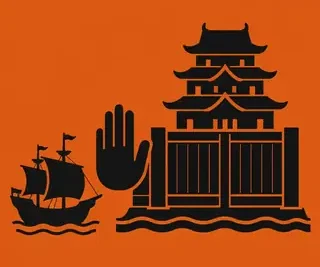 Isolationist Policies
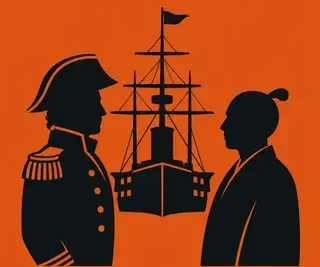 Arrival of Commodore Perry
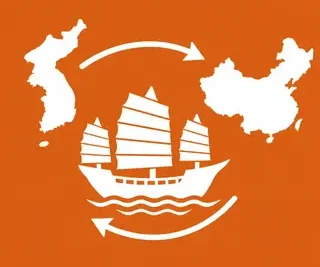 Trade with Korea and China
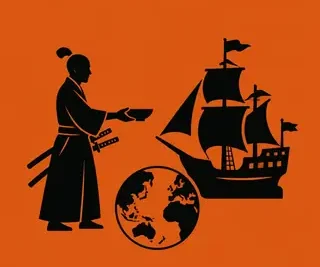 Japan-West Interactions
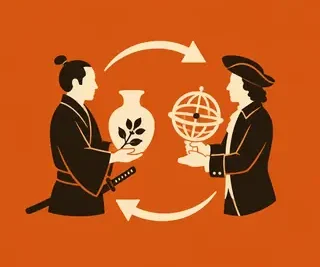 Cultural Exchanges
Explore the complex world of Foreign Relations in Feudal Japan, where diplomacy, trade, warfare, religion, and cultural exchange shaped the country’s history for centuries. This category examines how Japanese rulers, warriors, merchants, missionaries, and intellectuals interacted with neighboring countries and distant Western powers during the feudal era.
From early connections with China and Korea to the arrival of European traders and the dramatic appearance of Commodore Perry’s fleet, these articles reveal how Japan responded to foreign influence while protecting its political independence and cultural identity. Discover the development of international trade routes, diplomatic missions, maritime policies, Christian encounters, sakoku restrictions, and cross-cultural exchange through carefully researched historical analysis.
🌏 Cultural Exchanges
This section explores the movement of ideas, technologies, religions, artistic traditions, and customs between Japan and other societies. Readers can learn how Buddhism, Confucianism, writing systems, architecture, textiles, weapons, and scientific knowledge influenced Japanese life during the feudal period.
Articles also examine the people who carried these influences across borders, including monks, scholars, merchants, artisans, and diplomatic envoys. Expect insights into cross-cultural communication, cultural adaptation, religious exchange, and the lasting influence of foreign traditions on Japanese society.
🤝 Japan-West Interactions
Discover how Japan encountered European powers during the sixteenth and seventeenth centuries. This subcategory covers the arrival of Portuguese and Spanish traders, the spread of Christianity, the activities of Jesuit missionaries, and Japan’s changing understanding of the wider world.
Readers will also learn about firearms, maritime commerce, diplomatic efforts, and the political responses of Japanese leaders. These articles explain how European contact affected warfare, trade, religion, and domestic authority while highlighting Japan’s selective approach to foreign influence.
🚢 Trade with Korea and China
Japan’s relationships with Korea and China were central to its political, economic, and cultural development. This section investigates tribute missions, merchant networks, official embassies, piracy, port cities, and the exchange of luxury goods, books, technologies, and diplomatic information.
Expect detailed coverage of East Asian trade routes, Korean embassies, Chinese cultural influence, maritime commerce, and regional diplomacy. The articles place Japan within a broader network of Asian states rather than viewing its history in isolation.
⚓ Arrival of Commodore Perry
Learn how Commodore Matthew Perry’s arrival in 1853 challenged Japan’s long-standing foreign policy and exposed the weaknesses of the Tokugawa shogunate. This section explains the significance of the American fleet, the negotiations that followed, and the treaties that opened Japanese ports.
Readers can explore the political and social consequences of Perry’s expedition, including debates over national defense, imperialism, modernization, and the authority of the shogunate. These articles provide essential context for understanding the end of Japan’s isolation and the transition toward the Meiji Restoration.
🏯 Isolationist Policies
This subcategory examines the Tokugawa shogunate’s restrictions on foreign travel, overseas trade, Christianity, and international contact. Rather than presenting isolation as complete or absolute, the articles explain the controlled channels through which Japan continued to communicate with China, Korea, the Dutch, and the Ryukyu Kingdom.
Explore the origins, enforcement, and consequences of sakoku policies, including maritime laws, religious persecution, regulated trade, and the role of Nagasaki and Dejima. Readers will gain a clearer understanding of how controlled isolation supported domestic stability while limiting Japan’s access to global developments.
❓ Frequently Asked Questions About Foreign Relations in Feudal Japan
What countries did feudal Japan have relations with?
Feudal Japan maintained important relations with China, Korea, the Ryukyu Kingdom, the Dutch, Portugal, Spain, and later the United States. These relationships involved trade, diplomacy, warfare, religious missions, cultural exchange, and maritime regulation.
Was Japan completely isolated during the Tokugawa period?
No. Tokugawa Japan restricted foreign contact but did not eliminate it entirely. Trade and diplomacy continued through controlled channels, especially with the Dutch and Chinese at Nagasaki, Korea through formal embassies, and the Ryukyu Kingdom through regional networks.
How did China and Korea influence feudal Japan?
China and Korea influenced Japan through Buddhism, Confucian philosophy, writing, political ideas, artistic styles, technologies, books, and diplomatic practices. Korean scholars and artisans also played important roles in transmitting knowledge to Japan.
Why was Commodore Perry’s arrival important?
Commodore Perry’s arrival in 1853 pressured Japan to open its ports to American ships. The resulting agreements weakened the Tokugawa shogunate’s authority, intensified political debate, and contributed to the collapse of the shogunate and the Meiji Restoration.
What does sakoku mean in Japanese history?
Sakoku is commonly translated as “closed country” and describes the Tokugawa shogunate’s system of restricting foreign travel, Christianity, and overseas contact. Modern historians often emphasize that Japan was not entirely closed but operated under carefully controlled international relations.