
Social History
Explore the rich social history of feudal Japan, revealing how people lived, worked, learned, and shaped society beyond the battlefield. Discover the traditions, customs, class systems, family life, and everyday experiences that defined samurai and commoners alike. ⚔️🏯 Through expert-driven articles, gain deeper insight into the culture and society of Japan’s feudal era, from village communities to elite households. Uncover the human stories behind feudal Japan’s history and see how social roles, education, work, and relationships influenced this remarkable period.
 Roles of Women
 Artisans and Merchants
 Life of Farmers
 Class Structure
 Education and Training
 Daily Life of Samurai
Social History of Feudal Japan reveals how people lived, worked, learned, and interacted during Japan’s feudal era. While samurai often dominate popular images of medieval Japan, society also included farmers, artisans, merchants, religious figures, women, children, and ruling elites whose experiences shaped the country’s political and cultural development.
Explore the daily life, social classes, education, occupations, family roles, and cultural traditions that defined Japanese society from the Kamakura and Muromachi periods through the Edo period. These detailed articles examine the customs, responsibilities, privileges, and challenges faced by different communities, offering a balanced view of feudal Japan beyond warfare and castles.
⚔️ Daily Life of Samurai
Discover what everyday life was like for samurai beyond the battlefield. This section explores samurai duties, household management, military service, clothing, food, religion, etiquette, and leisure activities. Readers can learn how warrior families organized their homes and maintained status within Japan’s feudal society.
Articles also examine the ideals of bushido, loyalty to a lord, personal discipline, and the relationship between samurai identity and political authority. Expect historical insight into castle-town life, samurai families, weapons training, ceremonies, and the practical realities of serving a daimyo.
📚 Education and Training
Learn how people were educated and trained in feudal Japan. This subcategory covers samurai education, temple schools, Confucian learning, literacy, martial arts, religious instruction, and apprenticeships. It explains how knowledge was passed through families, schools, temples, and professional communities.
Readers will also discover how education differed according to class, gender, region, and occupation. From calligraphy and classical texts to swordsmanship and practical farming skills, these articles show how training prepared individuals for their expected roles in Japanese society.
🏯 Class Structure
Explore the hierarchical organization of feudal Japanese society, including the relationships between the shogun, daimyo, samurai, farmers, artisans, merchants, religious communities, and outcast groups. This section explains how status influenced legal rights, occupations, housing, clothing, taxation, and social behavior.
Detailed articles examine the warrior-based political order and the official status systems associated with the Edo period. Readers can expect clear explanations of social mobility, hereditary status, village organization, urban communities, and the difference between formal rules and everyday social practice.
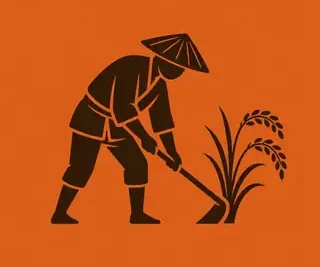
🌾 Life of Farmers
Discover the central role farmers played in sustaining feudal Japan. This section explores agriculture, rice cultivation, taxation, village leadership, seasonal labor, family life, and rural religious traditions. It presents farmers as essential members of society whose work supported samurai governments and growing cities.
Articles also discuss the hardships and resilience of rural communities, including crop failures, debt, labor obligations, local disputes, and peasant protests. Readers will gain a richer understanding of village life, farming technology, land ownership, and the relationship between rural populations and feudal authorities.
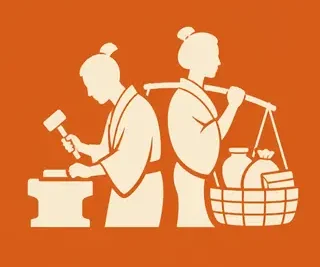
🧵 Artisans and Merchants
Learn about the craftsmen, traders, shopkeepers, and urban communities that drove economic and cultural change in feudal Japan. This subcategory covers craft production, trade networks, marketplaces, guilds, merchant houses, textiles, ceramics, metalworking, and woodworking.
Readers can explore the growing importance of castle towns such as Edo, Osaka, and Kyoto, where artisans and merchants supplied goods to samurai households and ordinary residents. These articles also explain how commerce, despite lower formal status, helped create wealth and influenced theater, fashion, publishing, cuisine, and popular culture.
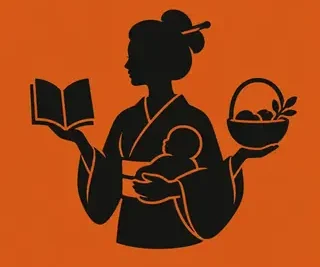
👘 Roles of Women
Explore the varied experiences of women in feudal Japanese society. This section examines marriage, motherhood, household management, inheritance, religious life, labor, political influence, and women’s education. It avoids treating women as a single social group by considering differences between samurai, farming, artisan, merchant, aristocratic, and religious communities.
Articles also highlight women’s contributions to family economies, textile production, estate administration, diplomacy, and cultural life. Readers will learn how legal customs, family expectations, social class, and personal status shaped women’s choices and opportunities throughout Japan’s feudal period.
❓ Frequently Asked Questions About Social History in Feudal Japan
What was the social structure of feudal Japan?
Feudal Japanese society was organized through a complex hierarchy that placed the shogun and daimyo at the top of political authority, followed by samurai retainers and several occupational communities. Farmers, artisans, and merchants held distinct social positions, while religious groups and marginalized communities occupied additional roles outside or alongside the formal hierarchy.
Did all samurai live in castles?
No. Only major lords and selected retainers lived in castles or castle compounds. Many samurai lived in castle towns, fortified residences, domain towns, or rural settlements. Their homes and lifestyles varied according to rank, income, military responsibilities, and service to a daimyo.
What did farmers do in feudal Japan?
Farmers cultivated rice, wheat, barley, vegetables, tea, cotton, and other crops while also raising animals and performing local labor. They paid taxes, often in rice or other agricultural products, and participated in village duties. Farming communities were the foundation of the feudal economy.
Were women educated in feudal Japan?
Some women received education, although access depended heavily on class, family resources, location, and period. Samurai and merchant daughters might learn reading, writing, etiquette, household management, religion, or artistic skills. Education was often designed around family responsibilities, but some women also became writers, artists, teachers, or religious figures.
Could people change their social class in feudal Japan?
Formal status was generally hereditary, especially during the Edo period, making significant social mobility difficult. However, wealth, adoption, marriage, service, education, military achievement, and commercial success could improve a person’s practical influence or family position. The difference between official status and lived experience is an important theme in the social history of feudal Japan.