The Role of Women in Political Intrigue: Behind the Scenes of Power
Women in Japan's feudal politics wielded significant influence behind the scenes, shaping alliances and power dynamics. Their strategic roles often went unnoticed,…
Read article
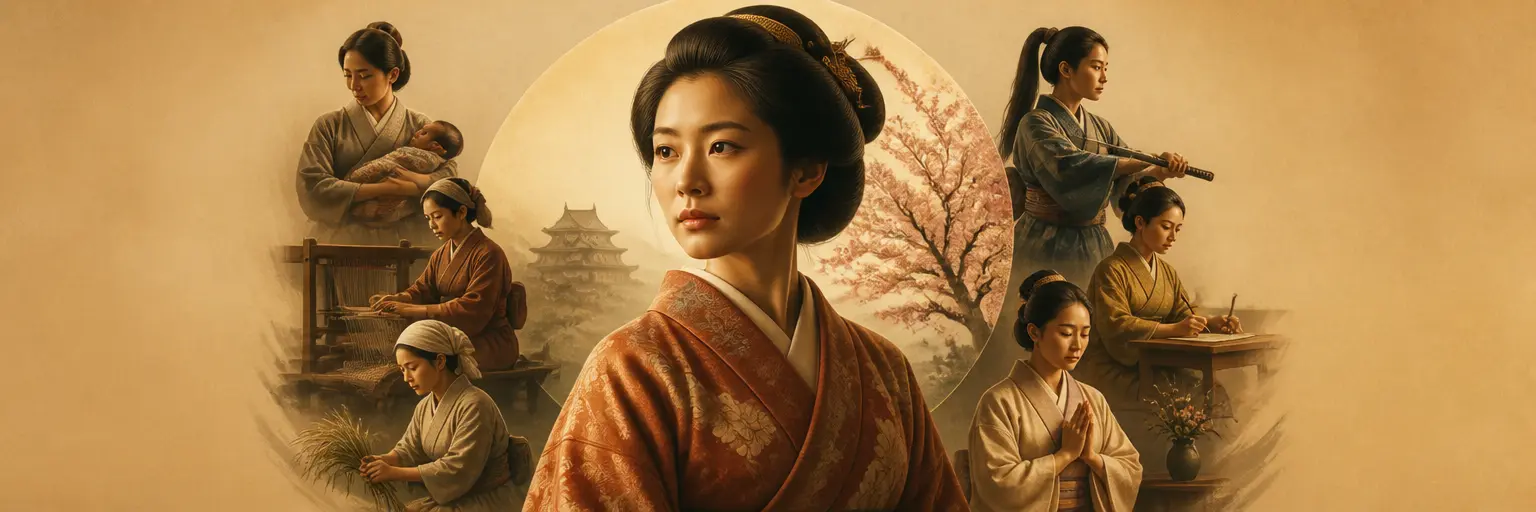
Explore the roles of women in feudal Japan and discover how women shaped family life, politics, religion, culture, and society across the samurai era. From samurai women and noblewomen to farmers, merchants, artisans, and religious figures, uncover their responsibilities, rights, challenges, and influence within Japan’s changing social order. 🏯📜 Gain expert-driven insights into women’s everyday experiences and lasting contributions to Japanese social history.
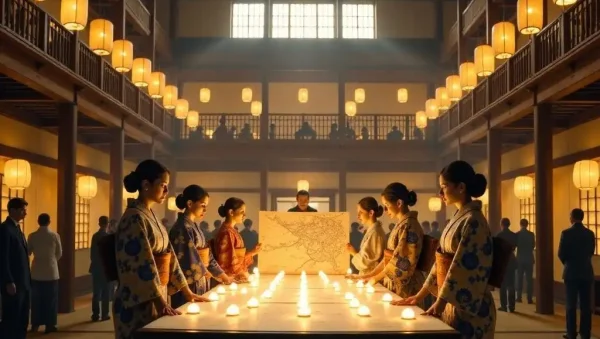
Women in Japan's feudal politics wielded significant influence behind the scenes, shaping alliances and power dynamics. Their strategic roles often went unnoticed,…
Read article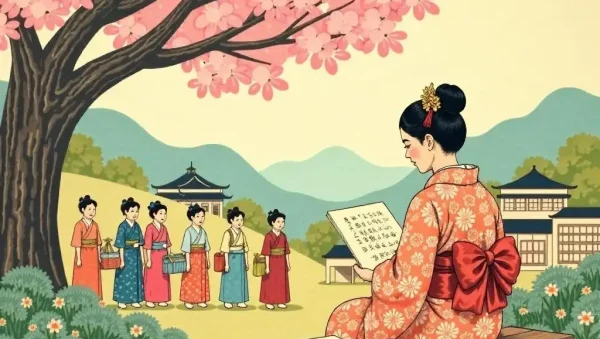
🌸 Women in Japan's feudal society played vital roles beyond traditional expectations, evolving from peasants to celebrated poets. Their diverse experiences shaped…
Read article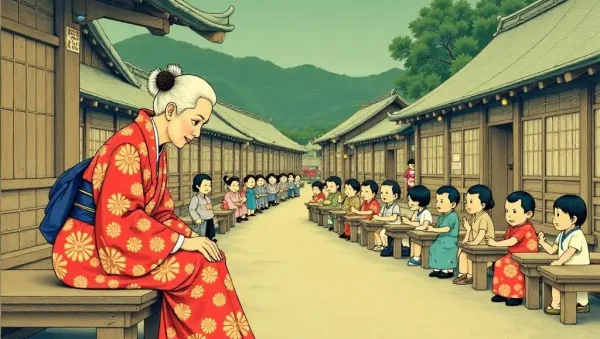
In Feudal Japan, women played a crucial yet often overlooked role in family business, balancing household duties with economic responsibilities. Their contributions…
Read article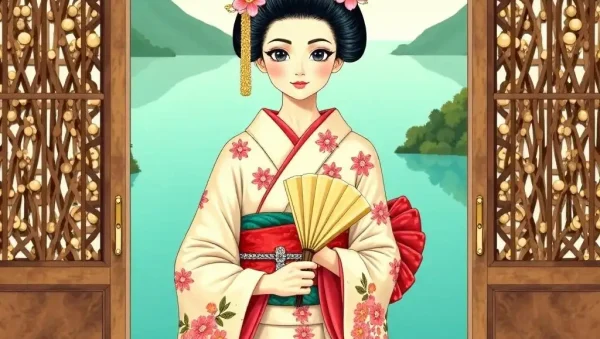
🌸 The life of a geisha in feudal Japan transcended mere entertainment; it embodied a rich tapestry of art, tradition, and social…
Read article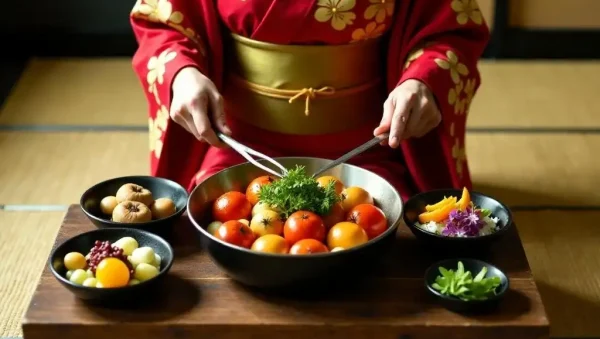
🌸 Women in Japanese cuisine history have played a pivotal role in shaping culinary traditions, from managing household kitchens to influencing regional…
Read article
🌸 The role of courtesans in feudal Japan reveals a complex social hierarchy, where these women navigated power dynamics, artistic expression, and…
Read article
The Confucianism influence on feudal women shaped their roles within Japanese society, emphasizing obedience and familial duty. This article delves into how…
Read article
✨ "The Unwritten Histories: Rediscovering Women’s Stories in Feudal Japan" delves into the often-overlooked contributions of women in feudal Japan, highlighting their…
Read article
🌸 Buddhism profoundly shaped women's roles in feudal Japan, offering spiritual empowerment and influencing societal expectations. This article delves into the intricate…
Read article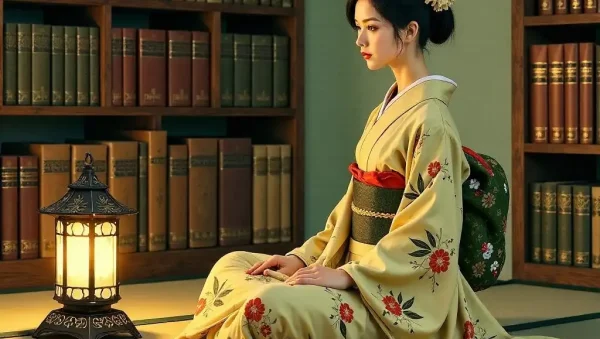
In "Women in Feudal Japan Literature," we uncover the powerful yet often overlooked voices of female authors who navigated the constraints of…
Read article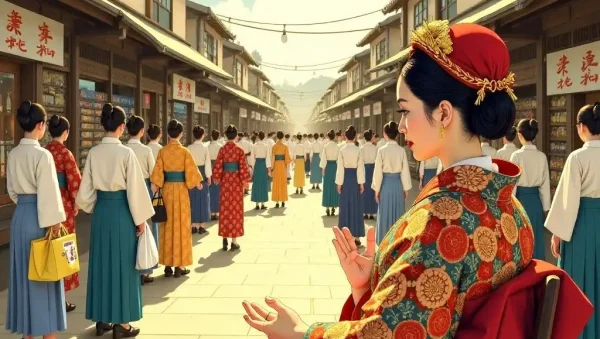
🌸 The emergence of the merchant class in feudal Japan significantly transformed the economy, highlighting the pivotal role of women in feudal…
Read article
In "Women and the Arts: Crafting Identity in Feudal Japan," explore how women in feudal Japan arts shaped cultural narratives, expressing their…
Read articleExplore the roles of women in feudal Japan through the social, cultural, political, and economic history of Japan’s medieval and early modern periods. This subcategory examines how women lived, worked, married, governed households, practiced religion, influenced samurai society, and contributed to communities during the Kamakura, Muromachi, Sengoku, and Edo eras. Discover the experiences of aristocratic women, samurai wives, peasant women, merchants, artisans, religious figures, and women connected to the imperial court. Each article provides historically grounded insight into gender roles, women’s status, family life, education, inheritance, marriage customs, motherhood, labor, and female authority in feudal Japan.
Learn how women participated in the organization and survival of samurai households. Articles explore the responsibilities of samurai wives and daughters, including household management, estate administration, correspondence, alliance-building, and the preservation of family honor. Readers will gain a clearer understanding of how women contributed to warrior families even when official power was often associated with men.
This section also examines exceptional examples of female leadership, military involvement, and political influence. Discover the historical roles of women who defended castles, managed domains, supported military campaigns, or acted as guardians of family interests during periods of war and succession. These stories reveal that women’s influence in samurai culture extended beyond the battlefield.
Explore the history of onna-musha, women associated with martial training and warfare in feudal Japan. Articles discuss the use of weapons such as the naginata, the responsibilities of women during castle defense, and the relationship between martial skill, family duty, and social status. Readers can discover how historical records, military accounts, and later traditions describe women connected to Japan’s warrior class.
This subcategory also separates documented history from legend and popular representation. By examining figures such as Tomoe Gozen and other celebrated women, readers can better understand the cultural importance of female warriors, the limits of the available evidence, and the ways modern media has interpreted women in samurai history.
Discover the everyday experiences of women outside elite warrior and court circles. Women in agricultural villages, merchant households, fishing communities, and artisan families played essential roles in farming, textile production, food preparation, trade, household income, and local economies. Their work was fundamental to the prosperity of feudal Japanese society.
Articles examine how class, region, occupation, and household structure shaped women’s lives. Readers will learn about rural labor, sericulture, weaving, market activity, domestic industries, and the economic responsibilities of women in the Edo period. These perspectives provide a broader social history of Japan beyond castles and battlefields.
Understand how marriage functioned in feudal Japan as both a personal relationship and a social institution. This section explores arranged marriages, family alliances, adoption, divorce, concubinage, inheritance, and the importance of producing heirs. Readers will discover how marriage customs differed according to class, period, region, and family strategy.
Women’s responsibilities within the ie household system are also examined in detail. Articles explain the roles of wives, mothers, daughters, widows, and female relatives in managing property, maintaining ancestral traditions, and supporting family continuity. These topics offer valuable insight into domestic life and kinship in Japanese social history.
Explore women’s contributions to Japanese literacy, literature, poetry, calligraphy, music, and artistic culture. While access to education varied considerably, some women—especially in aristocratic, samurai, and wealthy merchant families—received instruction that enabled them to produce influential works and preserve cultural traditions.
Readers can learn about the significance of women’s writing, including court literature, diaries, poetry collections, and religious texts. The study of female authors and patrons reveals how women shaped Japanese cultural history and created records that provide rare insight into emotions, relationships, court life, domestic experience, and social expectations.
Discover the roles women played in Shinto practices, Buddhism, folk religion, pilgrimage, temple communities, and household rituals. Women often served as caretakers of family religious traditions, participated in local ceremonies, supported temples, and passed spiritual customs between generations.
This section also explores nuns, female religious practitioners, shrine-related figures, and women who used spiritual authority to shape their communities. Articles consider both opportunities and restrictions, including debates about ritual purity, institutional rules, and women’s access to religious education and leadership.
Examine the political importance of women connected to the imperial court, aristocratic families, shogunal governments, and powerful regional clans. Women could influence diplomacy, succession, inheritance, and political alliances through marriage, correspondence, patronage, and family networks.
Readers will encounter biographies and historical studies of empresses, noblewomen, regents’ relatives, political wives, and influential mothers. These articles explain how female political influence in feudal Japan often operated through informal authority, household relationships, and strategic family connections rather than formal office.
Women managed households, raised children, produced textiles, worked in agriculture and trade, supported religious practices, arranged family relationships, and helped preserve household wealth and status. Their responsibilities varied according to class, location, historical period, and family occupation.
Yes. Although samurai society was strongly patriarchal, women could exercise authority as household managers, estate administrators, political intermediaries, regents, widows, and guardians of family interests. Some also participated in military defense and strategic decision-making.
Property rights differed across periods and social groups. Some women inherited land, dowries, estates, or household assets, particularly in earlier medieval periods. Over time, changing family systems and legal customs often reduced women’s independent control, but inheritance practices were not identical everywhere.
Women with martial training existed, particularly within warrior households, but female warriors were not the majority of samurai women. Their responsibilities commonly included household defense and protection of family property. Historical examples are important, although later legends sometimes exaggerate their numbers or achievements.
Studying women reveals how feudal Japan functioned at the household and community levels. Women’s labor, relationships, religious activity, education, and political influence shaped agriculture, commerce, inheritance, culture, and social continuity. Their history provides a fuller and more accurate understanding of Japan’s feudal era.