The Farmer's Toolkit: Traditional Farming Techniques of Feudal Japan
🌾 Discover the rich tapestry of traditional farming techniques in feudal Japan, where innovative methods and community practices shaped agricultural landscapes and…
Read article
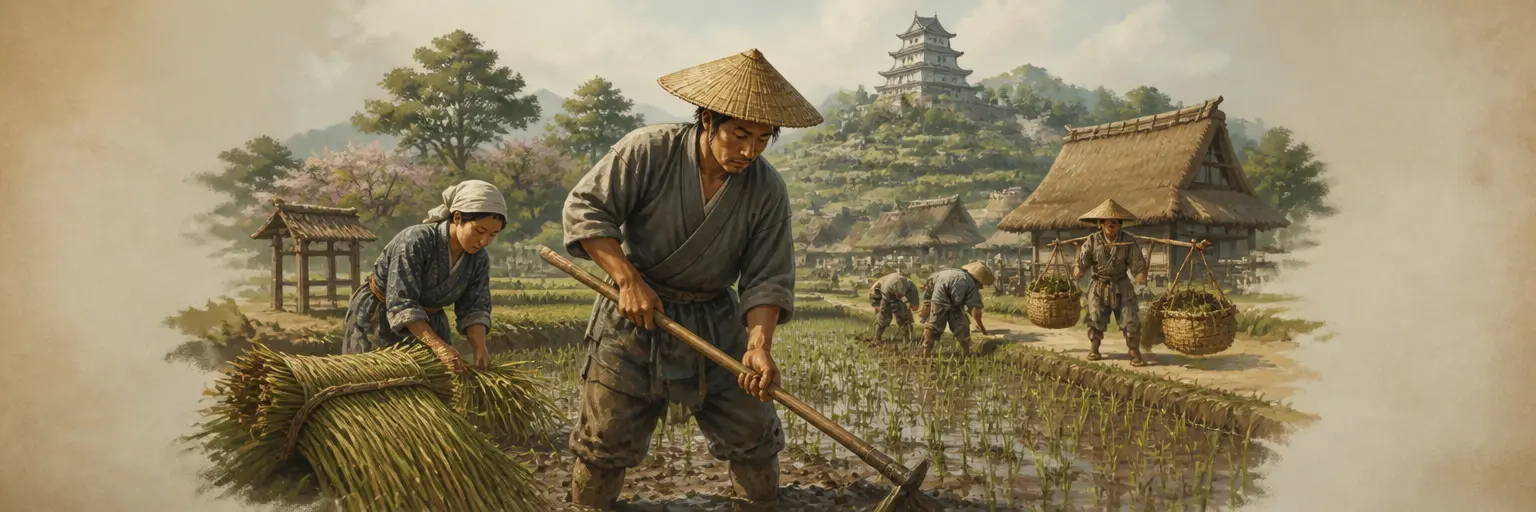
Explore the life of farmers in feudal Japan 🌾—from rice cultivation and seasonal labor to village communities, taxation, family traditions, and the challenges of rural life under the samurai class. Discover how farming families sustained Japan’s social and economic order while preserving local customs, religious practices, and resilience through changing times.

🌾 Discover the rich tapestry of traditional farming techniques in feudal Japan, where innovative methods and community practices shaped agricultural landscapes and…
Read article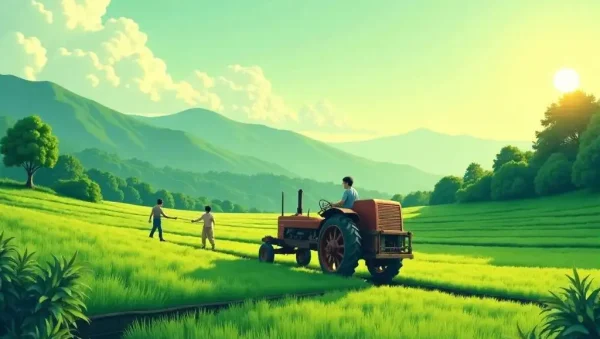
🌾 Japan's feudal agricultural innovations played a crucial role in transforming the economy, enabling farmers to enhance productivity through advanced techniques and…
Read article
🌾 The climate effects on feudal farming in Japan profoundly shaped agricultural practices and societal structures. Understanding these adaptations reveals how rural…
Read article
🌾 Rice culture in feudal Japan served as a vital economic foundation and a profound cultural symbol, reflecting the intricate relationship between…
Read article
🌾 Delve into the intricate social dynamics in feudal Japan as we explore how family roles, hierarchies, and relationships shaped the lives…
Read article
🌾 Farmers in samurai society played a crucial role beyond mere laborers; they were vital to the economy, culture, and social structure,…
Read article
🌾 In feudal Japan, crop diversity played a crucial role in agricultural resilience and cultural identity. This article delves into the various…
Read article
🌾 The impact of farming in feudal Japan was profound, shaping the economy, social hierarchy, and cultural practices. As agrarian communities flourished,…
Read article
🌿 Geography's influence on feudal farming in Japan was profound, dictating crop choices and agricultural methods. The interplay between mountainous terrain and…
Read article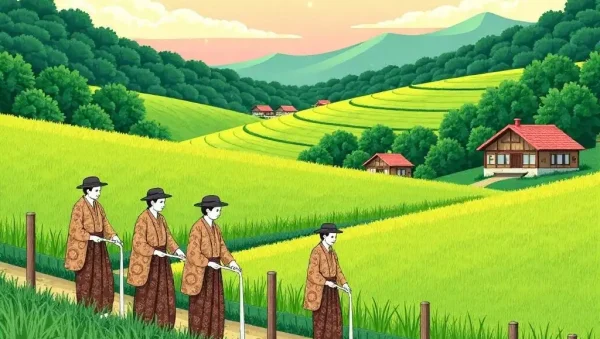
🌾 Dive into the innovative Japanese feudal irrigation techniques that transformed agriculture during the feudal era. Explore how these methods not only…
Read article
🌾 Farmers in feudal Japan faced immense farming challenges, battling harsh weather, oppressive taxes, and social upheaval. Yet, their resilience forged a…
Read article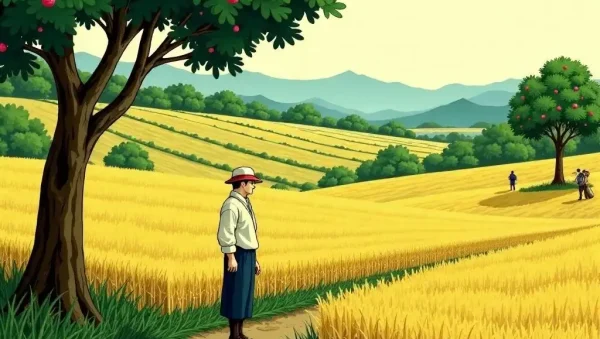
🌾 In the intricate tapestry of Japan’s feudal era, the role of farmers in the Samurai economy reveals a complex dynamic, where…
Read articleExplore the life of farmers in feudal Japan and discover how peasants, tenant cultivators, and rural communities sustained Japanese society during the Kamakura, Muromachi, Sengoku, and Edo periods. This subcategory examines agricultural work, village life, taxation, social class, religion, family structures, and the daily challenges faced by farming communities. Through carefully researched articles, Feudal Japan History provides an in-depth look at the people who produced the rice, crops, and resources that supported samurai domains, castles, towns, and the wider feudal economy.
Learn how farmers cultivated rice paddies, wheat, barley, millet, soybeans, vegetables, and other essential crops in feudal Japan. Articles explore seasonal farming routines, irrigation systems, plowing, planting, transplanting rice seedlings, harvesting, threshing, and storing grain. Readers can expect detailed explanations of the tools, techniques, labor demands, and environmental knowledge required for successful agriculture.
This section also explains why rice was more than a food source: it was a form of wealth, taxation, political power, and social measurement. Discover how agricultural productivity influenced a domain’s strength, how land surveys assessed harvest potential, and how farmers adapted to mountains, coastlines, floods, droughts, and limited arable land.
Explore the organization of feudal Japanese villages, including communal responsibilities, village headmen, irrigation groups, boundary maintenance, and cooperation during planting and harvesting. Articles reveal how rural communities managed shared resources, settled disputes, maintained roads, and organized collective duties under the authority of a local lord or domain administration.
Readers will also learn about everyday village life beyond the fields. Topics may include rural houses, clothing, food, household goods, local markets, festivals, neighboring relationships, and the role of community customs. These accounts show how farmers lived within tightly connected communities shaped by cooperation, obligation, tradition, and seasonal rhythms.
Understand the position of farmers within Japan’s traditional social hierarchy and the relationship between peasants, samurai, land stewards, officials, merchants, and artisans. This section examines how status categories were defined, how authority operated in the countryside, and how farmers interacted with the warrior class that governed their lands.
Although often described as a fixed social order, rural society could be complex and flexible. Articles explore wealthy village families, tenant farmers, landless laborers, local leaders, and people who moved between agricultural and commercial work. Readers can expect balanced historical analysis of social status in feudal Japan, including both official rules and lived experience.
Discover how farmers supported the feudal economy through taxes, rice assessments, labor obligations, transportation duties, and other demands. Explanations cover the importance of kokudaka, land surveys, domain administration, and the collection of agricultural revenue. These topics clarify how authorities measured production and converted rural labor into political and military power.
This section also considers the financial pressures faced by farming households. Poor harvests, debt, natural disasters, rising demands, and market fluctuations could threaten a family’s survival. By examining taxation and rural economics, readers gain a clearer understanding of why hardship, migration, land disputes, and peasant protests occurred throughout Japanese history.
Learn how Shinto beliefs, Buddhism, ancestor veneration, local shrines, temples, and agricultural rituals shaped the lives of Japanese farmers. Articles explore prayers for rain, ceremonies for successful harvests, protective deities, village festivals, funerary customs, and the spiritual meaning of mountains, rivers, rice, and the changing seasons.
Readers can also discover how religious institutions influenced rural society through landholding, education, charity, record keeping, and community organization. These traditions demonstrate that the life of a farmer in feudal Japan involved not only physical labor, but also a deep connection to family memory, local identity, natural forces, and sacred practice.
Explore the structure of farming households and the roles performed by men, women, children, and older family members. Agricultural work was usually a shared responsibility, with household members contributing to planting, weeding, harvesting, food preparation, animal care, spinning, childcare, and the management of household resources.
This section offers insight into marriage, inheritance, adoption, family continuity, and the importance of maintaining a productive household. Articles also examine how gender expectations varied according to wealth, region, occupation, and historical period, providing a more nuanced view of family life in feudal Japan.
Understand the dangers that shaped rural life, including famine, crop failure, floods, droughts, earthquakes, epidemics, warfare, and crop disease. Farmers often faced severe uncertainty because their food supply and financial obligations depended on weather, harvest conditions, and decisions made by distant authorities.
Readers will also learn about peasant petitions, village negotiations, flight from domains, tax resistance, and organized uprisings. These events reveal that farmers were not passive subjects. They used collective action, local knowledge, legal appeals, and community solidarity to defend their livelihoods and challenge unreasonable demands.
Farmers produced rice and other crops that supported the population, samurai governments, castles, temples, towns, and military campaigns. Their agricultural output formed the foundation of the feudal economy and was frequently used to calculate taxes and domain wealth.
No. Some farming families owned or controlled land, while others were tenant farmers, sharecroppers, laborers, or dependents of wealthier households. Land ownership and agricultural rights varied by period, region, domain regulations, and family status.
Farmers commonly paid taxes in rice or other agricultural products. They could also face labor service, transportation duties, fees, and special assessments. The exact burden differed according to the domain, harvest estimates, local policies, and extraordinary needs such as war or disaster recovery.
Farmers ate rice when available, but their everyday diet could also include millet, barley, beans, vegetables, pickles, sweet potatoes, fish, seaweed, and miso. Diets varied by region, season, household wealth, and the amount of rice required for taxation.
Villagers could negotiate with officials, submit petitions, request tax reductions, seek assistance from temples or local leaders, migrate, hide resources, or organize collective protests. Peasant resistance and village petitions were important expressions of rural political activity in feudal Japan.