
Japan’s Trade Network: Mapping the Routes to Korea and China

Welcome to Feudal Japan History, where we delve into the rich tapestry of Japan’s feudal era, unraveling the intricate threads of its historical, cultural, and societal aspects. In our featured article, “Japan’s Trade Network: Mapping the Routes to Korea and China,” we invite you to embark on a journey through the fascinating Japan feudal trade routes that shaped foreign relations and transformed commerce during this pivotal time. What secrets lie within these ancient pathways? Join us as we explore the connections that bridged nations and influenced the very fabric of Japanese society. Your adventure in history begins here!
- Introduction to Japan's Feudal Trade Routes
- Historical Context of Japan's Trade Network
- Mapping Japan's Feudal Trade Routes
- Goods Traded in Japan's Feudal Trade Routes
- Cultural Exchange Through Trade
- Challenges Faced in Trade Routes
- Conclusion: The Legacy of Japan's Feudal Trade Routes
- Frequently Asked Questions
- Final Reflection: The Enduring Legacy of Japan's Feudal Trade Routes
- Unveil the Secrets of Japan’s Trade Routes!
Introduction to Japan's Feudal Trade Routes
The feudal era of Japan, spanning from the late 12th century to the early 17th century, was a time of profound transformation that shaped the nation's political, social, and economic landscape. One of the most significant aspects of this period was the development of trade routes that connected Japan with neighboring countries such as Korea and China.
These routes facilitated not only the exchange of goods but also cultural interactions and diplomatic relations, which were crucial for Japan's evolution during the feudal age. In this article, we will explore the intricate trade networks established during this time, the commodities exchanged, and the impact these exchanges had on Japan's societal fabric and foreign relations.
Overview of Japan's Feudal Era
The feudal era in Japan was marked by a decentralized political structure dominated by powerful regional lords known as daimyo, who controlled vast lands and maintained their own armies of samurai warriors. The Tokugawa shogunate, which began in 1603, brought about a period of relative peace known as the Edo period, but the groundwork for these developments was laid during the earlier feudal period.
During this time, Japan's isolationist policies began to take shape, yet trade with Korea and China persisted, driven by mutual interests in commerce and cultural exchange. Key features of this era included:
- The rise of the samurai class: As the primary military nobility, samurai played a critical role in protecting trade routes and ensuring the safety of merchants.
- Emergence of merchant classes: With the growth of trade, a new social class of merchants arose, gaining wealth and influence, particularly in port cities.
- Cultural exchanges: The influx of goods and ideas from Korea and China significantly influenced Japanese culture, art, and technology.
These elements combined to create a dynamic environment where trade became a cornerstone of Japan's economic and cultural development during the feudal era.
Importance of Trade with Korea and China
Trade with Korea and China was vital for Japan during the feudal period, providing access to essential goods, ideas, and technologies. The significance of these trade routes can be summarized as follows:
- Economic Growth: The exchange of commodities such as silk, ceramics, and spices enriched Japan's economy. These goods were not only valuable for domestic consumption but also played a crucial role in the broader Asian trade networks.
- Cultural Exchange: Interaction with Korea and China facilitated the transmission of cultural practices, religious beliefs, and technological innovations. For instance, the introduction of Confucianism from China significantly influenced Japanese governance and social structures.
- Diplomatic Relations: Trade served as a means of establishing and maintaining diplomatic ties. The exchanges fostered mutual respect and understanding between Japan and its neighbors, which were crucial for regional stability.
Japan's feudal trade routes to Korea and China were instrumental in shaping the historical trajectory of the nation. The complexities of these interactions reveal much about the economic, cultural, and political nuances of feudal Japan, setting the stage for further developments in the ensuing centuries.
Historical Context of Japan's Trade Network
The Rise of Feudal Japan and Its Impact on Trade
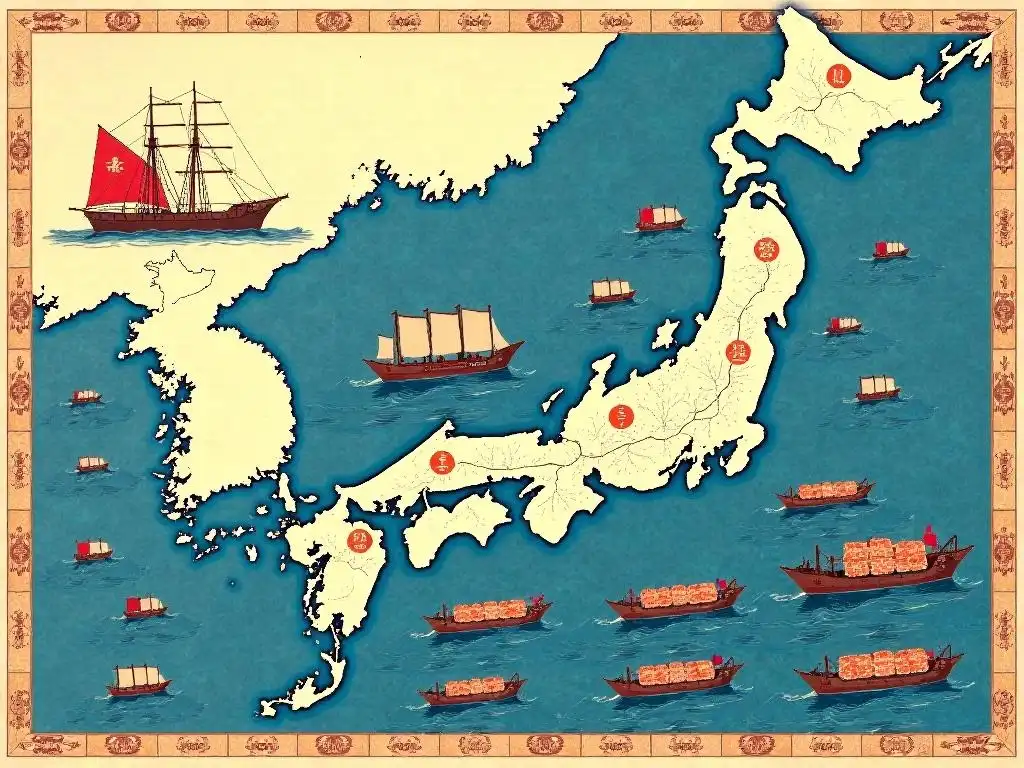
The emergence of feudalism in Japan during the late 12th century marked a pivotal shift in the country's political and economic landscape. With the establishment of the Kamakura shogunate in 1185, power transitioned from the imperial court to a military government, fundamentally altering trade dynamics. The feudal system, characterized by a hierarchical structure of lords and vassals, facilitated the development of regional trade networks that interlinked various provinces.
The shugo (military governors) and daimyō (feudal lords) played crucial roles in this trade evolution. They not only controlled land but also regulated commerce within their territories. The need for resources—such as rice, textiles, and metal goods—prompted these leaders to establish trade agreements with neighboring regions, particularly Korea and China. As trade flourished, so did the demand for luxury goods, which were often imported from these countries.
The influence of the Hashimoto and Mizuno clans, for instance, is notable in how they engaged in maritime trade, capitalizing on Japan's strategic position between Korea and China. This period saw an increase in shipbuilding and navigation technologies, allowing for more extensive maritime trade routes to be established. The sampan (a small boat) became a common vessel for these journeys, facilitating the transport of goods across the seas.
Key Historical Events Influencing Trade Routes
Several key historical events significantly shaped Japan's feudal trade routes, particularly those connecting to Korea and China.
- The Mongol Invasions (1274 and 1281):
- The attempted invasions by Kublai Khan's Mongol Empire disrupted trade relations and caused a temporary decline in maritime commerce. However, the eventual repulsion of these invasions, attributed to typhoons known as "kamikaze" or divine winds, restored confidence in maritime activities.
- The Ashikaga Shogunate (1336-1573):
- During this period, trade with China blossomed, particularly through the establishment of the Nanban trade (Southern barbarian trade). Japanese merchants, particularly the Wokou pirates, engaged in trade with the Ming Dynasty, exchanging silver and other commodities for Chinese silk, pottery, and other luxury goods.
- The Sengoku Period (1467-1603):
- A time of social upheaval and constant military conflict, the Sengoku period saw feudal lords vying for power, which inadvertently fostered trade competition. The desperate need for resources led many daimyō to seek new trading partners, including Korea, thereby expanding trade routes.
- The Arrival of Europeans (1543 onward):
- The introduction of European traders and missionaries brought new goods and ideas, reshaping existing trade networks. The Portuguese and Spanish introduced firearms, which not only altered warfare but also accelerated trade needs and patterns.
- The Sakoku Edicts (1635):
- With the implementation of sakoku, or national isolation, Japan curtailed foreign trade significantly, focusing instead on domestic production. This policy lasted for over two centuries, but prior to its enforcement, extensive trade routes had been established, laying the groundwork for future interactions with Korea and China.
Through these events, Japan's feudal trade routes evolved, reflecting the complexities of international relations, local power dynamics, and economic necessities. Understanding this historical context is essential for comprehending how these routes shaped not only Japan's economy but also its cultural exchanges with neighboring nations.
Mapping Japan's Feudal Trade Routes
Major Trade Routes to Korea
Geographical Overview of Routes to Korea
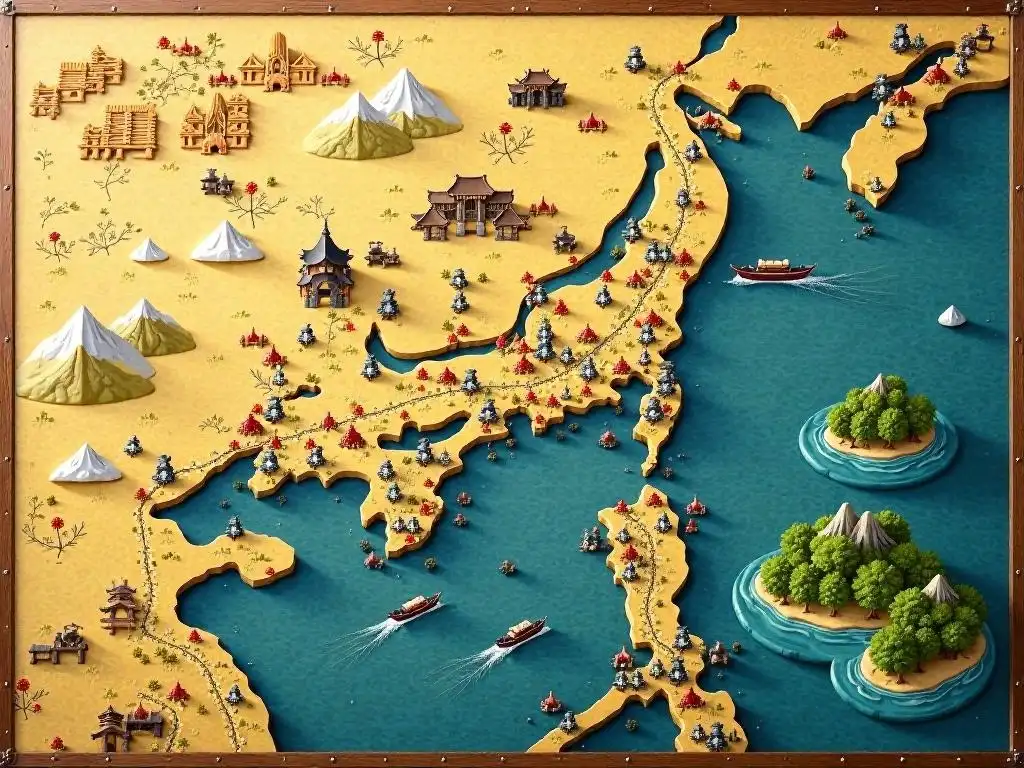
During Japan's feudal era, trade routes to Korea were critical for economic and cultural exchange. The primary maritime routes connected the southwestern islands of Kyushu and Shikoku to the Korean Peninsula, particularly to the kingdoms of Silla and Goryeo. The Tsushima Strait and the Korea Strait served as the main channels facilitating this trade. These routes were characterized by their navigational challenges due to unpredictable weather patterns and strong currents, making the role of skilled sailors and navigators essential.
The Tsushima Island served as a natural waypoint for vessels traveling between Japan and Korea. Merchants often utilized this island for shelter and resupply, enhancing its significance as a trading hub. The proximity of Tsushima to both regions allowed for frequent exchanges, fostering not only trade but also diplomatic relations.
Key Ports and Trading Cities in Japan and Korea
In Japan, several key ports emerged as vital trade centers during the feudal period:
- Nagasaki: This port became a significant trading hub due to its strategic location and was known for its vibrant trade with Korea, facilitating the exchange of goods like textiles, ceramics, and metalwork.
- Fukuoka: Located on the northern shore of Kyushu, Fukuoka was another critical port where merchants congregated to engage in trade with Korean counterparts.
- Tsushima: As mentioned, Tsushima was a crucial stop for traders, offering a unique blend of Japanese and Korean cultural influences due to its geographical positioning.
On the Korean side, major trading cities included:
- Busan: This city served as a key entry point for Japanese goods and was essential for the exchange of Korean agricultural products and crafts.
- Incheon: Known for its deep-water harbor, Incheon facilitated larger ships, making it a significant location for international trade.
Major Trade Routes to China
Geographical Overview of Routes to China
The feudal trade routes to China from Japan were predominantly maritime, traversing the East China Sea. These routes connected Japan's main islands, including Honshu and Kyushu, with the coastal cities of China, particularly in the provinces of Zhejiang and Fujian. The Shimonoseki Strait, located between Honshu and Kyushu, played a pivotal role as a transit point for vessels heading to Chinese ports.
Navigational knowledge was paramount, as merchants faced challenges such as typhoons and fluctuating tides. Trade flourished along these routes, particularly during the Ming Dynasty, when Japan began to establish more formal trade relations with China, fostering a rich exchange of culture and goods.
Key Ports and Trading Cities in Japan and China
In Japan, key ports for trade with China included:
- Kagoshima: This port on Kyushu's southern tip emerged as a key player in the trade network, facilitating the exchange of silver and other goods in return for Chinese silk and ceramics.
- Hiroshima: Located on Honshu, Hiroshima was another important port that facilitated trade, mainly dealing in rice and other local agricultural products.
On the Chinese side, notable trading cities were:
- Nanjing: As a former capital, Nanjing was a cultural and economic center, welcoming Japanese traders and fostering a significant exchange of luxury goods.
- Hangzhou: Known for its silk production, Hangzhou attracted many Japanese merchants seeking high-quality textiles, which were highly prized in Japan.
The intricate web of Japan feudal trade routes not only connected these regions economically but also played a crucial role in cultural exchanges that shaped the identities of the nations involved.
Goods Traded in Japan's Feudal Trade Routes

Exported Products from Japan
During Japan's feudal era, particularly from the late 12th century to the 16th century, the nation became a significant player in regional trade, especially with its neighbors, Korea and China. Japan's feudal trade routes facilitated the exportation of several key products that played a vital role in its economy and cultural exchange.
Major Exported Goods
- Silk: Although Japan was not a primary silk producer, it exported silk textiles crafted from imported raw silk. The intricate designs and high-quality weaving techniques made Japanese silk highly sought after, particularly in China.
- Pottery and Porcelain: Japanese ceramics, especially from regions like Arita and Imari, gained popularity for their unique designs and craftsmanship. These goods were often traded for Korean and Chinese products.
- Lacquerware: Renowned for its durability and artistry, lacquerware was another significant export. These items were often adorned with intricate patterns, appealing to both Korean and Chinese markets.
- Copper and Metal Goods: Japan exported various metal products, including tools and weapons. The quality of Japanese metallurgy was highly regarded, with items like swords and agricultural tools being particularly valued.
- Fish and Seafood: Given Japan's extensive coastline, fisheries thrived, leading to exports of preserved fish and seafood, which were delicacies in both Korea and China.
Cultural and Historical Significance of Japanese Exports
The goods exported from Japan during the feudal trade routes were not just commodities; they held cultural and historical significance. The exchange of silk and ceramics, for instance, fostered artistic influences that shaped Japanese aesthetics. Moreover, the trade routes facilitated not only economic prosperity but also cultural exchanges, leading to the adoption of various techniques and styles in art and craftsmanship.
The export of lacquerware particularly illustrates how Japanese artisans developed unique styles that were distinct from their Chinese counterparts, thus marking a cultural identity that resonated through generations. This exchange solidified Japan's reputation as a hub of quality craftsmanship and artistic innovation within the broader context of East Asian trade.
Imported Goods from Korea and China
The trade routes established during Japan's feudal period were not solely about exports; they also enabled the influx of various goods from Korea and China, which significantly influenced Japanese society and culture.
Major Imported Goods
- Rice: As a staple food, rice was imported in significant quantities from Korea and China, influencing agricultural practices and dietary habits in Japan.
- Buddhist Texts and Artifacts: The importation of religious texts and artifacts played a crucial role in the spread of Buddhism in Japan, profoundly affecting spirituality and philosophy across the nation.
- Chinese Tea: The introduction of tea from China greatly influenced Japanese culture, leading to the development of the traditional tea ceremony, which remains an essential aspect of Japanese social life.
- Silk and Textiles: While Japan exported silk, it also imported raw silk and textiles from China, enhancing the local textile industry and diversifying fashion.
- Metallurgy Techniques: The importation of advanced metallurgy methods from China improved Japan's own metalworking capabilities, particularly in producing high-quality weapons and tools.
Influence of Korean and Chinese Goods on Japanese Society
The impact of imported goods from Korea and China on Japanese society was profound. The introduction of rice not only transformed dietary staples but also agricultural practices, leading to increased productivity and population growth. The influence of Buddhist texts spurred the development of a unique Japanese interpretation of Buddhism, which integrated local traditions and customs.
The adoption of tea culture from China created a social ritual that emphasized mindfulness and community, evolving into the sophisticated practice of the tea ceremony. Additionally, the techniques learned from Chinese metallurgy significantly improved Japan's craftsmanship in sword-making, contributing to the samurai's legendary status.
The interplay of imported goods from Korea and China with Japan's local products fostered a rich tapestry of cultural exchange that shaped Japan's feudal society in numerous ways. This dynamic trade network not only facilitated economic growth but also deepened the cultural connections between these East Asian nations, leaving a lasting legacy that still resonates today.
Cultural Exchange Through Trade
Impact of Trade on Japanese Culture and Society
The trade routes established during Japan's feudal era played a pivotal role in shaping its culture and society. The influx of goods, ideas, and customs from Korea and China not only enriched the Japanese lifestyle but also influenced various aspects of daily life and arts.
Goods and Commodities
The trade routes facilitated a vibrant exchange of commodities. Japan primarily imported silk, ceramics, and metal tools from China, while Korean traders brought textiles, ginseng, and paper. This access to foreign products led to significant changes in local craftsmanship and consumption patterns. For instance, silk became a symbol of status among the samurai and aristocrats, driving the demand for luxurious garments.
Art and Aesthetics
Furthermore, the cultural impact of trade is evident in Japanese art. The introduction of new artistic techniques and styles from China profoundly influenced Japanese painters and craftsmen. The adoption of Chinese ink wash painting techniques, for example, led to the development of the unique Japanese style known as "sumi-e." This blending of artistic traditions resulted in a rich tapestry of visual culture that is still appreciated today.
Religion and Philosophy
The trade routes also served as conduits for the exchange of religious and philosophical ideas. Buddhism, which had originally come from Korea and China, was further propagated through these trade interactions. As a result, Japanese society saw the integration of various Buddhist sects and practices, which shaped its spiritual landscape and influenced societal values.
Exchange of Knowledge and Ideas Between Japan, Korea, and China
The interactions along the feudal trade routes were not limited to tangible goods; they also encompassed a significant exchange of knowledge and ideas that shaped Japan's intellectual landscape.
Technological Advancements
One major area of influence was technology. Japan benefited from Korean and Chinese innovations in agriculture, metallurgy, and architecture. For example, the introduction of advanced rice cultivation techniques from China allowed for improved food production, which was crucial for sustaining Japan's growing population. Likewise, the knowledge of metalworking techniques led to the development of superior weaponry and tools, enhancing Japan's military capabilities.
Language and Writing Systems
The exchange extended to language and writing as well. The adoption of Chinese characters (kanji) profoundly transformed the Japanese writing system, leading to the development of a unique blend of kanji and native scripts such as hiragana and katakana. This linguistic evolution facilitated the growth of literature and scholarship in Japan, allowing for greater expression of cultural identity.
Scientific and Medical Knowledge
Additionally, trade routes allowed for the dissemination of scientific and medical knowledge. Traditional Chinese medicine and herbal remedies were introduced to Japan, influencing local medical practices and leading to the establishment of a unique Japanese medicinal tradition. The sharing of astronomical knowledge also contributed to advancements in navigation and understanding of the natural world.
The trade networks between Japan, Korea, and China during the feudal era were instrumental in fostering a rich cultural exchange that not only transformed Japan's material culture but also enhanced its intellectual and spiritual dimensions. This intricate web of interactions laid the groundwork for the Japan we know today, blending local traditions with foreign influences to create a unique and dynamic society.
Challenges Faced in Trade Routes
The trade routes between Japan, Korea, and China during the feudal era were not only vital for economic exchange but were also fraught with numerous challenges. These obstacles significantly influenced the nature and efficiency of trade, dictating how goods were transported and how relationships were forged between these nations.
Natural Barriers and Geographical Challenges
One of the most significant challenges faced by traders navigating the Japan feudal trade routes was the natural landscape itself. The geography of East Asia presented formidable obstacles that hindered smooth trade operations.
-
Mountainous Terrain
The presence of mountain ranges, particularly in Japan and parts of Korea, created physical barriers that complicated overland transportation. For instance, the Japanese archipelago is characterized by rugged mountains that limited the accessibility of certain regions. This necessitated the use of coastal routes, which were often subject to the unpredictable nature of the sea.
-
Ocean Currents and Weather Conditions
The sea routes, while essential for trade, were heavily influenced by ocean currents and weather. The Tsushima Strait, for example, could be treacherous, with strong currents that posed risks to smaller vessels. Seasonal changes also affected trade patterns; monsoons and typhoons could disrupt shipping schedules, leading to delays or losses.
-
Limited Infrastructure
The lack of sophisticated infrastructure further compounded these geographical challenges. While there were established ports and trading outposts, many areas lacked the facilities necessary for the safe storage and transfer of goods. The absence of well-maintained roads meant that overland transport was often slow and perilous.
The combination of these natural barriers and geographical challenges meant that traders had to be highly skilled navigators and strategists to ensure successful exchanges between Japan, Korea, and China.
Political and Economic Factors Affecting Trade
In addition to natural impediments, various political and economic factors significantly impacted the dynamics of trade during the feudal era.
-
Interstate Relations
The political climate between Japan, Korea, and China fluctuated throughout the feudal period, often affecting trade routes. Diplomatic tensions, such as territorial disputes or military conflicts, could lead to the closure of ports or the imposition of trade restrictions. For example, periods of hostility between Japan and Korea could result in decreased trade activity, forcing merchants to seek alternative routes or partners.
-
Economic Policies and Regulation
Each nation maintained its own economic policies that influenced trade practices. Japan, for instance, implemented a policy of sakoku (closed country) during the Edo period, which restricted foreign influence and trade. While this policy was later relaxed, it had far-reaching implications on the established trade routes and relationships, controlling the flow of goods and limiting access to foreign markets.
-
Cultural Exchange and Trade Practices
Cultural factors also played a role in shaping trade relationships. The exchange of goods was often accompanied by cultural exchange, which required a deep understanding of local customs and practices. Misunderstandings or cultural insensitivity could jeopardize trade agreements and foster distrust among traders.
-
Market Demand and Control
The demand for specific goods influenced trade routes significantly. Items such as silk, ceramics, and spices were highly sought after, driving merchants to establish more reliable supply chains. However, the monopolization of certain goods by powerful clans or merchants could lead to inflated prices and restricted access, creating economic tensions.
The interplay of these political and economic factors not only shaped the trade routes but also influenced the broader relationships between Japan, Korea, and China, making the study of these dynamics crucial for understanding the historical context of trade during the feudal era.
Conclusion: The Legacy of Japan's Feudal Trade Routes
The feudal trade routes of Japan established a foundation for economic interactions that not only shaped the historical landscape of East Asia but also continue to influence modern trade practices. The exchange of goods, culture, and ideas through these routes promoted a sense of interconnectedness among Japan, Korea, and China, fostering relationships that laid the groundwork for contemporary economic networks.
The significance of Japan's feudal trade routes can be seen in various sectors. The trade relationships established during this era facilitated the flow of essential goods, such as rice, textiles, and ceramics, which were critical to the economies of all three nations. In turn, these early interactions contributed to the development of regional trade hubs and the emergence of merchant classes that would evolve over centuries.
Additionally, the routes enabled cultural exchanges that enriched Japanese society, introducing foreign philosophies, artistic techniques, and technological advancements. This cultural diffusion had a lasting impact on Japan's societal structure and artistic expressions, which can still be observed today.
Lasting Impacts on Modern Trade Relations in East Asia
The legacy of Japan's feudal trade routes is evident in the current trade dynamics of East Asia. The historical connections established through these routes have evolved into robust economic partnerships among Japan, Korea, and China. As these nations continue to engage in trade today, the foundations laid during the feudal era still influence their interactions.
- Economic Integration: The historical trade routes fostered early economic integration, which has paved the way for current agreements such as the Regional Comprehensive Economic Partnership (RCEP). This modern trade agreement reflects a continuity of cooperative trade practices that began centuries ago.
- Cultural Heritage: The shared cultural heritage from the feudal trade era enhances modern diplomatic relations. Cultural exchanges, such as festivals, culinary traditions, and art exhibitions, continue to strengthen ties among the nations, promoting mutual understanding and respect.
- Supply Chains: The historical movement of goods across these trade routes has influenced modern supply chains. Today, Japan, Korea, and China form essential links in global supply chains, particularly in technology and manufacturing sectors.
The feudal trade routes have not only shaped the historical context of trade relationships in East Asia but have also established a framework for ongoing economic cooperation and cultural exchange.
Reflection on Historical Trade Practices and Their Relevance Today
Reflecting on Japan's feudal trade practices reveals key insights into the nature of trade and commerce that remain relevant today. The strategic positioning of trading ports, the establishment of trade regulations, and the development of merchant networks were crucial to the success of these routes.
- Port Cities: Ports such as Sakai and Nagasaki were critical in facilitating trade with Korea and China. Their strategic locations allowed for efficient maritime navigation and trade management, principles that are still relevant in modern shipping and logistics.
- Regulatory Frameworks: The feudal government implemented regulations that governed trade practices, establishing trust and stability within commerce. This echoes today’s focus on trade agreements and regulations that ensure fair practices and protect national interests.
- Merchant Networks: The rise of merchant classes during the feudal era highlights the importance of networks in trade. Today, strong business relationships and networks continue to play a vital role in international trade, driving innovation and collaboration.
Japan's feudal trade routes not only fostered significant economic and cultural exchanges during their time but also laid the groundwork for contemporary trade practices in East Asia. Understanding these historical practices allows for a deeper appreciation of current trade dynamics and the enduring legacies of the feudal era.
Frequently Asked Questions
What were the main trade routes of feudal Japan?
The main trade routes of feudal Japan included connections through the Korean Peninsula and China, facilitating cultural exchange and the flow of goods like textiles and ceramics.
How did trade impact the society of feudal Japan?
Trade played a significant role in shaping Japanese society, fostering economic growth and introducing foreign influences in art, religion, and technology, which enriched Japanese culture.
What goods were commonly traded between Japan and its neighbors?
Commonly traded goods included silk, spices, and ceramics from China, while Japan exported gold, silver, and unique craftsmanship, enhancing its economic standing.
How did geographical features influence trade routes in feudal Japan?
Geographical features such as mountains and coastal areas dictated the development of trade routes, as merchants sought the most efficient paths to transport goods between regions.
What role did the samurai play in trade during the feudal era?
While primarily known as warriors, some samurai engaged in trade to support their clans, and their involvement helped protect trade routes, ensuring the safety of merchants and goods.
Final Reflection: The Enduring Legacy of Japan's Feudal Trade Routes
Japan's feudal trade routes were not merely pathways for commerce; they were the lifelines that connected cultures, economies, and ideas across East Asia. In today's globalized world, the significance of these historical networks resonates more than ever, as we navigate our own complex trade relationships and cultural exchanges. The intricate web of connections established during Japan's feudal era serves as a reminder of the power of trade to foster understanding and collaboration among nations.
Culturally and socially, the impact of these trade routes continues to shape our perceptions and interactions with Japan, Korea, and China. The exchange of goods, art, and philosophies not only enriched the societies involved but also laid the groundwork for the vibrant cultural tapestry we see today. As we reflect on this historical context, we are reminded of the words of historian John W. Hall: Trade is not merely an economic activity; it is a social and cultural phenomenon that shapes the identities of nations.
This observation underscores the importance of recognizing our shared histories and the ongoing influence of these ancient routes on contemporary society.
As we look to the future, let us take a moment to reflect on how we can apply the lessons learned from Japan's feudal trade routes in our own lives. Consider how you can foster connections across cultures, whether through travel, education, or simply engaging with diverse communities.
Embrace the spirit of curiosity and collaboration that characterized these historic trade networks, and let it inspire you to build bridges in your own world. The legacy of these routes is not just a chapter in history; it is a call to action for us all to cultivate understanding and cooperation in an increasingly interconnected global landscape.
Unveil the Secrets of Japan’s Trade Routes!
Thank you for exploring the fascinating trade networks that connected Japan with Korea and China! You've uncovered the historical significance of these routes and their impact on culture and commerce. Now, it's time to take what you've learned and dive deeper into this rich history.
Here are some engaging actions you can take next:
- Join a virtual tour to experience the trade routes firsthand—visit historical sites or museums that showcase artifacts from this era.
- Share your insights with friends or on social media—start a conversation about the importance of trade in shaping societies.
- Participate in a local history group or forum focused on Japan’s feudal period to connect with fellow history enthusiasts and share knowledge.
What intriguing connections can you draw between Japan’s trade history and the dynamics of today’s global economy?