
Behind the Scenes: The Political Maneuvering Leading to Perry's Arrival


Welcome to Feudal Japan History, where we invite you to embark on a fascinating journey through the intricate tapestry of Japan’s feudal era. In our featured article, "Behind the Scenes: The Political Maneuvering Leading to Perry's Arrival," we delve deep into the Japan feudal political history that set the stage for monumental shifts in foreign relations. Prepare to uncover the complex dynamics that shaped a nation, and discover how political intrigue and diplomacy intertwined to alter the course of history. Are you ready to explore the secrets hidden within this pivotal period? Let's dive in!
The arrival of Commodore Matthew Perry in 1853 marked a pivotal moment in Japan's history, leading to the decline of its feudal system and the eventual opening of the country to the West. This article delves into the intricate political maneuvering that set the stage for Perry's expedition, exploring the historical context and internal dynamics of Japan during the feudal era.
By examining the key political structures, the role of shogunates, and the broader implications of foreign relations in the 19th century, we can gain a deeper understanding of how Japan's feudal political history influenced its interactions with foreign powers.
Understanding Japan's Feudal Political History
Overview of Japan's Feudal Era
Japan's feudal era, spanning from the late 12th century to the mid-19th century, was characterized by a complex hierarchical structure dominated by a warrior class known as the samurai. This period was marked by constant conflict, territorial disputes, and the rise of powerful clans, leading to the establishment of the shogunate system. The Tokugawa shogunate, which began in 1603, is particularly significant, as it unified Japan under a strict social order and implemented policies that would shape the nation's political landscape for over 250 years.
- Key Features of the Feudal System:
- Samurai Class: The ruling military elite responsible for maintaining order and loyalty.
- Daimyo: Feudal lords who governed regions and held significant power.
- Peasants and Artisans: The majority of the population, whose labor supported the economy.
Key Political Structures of Feudal Japan
The political framework of feudal Japan was underpinned by several key structures that defined governance and societal roles:
- Emperor: The symbolic figurehead with limited political power, primarily serving as a spiritual leader.
- Shogun: The military ruler who held real power, overseeing administration and military affairs.
- Council of Elders: Advisors to the shogun, often comprising senior samurai responsible for key decisions.
This hierarchy created a rigid social stratification, with loyalty and duty being paramount values among the samurai, which would ultimately influence Japan's response to external pressures.
The Role of Shogunates in Governance
Shogunates played a crucial role in shaping Japan's political landscape. The Tokugawa shogunate is particularly noteworthy for its policies that aimed to maintain stability and control:
- Centralization of Power: The shogunate established a centralized bureaucratic system, effectively limiting the power of regional daimyo.
- Restrictions on Mobility: The samurai class was bound to their lords, which prevented internal conflicts and ensured loyalty.
- Cultural Flourishing: Despite political rigidity, this era saw a rise in arts, culture, and commerce, contributing to Japan's unique identity.
However, as the world began to change in the 19th century, these political structures would face unprecedented challenges.
The Context of Foreign Relations in the 19th Century
Japan's Isolationist Policies: Sakoku Era
Japan's Sakoku, or closed country policy, was instituted in the early 17th century, effectively isolating the nation from foreign influence. This policy aimed to protect Japanese culture and maintain the shogunate's power by:
- Restricting Trade: Limited foreign trade primarily to the Dutch and Chinese under strict regulations.
- Banning Christianity: Efforts to eliminate foreign religious influence led to severe persecution of Christians.
This isolationist stance created a bubble where Japan could develop independently, but it also sowed the seeds of vulnerability as Western powers sought new markets and trade opportunities.
The Impact of Western Expansion on Japan
The 19th century was marked by significant Western expansion. Countries like the United States and European powers were eager to establish trade routes and extend their influence in Asia. The consequences for Japan included:
- Pressure to Open Ports: Commodore Perry's expedition was driven by the desire to secure trade agreements, which challenged Japan’s isolationist policies.
- Cultural Exchange and Conflict: Increasing encounters with Western ideas and technologies sparked both interest and apprehension among the Japanese.
Initial Encounters Between Japan and Western Powers
Japan's initial encounters with Western powers were fraught with tension and misunderstanding. The arrival of Perry's "Black Ships" in 1853 was a watershed moment, as it represented not only a military threat but also an opportunity for Japan to engage with the outside world:
- Commodore Perry's Objectives: Perry aimed to open Japan to American trade and establish diplomatic relations.
- Japanese Response: The shogunate was initially hesitant, reflecting the internal divisions and debates over how to respond to foreign demands.
This complex interplay of feudal political history and external pressures set the stage for significant transformations in Japan, leading to the eventual end of the feudal system and the modernization of the nation.
The Prelude to Perry's Arrival
The arrival of Commodore Matthew Perry in Japan in 1853 marked a significant turning point in the nation’s history, transitioning it from a period of isolation to one of engagement with the world. This era was characterized by a complex interplay of internal and external political dynamics, setting the stage for Perry's expedition. The feudal political history of Japan during this time is essential to understanding how various factors converged to influence Japan's response to foreign powers.
Key Events Leading to Commodore Perry's Expedition
Several key events throughout the early 19th century contributed to the conditions that allowed Perry's expedition to take place. The most significant event was the increasing pressure from Western nations, particularly following the Opium War in China (1839-1842), which demonstrated the military superiority of Western powers. The United States, eager to expand its trade networks and influence in Asia, began to view Japan as a potential market for its goods and a coaling station for ships traveling to China.
In 1851, President Millard Fillmore directed Commodore Perry to undertake a mission to Japan, aimed at opening the country to American trade. Perry's expedition was meticulously planned, involving the construction of a powerful fleet, including steam-powered warships, which not only showcased technological advancement but also served as a symbol of American naval strength. This mission would ultimately lead to the signing of the Treaty of Kanagawa in 1854, which established formal relations between the United States and Japan.
The Influence of American Interests in Asia
American interests in Asia were driven by a combination of economic ambitions and strategic considerations. The United States sought to establish trade routes that would facilitate access to the lucrative markets of China and beyond. American merchants were particularly interested in Japanese goods, such as silk and porcelain, which were highly valued in Western markets.
Moreover, the whaling industry played a crucial role in the push for engagement with Japan. American whalers often found themselves in need of provisions and safe harbor while navigating the Pacific. Establishing relations with Japan would not only provide a reliable supply route but also secure a strategic foothold in the region, strengthening America's position against European colonial powers.
Internal Political Dynamics in Japan Before Perry
Before Perry's arrival, Japan was under the rule of the Tokugawa Shogunate, which upheld a policy of sakoku, or national isolation. This policy limited foreign contact and trade, allowing only the Dutch and Chinese to engage with Japan under strict regulations. Internally, the Tokugawa regime faced challenges from various factions, including discontent among the samurai class, who were increasingly frustrated by the Shogunate's inability to respond effectively to external threats.
Furthermore, the growing influence of nationalist sentiments and the rise of pro-imperialist ideologies among certain samurai groups began to shift the political landscape. These factions advocated for a reevaluation of Japan's isolationist policies, arguing for modernization and engagement with Western nations to strengthen Japan against foreign domination.
Political Maneuvering Within Japan
The political maneuvering within Japan in the lead-up to Perry's arrival was marked by a delicate balance of power and conflicting interests among various political entities. The Tokugawa Shogunate found itself in a precarious position, needing to navigate both internal dissent and external pressures.
The Tokugawa Shogunate's Response to Foreign Threats
The Tokugawa Shogunate was initially hesitant to engage with foreign powers, fearing the destabilizing effects of opening the country. However, as evidence of Western military capabilities became apparent, the Shogunate faced increasing pressure to respond. The arrival of Perry's fleet was perceived as a direct threat, prompting the Shogunate to reconsider its isolationist stance.
In response to Perry's demands, the Shogunate adopted a cautious approach, seeking to negotiate from a position of strength while simultaneously attempting to maintain control over domestic affairs. This included a focus on military modernization efforts and the strengthening of coastal defenses to prepare for potential conflict.
Conflicting Views Among Japanese Leaders
Within the Japanese political landscape, differing views on how to handle foreign relations emerged. While some leaders advocated for a hardline stance against foreign encroachment, others recognized the need for engagement and modernization. This division often pitted traditionalists against reformists, leading to heated debates about the future direction of Japan.
The pro-engagement faction argued that opening Japan to foreign trade and ideas was essential for the nation's survival and advancement. They believed that by learning from Western powers, Japan could strengthen itself against potential colonization. Conversely, traditionalists feared that such engagement would undermine Japanese culture and sovereignty.
Role of the Samurai Class in Political Decisions
The samurai class played a pivotal role in shaping the political landscape of Japan during this period. As the ruling elite, their perspectives and allegiances significantly influenced the direction of the Shogunate's policies. Many samurai were torn between loyalty to the Shogunate and their growing awareness of the necessity for reform and modernization.
Some samurai took an active role in advocating for a more aggressive foreign policy, seeking to protect Japan from the fate of other Asian nations that had succumbed to Western imperialism. Others, however, remained staunch supporters of the Shogunate's isolationist policies, fearing that any concession to foreign powers would lead to the erosion of their status and the traditional way of life. This internal conflict within the samurai class reflected the broader societal tensions that would ultimately shape Japan's response to Perry's arrival.
The Arrival of Commodore Perry
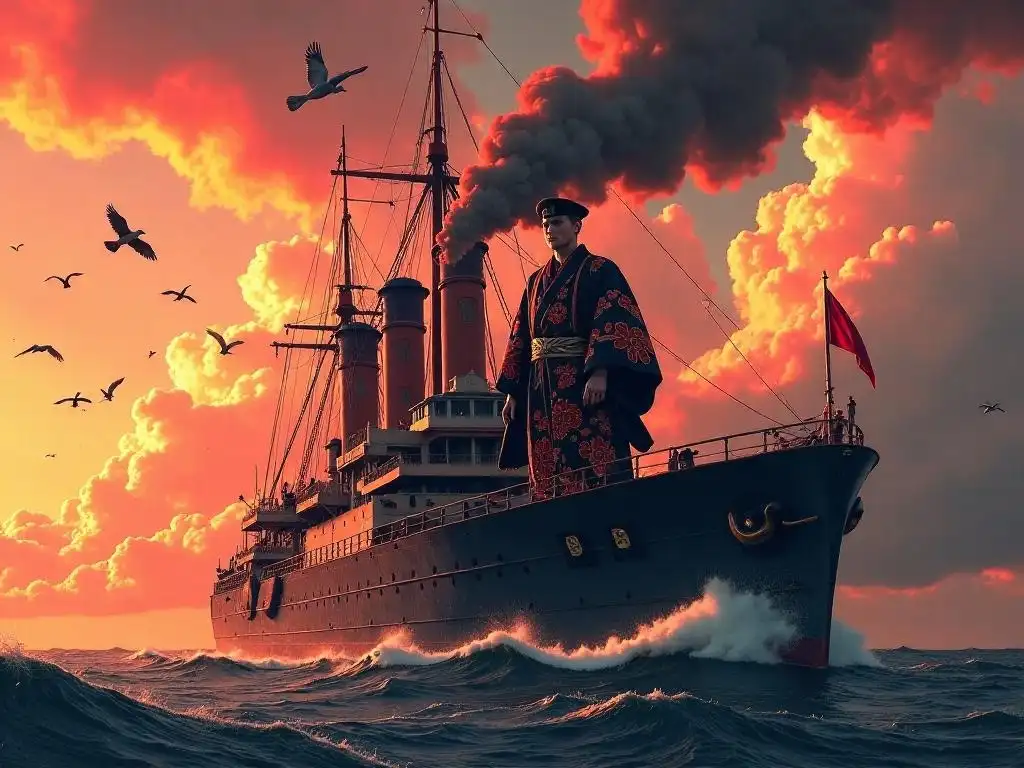
Commodore Matthew Perry's arrival in Japan in 1853 marked a pivotal moment in the nation's history, effectively ending over two centuries of self-imposed isolation known as Sakoku. Perry, representing the United States, arrived with a fleet of "Black Ships," which were steam-powered vessels that not only symbolized Western technological advancement but also a formidable presence that Japan had never encountered before. The mission was driven by the desire for trade and the need to establish diplomatic relations, highlighting the broader context of Western expansion and imperialism during the 19th century.
Overview of Perry's Mission and Objectives
The primary objectives of Perry's mission were to open Japanese ports to American trade, secure provisions for American whaling ships in the Pacific, and establish a consulate in Japan. The United States was motivated by several factors, including economic interests, the need for coaling stations for steamboats, and the broader goal of curbing the influence of European powers in Asia. Perry's diplomatic approach was marked by a blend of negotiation and implied threat, as the display of naval power was intended to compel Japan to engage with the West.
Initial Reactions from Japanese Officials
The initial reactions from Japanese officials were a combination of astonishment and apprehension. The sight of Perry's fleet, with its black smoke and steam engines, was unlike anything they had seen before. Officials in Edo (modern-day Tokyo) were uncertain how to respond, torn between the desire to maintain Japan's isolationist policies and the realization of the need to engage with foreign powers. The Shogunate initially attempted to negotiate from a position of strength, but the overwhelming display of Perry's military might ultimately shifted their strategy toward accommodation.
The Strategic Importance of Perry's Arrival
Perry's arrival held immense strategic importance not only for Japan but also for the broader geopolitics of the region. For Japan, the opening of trade was crucial for its economic development and modernization. It also represented a critical juncture in the power dynamics of East Asia, as it signaled the beginning of increased Western influence in the region. The United States, on the other hand, sought to establish a foothold in Asia, recognizing Japan as a potential ally against rival European nations and as a key player in Pacific trade routes.
Consequences of Perry's Arrival on Japan's Political Landscape
The consequences of Perry's arrival were profound and far-reaching, leading to significant changes in Japan's political landscape and its interactions with the world.
Immediate Political Repercussions
In the immediate aftermath of Perry's arrival, Japan faced a crisis of confidence within its ruling Shogunate. The realization that isolation could no longer be maintained prompted a series of political debates and conflicts within the government. The Bakufu (Shogunate) had to grapple with the pressures of modernization while managing internal dissent. This environment of uncertainty and fear of foreign domination led to the emergence of factions that either supported engagement with the West or advocated for a return to isolation.
Long-Term Effects on Japan's Foreign Relations
Perry's mission catalyzed a transformation in Japan's foreign relations that would have lasting implications. The Treaty of Kanagawa, signed in 1854, marked the beginning of formal diplomatic relations between Japan and the United States. This treaty opened two ports to American ships and initiated a trend where Japan would gradually sign similar agreements with other Western nations. As a result, Japan transitioned from a hermit nation to an active participant in international affairs, significantly altering the balance of power in East Asia.
The Shift from Isolation to Engagement with the West
The shift from isolation to engagement with the West was a crucial turning point for Japan. It initiated a period of profound change and modernization known as the Meiji Restoration. The influx of Western ideas, technology, and culture transformed Japan's political, economic, and social structures. The once-isolated nation began to embrace Western advancements, leading to the establishment of a modern military and industrial economy. This engagement ultimately allowed Japan to emerge as a significant global power by the early 20th century, reshaping its identity and role on the world stage.
Conclusion: The Legacy of Political Maneuvering in Japan
The intricate web of political maneuvering leading to Commodore Perry's arrival in Japan serves as a pivotal moment in the nation's feudal political history. This period showcases how the interplay of local and foreign interests influenced Japan's trajectory. The actions and decisions made by key figures during this time laid the groundwork for significant transformations in Japan's governance and its relationship with the outside world.
Reflecting on this legacy, one can see that the feudal lords, or daimyōs, were not merely passive actors but rather engaged in strategic alliances and rivalries that shaped Japan's response to external pressures. The awareness of the need for modernization, spurred by the arrival of Perry, catalyzed a shift that would ultimately lead to the end of the feudal system and the establishment of a centralized government.
Reflections on Japan's Feudal Political History

Japan's feudal political history is marked by a complex hierarchy and the dynamic relationships among the shogunate, daimyōs, and samurai. This era was characterized by power struggles, local governance, and the negotiation of allegiances, which were critical in determining the country's stance on foreign relations. The political landscape was not static; it evolved in response to both internal conflicts and external threats.
As Japan faced increasing pressure from Western powers in the mid-19th century, the feudal system's rigidity began to crack. The arrival of Perry acted as a wake-up call, prompting reflections on Japan's isolationist policies. The resulting discourse among political elites highlighted the tension between tradition and the necessity for modernization, leading to crucial developments that would reshape Japan's governance.
The Enduring Impact of Perry's Arrival on Modern Japan
Perry's arrival in 1853 marked not just a turning point in Japan's foreign policy but also instigated profound changes within its sociopolitical landscape. The subsequent Treaty of Kanagawa in 1854 effectively ended Japan's isolationist stance and opened the door for trade and diplomatic relations with the United States and other Western nations.
This shift had lasting implications. It propelled Japan toward rapid modernization, as leaders recognized the necessity of adopting Western technologies and practices to maintain sovereignty. The shift from feudalism to a centralized state during the Meiji Restoration was fueled by the desire to strengthen Japan in the face of potential colonial threats. Thus, Perry's arrival can be seen as a catalyst for the transformation of Japan into a modern nation-state.
Final Thoughts on the Evolution of Japan's Foreign Relations
The evolution of Japan's foreign relations can be traced back to the political maneuvering and decisions made during the feudal era, particularly in response to external pressures like those presented by Commodore Perry. The transition from a closed, insular society to one that actively engaged with global powers marked a significant turning point in Japan's history.
In the years following Perry's arrival, Japan forged new alliances and navigated complex international relations, ultimately emerging as a formidable player on the world stage. The lessons learned during this period continue to inform Japan's foreign policy today, as it balances tradition with the demands of an increasingly interconnected world. The legacy of this political maneuvering underscores the importance of adaptability and strategic thinking in international relations, crucial traits that have defined Japan's path over the past century and beyond.
- Understanding Japan's Feudal Political History
- The Context of Foreign Relations in the 19th Century
- The Prelude to Perry's Arrival
- Political Maneuvering Within Japan
- The Arrival of Commodore Perry
- Consequences of Perry's Arrival on Japan's Political Landscape
- Conclusion: The Legacy of Political Maneuvering in Japan
- Reflections on Japan's Feudal Political History
- The Enduring Impact of Perry's Arrival on Modern Japan
- Final Thoughts on the Evolution of Japan's Foreign Relations
- What was the significance of Commodore Perry's arrival in Japan?
- How did feudal political structures influence Japan's response to Perry?
- What were the key political factions during Perry's arrival?
- How did Perry's arrival impact Japan's feudal system?
- What role did cultural attitudes play in the feudal political history of Japan?
Frequently Asked Questions
What was the significance of Commodore Perry's arrival in Japan?
Commodore Perry's arrival in 1853 marked the end of Japan's isolationist policies and initiated a new era of political and economic engagement with the West.
How did feudal political structures influence Japan's response to Perry?
The feudal political structures in Japan, characterized by regional daimyos and the shogunate, created a complex dynamic that influenced decision-making and the eventual opening of Japan to foreign trade.
What were the key political factions during Perry's arrival?
During Perry's arrival, there were two main factions: the pro-foreign group advocating for trade and the anti-foreign faction that sought to maintain traditional isolationist policies.
How did Perry's arrival impact Japan's feudal system?
Perry's arrival challenged the existing feudal system, leading to significant political reforms and the eventual dissolution of feudalism in favor of modernization and the establishment of a centralized government.
What role did cultural attitudes play in the feudal political history of Japan?
Cultural attitudes, including xenophobia and national pride, significantly shaped the feudal political history, affecting Japan's reaction to foreign pressures and ultimately contributing to the Meiji Restoration.
Final Reflection: Understanding the Threads of Japan's Feudal Political History
The intricate web of political maneuvering that led to Perry's arrival in Japan is not just a historical footnote; it is a testament to the profound impact of diplomacy and power dynamics on a nation's trajectory. As we navigate the complexities of today's global landscape, the lessons from Japan's feudal political history resonate strongly, reminding us that the actions of a few can alter the course of a nation and its people. The interplay of ambition, strategy, and cultural exchange continues to shape our world, urging us to reflect on the significance of historical events in informing our present.
The political landscape of Japan during the feudal era serves as a mirror reflecting the ongoing struggles for power and influence that persist in modern society. The intricate alliances and rivalries of the past have laid the groundwork for contemporary political systems, highlighting the importance of understanding history to grasp current events. As historian John W. Dower aptly stated, "> History is a vast early warning system." This quote encapsulates the essence of learning from the past, as the lessons derived from Japan's feudal political history can guide us in navigating today's geopolitical challenges.
As we conclude this exploration of Japan's feudal political history, I invite you to reflect on the implications of these historical narratives in your own life. Consider how the dynamics of power, negotiation, and cultural exchange manifest in your surroundings. Whether in your community, workplace, or global interactions, the lessons from the past can inspire you to engage thoughtfully and purposefully. Let us carry forward the wisdom of history, using it as a compass to navigate the complexities of our present and future, ensuring that we remain vigilant and informed as we shape the world around us.
Unveil the Secrets: Take Action on Perry's Legacy!
Thank you for diving into the intricate world of political maneuvering that led to Commodore Matthew Perry's historic arrival in Japan. Your interest in this pivotal moment in history highlights the importance of understanding the transitions that shaped our world. Now, it's time to put your newfound knowledge into action!
Here are some steps you can take to further explore and engage with this fascinating chapter of history:
- Dive Deeper! Explore more resources on the impact of Perry's interaction with Japan by visiting our recommended readings section on Feudal Japan History .
- Start Conversations! Share this article with friends or family and spark discussions about the consequences of political maneuvers throughout history. Use social media to engage a wider audience!
- Join the Community! Consider joining our online forum to connect with fellow history enthusiasts and share your thoughts on Perry’s legacy and its relevance today.
What aspect of Perry's arrival intrigues you the most, and how does it shape your understanding of Japan's transition into the modern world?