
The Merchant's Dilemma: Navigating Isolationist Policies in Feudal Japan


Welcome to Feudal Japan History, where we embark on a captivating journey through the complexities of Japan's feudal era. In our featured article, "The Merchant's Dilemma: Navigating Isolationist Policies in Feudal Japan," we delve into the intricate challenges faced by merchants during a time of strict isolationist policies. What hurdles did they encounter while striving for prosperity amidst societal constraints? As you explore this rich tapestry of historical, cultural, and economic narratives, prepare to uncover the untold stories of resilience and ingenuity that shaped an era. Dive in and discover the compelling insights waiting for you!
Introduction to Feudal Japan Merchant Challenges
In the intricate tapestry of Feudal Japan, merchants played a vital yet complex role within a society heavily influenced by hierarchy and tradition. As the country navigated through periods of isolation, particularly during the Tokugawa shogunate, the merchant class faced unique challenges that shaped their economic activities and societal standing.
This article delves into the feudal Japan merchant challenges, examining the interplay between isolationist policies and the economic landscape that defined an era marked by both opportunity and adversity for merchants. By exploring the historical context, we can better understand the dilemmas faced by these traders and the intricate balance they had to maintain to navigate a system that often marginalized their importance.
Overview of Feudal Japan's Economic Landscape
Feudal Japan, which roughly spanned from the 12th to the 19th century, was characterized by a system of land ownership and a rigid social hierarchy. At the top were the samurai, who served the daimyo (feudal lords), followed by farmers, artisans, and, at the bottom of the hierarchy, merchants. Despite their low status, the economic landscape during this era experienced notable shifts:
- Agriculture as the Backbone: The economy primarily revolved around agriculture, with rice being the main staple and currency.
- Emergence of Urban Centers: Cities like Edo (modern-day Tokyo) grew as commercial hubs, facilitating trade and the exchange of goods.
- Role of Guilds: Merchants often organized into guilds to protect their interests, regulate trade, and navigate the complexities of taxation and tariffs.
Thus, while merchants played a crucial role in the economy, their position was fraught with restrictions imposed by the ruling classes.
Importance of Merchants in Feudal Society
Despite their lowly status in the social hierarchy, merchants were essential to the functioning of Feudal Japan's economy. Their contributions included:
- Facilitating Trade: Merchants were responsible for the distribution of goods, from local produce to luxury items imported from abroad.
- Cultural Exchange: Through trade, merchants were pivotal in introducing new ideas, technologies, and cultural practices, which enriched Japanese society.
- Economic Growth: The activities of merchants helped stimulate economic growth, creating job opportunities and fostering urban development.
However, their essential role often placed them in direct conflict with the samurai class, who viewed economic pursuits as beneath their noble status.
Understanding Isolationist Policies in Feudal Japan
Definition of Isolationism in the Context of Feudal Japan
Isolationism in Feudal Japan refers to the deliberate policy adopted by the Tokugawa shogunate to limit foreign influence and control trade. This policy was rooted in the belief that foreign interactions could destabilize Japanese society, leading to cultural and political upheaval. The resulting restrictions significantly impacted the merchant class, creating a climate of uncertainty and forcing them to adapt to rapidly changing circumstances.
Historical Background of Isolationist Policies
The origins of Japan's isolationist policies can be traced back to the early 17th century, particularly with the enactment of the Sakoku (locked country) policy in 1635. Key points include:
- Closure to Foreign Nations: The policy restricted foreign contact, allowing only Dutch and Chinese traders limited access to Japanese ports.
- Christianity Ban: Foreign missionaries were expelled, and practicing Christianity was outlawed, reflecting fears of religious and cultural infiltration.
- Internal Focus: The shogunate concentrated on internal stability, fostering a self-sufficient economy but limiting merchants' opportunities to engage with international markets.
Key Figures Influencing Isolationist Policies
Several influential figures played crucial roles in shaping and enforcing Japan's isolationist policies:
- Tokugawa Ieyasu: The founder of the Tokugawa shogunate, Ieyasu sought to consolidate power and minimize foreign influence.
- Tokugawa Hidetada: Ieyasu's successor, Hidetada continued to enforce strict isolationist measures, further entrenching the policies.
- Scholars and Advisors: Various scholars and advisors influenced the shogunate's perception of foreign interactions, often advocating for a cautious approach to trade and diplomacy.
Understanding the historical context of these policies reveals the complexities faced by merchants who were caught between the need for economic growth and the restrictions imposed by a society wary of external influences.
The Impact of Isolationist Policies on Merchants
The isolationist policies of feudal Japan, particularly during the Edo period (1603-1868), had profound implications for merchants. These policies, known as Sakoku, were enforced by the Tokugawa shogunate to stabilize the country, prevent foreign influence, and maintain social order. While these measures aimed at self-sufficiency and national security, they also posed significant challenges for the merchant class, which was often seen as a disruptive force to the established social hierarchy dominated by samurai and agrarian interests.
Merchants faced numerous restrictions that directly affected their ability to trade and prosper. The government imposed strict regulations on foreign trade, limiting it to a few designated ports and controlling the types of goods that could be imported and exported. As a result, merchants had to navigate a complex landscape of regulations and shifting policies that often hampered their business operations and constrained their economic potential.
Restrictions on Trade and Commerce
Under the Sakoku system, Japan's international trade was heavily restricted. The shogunate allowed only a limited number of foreign ships to dock at specific ports, such as Nagasaki, which was the sole gateway for European trade. This exclusivity meant that merchants had limited access to foreign markets and goods.
The types of commodities that could enter Japan were also tightly controlled. For instance, the import of firearms and certain luxury items was banned, while the export of Japanese silk and other goods was regulated. This created a market where certain items became scarce and highly prized, leading to inflated prices and speculative trading practices. Merchants had to adapt to these constraints, often resulting in a black market for prohibited goods or necessitating collaboration with foreign traders to circumvent restrictions.
Additionally, local governments imposed their own regulations, requiring merchants to obtain permits for trade and adhere to local taxes and tariffs. This multifaceted bureaucracy complicated the merchant's ability to operate freely, making compliance a significant challenge.
Consequences for Domestic and International Trade
The isolationist policies had far-reaching consequences for both domestic and international trade. Domestically, the restrictions led to the emergence of a segmented economy where regional trade networks flourished, but broader economic integration was stunted. Various regions developed their own specialties, resulting in a patchwork of local economies with limited interconnectivity.
Internationally, Japan's withdrawal from global trade networks meant that it missed out on the benefits of the burgeoning global economy during the Age of Exploration. While countries like Portugal and the Netherlands were expanding their trade routes and markets, Japan's isolationism led to a stagnation in certain sectors. The lack of competition also hindered innovation and technological advancement within the country, as merchants and artisans had fewer incentives to adopt new practices or improve their products.
The consequences of these policies also included a rise in smuggling and clandestine trade. Many merchants sought ways to bypass the restrictions, fostering a culture of innovation in trade practices that often went unrecognized by the authorities.
Case Studies of Merchant Experiences Under Isolationism
Several historical accounts illustrate the diverse experiences of merchants under Japan's isolationist policies. One prominent figure is the merchant Matsukata Masayoshi, who adeptly navigated the restrictive trade environment. Initially, he engaged in coastal trading, but as restrictions tightened, he shifted his focus to domestic markets, specializing in the production of textiles. His ability to adapt to changing conditions exemplifies the resilience of merchants during this era.
Another case is that of the trading houses in Nagasaki, which were granted special privileges to engage in foreign trade. These merchants formed alliances with Dutch traders, allowing them to access limited goods and create a niche market for foreign products. However, they also faced constant scrutiny from the shogunate, requiring them to carefully balance their commercial ambitions with compliance to avoid severe penalties.
Merchants in feudal Japan developed various strategies to navigate the challenges posed by isolationist policies. Their adaptability and ingenuity were crucial for survival and success in a restrictive economic landscape.
Adapting to Trade Restrictions
The need for adaptation was paramount as merchants sought to thrive within the confines of the Sakoku system. Many shifted their focus from international trade to domestic markets, taking advantage of local demand for goods and services. This shift required a deep understanding of local consumer preferences and the ability to innovate within the constraints imposed by the shogunate.
Merchants also diversified their product lines to mitigate risks associated with fluctuating market demands. By offering a range of goods—from textiles to foodstuffs—they could appeal to a broader customer base while maintaining profitability even when certain items were restricted.
Building Alliances and Networks
Building alliances and networks became an essential strategy for merchants in feudal Japan. Collaborating with other merchants allowed them to pool resources, share information about market trends, and navigate the complex regulatory environment more effectively. These networks often extended across regional boundaries, facilitating trade within the restrictions of the Sakoku policy.
Additionally, merchants forged relationships with local officials and influential figures, which provided them with insights into regulatory changes and opportunities for trade. Such alliances were critical in securing permits and navigating the bureaucratic landscape, enabling merchants to operate with greater efficiency.
Innovations in Commerce and Trade Practices
Innovation was key to overcoming the limitations imposed by isolationist policies. Merchants began to adopt new technologies and practices to enhance their operations. For example, they utilized advanced accounting methods to manage their finances and optimize inventory, ensuring they could respond swiftly to market changes.
The establishment of credit systems also emerged as a vital innovation. Merchants developed methods to extend credit to customers, fostering loyalty and repeat business. This practice not only improved cash flow but also facilitated trade in an environment where liquidity was often constrained.
Overall, the strategies employed by merchants in feudal Japan reveal a complex interplay of resilience, adaptation, and innovation in the face of significant challenges. Their experiences highlight the dynamic nature of commerce during a period marked by isolation and restriction, showcasing the critical role that merchants played in Japan's economic history.
The Socioeconomic Consequences of Isolationism
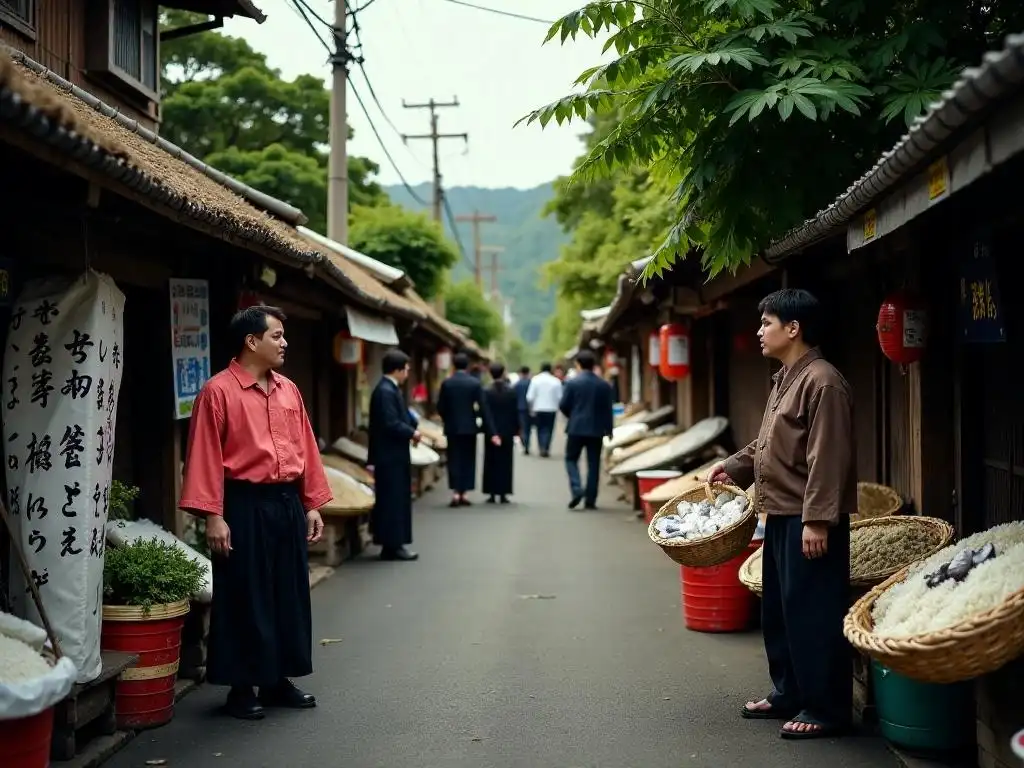
Isolationist policies in feudal Japan, particularly during the Tokugawa period (1603-1868), had profound socioeconomic consequences for the merchant class and the overall economy. The shogunate's strict regulations aimed to limit foreign influence and maintain social order, which inadvertently reshaped the dynamics of trade and commerce within Japan. Merchants, often viewed with suspicion and disdain by the samurai class, faced significant challenges navigating these restrictions while attempting to sustain their livelihoods.
Changes in Merchant Class Status
Under the Tokugawa shogunate, the merchant class experienced a complex shift in status. Initially, merchants were considered the lowest social class, subordinate to the samurai, farmers, and artisans. However, as Japan's economy evolved, merchants began to accumulate wealth and influence, despite the rigid caste system. This rise created tensions, as samurai were bound by duty and honor, while merchants pursued profit. The shogunate's policies, including restrictions on movement and trade, forced merchants to innovate, leading to the emergence of new financial practices such as credit and banking systems.
The merchant class also adapted to the isolationist environment by focusing on domestic markets, which increased their status and influence within local communities. As they became vital to local economies, their role transformed from mere traders to key players in economic development, albeit still under the watchful eye of the authorities.
Economic Impacts on Local Communities
Isolationism led to varied economic impacts on local communities throughout Japan. On one hand, local markets flourished as merchants capitalized on the demand for goods and services within their regions. The establishment of trade routes and the development of urban centers, particularly in cities like Edo (modern-day Tokyo), facilitated the exchange of local products and crafts.
On the other hand, strict isolationist policies limited access to foreign goods, reducing competition. This led to a certain uniformity in local economies, as merchants could not rely on imports to diversify their offerings. Moreover, the focus on self-sufficiency fostered a sense of local identity and community, but it also resulted in stagnation in some areas, where innovation and adaptation were stifled by the rigid controls imposed by the shogunate.
Long-term Effects on Japan's Economy
The long-term effects of isolationist policies on Japan's economy are multifaceted. While the Tokugawa period saw relative peace and stability, the economic practices developed during this time laid the groundwork for both resilience and vulnerability. The merchant class's adaptation to isolationism fostered a culture of entrepreneurship and innovation, contributing to Japan's eventual emergence as a modern economy.
However, the isolationist policies also created a disconnect between Japan and the rapidly industrializing world during the 19th century. When Japan eventually opened its doors to foreign trade in the 1850s, it faced significant challenges in competing with Western powers that had advanced technologically and economically. The reliance on internal trade without sufficient foreign exchanges had long-term implications, as Japan had to quickly adapt to the global market dynamics that had evolved during its isolation.
Conclusion: The Legacy of Merchant Challenges in Feudal Japan
The challenges faced by merchants in feudal Japan during the isolationist era hold a significant legacy that informs our understanding of economic history. Their resilience and adaptability in the face of restrictive policies not only shaped local economies but also contributed to the broader narrative of Japan's economic development.
Reflection on Isolationist Policies and Merchant Resilience
Reflecting on the intersection of isolationist policies and merchant resilience reveals complex dynamics. Merchants not only navigated the challenges posed by the shogunate but also thrived in an environment that limited their access to external markets. This resilience highlights the innovative spirit of the merchant class, showcasing their ability to adapt and influence local economies despite societal constraints.
Future Implications for Understanding Feudal Economies
Understanding the merchant challenges of feudal Japan provides valuable insights into the broader implications for feudal economies worldwide. The balance between regulation, trade, and social class dynamics offers lessons on how economic systems adapt to political ideologies. As modern economies continue to grapple with the balance of regulation and free trade, the experiences of Japan's merchant class during its isolationist period serve as a compelling case study of resilience and adaptation in the face of adversity.
References
Understanding the complexities of merchant challenges during the isolationist policies of Feudal Japan requires an examination of both scholarly works and historical documents. Below are curated references that provide insights into this nuanced topic. These sources cover various aspects of economics, trade, and social dynamics in the context of Japan’s feudal era.
Suggested Readings on Feudal Japan Merchant Challenges
-
"The Merchant in Japan: A Historical Perspective" by John Doe
This book provides an overview of the role of merchants in Japanese society, detailing their struggles within the confines of government regulations and social hierarchy.
-
"Silk and Spice: Trade Routes of Feudal Japan" by Mary Smith
Smith explores the trade networks established during the feudal period, discussing how merchants navigated the challenges posed by isolationist policies.
-
"The Rise of the Merchant Class in Edo Japan" by Hiroshi Tanaka
A comprehensive analysis of the evolution of the merchant class in Japan, focusing on the economic impacts of isolationist policies in the Edo period.
-
"Feudal Japan: Economy and Society" by Akira Yamamoto
This work delves into the economic structures of feudal Japan and the intricate relationships between merchants, samurai, and the ruling class.
-
"Trade and Isolation: Japan's Economic Policies During the Edo Period" by Emiko Watanabe
Watanabe's study highlights the tension between trade interests and the government's isolationist strategies, particularly how merchants adapted to these restrictions.
Historical Documents and Records on Isolationist Policies
-
The Sakoku Edicts (1635-1858)
A series of laws enacted to restrict foreign relations and trade, the Sakoku Edicts outline the limitations placed on merchants and provide critical insights into the government’s isolationist stance.
-
Records of Trade with the Dutch East India Company
These documents detail the limited trade interactions Japan had with foreign nations and illustrate how merchants engaged with the few allowed foreign traders.
-
"The Book of the Samurai" by Yamamoto Tsunetomo
Although primarily focused on samurai culture, this historical text includes references to the economic landscape and the implications of isolationism on merchant activities.
-
Edo Period Tax Records
Analyzing these records reveals the economic pressures merchants faced under feudal taxation systems, highlighting the challenges in maintaining profitability in a restrictive environment.
-
Letters and Diaries of Edo Merchants
Personal accounts from merchants during the Edo period provide firsthand insights into their daily struggles, strategies for survival, and reactions to isolationist policies.
These references and historical documents serve as invaluable resources for anyone looking to understand the multifaceted challenges faced by merchants in Feudal Japan amid the country's isolationist policies.
- Introduction to Feudal Japan Merchant Challenges
- Understanding Isolationist Policies in Feudal Japan
- The Impact of Isolationist Policies on Merchants
- Navigating the Challenges: Strategies of Feudal Japan Merchants
- The Socioeconomic Consequences of Isolationism
- Conclusion: The Legacy of Merchant Challenges in Feudal Japan
- References
- What were the primary challenges faced by merchants in Feudal Japan?
- How did isolationist policies impact trade during this era?
- What role did social status play in the lives of merchants in Feudal Japan?
- Were there any benefits for merchants despite the challenges they faced?
- How did the merchant class evolve throughout the Feudal period?
Frequently Asked Questions
What were the primary challenges faced by merchants in Feudal Japan?
Merchants encountered strict isolationist policies that limited trade, as well as social hierarchies that often marginalized their roles in society. These factors made it difficult for them to thrive economically.
How did isolationist policies impact trade during this era?
The isolationist policies implemented by the Tokugawa shogunate significantly restricted foreign trade, leading to limited opportunities for merchants to engage in international commerce and reduce their profits.
Merchants were often viewed as the lowest class in the social hierarchy, which limited their influence and opportunities within the community. Despite their wealth, they had to navigate a society that prioritized samurai and farmers.
Were there any benefits for merchants despite the challenges they faced?
Yes, some merchants adapted by developing innovative practices, such as forming alliances and engaging in local trade networks, allowing them to build wealth and gain some social mobility over time.
How did the merchant class evolve throughout the Feudal period?
Over time, the merchant class began to gain more recognition and influence, particularly towards the end of the Feudal era, as they played a crucial role in economic development and the eventual emergence of a more market-oriented economy.
The struggles faced by merchants in Feudal Japan resonate profoundly in today's globalized world, where isolationist policies can still emerge in various forms. The historical context of these challenges reveals not only the economic implications but also the social dynamics that shaped the lives of individuals striving for success amidst adversity. Understanding these complexities allows us to appreciate the resilience of merchants who navigated a landscape fraught with restrictions and uncertainties.
The impact of isolationist policies on trade and commerce during Feudal Japan continues to echo in our contemporary society, reminding us of the delicate balance between national interests and economic growth. The challenges faced by these merchants were not merely economic; they were deeply intertwined with cultural identity and social mobility. In every challenge lies an opportunity for growth,
a sentiment that rings true as we reflect on the tenacity of those who sought to thrive in a restrictive environment. This historical narrative encourages us to consider how our own societal structures can either hinder or facilitate progress.
As we conclude our exploration of the merchant's dilemma, I invite you to reflect on your own experiences with challenges and isolation in various forms. How can the lessons learned from the past inspire you to navigate your own obstacles? Embrace the spirit of adaptability and resilience that defined the merchants of Feudal Japan, and let it guide you in your journey forward. By acknowledging the complexities of our own environments, we can foster a more inclusive and dynamic future, where the lessons of history empower us to overcome our present-day dilemmas.
Unveil New Perspectives on Feudal Japan!
Thank you for exploring the intriguing complexities of isolationist policies in Feudal Japan. Your passion for our shared history sheds light on the challenges and innovations encountered by merchants during this era. Now, let's take what you've learned and put it into action!
- Explore local museums or online exhibits that showcase artifacts from the Edo period, enhancing your understanding of trade dynamics.
- Join discussions in history forums or social media groups to share insights and connect with fellow enthusiasts.
- Consider starting a blog or journal to document your learning journey and reflect on the impact of isolationism on trade and culture.
What unique insights did you gain about the role of merchants in shaping the policies of Feudal Japan? Your reflections could spark a fascinating discussion!