
Japan's Strategic Maritime Policies in Response to Western Powers

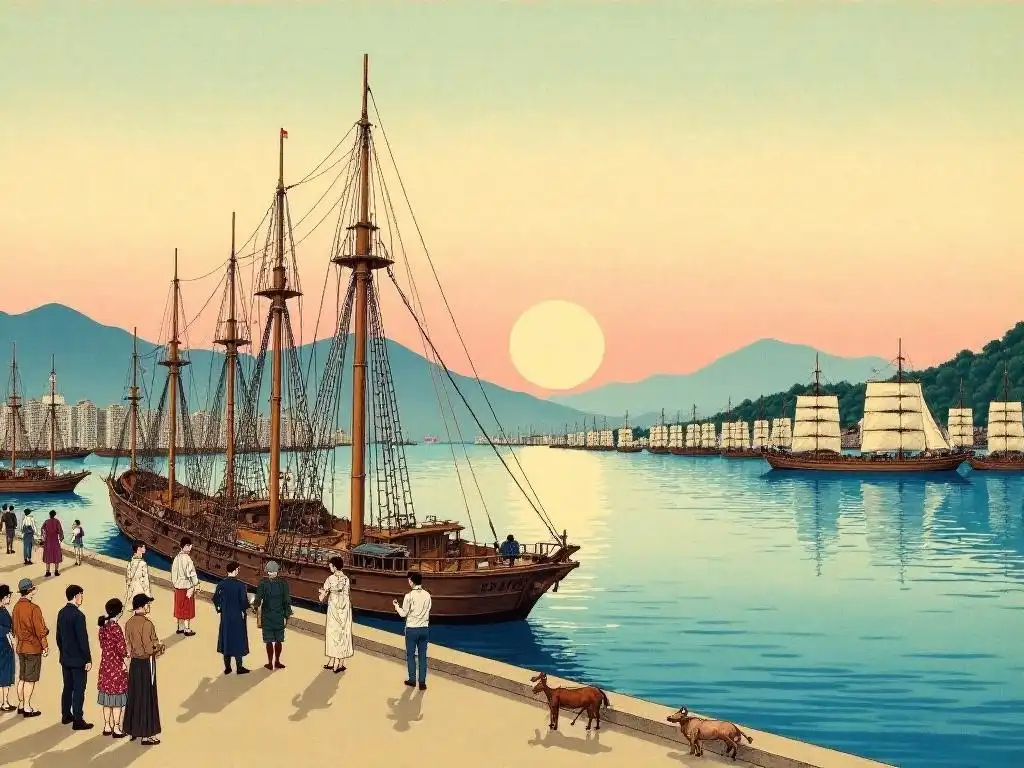
Welcome to Feudal Japan History, where we embark on a captivating journey through the intricate tapestry of Japan’s feudal era. Here, you will uncover the historical, cultural, and societal nuances that shaped this fascinating period.
Dive into our featured article, "Japan's Strategic Maritime Policies in Response to Western Powers," and unravel the complexities of Japan’s maritime policies history—a pivotal aspect of its foreign relations that reveals how the nation navigated the turbulent waters of Western influence. Prepare to be intrigued as we delve deeper into the past, sparking your curiosity and inviting you to explore the profound legacy of feudal Japan.
- Introduction to Japan's Maritime Policies History
- Historical Context of Japan's Maritime Policies
- Evolution of Japan's Maritime Policies
- Major Influences on Japan's Maritime Policies
- Case Studies of Japan's Maritime Policies
- Comparative Analysis of Japan's Maritime Policies
- Conclusion: The Legacy of Japan's Maritime Policies
-
Frequently Asked Questions
- What were Japan's maritime policies during the feudal era?
- How did Western powers influence Japan's maritime strategies?
- What role did the Tokugawa shogunate play in shaping maritime policies?
- How did Japan's maritime policies evolve after the feudal era?
- What impact did Japan's maritime policies have on its international relations?
- Final Reflection: Navigating the Waters of Japan's Maritime Policies
- Unveil the Future of Maritime Strategy!
Introduction to Japan's Maritime Policies History
Japan's maritime policies have played a pivotal role in shaping its interactions with Western powers, particularly during the feudal era when the nation was defined by strict isolationist principles. The strategic responses to external influences not only reflect the political and military calculations of the time but also illustrate the cultural shifts and adaptations that occurred in the face of globalization.
This article delves into Japan's maritime policies history, examining how these strategies evolved to navigate the complexities of foreign relations, particularly with Western nations. By exploring the nuances of these policies, we gain a deeper understanding of Japan's historical trajectory and the ways in which it asserted its sovereignty while engaging with the outside world.
Overview of Japan's Strategic Maritime Policies
Japan's strategic maritime policies during the feudal era were characterized by a careful balance between isolation and engagement. Initially, the Tokugawa shogunate enforced a strict policy of sakoku (closed country), which limited foreign trade and prohibited Japanese citizens from traveling abroad. However, as Western powers began to expand their influence in Asia, Japan found itself at a crossroads.
- Key Policies and Treaties:
- Sakoku Edicts (1635): These laws restricted foreign relations and trade, effectively closing Japan off from most of the world.
- Treaty of Kanagawa (1854): Marked the end of Japan's isolation by opening ports to American trade and establishing diplomatic relations.
- Unequal Treaties: A series of agreements with Western nations that forced Japan to concede trade rights and extraterritoriality.
As these policies unfolded, Japan began to adopt a more pragmatic approach, recognizing the need to modernize its maritime capabilities to compete on the global stage. This shift laid the groundwork for the Meiji Restoration, a period of rapid industrialization and military expansion.
Importance of Maritime Policies in Japan's Feudal Era
The significance of maritime policies in Japan's feudal era cannot be overstated. They were not only instrumental in determining the nation's foreign relations but also influenced domestic affairs and societal changes.
- Economic Impact:
- The restrictions on foreign trade initially bolstered local economies but ultimately hindered technological and industrial advancements.
- The opening of Japan to foreign trade led to a surge in economic activity, changing the landscape of commerce and industry.
- Cultural Exchange:
- Limited contact with Western countries facilitated the preservation of traditional Japanese culture.
- However, the eventual opening up allowed for the introduction of Western ideas, technology, and practices, contributing to a cultural transformation.
- Military Strategy:
- Japan's maritime policies directly affected its military strategies, as the nation sought to enhance its naval power to protect its sovereignty.
- The lessons learned during this period would later inform Japan's military engagements in the late 19th and early 20th centuries, altering the balance of power in East Asia.
Japan's maritime policies during the feudal era were a reflection of the nation’s strategic responses to external pressures, ultimately shaping its historical and cultural landscape. Understanding this history is crucial for appreciating the complexities of Japan's interactions with Western powers and the legacy of its maritime strategies.
Historical Context of Japan's Maritime Policies
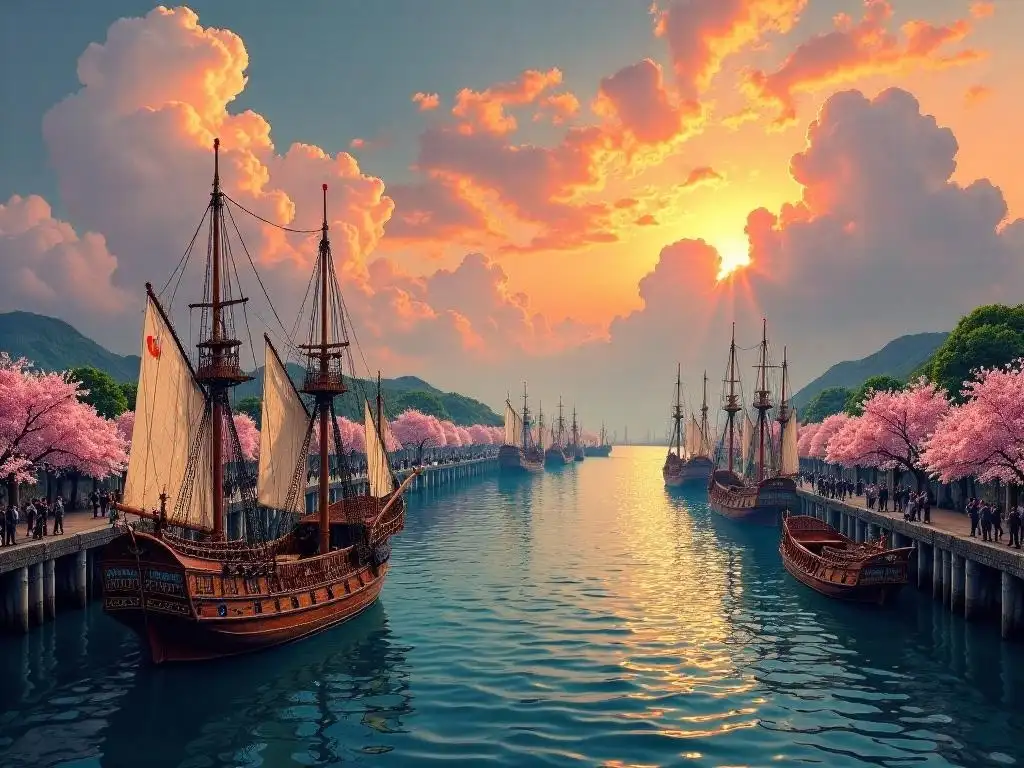
Japan's maritime policies have undergone significant transformations throughout its history, particularly during the feudal era. As a nation composed of numerous islands, Japan's geographical positioning has inherently shaped its approach to maritime affairs. The feudal period, spanning from the late 12th century to the mid-19th century, was marked by a complex interplay of internal power struggles and external threats. Understanding the historical context of these policies is essential for grasping how Japan navigated its relationships with Western powers.
The isolationist stance adopted by Japan, particularly during the Edo period (1603-1868), was a direct response to the perceived threats posed by foreign nations. The Tokugawa shogunate implemented strict maritime regulations, including the Sakoku policy, which restricted foreign trade and prohibited Japanese citizens from traveling abroad. This isolationism was aimed at preserving Japan’s cultural identity and preventing Western influences from destabilizing the feudal system.
However, the arrival of Western powers in the 19th century necessitated a reevaluation of these policies. The increasing pressure from nations such as the United States and European countries challenged Japan's isolationist approach, prompting a strategic shift in its maritime policies. This transition marked the beginning of Japan's engagement with the broader world, leading to a more proactive maritime strategy that would eventually influence its role in international affairs.
The Role of Geography in Japan's Maritime Strategy
Japan's unique geography played a crucial role in shaping its maritime strategies throughout history. The archipelago consists of four main islands—Honshu, Hokkaido, Kyushu, and Shikoku—along with numerous smaller islands. This geographical configuration not only provided natural defenses but also presented challenges in terms of resource distribution and trade.
- Natural Barriers: The surrounding seas acted as a protective barrier against invasions, allowing Japan to develop a distinct cultural and political identity. The Pacific Ocean and the Sea of Japan provided a buffer zone, which influenced Japan's approach to foreign relations.
- Trade Routes: The maritime routes around Japan became vital for trade during the feudal era. Control over these routes allowed Japan to engage with neighboring cultures while maintaining a degree of autonomy. The strategic location of Japan made it a crucial player in regional maritime trade networks, particularly with China and Korea.
- Fishing and Resources: The abundance of marine resources in Japan’s waters led to a maritime culture that emphasized fishing and trade. This reliance on the sea not only shaped local economies but also informed Japan's broader maritime policies regarding resource management and trade relations.
Japan's geographical position, therefore, was not merely a backdrop but a dynamic factor that influenced its maritime strategies throughout the feudal era.
Interactions with Western Powers during the Feudal Era
The feudal era saw limited but significant interactions between Japan and Western powers, particularly from the 16th century onward. These interactions were characterized by a blend of trade, cultural exchange, and conflict, ultimately leading to a reevaluation of Japan's maritime policies.
- Early Encounters: Portuguese traders arrived in Japan in the mid-1500s, introducing firearms and new trading opportunities. The initial interactions were largely commercial, but they also brought about cultural exchanges that influenced Japanese society.
- The Dutch Influence: The Dutch East India Company established a trading post in Nagasaki, becoming one of the few Western entities allowed to trade with Japan during the Sakoku period. The Dutch played a pivotal role in providing Japan with information about Western science and technology, which would later be crucial in Japan's modernization efforts.
- Western Pressure: The arrival of Commodore Matthew Perry in 1853 marked a turning point in Japan's interactions with Western powers. His demand for the opening of Japanese ports to American ships highlighted the limitations of Japan's isolationist policies. This encounter forced Japan to reconsider its maritime strategies and approach to foreign relations.
These interactions laid the groundwork for Japan's eventual shift from isolationism to a more open and proactive maritime policy, significantly influencing its historical trajectory.
Key Historical Events Influencing Maritime Policies
Several key historical events during the feudal era played a critical role in shaping Japan's maritime policies. Understanding these events provides insight into how Japan navigated the complexities of foreign relations and maritime strategy.
- The Arrival of the Europeans (1543): The introduction of firearms and Western technologies by Portuguese traders had a profound impact on Japan's military capabilities and trade dynamics. This event marked the beginning of Japan's engagement with Western powers, prompting a reevaluation of its maritime policies.
- Sakoku Edicts (1635-1853): The Tokugawa shogunate's Sakoku edicts established a policy of isolation, prohibiting foreign trade and limiting interactions with Western nations. This period of enforced isolation significantly impacted Japan's maritime strategy, leading to a focus on self-sufficiency and internal stability.
- Commodore Perry's Expedition (1853): The arrival of Commodore Perry and his "Black Ships" forced Japan to confront the realities of Western imperialism. The subsequent Treaty of Kanagawa (1854) opened Japanese ports to American trade, marking the end of Japan's isolation and the beginning of a new era in its maritime policies.
- Meiji Restoration (1868): The Meiji Restoration signaled a dramatic shift in Japan's approach to foreign relations and maritime strategy. The new government sought to modernize Japan's military and economy, leading to increased engagement with Western powers and a reevaluation of its maritime policies.
These historical events collectively illustrate the evolution of Japan's maritime policies, highlighting the dynamic interplay between domestic governance and foreign relations throughout the feudal era. Understanding this history is essential for grasping the complexities of Japan's maritime policies in response to Western powers.
Evolution of Japan's Maritime Policies
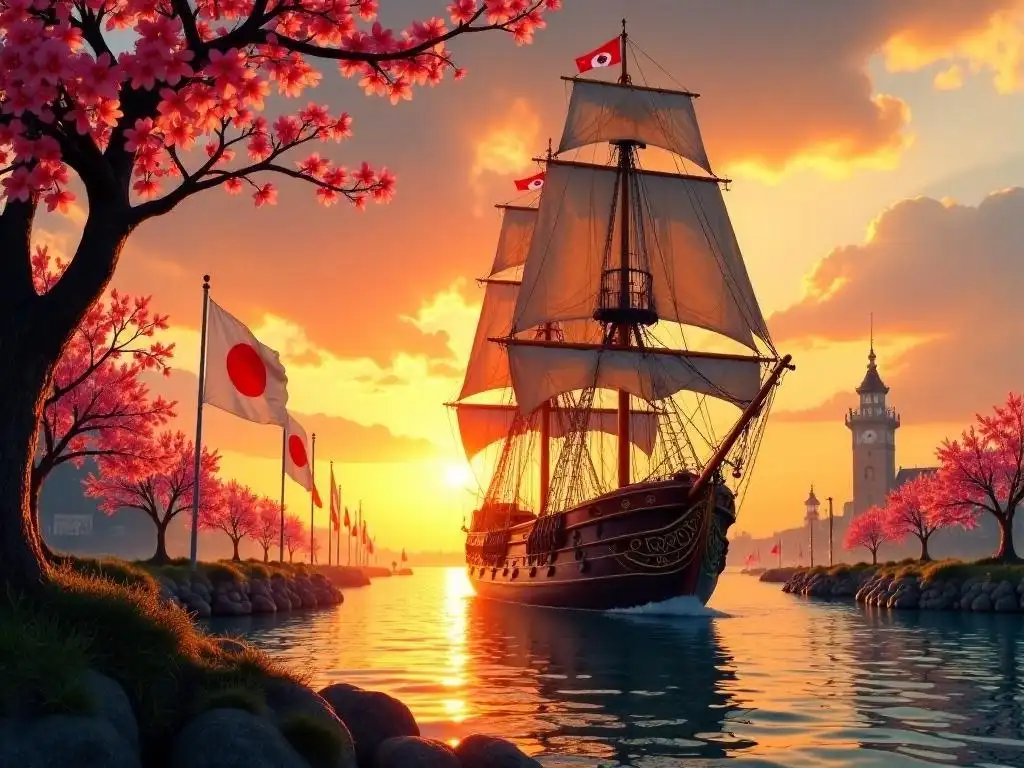
The evolution of Japan's maritime policies is a complex narrative shaped by internal dynamics and external pressures, particularly from Western powers. During the feudal era, maritime practices were not only a reflection of Japan's geographical context but also a manifestation of its socio-political landscape. Understanding this evolution requires delving into the early maritime practices, subsequent adaptations in response to Western expansion, and the long-lasting effects of the Sakoku policy.
Early Maritime Practices in Feudal Japan
In the early periods of feudal Japan, maritime activities were primarily driven by trade and the need for defense. Japanese fishermen and traders utilized small boats, known as "wakas", and larger vessels like "sankin" for coastal and inland sea navigation. Key points regarding these practices include:
- Fishing Techniques: Techniques such as net fishing and hook-and-line fishing were prevalent, with communities relying heavily on the sea for sustenance.
- Trade Routes: The establishment of trade routes, particularly with neighboring regions like Korea and China, facilitated cultural exchanges and economic growth.
- Naval Defense: Feudal lords (daimyōs) maintained small fleets to protect their territories from piracy and foreign incursions, laying the groundwork for Japan's naval strategies.
The maritime practices during this period were characterized by a localized approach, with each region developing specific techniques and trade networks that reflected its unique resources and demands.
Adaptations in Response to Western Expansion
The arrival of Western powers in the 19th century, particularly after Commodore Perry's expedition in 1853, prompted Japan to reassess and adapt its maritime policies significantly. Some key adaptations include:
- Gunboat Diplomacy: Japan was compelled to engage in treaties that favored Western nations, leading to the establishment of port cities such as Yokohama and Nagasaki. This marked a shift from isolation to increased maritime engagement.
- Modernization of the Navy: To compete with Western naval powers, Japan initiated a modernization program, which included the acquisition of steam-powered warships and the establishment of naval academies. This transition was pivotal in shaping a more formidable Japanese navy.
- Codification of Maritime Law: The Meiji government began to implement new maritime laws that aligned with international standards, focusing on trade regulations and maritime safety, thereby integrating Japan into the global maritime system.
These adaptations not only reshaped Japan's maritime policies but also laid the foundation for its emergence as a significant maritime power in the early 20th century.
The Impact of the Sakoku Policy on Maritime Activities
The Sakoku policy, enacted in the early 17th century, had profound implications for Japan's maritime activities. This policy of national isolation restricted foreign influence and maritime interactions. Key impacts include:
- Limited Foreign Trade: While Japan engaged in limited trade with the Dutch and Chinese, the overall maritime trade was significantly curtailed. This isolationist stance allowed Japan to develop its unique maritime culture but also rendered it vulnerable to external pressures later on.
- Cultural Homogeneity: The restriction on foreign interactions fostered a sense of cultural homogeneity, which influenced maritime practices, including the development of traditional shipbuilding techniques and fishing methods that were distinct to Japan.
- Preparation for Future Engagement: Ironically, the isolationist policies prepared Japan for future encounters with Western powers by fostering a sense of national identity and self-sufficiency in maritime practices. This would later facilitate a more unified response to Western expansion during the 19th century.
The Sakoku policy played a crucial role in shaping Japan's maritime history, creating a foundation that would be tested and transformed by the pressures of Western engagement in the following centuries.
Major Influences on Japan's Maritime Policies
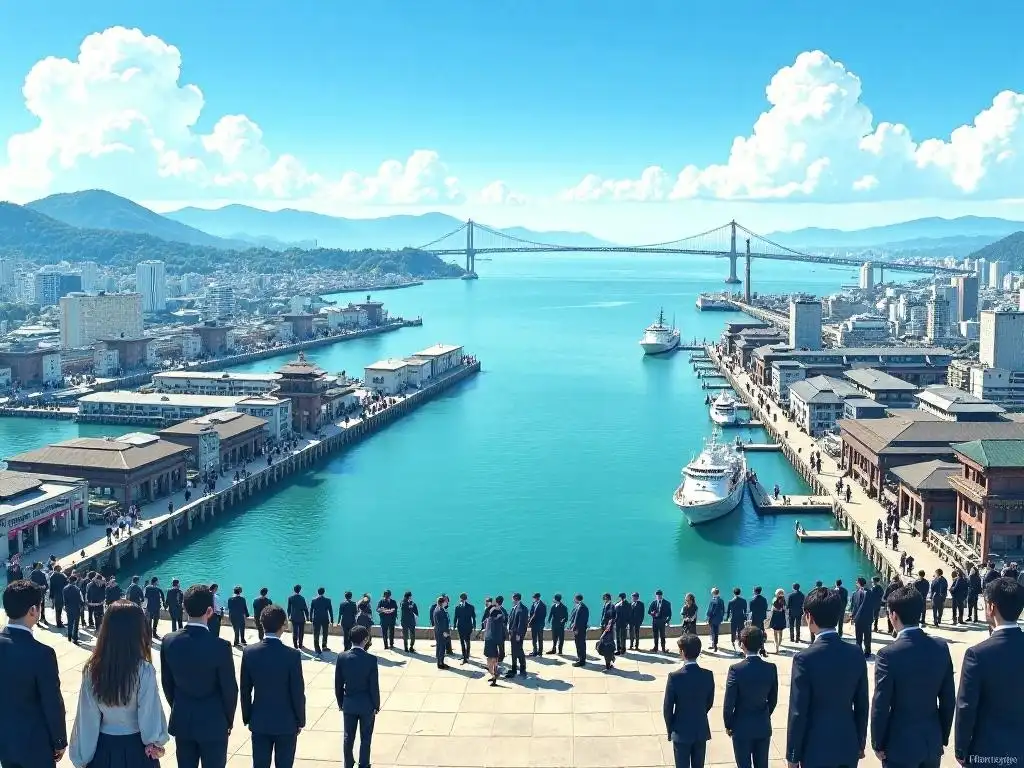
The Role of Trade and Economic Interests
Japan's maritime policies during the feudal era were significantly shaped by trade and economic interests, particularly in response to increasing interactions with Western powers. The arrival of the Portuguese in the mid-16th century marked a pivotal moment, as it opened Japan to new trade opportunities. Key commodities, such as silk, ceramics, and spices, became highly sought after, driving Japan to refine its maritime strategies.
- The Nanban Trade Period: The period from the 1540s to the early 1600s, known as the Nanban trade era, saw an influx of European traders. This period not only enriched Japan economically but also introduced foreign technologies and ideas. The Japanese began to recognize the importance of maritime routes for sustaining their growing economy.
- The Impact of the Sakoku Policy: In the early 17th century, the Tokugawa shogunate implemented the Sakoku (closed country) policy, which drastically limited foreign trade. However, this policy also prompted Japan to focus on strengthening its domestic maritime capabilities. The need to control and protect local trade routes became paramount, leading to investments in shipbuilding and the development of local ports.
- Economic Motivations Behind Diplomacy: Japan's maritime policies were also influenced by diplomatic efforts to secure favorable trade agreements. The Treaty of Kanagawa in 1854, for instance, emerged from Japan's desire to reopen trade with the West, showcasing the intricate connection between economic motivations and maritime policy decisions.
Cultural Exchanges and Their Effects on Maritime Strategies
Cultural exchanges played a crucial role in shaping Japan's maritime policies and strategies, influencing not only trade but also diplomatic relations. The introduction of Western cultural elements had profound effects on Japan's worldview and policy-making.
- Influence of Western Navigation Techniques: The interactions with Western powers led to the adoption of advanced navigation techniques. Japanese scholars and sailors studied Western maps and navigational tools, which improved their maritime operations and expanded their understanding of global trade dynamics.
- Cultural Syncretism: The blending of Japanese and Western cultures fostered new ideas about maritime governance. For example, the introduction of Western political philosophies encouraged Japanese leaders to rethink their maritime policies in terms of national sovereignty and international law, paving the way for more robust maritime diplomacy.
- Educational Exchanges: The establishment of schools and institutions focused on Western sciences and arts contributed to a more profound understanding of maritime issues. The awareness of international maritime norms and practices allowed Japan to craft policies that aligned with global standards, enhancing its diplomatic stance.
The military dimension of Japan's maritime policies cannot be overstated. The need to protect its sovereignty and interests in an increasingly competitive international landscape led to significant naval developments.
- Naval Modernization: In the mid-19th century, Japan recognized the necessity of modernizing its navy to compete with Western powers. The Meiji Restoration (1868) marked a turning point, with the government investing heavily in naval technology and training. This modernization was crucial for asserting Japan's maritime presence and securing its interests.
- Strategic Alliances: Japan's military considerations also influenced its diplomatic strategies. The Anglo-Japanese Alliance of 1902 was a significant milestone, as it provided Japan with military backing and access to advanced naval technologies. This alliance not only enhanced Japan's naval capabilities but also underscored its emerging status as a formidable maritime power.
- Imperial Expansion: Japan's maritime policies were closely tied to its imperial ambitions. The need to secure maritime routes for resource acquisition led to military engagements in regions such as Korea and Taiwan. Japan's military strategies thus evolved to encompass a broader vision of maritime control and expansion, reflecting its aspirations on the global stage.
Japan's maritime policies were deeply influenced by a complex interplay of trade and economic interests, cultural exchanges, and military considerations. Each of these factors contributed to shaping a unique maritime history that not only responded to external pressures but also laid the foundation for Japan's future interactions with Western powers and its emergence as a significant player on the global maritime stage.
Case Studies of Japan's Maritime Policies
The Arrival of Commodore Perry and Its Implications
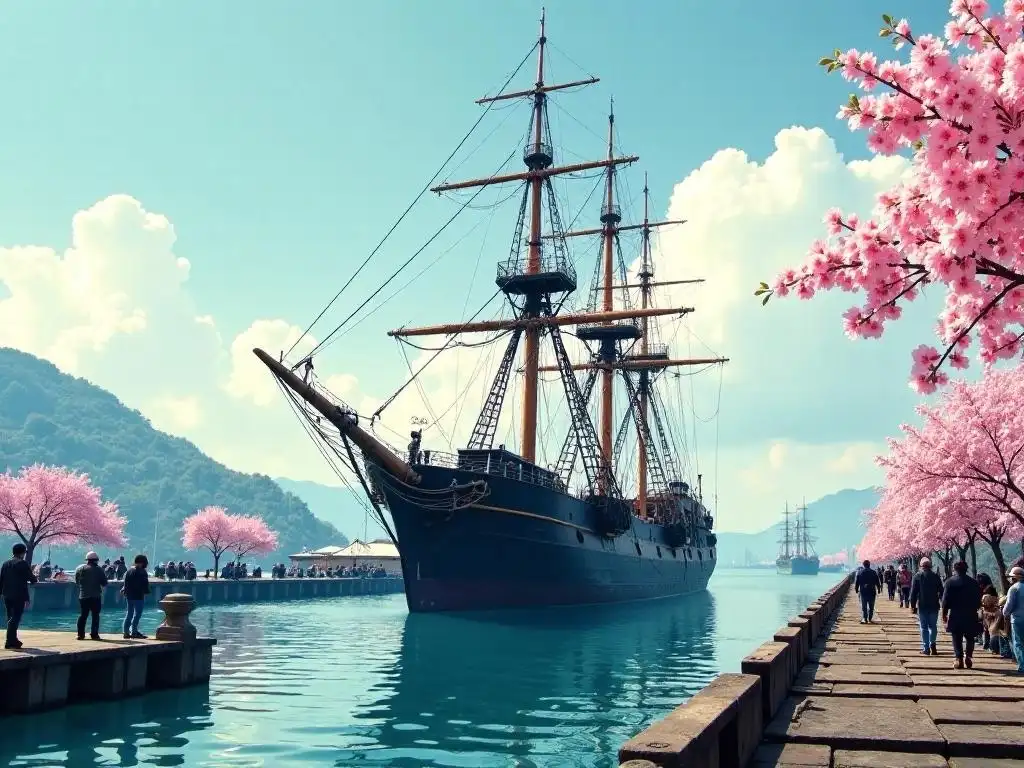
In 1853, Commodore Matthew Perry of the United States Navy arrived in Japan, marking a significant turning point in Japan's maritime policies. Perry's arrival was not merely a diplomatic mission; it was a demonstration of military power aimed at forcing Japan to open its ports to Western trade. This event shocked the isolationist Tokugawa shogunate, which had maintained a strict policy of sakoku (closed country) for over two centuries.
The implications of Perry's arrival extended beyond mere trade negotiations. It revealed Japan's vulnerability to foreign military might and the necessity for reform in its naval capabilities. The black ships, as they were called, symbolized an urgent call for modernization. Japan's limited maritime technology and its outdated naval fleet became glaringly apparent, prompting intense debates among Japanese leaders about how to respond effectively to this new threat.
The arrival of Perry thus acted as a catalyst for Japan's maritime policies to evolve from isolationism to engagement with Western powers. The Treaty of Kanagawa, which followed shortly after, would serve as both a response to this external pressure and a critical juncture in Japan's approach to maritime relations.
The Treaty of Kanagawa: A Turning Point in Maritime Policy
The Treaty of Kanagawa, signed in 1854, was a landmark agreement that fundamentally altered Japan's maritime policies. This treaty marked the end of Japan's isolationist stance by opening two ports—Shimoda and Hakodate—to American vessels for supplies and trade.
| Key Aspects of the Treaty of Kanagawa |
|---|
| Date Signed: March 31, 1854 |
| Parties Involved: United States, Tokugawa Shogunate |
| Key Provisions: |
| - Opening of two ports for American ships |
| - Establishment of a U.S. consulate in Japan |
| - Assurance of safe treatment for shipwrecked sailors |
The treaty also included clauses that allowed for the exchange of goods and the protection of American nationals, setting a precedent for future agreements with other Western powers. This shift towards openness signified a broader transformation in Japan's maritime policy, as it recognized the need for international trade and cooperation to bolster its economic standing and security.
Moreover, the Treaty of Kanagawa prompted Japan to reassess its naval capabilities and invest in modernization efforts, leading to significant advancements in shipbuilding and maritime technology in the subsequent years.
Following the signing of the Treaty of Kanagawa, Japan's response to Western naval technology became a central focus of its maritime policies. The glaring inadequacies of Japan's naval fleet, exposed by Perry's expedition, ignited a fervor for modernization.
Recognizing that naval superiority was essential for maintaining sovereignty and engaging in international trade, Japan initiated a series of reforms:
- Importing Western Vessels: Japan began purchasing modern warships from Western nations, particularly from the United States and Britain. This acquisition not only enhanced Japan's naval capabilities but also facilitated the transfer of knowledge regarding ship design and construction.
- Establishment of Naval Academies: To cultivate a skilled naval workforce, Japan established military academies and training programs modeled after Western institutions. These academies emphasized modern naval tactics, engineering, and maritime law.
- Development of Domestic Shipbuilding: The need for self-sufficiency led to the establishment of domestic shipyards. By the late 19th century, Japan had developed its own fleet of modern warships, which played a crucial role in conflicts such as the First Sino-Japanese War (1894-1895).
- Strategic Alliances: Japan sought alliances with Western powers to gain further technological insights and diplomatic support. The Anglo-Japanese Alliance of 1902 exemplified this strategy, allowing Japan to assert itself as a formidable naval power in the Asia-Pacific region.
Through these multifaceted responses to Western naval technology, Japan successfully transitioned from a nation with limited maritime capabilities to a dominant naval power by the early 20th century. This evolution not only reshaped Japan's maritime policies but also positioned it as a key player in the geopolitical landscape of East Asia.
Comparative Analysis of Japan's Maritime Policies
Japan's maritime policies during the feudal era, particularly in response to Western powers, offer a fascinating lens through which to understand its strategic maneuvering in a rapidly changing geopolitical landscape. These policies not only reflect Japan's efforts to maintain sovereignty but also highlight its unique position compared to other Asian nations.
Japan vs. Other Asian Nations: A Maritime Perspective
In the late 19th century, Japan embarked on a series of maritime reforms and policies that set it apart from its Asian counterparts. Unlike China, which struggled with foreign encroachment and ultimately succumbed to unequal treaties, Japan adopted a proactive approach to modernization and naval expansion. This strategic pivot was largely influenced by the arrival of Commodore Matthew Perry in 1853, which marked the beginning of Japan's engagement with Western powers.
- Key Differences:
- Modernization Initiatives: Japan embraced Western technology and naval practices, establishing a modern navy by the 1880s. In contrast, countries like China were slow to adopt such reforms, leading to significant military disadvantages.
- Diplomatic Engagement: Japan sought to negotiate and form alliances, exemplified by the Anglo-Japanese Alliance of 1902. This was a stark contrast to the isolationist policies that characterized much of Southeast Asia during the same period.
Japan's efforts in maritime policy also included:
- Naval Expansion: The construction of new warships and the establishment of naval academies.
- Trade Policy: Opening ports to foreign trade, while also safeguarding key national interests.
The result of these policies was a rapidly modernized maritime force that allowed Japan to assert itself as a dominant power in the region, contrasting sharply with the stagnation observed in other Asian nations.
Long-term Impacts of Japan's Maritime Policies on Regional Relations
Japan's maritime policies not only shaped its immediate interactions with Western powers but also had profound long-term effects on regional relations in Asia. By establishing itself as a formidable naval power, Japan altered the balance of power in the region and set the stage for future conflicts and alliances.
- Increased Regional Tensions: Japan's emergence as a maritime power led to heightened tensions with neighboring countries, particularly Russia and China. The Russo-Japanese War (1904-1905) is a prime example of how Japan's naval capabilities enabled it to challenge a major European power and assert its dominance in East Asia.
- Influence on Colonial Policies: Japan's successful modernization influenced other Asian nations, igniting movements aimed at reform and independence. Nationalist movements in Korea and China drew inspiration from Japan’s ability to resist colonization and assert its sovereignty.
- Post-War Maritime Strategy: The legacy of Japan's maritime policies continued into the post-World War II era. The nation adopted a pacifist constitution, yet its maritime capabilities evolved into a robust self-defense force, reshaping its role in international maritime law and trade.
Japan's maritime policies during its feudal era not only secured its sovereignty against Western encroachment but also established a framework for future regional dynamics. These policies set a precedent for modernization that resonated throughout Asia, influencing both conflicts and collaborations in the years to come. The historical trajectory of Japan's maritime policies serves as a critical study in understanding the complex interplay of power, diplomacy, and cultural exchange in Japan's foreign relations.
Conclusion: The Legacy of Japan's Maritime Policies
Summary of Key Insights on Japan's Maritime Policies History
Japan's maritime policies have undergone significant transformations throughout its history, particularly during the feudal era and the subsequent interactions with Western powers. The Edo period (1603-1868) marked a time of relative isolation, where the sakoku policy restricted foreign influence and trade primarily to the Dutch and Chinese. However, as Western powers began to assert their presence in the Asia-Pacific region in the mid-19th century, Japan was compelled to reevaluate its maritime strategies.
Key insights into Japan's maritime policies history include:
- Adaptation to Western Technology: Japan recognized the technological advancements of Western naval forces. The Meiji Restoration (1868) catalyzed a modernization effort, including the development of a formidable navy, which was crucial for asserting sovereignty and engaging in international trade.
- Treaties and Diplomacy: The Treaty of Kanagawa (1854) and subsequent agreements exemplified Japan's shift from isolation to engagement. These treaties opened Japanese ports to foreign ships, marking a pivotal shift in maritime policy that emphasized both trade and diplomacy.
- Imperial Expansion: By the late 19th and early 20th centuries, Japan's maritime policies evolved to support imperial ambitions. The acquisition of territories such as Taiwan and Korea was facilitated by a robust naval strategy, showcasing how maritime power was intertwined with national interests.
- Post-War Maritime Policy: Following World War II, Japan's maritime policies shifted again, focusing on rebuilding its economy and establishing itself as a peaceful maritime nation. The 1951 Treaty of San Francisco allowed Japan to regain sovereignty while limiting its military capabilities, leading to a focus on economic maritime activities.
These historical phases illustrate how Japan's maritime policies were shaped by external pressures and internal transformations, establishing a complex legacy that continues to influence its contemporary maritime strategy.
Future Implications for Japan's Maritime Strategy in a Global Context
As Japan navigates the complexities of the modern international landscape, its maritime strategy will play a crucial role in addressing both regional and global challenges. Key future implications include:
- Geopolitical Tensions in the Asia-Pacific: With rising tensions in the South China Sea and the Taiwan Strait, Japan's maritime policies will likely emphasize collective security measures, including partnerships with allies such as the United States and Australia. This collaborative approach aims to counterbalance China's expanding influence.
- Sustainability and Environmental Concerns: The global focus on sustainable development will necessitate a reevaluation of Japan's maritime policies. Emphasizing green shipping practices and protecting marine biodiversity will be central to Japan's future maritime strategy, aligning with international environmental standards and agreements.
- Technological Advancements and Cybersecurity: The integration of cutting-edge technologies in maritime operations, including cybersecurity measures for naval assets, will be imperative. Japan's investment in maritime innovation, such as autonomous vessels and AI-driven navigation systems, will enhance its strategic capabilities.
- Economic Maritime Activities: As Japan seeks to strengthen its economic resilience, maritime trade routes will remain critical. Policies aimed at expanding trade partnerships, securing supply chains, and improving port infrastructure will be essential for maintaining Japan's position in the global economy.
The legacy of Japan's maritime policies reflects a dynamic interplay of historical context, strategic adaptation, and evolving global challenges. As Japan continues to craft its maritime strategy, the lessons learned from its rich history will inform its responses to contemporary issues and opportunities on the global stage.
Frequently Asked Questions
What were Japan's maritime policies during the feudal era?
Japan's maritime policies were largely focused on restricting foreign influence while promoting domestic trade and security. This included the Sakoku policy, which limited foreign contact and trade to specific Dutch and Chinese merchants.
How did Western powers influence Japan's maritime strategies?
The arrival of Western powers in the 19th century prompted Japan to reconsider its maritime strategies. This led to the end of isolationism and the adoption of more aggressive maritime policies to protect its interests and assert itself internationally.
What role did the Tokugawa shogunate play in shaping maritime policies?
The Tokugawa shogunate established a strict policy of isolation, which included controlling trade routes and limiting foreign ships. This was intended to maintain internal stability and prevent foreign influence in Japan.
How did Japan's maritime policies evolve after the feudal era?
After the feudal era, Japan transitioned towards more modern maritime policies, emphasizing industrialization and military expansion. The Meiji Restoration marked a significant shift, allowing Japan to become a prominent maritime power.
What impact did Japan's maritime policies have on its international relations?
Japan's maritime policies significantly impacted its international relations, particularly in the late 19th and early 20th centuries. By modernizing its navy and expanding its trade networks, Japan sought to establish itself as a key player on the global stage.
Japan's maritime policies have evolved significantly in response to the shifting tides of Western powers, highlighting the nation's resilience and adaptability. As we examine the historical context of these policies, it becomes evident that they are not merely relics of the past but are deeply intertwined with Japan's current geopolitical strategies. The intricate balance of power in the Asia-Pacific region today underscores the relevance of understanding Japan's maritime history, as it continues to shape diplomatic relations and security frameworks in the face of emerging global challenges.
The influence of Japan's maritime policies extends beyond mere navigation; it reflects a broader cultural and social narrative that resonates with the nation's identity. From the Meiji Restoration to contemporary maritime security initiatives, Japan's approach to its waters has been a testament to its commitment to sovereignty and international cooperation. As noted by maritime historian Dr. Akira Saito, Japan's maritime policies are a mirror reflecting its historical journey, revealing the complexities of its interactions with the world.
This ongoing evolution not only informs our understanding of Japan's past but also serves as a guide for navigating future maritime challenges.
As we reflect on the lessons gleaned from Japan's maritime policies, let us consider our own roles in fostering understanding and cooperation in an increasingly interconnected world. I invite you to explore how the principles of resilience, adaptability, and strategic foresight can be applied in your own life and community. By embracing these values, we can all contribute to a more harmonious global maritime environment, ensuring that the lessons of history guide us toward a more collaborative and peaceful future.
Unveil the Future of Maritime Strategy!
Thank you for taking the time to explore Japan's strategic maritime policies! Your interest reveals a passion for understanding how nations adapt and thrive in a dynamic world. Now that you've gained insights into Japan's historical navigations, it's time to put that knowledge to use.
Here are a few engaging steps you can take next:
- Dive Deeper: Explore insightful articles on historical maritime strategies and how they influence contemporary policies—discover connections that span centuries!
- Join the Conversation: Share your perspectives about Japan's strategic adaptations on social media or in our comments section—let's discuss how these principles remain relevant today!
- Explore Related Cultures: Investigate how other nations responded to external maritime influences and uncover the diverse strategies that emerged from these interactions.
What do you believe was the most effective maritime strategy employed by Japan during its historical period, and how might it inspire modern approaches to maritime challenges?