
From Isolation to Engagement: The Transformation of Japan’s Foreign Policy


Welcome to Feudal Japan History, where we embark on a captivating journey through the intricate tapestry of Japan's feudal era. Here, you will uncover the transformative stories behind Japan’s feudal era foreign policy, exploring how the nation evolved from a stance of isolation to one of engagement with the world. Are you ready to delve into the complexities of diplomacy and cultural exchange during this pivotal period? Join us as we unravel the threads of history and reveal the fascinating dynamics that shaped Japan's interactions with foreign powers. Your exploration begins now!
- Introduction to Japan's Feudal Era Foreign Policy
- Historical Context of Japan’s Feudal Foreign Relations
- The Transformation of Japan’s Foreign Policy
- Changes in Japan's Interaction with Western Powers
- Japan’s Foreign Policy Strategies during the Feudal Era
- The Role of Key Figures in Japan's Foreign Policy Shift
- The Effects of Engagement on Japanese Society
- Conclusion: The Legacy of Japan's Feudal Era Foreign Policy
-
Frequently Asked Questions
- What was the primary focus of Japan's foreign policy during the feudal era?
- How did Japan's foreign policy change over time?
- What role did trade play in Japan's foreign policy?
- How did foreign policy impact Japan's cultural development?
- What were the consequences of Japan's foreign policy transformations?
- Final Reflection: From Isolation to Engagement in Japan's Foreign Policy
- Embark on Your Journey from Isolation to Engagement!
Introduction to Japan's Feudal Era Foreign Policy
Japan's feudal era, spanning from the late 12th century until the mid-19th century, was a time marked by significant political, social, and cultural transformations. One of the most intriguing aspects of this period is the evolution of Japan's foreign policy, which shifted dramatically from isolation to engagement. Understanding this transformation not only sheds light on Japan's historical interactions with the outside world but also reveals the underlying motivations and consequences of these policies.
The feudal system, characterized by a hierarchy of power and loyalty among daimyōs (feudal lords), samurai warriors, and the emperor, shaped Japan's approach to foreign relations. This article offers a comprehensive exploration of Japan's foreign policy during the feudal era, focusing on its isolationist period, the motivations behind foreign interactions, and the eventual shift towards engagement with Western powers. By delving into these themes, we aim to provide a nuanced understanding of how Japan navigated the complex landscape of international relations amid internal strife and external pressures.
Overview of Japan's Isolationist Period
The isolationist period of Japan, commonly referred to as Sakoku (鎖国), began in the early 17th century under the Tokugawa shogunate. This policy was characterized by a deliberate attempt to limit foreign influence and trade, primarily to maintain social order and political stability. The shogunate recognized the potential dangers foreign interactions posed, particularly the influence of Christianity and European colonial ambitions.
- Key Features of the Isolationist Period:
- Limited Trade: Japan restricted foreign trade to a few select ports, with Nagasaki being the primary hub for Dutch and Chinese commerce.
- Cultural Exchange: While Japan isolated itself politically, limited cultural exchanges occurred, particularly with the Dutch, who provided insights into Western science and technology.
- Religious Restrictions: The Tokugawa regime suppressed Christianity and persecuted converts to ensure social cohesion and loyalty to the shogunate.
The isolationist policy effectively safeguarded Japan from external conflicts and preserved its unique cultural identity for over two centuries. However, it also created a sense of insularity that would later necessitate a reevaluation of foreign relations.
Importance of Foreign Policy in the Feudal Era
Understanding the foreign policy of Japan during the feudal era is crucial for several reasons:
- Cultural Identity Formation: The interactions—or lack thereof—with foreign nations played a significant role in shaping Japan's cultural identity and national consciousness.
- Political Stability: The isolationist policies helped maintain the political structure of the Tokugawa shogunate, allowing it to focus on internal affairs and governance without external threats.
- Economic Implications: By controlling foreign trade, Japan could protect its economy from external fluctuations and focus on self-sufficiency, although this also limited economic growth opportunities.
- Precursor to Modernization: The eventual shift from isolation to engagement in the mid-19th century set the stage for Japan's rapid modernization and integration into the global community, leading to significant transformations in its social, political, and economic landscapes.
The foreign policy of Japan during its feudal era reflects a complex interplay of cultural, political, and economic factors that significantly influenced the country's trajectory. Understanding this period is essential for grasping the broader historical context of Japan's emergence as a modern nation.
Historical Context of Japan’s Feudal Foreign Relations
The Emergence of Isolationism in Japan
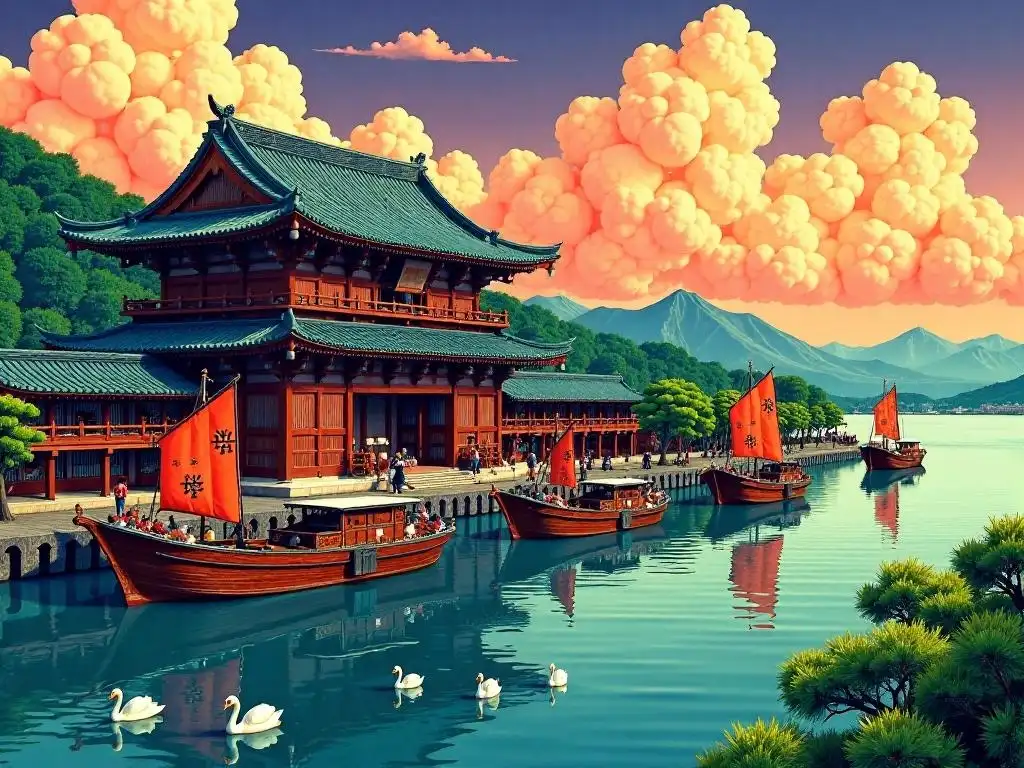
The emergence of isolationism in Japan during the feudal era can be traced back to the late 16th century, particularly with the unification efforts of the Tokugawa shogunate. After centuries of civil strife, the Tokugawa clan established a centralized feudal government in 1603, which significantly influenced Japan's foreign relations. The shogunate's primary goal was to maintain stability and control over the country, and this led to the implementation of a policy of seclusion known as sakoku.
Under sakoku, which was formalized in the 1630s, Japan severely restricted foreign interaction. The following key points highlight this isolationist policy:
- Limited Trade: Foreign trade was restricted to a few designated ports, with Nagasaki becoming the only port open to Dutch and Chinese traders.
- Banishment of Christianity: The Tokugawa shogunate viewed Christianity as a threat to its authority and social order, leading to the expulsion of missionaries and the persecution of Japanese Christians.
- Cultural Exchange Restrictions: Interaction with foreign nations was tightly controlled, with Japanese citizens forbidden from traveling abroad to prevent exposure to foreign ideas and cultures.
This approach allowed Japan to maintain internal stability but ultimately delayed its engagement with the Western world, fostering a unique cultural evolution within a largely isolated context.
Key Historical Events Influencing Foreign Policy
Several pivotal events shaped Japan's foreign policy during the feudal era, ultimately leading to its transformation from isolationism to engagement.
-
The Arrival of Commodore Perry (1853-1854)
Commodore Matthew Perry of the United States made a significant impact on Japan's isolationist stance by arriving with a fleet of "Black Ships." His mission was to open Japan to trade and diplomacy. The resulting Treaty of Kanagawa in 1854 marked the end of sakoku and established diplomatic relations between Japan and the United States, paving the way for further foreign engagement.
-
The Meiji Restoration (1868)
The fall of the Tokugawa shogunate and the subsequent Meiji Restoration heralded a new era in Japan's foreign policy. The Meiji leaders recognized the need to modernize and adapt to the Western world, leading to the adoption of policies aimed at strengthening Japan's military and economy. This era saw Japan actively engaging in international relations and participating in global trade.
-
Sino-Japanese War (1894-1895)
The First Sino-Japanese War was a crucial event that demonstrated Japan's newfound military prowess and willingness to engage with foreign powers. Japan's victory over China not only expanded its territory but also signified its emergence as a formidable player on the international stage. This victory led to the Treaty of Shimonoseki, which granted Japan significant territorial gains and increased its influence in Asia.
-
Russo-Japanese War (1904-1905)
Japan's victory in the Russo-Japanese War further solidified its status as a major world power. This conflict against Russia was significant as it was the first time an Asian nation defeated a European power in modern history. The subsequent Treaty of Portsmouth recognized Japan's interests in Korea and parts of Manchuria, marking a pivotal shift in foreign relations.
These events collectively illustrate the transition from Japan’s feudal foreign policy characterized by isolationism to an era of increasing engagement and international influence. The transformation laid the groundwork for Japan’s role in the global arena, shaping the course of its history well into the 20th century and beyond.
The Transformation of Japan’s Foreign Policy

The transformation of Japan's foreign policy during the late feudal era marked a pivotal shift from centuries of isolation to active engagement with Western powers. This evolution was not merely a change in diplomatic strategy but reflected a broader transformation in Japan’s national identity, economy, and societal structures. The transition was driven by various internal and external factors that collectively influenced Japan's decision to open its doors to the West, ultimately setting the stage for modernization and international involvement.
Factors Leading to Engagement with the West
The factors that propelled Japan towards engagement with the West can be categorized into several key areas:
- Internal Strains and Economic Pressures:
- Sankin-kōtai: The costly system of alternate attendance imposed on daimyōs strained the feudal economy, leading to increased dissatisfaction among the samurai class and common people.
- Agricultural Decline: A series of poor harvests in the 19th century resulted in famine and unrest, prompting the need for reforms and new economic opportunities, which the West could provide.
- Global Context and Imperialism:
- Western Imperialism: The expansion of Western powers, particularly after the Opium Wars, illustrated the potential consequences of isolation. Japan recognized the need to adapt or risk becoming a victim of colonial ambitions.
- Technological Advancements: The industrial revolution in the West demonstrated the advantages of modern technology and military power. Japan understood that engagement was necessary to acquire these advancements.
- Cultural Exchanges and Intellectual Movements:
- Rangaku (Dutch Learning): The study of Western sciences and technologies, primarily through Dutch texts, sparked curiosity about Western ways of governance and military organization.
- Nationalism and Reform Movements: Intellectuals and reformers began advocating for a reevaluation of Japan's foreign policy, promoting the idea that Japan could benefit from selective engagement with Western nations.
The Role of Commodore Perry and the Treaty of Kanagawa
Commodore Matthew Perry's expedition in 1853-1854 was a crucial turning point in Japan's foreign relations. His arrival with a fleet of "black ships" symbolized the might of Western naval power and the urgency for Japan to consider foreign engagement.
- The Black Ships Incident:
- In July 1853, Perry arrived in Edo Bay, demanding that Japan open its ports to American trade. His show of force highlighted the inadequacy of Japan’s defenses and the necessity of reforming its foreign policy.
- The Treaty of Kanagawa (1854):
- The pressure from Perry led to the signing of the Treaty of Kanagawa on March 31, 1854. This treaty marked the first formal agreement between Japan and a Western power, establishing:
- Opening of Ports: Kanagawa and Shimoda were opened for American ships, allowing for trade and establishing a U.S. consulate.
- Protection of Shipwrecked Sailors: The treaty included provisions for the protection of American sailors stranded in Japan.
- Limited Diplomatic Relations: It laid the groundwork for future treaties with other Western nations.
- The pressure from Perry led to the signing of the Treaty of Kanagawa on March 31, 1854. This treaty marked the first formal agreement between Japan and a Western power, establishing:
- Consequences of the Treaty:
- The Treaty of Kanagawa signified the end of Japan’s sakoku (closed country) policy, which had lasted over 200 years. This opened the floodgates for further treaties and trade agreements with various Western countries.
- It also ignited significant domestic turmoil, leading to the eventual overthrow of the Tokugawa shogunate and the rise of the Meiji Restoration in 1868, which transformed Japan into a modern state.
The transformation of Japan's foreign policy during the feudal era was a complex interplay of internal pressures, external threats, and a pivotal encounter with Commodore Perry. This engagement with the West not only reshaped Japan’s international relations but also set the foundation for the nation’s rapid modernization and emergence as a global power.
Changes in Japan's Interaction with Western Powers
Shifting Attitudes Towards Foreign Trade and Diplomacy
During the Japan feudal era, the country's approach to foreign trade and diplomacy underwent significant transformations, particularly in response to Western pressures. Initially, Japan maintained a policy of sakoku (鎖国), or closed country, which severely restricted foreign interactions. This isolationist stance, enforced from the early 17th century under the Tokugawa shogunate, aimed to protect Japanese culture and prevent foreign influence, particularly from Christianity.
However, by the mid-19th century, the geopolitical landscape began to shift. The arrival of Commodore Matthew Perry in 1853 marked a pivotal moment in Japan's foreign policy. Perry's expedition, backed by the United States' military might, effectively challenged Japan's isolationist policies, pushing for the opening of Japanese ports to American and, subsequently, other Western nations. This event catalyzed a gradual transformation in Japan’s attitudes towards foreign trade:
- Increased Trade Opportunities: The Treaty of Kanagawa in 1854 opened two ports to American vessels, leading to similar agreements with other Western powers. This newfound engagement allowed Japan to import Western technology and ideas, significantly impacting its economy.
- Diplomatic Relations: Japan began to establish diplomatic relations with Western countries, which were crucial for negotiating trade agreements that favored its interests. The signing of the Harris Treaty in 1858 with the U.S. further exemplified Japan's shift towards a more open foreign policy.
These changes were not without internal opposition, as many samurai and traditionalists feared the loss of cultural identity. Nevertheless, the realization of Japan's vulnerability in the face of Western imperialism prompted a reevaluation of its foreign policy, ultimately leading to a more engaged international stance.
The Impact of Western Influence on Japanese Society and Culture
The opening of Japan to Western influences during the late feudal era had profound effects on Japanese society and culture, reshaping its identity in the process. As Western ideas, technologies, and practices permeated Japanese life, several key aspects emerged:
- Modernization of Infrastructure: Japan recognized the need to modernize its infrastructure, inspired by Western advancements. The construction of railways, telegraph lines, and modern ports began in earnest, facilitating trade and communication.
- Cultural Exchange: The influx of Western literature, art, and philosophy introduced new ideas and perspectives. This cultural exchange led to a hybridization of traditional Japanese culture with Western influences, seen in various art forms like ukiyo-e (浮世絵) that began integrating Western techniques.
- Educational Reforms: The introduction of Western educational models transformed Japan’s educational system. The Meiji Restoration in 1868 further accelerated these changes, promoting scientific learning and modern curricula, which would lay the foundation for Japan's rapid industrialization.
| Aspect               | Traditional Japan                   | Post-Opening Japan                     |
|----------------------|-------------------------------------|----------------------------------------|
| Trade                | Restricted, primarily domestic      | Open to international trade            |
| Culture              | Isolationist, preservationist       | Hybridization with Western influences   |
| Education            | Confucian-based                     | Western-style, focus on science        |
| Infrastructure       | Limited                             | Modernized with railways and ports     |
The interplay of these factors not only transformed Japan's foreign policy but also laid the groundwork for its emergence as a modern nation-state. This engagement with Western powers ultimately propelled Japan onto the world stage, facilitating its transition from a feudal society to a significant player in international relations.
Japan’s Foreign Policy Strategies during the Feudal Era

Diplomatic Approaches to Western Countries
During the feudal era, Japan's foreign policy was shaped by a variety of diplomatic approaches, particularly in its interactions with Western countries. The early encounters, especially during the 16th century, marked the beginning of a complex relationship characterized by both curiosity and caution.
- Portuguese Influence: The arrival of the Portuguese in 1543 introduced firearms and new trade opportunities. The Japanese were intrigued by Western technology, leading to initial diplomatic exchanges. However, these interactions were primarily focused on trade rather than deep political alliances.
- Jesuit Missions: Jesuit missionaries played a significant role in fostering cultural exchanges. They not only sought to convert the Japanese to Christianity but also acted as intermediaries for trade. Notably, figures like Francis Xavier established missions that influenced local culture and politics.
- Shogunal Isolationist Policies: By the early 17th century, Tokugawa Ieyasu implemented a series of isolationist policies, known as sakoku, which restricted foreign trade and interactions. The shogunate's primary goal was to preserve Japanese sovereignty and maintain social order. This isolationist approach led to the expulsion of many missionaries and the severe limitation of foreign traders to specific ports, such as Nagasaki.
The diplomatic strategies during this period reveal a delicate balance between openness to trade and a desire to maintain control over foreign influences. This approach laid the groundwork for Japan's later transformation in foreign policy as it navigated the complexities of Western engagement.
Military Strategies and the Defense of Sovereignty
The military strategies employed by Japan during the feudal era were crucial in shaping its foreign policy and ensuring the defense of sovereignty. As Japan faced increasing pressure from Western powers, particularly in the 19th century, its military stance evolved significantly.
- Strengthening the Samurai Class: The samurai, as the ruling warrior class, were instrumental in Japan's military strategies. The Tokugawa shogunate relied on the loyalty and martial prowess of samurai to maintain internal stability and defend against external threats. The samurai ethos emphasized honor and loyalty, which played a critical role in mobilizing military efforts.
- Naval Developments: Recognizing the importance of naval power, especially in the face of Western naval superiority, Japan began to modernize its fleet. The construction of Western-style ships and the establishment of a formal navy were essential for protecting Japan's maritime interests and trade routes.
- The Boshin War and Meiji Restoration: The internal conflict known as the Boshin War (1868-1869) marked a pivotal moment in Japan's military history. The conflict arose from tensions between the ruling Tokugawa shogunate and pro-imperial factions. The eventual victory of the imperial forces led to the Meiji Restoration, which resulted in the rapid modernization of Japan's military. This transformation enabled Japan to assert its sovereignty and engage more effectively with Western powers.
The military strategies employed during the feudal era reflect Japan's evolving understanding of its place in the world. While initially focused on isolation, the pressures from Western nations prompted a shift towards modernization and defense, ultimately shaping the course of Japan's foreign policy in the years to come.
The Role of Key Figures in Japan's Foreign Policy Shift
The transformation of Japan's foreign policy during the feudal era was not merely a result of changing circumstances; it was also significantly shaped by the actions and ideologies of key leaders. Understanding the contributions of these influential figures provides deeper insight into how Japan navigated its complex relationships with the West and other nations.
Influential Leaders and Their Contributions
Several prominent leaders played pivotal roles in Japan's foreign policy evolution from isolation to engagement. Here are a few notable figures:
- Ashikaga Yoshimitsu (1358-1408)
- As the third shōgun of the Ashikaga shogunate, Yoshimitsu was instrumental in promoting trade with China and the Korean Peninsula. His policies facilitated cultural exchanges, leading to the introduction of new ideas and technologies that would later influence Japan's interactions with Western powers.
- Oda Nobunaga (1534-1582)
- Nobunaga is often credited with initiating Japan's transition from a feudal society to a more centralized state. His aggressive military campaigns not only unified Japan but also opened it to European traders and missionaries. He recognized the potential benefits of foreign relations, especially in terms of technology and military advancements.
- Toyotomi Hideyoshi (1537-1598)
- Hideyoshi continued Nobunaga's legacy, fostering trade with the Portuguese and Spanish. He also attempted to extend Japan's influence abroad through military expeditions to Korea. His diplomatic missions and interest in foreign cultures laid the groundwork for subsequent interactions with Western nations.
- Tokugawa Ieyasu (1543-1616)
- The founder of the Tokugawa shogunate, Ieyasu implemented isolationist policies, but his era also witnessed significant foreign engagement. He established the first formal trade agreements with the Dutch and the English, navigating the delicate balance between maintaining sovereignty and embracing foreign commerce.
- Commodore Matthew Perry (1794-1858)
- Although not a Japanese leader, Perry's arrival in Japan in 1853 was a catalyst for change. His "Black Ships" forced Japan to reassess its isolationist stance, leading to the signing of the Treaty of Kanagawa in 1854. This marked a turning point in Japan’s foreign policy, opening the nation to international trade and relationships.
The contributions of these leaders collectively illustrate the dynamic and often tumultuous nature of Japan’s foreign policy during the feudal era. Their decisions not only shaped Japan's interactions with other nations but also influenced its cultural and societal evolution.
The Impact of Samurai Ideology on Foreign Relations
The samurai class, with its distinct code of honor and loyalty, significantly influenced Japan's foreign relations during the feudal era. Their ideology shaped both the attitudes toward foreign engagement and the strategies employed in diplomatic interactions.
-
Bushido and National Identity
The samurai code, known as Bushido, emphasized loyalty, honor, and discipline. This code fostered a strong sense of national identity, which influenced how samurai viewed interactions with foreign powers. While they valued honor in combat and negotiations, they also grappled with the implications of foreign ideas, cultures, and technologies.
-
Diplomatic Missions
Samurai were often chosen as envoys in diplomatic missions due to their status and training in martial arts and diplomacy. Their involvement in foreign relations conveyed a sense of legitimacy and respect, which was crucial in negotiations with European powers. These missions were not only about trade but also about affirming Japan's sovereignty and cultural values.
-
Cultural Exchanges
The samurai's fascination with foreign cultures, particularly European art, religion, and technology, led to cultural exchanges that enriched Japan's own traditions. While some samurai embraced new ideas, others remained skeptical, leading to a complex relationship with foreign influence.
-
Resistance to Change
Despite their engagement with foreign cultures, many samurai resisted changes that threatened their societal structure. This tension often manifested in foreign policy decisions, where the desire to maintain the status quo conflicted with the need to adapt to new realities.
The samurai ideology thus played a dual role in shaping Japan's foreign relations during the feudal era: it both facilitated engagement with foreign nations and fostered resistance to external influences. Understanding this complex interplay offers valuable insight into Japan's foreign policy development and its eventual transformation from isolation to active participation in global affairs.
The Effects of Engagement on Japanese Society
As Japan transitioned from its long-standing isolationist policies to a more engaged approach towards foreign nations, significant changes rippled through its society. This transformation not only reshaped diplomatic relations but also had profound implications on cultural, economic, and social structures within Japan. Understanding these effects is crucial for grasping the broader narrative of Japan's feudal era foreign policy.
Cultural Exchanges and Their Significance
Cultural exchanges between Japan and Western nations during the late feudal period marked a pivotal shift in the nation’s identity. The introduction of Western ideas, art, and technologies influenced various aspects of Japanese life.
-
Art and Aesthetics:
The influx of Western artistic styles led to the emergence of unique hybrid forms of art. For instance, the ukiyo-e woodblock prints began to incorporate Western perspective, changing the landscape of Japanese art. Artists like Katsushika Hokusai were particularly influenced by these interactions, producing works that blended traditional techniques with new ideas.
-
Philosophy and Education:
The engagement with Western philosophies prompted a reevaluation of Japanese values and beliefs. The introduction of new educational systems emphasized science and technology, shifting the focus from classical literature to practical skills. This period saw the establishment of institutions that taught Western sciences, leading to a more informed and skilled populace.
-
Language and Literature:
The necessity to communicate with foreign nations led to the adaptation of the Japanese language. New vocabulary was introduced to accommodate concepts that did not exist in the native tongue. This linguistic evolution enriched Japanese literature and allowed for greater expression of contemporary thoughts and experiences.
The significance of these cultural exchanges cannot be overstated; they sparked a renaissance of sorts in Japan, fostering a sense of curiosity and innovation that would lay the groundwork for the modernization of the country in the Meiji era.
Economic Impacts of Increased Foreign Relations
The economic dimension of Japan's engagement with foreign nations during its feudal era is equally noteworthy. As trade routes reopened and foreign relations expanded, Japan experienced significant economic transformations.
-
Trade Networks:
Increased foreign relations led to the establishment of new trade networks, particularly with European powers and the United States. Japan began exporting goods such as silk, ceramics, and tea, which became highly sought after in international markets. This shift contributed to the growth of merchant classes and the urban economy.
-
Technological Advancements:
The interaction with foreign nations facilitated the transfer of technology. Japanese craftsmen began adopting Western manufacturing techniques, leading to improvements in production efficiency. For example, shipbuilding techniques and firearms manufacturing saw significant enhancements, which not only boosted trade but also altered military capabilities.
-
Financial Systems:
The need to manage increased trade and currency flow prompted reforms in Japan’s financial systems. The introduction of Western banking practices and currency systems led to a more structured economy. Moreover, this economic engagement necessitated the development of infrastructure, such as railways and telegraph lines, further integrating Japan into the global economy.
Overall, the economic impacts of increased foreign relations during the feudal era were transformative, paving the way for Japan’s emergence as a competitive player on the world stage. The shift from isolation to engagement fundamentally altered both the cultural and economic landscapes of Japan, setting the foundation for future growth and interaction in the modern era.
Conclusion: The Legacy of Japan's Feudal Era Foreign Policy
The feudal era of Japan, spanning from the late 12th century to the mid-19th century, has left an indelible mark on the nation's foreign policy, shaping its interactions with the outside world in ways that continue to resonate today. The intricate web of relationships formed during this period, characterized by both isolationist tendencies and selective engagement, laid the groundwork for Japan's modern diplomatic strategies.
Historically, Japan's feudal lords (daimyō) and the shogunate controlled foreign relations, often prioritizing internal stability over external engagement. This insular approach was particularly pronounced during the Edo period (1603-1868), when the Tokugawa shogunate enforced the sakoku policy, restricting foreign interactions and trade. However, this isolation was not absolute; limited contact with the Dutch and Chinese facilitated the exchange of ideas and goods, subtly influencing Japan's eventual re-engagement with the world.
Lasting Impacts on Modern Japanese Foreign Relations
The legacy of Japan's feudal era is evident in its contemporary foreign relations. The balance between tradition and modernity can be traced back to this historical period. Notably, the Meiji Restoration of 1868 marked a significant turning point, as Japan transitioned from a feudal system to a centralized government, embracing Western technologies and ideas while carefully maintaining its cultural identity.
Key impacts include:
- Selective Engagement: Japan's historical experience with limited foreign interaction fostered a cautious approach to international relations. This is seen today in Japan's diplomatic strategies, where the nation often weighs the potential risks and benefits of engagement with other countries.
- Cultural Diplomacy: The feudal era's emphasis on cultural exchange, albeit restricted, laid the foundation for Japan's modern soft power. Initiatives in cultural diplomacy, such as the promotion of Japanese arts and traditions abroad, echo the historical values of respect and mutual understanding established during the feudal period.
- Economic Partnerships: The early trade relationships developed during the feudal era have evolved into robust economic partnerships with countries around the world. Japan's focus on technology and innovation can be traced back to its historical interactions with foreign traders and scholars.
Reflection on Japan's Transition from Isolation to Engagement
The transition from isolation to engagement was not merely a political shift but a profound transformation that shaped Japan's identity on the global stage. The end of the Edo period and the subsequent opening of ports to foreign powers were pivotal moments that redefined Japan's approach to international relations.
- Crisis and Opportunity: The arrival of Commodore Perry's fleet in 1853 served as a catalyst for change, forcing Japan to confront its isolationist policies. This crisis prompted a reassessment of foreign policy, leading to the adoption of a more proactive and engaged stance in global affairs.
- Cultural Resilience: Despite external pressures, Japan managed to retain its cultural integrity while adopting foreign technologies and practices. This adaptability is a hallmark of Japan's modern foreign policy, which emphasizes balancing global engagement with cultural preservation.
- Strategic Alliances: The lessons learned during the feudal era about the importance of alliances have persisted into modern times. Japan's current foreign policy often seeks to strengthen ties with like-minded nations to address shared challenges, reflecting the historical significance of alliances in the feudal context.
The feudal era of Japan significantly influenced the country’s foreign policy trajectory, fostering a complex interplay between isolation and engagement that continues to inform Japan's approach to international relations today. Understanding this historical context is crucial for grasping the nuances of Japan's current foreign policy landscape.
Frequently Asked Questions
What was the primary focus of Japan's foreign policy during the feudal era?
Japan's foreign policy during the feudal era predominantly emphasized isolation from foreign influences, especially during the Edo period, to maintain internal stability and control.
How did Japan's foreign policy change over time?
Japan transitioned from a policy of isolation to one of engagement in the late 19th century, influenced by Western powers and the need for modernization, leading to increased diplomatic relations.
What role did trade play in Japan's foreign policy?
Trade was limited during the feudal era, with the government controlling all foreign interactions. However, as policies shifted, trade became a crucial aspect of Japan's engagement with other nations.
How did foreign policy impact Japan's cultural development?
The shift in foreign policy facilitated the exchange of ideas and culture, leading to significant cultural enrichment and the adoption of new technologies and practices from Western countries.
What were the consequences of Japan's foreign policy transformations?
The transformation led to Japan emerging as a modern power by the early 20th century, allowing it to assert its influence in Asia and participate actively in global affairs, reshaping its identity on the world stage.
Final Reflection: From Isolation to Engagement in Japan's Foreign Policy
The evolution of Japan's foreign policy from the feudal era to its current engagement on the global stage is a testament to the power of transformation and adaptation. Understanding this journey is crucial today, as it highlights the importance of openness and collaboration in an increasingly interconnected world. As nations grapple with complex global challenges, Japan's shift from isolationism to proactive engagement serves as a striking reminder of how historical lessons can shape contemporary diplomatic strategies.
The impact of Japan's foreign policy transformation resonates deeply within the cultural and social fabric of the nation. This journey not only reflects a change in political stance but also signifies a broader cultural awakening. The embrace of international relations has fostered a sense of identity that balances tradition with modernity. As noted by historian John Dower, Japan's encounter with the West was not merely a challenge to its sovereignty but a profound catalyst for change.
This ongoing dialogue between Japan's past and present continues to influence its role in global affairs, encouraging a more nuanced understanding of cultural exchange and international cooperation.
As we reflect on Japan's remarkable journey, let us consider how these lessons can inspire our own actions. Engagement, rather than isolation, is essential for growth and understanding. I invite you to reflect on your own interactions and relationships—how can you foster a spirit of openness and collaboration in your life? By embracing the lessons from Japan's foreign policy transformation, we can all contribute to a more connected and harmonious world, where the past informs our future, and engagement leads to mutual growth and understanding.
Embark on Your Journey from Isolation to Engagement!
Thank you for diving into the transformative world of Japan’s foreign policy! Your exploration of this pivotal period not only equips you with knowledge but also ignites the curiosity to further engage with Japan’s rich heritage. Now, it's time to take action and deepen your understanding!
- Dive deeper into Japan's diplomatic history by exploring in-depth articles and analyses that cover the evolution of its relations with the world over the centuries.
- Join our community! Share your thoughts and insights on social media or in the comments section—your voice is vital to this ongoing conversation.
- Attend a local cultural event or participate in an online seminar focused on Japanese history, and experience the engagement firsthand.
What aspect of Japan's transition from isolation to engagement resonates most with you, and how do you envision it shaping the nation’s future?